Case study · Business cards · Jemm
Jemm ↗Neon green, on black plastic: Jemm’s NFC business cards
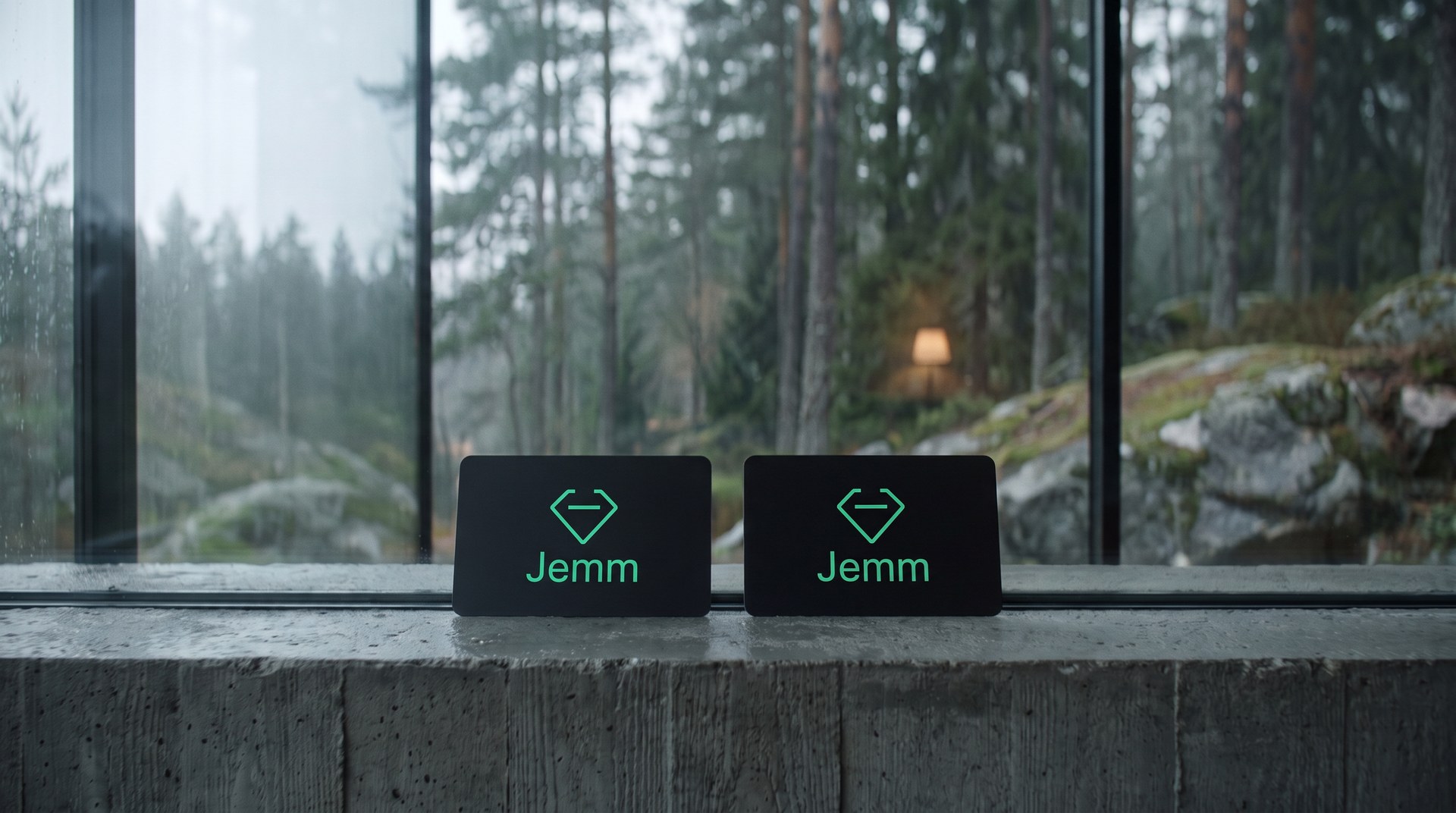
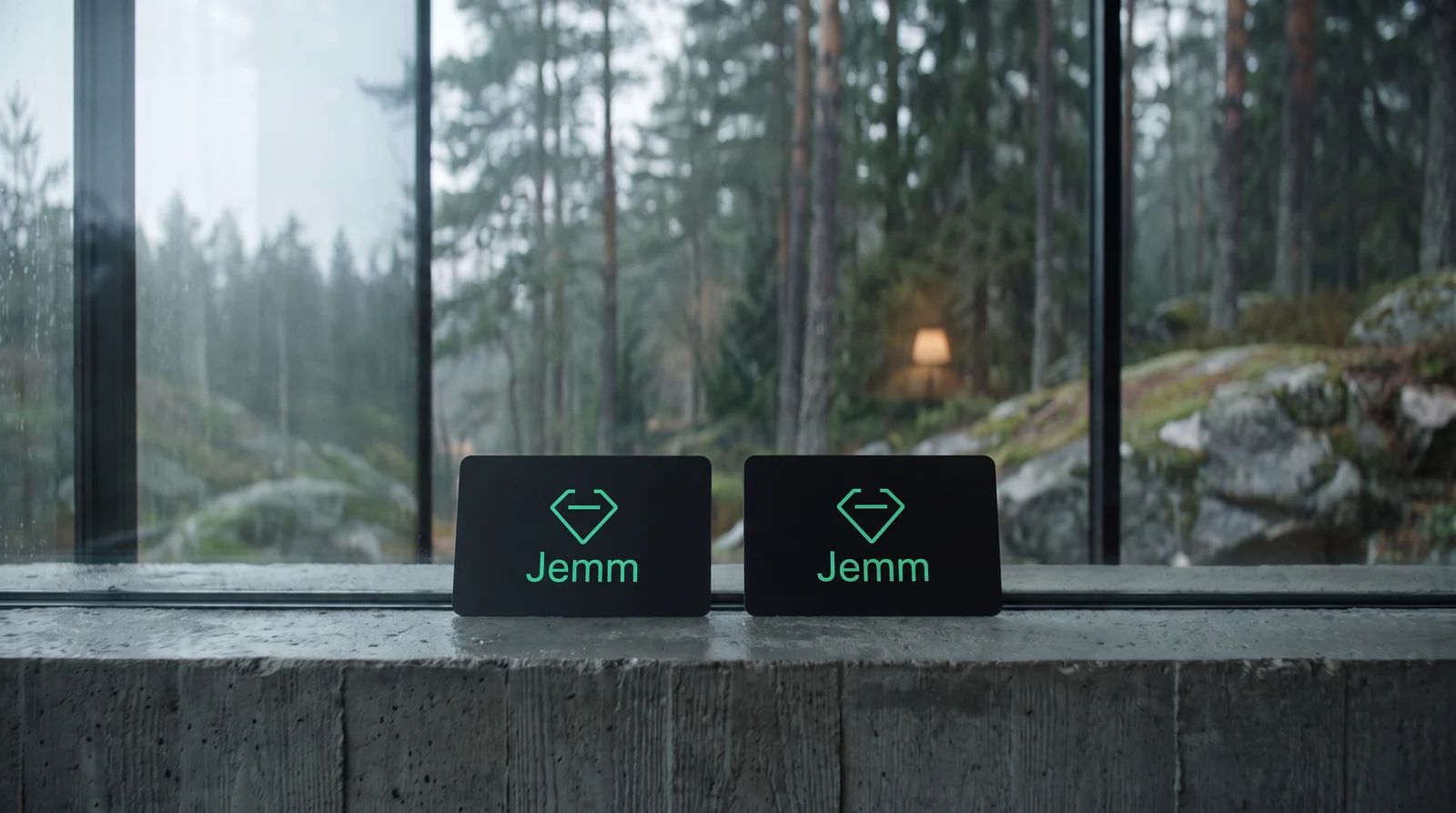
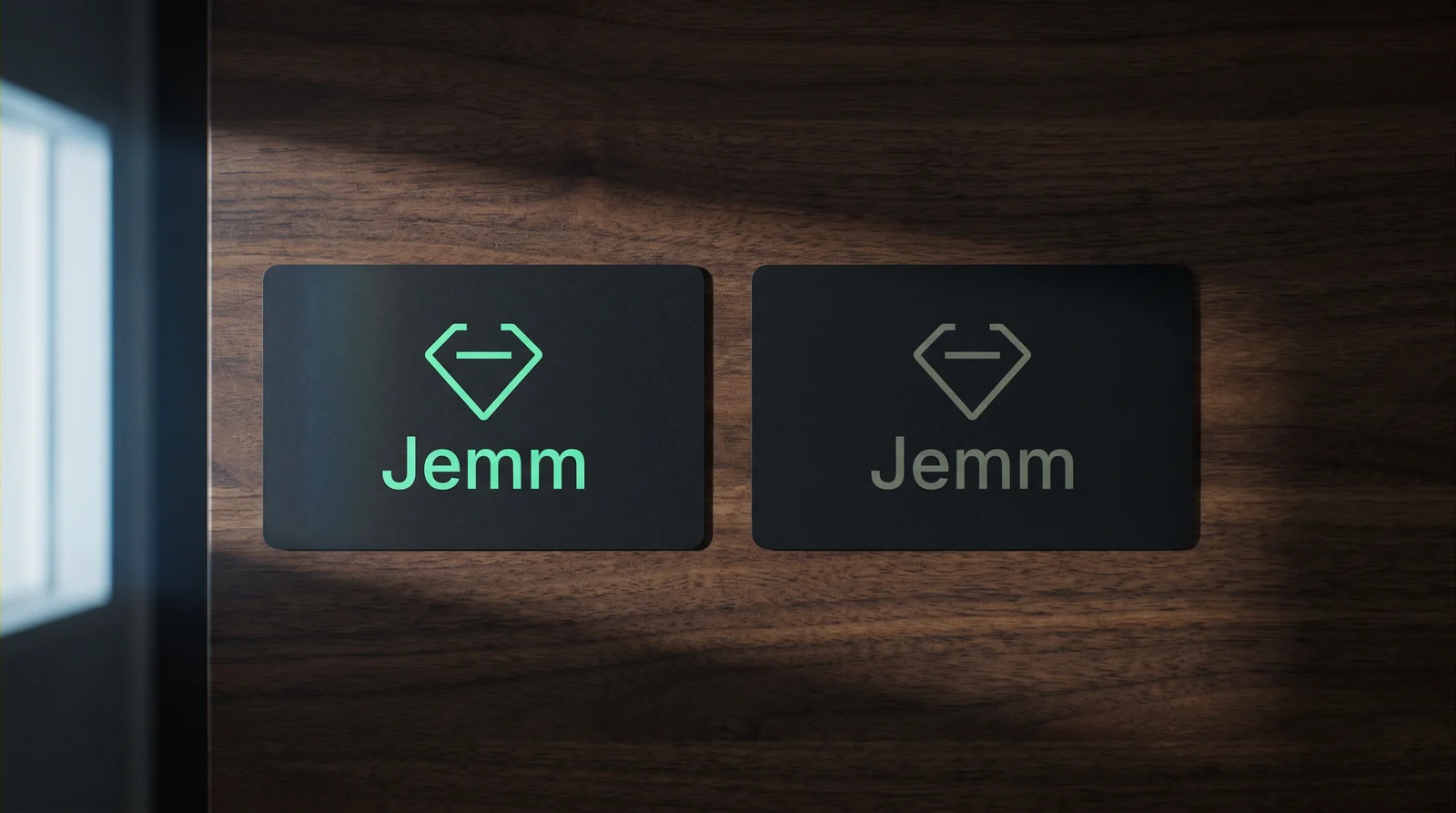
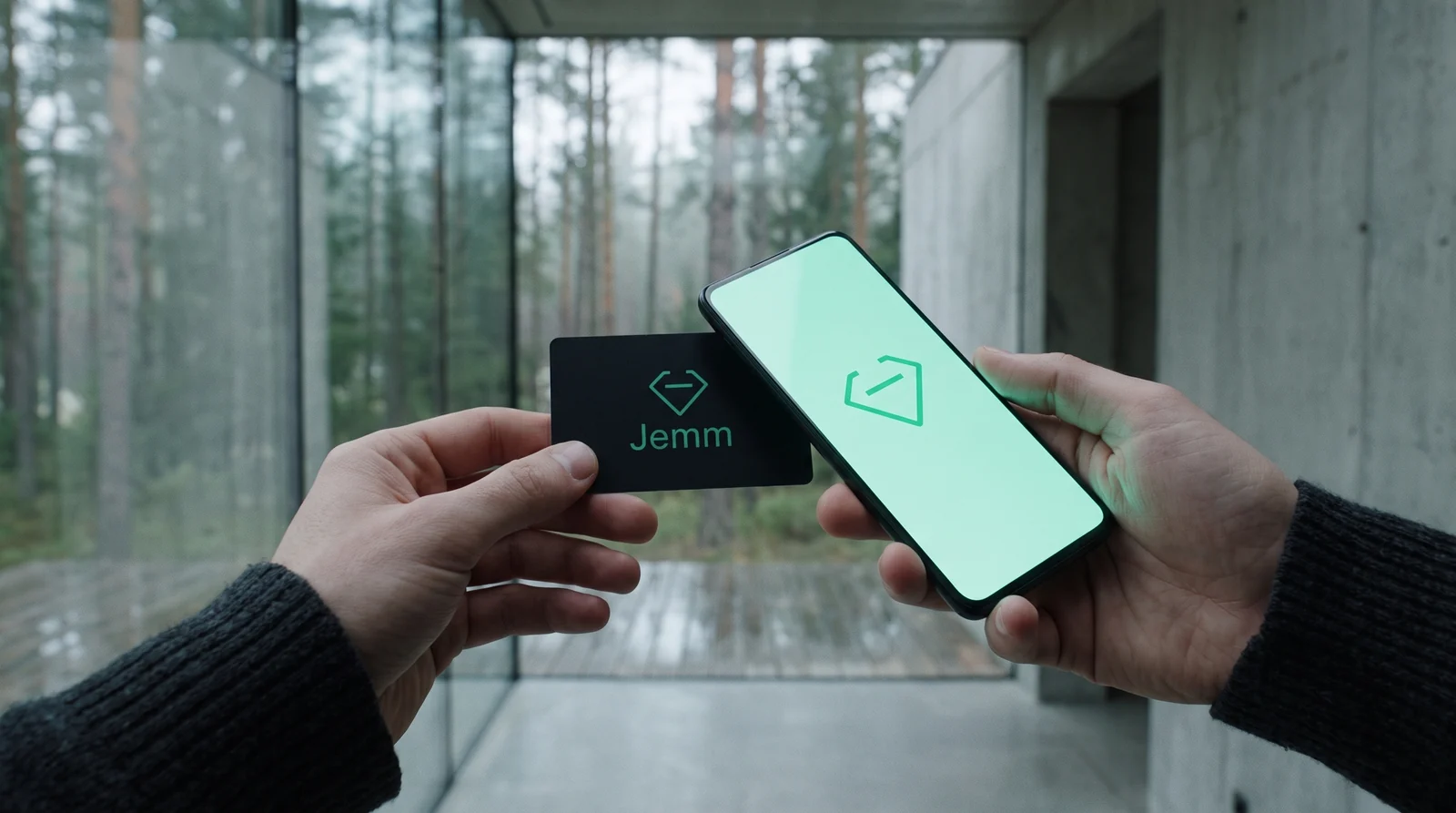
NFC business cards for Jemm, a voice-first AI company: 38 matte black PVC cards for 19 people across their US and EU teams. The first run was UV printed, and the brand’s neon mint green came back flat next to their paper cards. We matched the green by eye to PANTONE 3385 C and screen printed it as a neon spot colour on white-core PVC, with the black screened first and the NFC chip inside every card.
Het idee
When CMYK can’t reach the colour, stop building it from dots and print the colour itself.
Four rules
- 01Find out why their paper cards looked brighter. Stop building the green from dots. Treat it as its own ink.
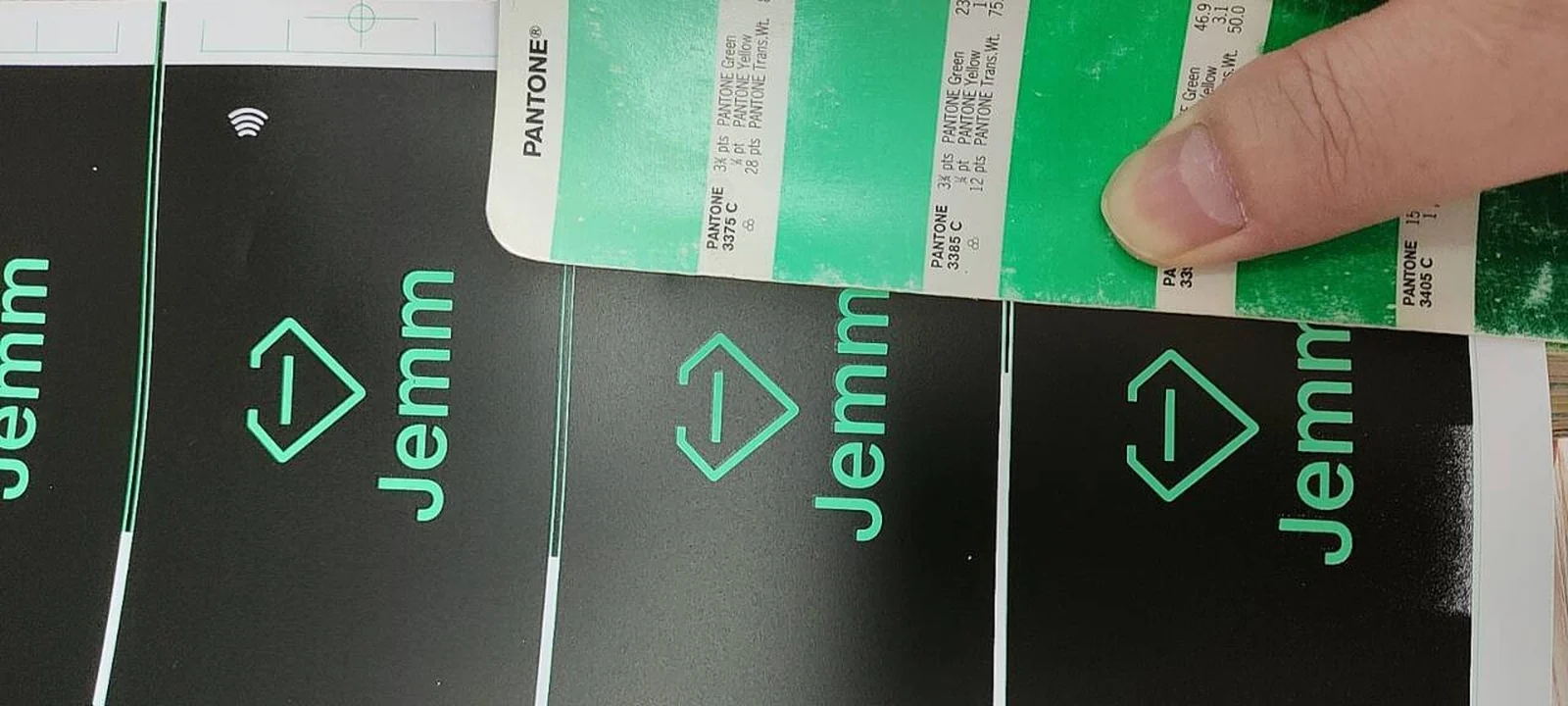
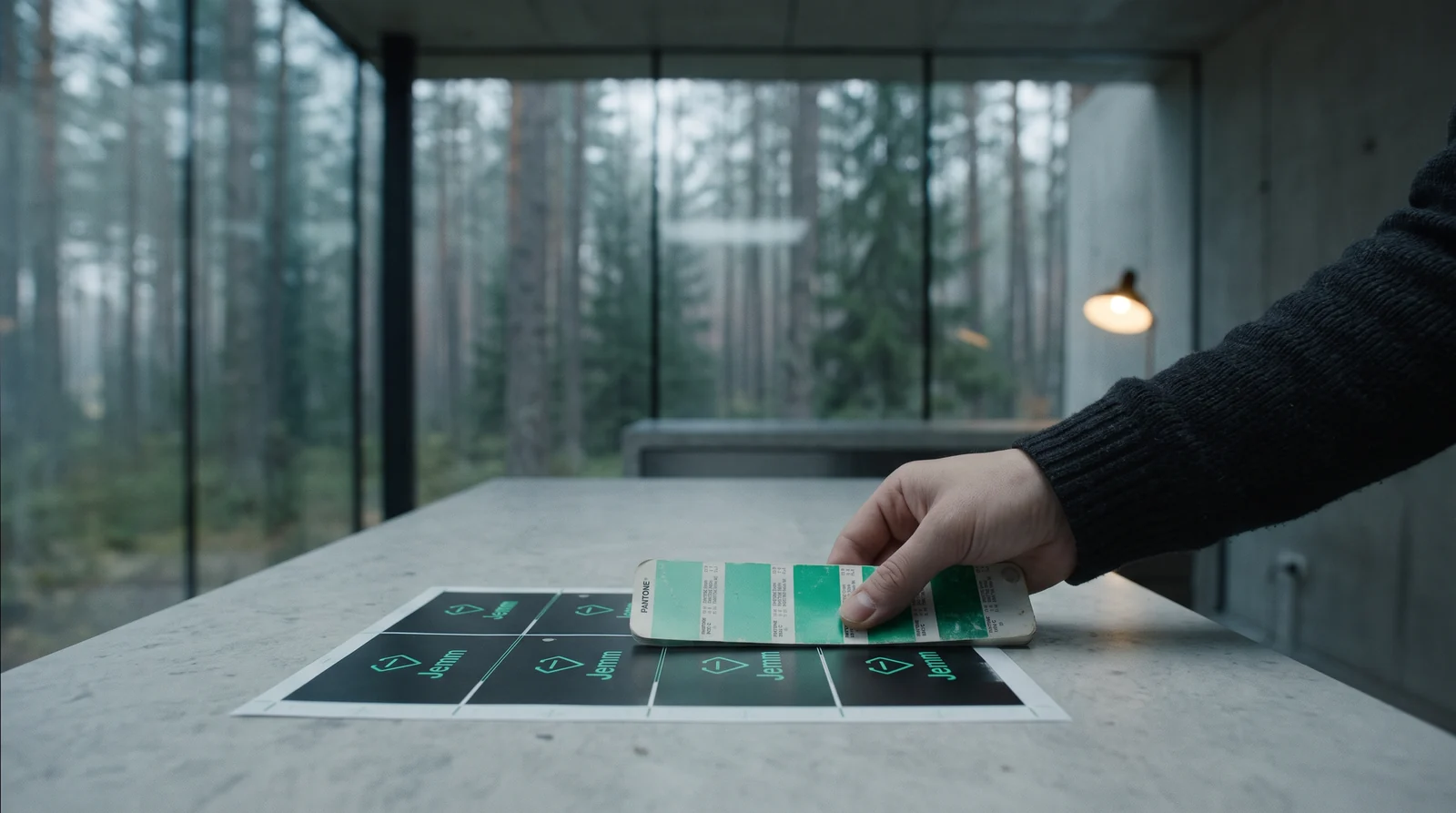
- 02Match a chip, not a screen. We put the Pantone solid guide next to the green Jemm wanted. PANTONE 3385 C matched; 3375 C beside it was paler. 3385 C became the target,…
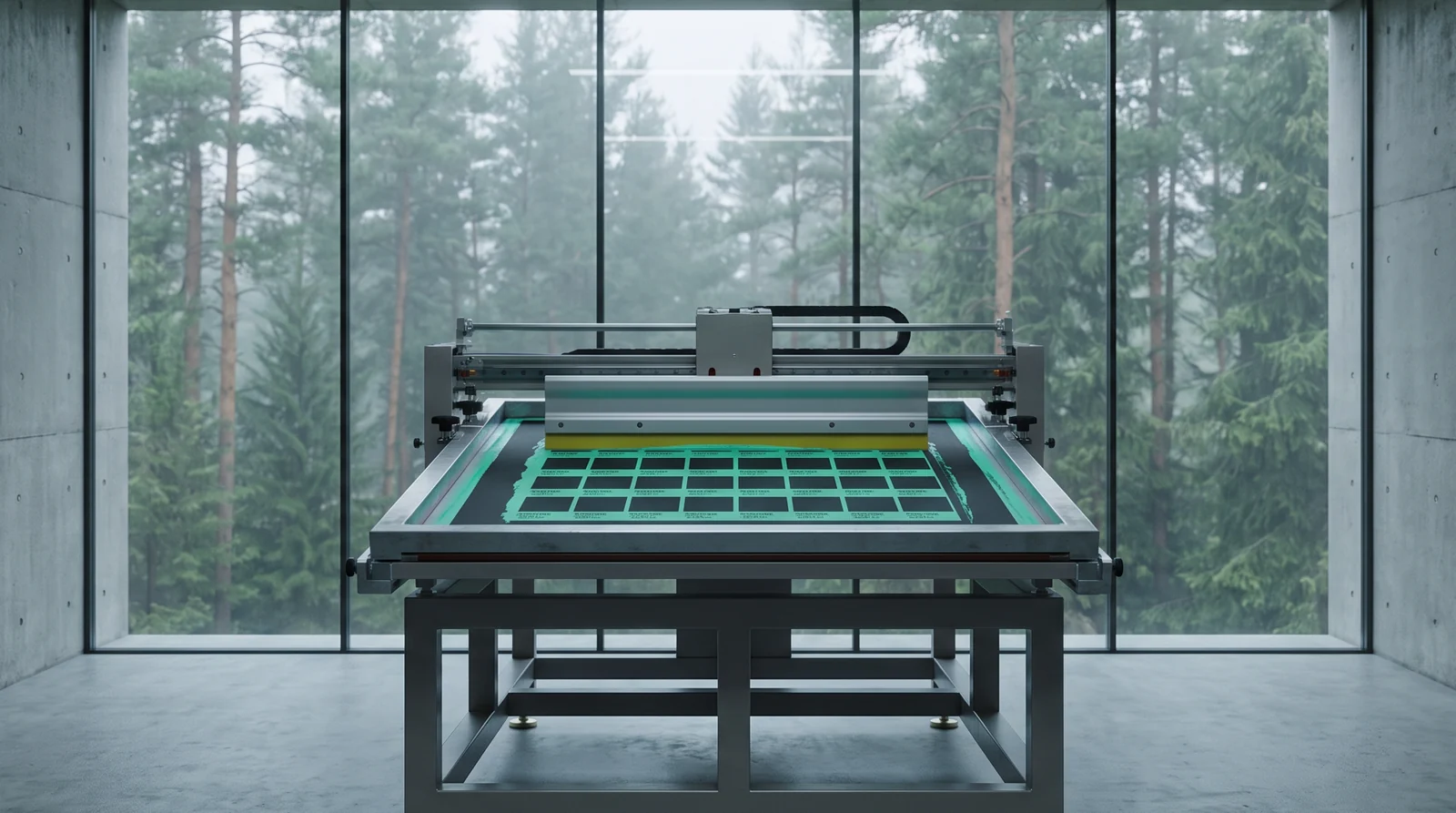
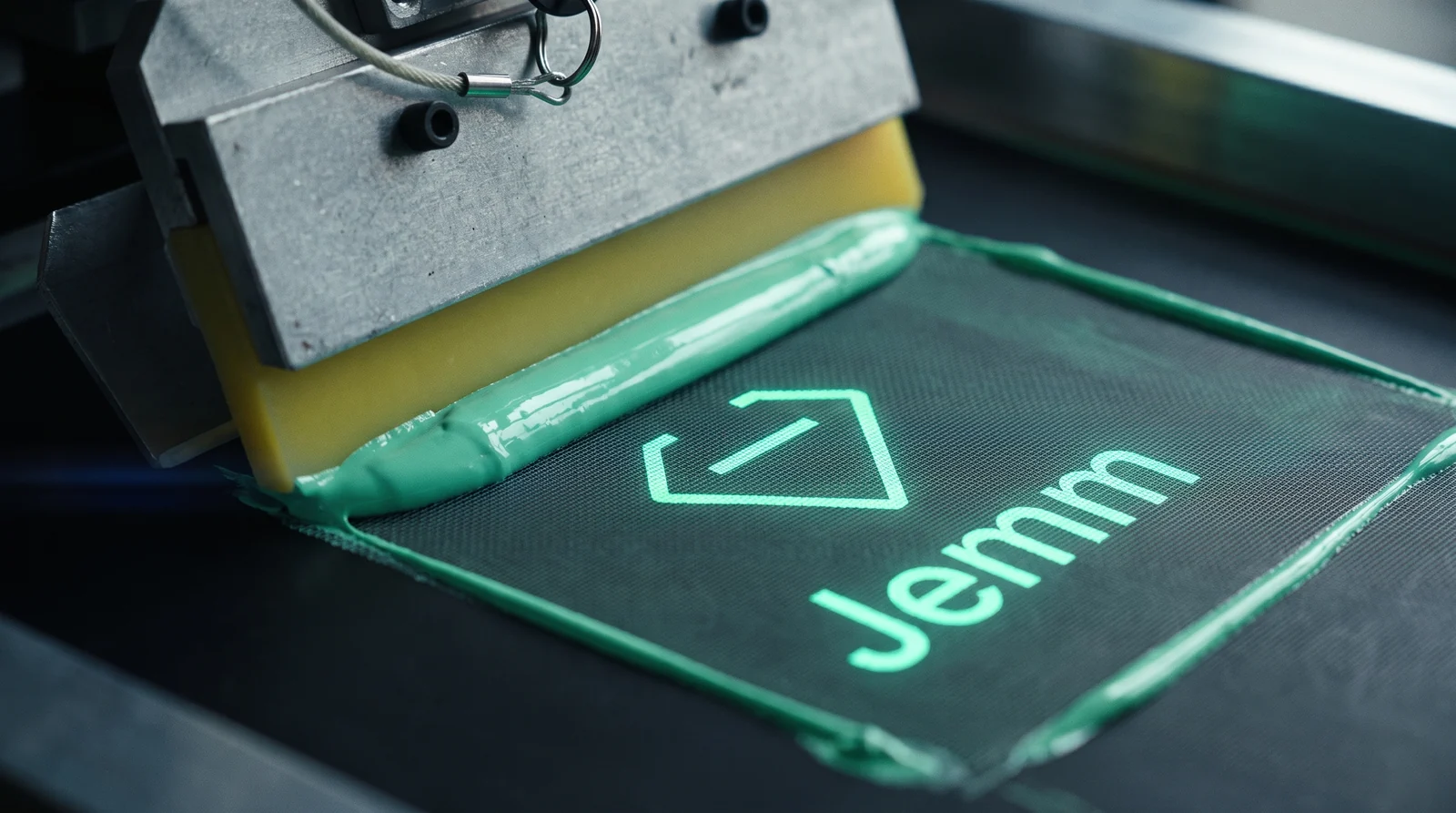
- 03Screen print the green as a spot colour. White-core PVC: the black is screen printed first, the logo areas are left open, and the neon green is screened straight onto the white cor…
- 04Check the sheet before cutting. The printed sheet was checked against the 3375 C and 3385 C chips before the cards were cut and the NFC chips were written.
A green that has to glow
Jemm builds voice-first AI that runs on your own device. Their brand is black with one colour: a bright mint green. They wanted NFC business cards in black plastic, 19 names across their US and EU teams, with the green as bright as on the paper cards they already had.
The first run, UV printed on black PVC, didn’t get there. So we matched the green to a Pantone chip and screen printed it as a neon spot colour instead.
Find out why their paper cards looked brighter
Wanted: The same bright mint green as the paper cards Jemm already had, on black plastic NFC cards.
Constraint: Our first run was UV printed on 30 pt black PVC. UV builds every colour from CMYK dots, and a neon mint sits outside what CMYK can reach. On black plastic there is also no white sheet under the ink to light it up, so the green came back flat next to their paper cards.
We chose: Stop building the green from dots. Treat it as its own ink.
Match a chip, not a screen
Wanted: One exact target for the green that everyone could hold in their hand.
Constraint: A screen can’t show a neon green, so a file colour alone was never going to be the target.
We chose: We put the Pantone solid guide next to the green Jemm wanted. PANTONE 3385 C matched; 3375 C beside it was paler. 3385 C became the target, mixed as a neon spot ink.
Screen print the green as a spot colour
Wanted: A green that sits on top of the black and stays bright.
Constraint: Ink printed straight onto black plastic always reads darker, however bright it is in the can.
We chose: White-core PVC: the black is screen printed first, the logo areas are left open, and the neon green is screened straight onto the white core underneath, one spot colour per pass.
Check the sheet before cutting
Wanted: No surprises once 38 cards were cut and encoded.
Constraint: Spot inks can shift a little between the tin, the press and lamination.
We chose: The printed sheet was checked against the 3375 C and 3385 C chips before the cards were cut and the NFC chips were written.
Zo maakten we de film
The cards, the press and the tap are made with AI from Jemm’s real artwork and real screen presses. The proof photo is real: the printed sheet next to the Pantone chips.
Need a colour CMYK can’t reach?
Neon greens, hot pinks, bright oranges and true brand blues often sit outside CMYK. On plastic, metal or dark stock, a Pantone spot colour by screen gets you there. Send us your brand colour, or a card you love, and we’ll match it to a chip.
Begin met deze materialen
Hetzelfde papier, dezelfde folie en afwerking, vastgelegd. Niets van Jemm's ontwerp gaat mee.
Vragen
- Why does neon green look dull on UV-printed plastic cards?
- UV and digital printers build colour from CMYK dots, and bright neon greens, pinks and oranges sit outside CMYK. On black plastic there is also no white under the ink. A Pantone spot ink, screen printed, gets much closer.
- What Pantone is a bright mint green?
- For Jemm we matched PANTONE 3385 C by eye; 3375 C is a paler neighbour. Always match against a physical chip, not a screen.
- Can you print a bright colour on black PVC cards?
- Yes. Use a white-core card, screen print the black, leave the logo open, and screen the spot colour straight onto the white core. Printed directly on black plastic, even bright ink reads darker.
- Is screen printing better than UV printing for business cards?
- For one or two bold spot colours, yes: screen printing lays down a thick, opaque layer of a mixed Pantone ink. UV is better for photos and gradients.
- Do NFC business cards work through printed PVC?
- Yes. The NFC chip sits inside the card, so ink and lamination on top don’t affect the tap. Each card can open its owner’s own page, and the chip can be reprogrammed later.
- Why did their paper cards look brighter than plastic?
- A white paper sheet reflects light back through the ink. Black PVC has nothing white underneath, so the same green looks flatter unless it’s printed on a white core.