The folder that carries the pitch.
Pocket folders, presentation folders and capability covers on heavyweight stock — foil or emboss on the cover, soft-touch lamination, card slits cut to your business card. Built to survive a bag, not just a boardroom table.
 Reviewed by a human before anything prints.
Fill the folder with custom letterhead on the same paper.
What’s possible
Structure first, finish second.
A folder is a small piece of engineering. The pocket depth, the score allowance and the stock weight decide whether it holds twenty sheets or splits at the glue on the second use. We spec the structure around what's going inside, then put the finish on top.
Pocket folders
Single or double pocket, 9×12 standard.
Card slits
Cut to hold your business card in the pocket.
Foil & emboss covers
Logo stamped or pressed into the board.
Soft-touch & matte lam
Velvet hand, fingerprint-resistant.
Why Peppermint
A human guides every custom order.
Checked by a person
We confirm files, materials and finishes before you pay.
Materials others won't
Papers, foils and techniques most printers can't offer.
A free proof, always
Nothing prints until you approve exactly what you get.
Custom folders FAQ
What stock should a presentation folder be?
14pt to 18pt C2S is the working range. Below 14pt the pocket sags once you load it; above 18pt the score wants to crack unless we run it laminated. If the folder is a leave-behind that has to look good on a desk for a year, laminate it — unlaminated board picks up every fingerprint at the fold.
Can you add a slit for a business card?
Yes, and tell us the card's exact thickness. A slit cut for a 16pt card won't hold a 32pt duplex — the card either falls out or tears the pocket going in. We cut the slit to your actual card.
Will foil crack on the fold?
It will if we put it across the score, which is why we don't. Foil goes on the flat of the cover, clear of the fold line. If your logo has to sit near the spine, we'll shift it or switch to a deep emboss, which tolerates the crease.
What's the minimum order for folders?
Folders carry a die and a gluing setup, so the per-unit price drops sharply after the first few hundred. Small runs are absolutely possible — just know that 250 and 500 often cost within a few dollars of each other, and we'll show you both tiers in the quote.
Do folders arrive glued, or flat for us to assemble?
Both are normal in folder production. Pre-glued means they're ready to load the moment the box opens; flat-shipped saves volume and lets you assemble as needed. Tell us how the folders will be stored and stuffed and we'll recommend one — a folder that sits in a closet for a year usually ships flat.
What do you need from us to set up the artwork?
Folders are laid out on a die line — the flat, unfolded shape with fold and cut positions marked — not a rectangle. Design on that template so pocket art lines up when the piece is folded. Keep anything critical away from fold lines and glue tabs, and give us bleed past every outside edge.
Soft-touch or matte lamination — which should we pick?
Both are fingerprint-resistant, which is the practical reason to laminate a folder. Matte reads clean and neutral. Soft-touch adds the velvet hand you notice as soon as you take it from someone. If the folder is being handed across a table, soft-touch does more for you; if it's mailed, either holds up.
Can a folder hold a thick booklet or a full proposal?
Pocket capacity is a structural decision, not an afterthought. Deeper pockets and a wider score allowance let the folder close flat with real weight inside. If you're carrying a bound booklet plus loose sheets, tell us the stack thickness in millimeters or inches and we'll build the fold around it.
Are you limited to the 9×12 size?
9×12 is standard because it holds letter-size sheets with room at the top for your fingers. Other sizes are a matter of cutting a different die — capability covers and slimmer folders for A4 or half-size inserts are all built the same way. Send the dimensions of what's going inside and we'll work outward from there.
We rebuild supplied artwork for the press.
Our design team redraws your artwork as clean, layered, press-ready files so every plate, die and colour can be produced properly.
Explore more
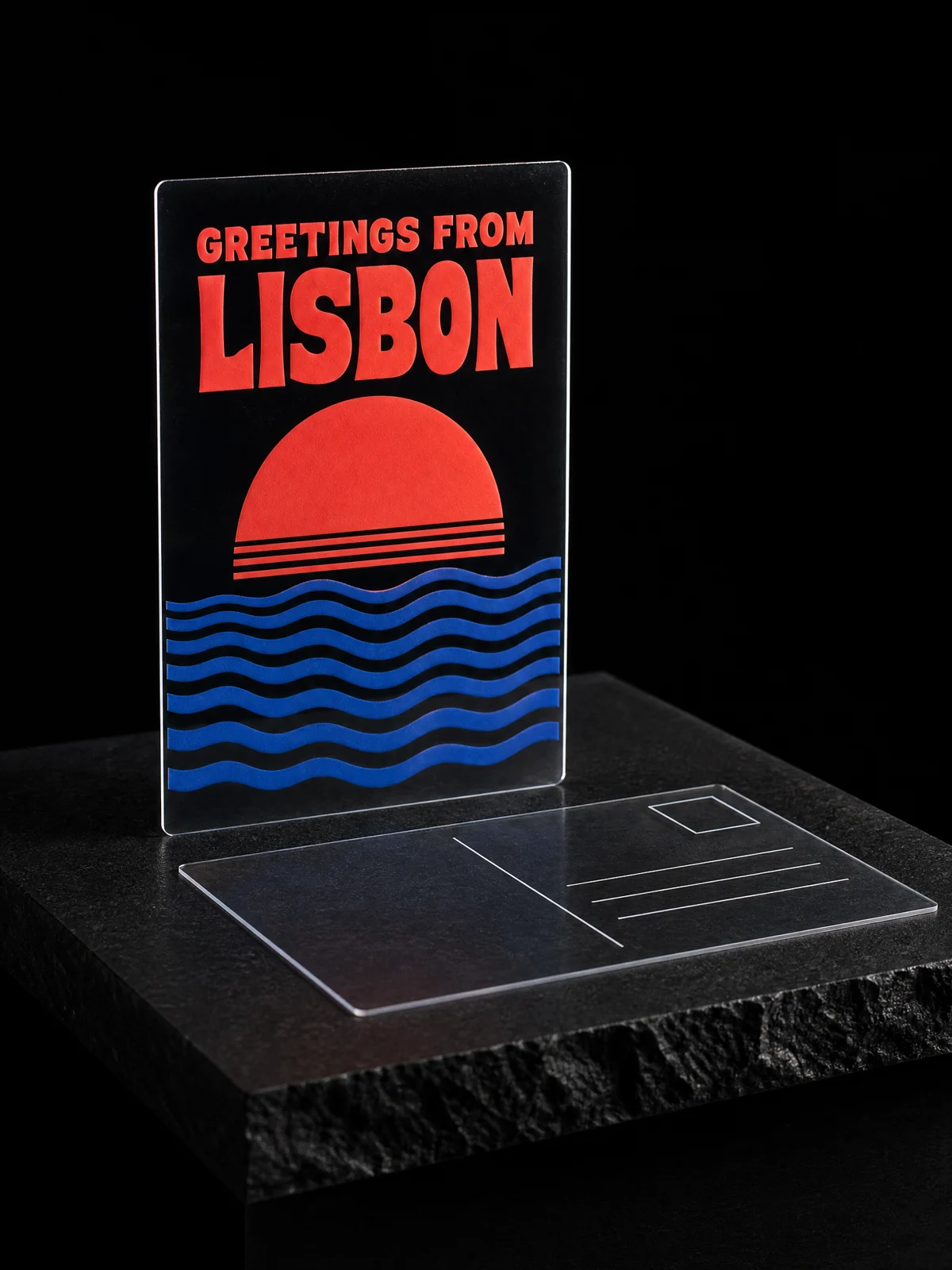
Postcards & Flyers
Flat pieces — postcards, flyers, rack cards, folded mailers, menus and small posters.
View postcards & flyers →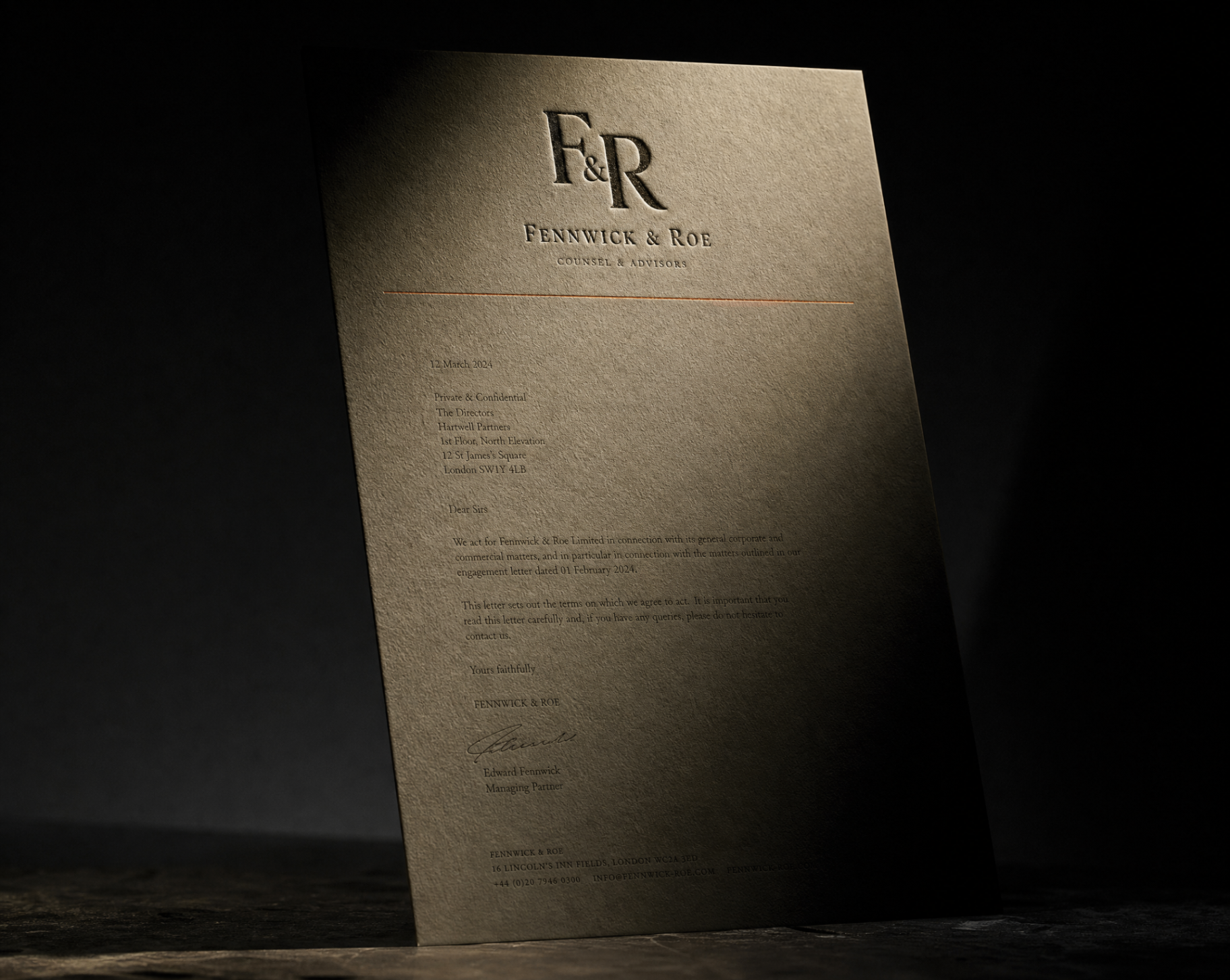
Letterhead
Branded letterhead, second sheets and comp slips on premium uncoated stock.
View letterhead →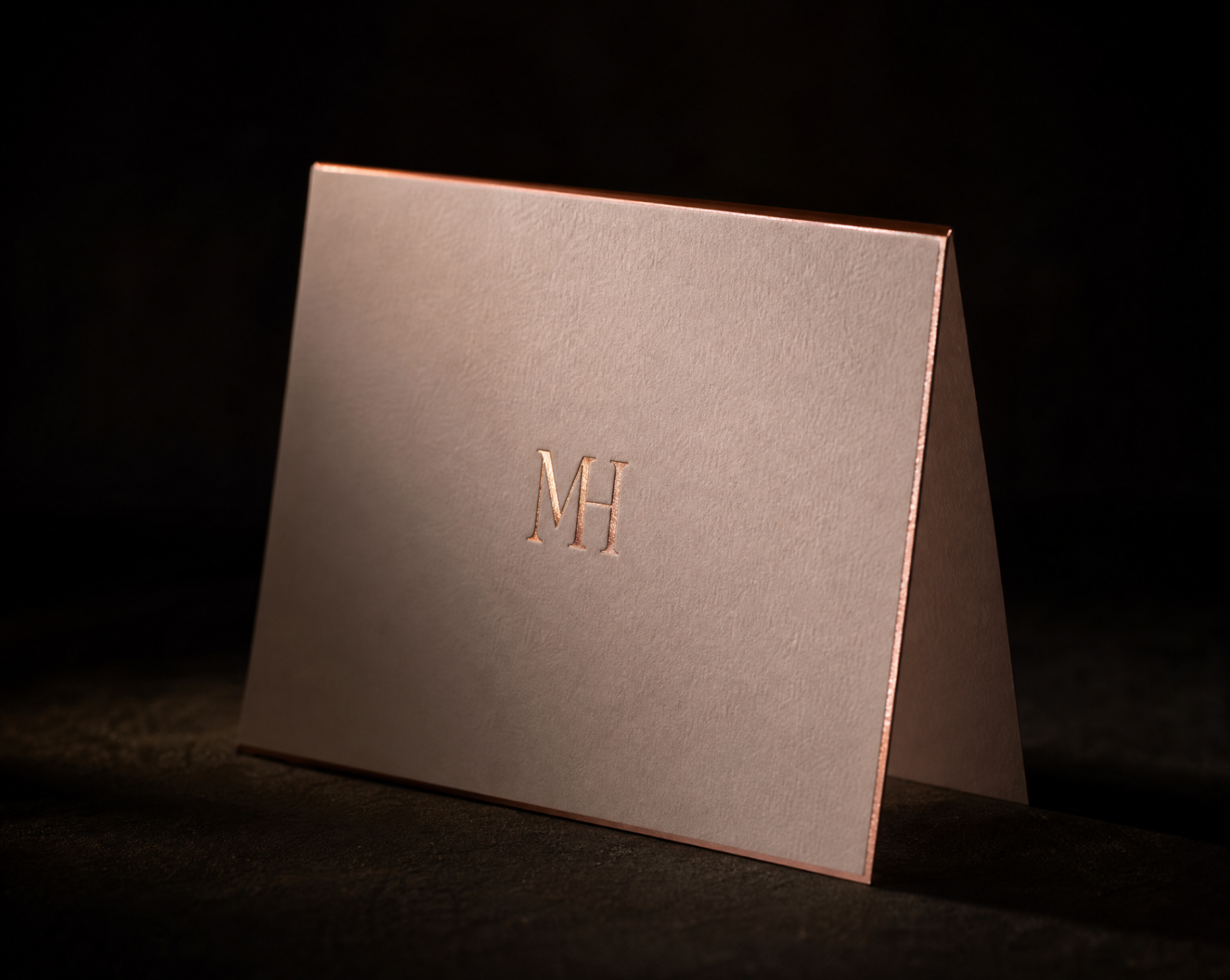
Notecards
Folded and flat cards with foil monograms, letterpress and painted edges.
View notecards →Spec the structure first, then decide what goes on the cover. A folder is a small piece of engineering — pocket depth, score allowance and stock weight are what decide whether it holds twenty sheets or splits at the glue the second time someone opens it. We work out the build around what's going inside, then put foil, emboss or soft-touch lamination on top. Pocket folders, presentation folders and capability covers, on heavyweight board, built to survive a bag rather than one polite afternoon on a boardroom table.
The glue line fails before the printing does
Nobody complains about the ink on a folder. They complain that the pocket bowed out, or the corner tore where the tab was glued, or the whole thing arrived at a pitch meeting looking tired.
That comes down to three numbers. Stock weight — 14pt to 18pt C2S is the working range, since thinner board sags once loaded and thicker board wants to crack at the score unless it's laminated. Pocket depth, which has to be deep enough that paper doesn't slide out when the folder is carried vertically. And score allowance, the small amount of extra room built into the fold so the folder still closes flat once it's full.
Pockets and card slits get cut to your contents
Single or double pocket, 9×12 as the standard. Double pockets let you split the stack — pricing on one side, case studies on the other — and they stiffen the whole panel, which matters on a folder that lives in a messenger bag.
Card slits hold your business card in the pocket, and this is where folders quietly go wrong. Send us the card's exact thickness. A slit cut for a 16pt card will not hold a 32pt duplex; the card either drops out in transit or tears the pocket going in. We cut the slit to the card you actually hand people, not to a generic dimension.
Foil on the flat, never across the score
Foil stamping lays metal into the board under heat and pressure, and it has no interest in bending afterward. Put it across a fold line and it cracks. So we keep foil on the flat of the cover, clear of the score. If your logo has to sit near the spine, we either shift it or switch to a deep emboss, which tolerates the crease because it's pressed board rather than applied metal.
Soft-touch and matte lamination give you the velvet hand and, more usefully, fingerprint resistance. On a leave-behind that has to look presentable on someone's desk a year from now, that film is doing real work at the fold.