Full build
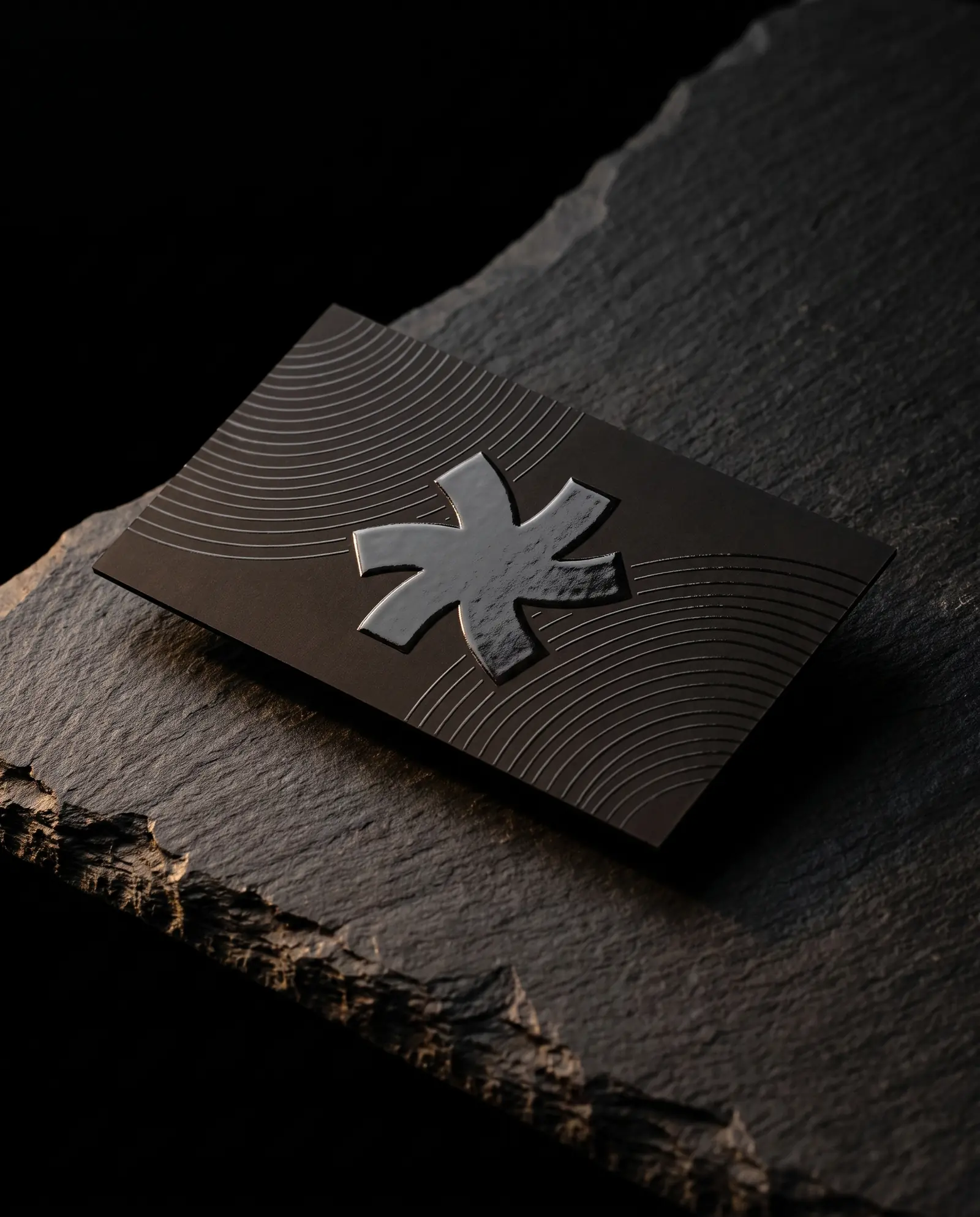
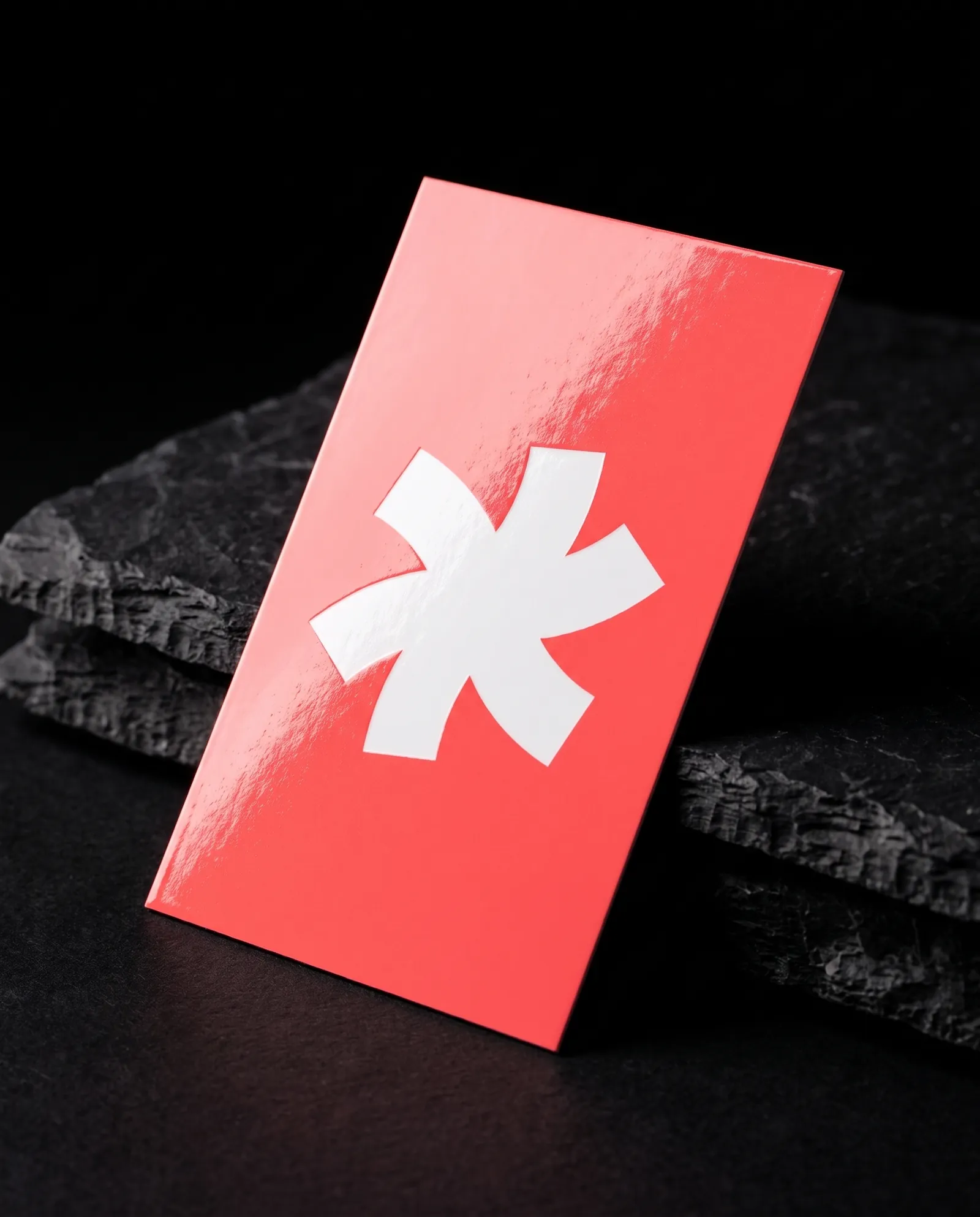
Soft touch + raised spot UV or raised foil
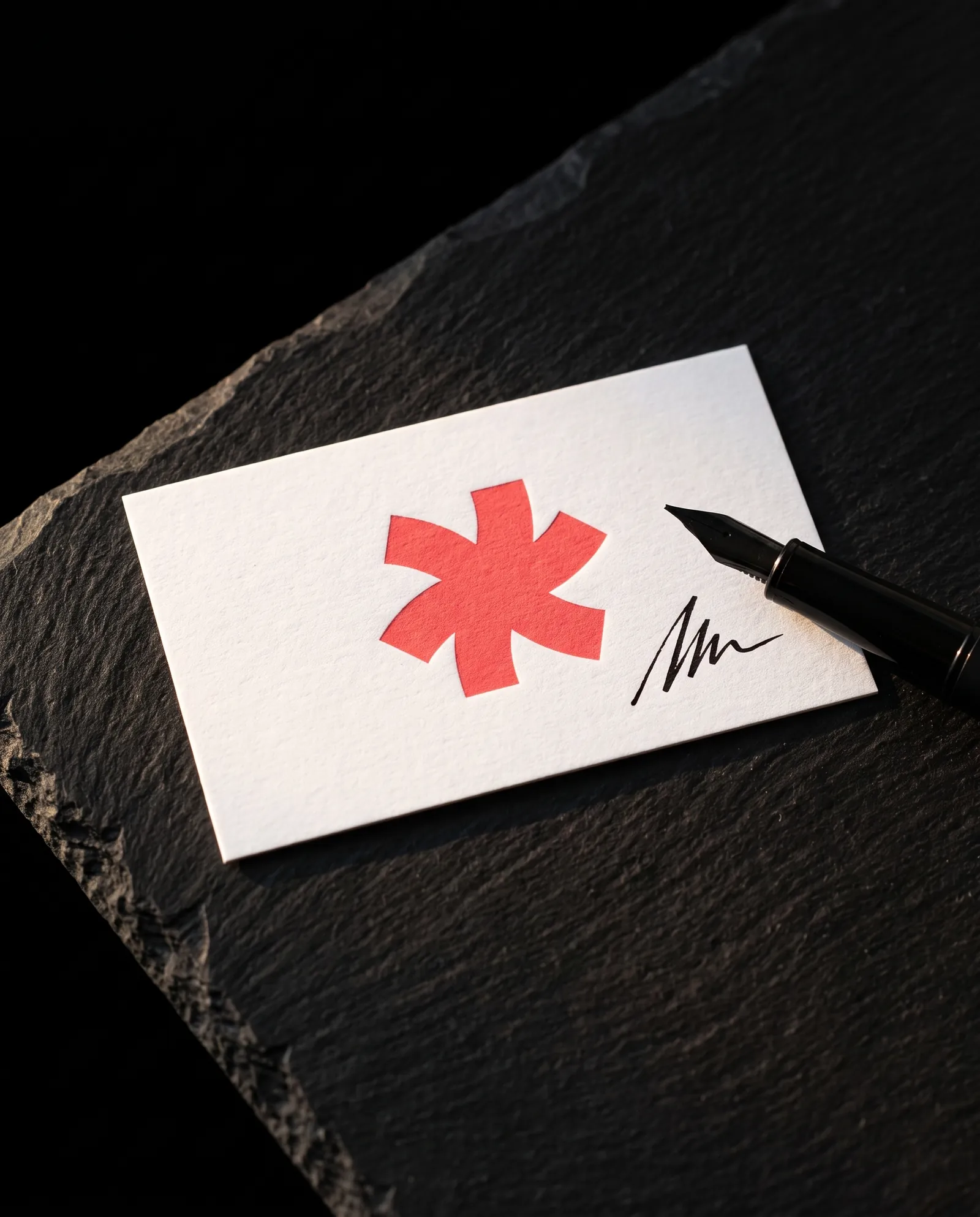
The velvet ground with one element raised in clear gloss, or in gold, silver or holographic foil. You see it at an angle and feel it under your thumb.
From 140 USD for 250
Standard · Business card finishes
Six surfaces, from slick gloss to a velvet drag under your thumb. Pick by feel, not by guesswork.
From 52 USD for 100 · 58 USD for 250
Ships in 3–4 business days after you approve your proof (estimate).
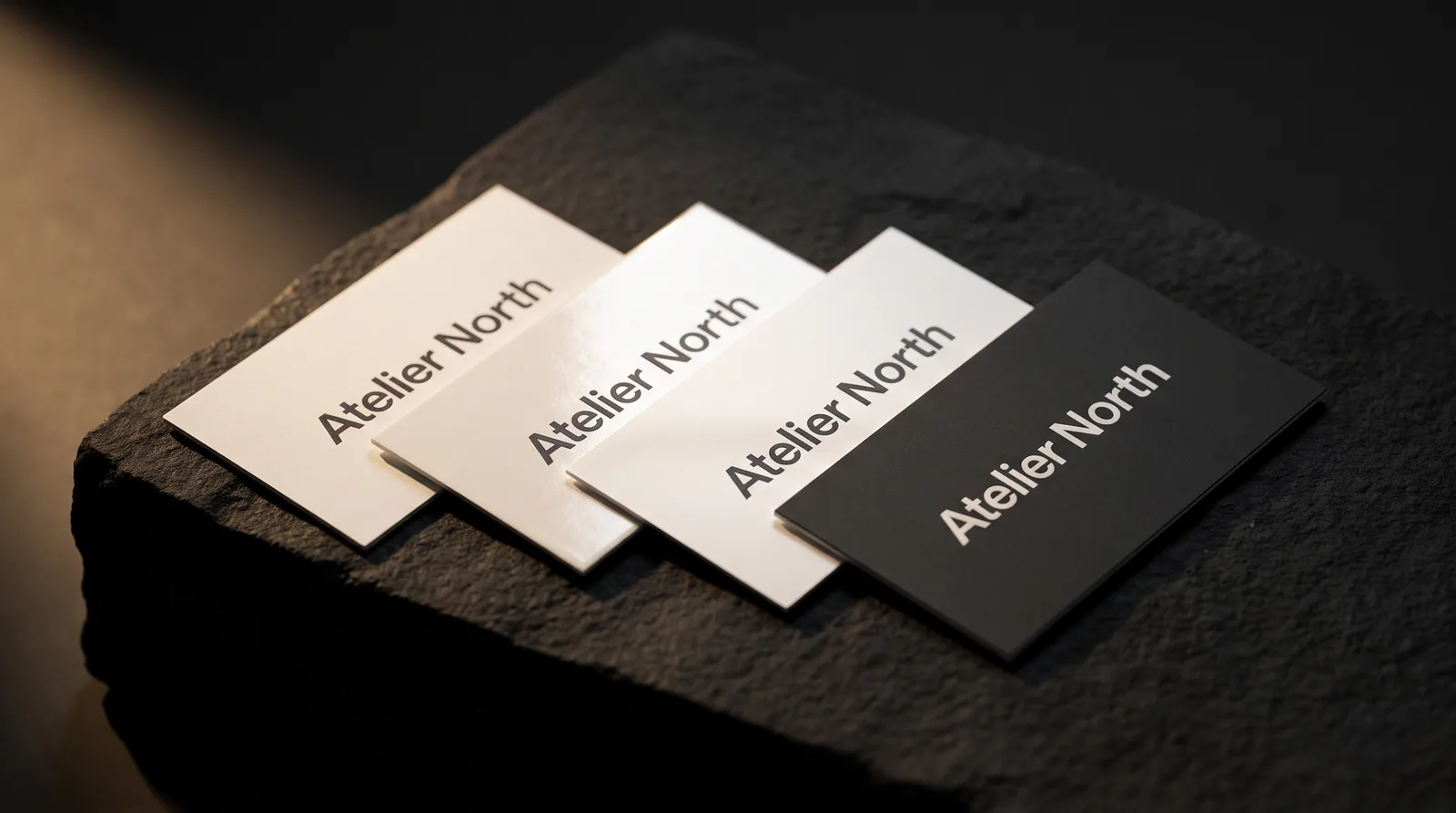
Classic business cards are our Standard line: full-colour printing on both sides of 14pt uncoated, 16pt matte, glossy or silk, or 20pt soft-touch stock. Prices start at 52 USD for 100. A person checks every file before print, cards ship in 3–4 business days after you approve the proof, and shipping is free within the continental US.
Prices checked 1 October 2026.
We'd price it with everything first, then scale back. Here's the line, top to bottom.
Full build
The velvet ground with one element raised in clear gloss, or in gold, silver or holographic foil. You see it at an angle and feel it under your thumb.
From 140 USD for 250
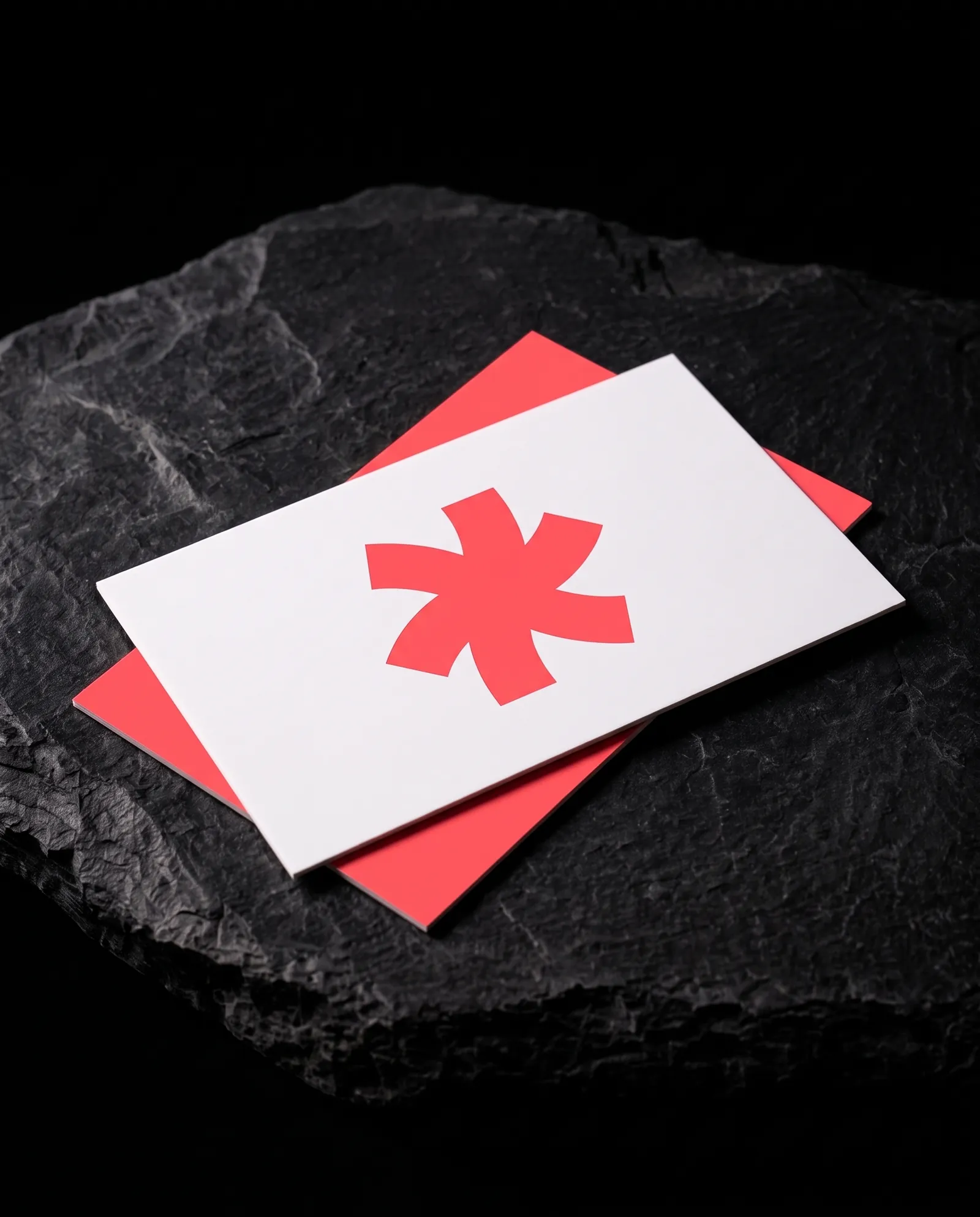
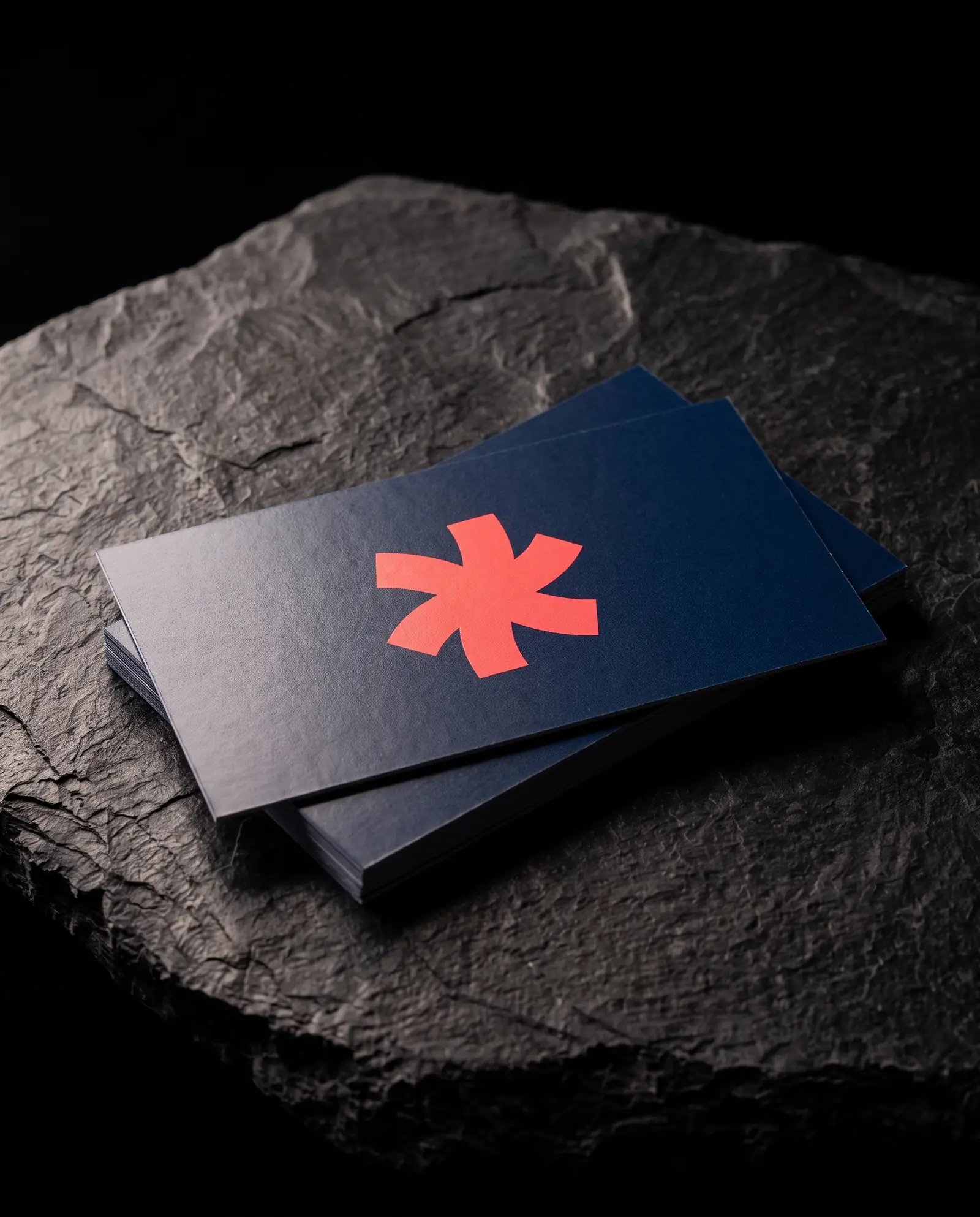
Our pick
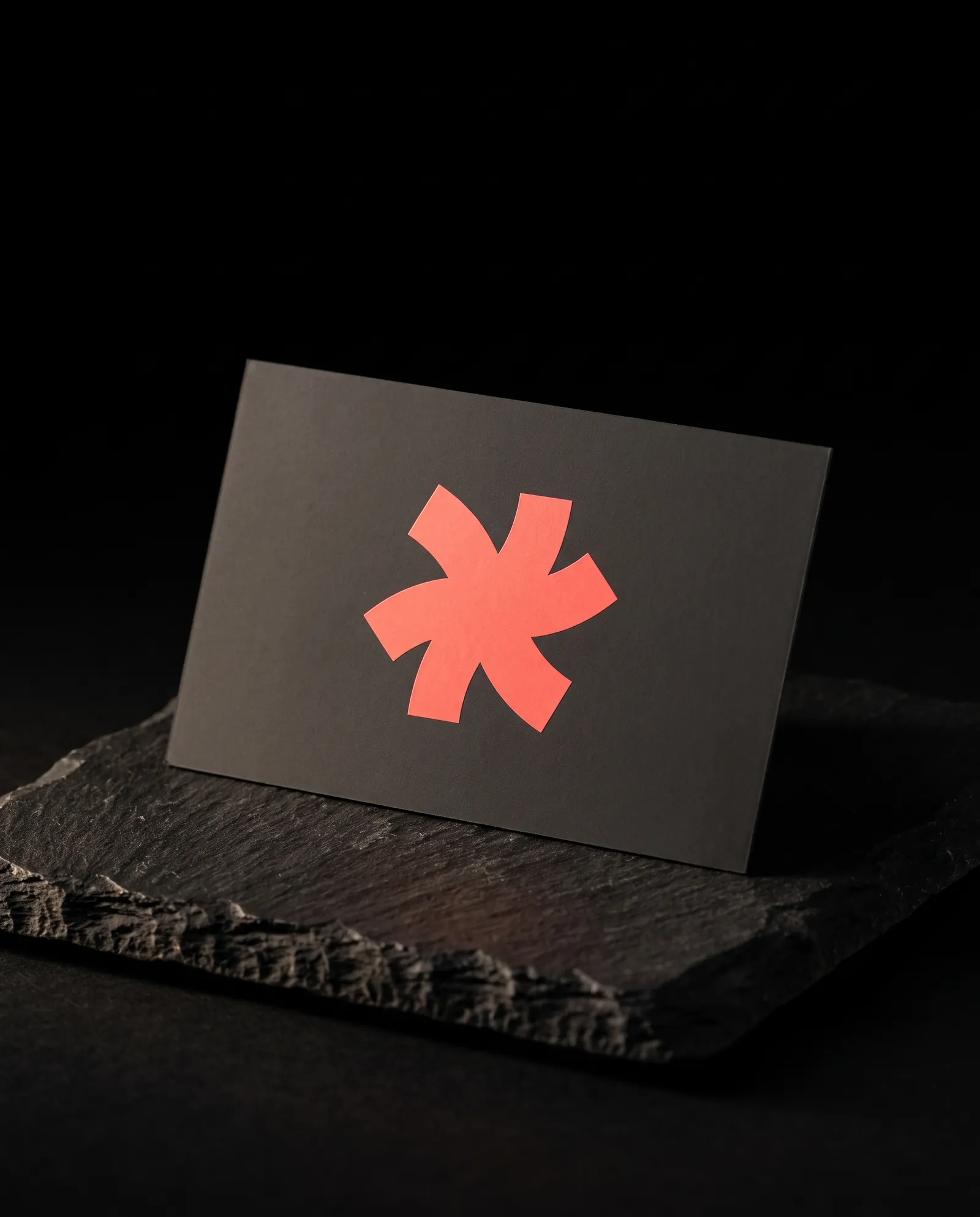
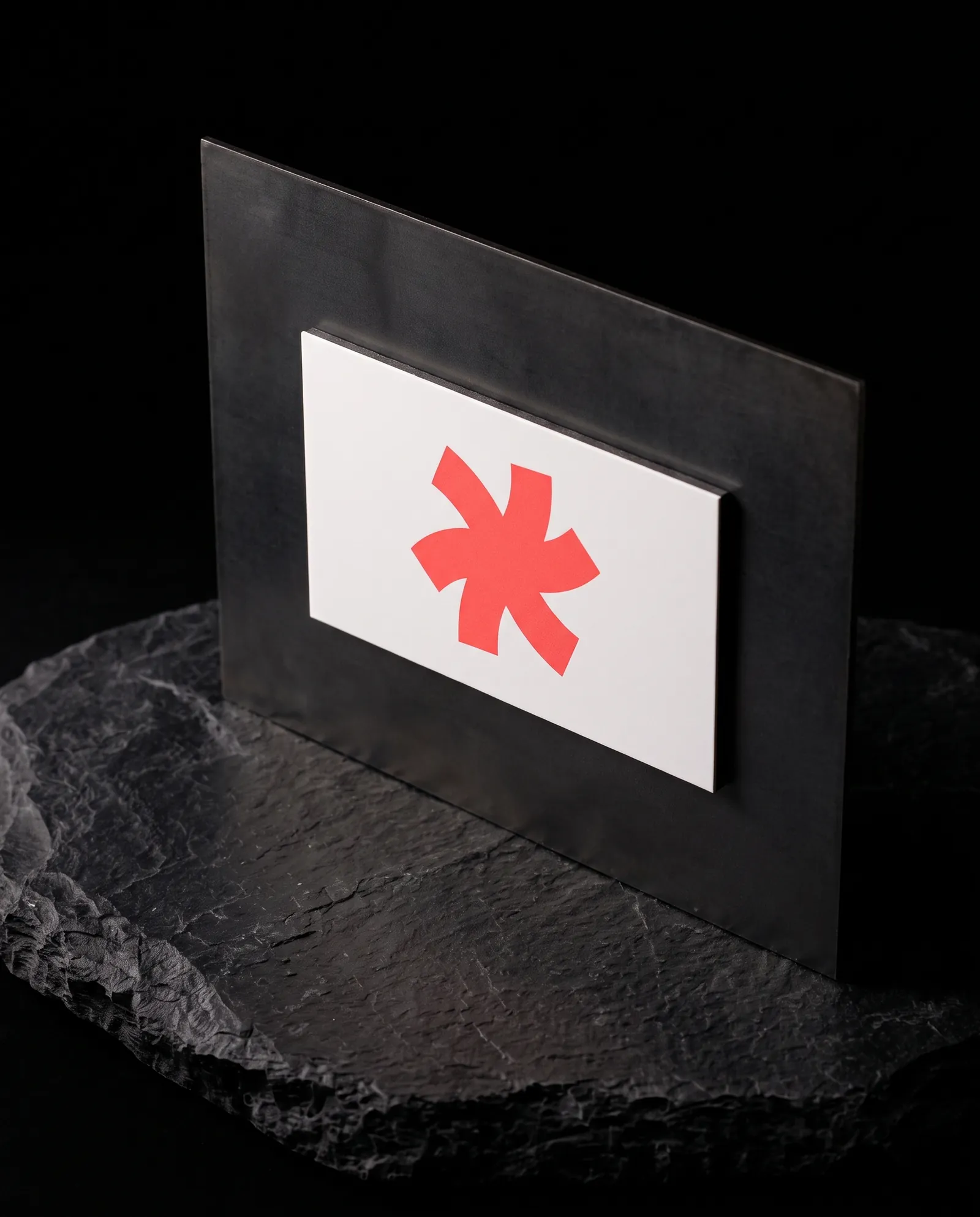
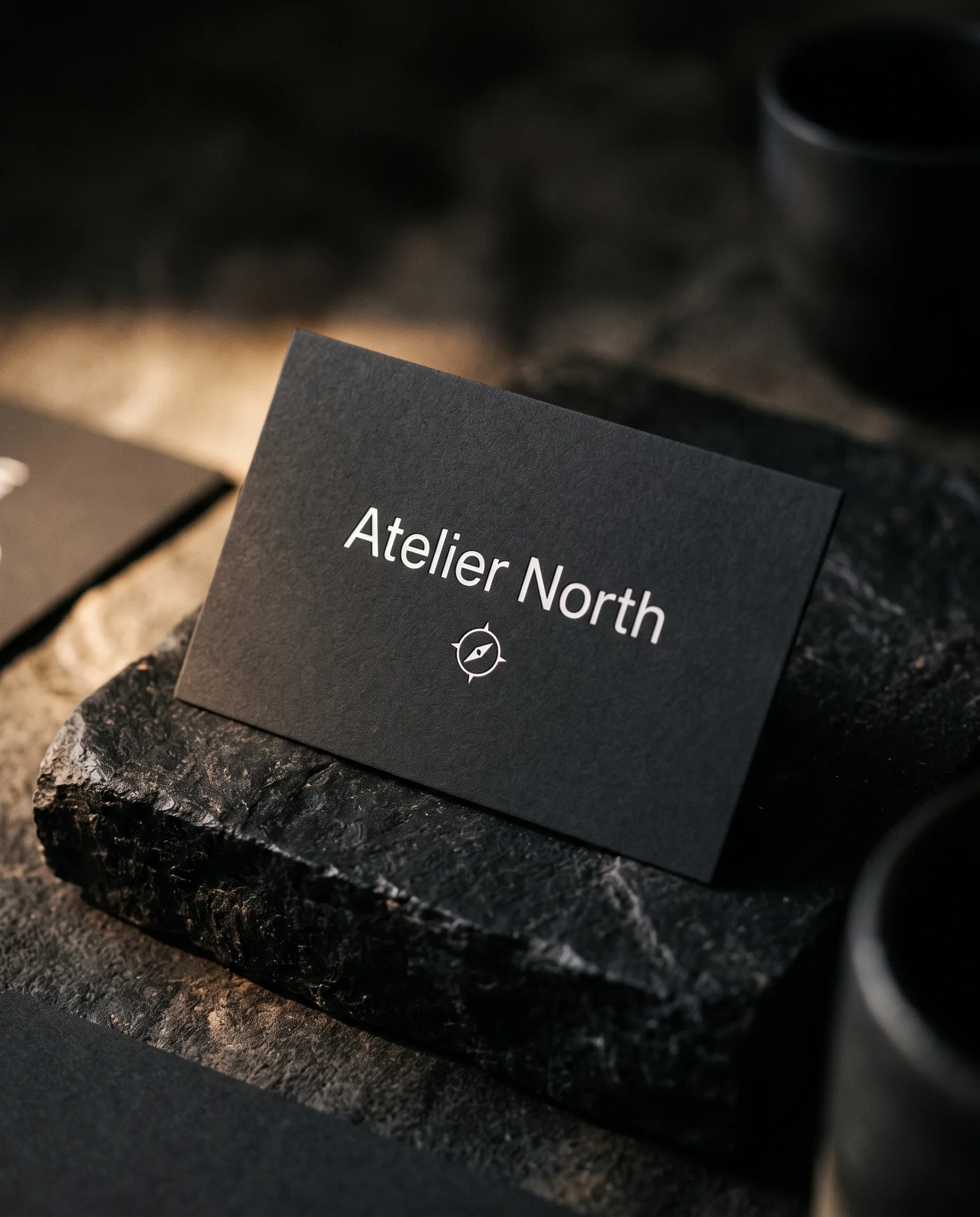
If you change one thing, change the surface. Thicker than the 16pt cards, no glare, and dark colours go deeper.
From 121 USD for 250
Essential
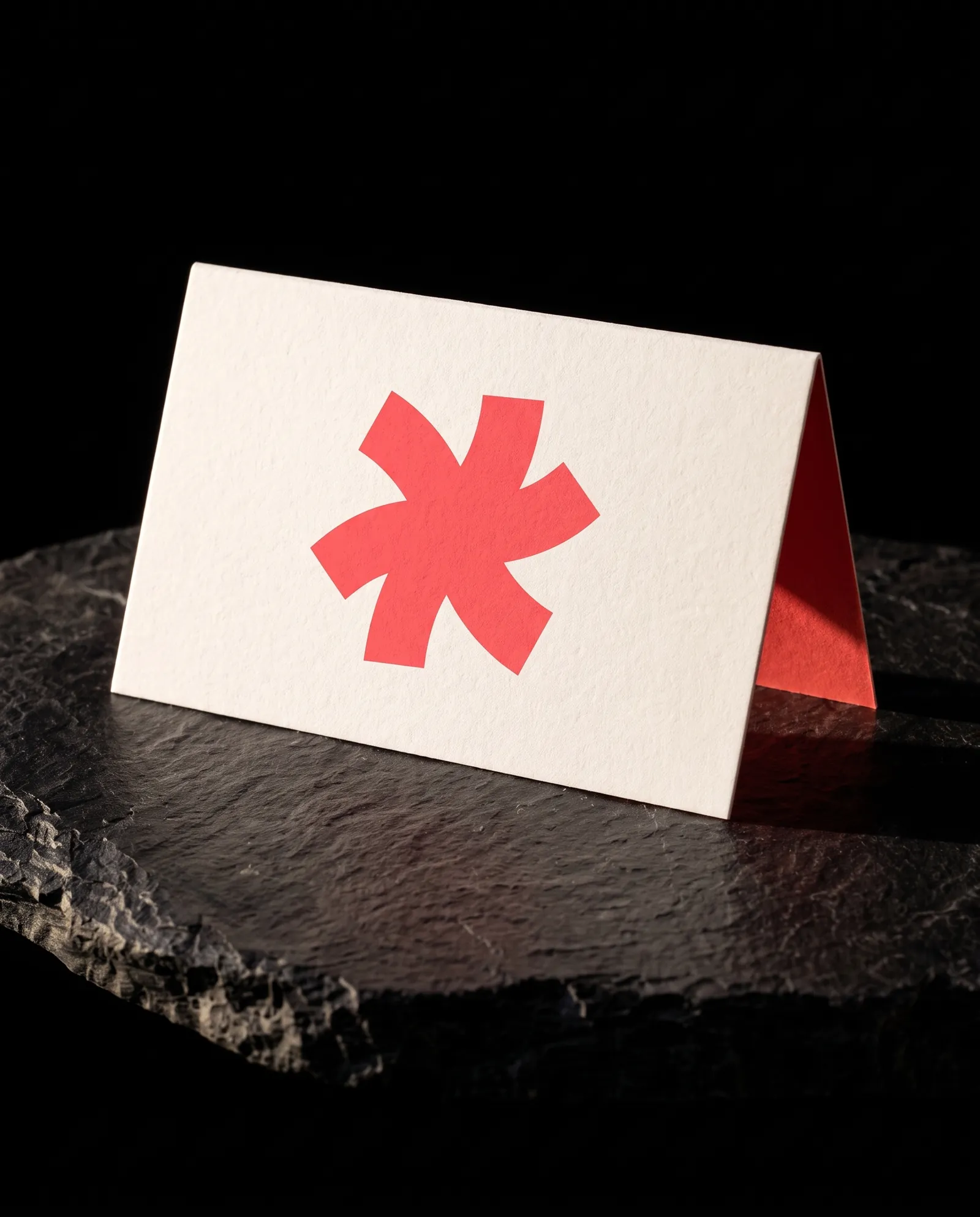
Clean, flat, easy to read under any light. The honest default for a text-led card.
From 58 USD for 250
Paper & finish
 Our pick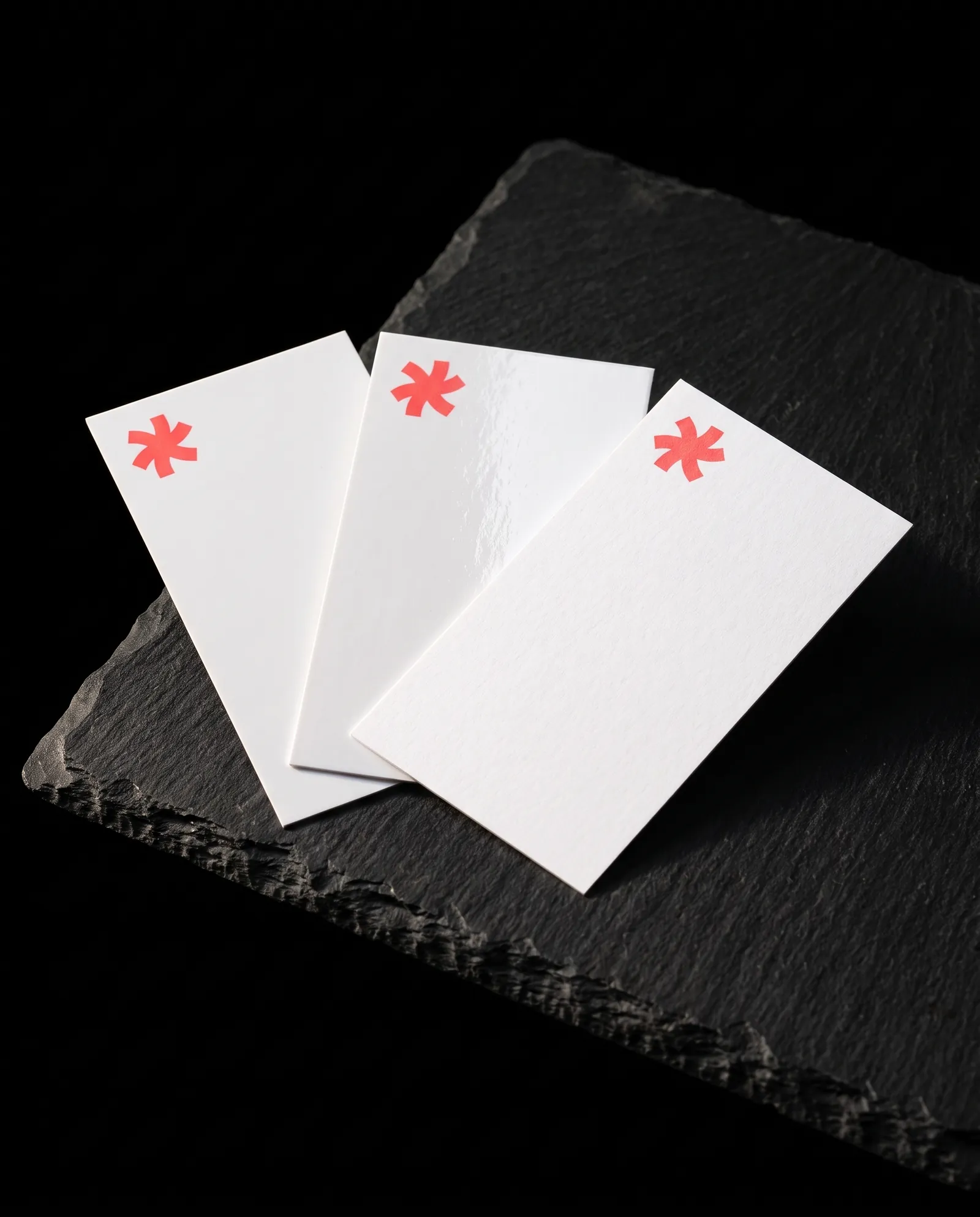
More options
Want foil pressed in, a thicker card or a painted edge? That's our Custom line: specialty business cards →
Pick up a 16pt card and it's about half the thickness of a credit card. Our soft-touch card is 20pt, about two-thirds. You notice that before you read a word. Here's how thick is a business card, in every unit.
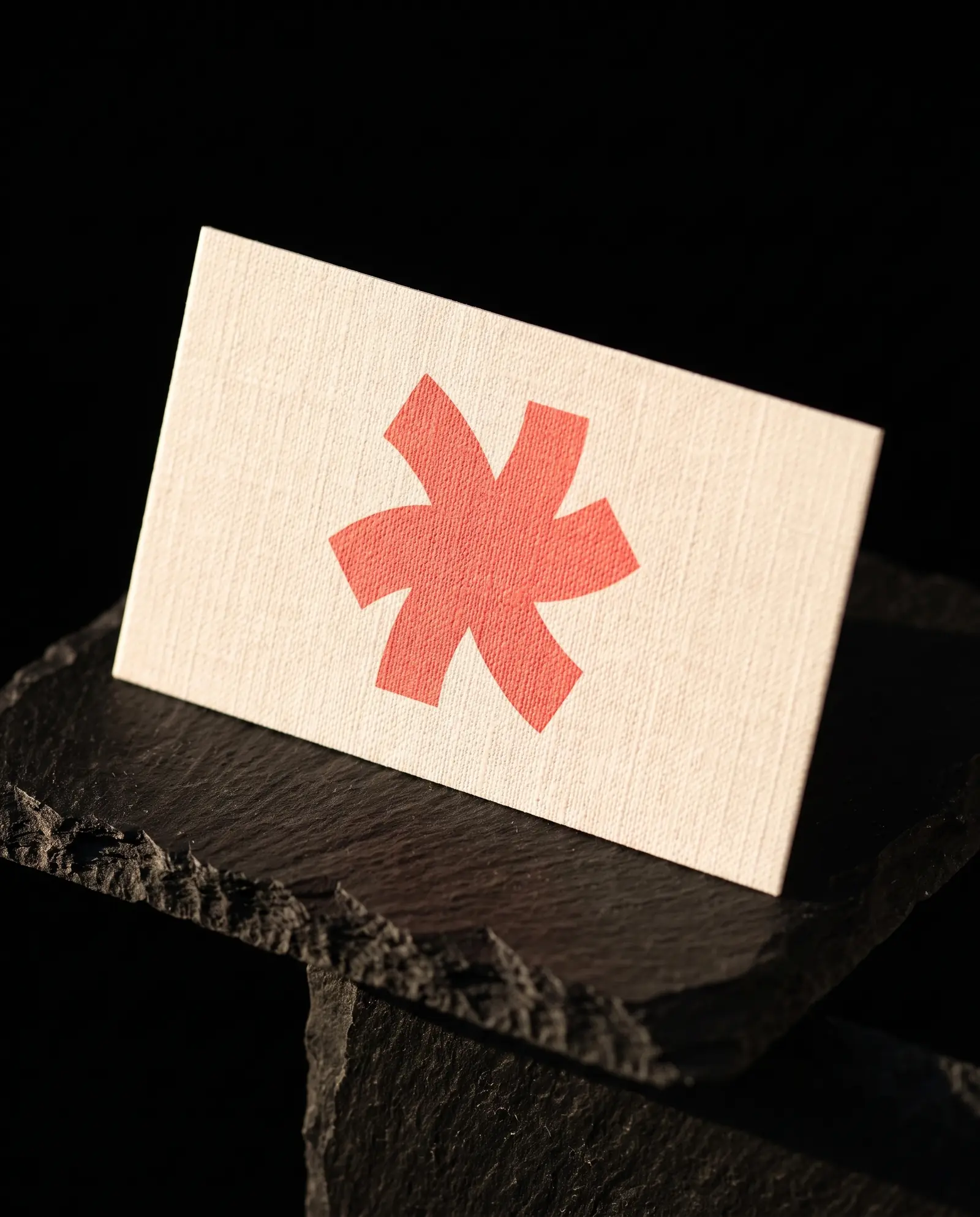
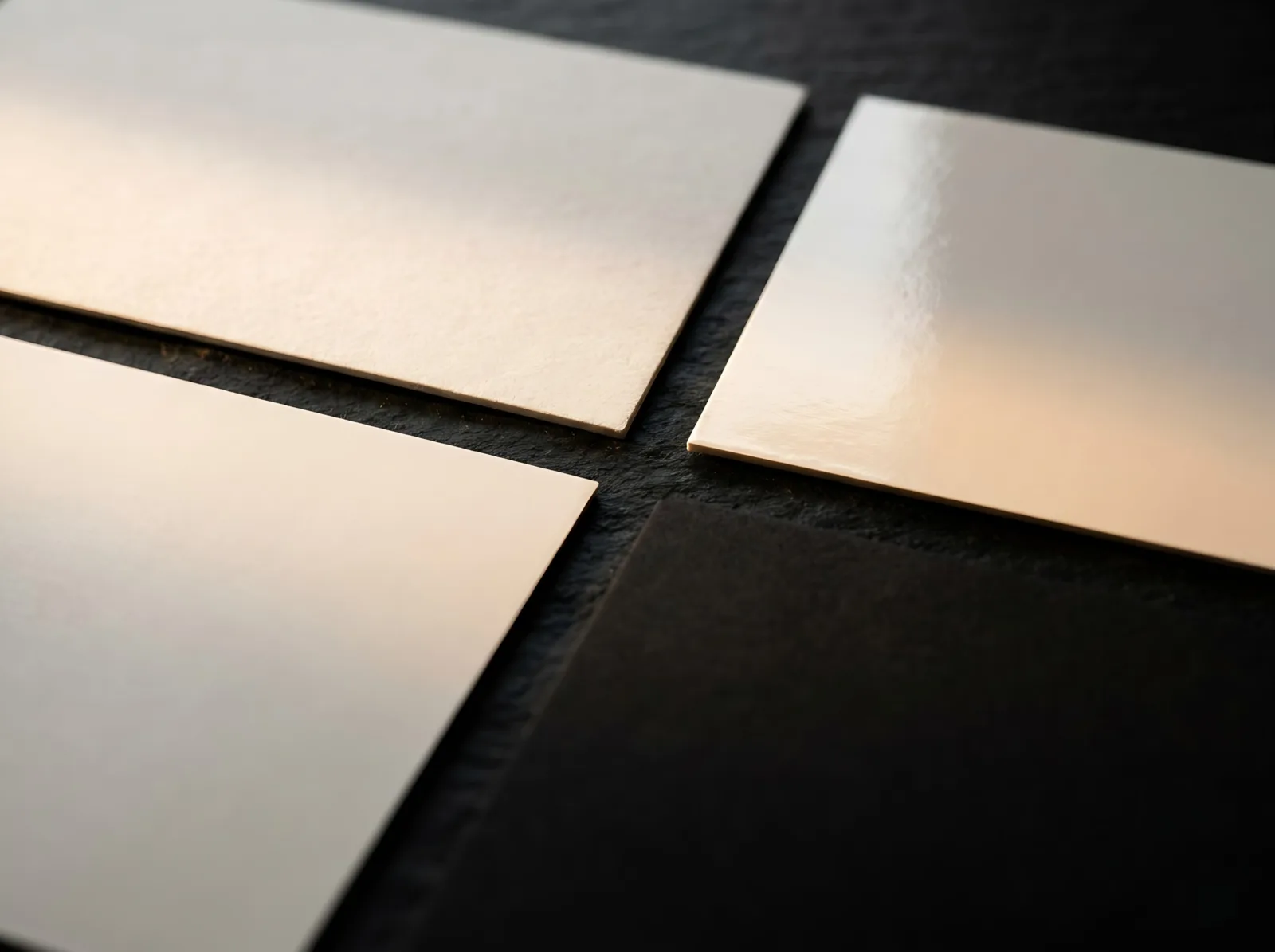
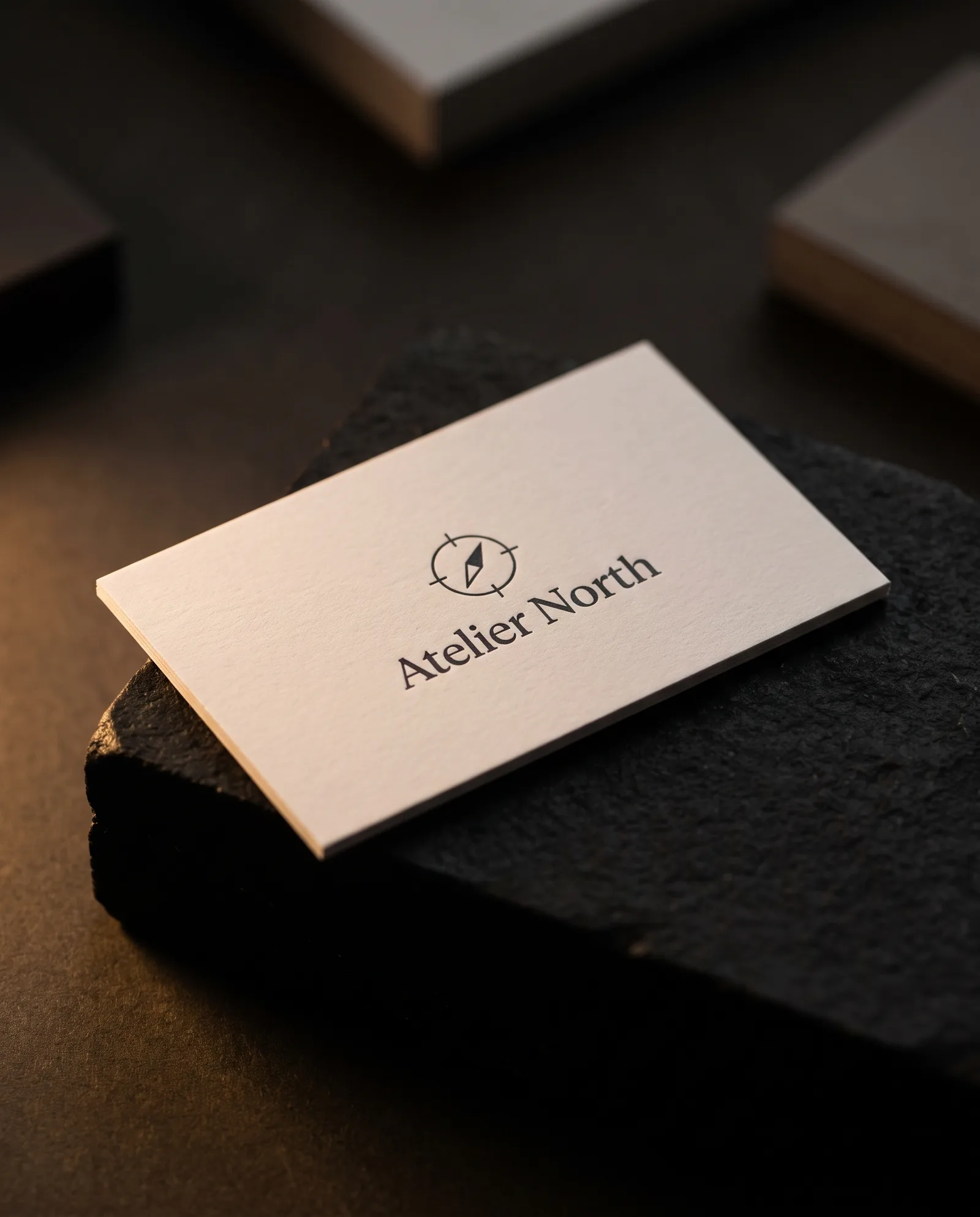
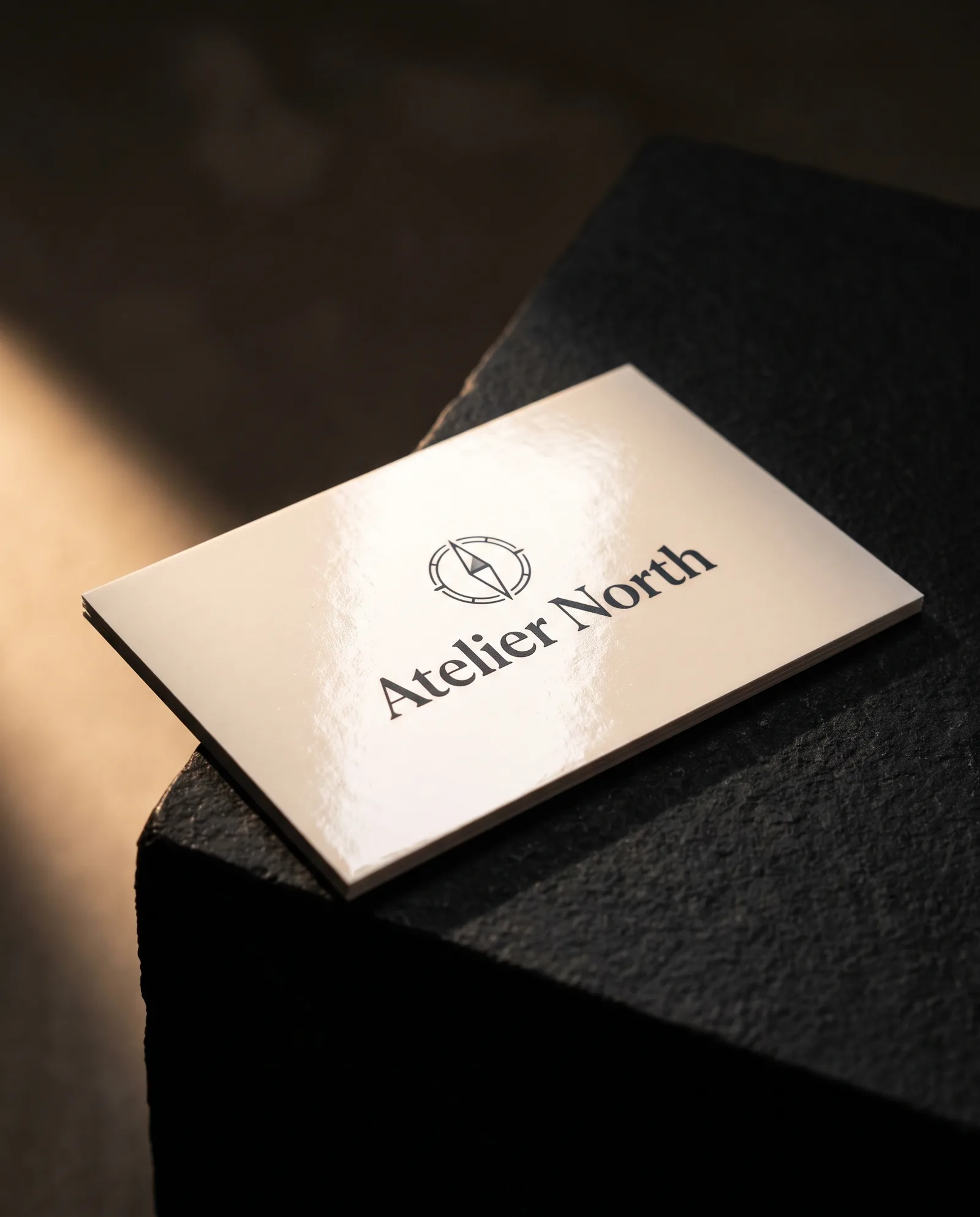
Matte is quiet: a smooth, dry surface with no glare, which is why premium matte cards suit text-led designs. Gloss is slick and cool, throws a highlight when it turns, and shows a thumbprint. Silk sits between them with a low satin glow. Soft touch has a faint drag, almost like the skin of a peach, and it swallows light so blacks look deeper. Uncoated and linen feel like paper, because they are: you feel the tooth, and linen's crosshatch.
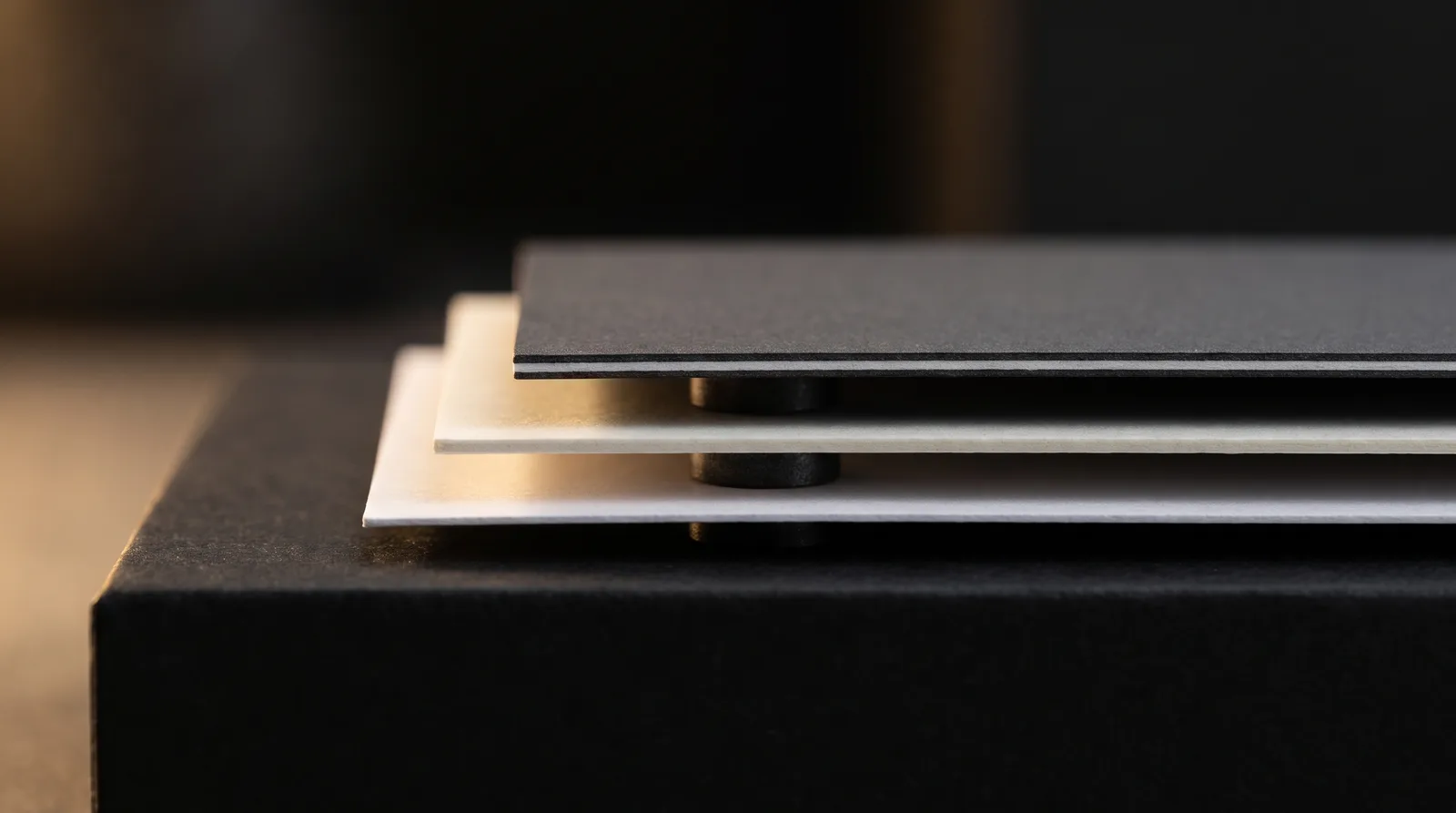
Every classic card is printed on white stock, so a design that's black edge to edge shows a hairline of white paper at the cut. On the proof we tell you when your design will do this. If a solid black edge matters, the true black (dyed-through) cards in our black business cards range are built for it, and a Custom build can add a foil-stamped edge. Dark cards get foiled edges, never painted ones.
Cards are cut in stacks, and the cut can drift slightly from card to card. A thin frame close to the edge makes that drift visible. We flag any border within about 1/8 in (3 mm) of the trim on your proof and suggest pulling it in or dropping it.
Classic cards print in four-colour process (CMYK), which gets close to a Pantone colour but can't always hit it exactly, and the finish changes it again (gloss reads brighter, matte softer). A person checks your colours on the proof. If the colour has to be exact, spot colour in a Custom build is the right tool.
We'd rather tell you now than reprint later.
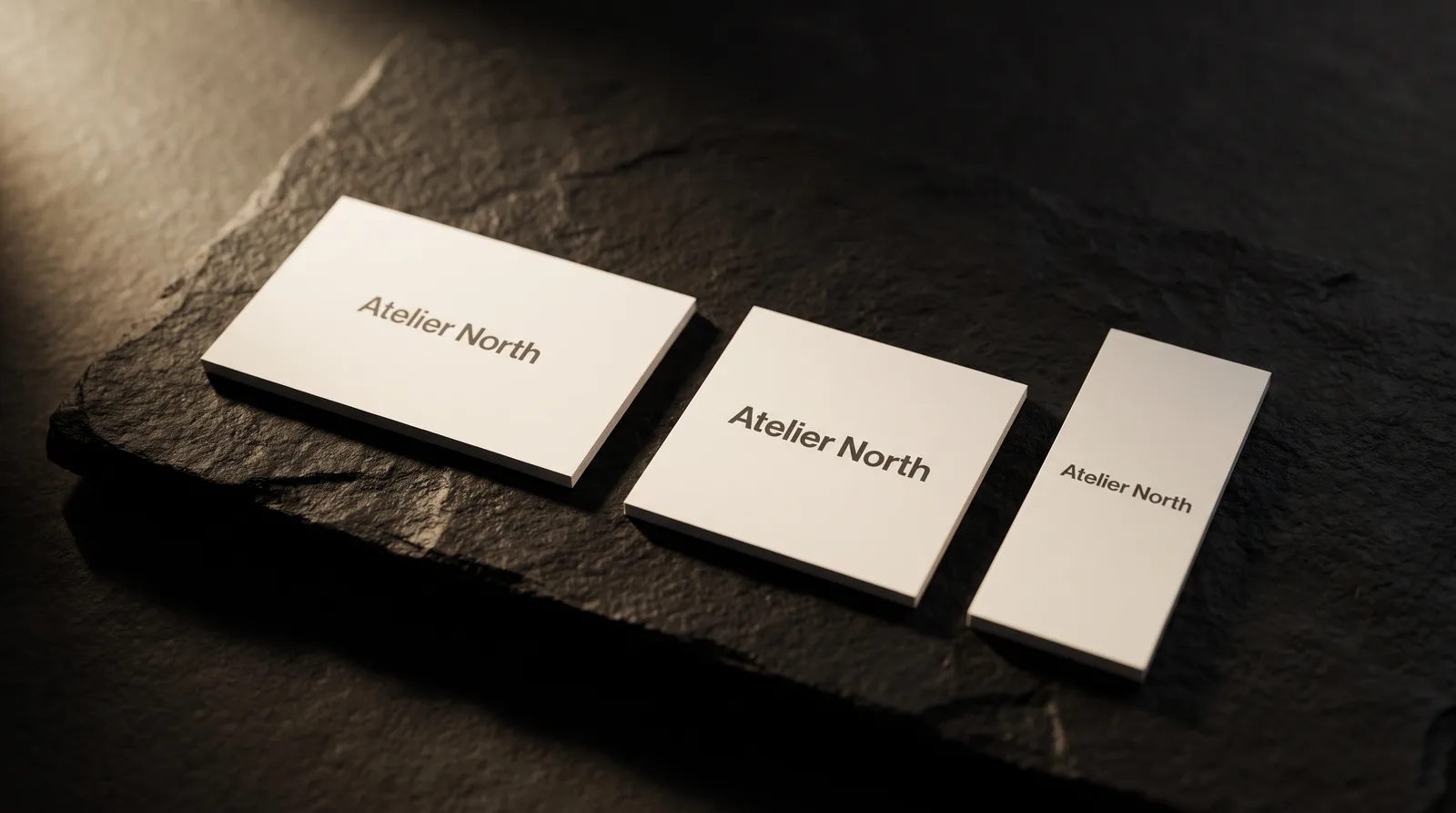
Standard 3.5 x 2 in, square 2.5 x 2.5 in, or mini 3.5 x 1.5 in (1 x 3 in on request) on matte, glossy, silk, soft touch and uncoated. Linen comes in standard and square. Square and mini read as a design decision, but check they fit your recipients' card holders.
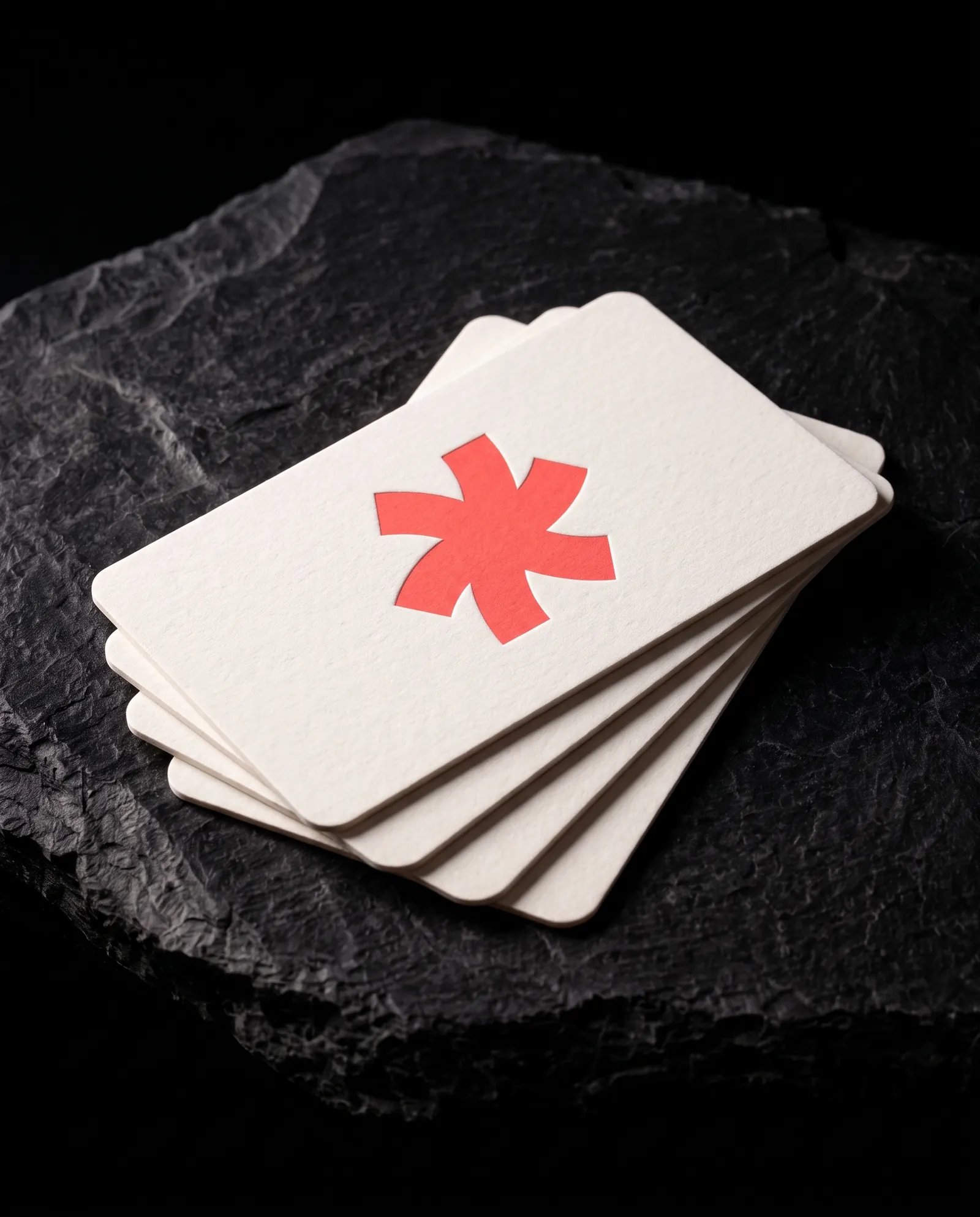
A soft 1/8 in radius on all four corners, available on most classic finishes. It's a die cut, not a trim, so the curve is clean.
Every classic card prints full colour on the front and back at no extra cost. Use the back for a QR code: we print it in flat dark ink at least 2 cm across so every phone reads it.
A clear gloss coat built up on your logo or name, over the soft-touch ground. Gloss against velvet, and you can feel the edge of it. We design raised lines and gaps to 0.3 mm, with a 0.17 mm floor. No rounded corners on this one.
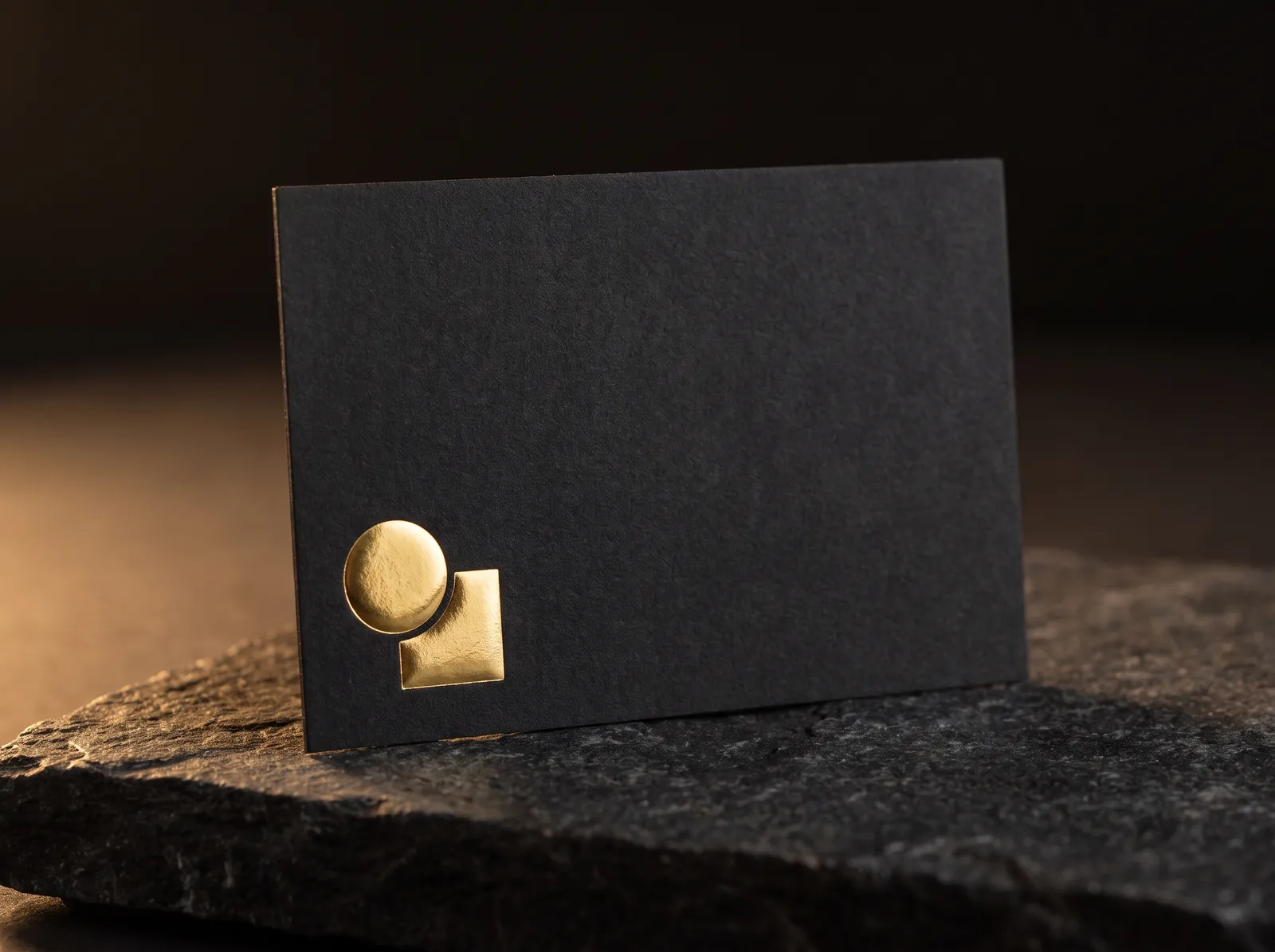
Gold, silver or holographic foil built up on the soft-touch card, one foil colour per design. It catches light the way the printed card can't. Raised lines and gaps target 0.3 mm, with a 0.17 mm floor; no rounded corners.
Blurry logo, a screenshot, an AI mockup? Our designers rebuild it as a clean, press-ready file before anything prints.
Upload your logo and the Studio lays it on matte, gloss, silk and soft touch in a couple of minutes. It's a rendering, so treat it as direction: colours and small type are set by a person at proof. But it answers the question this page can't: which surface suits your mark.
| Finish | 100 | 250 | 500 | 1,000 | 2,500 |
|---|---|---|---|---|---|
| Matte / Glossy / Uncoated / Standard | 49 € | 55 € | 65 € | 69 € | 95 € |
| Silk | 95 € | 99 € | 105 € | 125 € | 215 € |
| Soft touch | 105 € | 115 € | 119 € | 145 € | 245 € |
| Linen | — | 55 € | 75 € | 95 € | 139 € |
How much should 500 business cards cost? Here, 70 USD in matte, 110 USD in silk, 127 USD in soft touch.
Business card finishes
Matte is flat, non-reflective, and easy to read under any lighting. Colors appear softer and more muted. Glossy is shiny, reflective, and makes colors appear more saturated and vivid, and it shows fingerprints more easily. So: text and logos read best on matte, photos and bold colour on glossy. The table covers the rest.
| Matte | Glossy | Silk (satin) | Soft touch | Uncoated | Linen | |
|---|---|---|---|---|---|---|
| Thickness | 16pt | 16pt | 16pt | 20pt | 14pt | — |
| Surface | Matte coating, flat | UV gloss coat, shiny | Satin laminate, low sheen | Matte laminate with drag | No coating | Woven texture |
| Glare | None | High | Low | None | None | None |
| Colour | Softer | Most saturated | Rich | Deep darks | Softer, warmer | Softer |
| Takes a pen | Not reliably | No | No | No | Yes | — |
| Scuffs and prints | Shows scuffs on dark fills | Shows fingerprints | Resists scuffs | Can show handling marks on large dark fills | Can soften at the edges | Hides marks well |
| 250 cards | 58 USD | 58 USD | 107 USD | 121 USD | 58 USD | 55 USD |
| Best for | Type-led, minimal cards | Photos, food, real estate | Photos that need to last | Dark designs, a card people keep | Appointment cards, notes | Traditional stationery look |
Both are glare-free. Matte is a coating on 16pt stock; soft touch is a laminate film on 20pt, so it's thicker in the hand and has a faint drag that matte doesn't. Blacks look deeper on soft touch. Matte is half the price at 250 (58 USD vs 121 USD). If the card is mostly type on white, matte does the job. If it's dark, or you want people to notice the touch, soft touch business cards.
Silk is a satin laminate with a little sheen; it makes photos look rich and shrugs off scuffs. Soft touch absorbs light instead, so photos look a touch flatter but dark colours look deeper. Same family, opposite moods. See silk business cards.
Classic cards are printed in full colour and finished on a fixed menu, and ship in 3–4 business days after proof. Custom cards are built to your spec: Pantone inks, pressed foil, letterpress, 32pt and thicker stock, painted edges, about 3 weeks after proof. Start classic if you need cards next week; go Custom when the card is the brand. specialty business cards
These are Custom builds, not classic cards, but they start from the same surfaces: silk and soft touch. Each one is a real client job on our site.


Silk matte, four-colour artwork, PMS-matched painted edge, rounded corners
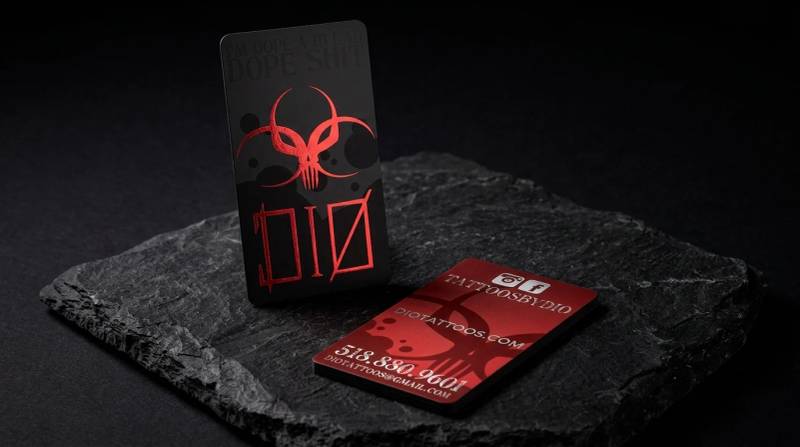
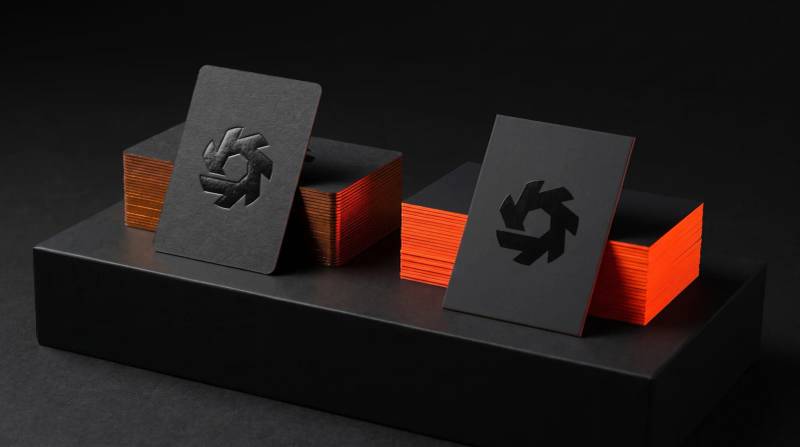
Two directions for one card, one of them 32pt soft touch with flat spot UV
Choose a finish and quantity.
Pick above, or start with standard if you're unsure.
Upload your file.
After checkout. PDF, AI, PSD or EPS, CMYK, 300 dpi, with bleed.
A person checks it.
A designer reviews your file and sends a digital proof. Dark edges, thin borders and colour shifts get flagged here.
You approve.
Nothing prints until you do.
Printed and shipped.
Ships in 3–4 business days after approval (estimate), then 1–3 business days by UPS Ground, free within the continental US.
If you're not happy, we reprint. How reprints work
The sample pack puts every surface in your hand for 8 USD, and you get 10 USD back on your first order.
15 minutes with the founder. Bring your artwork; he'll tell you which finish suits it, honestly.
A person checks your file and sends a proof before anything prints.
Matte for most text-led cards: it has no glare, so names and numbers read under any light, and colours print slightly softer. Glossy for photos and bold colour: it's shiny, makes colours more saturated, and shows fingerprints. If you want no glare and a thicker card, look at soft touch. Matte and glossy cost the same, 58 USD for 250; soft touch is 121 USD.
Yes. Our matte card is 16pt with a matte coating: smooth, flat, glare-free and easy to read. It suits minimal and type-led designs. It can show scuffs on large dark areas, and it isn't the best surface to write on; uncoated is. Matte starts at 52 USD for 100.
Both are non-reflective. Matte is a coating on 16pt stock. Soft touch is a matte laminate film on 20pt stock, so it is thicker and has a slight drag under your thumb, and dark colours look deeper. Soft touch costs more: 121 USD for 250 against 58 USD for matte.
Silk (also sold as satin) is a laminate with a low sheen, between matte and glossy. It resists scuffs and makes photos look rich without much glare. Ours is 16pt, from 101 USD for 100.
The one that suits the design. Type and logos on a light background: matte. Photos: glossy or silk. Dark designs, or a card you want people to notice in the hand: soft touch. Cards people write on, like appointment cards: uncoated. Our pick for most people is soft touch, because the thickness and the touch do the work without any extra process.
No. Our glossy card is 16pt with a UV gloss coating. Our laminated cards are silk (16pt) and soft touch (20pt). Laminate is a film bonded over the print; it resists scuffs better than a coating.
Neither. Matte, glossy and uncoated cost the same: 52 USD for 100, 58 USD for 250, 70 USD for 500. Silk and soft touch cost more because they're laminated.
They ship in 3–4 business days after you approve your proof, then 1–3 business days by UPS Ground, with free shipping within the continental US. These are estimates, not guaranteed delivery dates. If you have a deadline, tell us when you order and we'll tell you honestly whether it's realistic.
On fast-printed cards, three things: a thin border too close to the edge (the cut drifts and the border looks crooked), a design that's black right to the edge (white paper shows at the cut), and small text in four-colour black (it can blur). A person checks your file for all three before we print.
In the classic line the textured papers are linen, with a woven crosshatch, and uncoated, with a natural paper tooth (it's also the one that takes a pen). We don't list a parchment stock today; if that aged, mottled look is what you want, tell us and we'll say honestly what we can match. For heavier cards, in the 600 to 650 gsm range and up, see our thick business cards, made to order in our Custom line.
Yes on most classic finishes: rounded corners are a 1/8 in radius, and square cards are 2.5 x 2.5 in. Each product page shows exactly which sizes and corners it offers, with the price.
Yes. The sample pack costs 8 USD with free shipping within the continental US, and you get 10 USD back on your first order. You can also upload your logo to the Studio and see it on each finish in a couple of minutes (a rendering, not a proof).