Wood, kraft and recycled
Wood & Eco Business Cards
Real wood. Brown kraft. Recycled paper. Cards made from materials that tell a story before anyone reads a word.
Kraft from 39 € for 100 · recycled from 29 € for 100 · wood from 309 € for 100
Kraft and recycled ship 3–4 business days after proof approval; wood about 3 weeks (estimates).
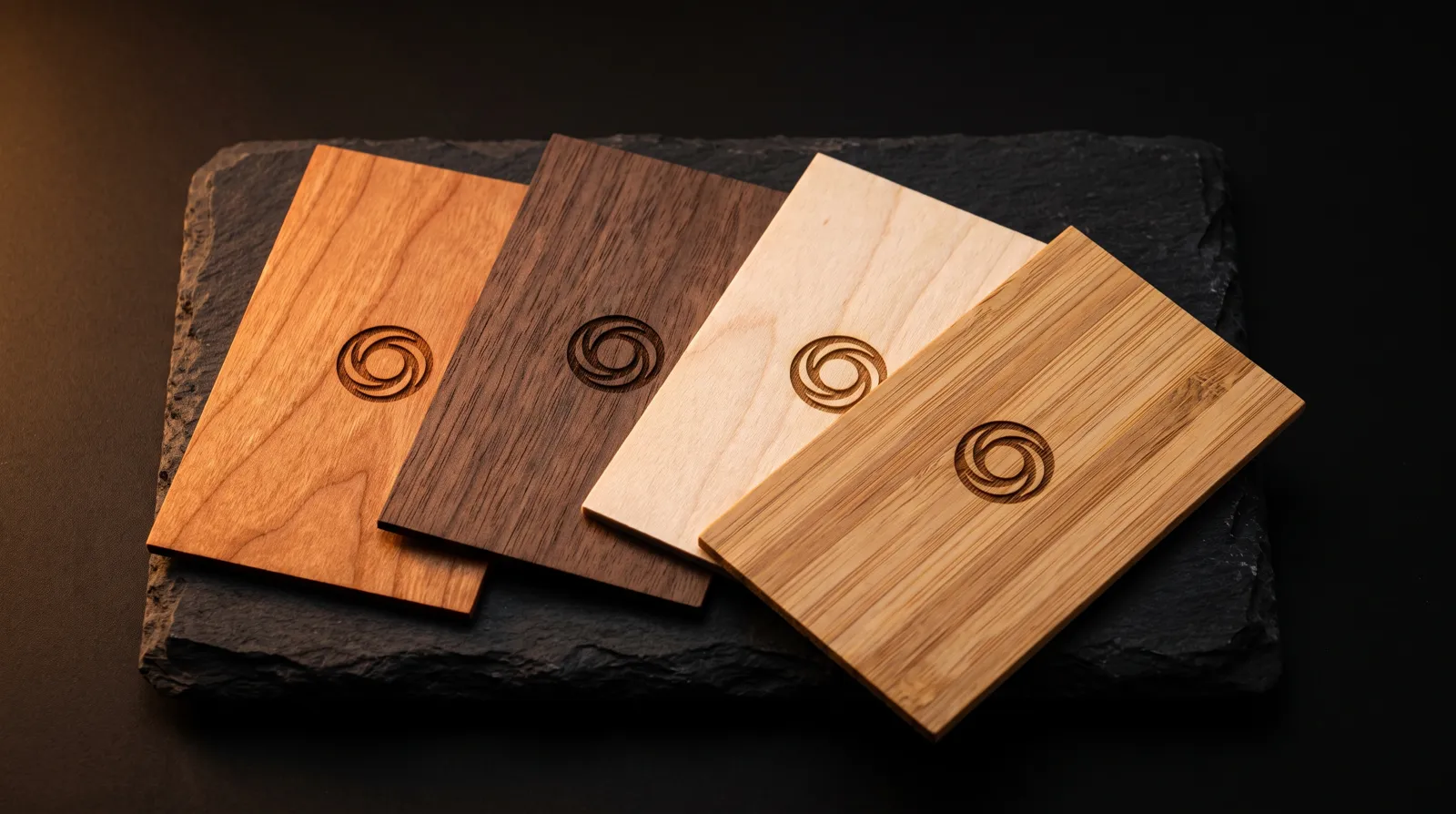
Whether the goal is sustainability, texture or just something that feels different in the hand, these cards start a different kind of conversation.
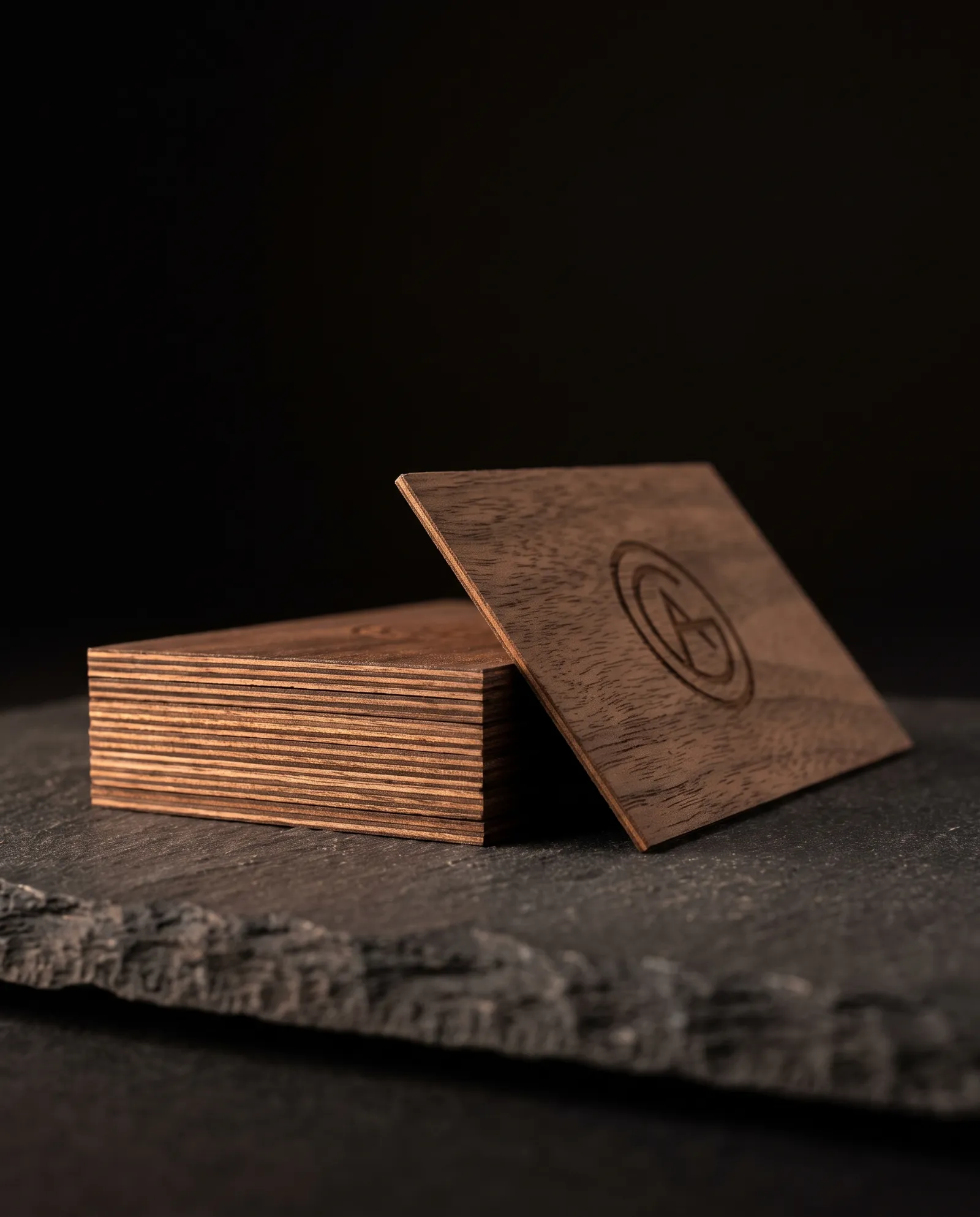 Custom
Wood Business Cards
From 309 € for 100About 3 weeks after proof approval (estimate)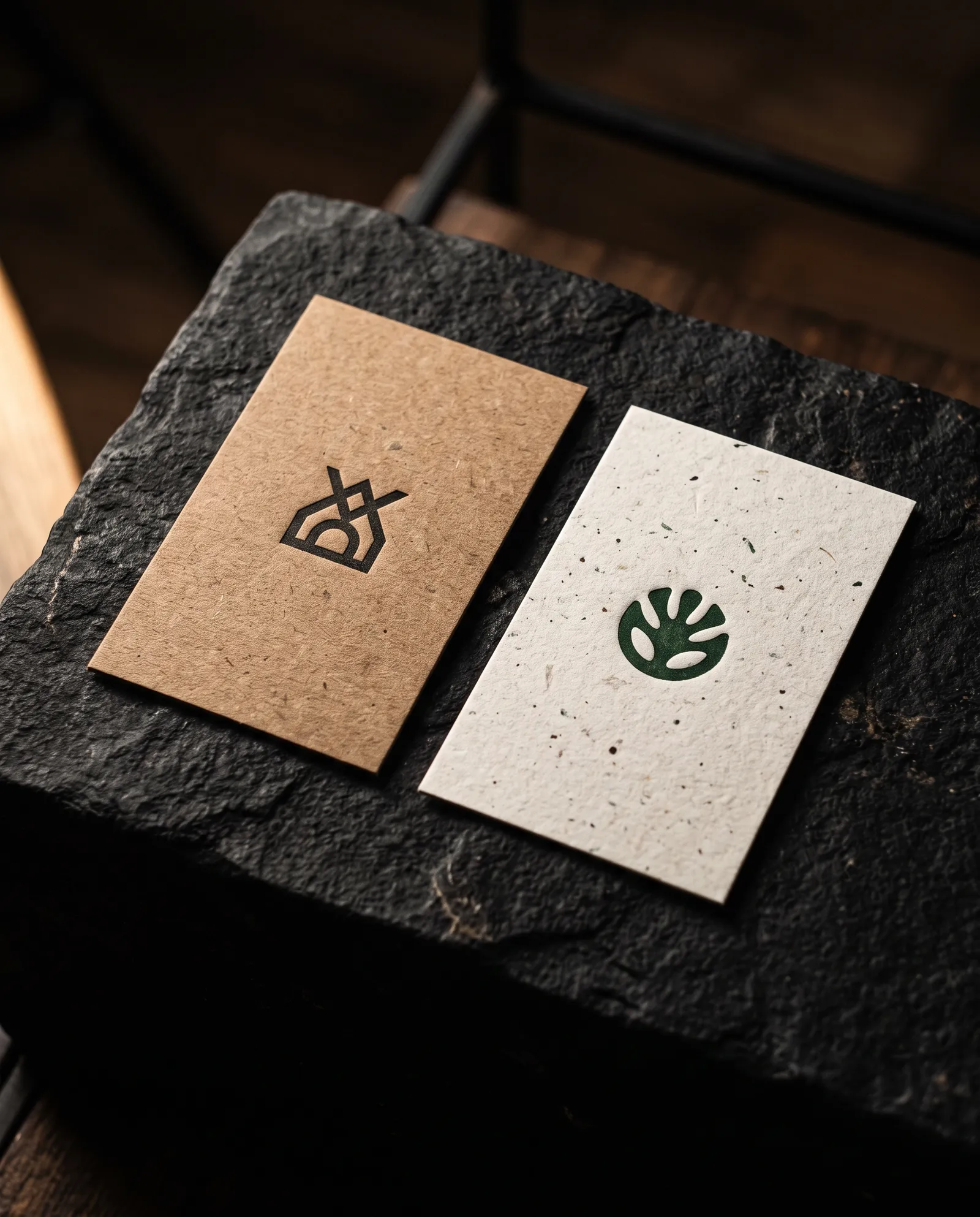 Standard
Kraft Business Cards
From 39 € for 100Ships in 3–4 business days after proof approval (estimate)- Standard
Recycled Business Cards
From 29 € for 100Ships 3–4 business days after proof approval; 100% recycled (Custom) about 3 weeks (estimates)
Wood species
Species notes, prices and engraving contrast live on our wood business cards page.
Cherry
Warm reddish-brown tone with smooth, fine grain. Darkens slightly with age. The most popular wood for business cards — rich color with excellent engraving contrast.
Walnut
Dark chocolate brown with dramatic grain patterns. Bold, serious, and luxurious. Creates the strongest contrast with laser engraving — light natural wood revealed through dark surface.
Birch
Light, pale blonde wood with subtle grain. Clean, Scandinavian feel. Works well with both engraving and color printing.
Bamboo
Golden tan with distinctive horizontal grain lines. Technically a grass, not a tree — the fastest-growing and most sustainable option. Strong, lightweight, and naturally unique.
What makes a business card eco-friendly?
Material source
The most direct way to reduce a business card's environmental impact is to change what it's made from. Recycled paper uses post-consumer waste instead of virgin pulp. Kraft paper uses unbleached fibers — the brown color is natural, not dyed, which skips the chemical bleaching process. Cotton paper is 100% tree-free, made from cotton linter (a byproduct of the textile industry). And wood cards from sustainably managed forests use a renewable resource that sequesters carbon as it grows.
What "recycled" actually means
Not all recycled paper is the same. "30% recycled" means 30% of the fiber comes from post-consumer waste, with the remaining 70% from virgin sources. "100% recycled" means all fiber is reclaimed. Both are meaningful improvements over fully virgin paper. Our Standard recycled option uses 30% post-consumer recycled stock. Our Custom recycled option uses 100% recycled stock.
100% tree-free: Cotton
Our cotton paper is made from 100% cotton linter — a byproduct of textile manufacturing. No trees, no recycled pulp, just pure cotton fiber. Available in 32pt and 48pt.
See Cotton Business Cards →For projects that need more
- Seed paper business cards — plantable cards with embedded wildflower seeds
- Hemp paper or banana fiber stock
- Custom wood shapes (die-cut)
- Foil stamping or letterpress on kraft
- Large format or oversized wood cards
Wood and eco business card questions
What wood types are available for business cards?
We offer cherry, walnut, birch, and bamboo. Each species has unique grain patterns and color characteristics.
What is the difference between kraft and recycled paper?
Kraft paper is unbleached brown paper made from wood pulp — the brown color is natural. Recycled paper uses post-consumer waste fiber and comes in natural white tones.
Are wood business cards sustainable?
Yes. Our wood is sourced from sustainably managed forests. Wood is a renewable resource that sequesters carbon as it grows.
What does 100% recycled mean for business cards?
100% recycled means all fiber in the paper comes from post-consumer waste — no virgin pulp is used.
Can you print color on wood business cards?
Yes — via screen printing or UV printing. Laser engraving is also available for a natural, etched look.
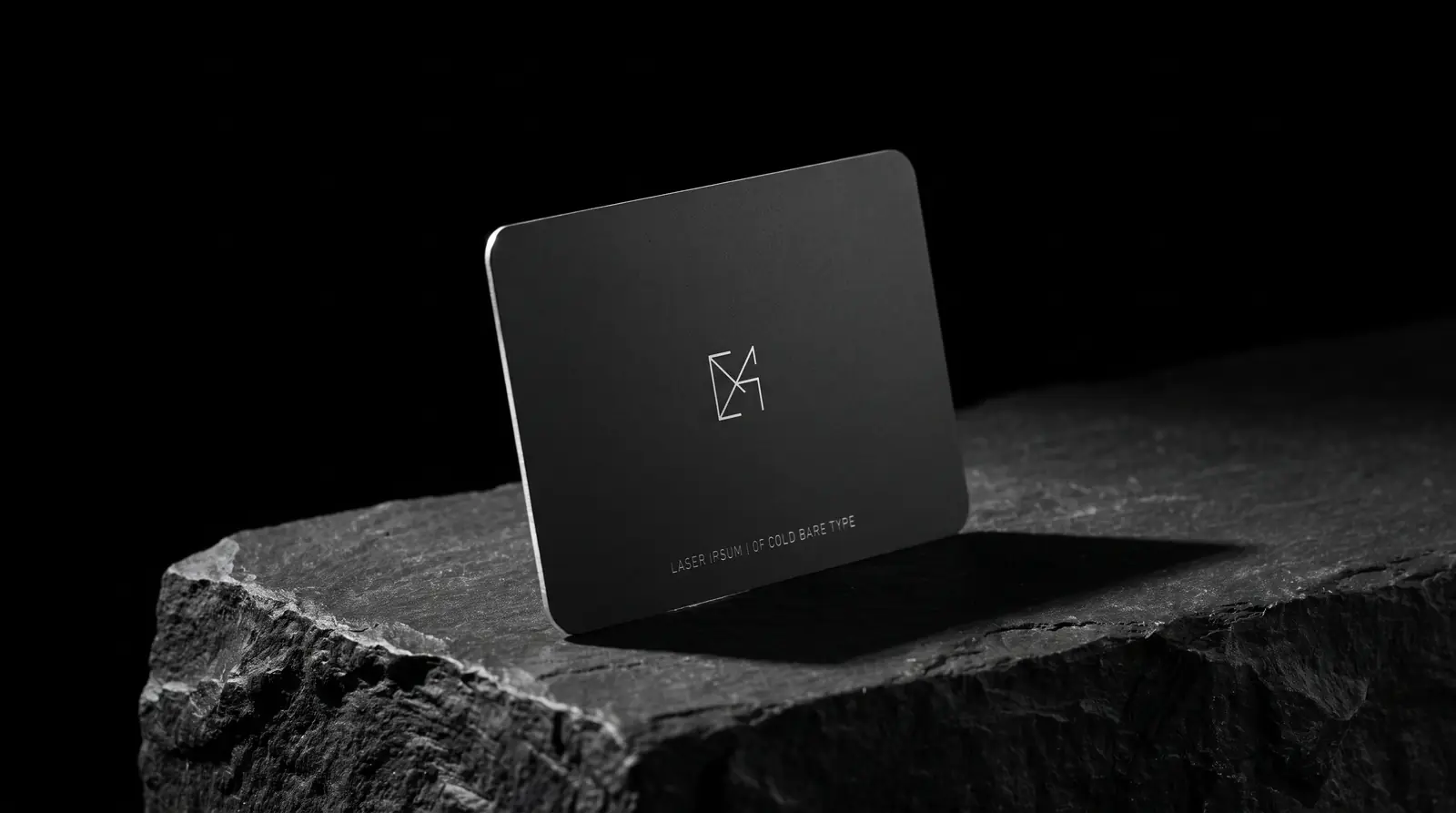
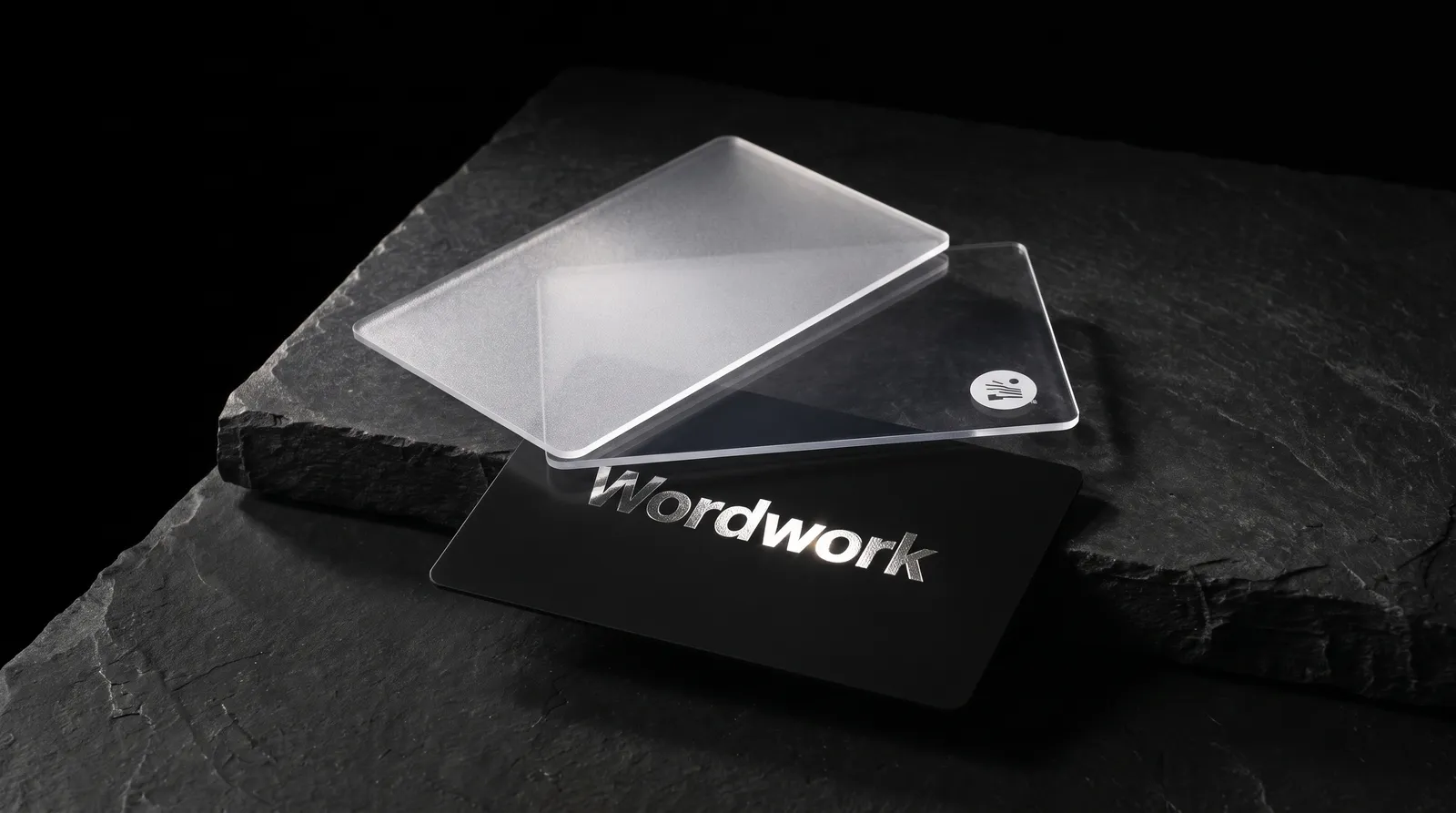
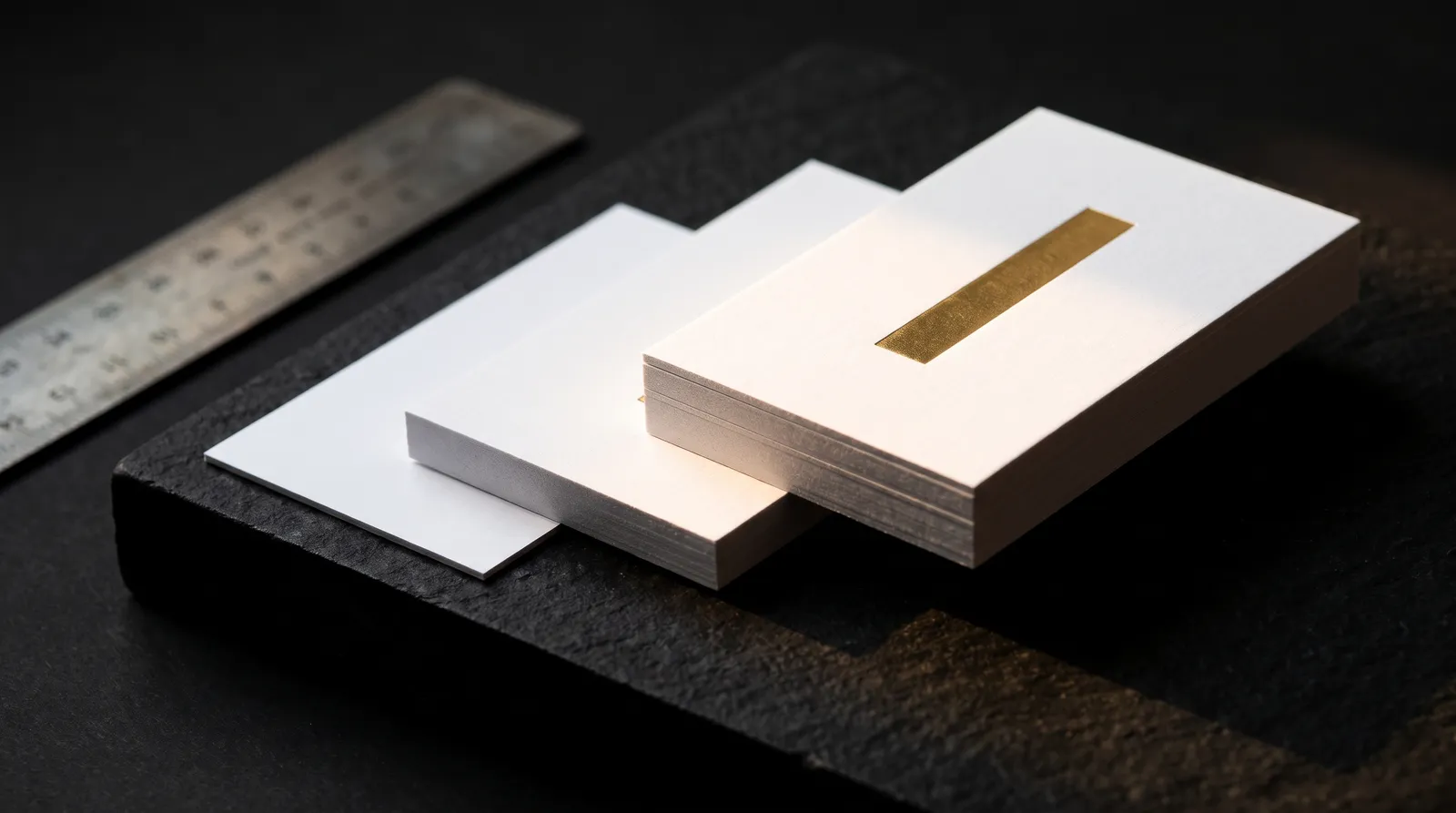
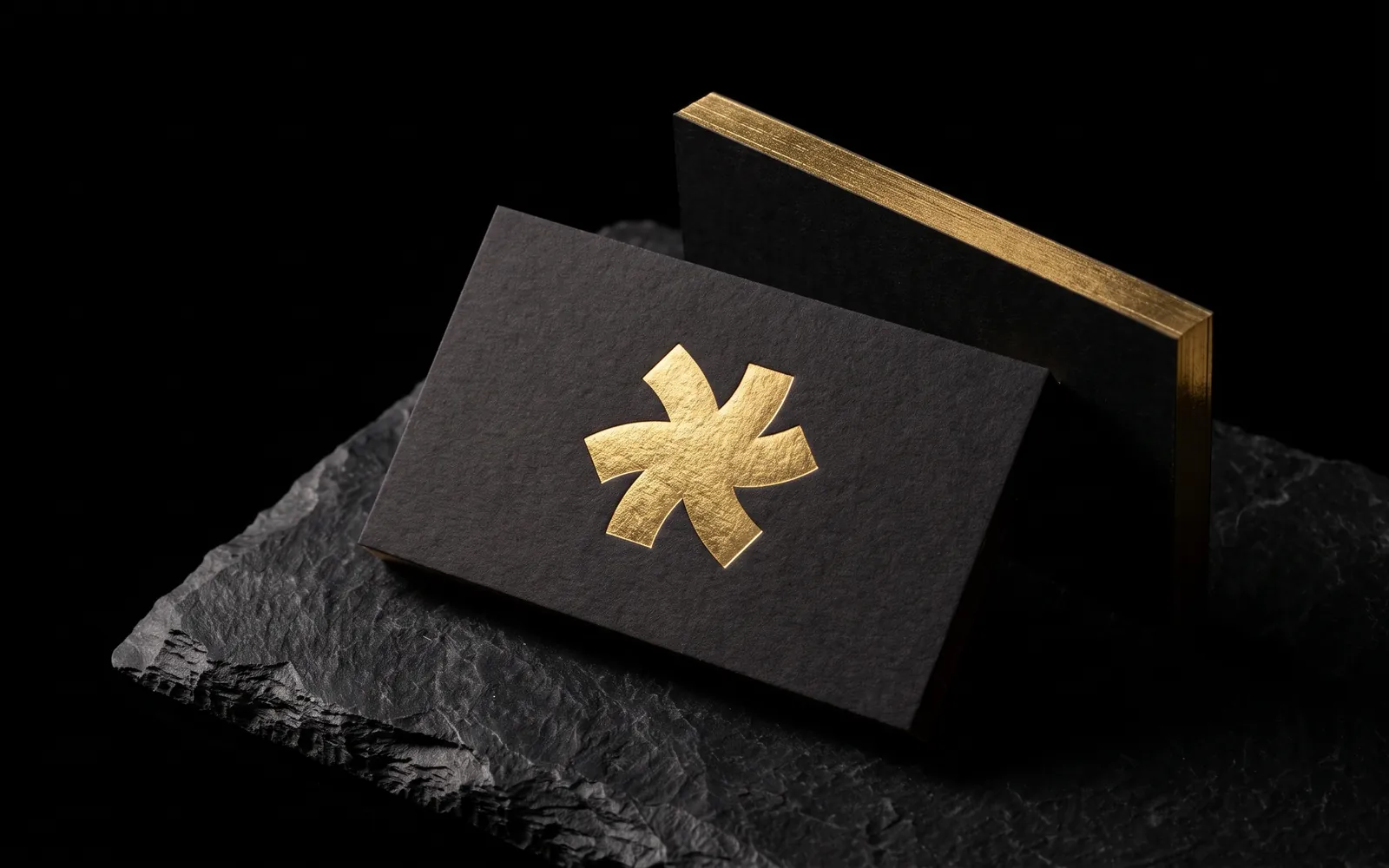
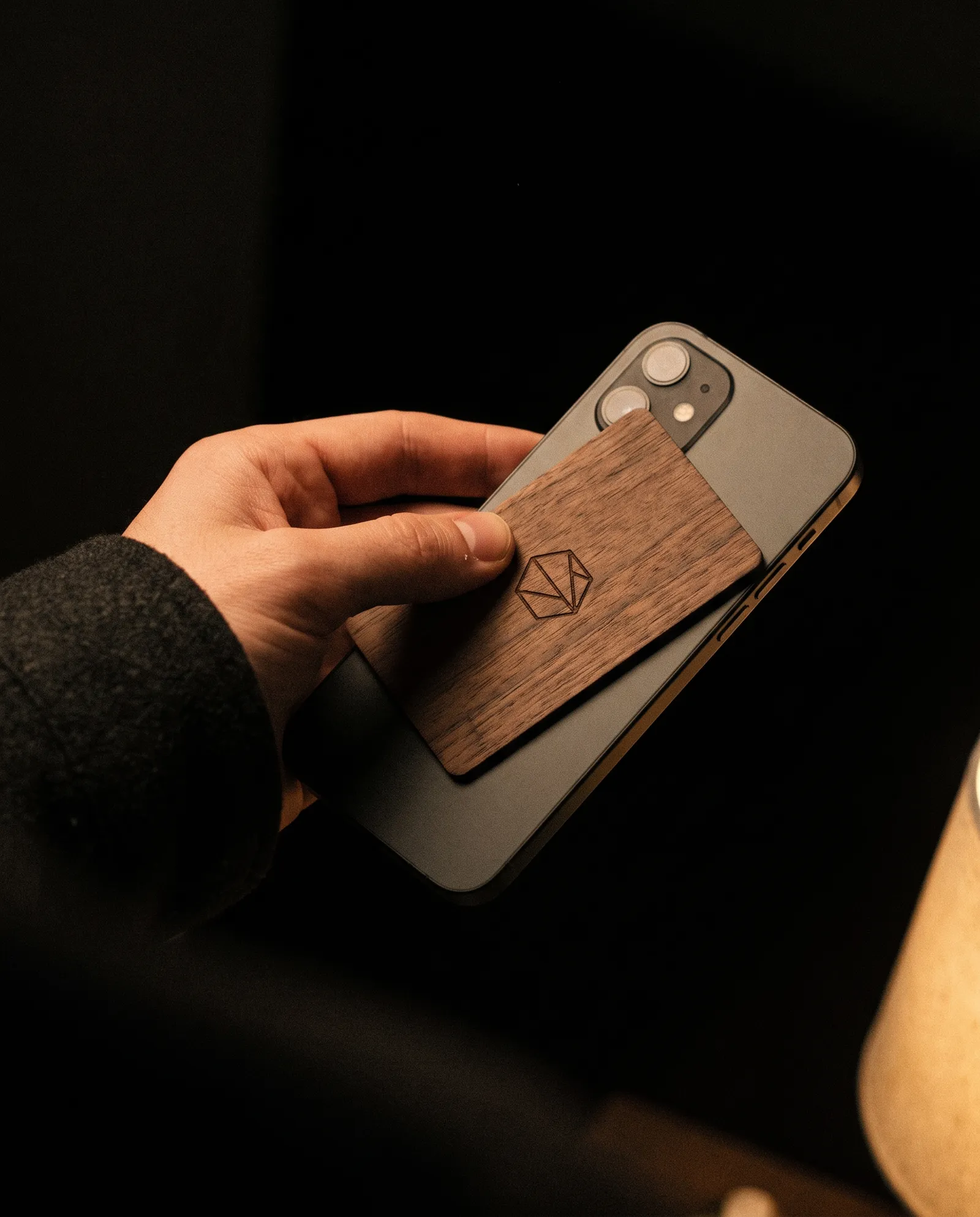
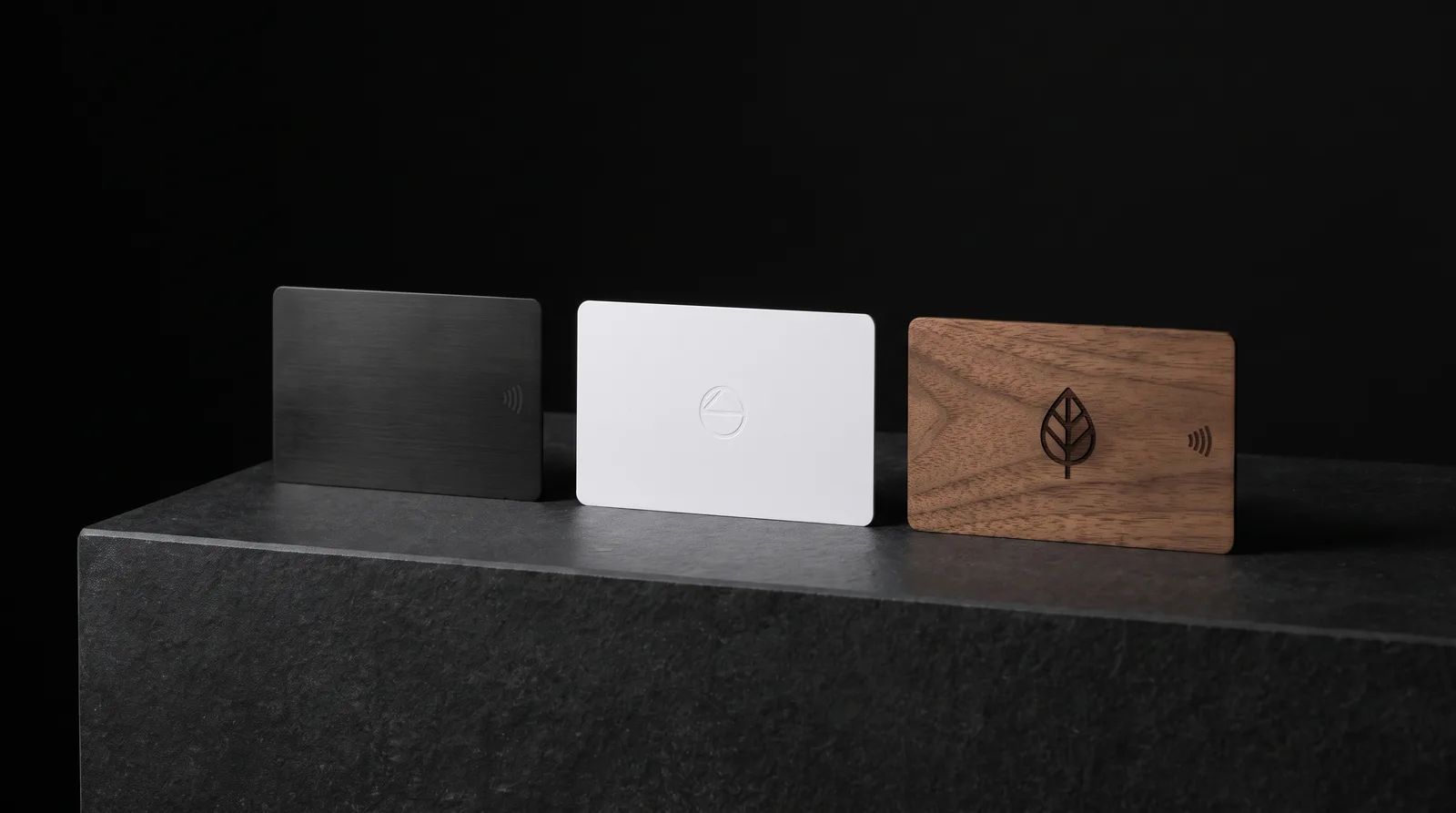
Wood, kraft and recycled stocks all put texture in the hand before anyone reads a word. We print solid wood cards, plus kraft and recycled papers with visible fiber. The tradeoff worth knowing up front: these are natural and uncoated materials, so they take ink softer and no two cards are truly twins. That's the appeal, but it needs to be a decision, not a surprise. Here's how each material behaves under the press, and how to design so the artwork works with the grain instead of fighting it.
Solid wood means every card is a different card
Wood grain is never identical card to card. Grain runs light in one card, tighter and darker in the next, and a knot or a ripple shows up wherever the tree put it. Across a box, you get a family, not a matched set.
That matters for layout. Reversed-out type sitting on a pale patch of grain reads clean; the same type landing on a dark streak can lose its edges. We design around it by keeping copy in a zone with breathing room, sizing type up a notch, and treating the grain as the background it actually is rather than a flat field we can control.
Kraft and recycled stocks drink ink, so colour sits softer
These stocks are uncoated. There's no sealed surface holding the ink up on top, so pigment sinks into the fiber and dries a shade quieter and warmer than the same file on a coated sheet. A confident red comes back a touch dustier. A cool grey warms up against the kraft base.
The fix is expectation, then adjustment. We read your artwork against the stock's own colour first, because kraft is already brown and every ink prints over that. Bold, simple marks hold beautifully. Fine hairlines and 6pt type can thicken slightly as the ink spreads into the fiber, so we push those up.
Choose the material by how the card gets handed over
Solid wood is the slow one. It has weight, warmth and a smell, and people turn it over. Good for a card handed across a table in a conversation you want remembered, or for a studio, maker or builder whose work is physical.
Kraft and recycled read differently: honest, worked, a little utilitarian in the best way. They stack and travel well and take heavy ink coverage with character.
Tell us where the card lives, whether it goes in a wallet or a sample kit, and we'll point you at the stock that survives that trip.
Common questions
Will my wood cards match the sample I approve?
Close in character, not identical in pattern. Wood grain is never the same card to card, so treat any sample as a representative of the batch rather than a template. If your logo needs to land on consistent tone every single time, kraft or recycled will serve you better than wood.
Why does my brand colour look duller on kraft?
Kraft and recycled stocks are uncoated and absorb ink, so colour sits softer than it does on coated stock. The pigment sinks into the fiber instead of sitting on a sealed surface, and the stock's own brown tone shows through. We review your colours against the actual stock before printing.
Can I print white ink on wood or kraft?
Opaque white is the usual request for dark and coloured natural stocks, and it behaves differently to standard inks because it has to build coverage rather than sink in. Whether it's available for the stock you've chosen is something we confirm with your specific file, so send the artwork over.
How thick are these cards?
Solid wood and heavy kraft feel substantially different in the hand even at similar calipers, because wood is rigid and kraft has more give. We match thickness to how the card will be carried and handled. Ask us for the exact caliper options on the stock you're considering and we'll confirm.
How should I design for these materials?
Simplify. Bold shapes, generous type sizes and clear space around copy all hold up on textured, absorbent surfaces. Avoid hairline rules, tiny type and photographic gradients that rely on a smooth coated surface to resolve. Send us the artwork and we'll flag anything that will soften more than you expect.