New: Peppermint Studio — Try it →
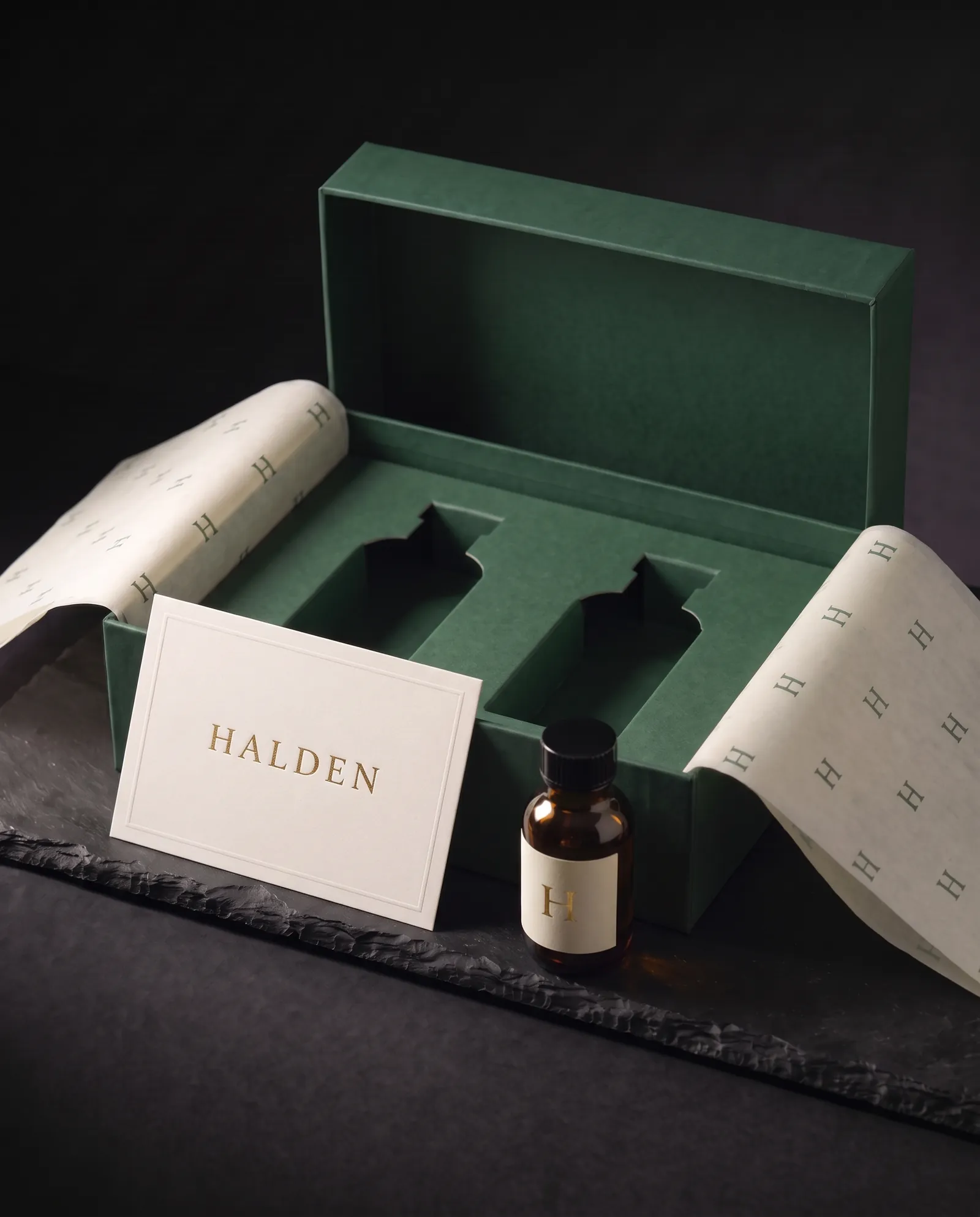
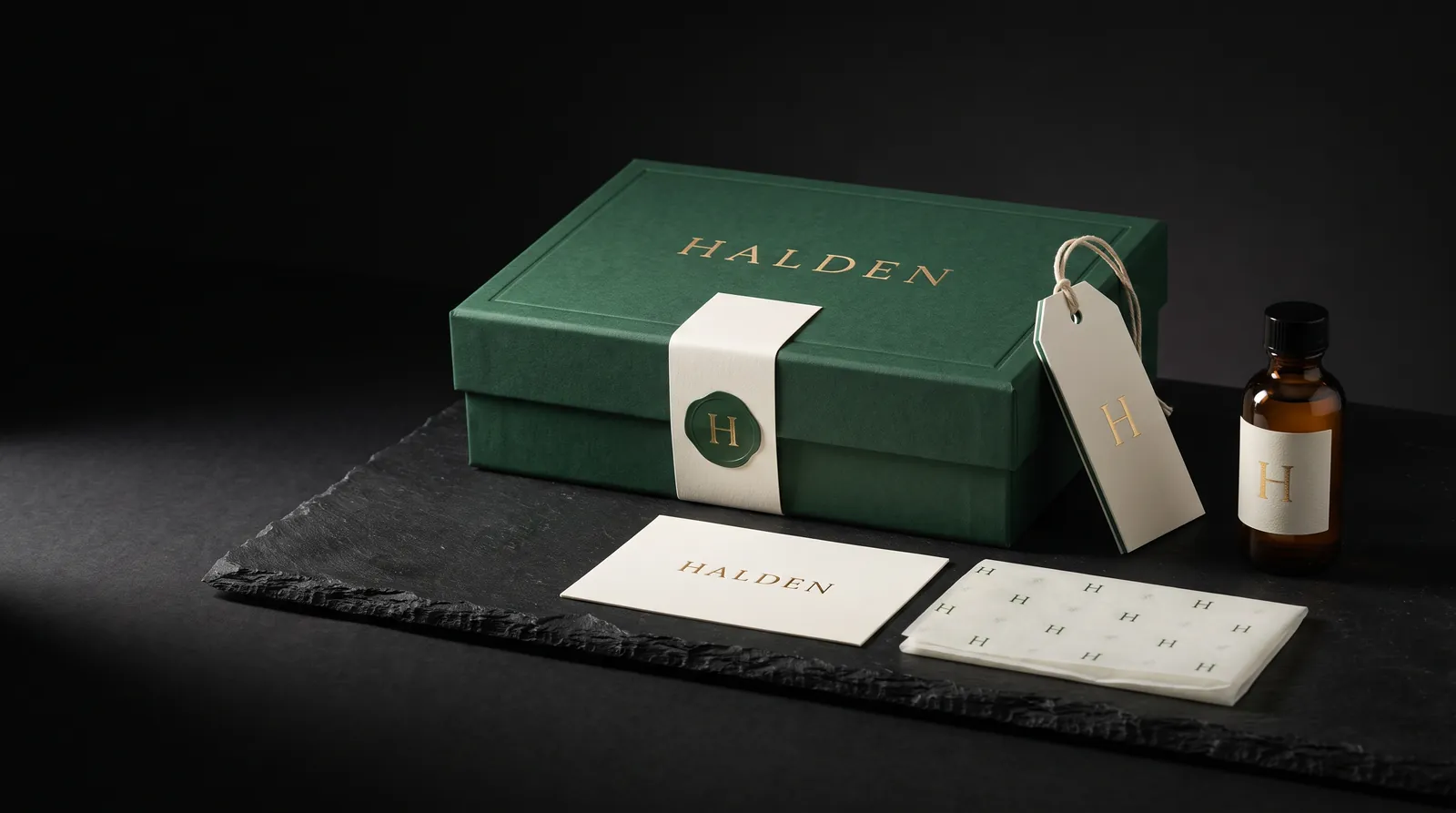
    A matched packaging kit on black slate: forest green rigid box with gold foil wordmark and ivory belly band, cotton hang tag, insert card, printed tissue and an amber bottle with a foil label

    Packaging

    Custom luxury packaging, matched from tag to box

    The box, the tag, the insert and the seal: considered together.

    Get a price

    Printed pieces: about 3 weeks after proof approval, an estimate.

    Every proof checked by our team before anything prints

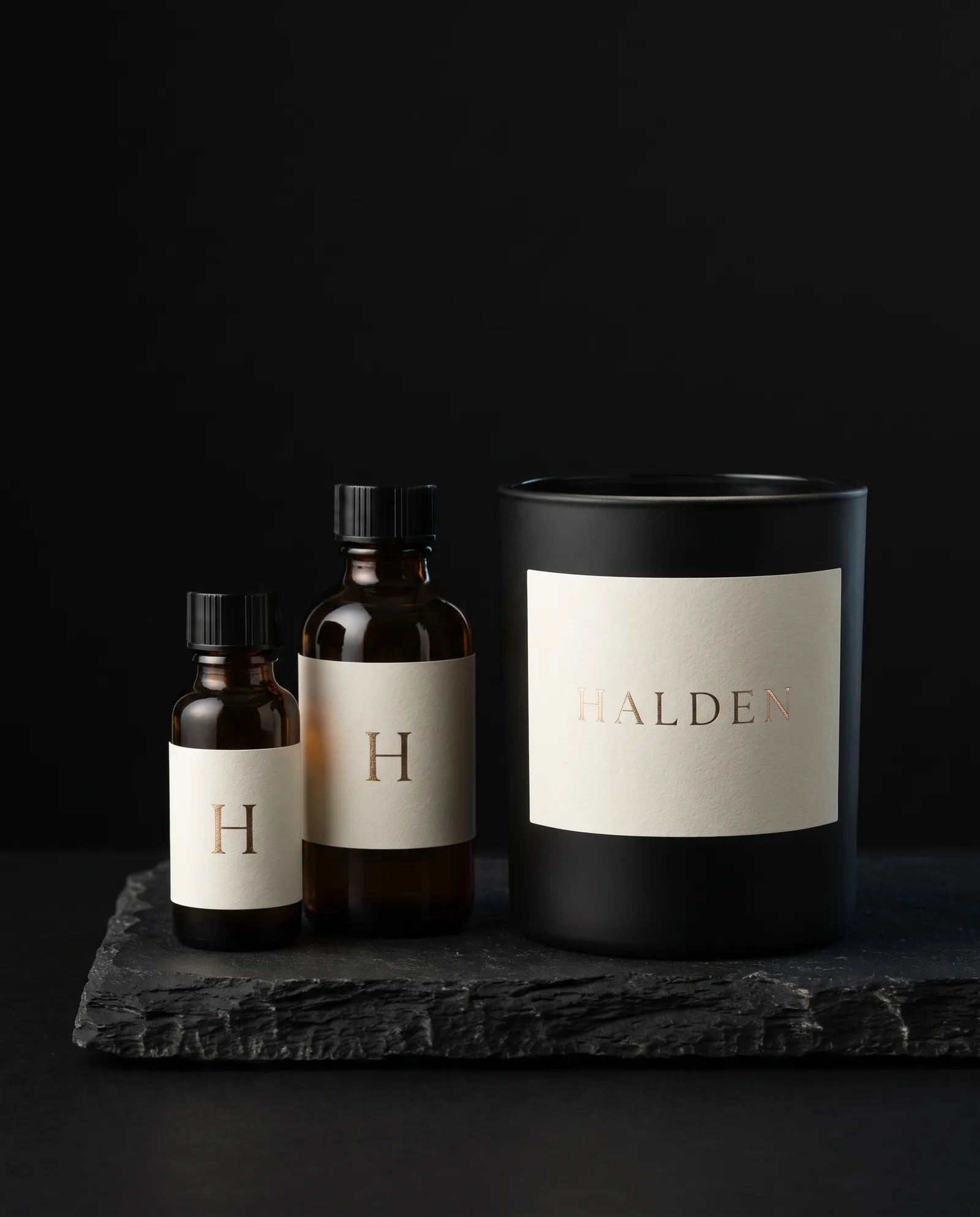
    Design exploration: HALDEN is an illustrative brand from our studio.

    Custom luxury packaging from Print Peppermint is the box, the hang tag, the insert card, the seal and the sleeve made from the same papers, stamped with the same hot foil and reviewed together on proofs. Hang tags and foil seals are priced by quote for your quantity. Custom rigid boxes are priced to your spec. Printed pieces take about 3 weeks of production after you approve the proof; boxes take longer because we prototype the structure first. Those are estimates, not promises.

    Printed pieces
    About 3 weeks after proof approval (estimate)
    Boxes
    About 4–5 weeks, prototype included (estimate)
    Hang tags
    From 100 pieces
    The kit
    One foil, one paper family, one proof
    Files
    Every file checked by a person

    What your customer opens

    Four moments, one paper and one foil. Every piece below is something we make.

    01

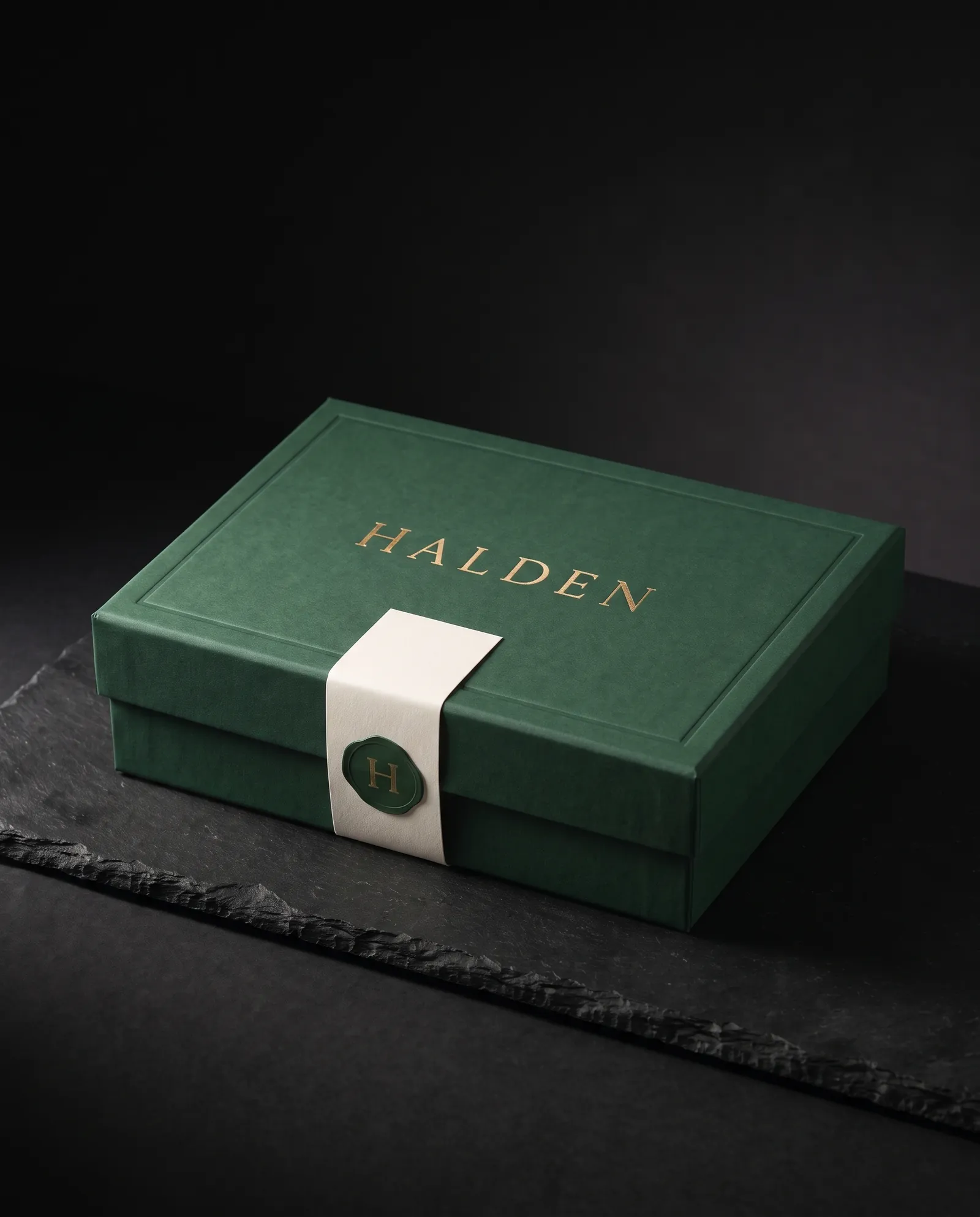
    The band and the seal.

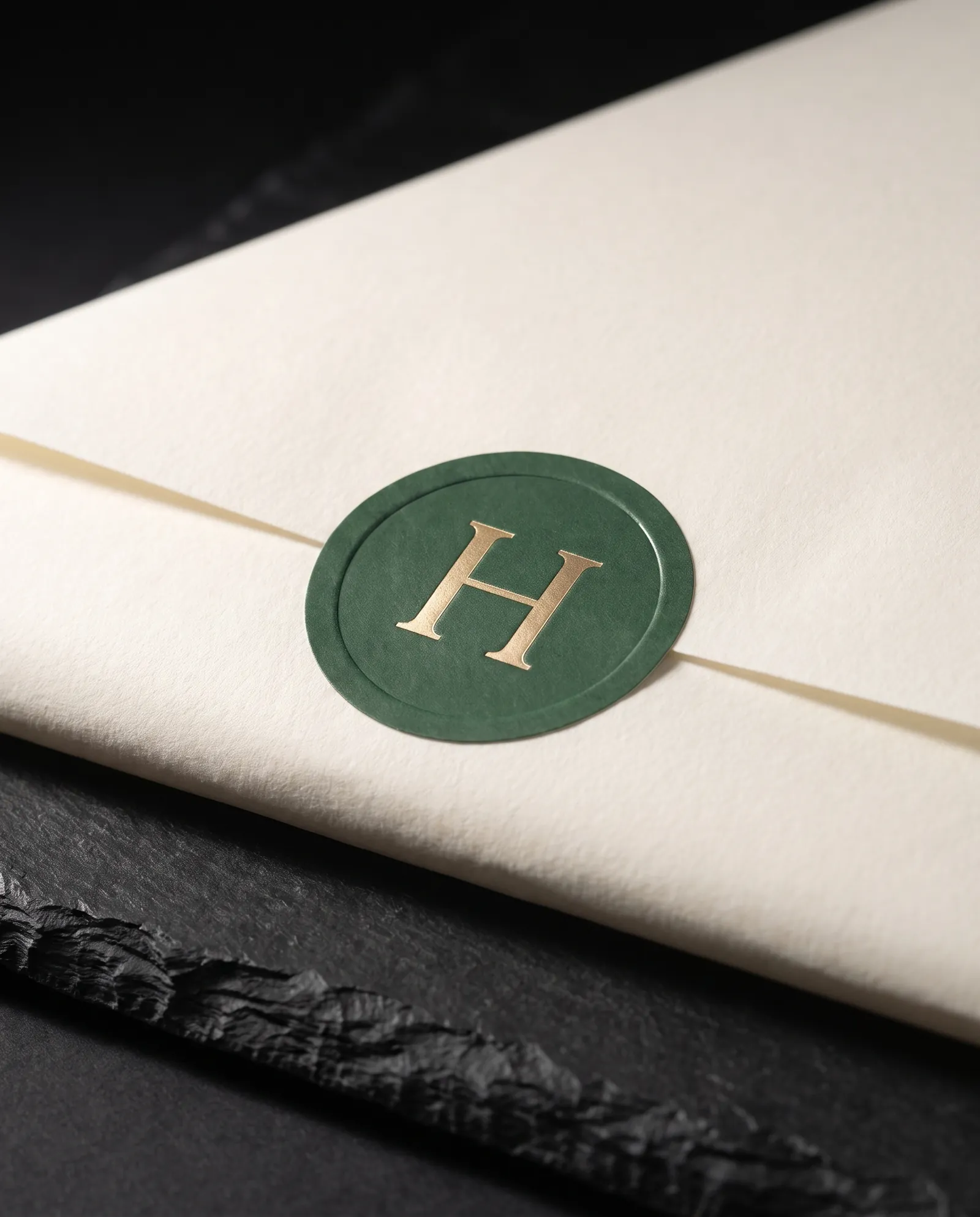
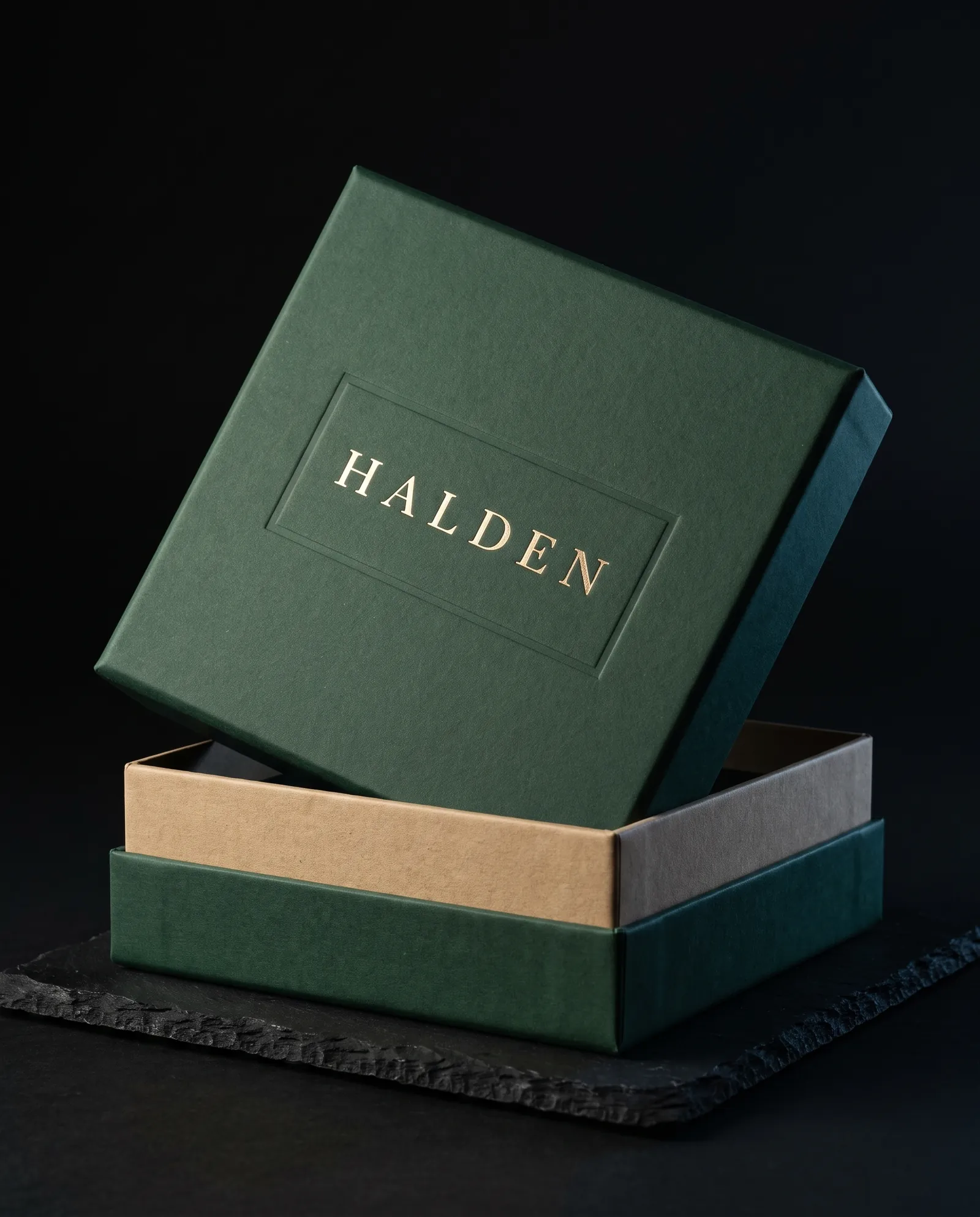
    A cotton belly band, closed with a foil seal. It makes a box yours before it's opened.

    Closed forest green rigid box with a gold foil wordmark, wrapped in an ivory cotton belly band closed with a foil seal

    02

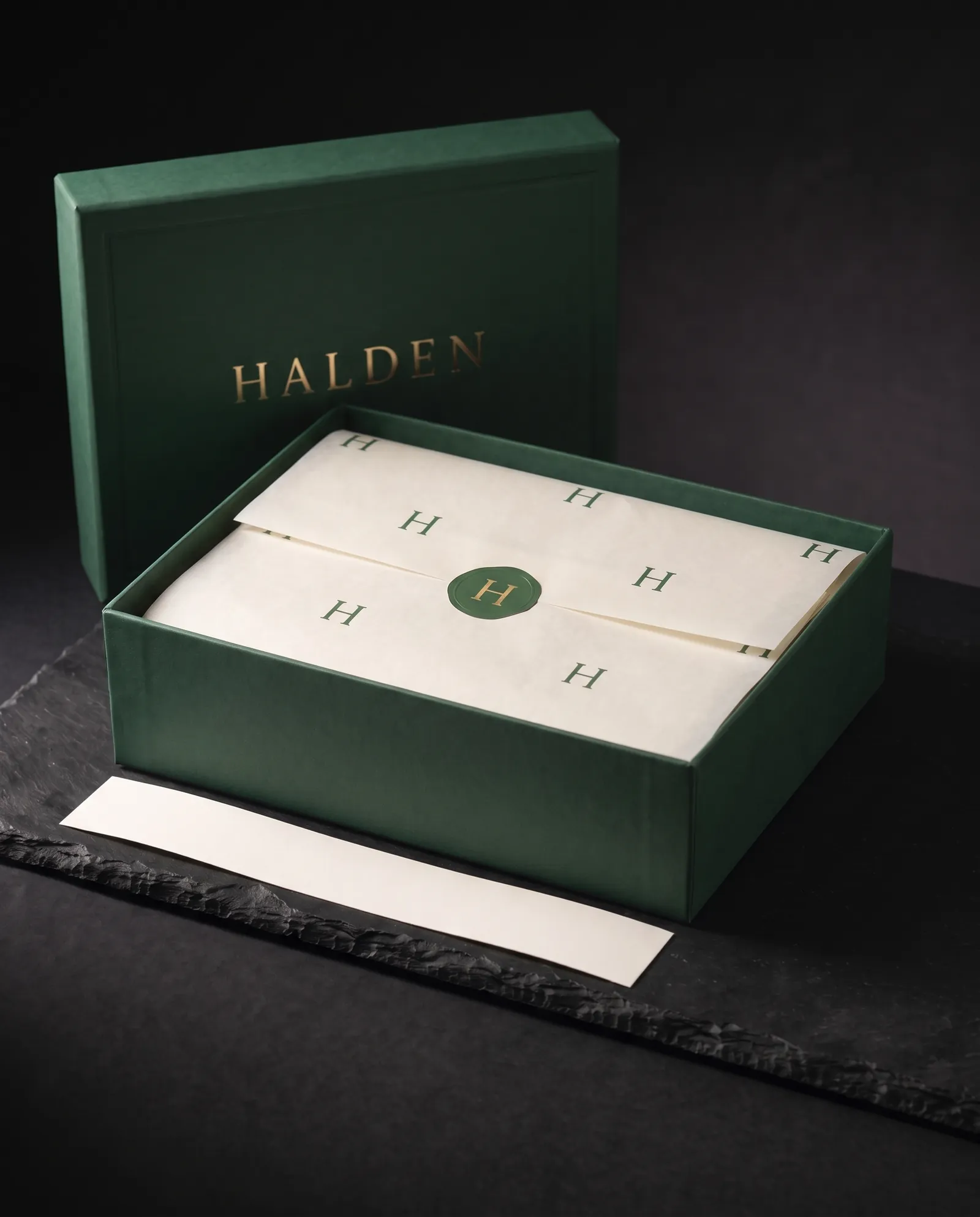
    The tissue.

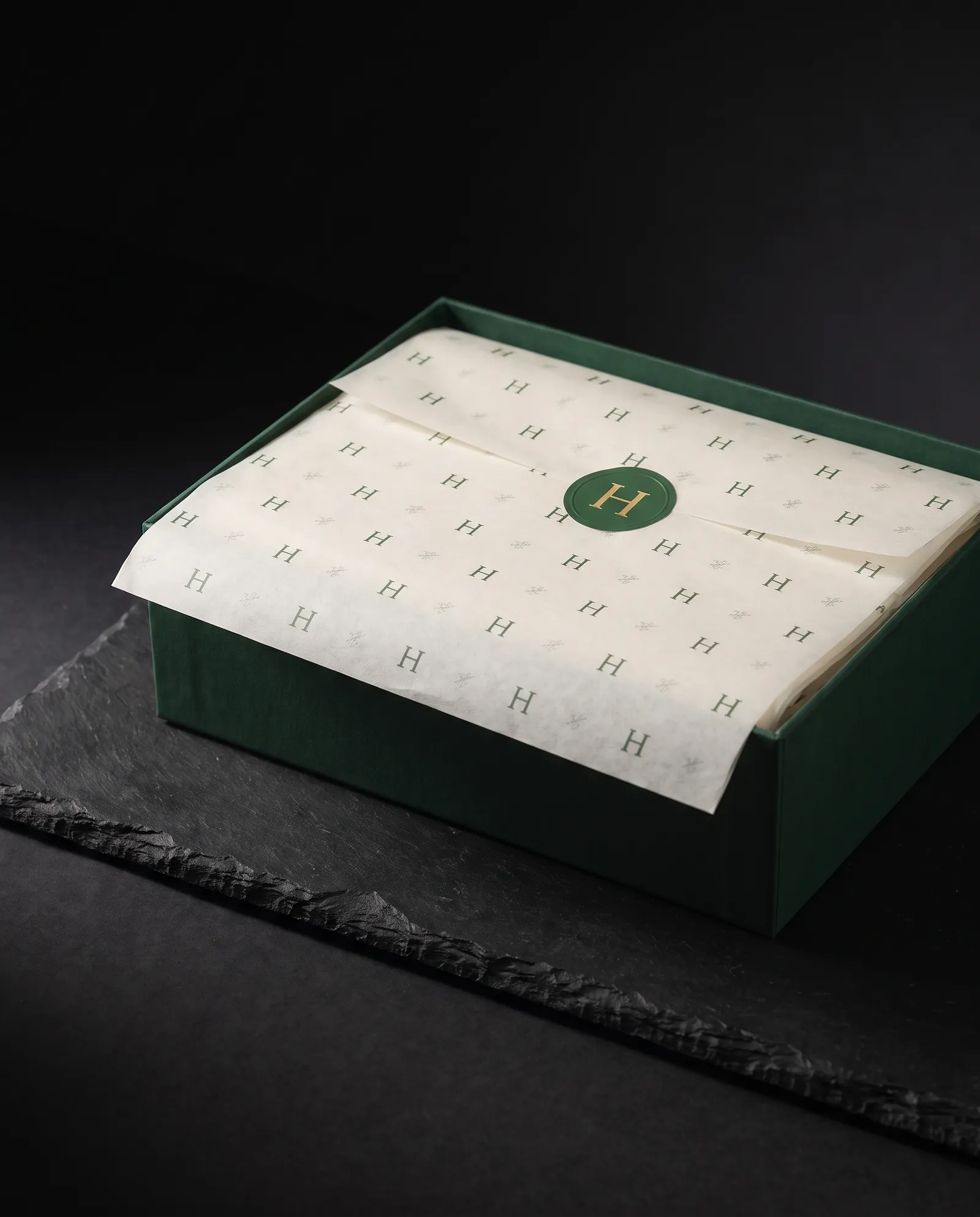
    Printed tissue, sealed with the same foil sticker.

    Lid lifted off the green box, printed tissue folded inside and closed with a round foil sticker seal

    03

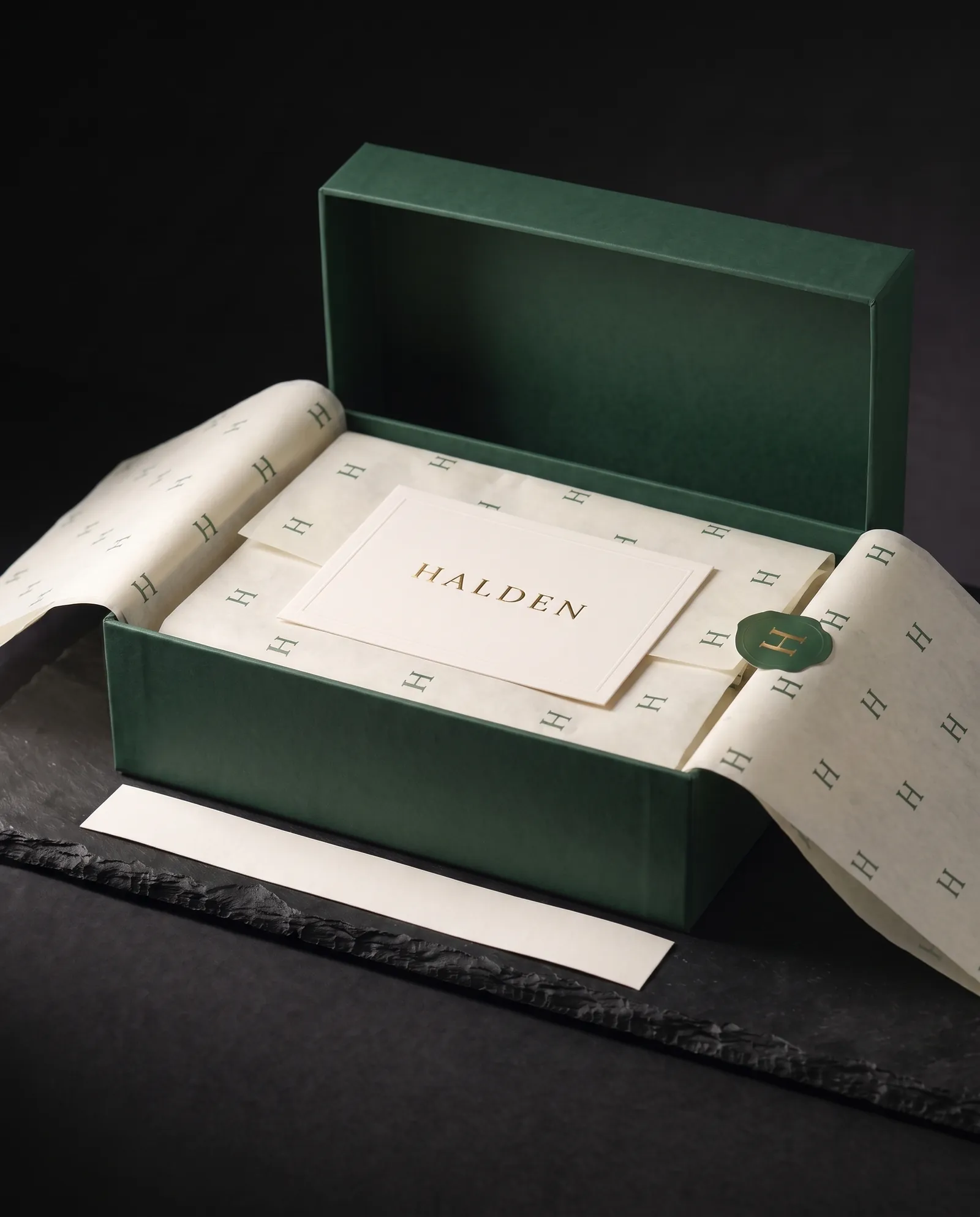
    The card.

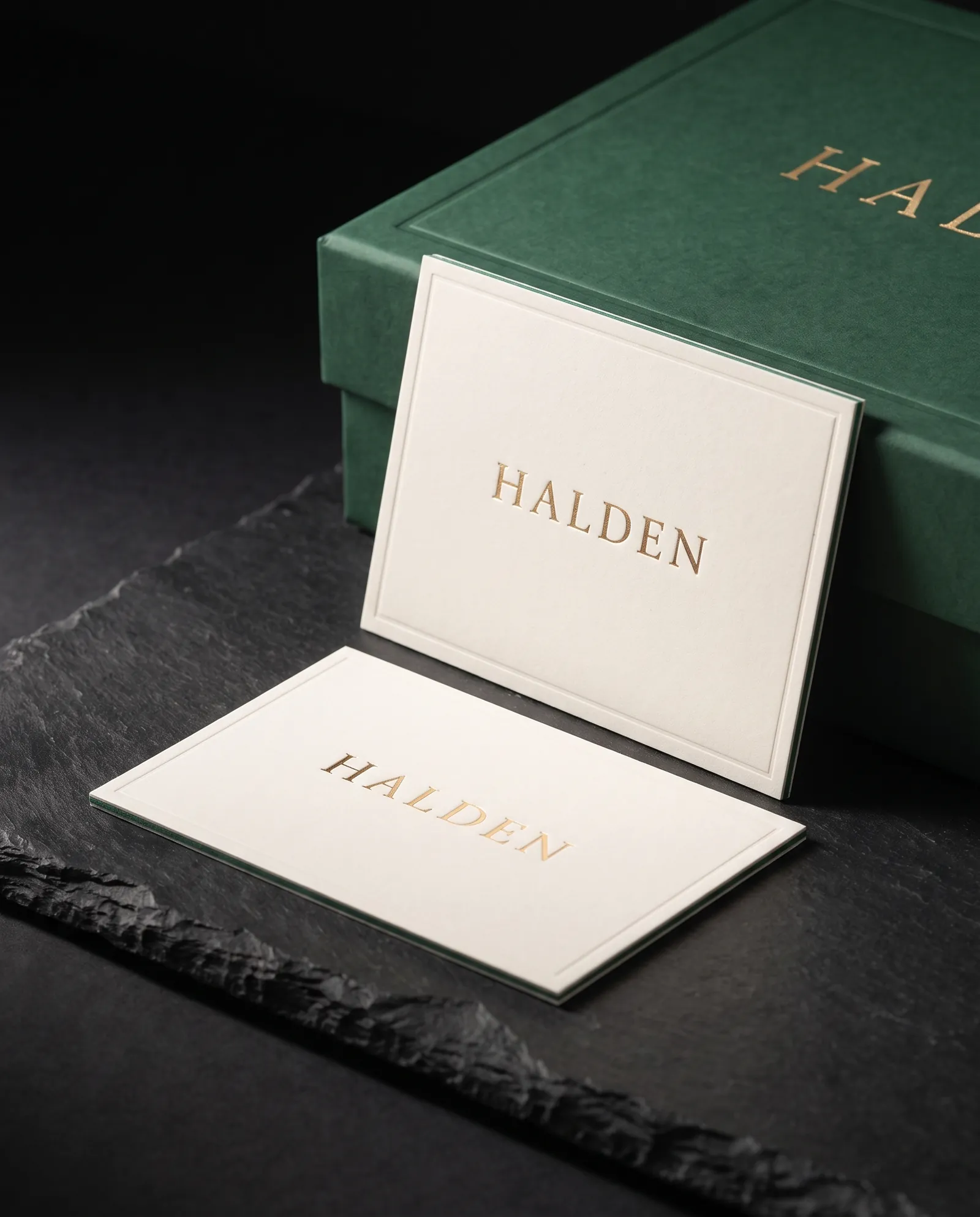
    The insert is the piece people keep. Cotton, one foil, a debossed hairline.

    Printed tissue folded open to reveal an ivory cotton insert card with a gold foil wordmark

    04

    The product.

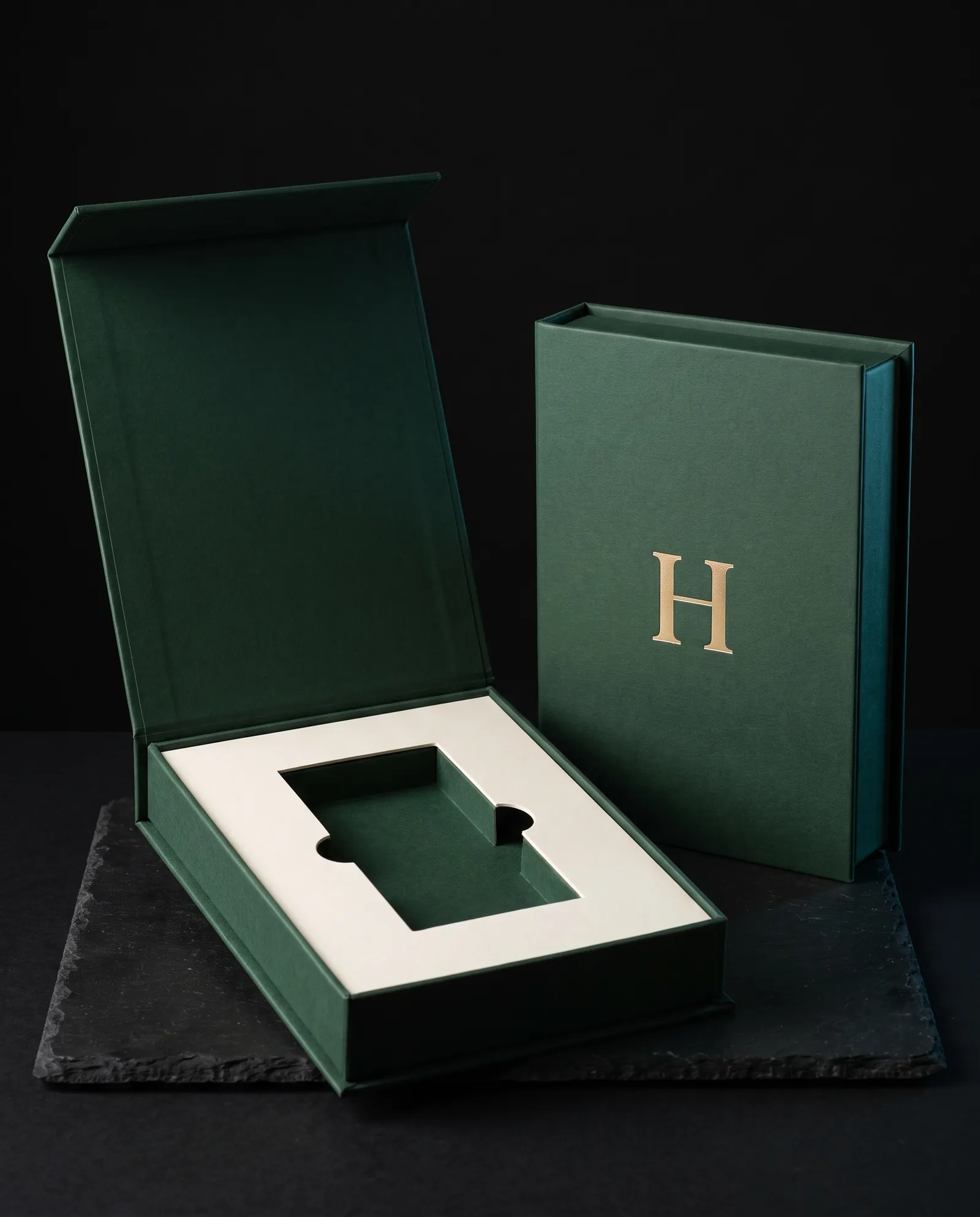
    A box built around what's inside, with a tray that holds it still.

    The insert card and an amber bottle with a foil label in front of the open box and its die-cut tray

    Design exploration.

    Start with the tag or the insert, not the box

    Most brands come to us wanting the box first. We'd usually start smaller. A hang tag or an insert card can be quoted on its own; it's in your customer's hand within seconds of opening, and it carries more of the unboxing experience than people expect. It's also where you find out which foil and which paper you actually love. The box is the biggest commitment in the kit, and it's a better box when that decision is already made.

    Each step reuses the foil and paper you approved in step one, so your branded packaging stays consistent as it grows. We keep your spec and files on record, so we can match a future box to the tags you approved.

    This is the order we'd build a packaging kit in:

    1. 1Two ivory cotton insert cards with a gold foil wordmark and a debossed hairline border

      Insert card or hang tag.

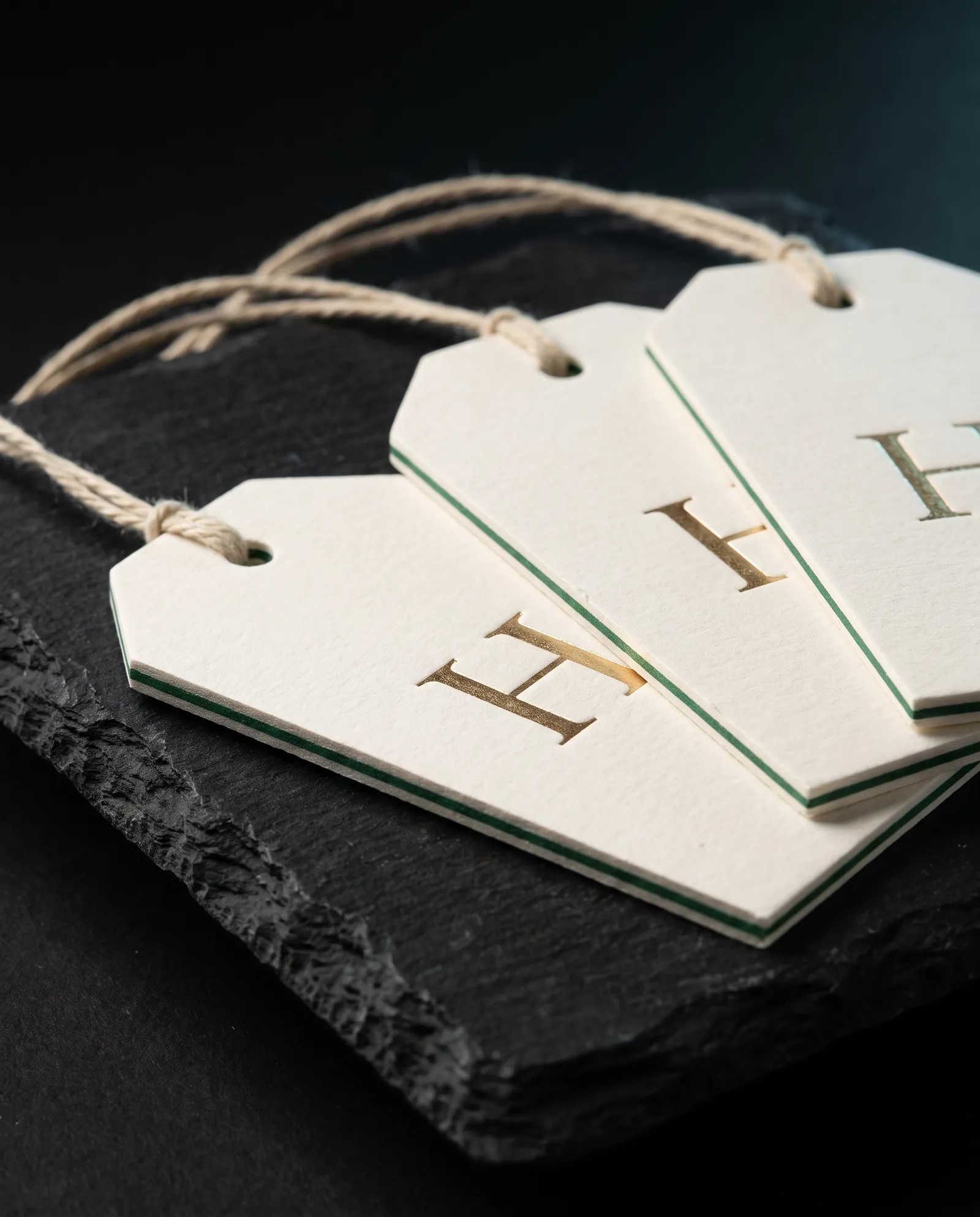
      The piece people hold and read. 32pt cotton with one hot foil, quoted for your quantity.

    2. 2A round green foil seal with an embossed gold monogram closing an ivory envelope flap

      Foil seal.

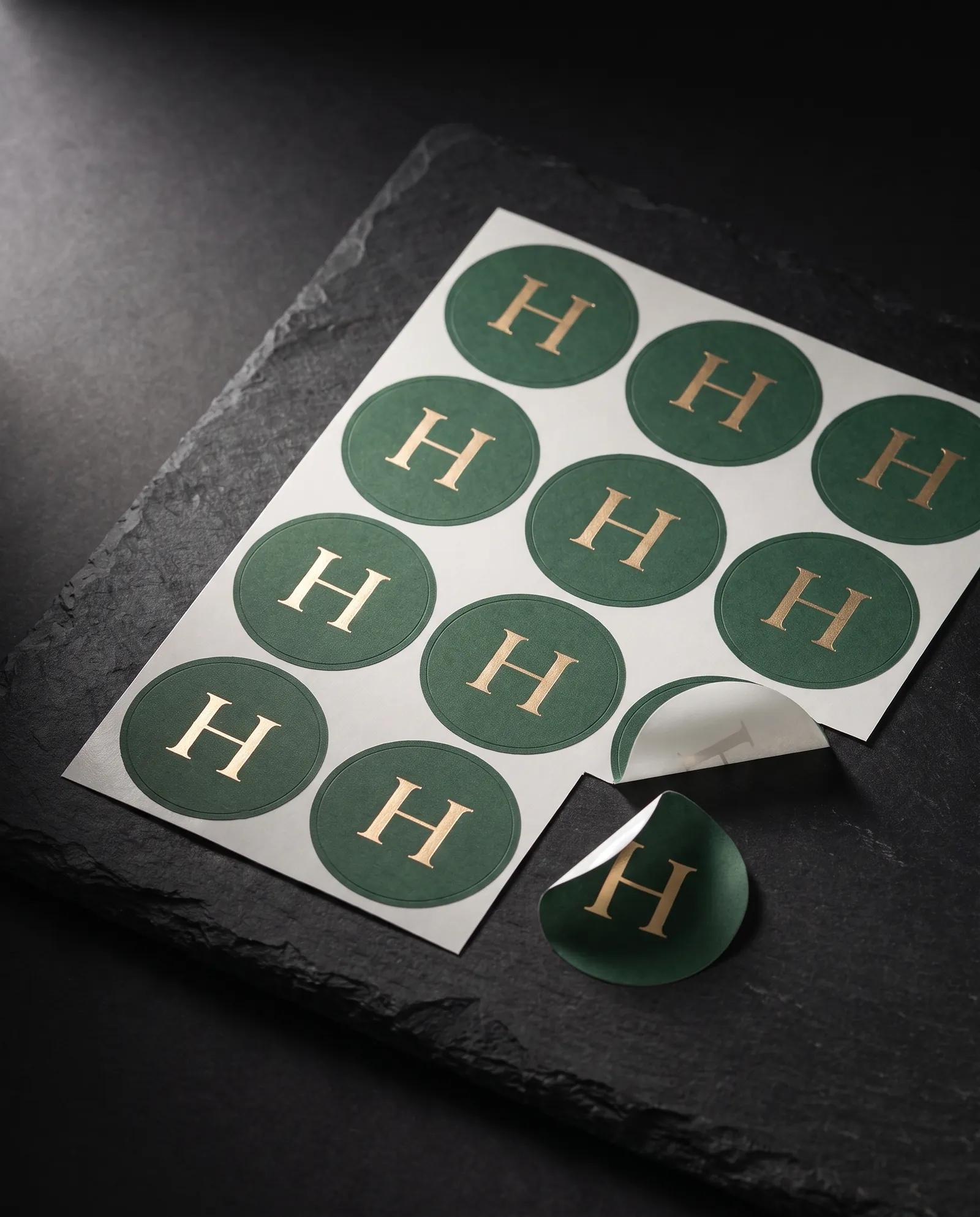
      Closes the tissue, the mailer or the envelope. Kiss-cut on a sheet and embossed so the foil catches the light, quoted for your quantity.

    3. 3Ivory tissue printed with a small green monogram, folded into a green box and closed with a foil sticker seal

      Printed tissue.

      17gsm sheets in one or two spot colors, quoted by quantity.

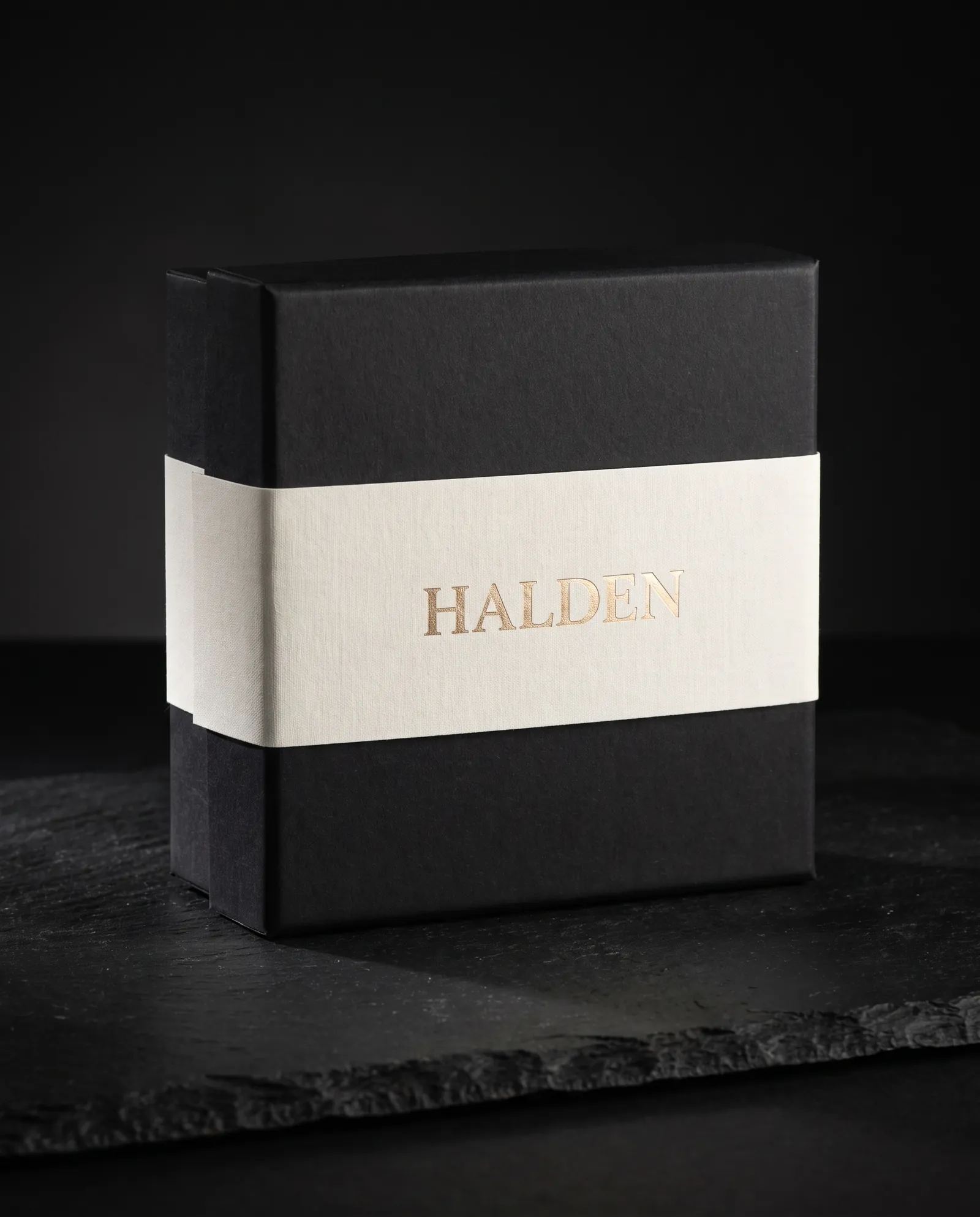
    4. 4A plain black stock box made custom with an ivory cotton belly band stamped in gold foil

      Belly band or sleeve.

      A foil band around a stock box makes it read as yours, quoted for your quantity.

    5. 5Green wrapped rigid box with the lid lifted, showing the chipboard wall and a foil wordmark inside a debossed border

      The box.

      Rigid, magnetic or mailer, with the structure drawn around your product. Quoted.

    Kits

    Everything for a run of shipments, in one foil and one proof.

    Custom Unboxing Brand Kit for 250 Shipments

    250 foil hang tags, 500 foil seals, 250 foil insert cards, 500 sheets of 1-colour tissue.

    From 1195 USD for 250 shipments

    Get this priced

    Priced on a quick quote. A person replies, usually the same day.

    Custom Foil Shipping Kit for 100 Orders: Foil Mailer Boxes, Seals and Insert Cards

    100 foil mailer boxes 8x6x3, 250 foil seals, 100 foil insert cards.

    From 1195 USD for 100 orders

    Get this priced

    Priced on a quick quote. A person replies, usually the same day.

    What a specialty studio does differently on packaging

    1. 01

      Hot foil at small runs.

      Our foil is stamped with a heated metal die, so it bites slightly into uncoated paper and holds a clean, reflective edge. Tags start at 100 pieces; ask us about minimums for boxes. Metallic ink and metallic sticker stock give a softer, satin shimmer. That's a fine product, but it isn't foil, and your quote will say which one you're getting.

    2. 02

      Papers that take an impression.

      Cotton, Colorplan, kraft and textured wraps take foil and deboss with real depth. For tags and inserts we also bond two sheets into one (duplex), so a colored core shows as a stripe on the edge.

    3. 03

      Proofs across the kit.

      The tag, the insert, the seal and the band are checked together, so the gold on the band is the gold on the tag.

    4. 04

      A person checks every file.

      Nothing prints until you approve the proof. If a finish won't work on the material you picked, we tell you before you've paid for it, and we show you what we'd do instead.

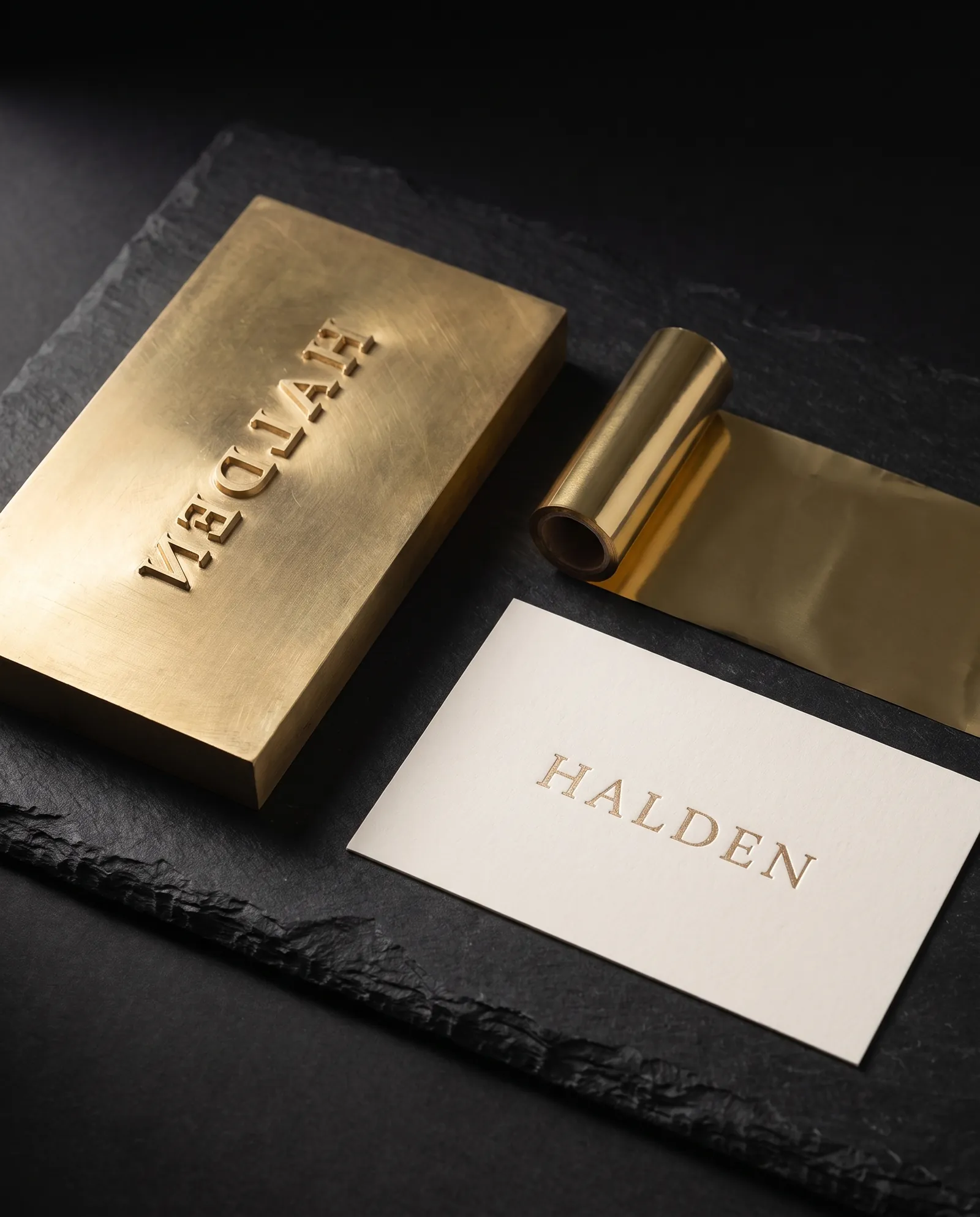
    A brass foil stamping die with a mirrored wordmark, a roll of gold foil and the stamped card
    A foil die is cut in reverse, so the mark reads right on paper.

    Packaging finishes, and the rule each one comes with

    Every finish below is a physical process with a limit. Here's the limit, up front.

    Macro of gold hot foil letters pressed into green uncoated paper

    Hot foil

    Heat and pressure transfer a metal or pigment film from a die onto the paper.

    The rule we design around

    Fine detail survives foil: lines hold to 0.1 mm; we design to 0.15 mm with gaps around 0.25 mm. One solid tone per die, so a gradient becomes a flat color. Foil lands on bare paper or on matte and soft-touch laminate, never on top of printed ink or spot UV.

    White pigment foil letter stamped on black uncoated board

    Foil on dark stock

    Light marks on black or deep-colored paper.

    The rule we design around

    White or pale color on dark paper is pigment foil, because ink sinks in. Black foil on black paper reads as a sheen, not contrast.

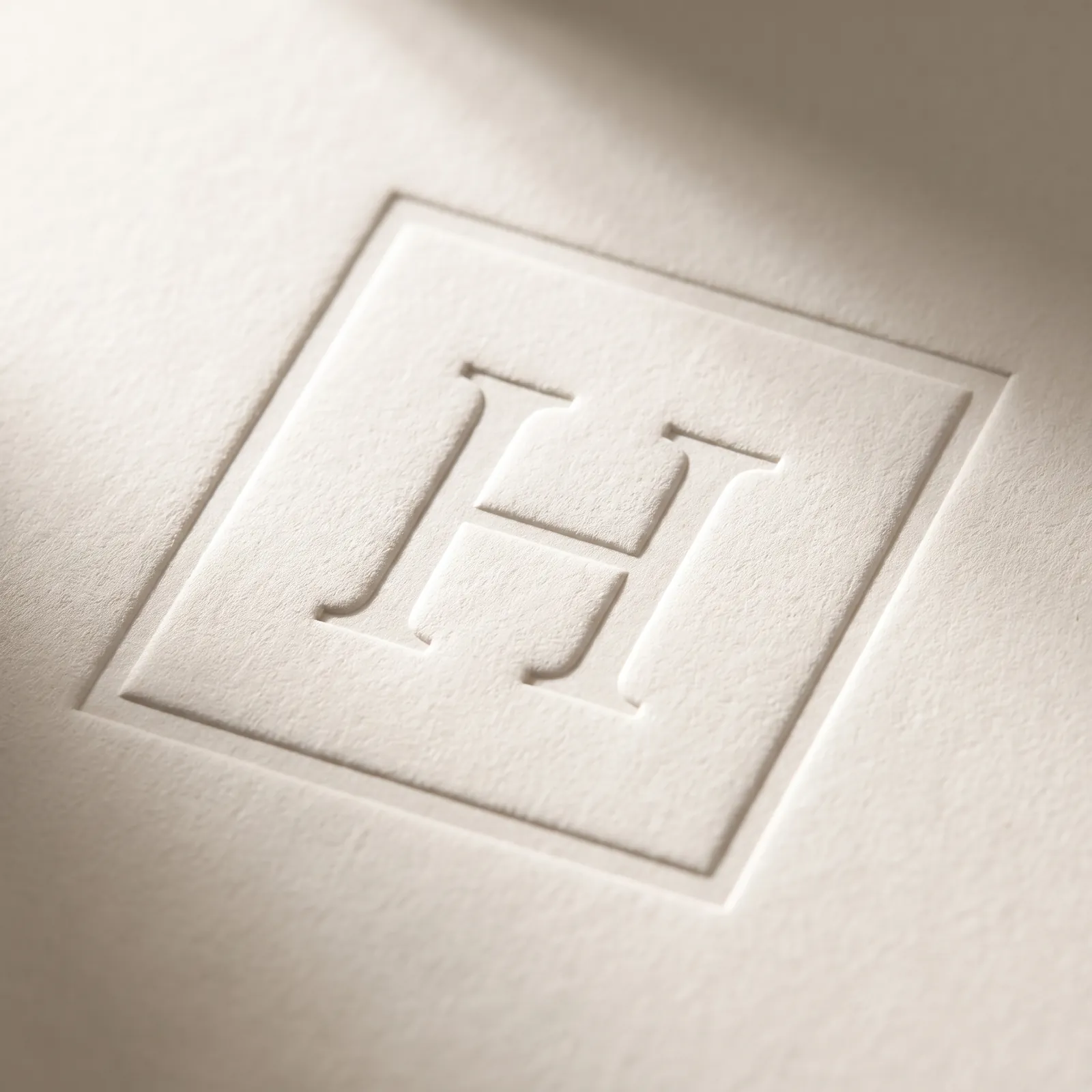
    A blind pressed monogram and border in ivory cotton, read by shadow alone

    Emboss and deboss

    A pair of metal dies presses the mark up or down into the wrap or card.

    The rule we design around

    Needs uncoated, cotton or textured paper. It won't seat in soft-touch or laminate. A blind deboss on black uncoated is very quiet, so we'd add foil in the impression if it has to be read.

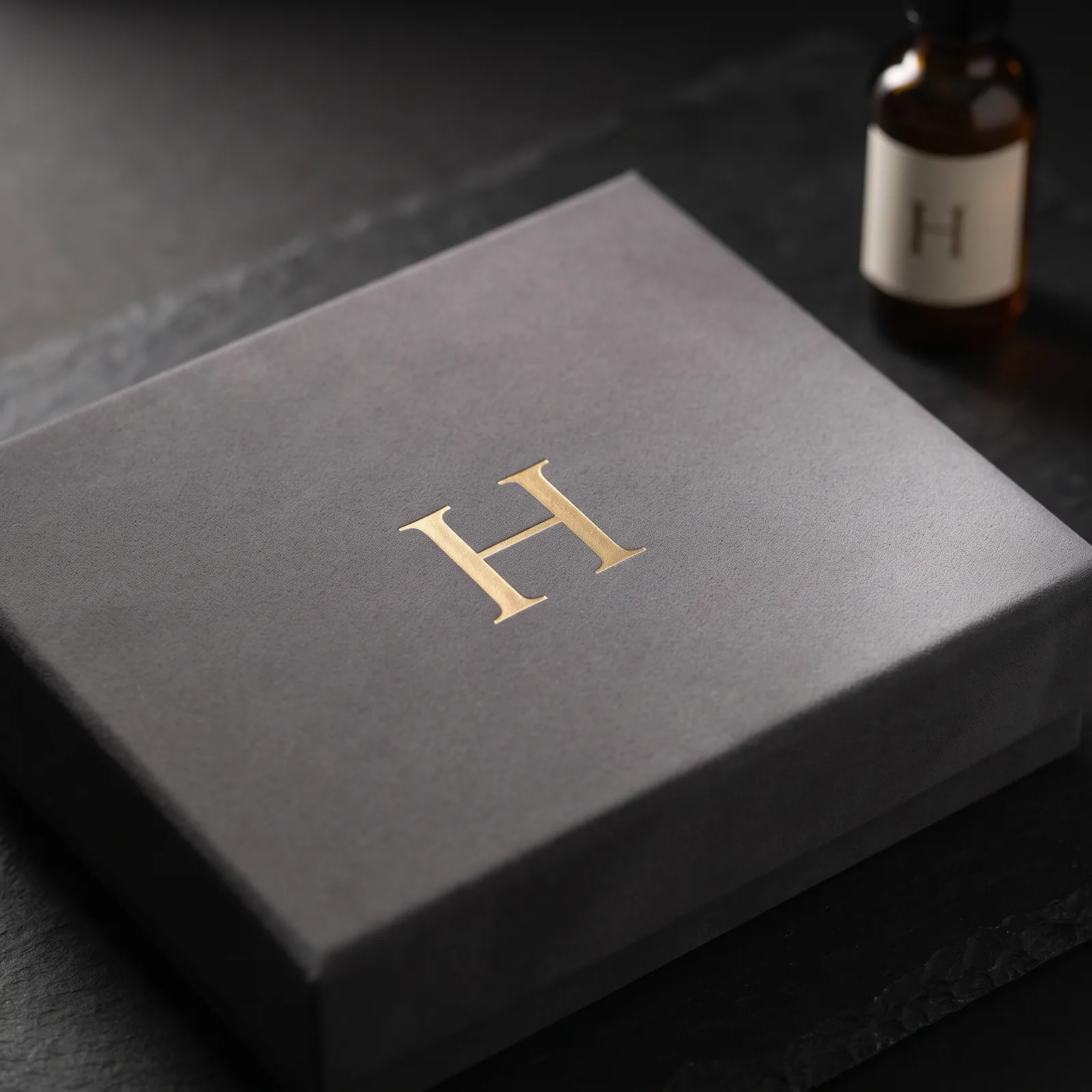
    Grey soft-touch laminated box lid with a gold foil monogram

    Soft-touch laminate

    A matte film with a suede-like drag under the fingers.

    The rule we design around

    Takes foil well, takes no emboss. On a dark box it records fingerprints and courier scuffs, so we steer dark soft-touch boxes to a lighter color or a matte laminate.

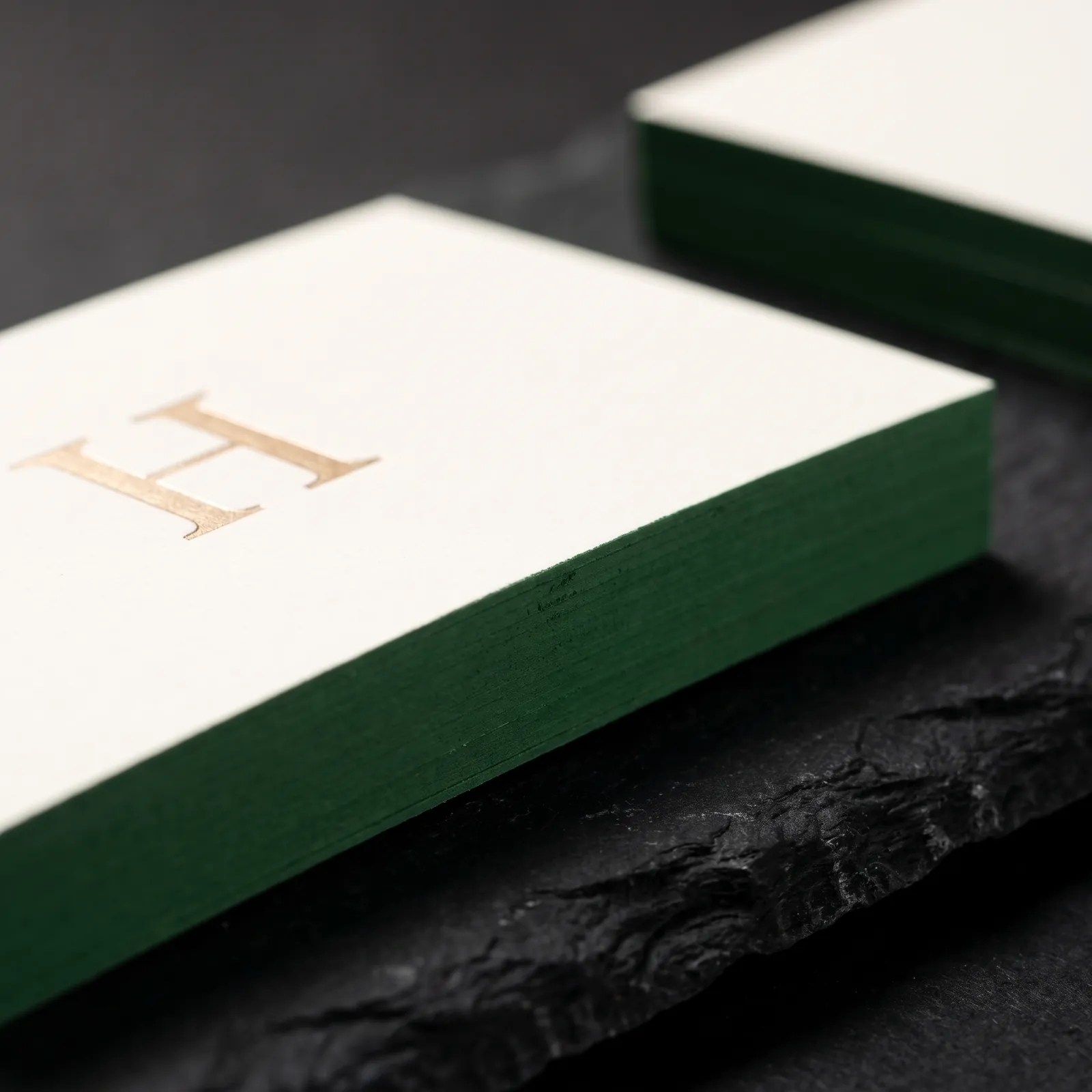
    Thick ivory cotton card with its edge painted forest green

    Painted edges

    Color applied by hand to the edge of a clamped stack of tags or inserts.

    The rule we design around

    Lighter stock can be painted; thicker stock shows a bolder line. Edge foil works with square or rounded corners; a painted edge on rounded corners is confirmed by our press team before we promise it. On black or dark stock we foil the edge instead of painting it.

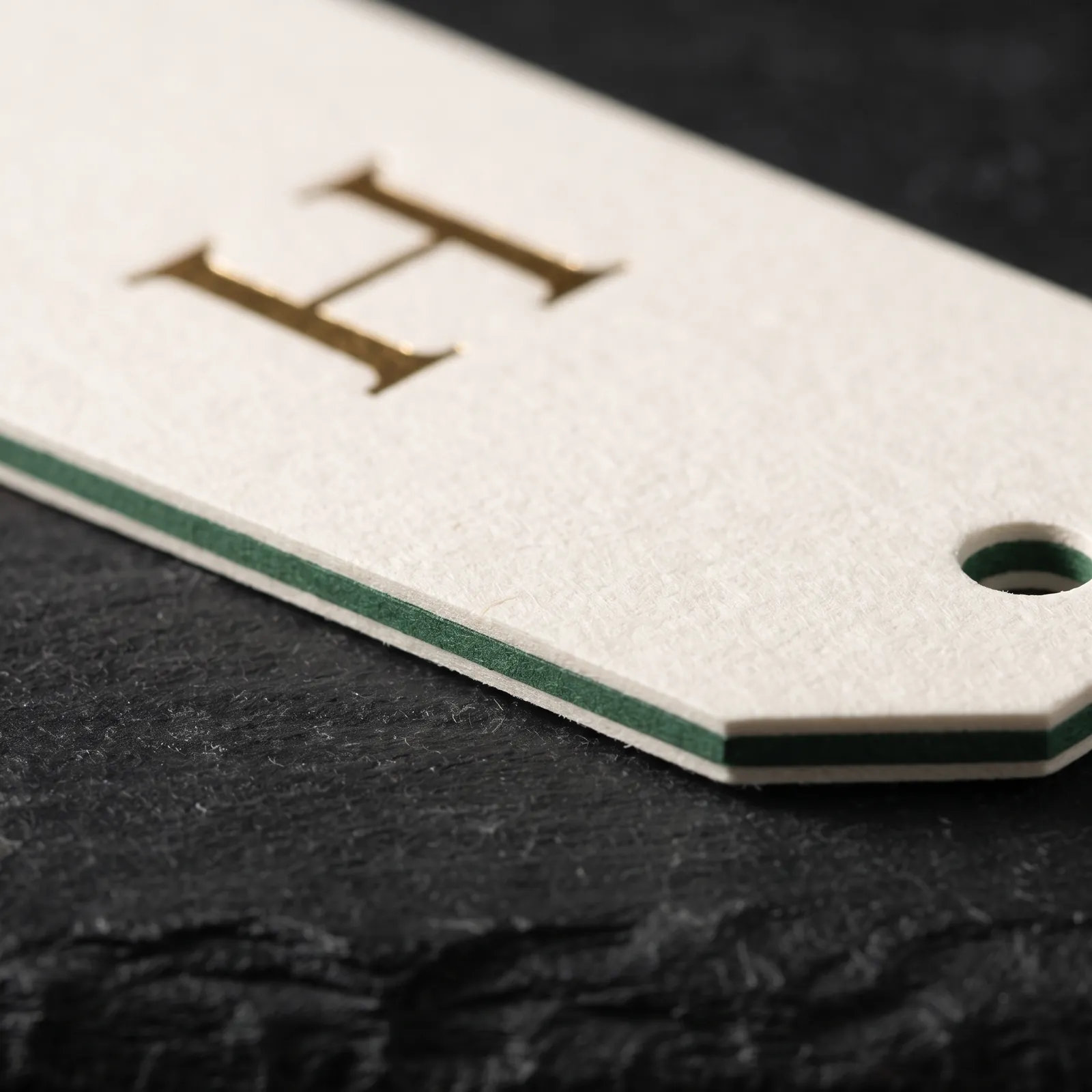
    Edge of a duplex hang tag showing a green layer bonded between ivory cotton

    Duplex

    Two sheets bonded into one tag or insert, each pressed before bonding.

    The rule we design around

    Lets each face carry its own impression without showing through. The join shows as a fine line on every edge.

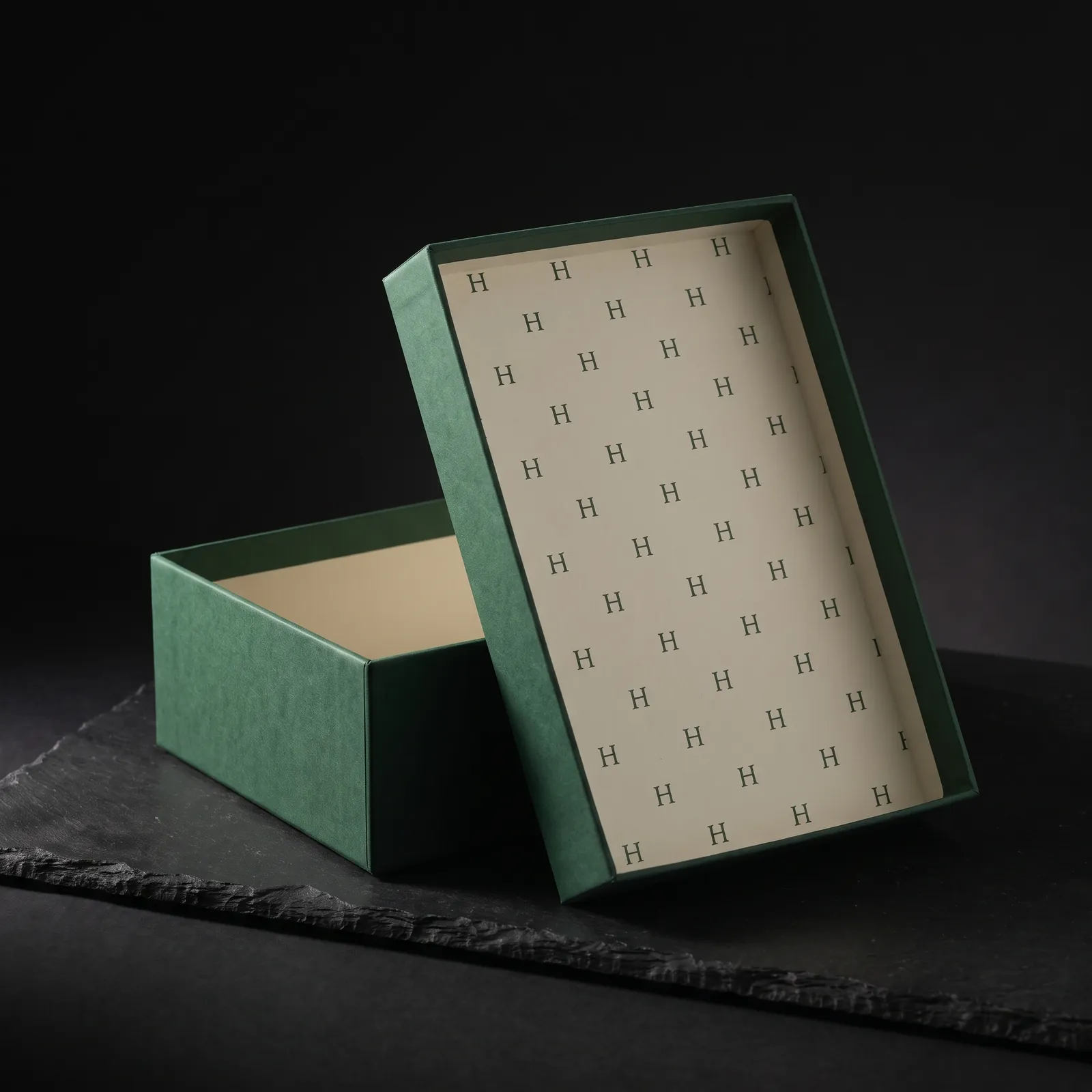
    Inside of a box lid printed with a small monogram pattern

    Printed interiors

    Color or a line of copy inside the lid.

    The rule we design around

    Costs less than most people assume, because the sheet is already on press. The art has to be oriented to read right-way-up when the lid opens, which we map on the dieline.

    Foil, emboss and deboss stay at least 3 mm off folds, scores and glue flaps, because they crack across a fold. QR codes always print in flat ink, never foil or emboss, so every phone can read them.

    What custom luxury packaging costs, in three budgets

    We price packaging the way we'd price a business card: everything in first, then we take things out until it lands on your number. Here are the three places most brands land.

    TierWhat's in itWhat it costsBest for
    EssentialsA foil insert card or hang tag, plus a foil seal, used with a stock box and plain tissue.Each piece is priced by quote for your quantity.A first launch, or testing a foil before committing to a box.
    The matched kit(what we'd recommend)Insert, tag and seal, plus a foil belly band around a stock box. One foil, one paper family.Each piece is priced by quote for your quantity.Most brands. The band does much of what a printed box does, at a fraction of the cost.
    The full buildA custom rigid or magnetic box with foil and deboss on an uncoated wrap, a printed interior and a paperboard tray, plus the kit.Quoted. Pricing depends on size, quantity, wrap and finish. Freight quoted with the box.Gifts, launches, press sends: anything where the box is part of the product.

    If your product ships in a mailer and gets opened at a desk, you probably don't need a rigid box. Spend that money on the insert, because that's the piece people keep.

    How custom packaging gets made with us

    Tell us the date it has to be in hand first. It decides which path is even possible.

    1. 01

      Tell us the product.

      Dimensions, weight, quantity, how it travels and the date you need it. Start with Peppermint Studio, or with a person.

    2. 02

      We check the spec and price it.

      A person confirms every finish will work on the material you chose before you pay.

    3. 03

      We draw the structure (boxes only).

      We build the dieline around your product's dimensions and discuss a structural prototype so you can test the fit.

    4. 04

      You approve one proof.

      Every piece in the kit, checked together. Nothing prints until you approve it.

    5. 05

      Production.

      About 3 weeks after proof approval for printed pieces; about 4–5 weeks for boxes, prototype included. Estimates, not guarantees. Ask about scheduling, so for a launch, start about 8 weeks out.

    6. 06

      It ships.

      Shipping on printed pieces is shown on each product page; boxes ship by freight, quoted with the box.

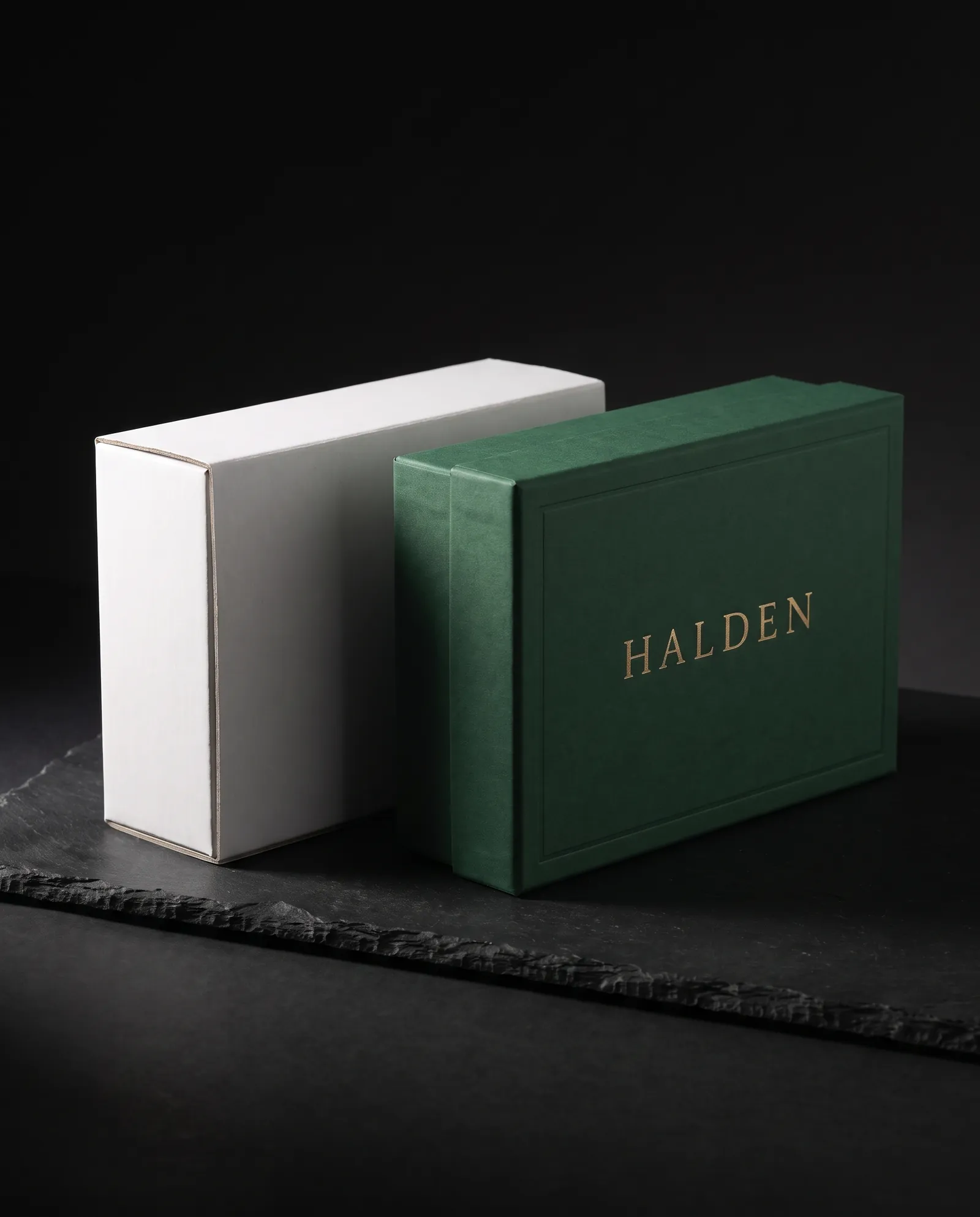
    An unprinted white structural prototype beside the finished green rigid box
    We prototype the structure before the run.

    Custom packaging questions

    What is the minimum order for custom packaging?

    It depends on the piece. Hang tags and foil insert cards are quoted by quantity, foil seals are quoted by quantity, and printed tissue is quoted by quantity. For custom boxes, ask us about minimums, and we'll price what the structure and tooling allow at your quantity.

    How much does custom luxury packaging cost?

    Tags, inserts, seals and bands are priced by quote for your quantity. Boxes are quoted because size, board, wrap, finish and quantity all move the price. Freight for boxes is quoted separately because they ship by volume.

    How long does custom packaging take?

    Plan on about 3 weeks of production after you approve the proof for printed pieces like tags, inserts, seals and bands, then transit. Custom boxes take about 4–5 weeks, with time for a structural prototype. These are estimates, not guarantees. Ask about scheduling, so if you have a launch date, tell us at the start and we'll tell you straight away whether it's realistic. For a launch, start about 8 weeks out.

    Can every piece of my packaging match?

    Yes. That's the reason to build the kit with one studio. We run the tag, insert, seal and band in the same hot foil and the same paper family, and you approve them together on proofs. One caution: texture changes how foil reads. Gold looks brighter on smooth label stock than on textured cotton, because the fibers break up the reflection, and we'll show you that on the proof rather than promise an identical look.

    Do you design the dieline?

    Yes. Send the product's dimensions and weight, or the product itself, and we draw the structure and dieline around it. You build your artwork on our dieline, or our designers handle the custom packaging design for you through our packaging artwork service. You don't need a finished dieline to start.

    Can I start with hang tags and add boxes later?

    Yes, and it's how we'd usually suggest building a kit. We keep your approved spec and files on record, so when you add a seal, a sleeve or a box months later, it's matched to the foil and paper you already approved.

    Do you ship custom packaging internationally?

    Yes. Ask us for a shipping quote for your destination; transit times vary.

    Is shipping included?

    Printed pieces such as tags, seals and bands ship free within the continental US; anywhere else, shipping is shown at checkout before you pay. Boxes are different: they ship by volume, so freight is quoted with your box and shown on the quote before you pay.

    Can I see samples before I order?

    Yes. Our sample kit is 8 USD, with a 10 USD credit toward your first order. It's built around cards rather than boxes, but it holds our papers and a hot foil swatch card with 40 stamped foils, the same foils our tags, inserts and seals are made with. For a custom box, ask us about a structural prototype before the run is made.

    What's the difference between hot foil and metallic printing on packaging?

    Hot foil is a metallic film pressed onto the paper with a heated metal die. On uncoated stock it leaves a slight bite and a clean, reflective edge. Metallic ink, or a sticker printed on metallic stock, gives a softer satin shimmer with no bite. Both are good products; they just aren't the same thing. Every foil we quote is stamped, and it lands on bare paper or a matte or soft-touch laminate, never on top of printed ink.

    Can you foil or emboss a soft-touch box?

    Foil, yes: hot foil bonds well to soft-touch and matte laminate. Emboss and deboss, no: laminate is a stiff film that won't take a clean impression, so for a pressed mark we switch that wrap to an uncoated paper. Also worth knowing before you choose it: soft-touch on a dark box shows fingerprints and courier scuffs, so we'd steer a black soft-touch box toward a lighter color or a matte laminate.

    Is custom packaging worth it for a small business?

    Custom packaging for small business doesn't have to mean all of it. If your product ships in a mailer and gets opened at a desk, a foil insert card and a foil seal on plain tissue do most of the work: both quoted for your quantity. A custom rigid box earns its cost when the box is part of the product: a gift, a launch, a press send. Tell us which one you are and we'll say where the money does the most.

    What makes packaging luxury packaging?

    Luxury packaging is packaging where the materials and finishes do the persuading before the product does: a rigid box that arrives built rather than flat, a wrap of textured or cotton paper, a hot foil mark you can feel, an insert that holds the product still. Most luxury packaging boxes are rigid for that reason: chipboard walls wrapped in paper, never flat-packed. It's less about price than restraint. One or two finishes done well read as more expensive than five competing for attention.
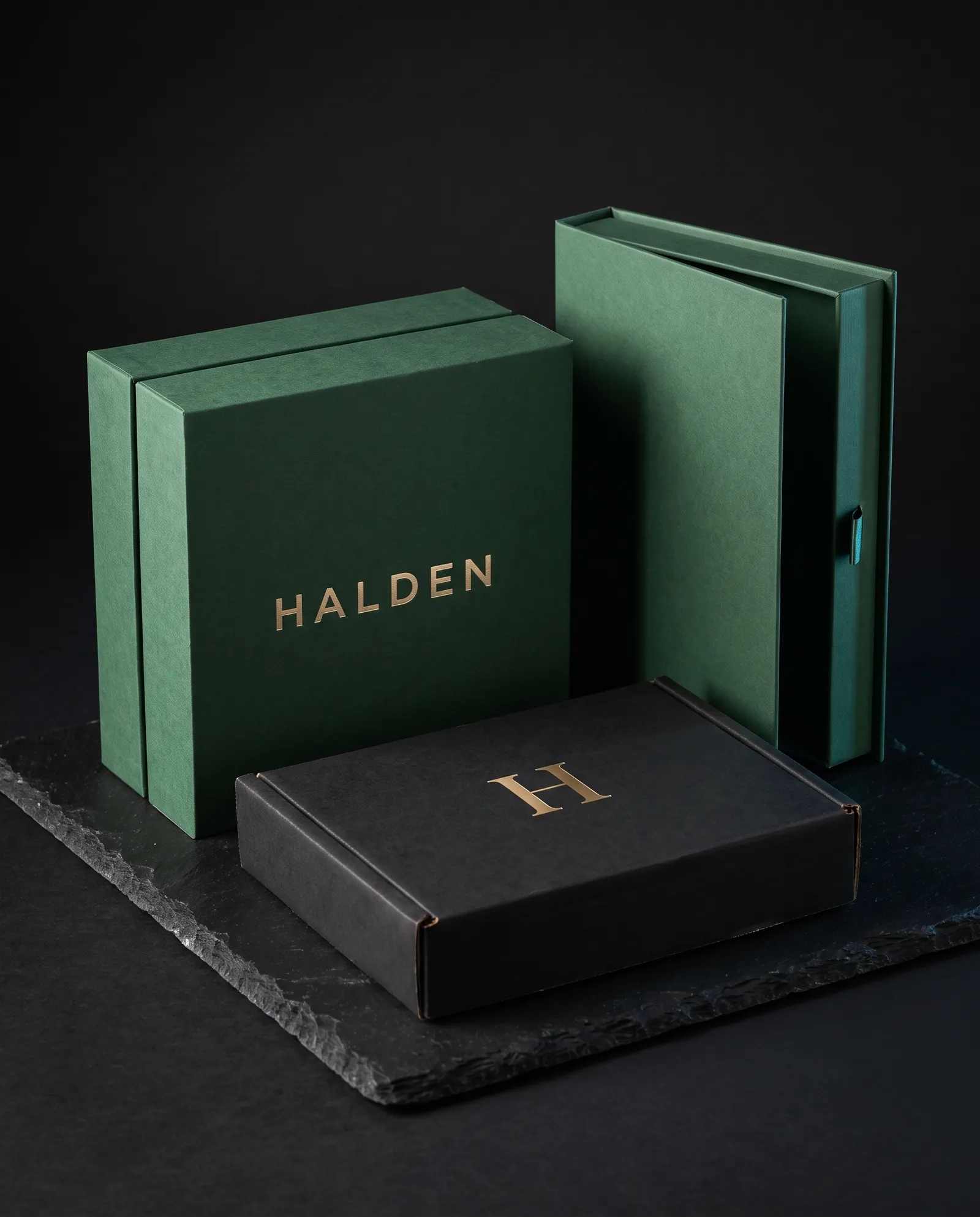
    Artwork for the actual box

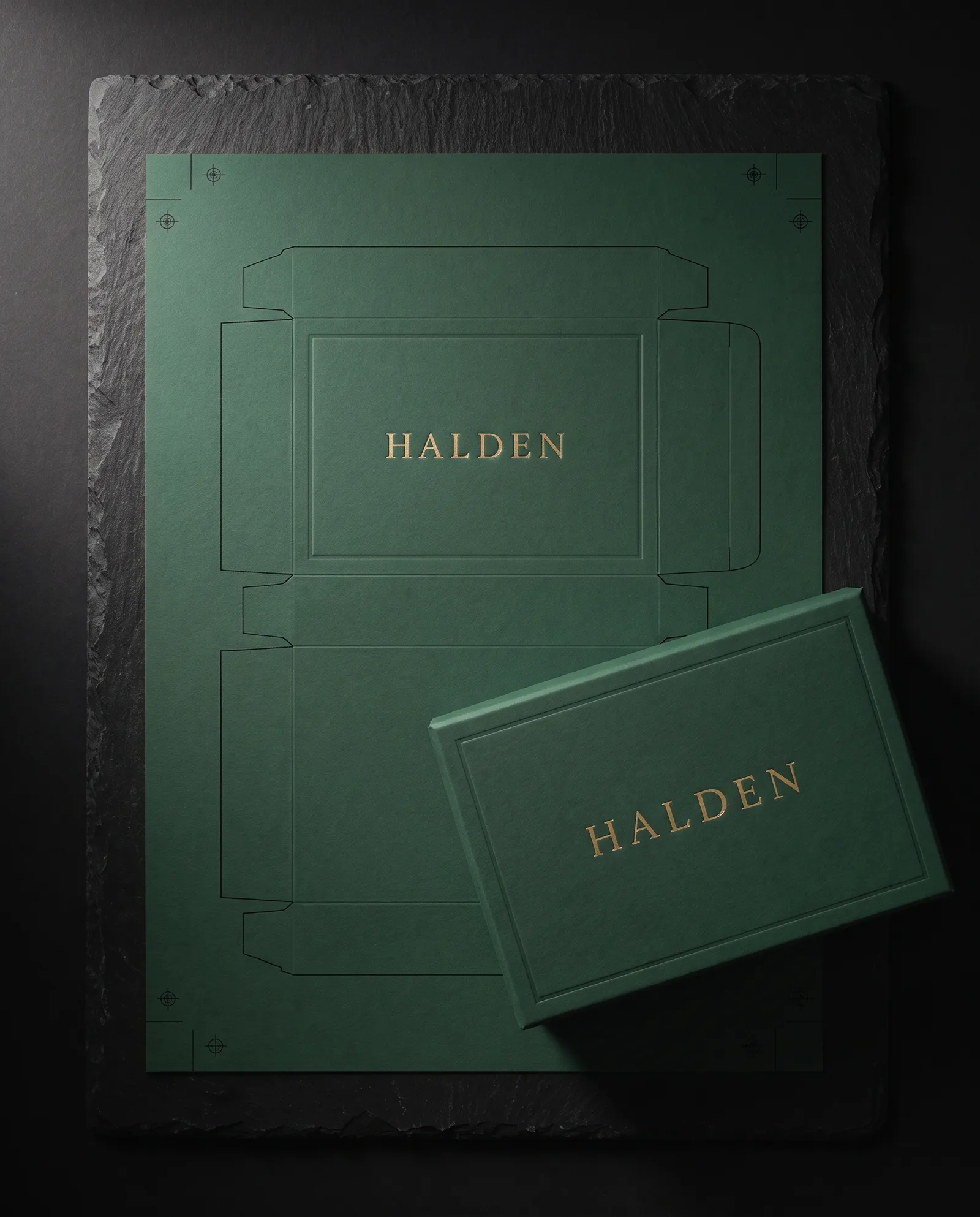
    Custom packaging design starts from the real dieline, not a flat rectangle: panels, folds and finishes placed where they'll actually land. Foil and deboss areas go on their own named layers so the press knows what gets which treatment.

    A printed box wrap laid flat on its dieline with crop marks, beside the finished box

    Start with the piece your customer holds first

    Tell us what you're packing and when it has to arrive. You'll get a spec, a price for your quantity and a plain note on anything that won't work, before anything prints.