Custom magnetic boxes
Book-style rigid gift boxes with a hidden magnetic flap.
Get a price
About 3 weeks after proof approval, an estimate. Freight quoted with your boxes.
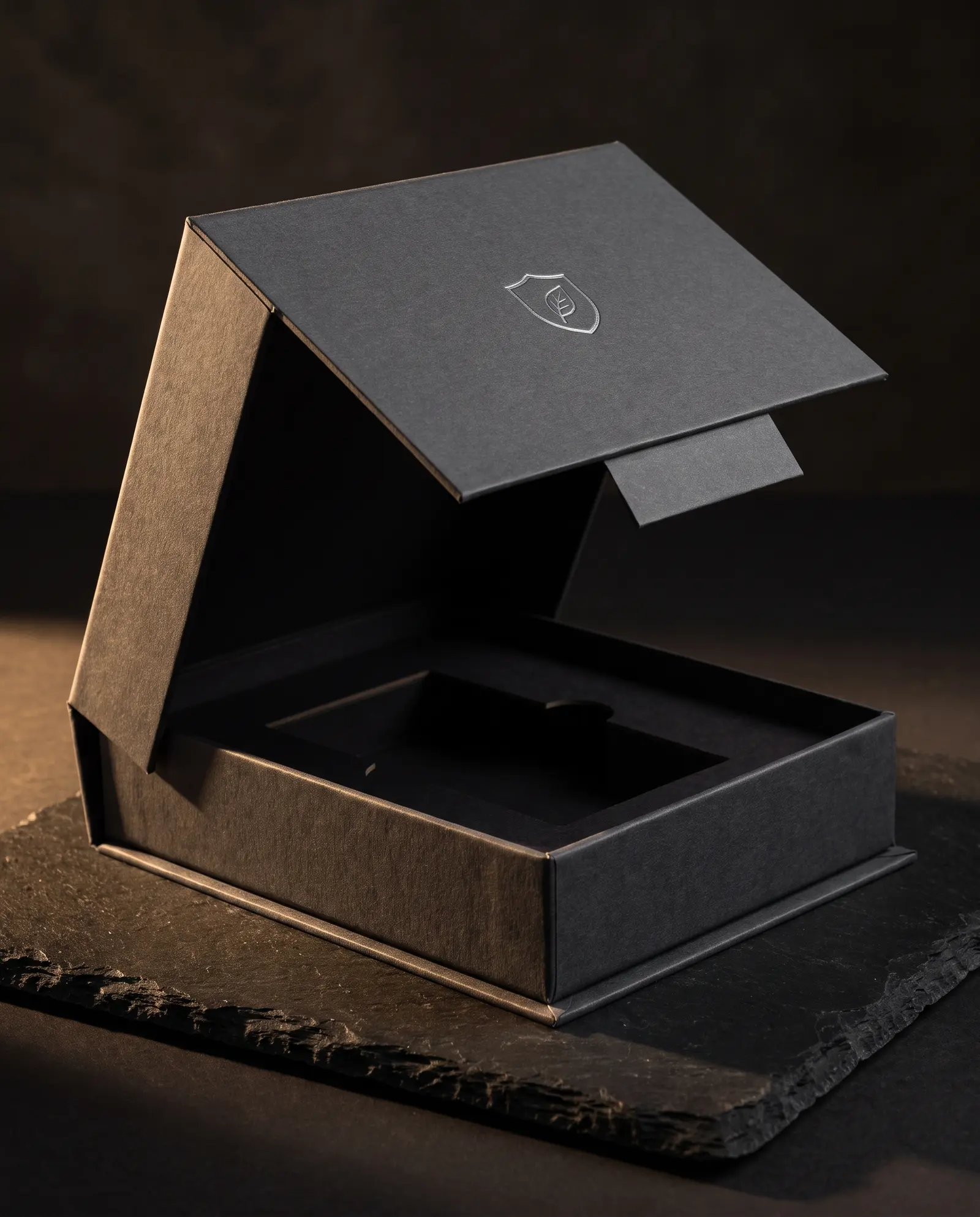
Custom magnetic boxes are rigid gift boxes with the lid built in: a hinged cover that folds over the front and closes on magnets hidden under the wrap. We build them to your product's dimensions and finish the wrap with real hot foil, blind deboss and a printed interior. Past custom box projects have run about $1,400–$2,000 for the whole run (context, not a quote), set by size, quantity, wrap and finish. Runs usually make sense from about 100 boxes, and shorter pilot runs are quoted on request. Production takes about three weeks after proof approval, with a prototype before it. Estimates, not promises.
A human checks every proof.
Structure, dieline and artwork are reviewed by a person before anything goes to press.
Prototype before the run.
You check the fit on a physical prototype of the structure before we produce the order.
Freight quoted with your boxes.
Built boxes ship by volume, so freight is priced with the job, not hidden in it.
How a custom magnetic box works
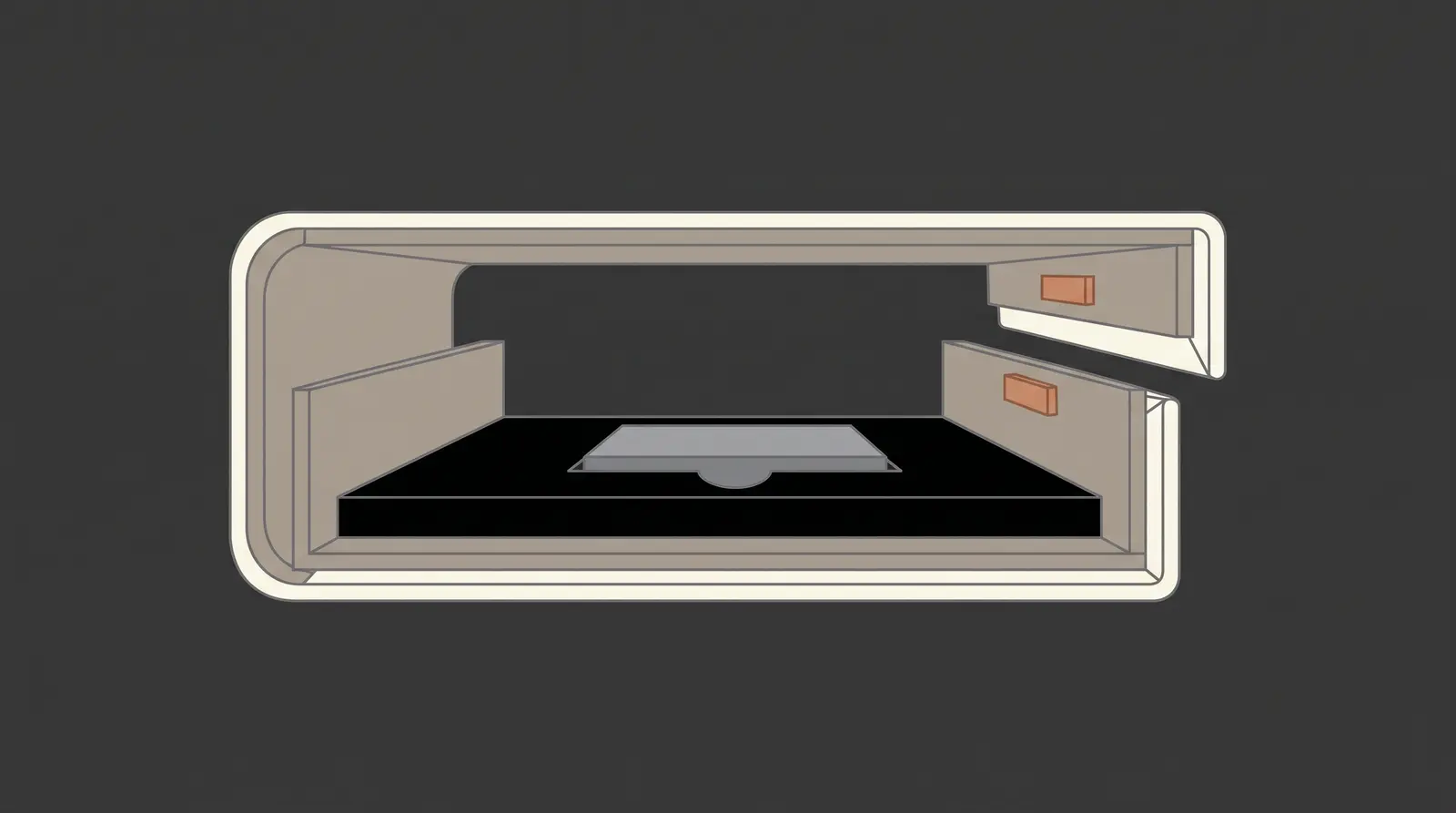
A magnetic closure box is a rigid box with the lid attached. The base is a tray of chipboard walls wrapped in paper. The cover is one wrapped panel, glued along the back wall, that runs over the top and folds down the front as a flap. Thin magnets sit under the wrap, one in the flap and one behind the front wall, so the flap pulls shut with a soft snap and lies flush. You never see them.
That's most of why it feels expensive. Nobody looks for somewhere to set a lid down. The box opens like a book, stays in one piece, and closes with a sound people notice.
The honest part comes before the pitch: the magnets hold the flap closed on a table, not in the back of a courier's van. A magnetic box isn't a shipping box. It travels inside an outer carton, and because it arrives built, you pay to move the air inside it. We price that freight with the job, so it doesn't surprise you later.
Magnetic gift boxes: stock or custom?
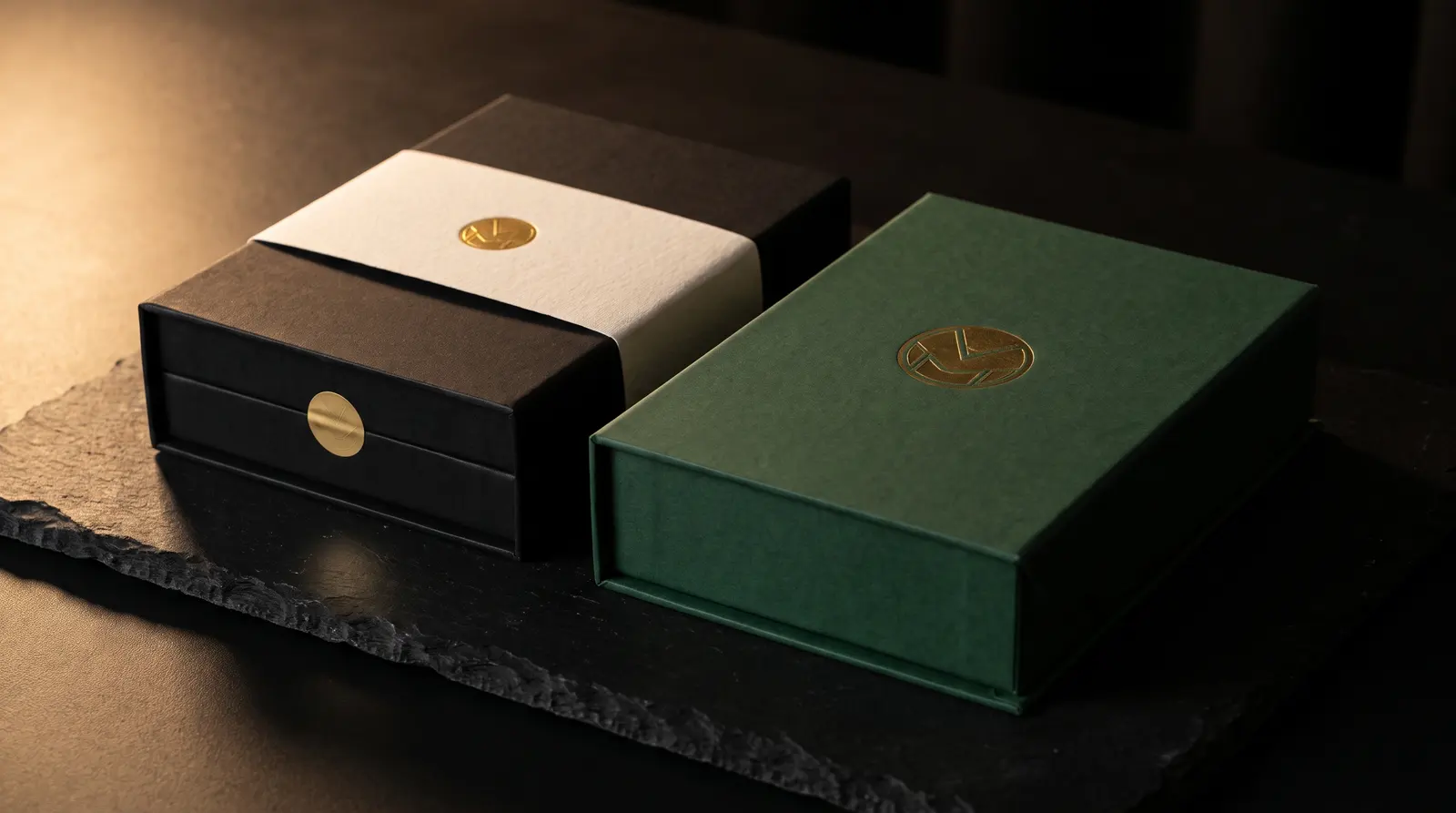
If you need a black magnetic gift box in a standard size next week, buy a stock one. Retail magnetic gift boxes are inexpensive and quick to get, and we don't sell them. What we can do is make a stock box look like yours: a foil belly band around it (10 × 2 in, one foil, from $295 for 100) or a foil seal across the flap (from $195 for 250). That's the least expensive way to put your mark on a box, and you can change it every season without new boxes.
A custom box with magnetic closure earns its cost when one of these is true:
- The product doesn't fit a stock size. A loose fit rattles, and padding it out looks packed rather than presented.
- The wrap has to carry the brand. A specific colour, a paper with tooth, foil on the flap, a deboss you can feel.
- The inside matters. A printed lid interior, or a tray cut to the exact shape of the product.
- The box has to match the rest. The same foil and paper language as your cards, hang tags and insert cards, checked on one proof.
Collapsible or fixed: how the box ships
A fixed magnetic box is glued up before it leaves production. It's the most solid in the hand and the most expensive to move, because every box travels at full size.
A collapsible magnetic box ships flat and is folded into shape on arrival. It costs far less to ship and store, which matters when you're packing a long gifting list at your own office. The trade-off is feel: the walls are a little less rigid than a glued box, and someone has to spend a moment setting up each one.
Our recommendation: if the box goes straight into a client's hands, build it fixed. If you're storing and packing hundreds yourself, ask us to price collapsible beside it and compare the freight.
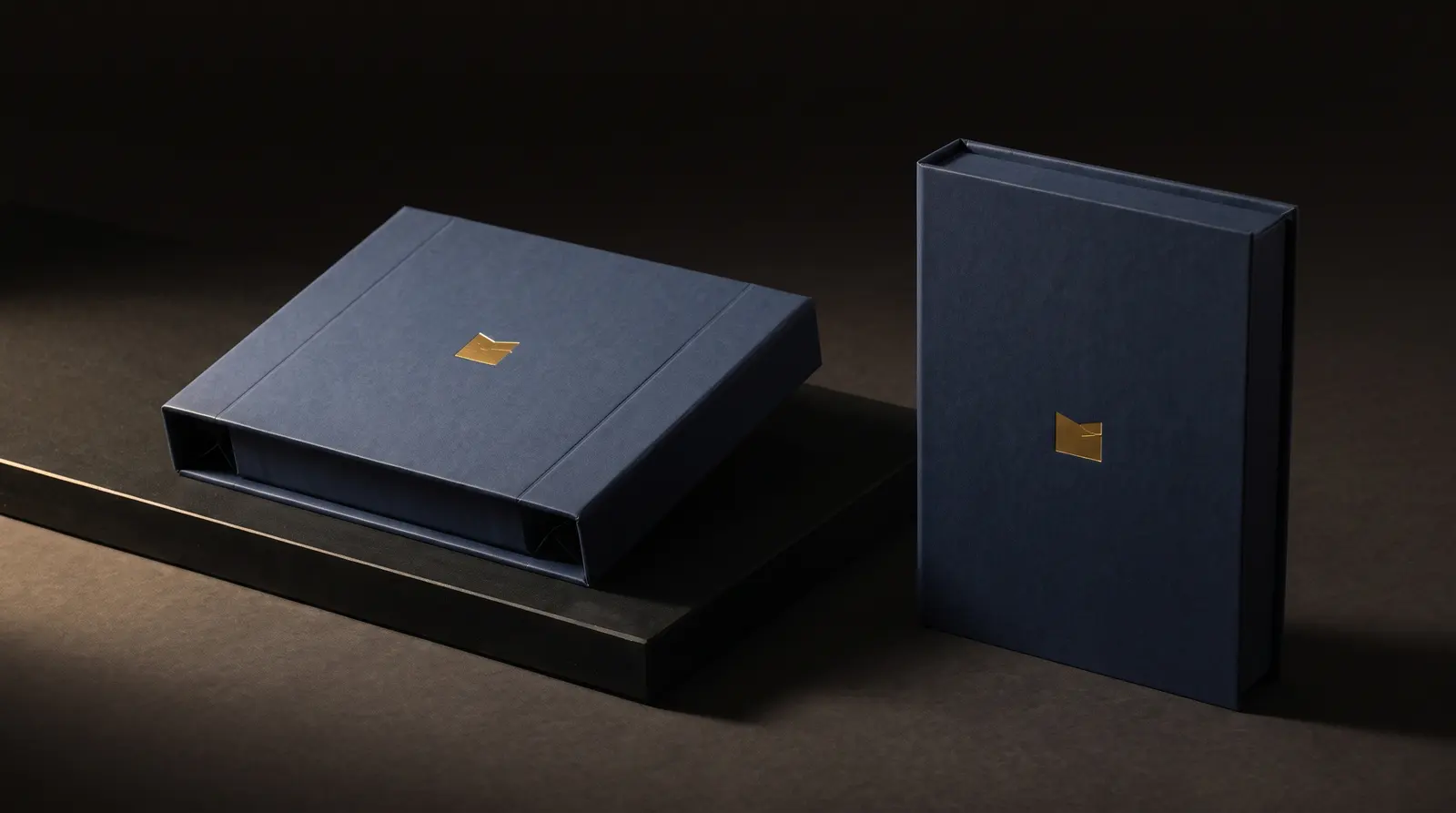
Foil, deboss and wraps for magnetic boxes
The wrap is the sheet of paper glued over the board, and it's where the brand lives. Finishes behave differently on a box than on a business card: there's a hinge, a flap and a courier to survive. Here's how we plan them.
The wrap
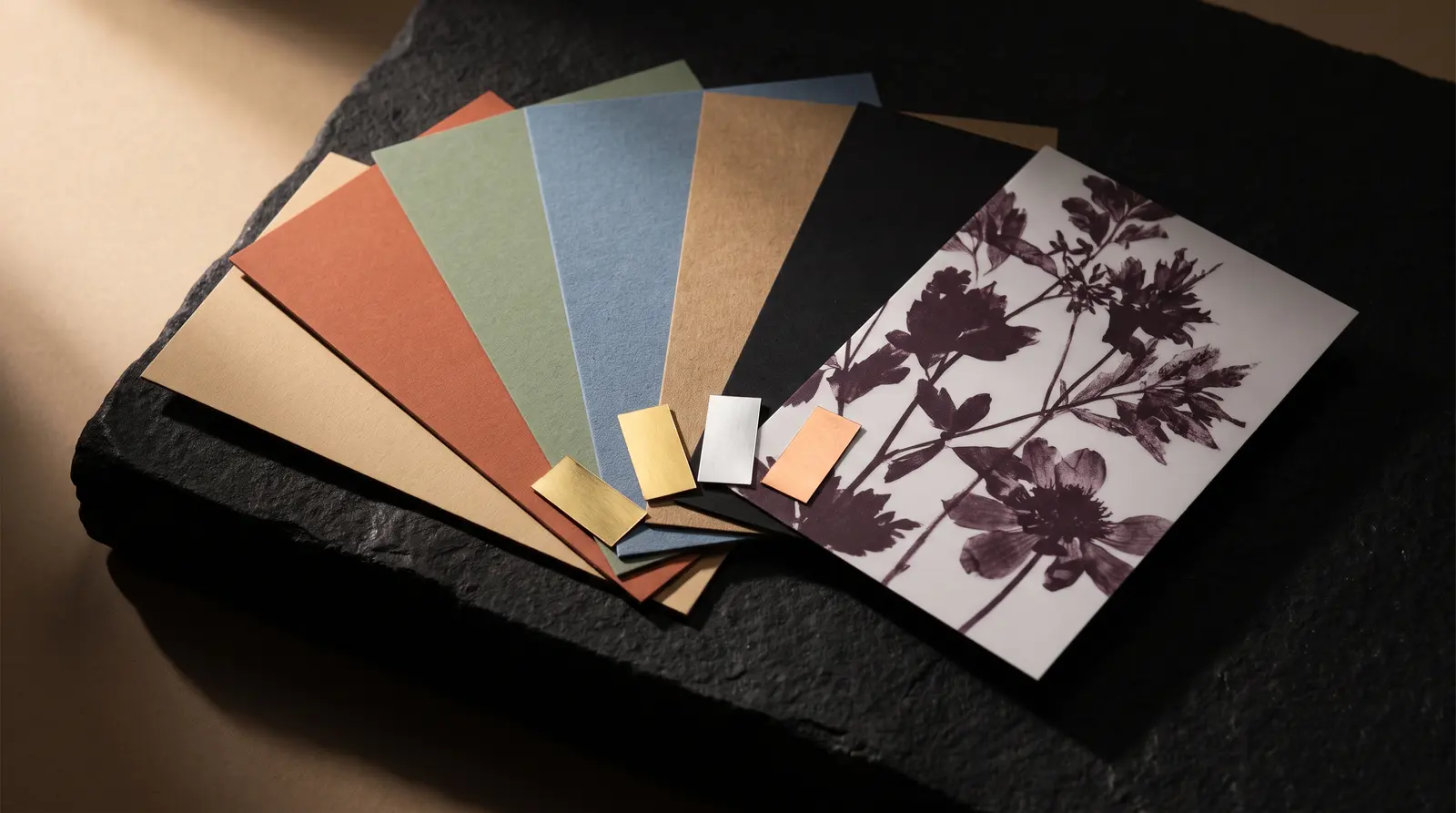
We wrap magnetic boxes in coloured uncoated paper (like Colorplan), natural kraft, black uncoated paper, or a printed text-weight sheet finished with matte or soft-touch lamination. Uncoated wraps take an impression and feel like paper. Laminated wraps take full-colour print and resist moisture, but they won't take a deboss.
Hot foil on the flap
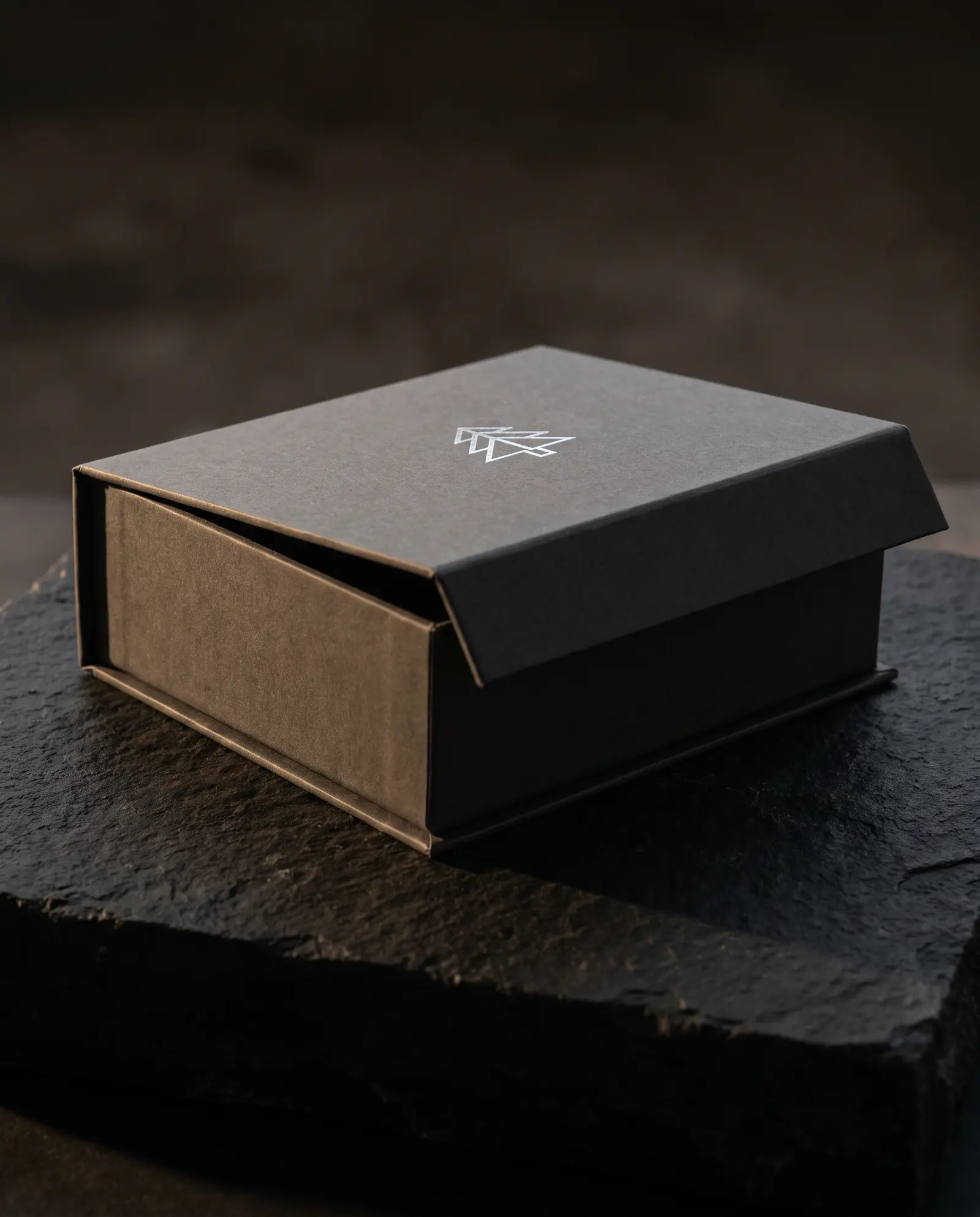
Hot foil is a metal film pressed onto the wrap with heat and a die. We stamp the wrap flat, before it goes onto the board, so every corner is turned after the foil is down. Metallic and pigment foils read on any colour, dark wraps included, though black foil on a black wrap is a quiet sheen rather than contrast. Foil bonds well to matte and soft-touch laminate, but not to ink: on a printed wrap we knock the ink out under the foil so it lands on bare paper. Foil lines thinner than 0.6 mm break up, so we thicken hairlines before the die is made. Black foil on natural kraft is the least expensive build that still feels like a gift; the Fletcher box is exactly that.
Deboss and emboss
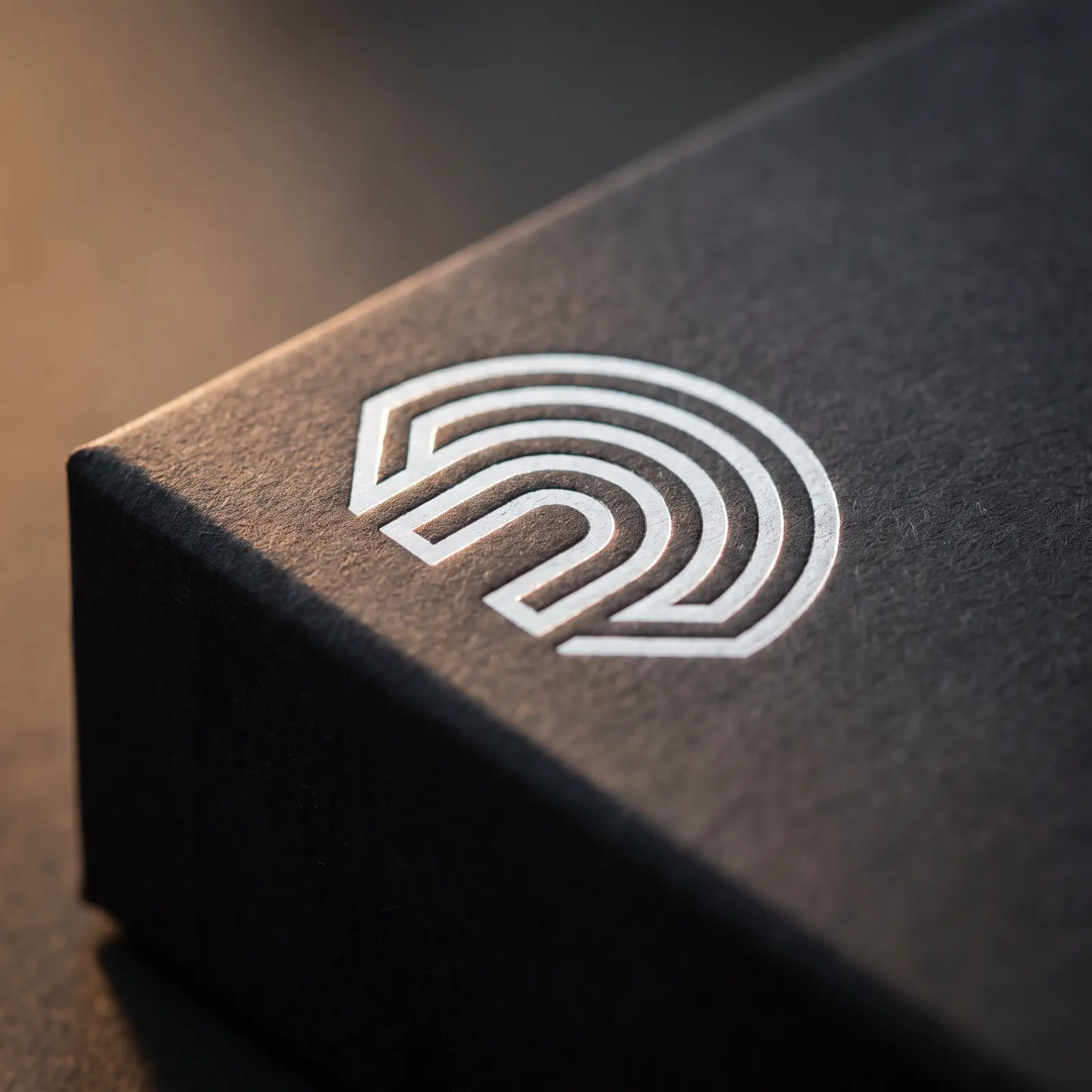
A blind deboss presses the mark into the wrap with no ink; an emboss raises it. Both need an uncoated wrap, because laminate is a stiff film that won't take a clean impression. On black paper a blind deboss is very quiet, a tone-on-tone mark you find with your thumb. If the mark has to be read across a table, we put foil in the impression. With black foil and an emboss on box board, we keep the impression shallow so the foil stays crisp.
The hinge is a fold
This is the landmine specific to magnetic boxes. The spine where the cover bends is a fold, and foil and embossing crack across a fold. We keep every finish at least 3 mm from the hinge, the flap edge and every turn-in, so the mark goes on the top panel or the face of the flap, not wrapped over the spine. You'll see that clearance on the proof.
Soft-touch on a dark box
Soft-touch is the suede-like finish people remember. On a black or deep navy magnetic box it also records every fingerprint and every scuff from the courier. If the box has to be dark and look clean on arrival, we'd choose an uncoated black wrap with foil, or a matte laminate, and pack it in a proper outer carton.
Kraft and white
Printing ink is translucent, so light colours printed on kraft go dull as the brown shows through. Black, deep colours and foil read best on kraft. For a white mark on kraft or black, we use white pigment foil, which stays opaque where ink would sink in.
Inserts: a recess cut to the product
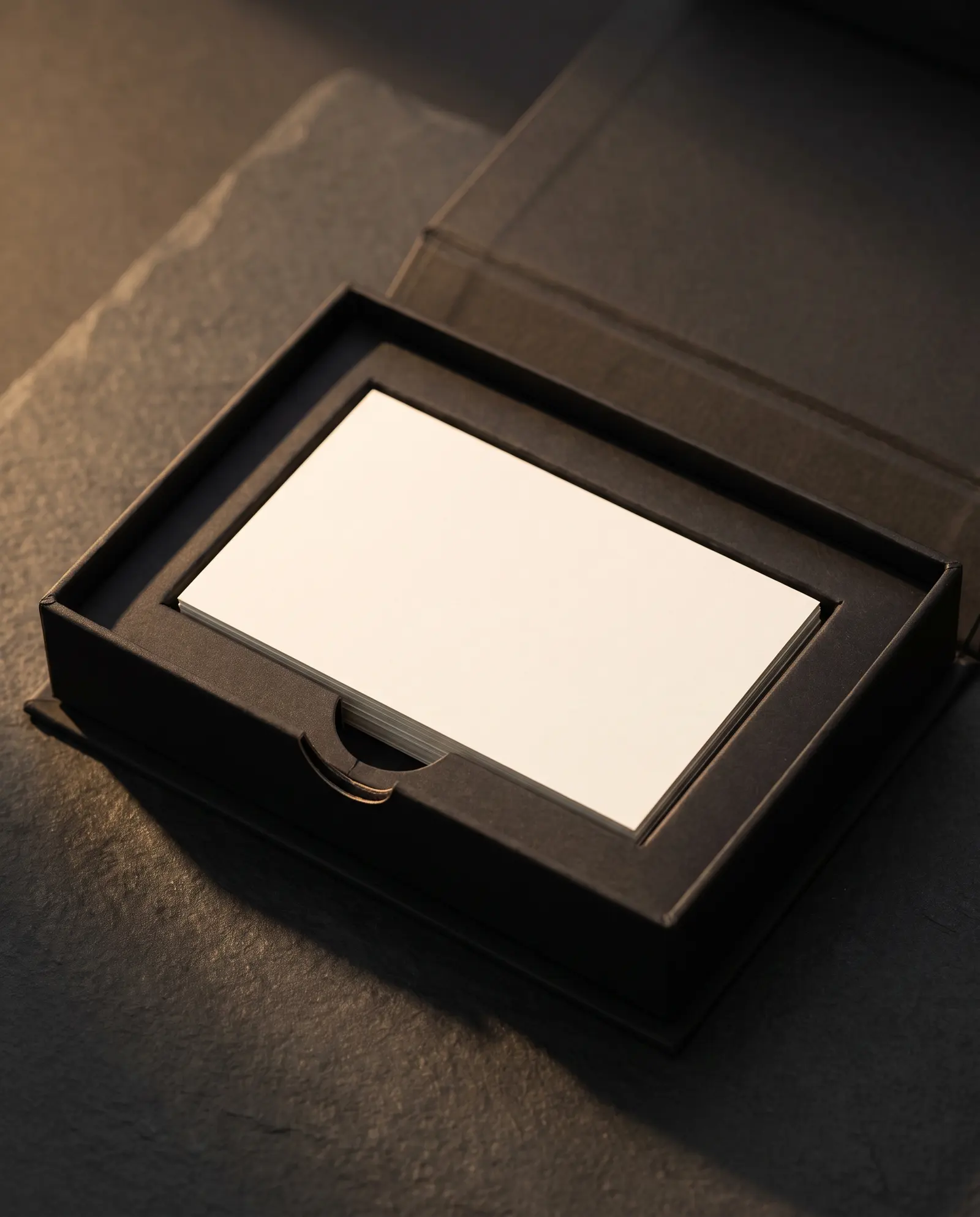
Foam is the default insert because it forgives loose sizing. It also looks like packing material. Our first suggestion is usually a paperboard tray: board die-cut and folded to the exact size of the product, with a recess for it to sit in, wrapped or printed to match the box. It reads as part of the design, and it recycles with the box. It needs accurate dimensions up front, because unlike foam it doesn't squeeze to fit.
To lift the product out, a half-moon finger cutout in the tray wall usually beats a ribbon pull. A ribbon is an extra part, glued under the product and threaded by hand into every box. A finger cutout is cut once, in the die.
A recent brief shows why the tray matters. A client's concept image showed a magnetic box holding seven cards, drawn as tall as a full deck. Seven cards stack to under 3 mm. We drew the tray to the stack, allowed about a quarter inch around the cards, and the box was specced at a little over half an inch tall. Everything above that would have been air you pay to ship.
Foam still earns its place for heavy glass or anything fragile, and we'll tell you when you need it.
Sizing a magnetic box: send us the product
We don't sell magnetic boxes from a size grid, because the right box is the product plus a little air. Send us the length, width, height and weight of what goes inside (or send the thing itself), and how many pieces share each box. We usually allow about a quarter inch around the product, and up to half an inch when you want the box to feel more generous.
The magnetic box packaging we're asked to build most:
- Card and stationery sets: a shallow box, often under an inch tall, with a recess for the stack.
- Jewelry: a small, deep box with a fitted tray or a slot for a card.
- Candles and bottles: a deeper base, with the recess carrying the weight.
- PR and gifting kits: several pieces in one tray, each with its own cutout.
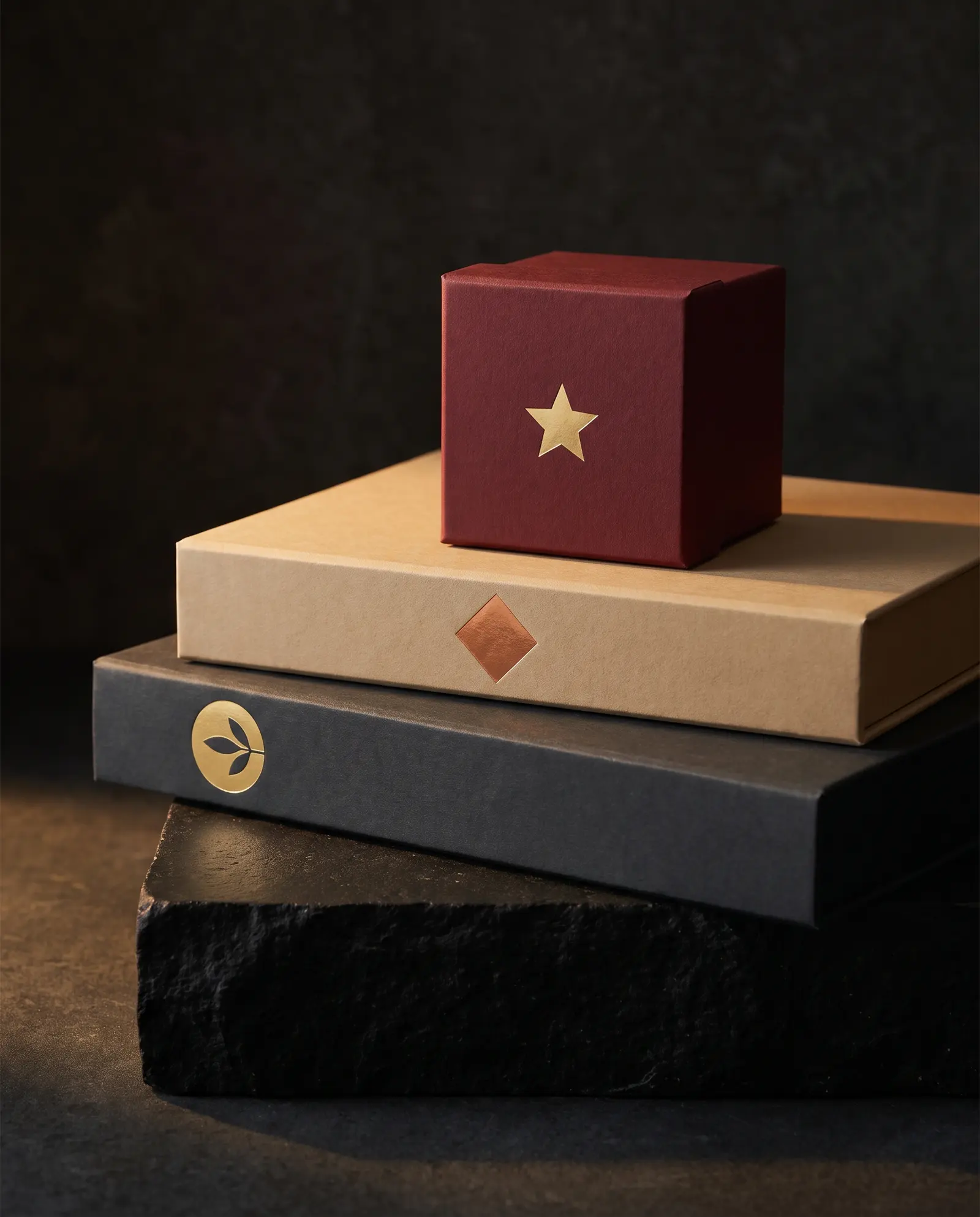
What custom magnetic boxes cost
Past custom rigid and magnetic box projects have run about $1,400–$2,000 for the whole run. That's context, not a quote. Six things set your number:
| Cost driver | Why it moves the price |
|---|---|
| Size | More board and wrap per box, and a bigger box to ship. |
| Quantity | Structure setup and every die are shared across the run, so each box costs less as the run grows. |
| Wrap | Printed and laminated sheets, specialty uncoated papers and kraft all price differently. |
| Finishes | Each foil colour is its own die and its own press pass. A deboss adds another die. |
| Insert | A paperboard tray, a foam insert or nothing at all. |
| Freight | Built boxes ship by volume, not weight. |
A magnetic box costs more than a lid-and-base box of the same size: the hinge, the flap and the magnets are extra parts, and fitting them adds assembly work to every box.
Minimums. Runs usually make sense from about 100 boxes. Below that, the structure setup and the foil die are spread over very few boxes, so each one costs more, but we quote short pilot runs for launches and gifting lists. When every box needs different artwork, we print the wraps digitally, which has no plates to set up per design.
Three ways to spend on a magnetic box
| Tier | What you get | Price |
|---|---|---|
| Stock box, our finish | A stock magnetic box you buy, made yours with a foil belly band (10 × 2 in, one foil) or a foil seal across the flap. | Bands from $295 for 100 · seals from $195 for 250 |
| Custom magnetic box, one foil (our recommendation) | Drawn to your product, uncoated wrap, one foil on the flap or top panel, paperboard tray with a finger cutout. | Get a price |
| The full build | Everything above, plus foil in a deboss, a printed lid interior, a second foil or a custom tray for several pieces. | Quoted with the build |
For a launch or a client gift, start with the middle row: one foil on an uncoated wrap and a paperboard tray carry most of the feel per dollar. Add a printed interior before you add a second foil.
How a custom magnetic box gets made
1
Tell us the date first.
When the boxes need to be in hand decides which path is possible. Then the product's size and weight, the quantity, and how the boxes travel.
2
We set the structure.
Board, wrap, magnets, hinge and insert, drawn as a dieline to your product's real dimensions. You don't need a dieline to start.
3
You hold a prototype.
A plain physical prototype of the structure, so you can check the fit, the snap of the flap and how the product lifts out before anything is printed.
4
Artwork on our dieline.
You build on our template, with foil and deboss areas on their own named layers, or our packaging artwork team builds it for you.
5
You approve the proof.
A person checks structure, artwork and finishes with you, including the 3 mm clearance from the hinge. Nothing goes to production until you approve.
6
Production and freight.
About three weeks of production after proof approval, then freight.
Timelines are estimates, not guarantees, and we won't promise an in-hand date. For a launch or a holiday gift, start about eight weeks before you need the boxes. If your date is tight, tell us before you approve the proof and we'll say honestly whether it's comfortable. See turnaround and shipping and proofing.
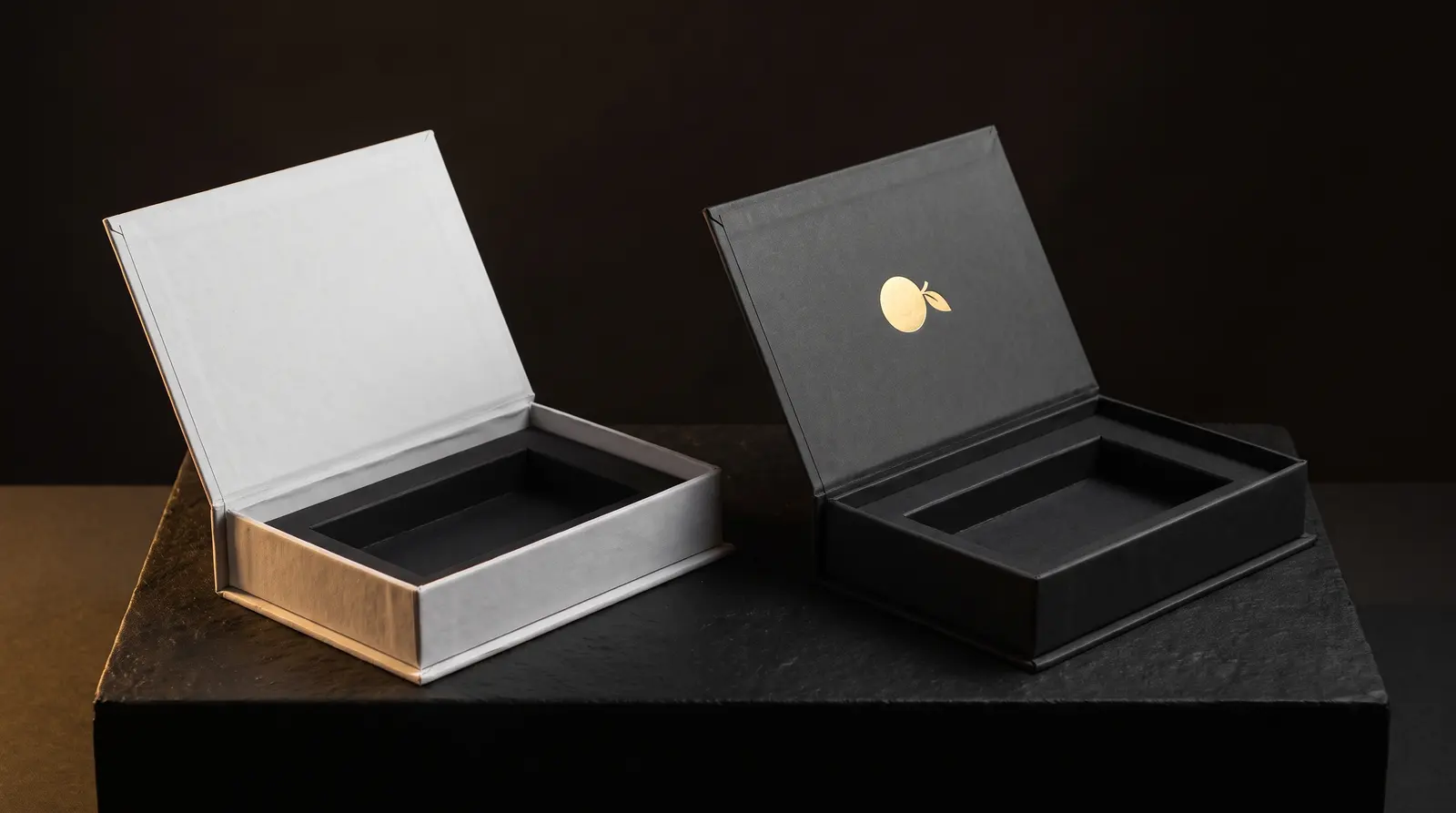
Magnetic box specifications
| Spec | Detail |
|---|---|
| Construction | Book-style rigid box with a hinged cover and a front flap. Fixed (glued up) or collapsible (ships flat). |
| Closure | Magnetic closure: magnets concealed under the wrap, in the flap and behind the front wall. |
| Board | Rigid chipboard, wrapped. Thickness set to the size and weight of the box. |
| Wraps | Coloured uncoated (Colorplan and similar), natural kraft, black uncoated, printed text-weight with matte or soft-touch lamination. |
| Spot colour or four-colour. Digital wraps when each box carries different artwork. | |
| Finishes | Hot foil from the 40 foils we stock (on bare wrap, never on top of ink), blind emboss and deboss (uncoated wraps only), foil in a deboss, printed lid interior. |
| Foil limits | Lines and gaps at least 0.6 mm; foil type 7 pt or larger (10 pt when knocked out of a foil panel). |
| Clearances | Every finish at least 3 mm from the hinge, folds, flap edge and turn-ins. |
| Inserts | Paperboard tray with a recess and finger cutout; ribbon pull or foam on request. |
| Sizes | Drawn to your product. No stock size grid. |
| Artwork | Vector on our dieline, foil and deboss on their own named layers. Or our packaging artwork team builds it. |
| Minimum | Usually from about 100; short pilot runs quoted. |
| Production | About 3 weeks after proof approval (estimate), with a prototype before it. |
| Shipping | Freight quoted with the job. Boxes travel inside outer cartons. |
Boxes we've made, and design explorations
Client jobs come first and say so. These are rigid boxes on the same wraps and finishes we use for magnetic builds. Design explorations are labelled, and they're not client work.
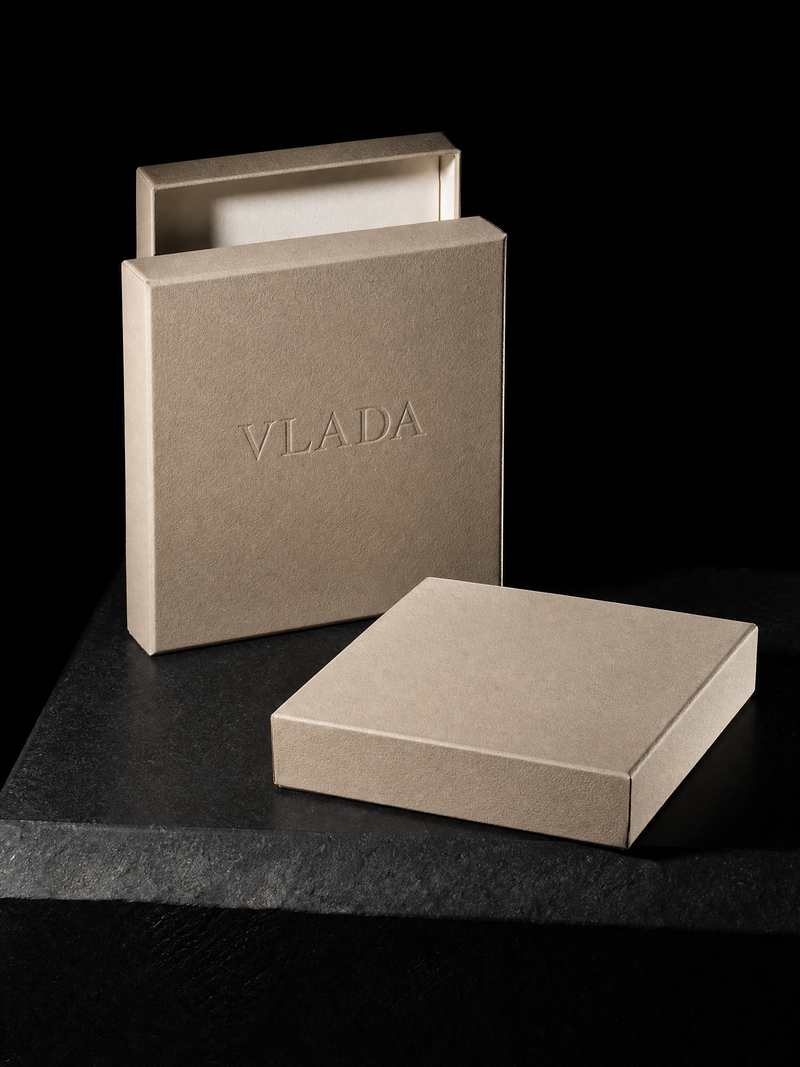
Client job · rigid box
Vlada
A name blind-embossed into sand Colorplan, embossed flat before wrapping. No ink.

Client job · rigid box
Fletcher
Black hot foil on a natural kraft wrap, stamped flat before the corners were turned.
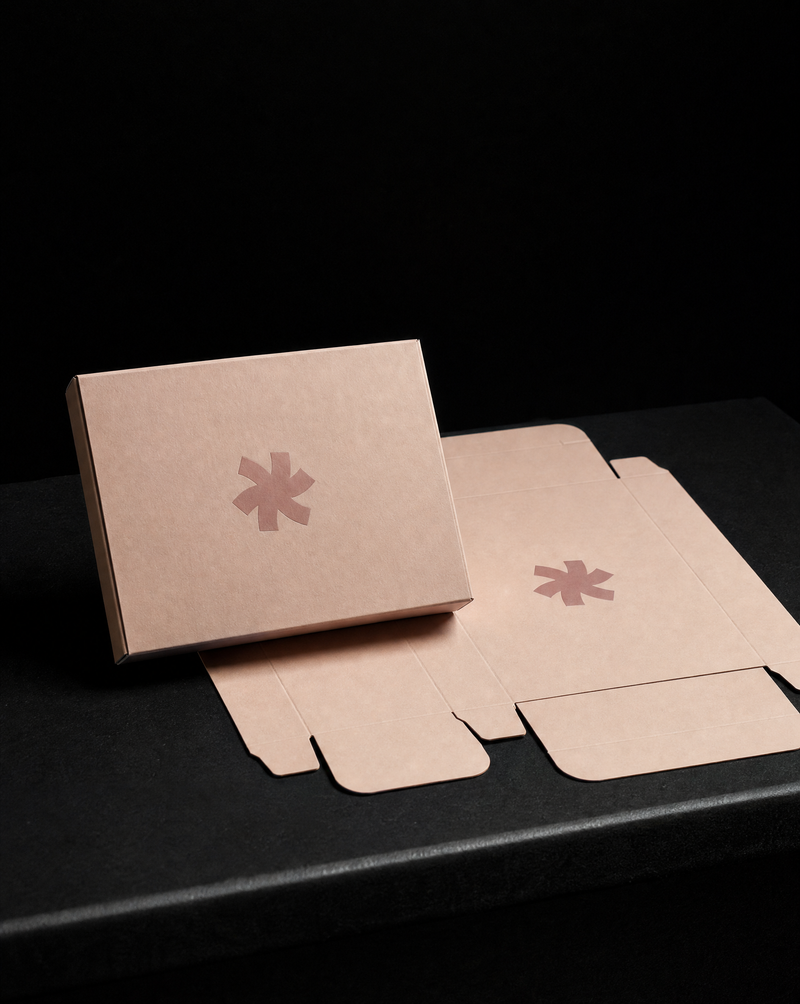
Our own packaging
Our samples box
One matte blush foil on blush board. One die, one foil, no ink.
Custom magnetic box questions, answered
What is a magnetic box called?
You'll see it called a magnetic closure gift box, a book-style box, a flip-top box or simply a magnetic box. They all mean the same structure: a rigid box with the lid attached along the back, a flap that folds over the front, and magnets hidden under the wrap that hold the flap shut. The other common rigid box, with a separate lid that lifts off, is a lid-and-base or two-piece box.
How much do custom magnetic boxes cost?
Past custom rigid and magnetic box projects have run about $1,400–$2,000 for the whole run. That's context, not a quote: size, quantity, the wrap paper, how much foil and deboss, the insert and freight set your number. A custom box costs far more per piece than a retail stock box because its structure setup and dies are spread over your run alone, not over a standard size made in bulk. And a magnetic box costs more than a lid-and-base box of the same size, because the hinge, the flap and the magnets are extra parts and extra assembly. If you only need a stock box to look like yours, a foil belly band starts at $295 for 100.
What's the minimum order for custom magnetic boxes?
Runs usually make sense from about 100 boxes. Below that, the structure setup and the foil die are spread across very few boxes, so each one costs more, but we quote short pilot runs for launches, gifting lists and executive mailings. Tell us the quantity you actually need and we'll price exactly that.
How long do custom magnetic boxes take?
Production takes about three weeks after you approve the proof. Before that comes the structure and a physical prototype, and after it, freight. For a launch or a holiday gift, start about eight weeks before you need the boxes in hand. These are estimates, not guarantees, so tell us your date first and we'll say honestly whether it's comfortable.
How strong are the magnets, and will the box stay shut in shipping?
The magnets are sized to pull the flap closed with a clean snap and hold it flat, not to lock the box. A magnetic box sitting on a table stays closed. Squeezed or dropped in a courier's van, a flap can open, which is one reason every magnetic box travels inside an outer carton. If the box has to stay sealed until it's opened, a foil seal across the flap does that job and looks deliberate.
Can a magnetic box ship on its own, without an outer box?
No. A magnetic box is a presentation box, not a shipper. The wrap scuffs, the corners crush and the flap can open, so it goes inside a corrugated carton. Built boxes ship by volume, so we quote the freight with the job. If the box itself has to go through the post, a printed mailer box is the right structure; see all box structures.
Should my magnetic box be collapsible or fixed?
A fixed box is glued up before it ships, so it's the most solid in the hand and the most expensive to move. A collapsible box ships flat and folds into shape on arrival, which saves a lot of freight and storage on a big gifting list. If the box goes straight to a client, we'd build it fixed. If you're packing hundreds yourself, ask us to price both and compare the freight.
What's the difference between a magnetic box and a rigid lid-and-base box?
Both are rigid boxes: chipboard wrapped in paper, built before they ship. A lid-and-base box has a separate lid that lifts off. A magnetic box has the lid attached along the back and closes with magnets in a front flap, so it opens like a book and stays in one piece. Magnetic costs a little more and makes a quieter, more deliberate reveal. Lid-and-base leaves more of the wrap clear for print and finishes. See custom rigid boxes.
Can each box carry a different design?
Yes. For short runs where every box is different, we print the wraps digitally, so there are no plates to set up per design, and the eighth design costs the same to set up as the first. Foil is the exception: each foil design needs its own die, so personalised foil is priced per design. A common approach is a shared foil mark on every box, with the variable artwork printed.
Can you foil or deboss a soft-touch magnetic box?
Foil, yes: hot foil bonds well to soft-touch laminate. Deboss and emboss, no: laminate is a stiff film that won't take a clean impression. If you want soft-touch and an impression, we put the impression on an uncoated wrap instead, or pair the soft-touch with foil. On a dark box, remember that soft-touch shows fingerprints and courier scuffs.
Do I need to supply a dieline?
No. Send us the product's dimensions and weight, or the product itself, and we draw the structure and dieline around it. You approve a physical prototype before the full run. Then you build artwork on our dieline in vector, with foil and deboss areas on their own named layers, or our packaging artwork team builds it for you.
Can I see a sample before I order?
Yes. Our $8 sample kit includes a swatch card with every foil we stock, plus papers and finishes like blind emboss, and comes with a $10 credit toward your first order. It's built around cards, not boxes, but it's the quickest way to pick a foil and a paper in your own light. The box itself isn't sampled from the kit: its fit is checked on a physical prototype of the structure before the run.
Are magnetic gift boxes recyclable?
Mostly. The board and an uncoated paper wrap recycle with paper where local collection accepts rigid board, but the magnets should be pulled out first, and soft-touch or other laminated wraps aren't accepted everywhere. If recyclability matters to your brand, choose an uncoated wrap and a paperboard tray instead of foam, and we'll keep the box as close to all-paper as the structure allows.
Do you sell plain stock magnetic boxes?
No. We make custom magnetic gift boxes, printed and finished to your brand. If you already have a stock box you like, we can make it yours with a foil belly band, a foil seal across the flap or a printed insert card. That's usually the fastest and least expensive route.
The rest of the unboxing
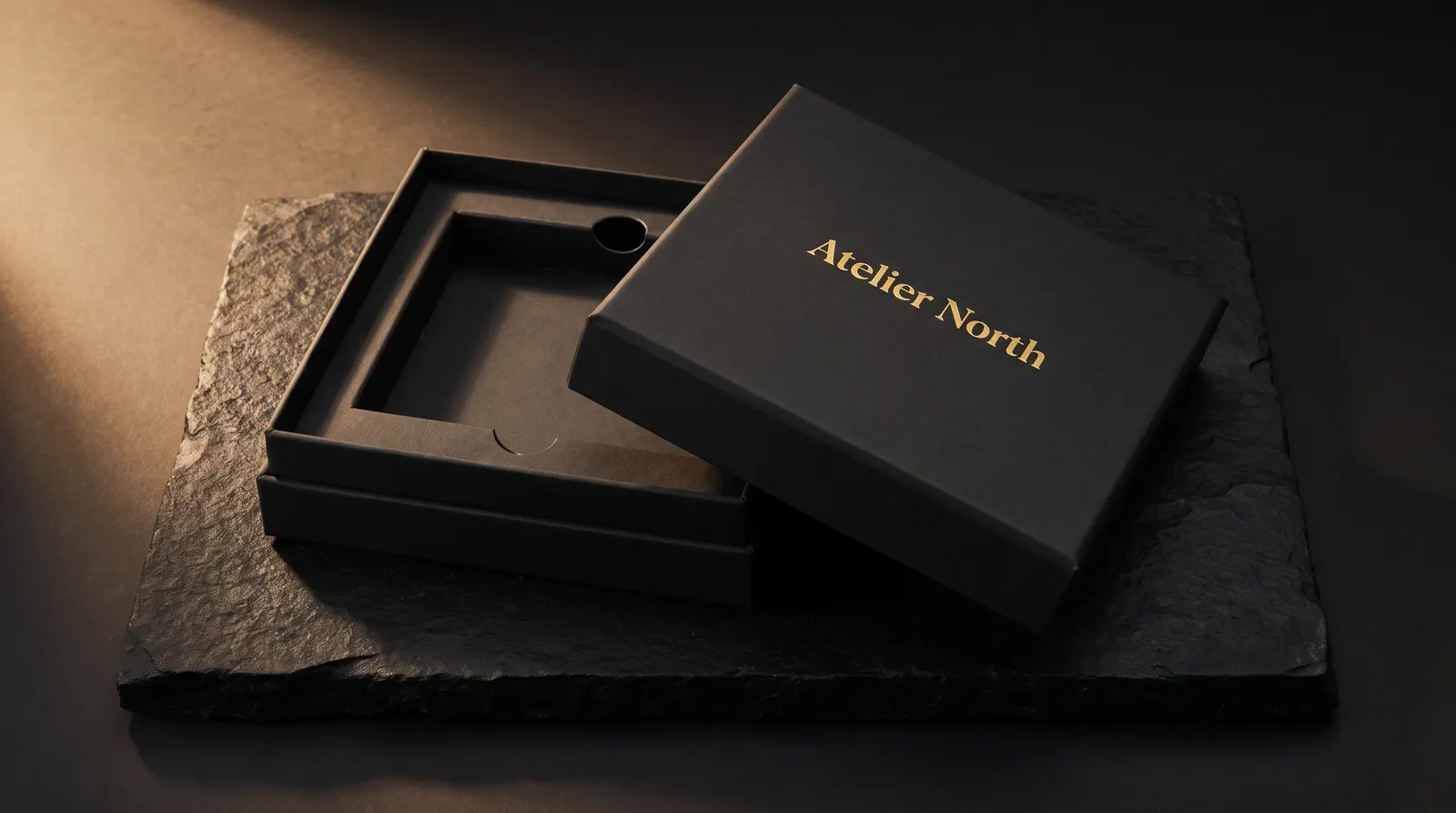
Custom rigid boxes
Get a price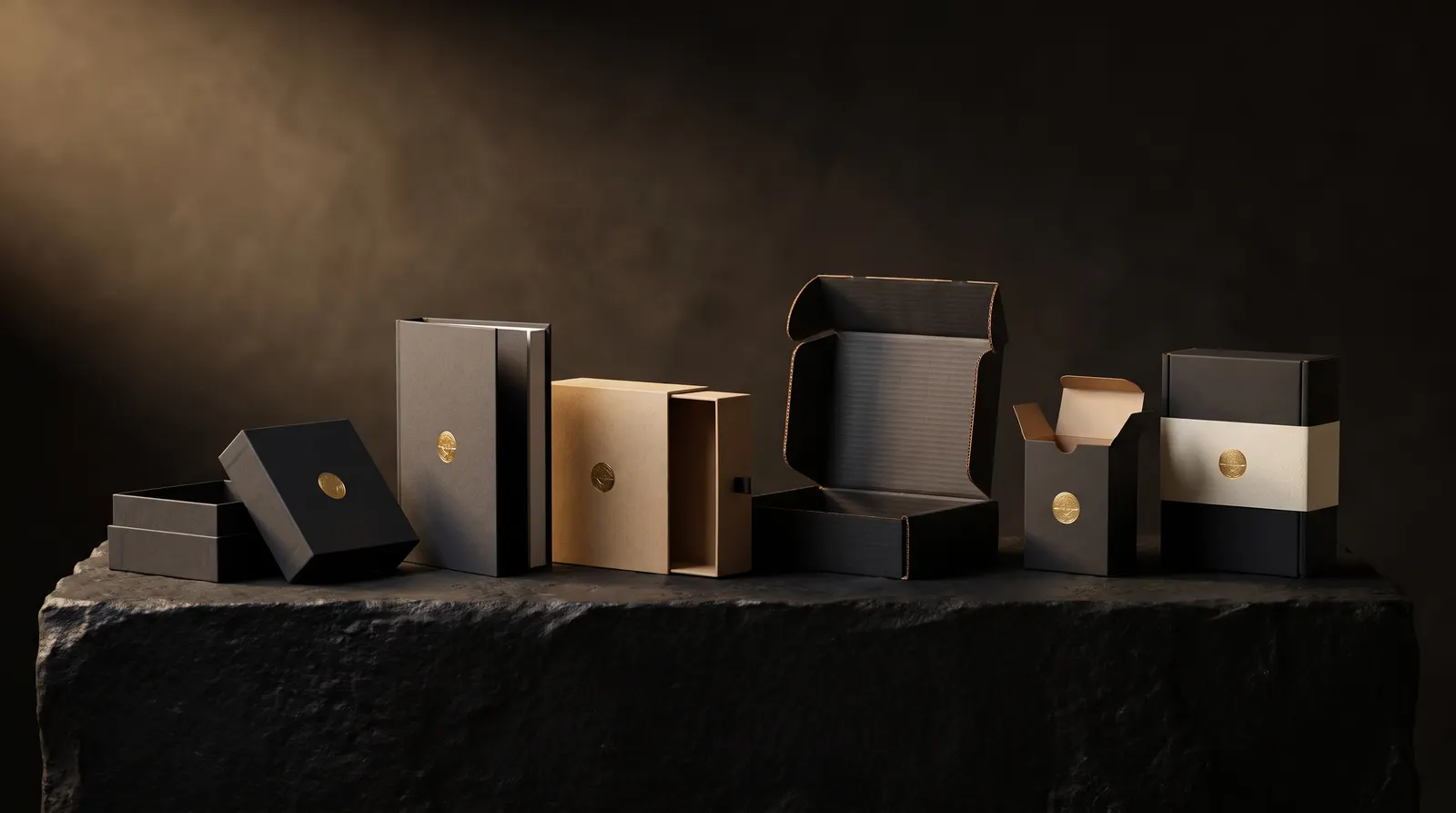
All box structures
Get a price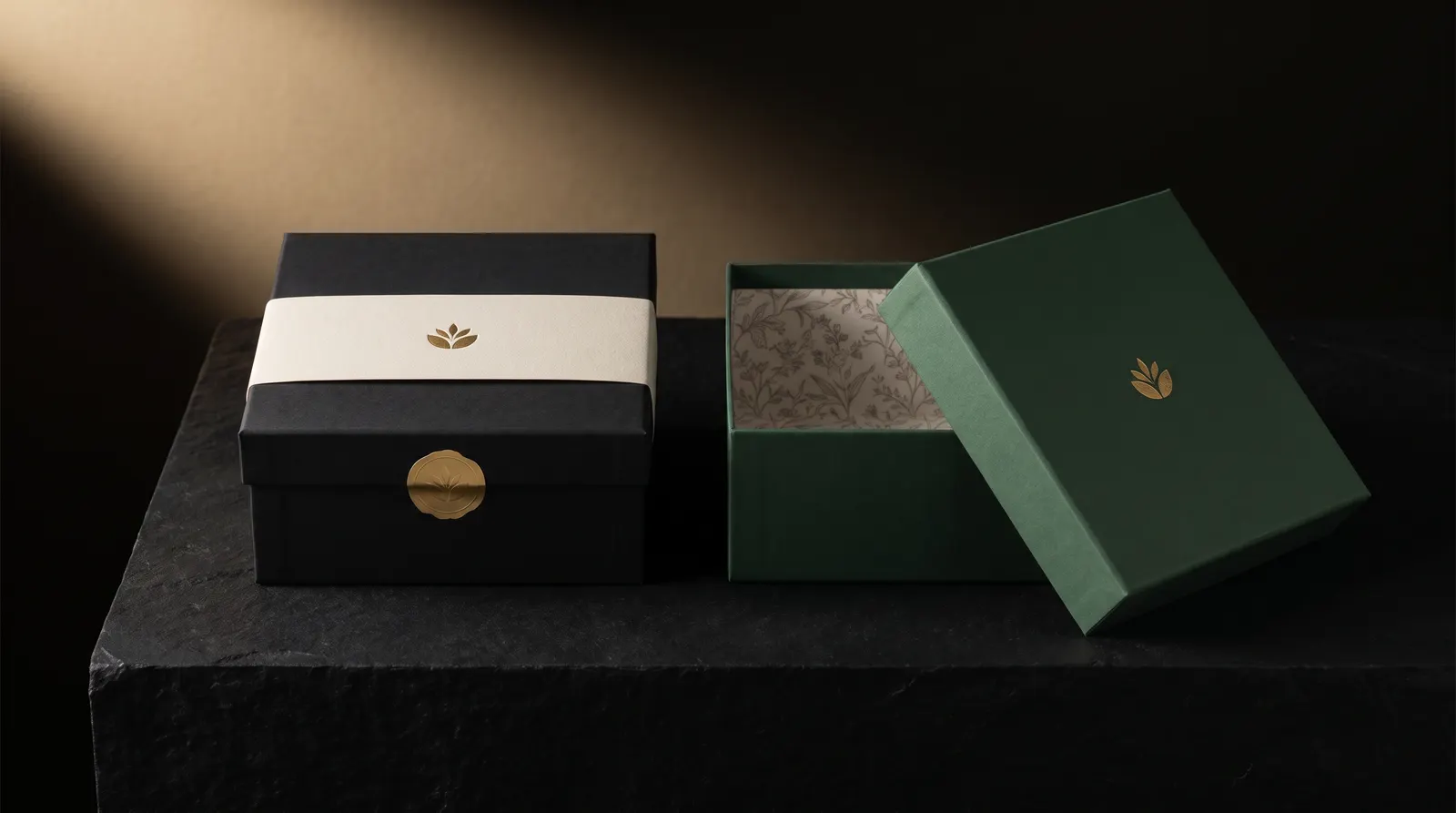
Belly bands & sleeves
Get a price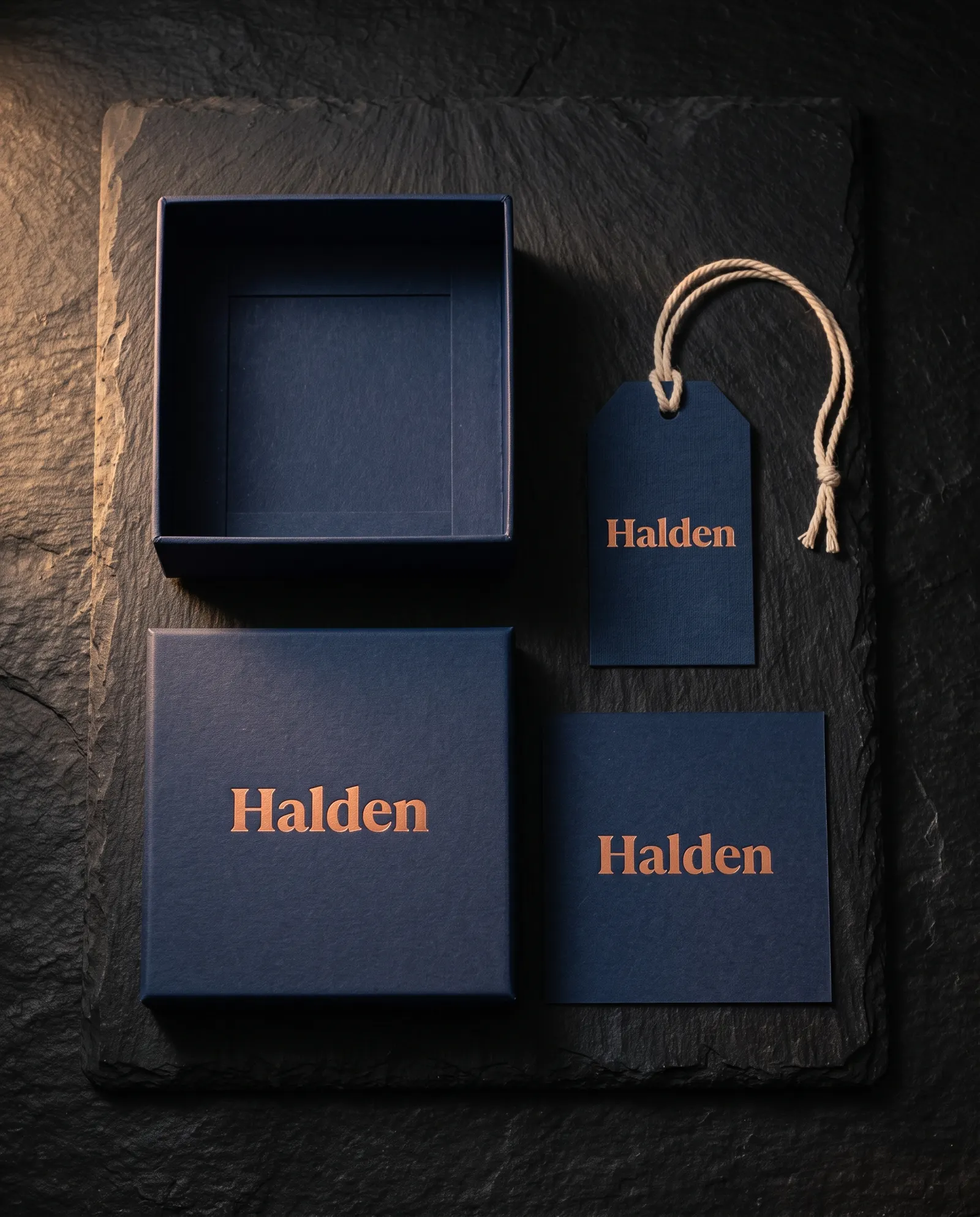
Hang tags
Get a pricePackaging inserts
Get a price
Need the box artwork drawn? Packaging artwork.
Tell us what goes inside the box
Send us the product's size and weight, the quantity and the date. We'll come back with a structure, a finish recommendation and a price, then a prototype you can open and close yourself. If it's simpler to talk it through, book a call.
Reviewed by a person before anything prints.