New: Peppermint Studio — Try it →

    True black and printed black

    Black Business Cards

    Printed black edge to edge, or paper dyed black all the way through, so even the cut edge is black.

    From $121 for 100 (Standard) · true black stock from $195 for 250

    Standard ships 3–4 business days after proof approval; true black about 3 weeks (estimates).

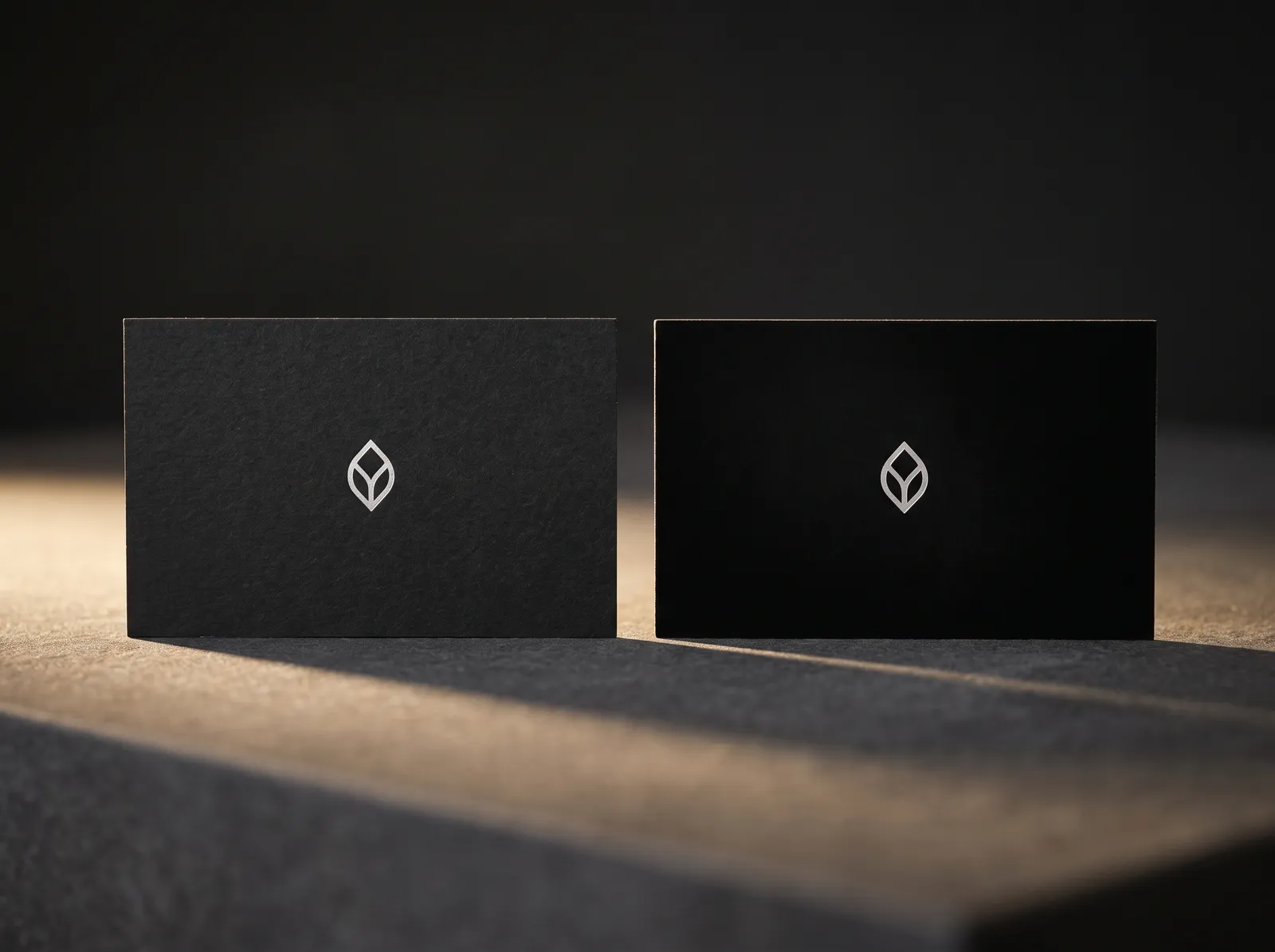
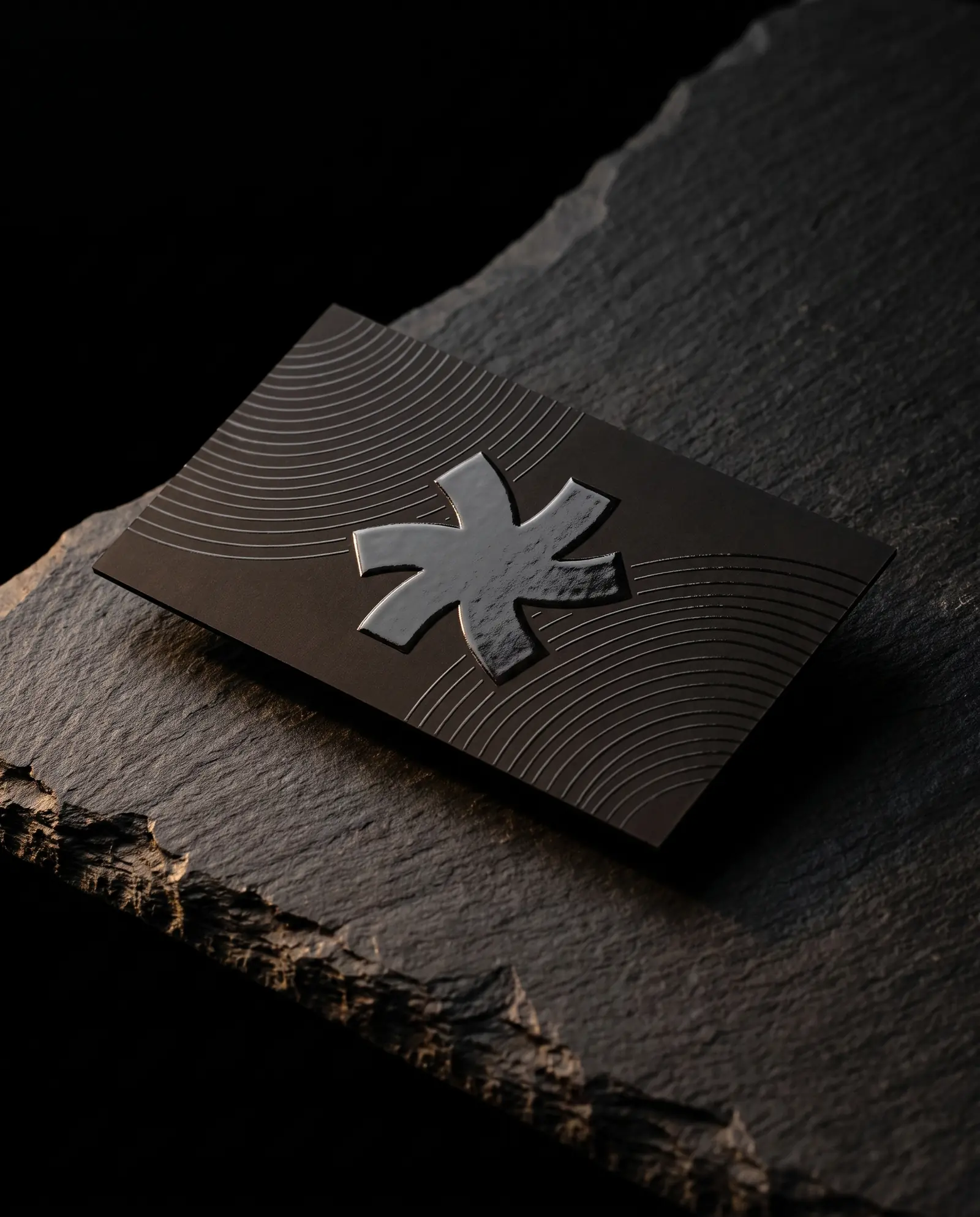
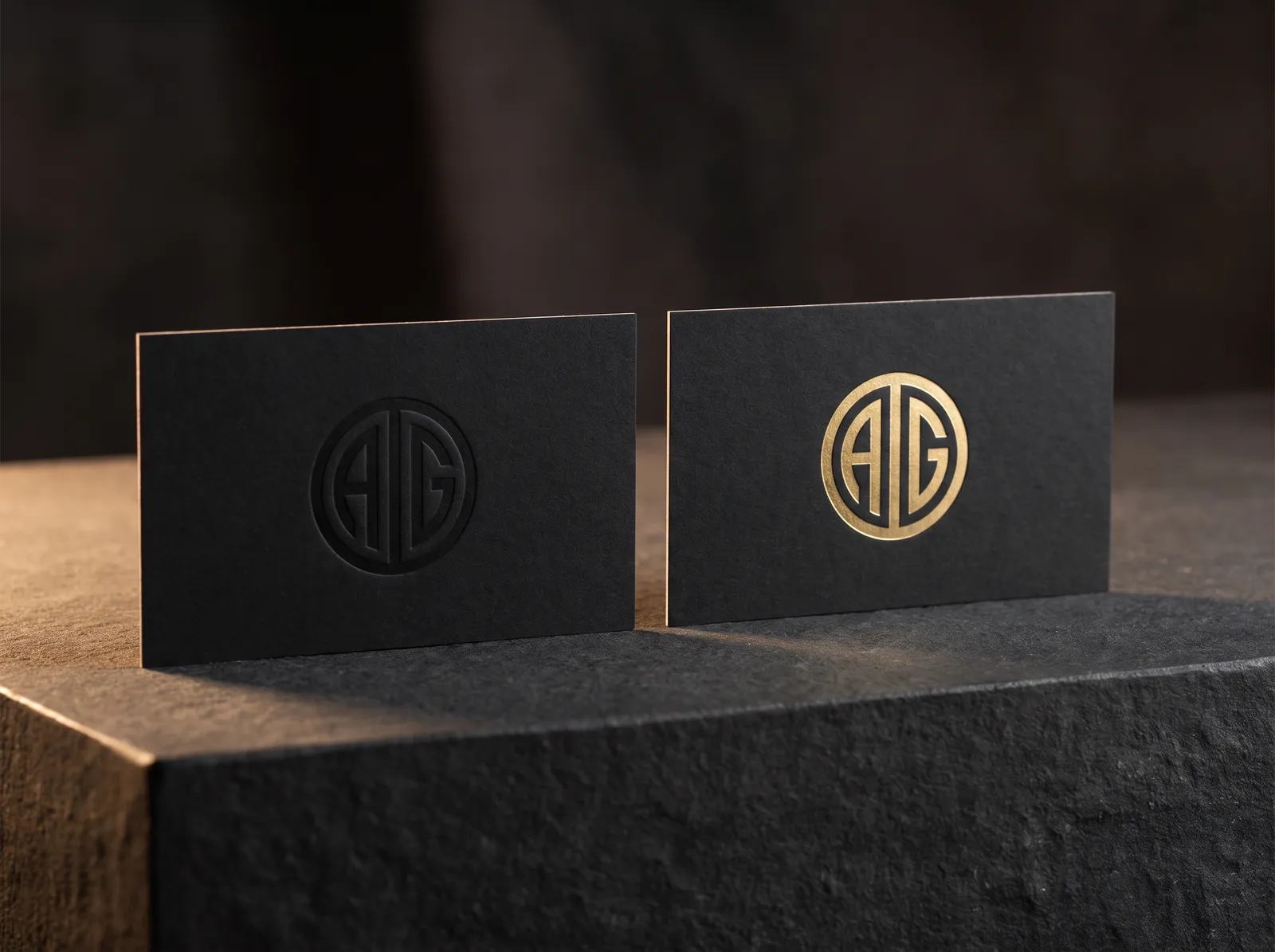
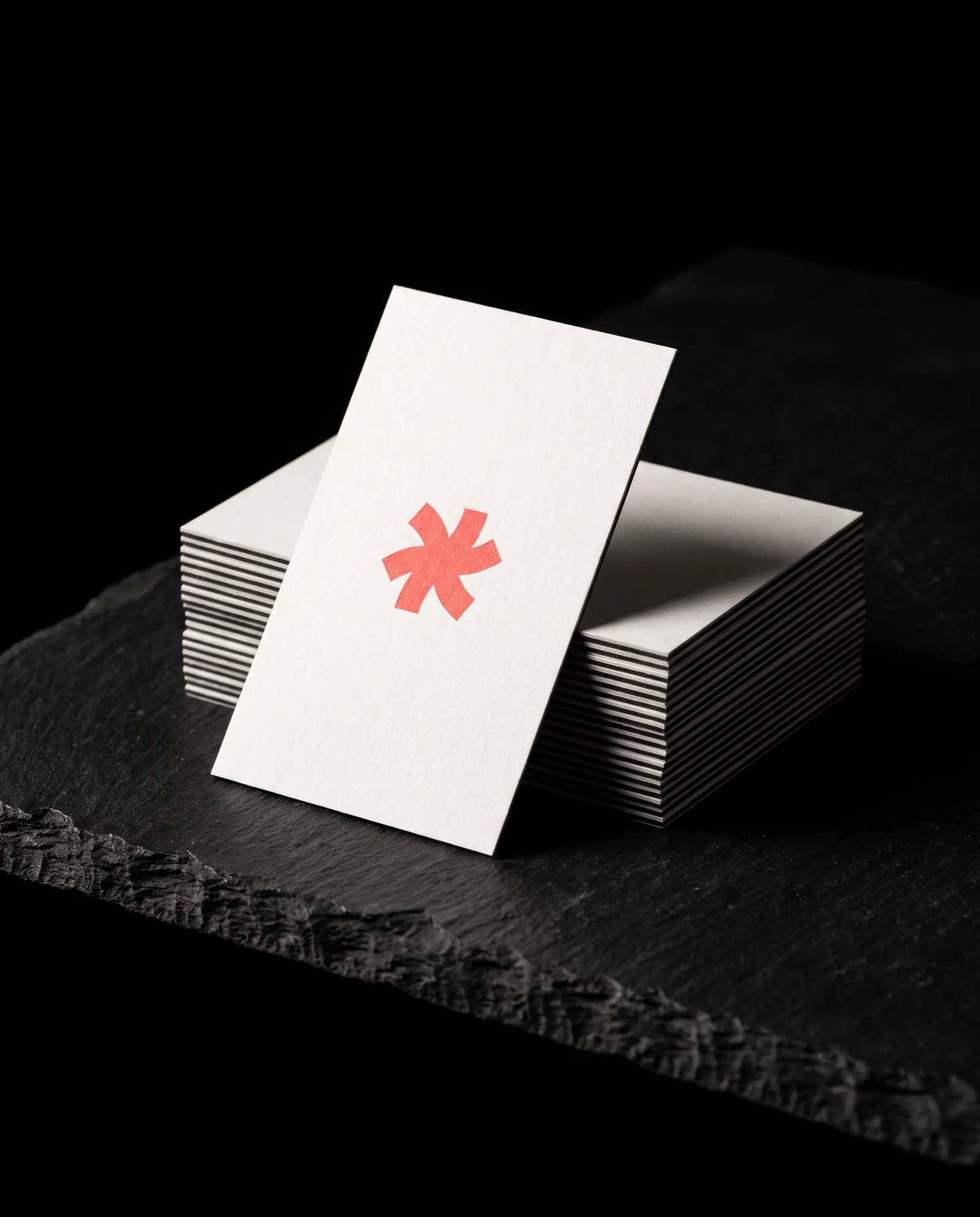
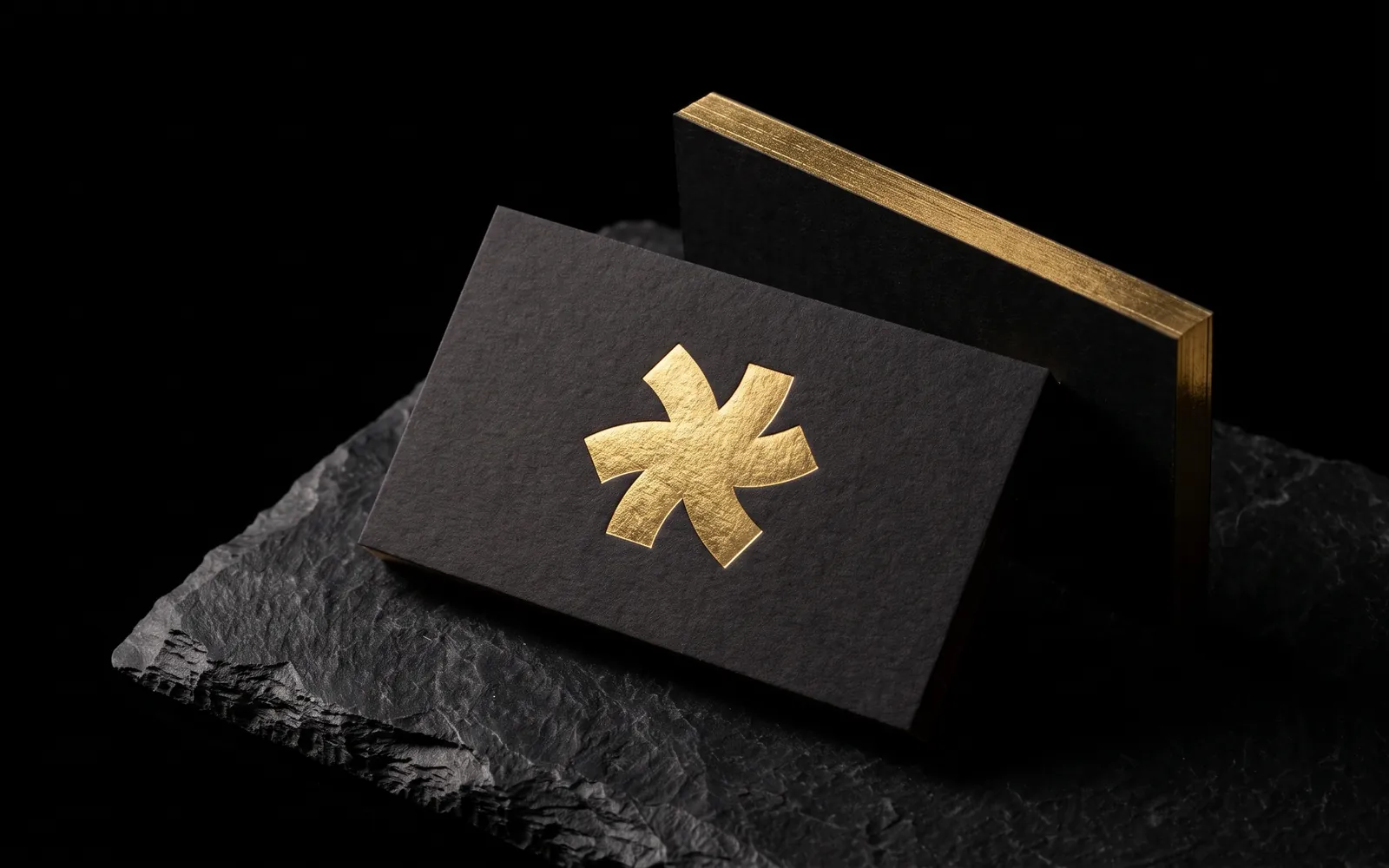
    Black business cards on dyed-through black cotton: the Print Peppermint mark hot foil stamped in gold, and a second card on edge showing a gold foil edge, on black slate

    Black business cards come two ways: black printed edge to edge on white card, leaving a thin white line at the cut edge, or paper dyed black through, decorated with foil because ink vanishes on black. Ours start at $121 for 100, shipping in 3–4 business days after proof approval, or $195 for 250 on true black stock in about 3 weeks.

    Two builds
    Printed black on white card (Standard) · True black paper, dyed through (Custom)
    Black business card paper
    Standard: printed black on 20pt soft touch or silk · True black: dyed-through black uncoated or black soft touch, 16, 32 or 48pt
    Finishes that read on black
    Gold, silver, rose gold, copper, red and holographic foil · white pigment foil · black-on-black spot UV · blind deboss (quiet: it reads by shadow)
    From
    $121 for 100 (Standard) · $195 for 250 (true black)
    Lead time (estimate)
    Standard ships in 3–4 business days · true black about 3 weeks, after proof approval
    Minimum
    100 (soft touch Standard) · 250 (true black) · 500 (silk Standard)

    Prices checked 1 October 2026.

    Which black card is right for you?

    We'd price your card with everything first, then scale back to the number that makes sense. For most people we'd point to the middle: real black paper, one gold foil.

    Full production

    Black and gold, front, back and edges

    48pt true black paper · gold hot foil front and back · gold edge foil · square corners

    At 48pt the edge is wide enough to read as a gold band from across a table. Square corners keep it architectural; rounded corners work with edge foil too.

    From $415 for 250 · about 3 weeks

    Edge foil on uncoated stock is confirmed by our press team before the die is made.

    Our pick

    Gold foil on 32pt true black paper

    32pt black uncoated, dyed through · one foil colour, front · back left clean or foiled

    This is the black card that stays black: face, back and the cut edge. The die presses the foil into the soft surface, so the gold sits in a shallow bite you can find with a thumbnail.

    From $225 for 250 · $295 for 500 · about 3 weeks

    Essential

    Raised gold on matte black soft touch, Standard

    Full-bleed black printed on 20pt soft touch · raised gold, silver or holographic foil · square corners

    No die to make, so it runs from 100 cards and ships in 3–4 business days after proof approval. It's printed black on white card, so look edge-on and you'll see a thin white line.

    From $126 for 100 · $162 for 250

    Want it almost invisible? Black-on-black raised spot UV from $121 for 100 →

    Need 500+ on silk with flat foil? From $224 for 500 →

    Not sure which? Feel soft touch, our papers and real foil in the sample pack →

    What a black card feels like before anyone reads it

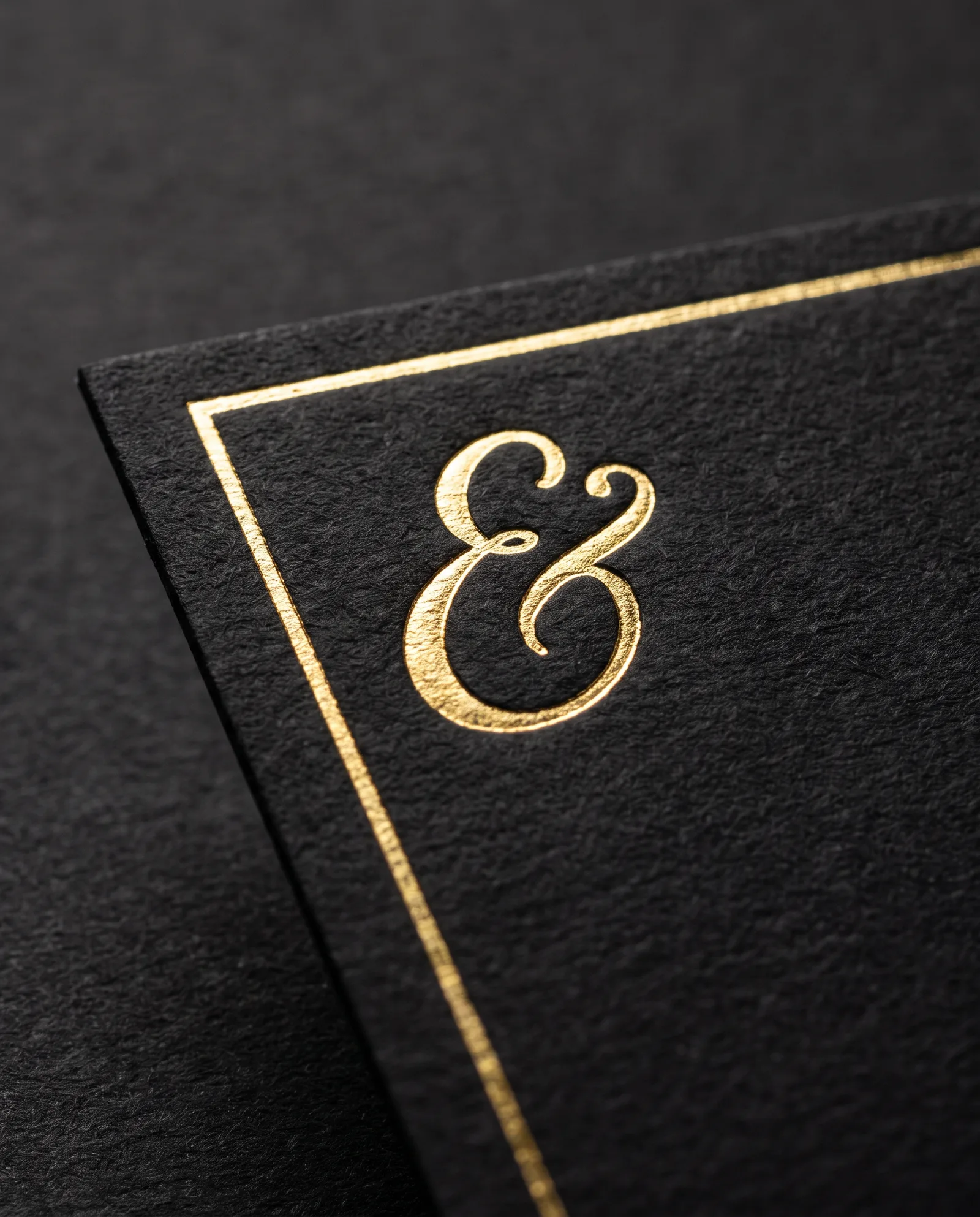
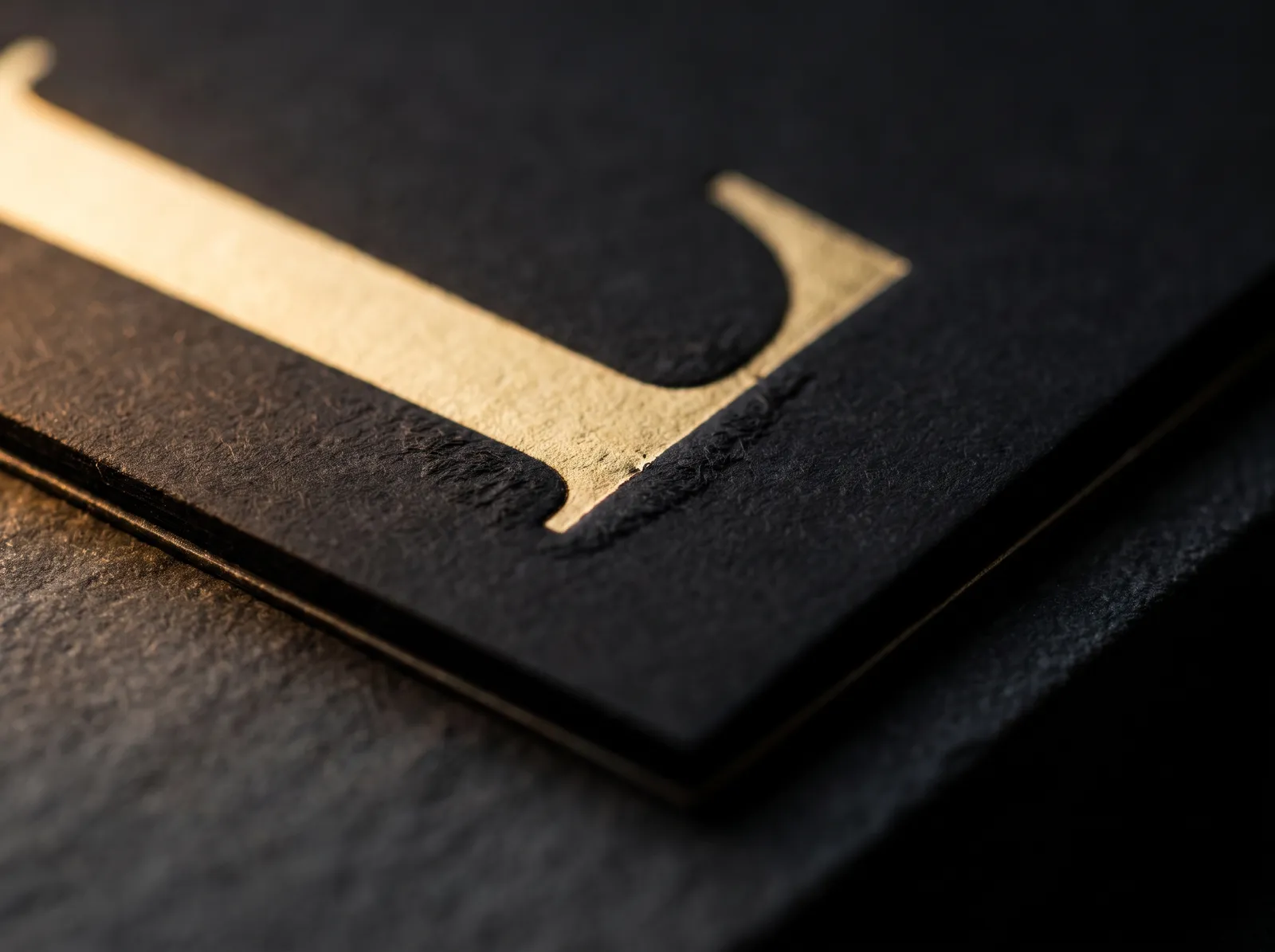
    Black business cards with gold foil, macro: gold foil stamped into black uncoated paper, fibres compressed at the edge of the foil
    Gold hot foil on black uncoated stock at roughly 5× magnification.

    Black paper drinks light. Hold a true black card under a lamp and the surface goes flat and deep, like velvet with the nap brushed down. There's no shine anywhere except where we put it.

    Then the foil. On black it's the only bright thing on the card, so the eye goes straight to it. Run a thumb across the gold and you feel a faint step where the die pressed it in. Turn the card over and the edge is black too, about as thick as a credit card at 32pt, and it stays black after a month in a wallet because there's no white core to wear through.

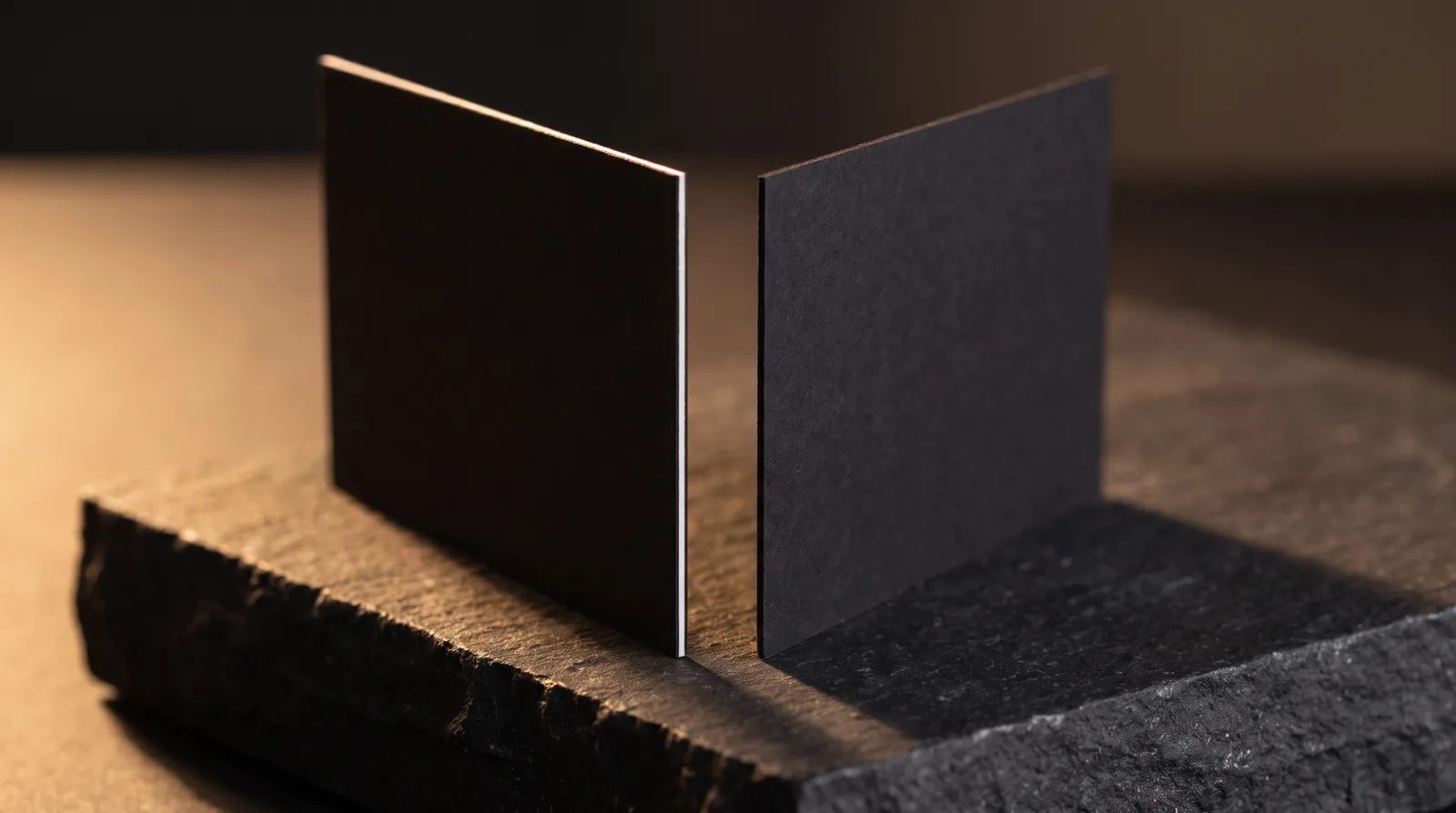
    Left, a printed black business card edge showing a thin white core; right, a true black paper card with a solid black edge
    Printed black vs dyed-through black, seen edge-on.

    Three ways black cards go wrong, and how we avoid them

    These are the three ways a black card usually disappoints. We catch all three at proof, before anything is pressed, and tell you in one line what changed.

    Why the edge is the whole argument for dyed-through stock

    Print black ink over white card and every trimmed edge shows a hairline of white. Corners wear pale in a pocket, and a fanned stack looks striped. Paper dyed black in the pulp has no white core to expose, so you get an all black business card, edges included, and a scuffed corner is still black. Standard cards always show the white line. If you love the printed look but want a finished edge, we foil-stamp the edges as a custom build, which takes about 3 weeks rather than 3–4 days. Dark cards get foiled edges, never painted ones.

    Left, a printed black business card edge showing a thin white core; right, a true black paper card with a solid black edge
    Printed black vs dyed-through black, seen edge-on.

    Translucent ink vanishes on black, so light colours are foil

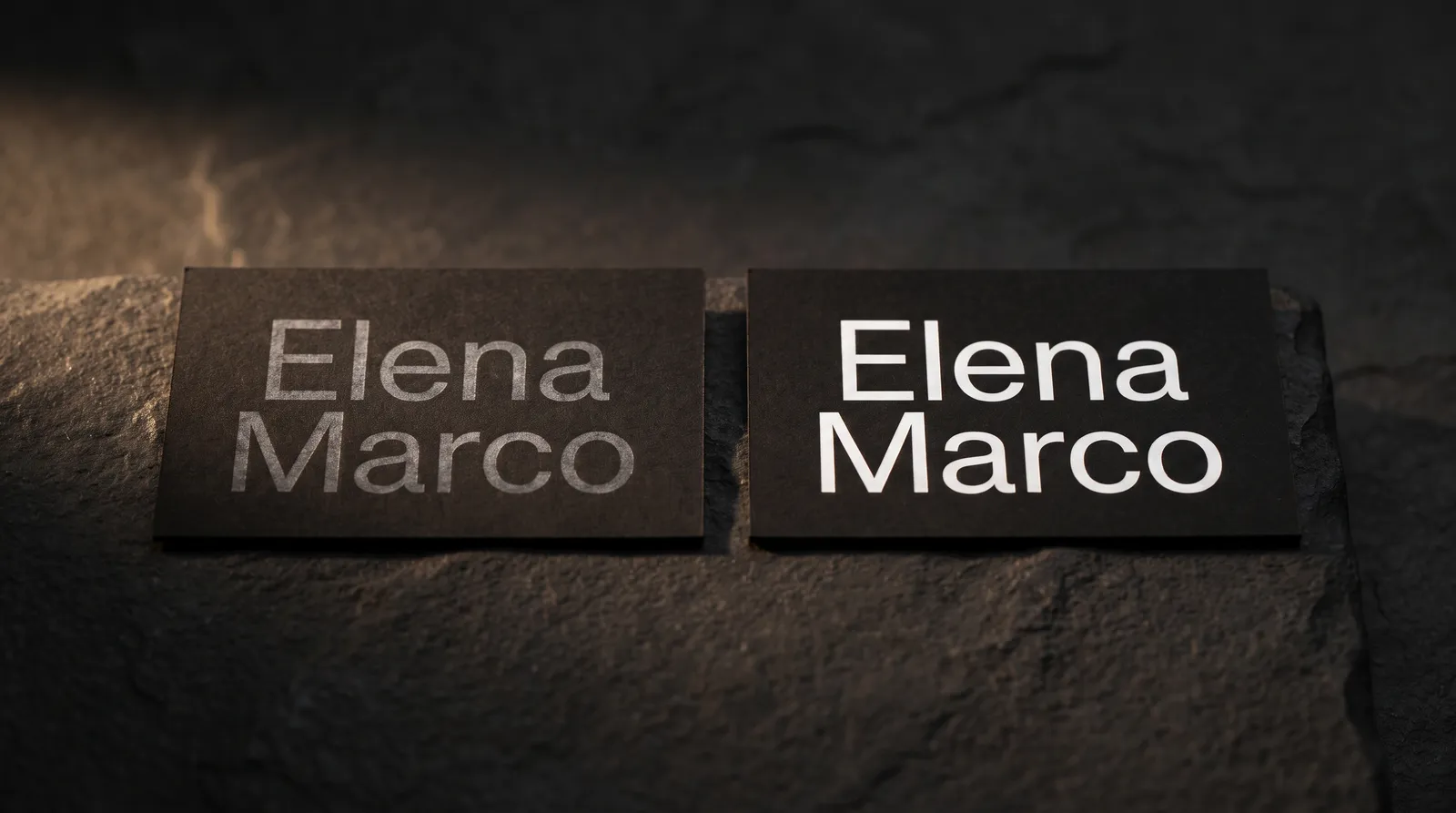
    Process inks are see-through. They rely on white paper bouncing light back through them, and black paper bounces nothing back. Cyan on black is black, and a full-colour logo turns to mud. So every light mark on true black stock is foil: gold, silver, rose gold, copper or red for shine, and white pigment foil when you want flat, opaque white with no shine. If your design truly needs full colour, the build is printed black on white card instead, and we'll show you that version.

    White ink looking chalky and thin on black paper next to crisp opaque white pigment foil on the same black stock
    What white ink does on black vs white pigment foil.

    Black foil on black stock is a tonal shift, not a contrast

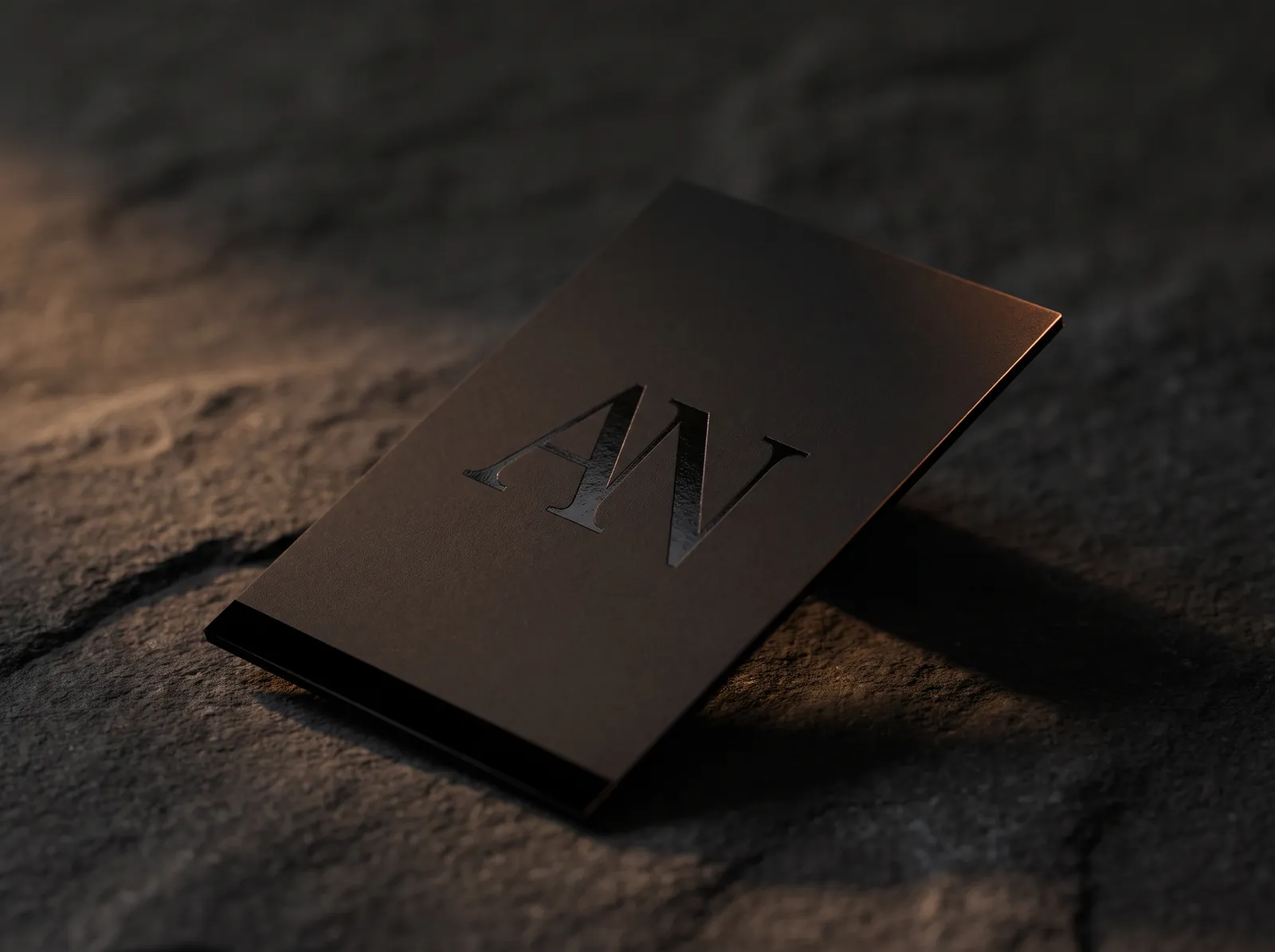
    Black foil on black paper doesn't read as contrast. It reads as a change in how the surface handles light: the foil is smooth where the stock is matte. Hold it flat under a ceiling light and the logo almost disappears. Tilt it toward a window and it flashes. Lovely for a quiet mark. Wrong for a phone number, which we set in a light foil instead. A blind deboss on black works the same way: it reads only by shadow, so if the mark has to be read across a table, we lay foil into the impression.

    Black foil logo on black card at three angles, invisible flat and gleaming when tilted
    Black on black: the monogram shows only where light catches it.
    • · QR codes need a light ground to scan. On printed black we leave a white panel and print the code in black ink. On true black stock we put it on a light back sheet or leave it off.
    • · Contact details in black foil fill in when they're small, so small black-foil type moves to a lighter foil or gets larger.
    • · Soft touch is a film, so it can't be embossed. Embossing goes on uncoated black.

    Check your file against these: Foil artwork, the 0.6 mm rule →

    Setting up your file

    Three ways to get a black card

    Black paper business cards, printed black, and everything that reads on them

    There are three routes to a black card. Print black edge to edge on white card: fast and affordable, with a white edge. Use black paper business cards, dyed through: black from every angle, decorated with foil or an impression. Or go further: black metal or black plastic, in the comparison below. Each route takes different finishes, and the cards below say which ones read on black.

    Black gold foil business card detail: gold foil stamped on black uncoated paper, macro

    Gold, silver and colour foil on black

    Foil is the reason black cards work. A heated die presses a metal film onto the paper, and on black it's the only thing that catches light. Gold is the classic: black and gold foil business cards read from across a room. Silver reads cooler and sharper for small type. Rose gold is warmer. Copper is earthy. Red flashes. Holographic throws a rainbow on smooth stock. Each colour on each side is its own die and its own pass.

    Can't: gradients (one flat tone per die), lines under 0.6 mm, QR codes.

    Gold foil business cards →Silver foil on black →Holographic foil on black →

    Two matte black business cards side by side, black uncoated with visible fibre and black soft touch with a velvet surface

    Matte black: uncoated or soft touch?

    Both are matte black business cards, and they feel nothing alike. Black uncoated has a dry, fibrous tooth and takes foil and deboss with a slight bite. Soft touch has a velvet film that feels almost warm, and makes foil and raised spot UV look sharper. Our Standard cards use printed soft touch. Our true black builds offer both, dyed through.

    Can't: soft touch can't be embossed or debossed (it's a film).

    Custom black business cards →

    Black on black business card with a raised gloss spot UV mark on matte soft touch, catching light at an angle

    Black on black business cards

    The quiet version. The whole card is matte black and the logo is clear gloss, flat on silk or raised on soft touch. Flat under a ceiling light, it's nearly blank. Tilt it and the mark appears. On true black uncoated stock, the same idea becomes black foil or a blind deboss.

    Can't: carry anything that has to be read across a table.

    Black + spot UV business cards →

    Black embossed business card: a blind debossed monogram beside the same monogram debossed with gold foil

    Embossed and debossed black business cards

    An emboss pushes your mark up out of the paper, and a deboss presses it down. On black uncoated, a blind impression reads only by shadow: elegant, and very quiet. Pair the deboss with foil in the same die and the mark reads from across a room while keeping the depth. We set the depth the sheet can hold, usually up to about 1 mm on a thick card.

    Can't: on soft touch or any laminate; an emboss on a single sheet leaves a mirror image on the back (we bond a second sheet behind it if the back matters).

    Embossed business cards →

    White pigment foil name on a true black business card, opaque and flat

    White on a black card

    For crisp white type on black paper we use white pigment foil. It's a foil without the metal, so it lays down opaque, flat white with a slight bite and no shine. It's the cleanest way to get a black and white business card on real black stock.

    Can't: hairlines or type under 7 pt.

    Stack of triplex business cards showing a black core stripe between white layers

    Edges, thickness and a black core

    Thickness changes the edge. A 16pt card shows a hairline, 32pt a clear line (about a credit card), and 48pt a band. On true black stock the edge is black already. Add gold or silver edge foil, with square or rounded corners. Dark stock edges are always foil, never paint. Or flip the idea: white faces with a black core, so the black only shows edge-on.

    Can't: painted edges on dark stock (we foil them instead).

    Layered black core business cards →

    Price any of these on true black stock →

    See it on your design

    Upload your logo and see it on a black card in a few minutes: gold foil, white foil or black on black. It's a rendering for direction; a person rebuilds your file and sends a real proof before anything is pressed.

    Design exploration: a gold foil wordmark on a black business card
    Design exploration · “Ostrander & Vale” · gold foil on 32pt true black
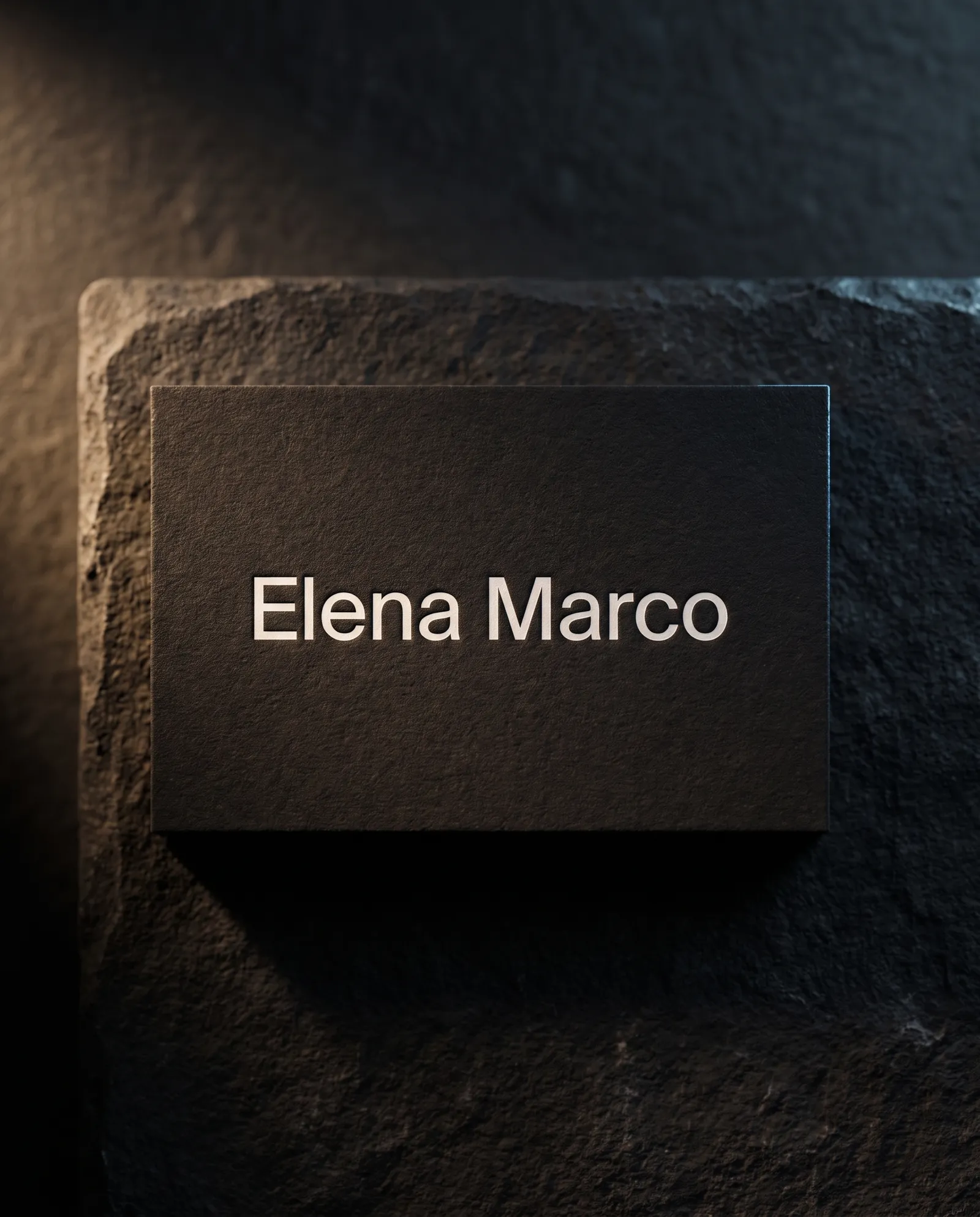
    Design exploration: a modern black business card with a white pigment foil name
    Design exploration · “Elena Marco” · white pigment foil, modern and quiet
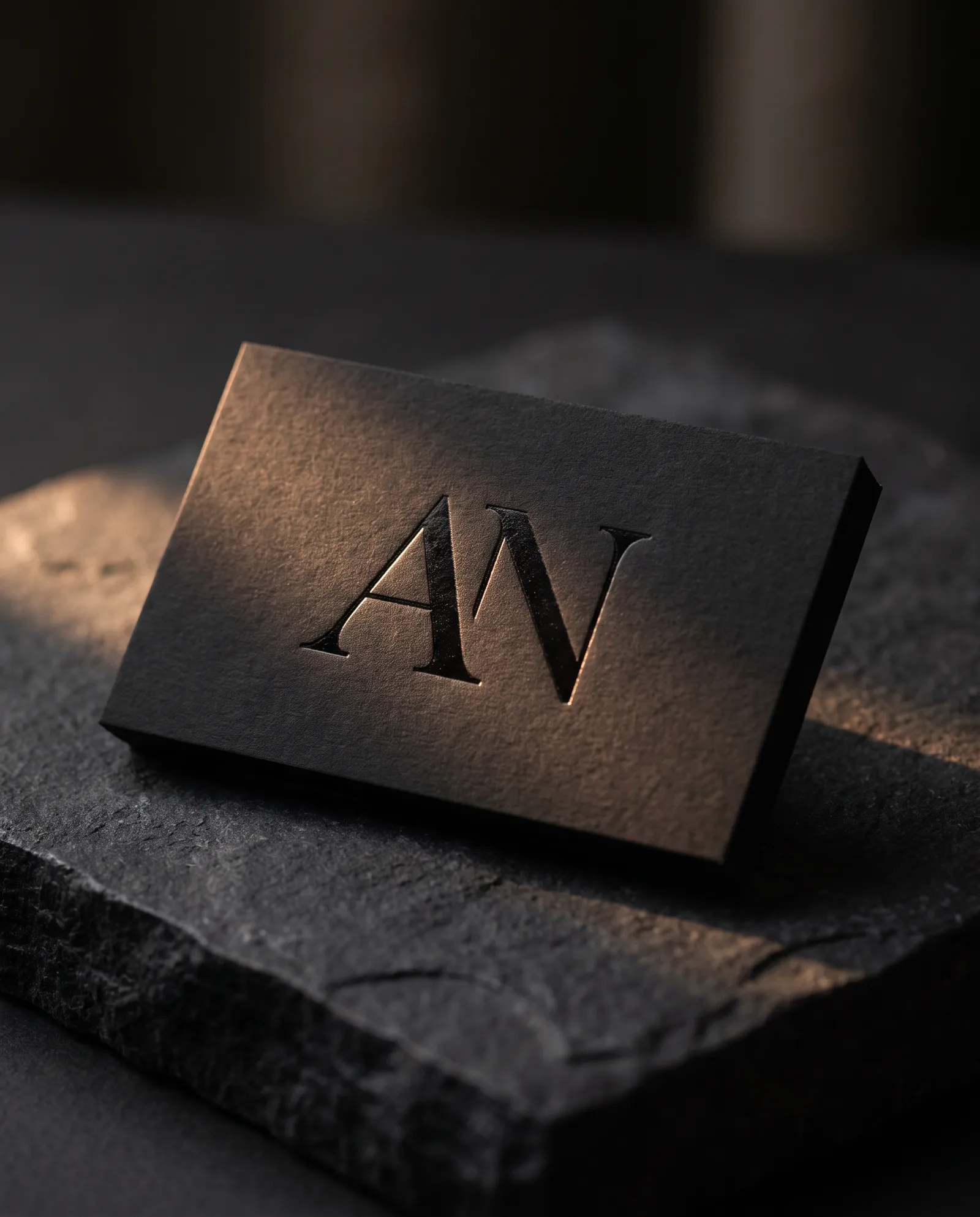
    Design exploration: a black on black business card with a black foil monogram
    Design exploration · “Atelier North” · black foil monogram on black

    How much do black business cards cost?

    QuantityBlack + raised foil (Standard, soft touch)Black + raised spot UV (Standard, soft touch)Gold foil on 32pt true black (Our Pick)48pt true black, foil both sides + edge foil
    100$126$1.26/card$121$1.21/cardGet a priceGet a price
    250$162$0.65/card$156$0.62/card$225$0.90/card$415$1.66/card
    500$205$0.41/card$196$0.39/card$295$0.59/card$595$1.19/card
    1,000Get a priceGet a price$445$0.45/cardGet a price
    Lead time (est.)ships in 3–4 business daysships in 3–4 business days~3 weeks~3 weeks

    Per-card price shown under each total. Foil on the back: +$37 at 100 (Standard) or +$45 at 250 (true black). Second foil colour +$50. Prices checked 1 October 2026. Free shipping within the continental US.

    Silk with flat foil (500 minimum) from $224; silk with flat spot UV from $141.

    Black business cards compared: printed, true black, metal and plastic

    Black cards in other materials

    Printed black (Standard)True black paperMatte black stainless steel business card with engraved bright-steel monogramBlack metalBlack PVC plastic business card with silver foil wordmarkBlack plastic
    FeelSmooth soft touch or silk, lightMatte, dry tooth or velvet; 16–48ptCold, rigid, heavySmooth, flexible, waterproof
    EdgeThin white lineBlackBare steel edgeBlack
    What reads on itRaised foil, spot UV, CMYK colourFoil (incl. white pigment foil), debossLaser engraving to bright steel, colour fillFoil (confirmed per sheet), white ink
    Price at 100$121–$126Get a price (from $195 for 250, 16pt)$585 (matte black, 0.5 mm)Get a price
    Lead time (est.)ships in 3–4 business days~3 weeks~3 weeks~3 weeks
    Best forFast, affordable, full-colour artThe real thing: black from every angleA statement card for a few peopleWet hands, rough use
    Where the alternative winsCheapest and fastestMost versatile on paperNothing feels heavierShrugs off water and spills

    Black metal business cards →Black plastic business cards →

    Real black business cards we've made

    All case studies →

    How long do black business cards take?

    1. 1. Configure or upload. Pick a build, or upload your logo in the Studio.
    2. 2. Proof. A person checks your file and sends a digital proof. Light-on-dark, foil minimums and QR placement are fixed here, with a one-line note on anything we changed.
    3. 3. Approve. Nothing is made until you say yes.
    4. 4. Production. Standard ships in 3–4 business days after proof approval (estimate); about 3 weeks for true black stock (foil dies are made from your approved file).
    5. 5. Ship. Free shipping within the continental US; we ship to 30+ countries. Shipping time comes on top.

    If you're not happy, we reprint. How reprints work

    Proofing, step by step → · Turnaround and shipping →

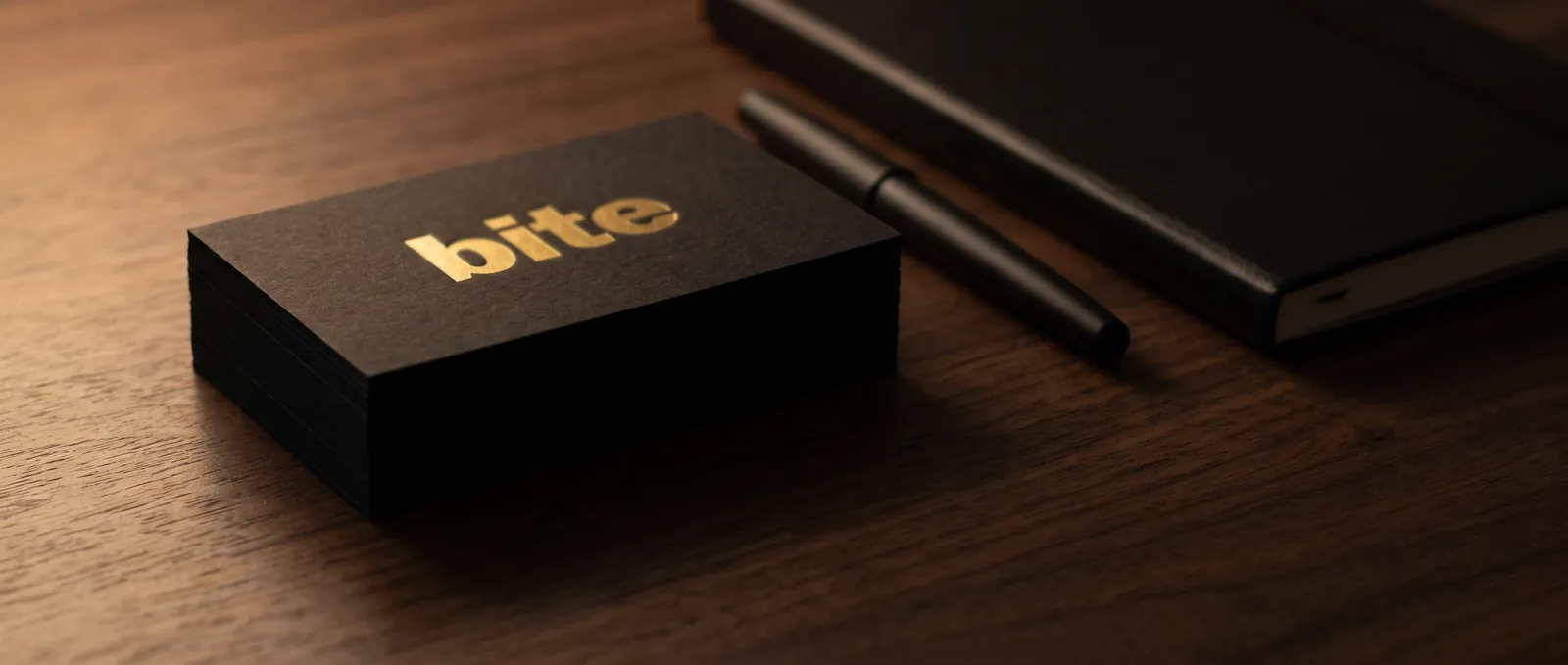
    Stack of black business cards with gold foil wordmark on walnut desk beside notebook and pen

    Hold it before you order

    Sample pack · $8.

    Our papers and finishes in your hand, soft touch and real foil among them, plus our hot foil swatch card to hold against the light. $10 credit back on your first order.

    15 minutes with Austin.

    Bring your logo. We'll tell you which build it wants, and when it doesn't need the upgrade.

    Free proof.

    A person checks your file and shows you exactly what will be pressed.

    Black business card questions

    How much do black business cards cost?

    Printed black cards with raised gold foil start at $126 for 100, and black-on-black spot UV at $121 for 100. Both ship in 3–4 business days after proof approval (estimate). Black and gold business cards on true black paper start at $195 for 250 (16pt) or $225 for 250 (32pt), in about 3 weeks. Prices include a free proof and free shipping within the continental US.

    What's the difference between printed black and true black paper?

    Printed black is white card printed black edge to edge, so the cut edge shows a thin white line and the surface takes full-colour print. True black paper (also called black stock, black cardstock or black business card paper) is dyed black through the pulp, so the face, back and edges are all black. Ink doesn't show on it, so business cards on black paper carry every mark in foil or as an impression.

    Why do some black business cards have white edges?

    Because they're white card printed black, and trimming exposes the white core. To avoid it, choose true black paper, or add foil-stamped edges to a printed card as a custom build (about 3 weeks; Standard cards always show the white line). Dark cards get foiled edges, not painted ones.

    How do I get white text on a black business card?

    On true black paper we use white pigment foil: opaque, flat white with a slight bite and no shine. White ink looks chalky on black uncoated paper because it sinks in. On printed black cards, white areas are left unprinted, so the white card shows through.

    Can you print full colour on black business cards?

    Not on true black paper; process inks are see-through and disappear into black. If your design needs full colour, we print it on white card with a full-bleed black background (the Standard builds), then add raised foil or spot UV on the soft touch surface.

    Does black foil show up on black stock?

    As a sheen, not as contrast. It's nearly invisible flat and flashes when tilted, which is lovely for a logo and wrong for a phone number. That's the black on black business card look; we set contact details in a lighter foil.

    Do embossed or debossed black business cards work?

    Yes, on black uncoated paper, but a blind impression on black reads only by shadow, so it's very quiet. For a mark people need to see, we add foil inside the deboss using one combined die. Soft touch can't be embossed, because it's a film.

    Are matte black business cards soft touch or uncoated?

    Either. Soft touch has a velvet film and makes foil look sharp; black uncoated has a dry, fibrous tooth and takes a deboss. Our Standard matte black is printed soft touch. Our true black builds come in both, dyed through.

    Can I put a QR code on a black business card?

    Yes, but it needs a light ground to scan, and it's always printed in flat ink, never foil. On printed black we leave a white panel and print the code in black. On true black paper we'll suggest a light back or leaving it off. We scan every code at proof.

    Will a black card scuff or show fingerprints?

    Dyed-through black hides wear well, because a scuffed corner is still black; printed black can show white at worn corners. Soft touch resists scuffs but can show finger oils at an angle.

    Can I buy blank black business cards?

    We don't sell blank card stock. The nearest thing is a true black card with a single blind deboss or one small foil mark: almost blank, and clearly made.

    What does a black business card say about a business?

    There's no fixed meaning, but in the hand it reads as restraint: one bright mark on a dark field, so the eye goes straight to your name. That's why black and gold suits brokers, salons and studios, and why a black card is unusual, and remembered, in fields where every card is white.
    More ideas: contemporary business cards