Case study · Business cards · Luminar
One letter, three colours
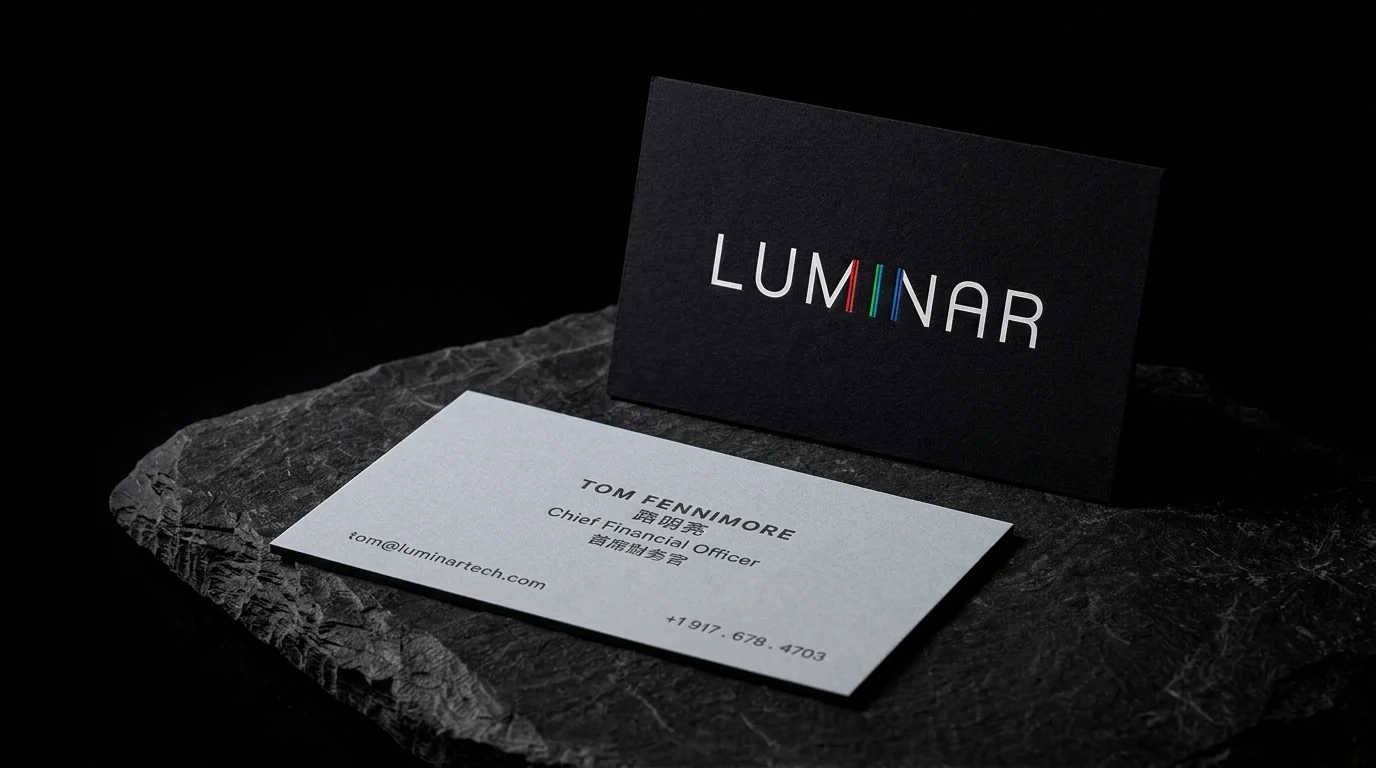
Card for Luminar: 'LUMINAR' in thin white capitals on matte black with the I split into red, green and blue stripes, and a pale grey reverse with the CFO's name and title in English and Chinese.
The idea
Luminar Technologies was an American company developing lidar and machine-perception technology for self-driving cars, including a supply agreement with Volvo. Its assets were acquired by MicroVision. The card shown is for its Chief Financial Officer.
Two rules
- 01Colour in one letter. White on black with only the I split into three hot-foil colours, red, green and blue, registered side by side.
- 02Bilingual reverse. Both set centred in grey on a pale sheet, English above Chinese, with contact details along the bottom edge.
Why it works
It's one small colour accent on a black and white card, like a single light turning on in the dark.
Start from these materials
Same paper, foil and finish, locked in — nothing of Luminar's artwork comes with it.
Questions
- Can a bilingual card use Chinese characters?
- Yes. Supply outlined type and have a native reader proof it.
- How do you print white on black?
- Usually with white foil, which covers dark stock cleanly and stays bright.
- Should a tech card use colour?
- Sparingly. A single accent tied to what the company does is more memorable than full colour.
- Can three foil colours be registered side by side?
- Yes. Each colour is its own die and pass, and tight registration lets thin foil stripes sit edge to edge.