New: Peppermint Studio — Try it →

    Pressed finishes

    Pressed Business Cards: Emboss, Deboss & Letterpress

    Three ways to make a card people feel before they read: paper pushed up, paper pressed in, or ink pressed in.

    From about Get a price for 100 · Custom

    About 3 weeks after proof approval (estimate).

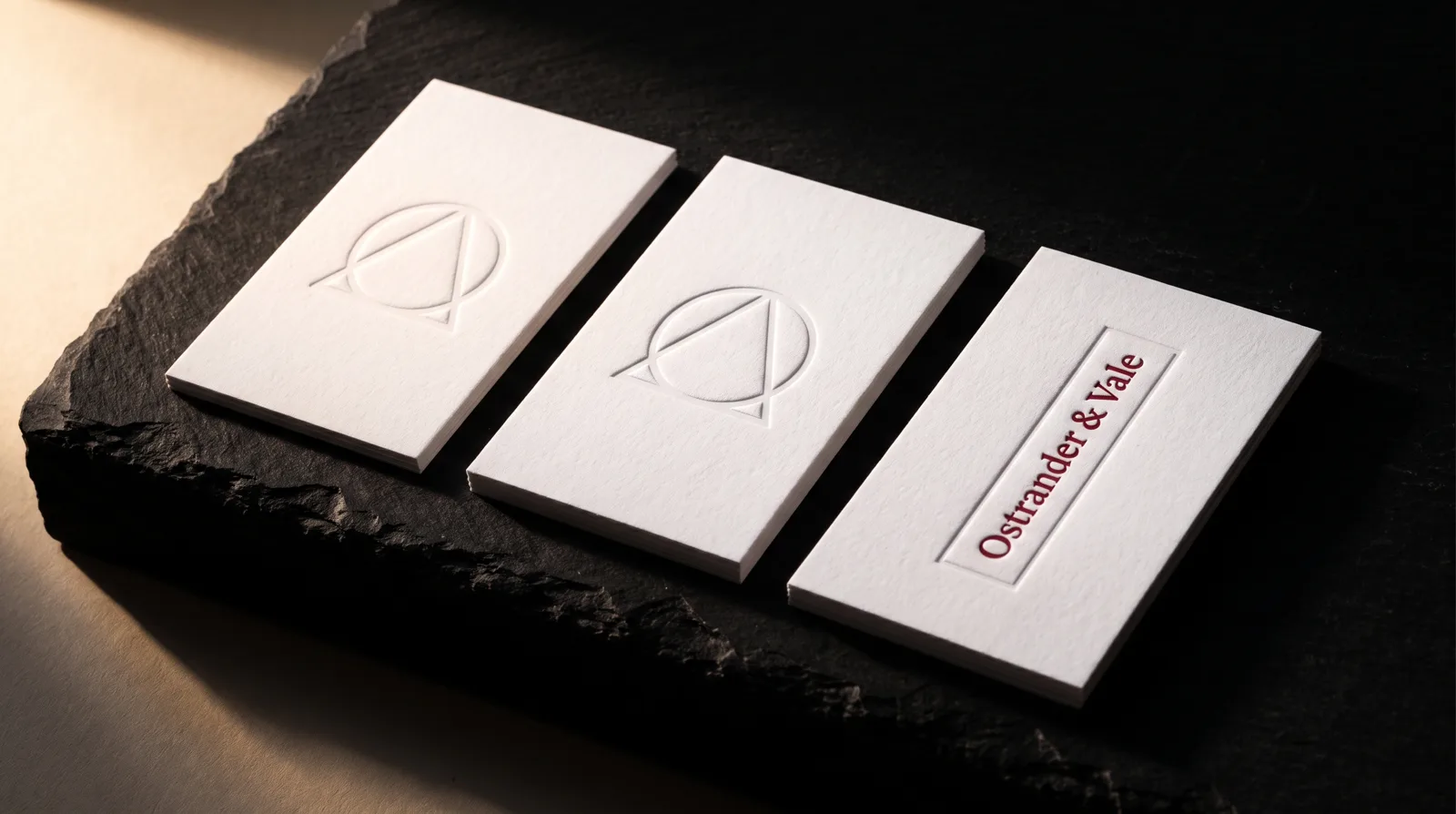
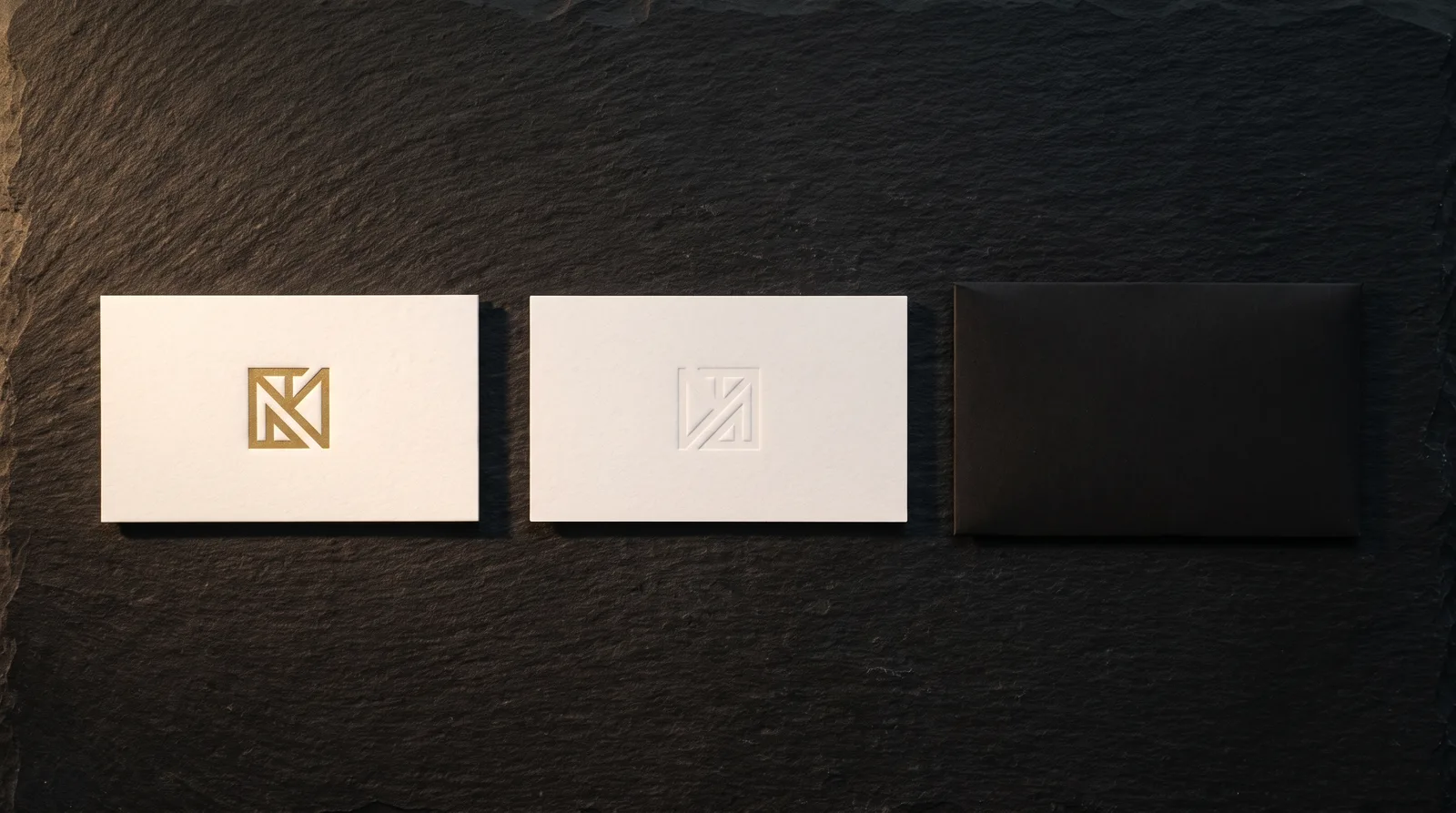
    Three white cotton business cards side by side: one blind embossed, one blind debossed, one letterpress printed in deep red, under raking light

    Pressed business cards are made by force rather than ink alone. Embossing pushes your design up out of the paper with a pair of metal dies, debossing presses it down, and letterpress presses an inked plate into soft cotton. All three need heavy uncoated paper, start from about Get a price and take about 3 weeks after proof approval.

    Which pressed finish is yours?

    Emboss

    What happens
    Paper is pushed up between a male and female die
    Ink
    None (blind), or foil registered to it
    You'll notice
    A soft raised shape and its shadow
    Best for
    A single logo or monogram
    Back of the card
    Mirror-image hollow on a single sheet
    From
    $350 / 250 (32pt cotton)

    Deboss

    What happens
    Paper is pressed down by a die
    Ink
    None (blind), or foil in the recess
    You'll notice
    A crisp hollow with a flat floor
    Best for
    Logos, foil marks, cards with painted edges
    Back of the card
    A deep bite can show faintly
    From
    $350 / 250 (die, 32pt cotton) · Get a price / 100 (letterpress plate)

    Letterpress

    What happens
    An inked plate is pressed into the paper
    Ink
    Pantone ink in the impression (or none: blind deboss)
    You'll notice
    Colour sitting at the bottom of a bite
    Best for
    Type-heavy cards, 1–3 colours
    Back of the card
    A deep bite can show faintly
    From
    $340 / 250 (48pt cotton)

    Still torn? Feel all three in the sample pack ($8, with $10 back on your first order) →

    Choose your build

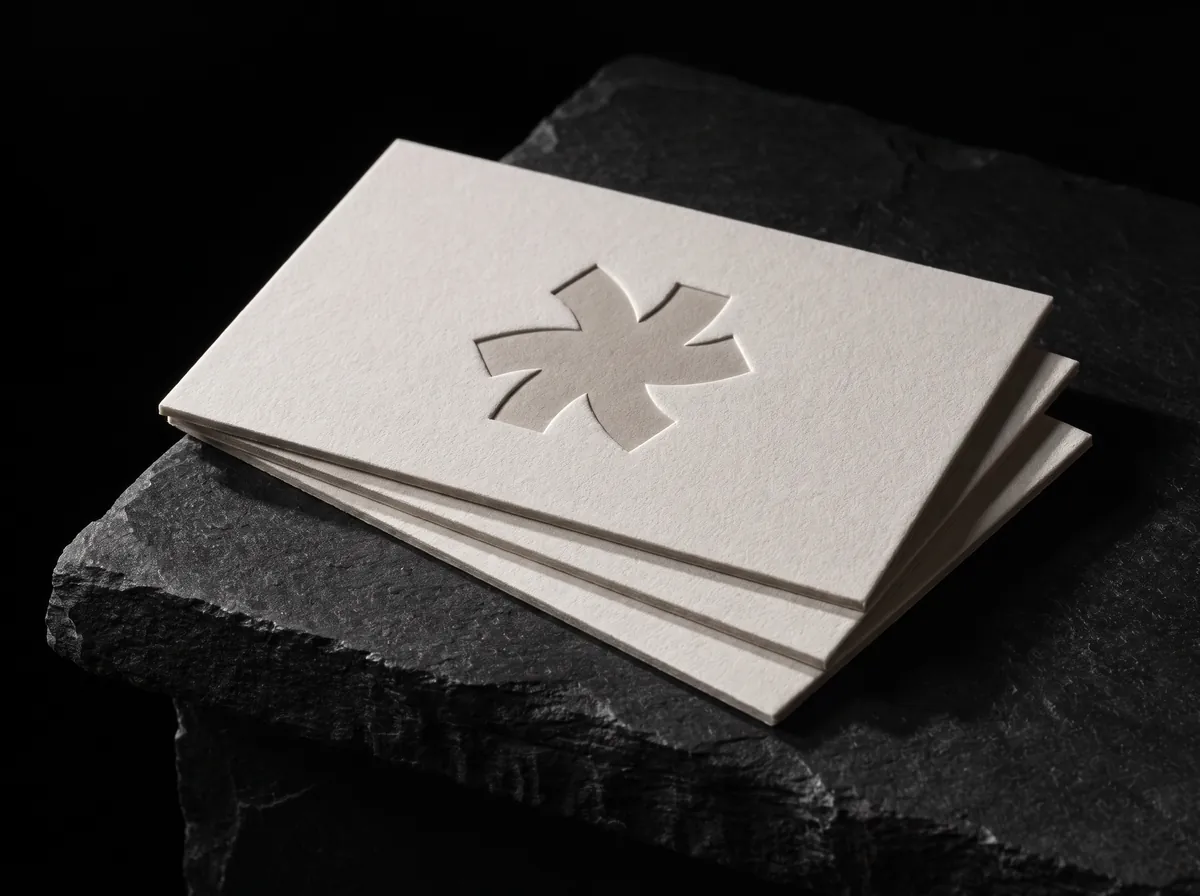
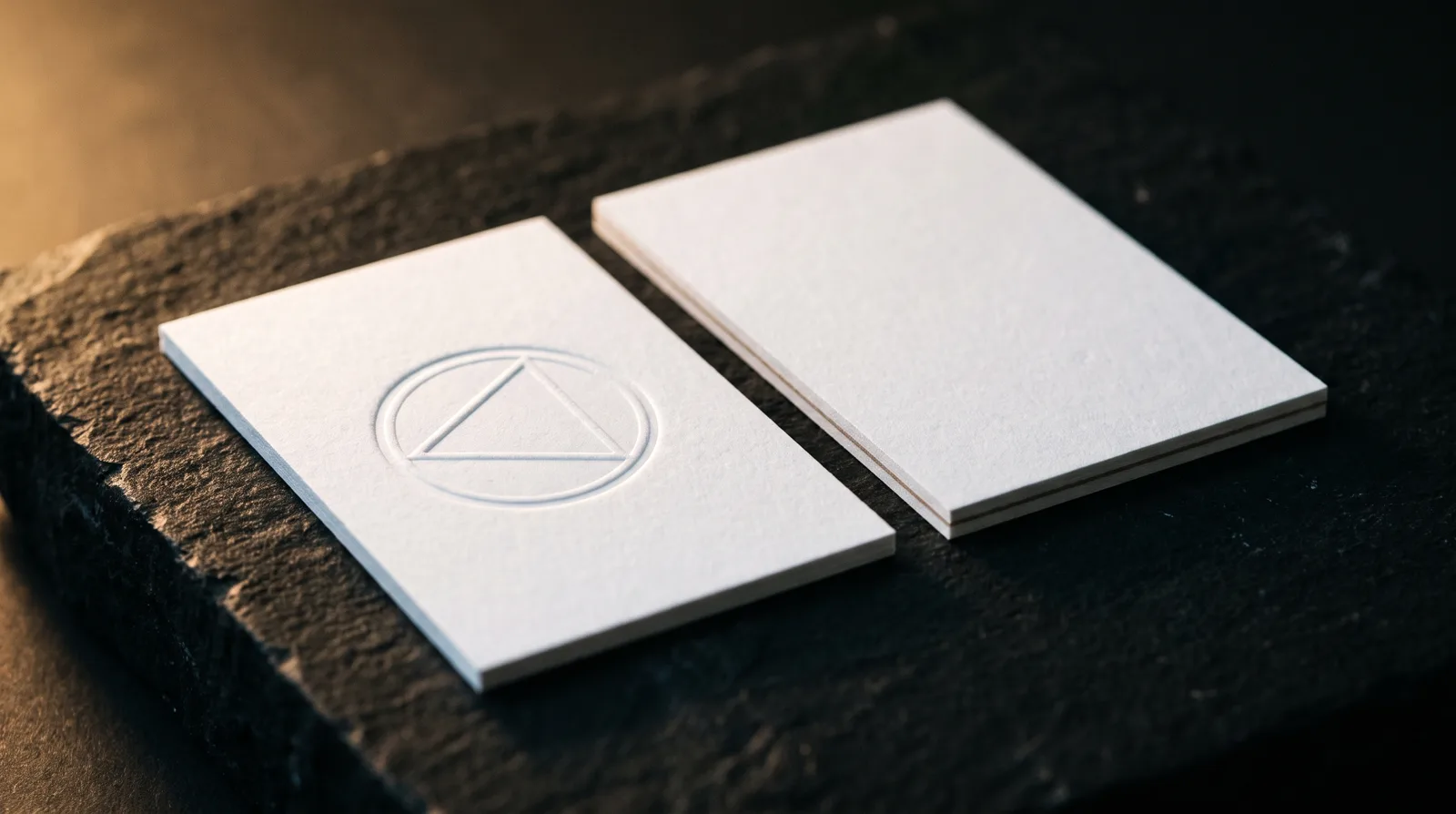
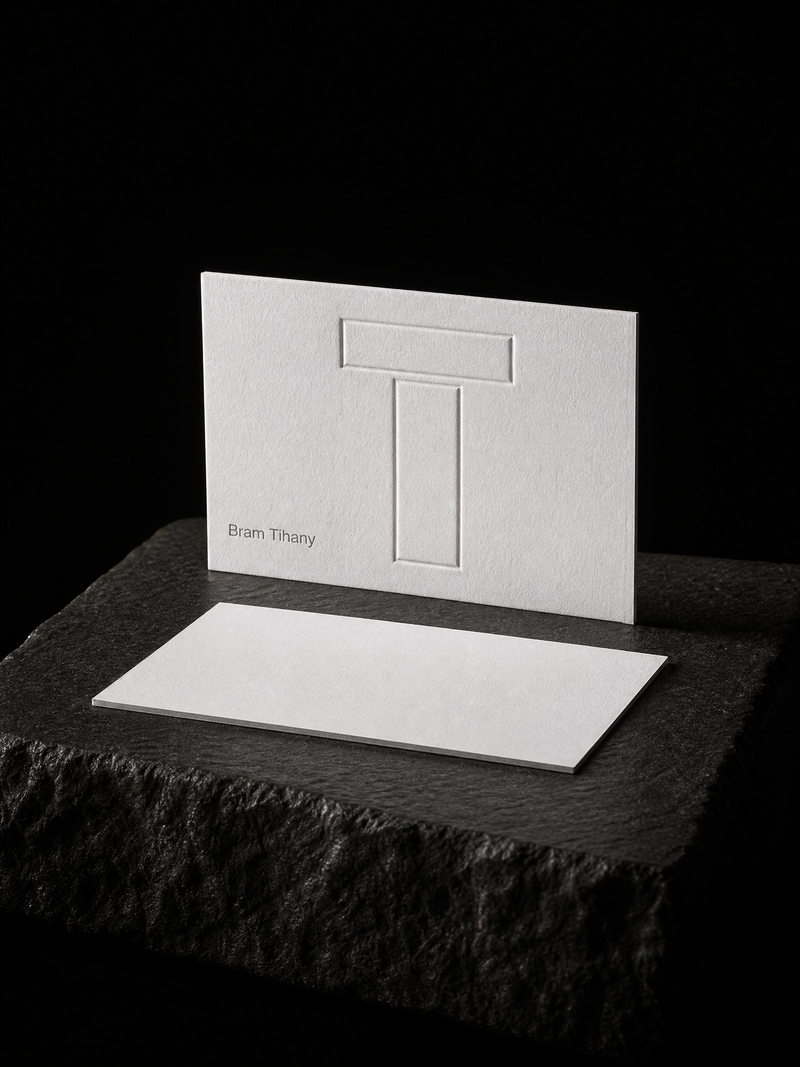
    Business card with embossed logo: a blind emboss on 32pt white cotton, raised and caught by a raking light on a black stone plinth

    Our pick: Embossed & debossed

    One die cut from your logo, pressed into 32pt cotton, blind or with foil in the impression. The pressed card that also carries metal.

    $350 for 250

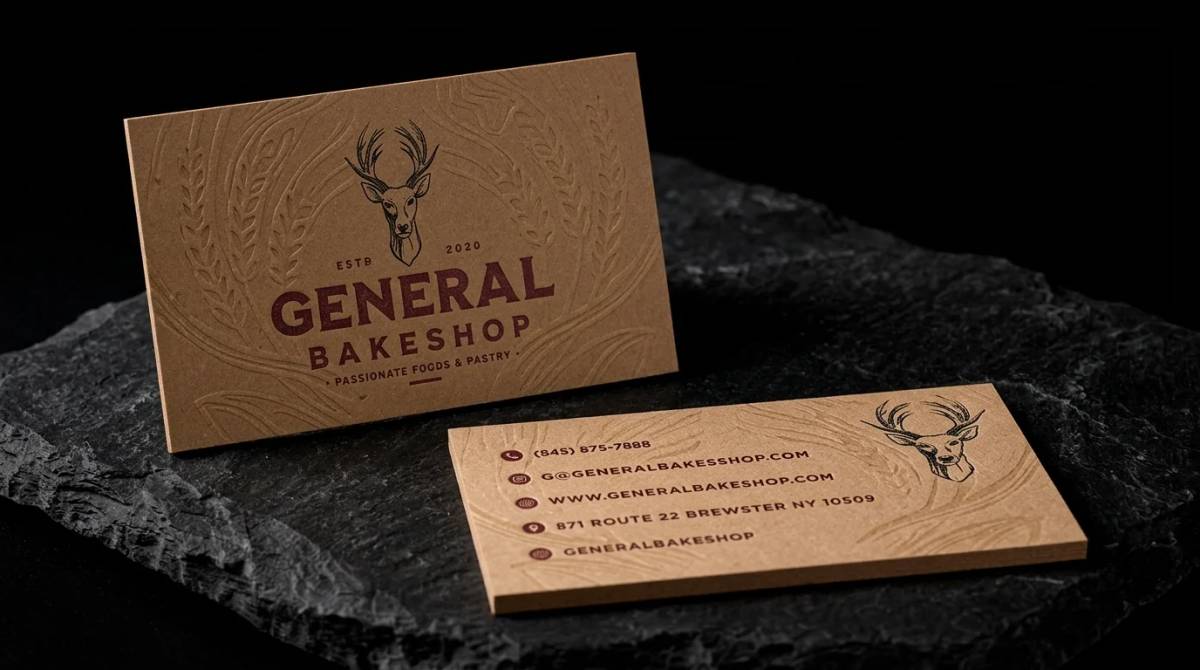
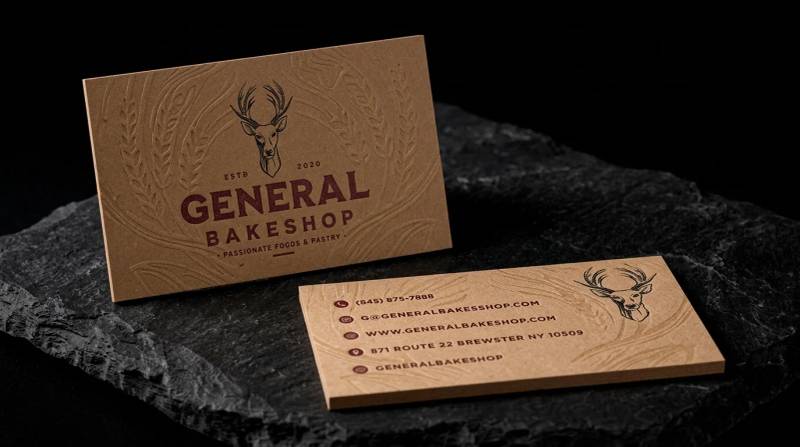
    General Bakeshop business card: blind-debossed wheat and wood grain with maroon letterpress on thick kraft

    General Bakeshop · blind deboss and letterpress on thick kraft

    Blind deboss

    No ink at all: a plate pressed hard into thick cotton. The quietest card we make, and the lowest entry price for a pressed card.

    around Get a price for 100

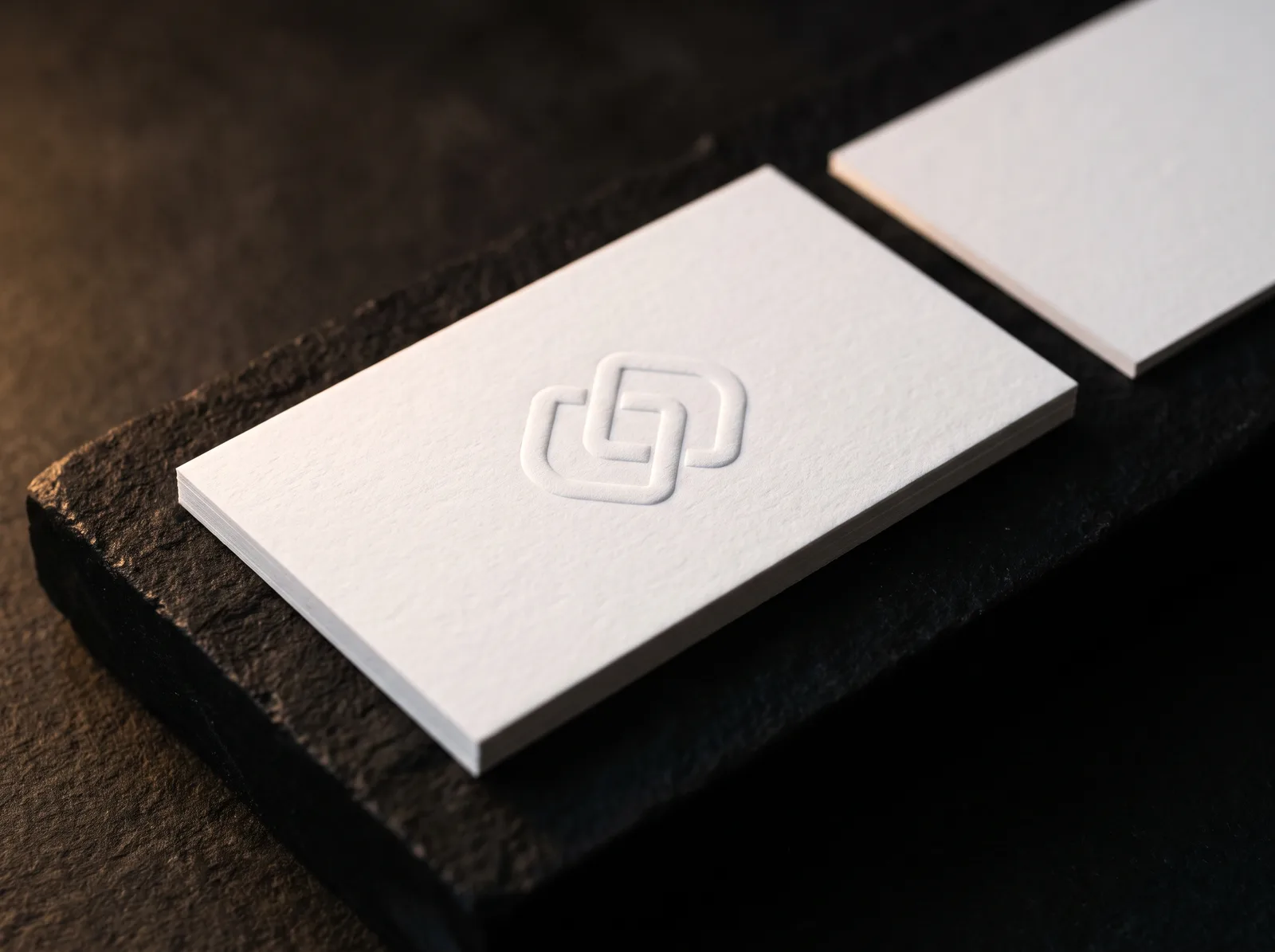
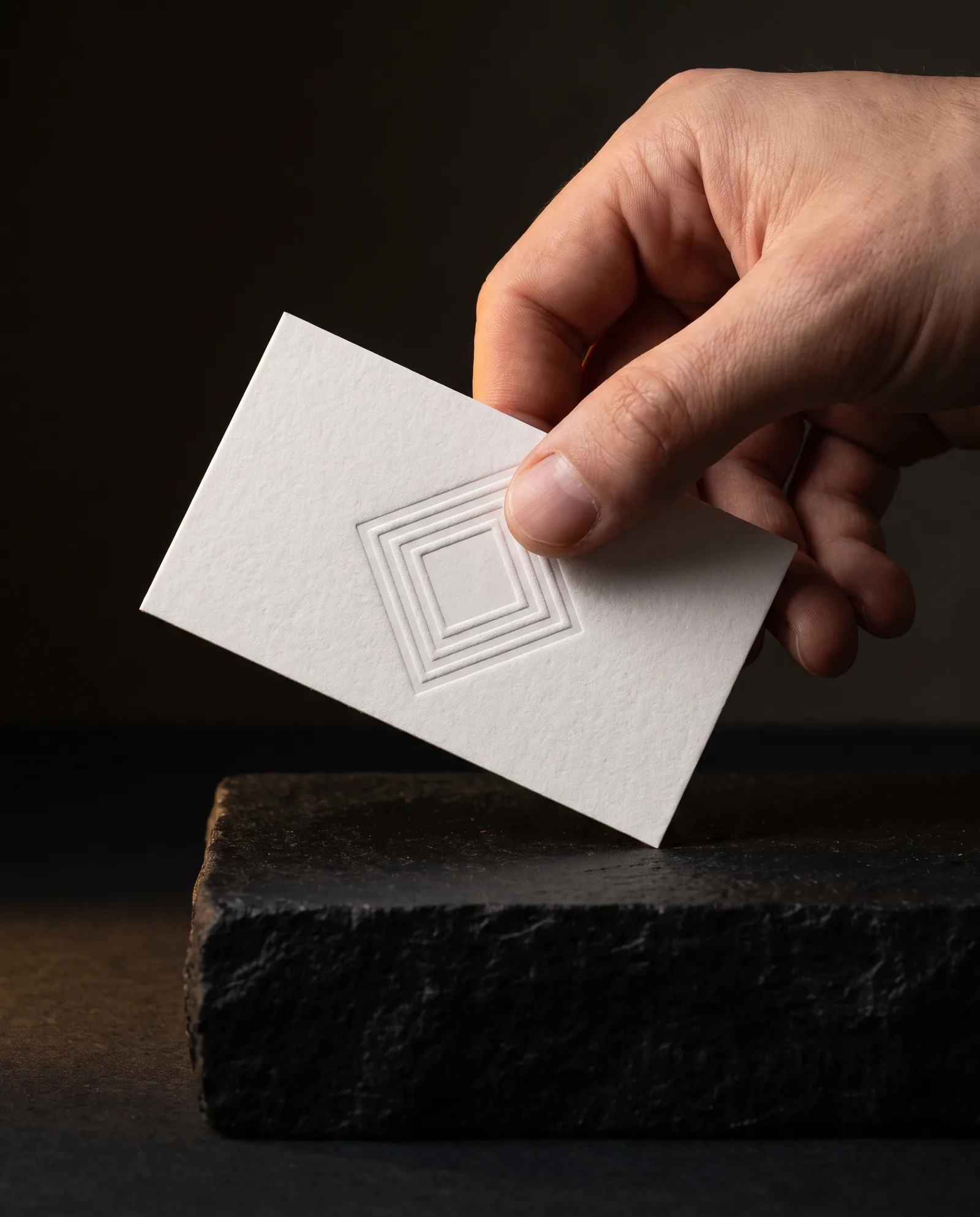
    Thumb crossing a blind embossed mark on a thick white cotton business card

    What a pressed card feels like

    Run a thumb across all three and you can tell them apart with your eyes closed. An emboss is a soft hill: the cotton stretches up over the die and the shape rises less than a millimetre, with rounded shoulders. A deboss is a clean hollow with a flat floor you can catch a fingernail on. Letterpress feels like a deboss, but the colour sits at the bottom of the bite, so the type looks set into the paper rather than printed on it. All three live on heavy uncoated cotton, so the card has weight in the hand before anyone notices the mark.

    The one thing that flattens a pressed card

    Detail. An impression reads only by its shadow, so anything thinner than the paper can stretch around disappears. For emboss and deboss that means strokes of at least 0.5 mm, gaps of 1 mm and text at 10 pt in a medium or bold weight. Letterpress holds finer lines, down to 0.15 mm, because the ink carries them. If your logo is finer than that, it isn't a reason to give up on pressing; it's a reason to redraw the mark for the die. We check every file before a die is cut and tell you which parts will hold.

    Will your logo hold in an emboss?

    Emboss needs open counters and one clear depth. Strokes under about 0.5 mm and gaps under 1 mm collapse as the paper stretches over the die. We open the drawing up so the shadow reads.

    How dimensional printing works

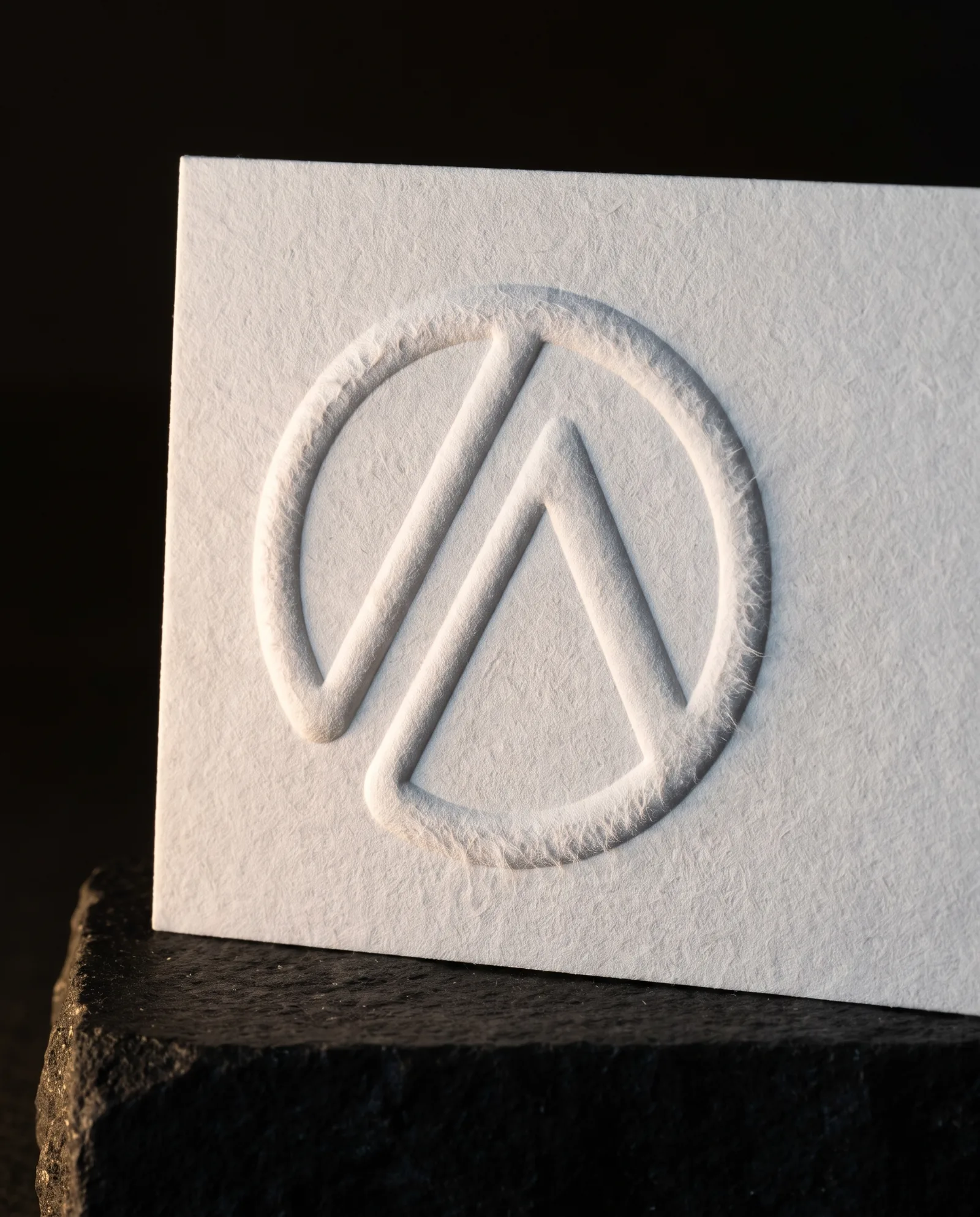
    Macro of a blind embossed mark rising from white cotton paper in raking light

    Embossing

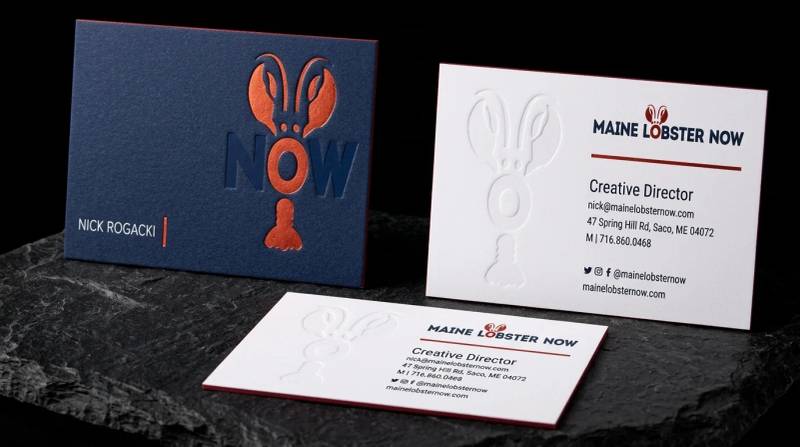
    Embossing pushes the paper up from behind between a male and a female metal die, so your logo, name or pattern stands above the surface. It can be blind (no ink or foil, just the raised shape) or registered to foil or print. Because the paper is stretched over the die, a single sheet always carries a mirror-image hollow on the back. Many designers plan the back around it. When both faces must be clean, two sheets are pressed separately and bonded.

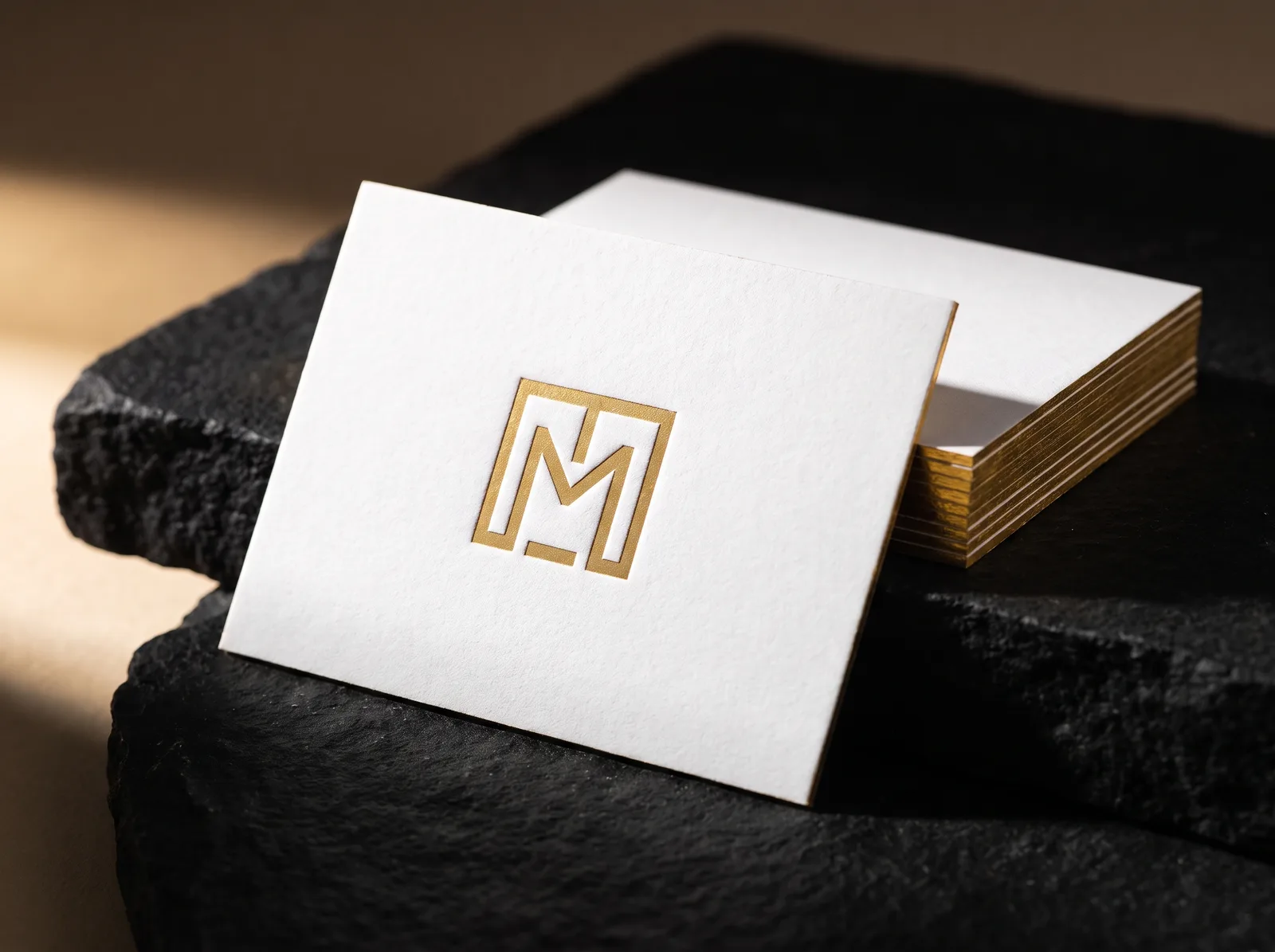
    Debossed business card with gold foil in the impression and gold foiled edges on square corners

    Debossing

    Debossing presses the design down into the paper, leaving a crisp recessed impression. On thick, soft cotton the deboss sinks deep into the fibres and holds a flat, sharp floor, which is why it's the finish we pair with foil. A deep deboss can still show faintly on the back of a single sheet, so we keep the reverse layout clear of it.

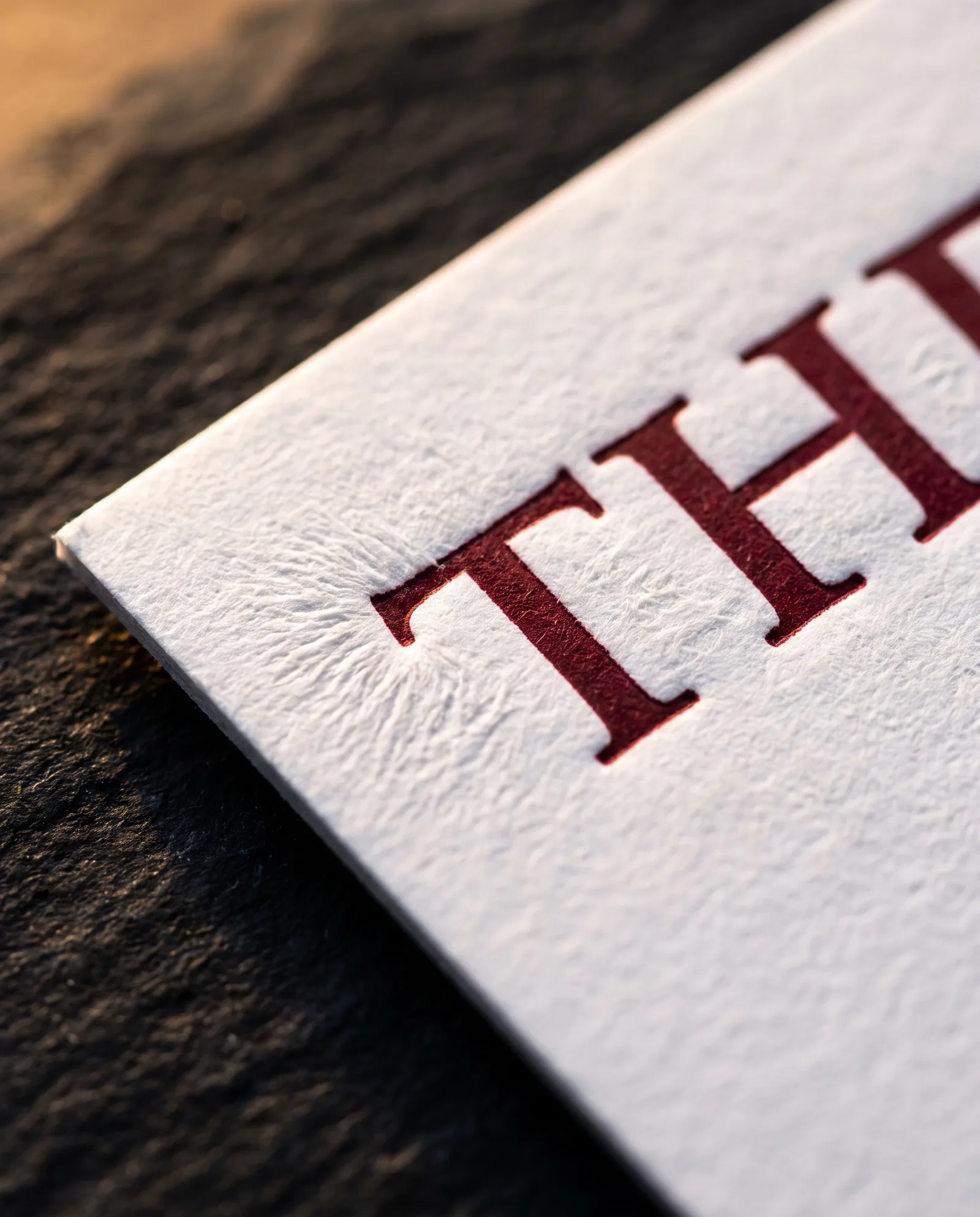
    Macro of deep red letterpress serif type pressed into white cotton business card, warm raking light

    Letterpress

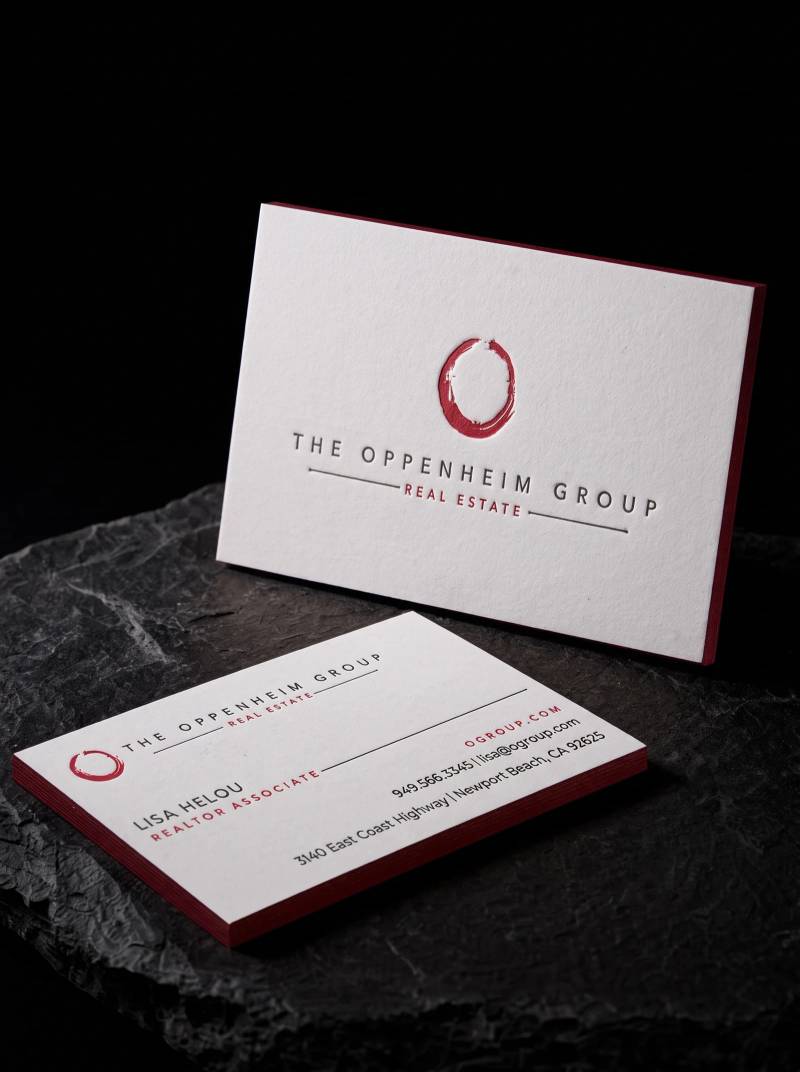
    Letterpress inks a raised plate and presses it into the paper under heavy pressure, so the colour sits at the bottom of the impression. It uses mixed Pantone inks rather than CMYK, which gives deeper, more even colour, and it's at its best with one to three colours on soft cotton. Letterpress ink is translucent, so light colours on dark paper go to foil instead.

    Emboss, deboss and letterpress compared, in depthEmbossing vs debossing guide

    Foil pressed into the impression

    The most legible pressed card puts metal where the paper is pressed. One combination die stamps the foil and presses the shape in the same pass, so the gold or copper sits exactly inside the deboss, protected from scuffing. Configure it on our embossed card page: choose deboss, add foil, choose "registered".

    Gold foil monogram pressed into a deboss on a white cotton business card, with the back of a second card and a black sleeve

    See your logo pressed before you order

    Upload your logo and our Studio shows you a concept of it embossed, debossed or letterpressed on the paper you choose, in a few minutes. It's a rendering for direction; a person rebuilds your file and sends a proof before anything is made.

    Which technique is right for you?

    EmbossingDebossingLetterpress
    EffectRaised above the surfaceRecessed into the surfaceInk pressed into the surface
    Best forLogos, monograms, simple patternsLogos, foil marks, cards with painted edgesType-heavy designs, 1–3 Pantone colours
    PaperCotton; colored uncoated stocks (black, navy, kraft, blush, forest, burgundy, slate)Cotton; colored uncoated stocksCotton (white, two-colour, duplex); Colorplan
    Ink / foilBlind, or with foilBlind, or with foil in the recessPantone spot ink; blind deboss has none
    Reverse sideMirror-image hollow on a single sheetA deep bite can show faintly; keep the back clearA deep bite can show faintly; duplex hides it
    Won't work onLaminated, soft-touch, plastic, metalLaminated, soft-touch, plastic, metalCoated or laminated paper; light ink on dark paper
    TurnaroundAbout 3 weeksAbout 3 weeksAbout 3 weeks
    From$350 / 250 (32pt cotton)$350 / 250 (32pt cotton)$340 / 250 (48pt cotton)
    Backs of two white cotton cards: emboss hollow on single ply, clean duplex with edge seam

    Pressed or flat: when a pressed card isn't the answer

    If you want…Pressed is right when…Choose instead
    ShineYou want shine and texture together → foil in a debossFoil business cards
    A glossy raised logo on a full-colour cardNever, because pressing needs uncoated paperRaised spot UV business cards
    Weight in the handPressing already needs heavy stockThick business cards
    Waterproof or see-throughNever: we don't emboss plasticPlastic business cards
    A card that lasts for years in a walletYou reprint every year or two anyway; a blind impression has no ink to wear offMetal business cards

    Pressed cards we've made

    How it works

    1. 1Pick a path or upload your logo.
    2. 2A person checks your file and sends a digital proof.
    3. 3You approve.
    4. 4We make the die or plate and press your cards. That takes about 3 weeks after approval.
    5. 5Free shipping within the continental US (most US deliveries arrive 1–3 business days after production). We ship to 30+ countries.

    If you're not happy, we reprint.

    How reprints work

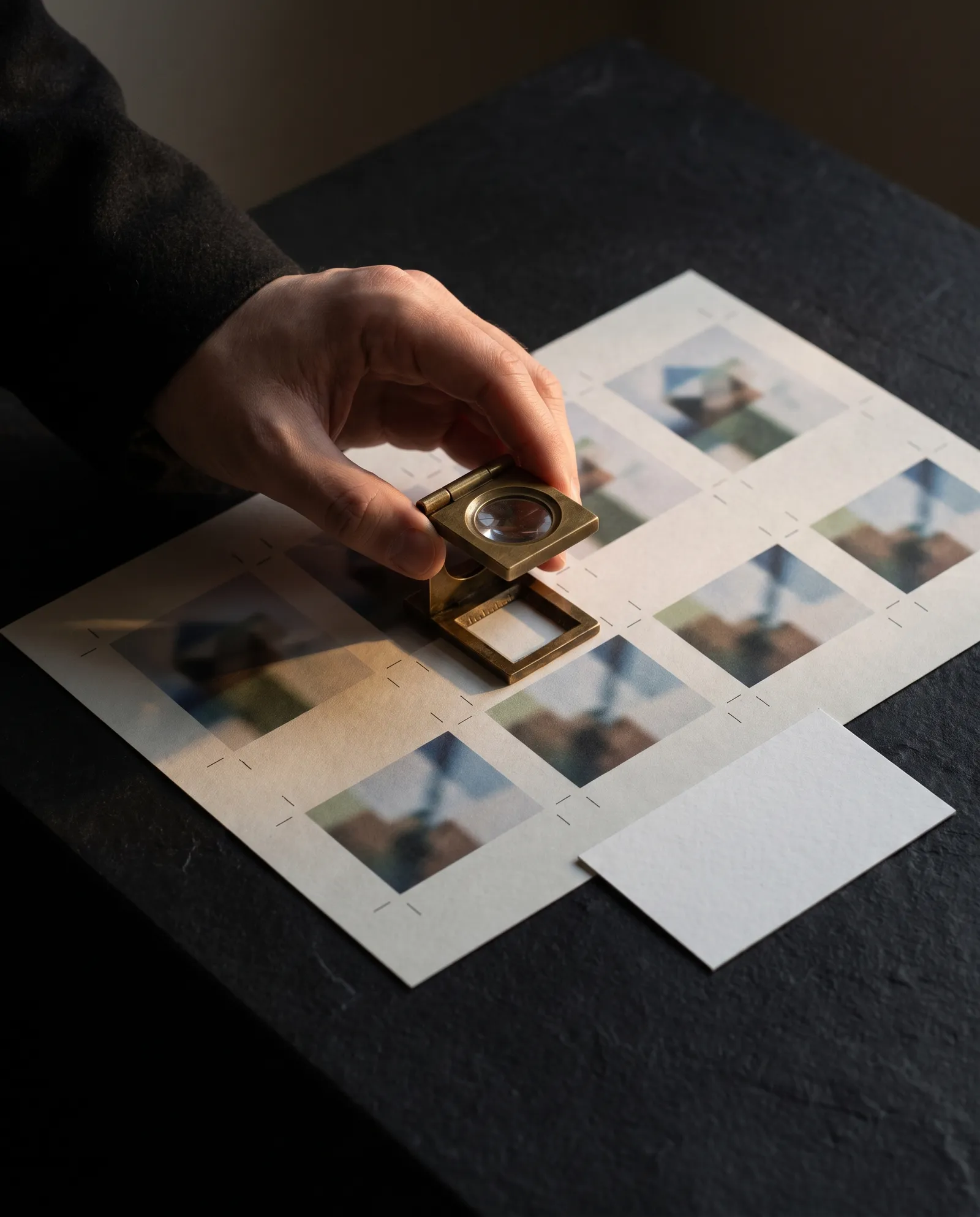
    Hands holding a loupe over a printed business card proof sheet

    Feel it first

    The sample pack, $8

    Talk to Austin

    15 minutes

    Free proof

    Every file is checked by a person

    Questions about pressed business cards

    What is the difference between embossed and debossed business cards?

    An embossed card has part of the design pushed up out of the paper; a debossed card has it pressed down into the paper. Both are made with custom metal dies and can be blind (no ink) or combined with foil. On a single sheet, an emboss always leaves a mirror-image hollow on the back.

    How do you emboss a card?

    A metal die is made from the artwork, in two halves: a recessed female die and a matching raised male die. The card is pressed between them, so the paper is stretched up into the shape. It needs soft, heavy, uncoated paper such as cotton, and lines thick enough to hold a shadow: at least 0.5 mm.

    What is a deboss card?

    A deboss card has a design pressed down into its surface rather than printed on it. The recess reads by shadow, so a blind deboss is subtle in flat light and striking in side light. Adding foil inside the recess makes it legible from across a table.

    Which is better, letterpress or embossing?

    It depends on the design. Letterpress is better for type-heavy cards, because the ink carries fine lines and small text. Embossing and debossing are better for one strong mark, especially with foil. Many of our favourite cards use both: a blind emboss for the logo and letterpress for the details.

    What are the disadvantages of embossing?

    Fine detail disappears, a single sheet carries a mirror image on the back, and it only works on soft, uncoated paper, never on laminated, soft-touch, plastic or metal cards. Each has a fix: a redrawn mark, a planned back or a bonded second sheet, and the right paper.

    How much do pressed business cards cost?

    A blind deboss letterpress card starts around Get a price for 100. Embossed or debossed cards with a custom die start at $235 for 250 on 16pt ($350 on 32pt cotton), and letterpress at $340 for 250 on 48pt cotton. Foil, a second colour or painted edges add to that; each product page shows the live price.

    How long do embossed, debossed and letterpress cards take?

    About 3 weeks after you approve your proof, because a die or plate is made from your artwork first. Shipping is on top: most US deliveries arrive 1–3 business days after production. Lead times are estimates, not guaranteed delivery dates.

    What are embossed gloss business cards?

    "Embossed gloss" is a marketing name for raised spot UV: a thick clear coating printed on top of a flat, usually soft-touch, card. You can feel it, but nothing is pressed into the paper. See raised spot UV business cards.

    Can you emboss postcards or invitations?

    Wedding invitations, yes: see embossed wedding invitations. For postcards and other flat pieces, postcards and flyers offers letterpress and foil; ask for a custom quote if you want a blind emboss.

    Can I see my logo pressed before I order?

    Yes. Upload it to the Studio for a concept in a few minutes, then a person sends a real proof after you order. To feel the finishes first, order the sample pack.