Coming soon · now taking custom orders
The wax seal that survives the mail.
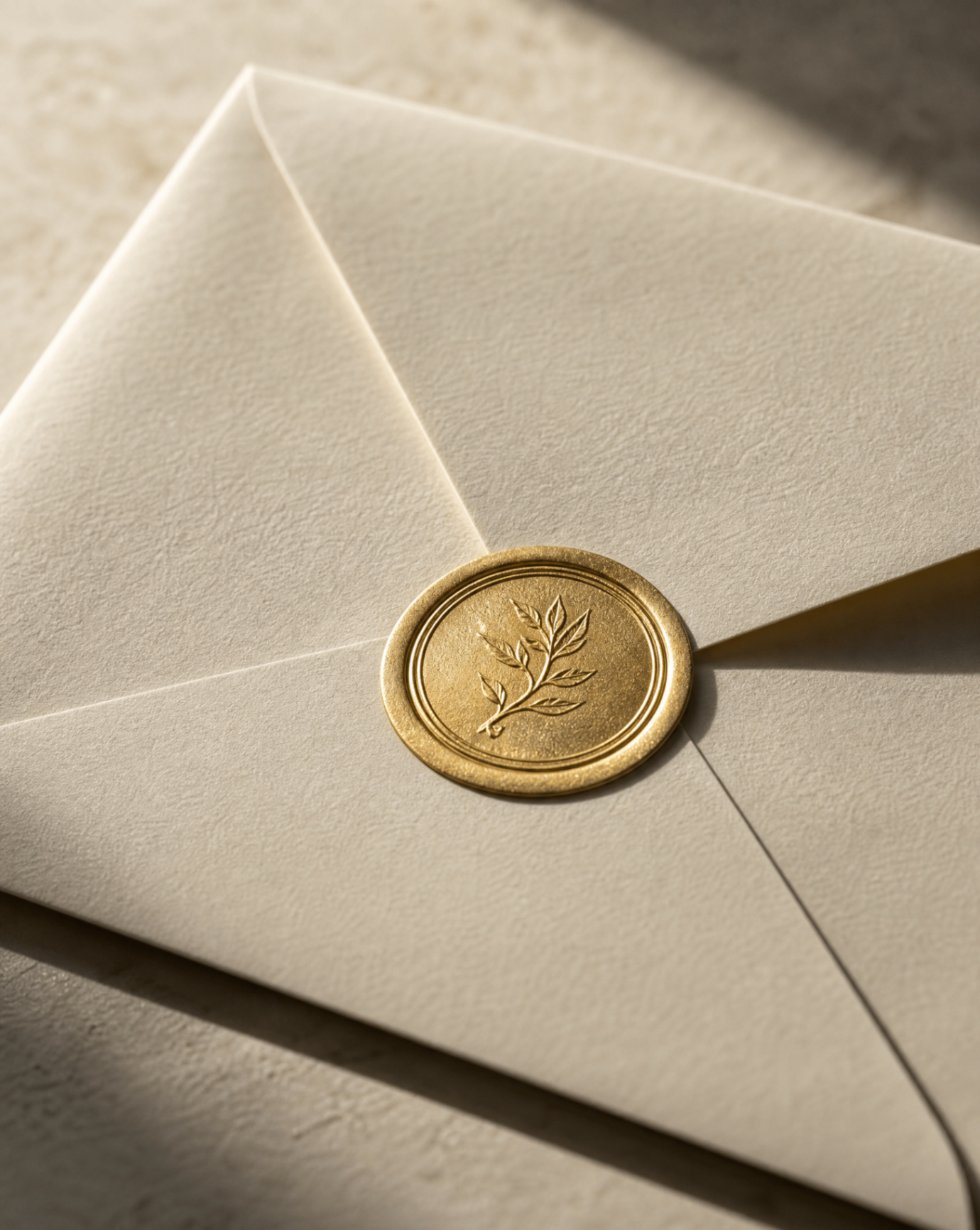
Stamped foil seals on a peel-and-stick backing — the look of a wax seal without the heat, the weight or the postal surcharge. Designed to match the monogram on the suite inside.

Reviewed by a human
before anything prints
What's possible
Why foil, and not wax.
Real wax is beautiful and it cracks. It also makes an envelope non-machinable, which means hand-cancelling and a surcharge on every piece. A stamped foil seal reads the same across a room, ships flat, and costs a fraction. We'll still make you real wax if the piece warrants it — hand-delivered menus, a small VIP list — but for a mailed invitation, foil is the honest recommendation.
Round & custom shapes
1.5in round is standard; die-cut to your mark.
Foil shades
Gold, copper, silver, matte black, holographic.
Emboss & deboss
Pressed relief in the foil for real depth.
Peel-and-stick backing
Kiss-cut on a sheet, ready to apply.
Why Peppermint
A human guides every custom order.
A human verifies everything
We confirm your files, materials and finishes will print before you ever pay.
Access to exotic materials
Papers, foils and techniques most printers can't or won't offer.
A free proof, every time
Approve exactly what you'll get — nothing goes to press until it's right.
Custom foil seals FAQ
A foil seal is stamped metallic foil on an adhesive backing — flat, mail-safe and consistent piece to piece. Wax is thicker and more tactile, but it cracks in transit and makes the envelope non-machinable, which means hand-cancelling and a per-piece surcharge. For anything mailed, foil is what we'd put our name on.
Yes — we can stamp and emboss in one hit so the mark sits raised in the foil. That's what sells the illusion; a flat foil circle reads as a sticker up close, a pressed one reads as a seal.
On cotton and Colorplan, yes — we spec a stronger adhesive for toothy stocks. Heavily textured or felt-finish papers are the one place we'd test first, and we'll say so before you order rather than after.
Same foil, same monogram, same shop. We cut the seal die from the mark already in your suite, so the gold on the seal is the identical foil on the invitation — not a near match from a different supplier.
Need foil seals before we launch self-serve?
Tell us what you have in mind. We'll come back with ideas, real options and an exact quote — no obligation.
A foil seal is the last thing a guest touches before the envelope opens, and it sets the temperature for everything inside. We stamp metallic foil into a kiss-cut sheet, press relief into it so the mark sits raised, and hand you a seal that reads like wax across a room and still runs through a postal sorter without a surcharge. Standard is a 1.5in round. Anything else, we cut a die to your monogram.
For a mailed invitation, foil is the honest recommendation
Real wax is beautiful and it cracks. A sealed envelope goes through rollers and belts, and wax that survived the drive to the post office often arrives as three pieces and a smear. Worse, the bulk makes the envelope non-machinable — that means hand-cancelling and a per-piece surcharge on the whole mailing.
Stamped foil sits flush. It ships flat, arrives identical piece to piece, and costs a fraction. We'll still pour real wax when the piece warrants it — hand-delivered menus, a short VIP list, place settings nobody has to mail — but for anything going in a mailbox, foil is what we'd put our name on.
1.5in round is standard; the die follows your mark
Most suites take the 1.5in round. It's the size the eye reads as a seal rather than a sticker, and it lands cleanly on the flap of a standard outer envelope.
Beyond that, we cut the die to your mark — a crest with an irregular outline, an oval, a hexagon, a shape that follows the monogram's own edge. Custom shapes are a die and a cut path, so the drawing matters. Fine hairlines and tight interior counters are where marks lose definition under a stamping die, and we'll flag those in your artwork before we cut anything rather than after.
Emboss the foil or it reads as a sticker
Foil comes in gold, copper, silver, matte black and holographic. Shade is the easy decision. Depth is the one that matters.
A flat foil circle is metallic ink to the eye — up close, it's clearly adhesive. Stamping and embossing in one hit pushes the relief up so light catches the shoulder of every letter, and that shadow is what sells the illusion of poured wax. Deboss does the inverse: the mark sinks and the foil pools in the recess.
Everything arrives kiss-cut on a sheet, backing intact, so you peel and place by hand.
Common questions
Gold and copper carry the most warmth and read as wax from a distance. Silver goes cooler and more modern. Matte black has no shine at all — it's relief and contrast only, which suits a light envelope. Holographic shifts color as it turns. The safest rule: use the identical foil that runs on your invitation.