Case study · Business cards · Minor Figures
Two inks, a steel core, and a playlist
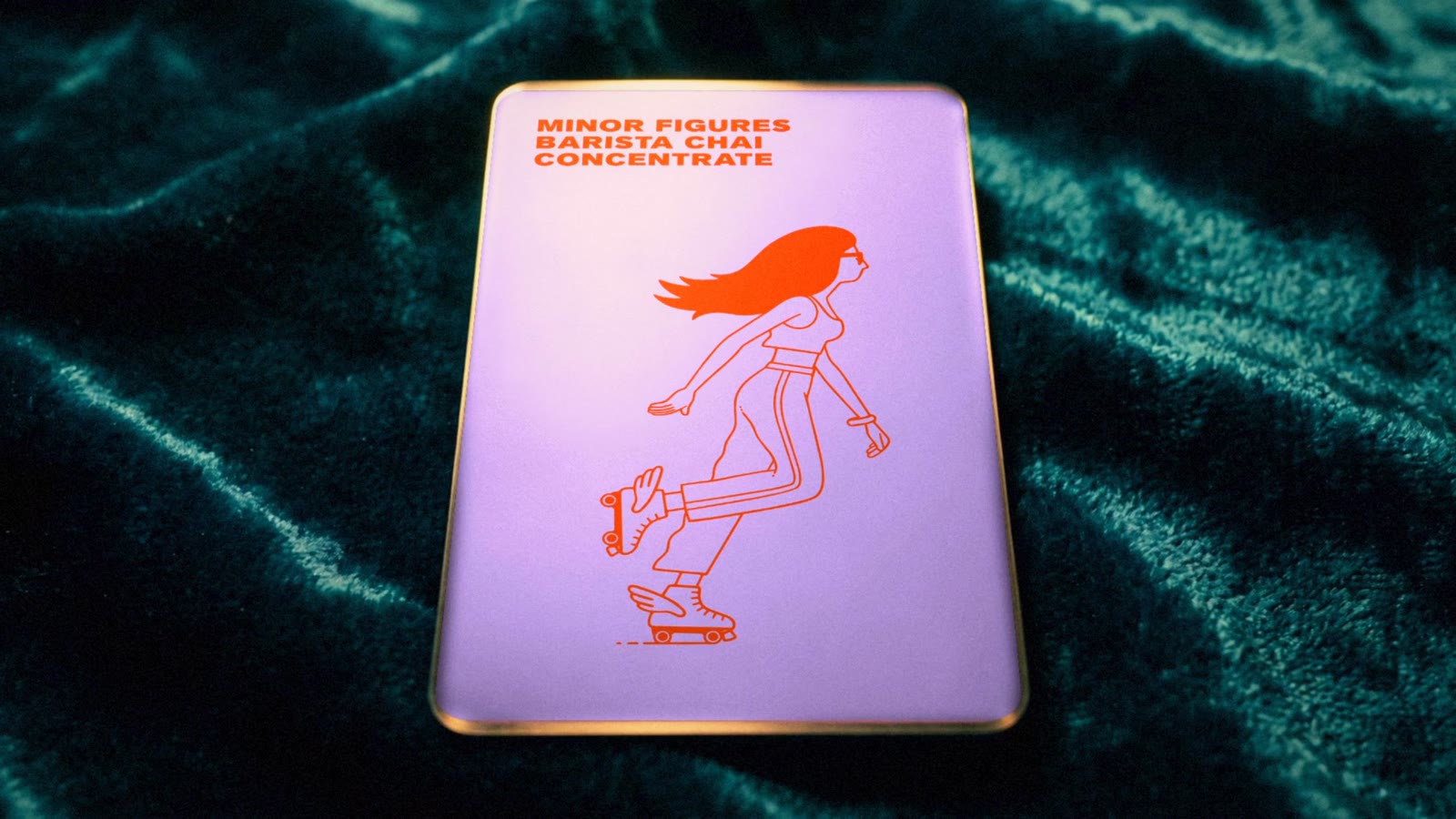
Minor Figures needed a launch object for their Barista Chai Concentrate: a card that taps to a playlist and reads unmistakably as the carton. We built a 1.26 mm hybrid, 0.5 mm stainless core laminated to 0.76 mm PVC, silkscreened in Pantone 1665 C and 2635 C on both layers, with an NTAG213 concealed in the PVC. Five looks, one drawing, two inks, and the bare steel as the only third colour.
The idea
Minor Figures were launching Barista Chai Concentrate and wanted an object to launch it with. Not a flyer, not a card with a QR code on it — something a barista would keep in a wallet and hand to someone else.
Five rules
- 01Hold the two colours, add nothing. The bare brushed steel is the only third surface. Every look is Pantone 1665 C, Pantone 2635 C and metal, and nothing else.
- 02Bind the illustration, never redraw it
- 03Steel shown or steel hidden. Two looks conceal the core, leaving only a hairline of steel at the edge. Three reveal it through clear PVC. Same construction underneath —…
- 04Chip in the PVC, not the metal. The NTAG213 sits in the PVC layer, with the antenna zone kept clear of solid flood. Read range is identical across all five looks.
- 05Thicken the line, keep the drawing. A uniform thickening to 0.5 pt across the whole drawing. The illustration itself does not change; the weight it prints at does.
The brief
The card taps to a Spotify playlist made for the launch, and it had to read unmistakably as the carton: same skater, same two inks, same weight of line. Everything below is what it took to get a printed carton onto a 1.26 mm hybrid card and keep the tap working.
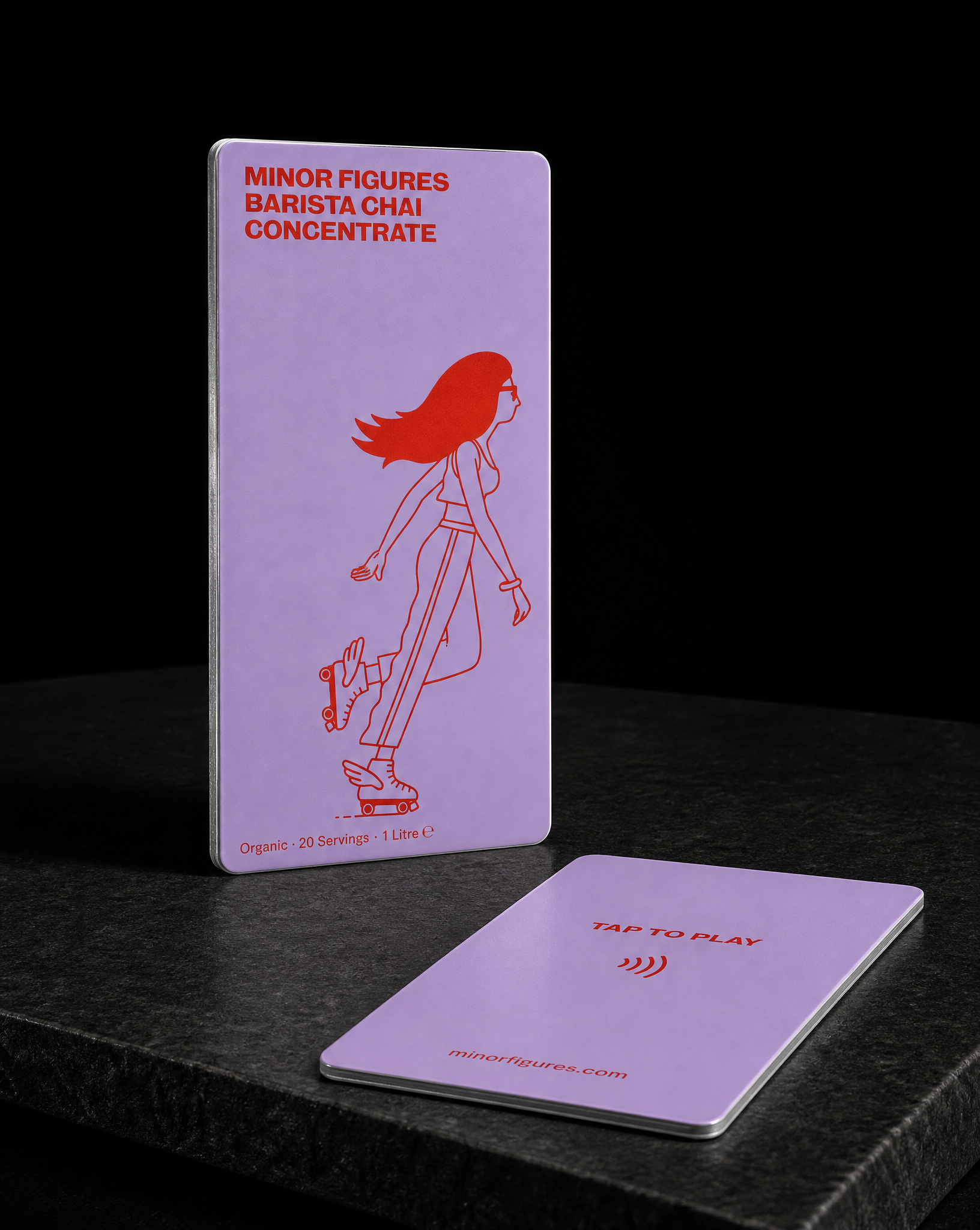
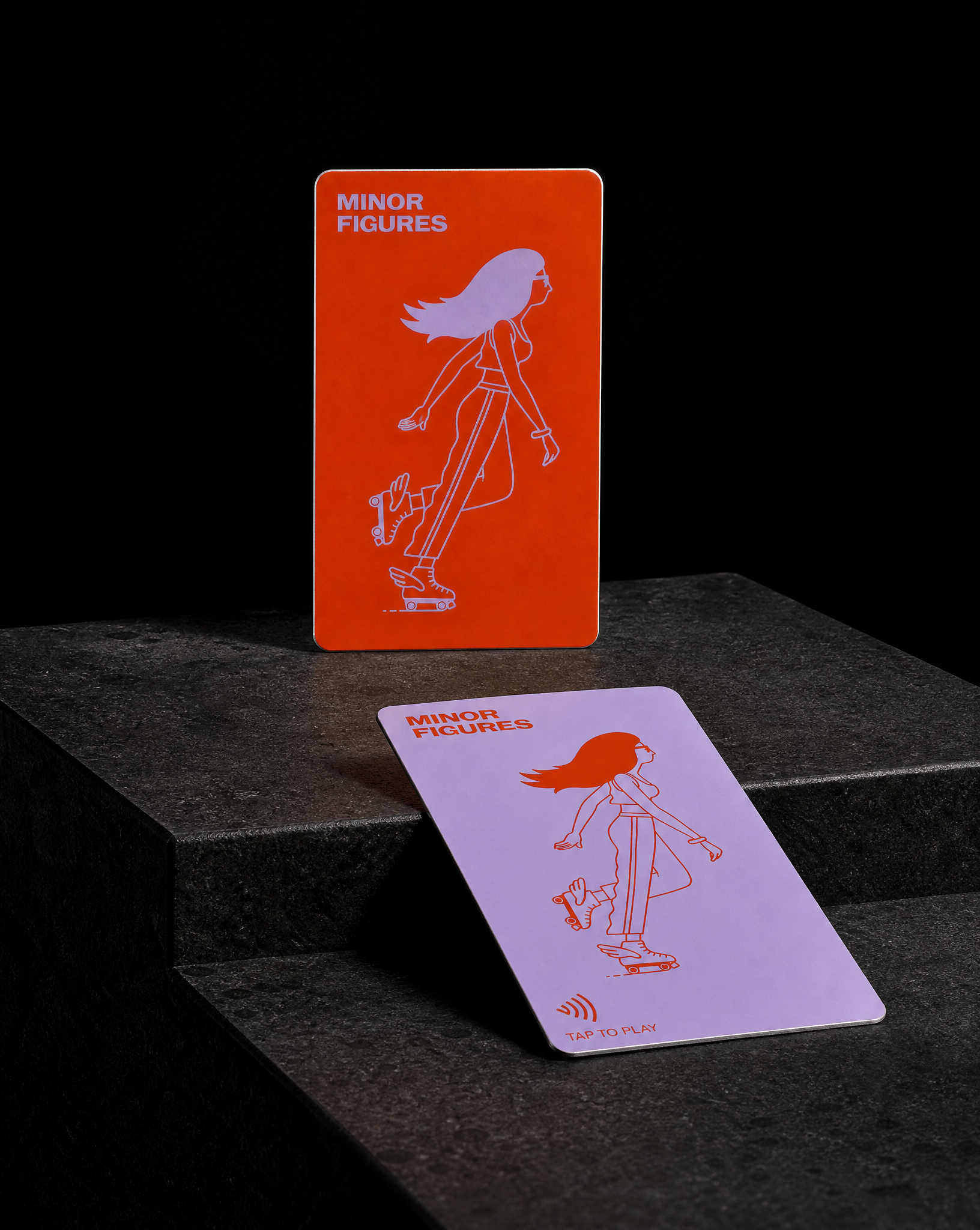
Five looks, one system
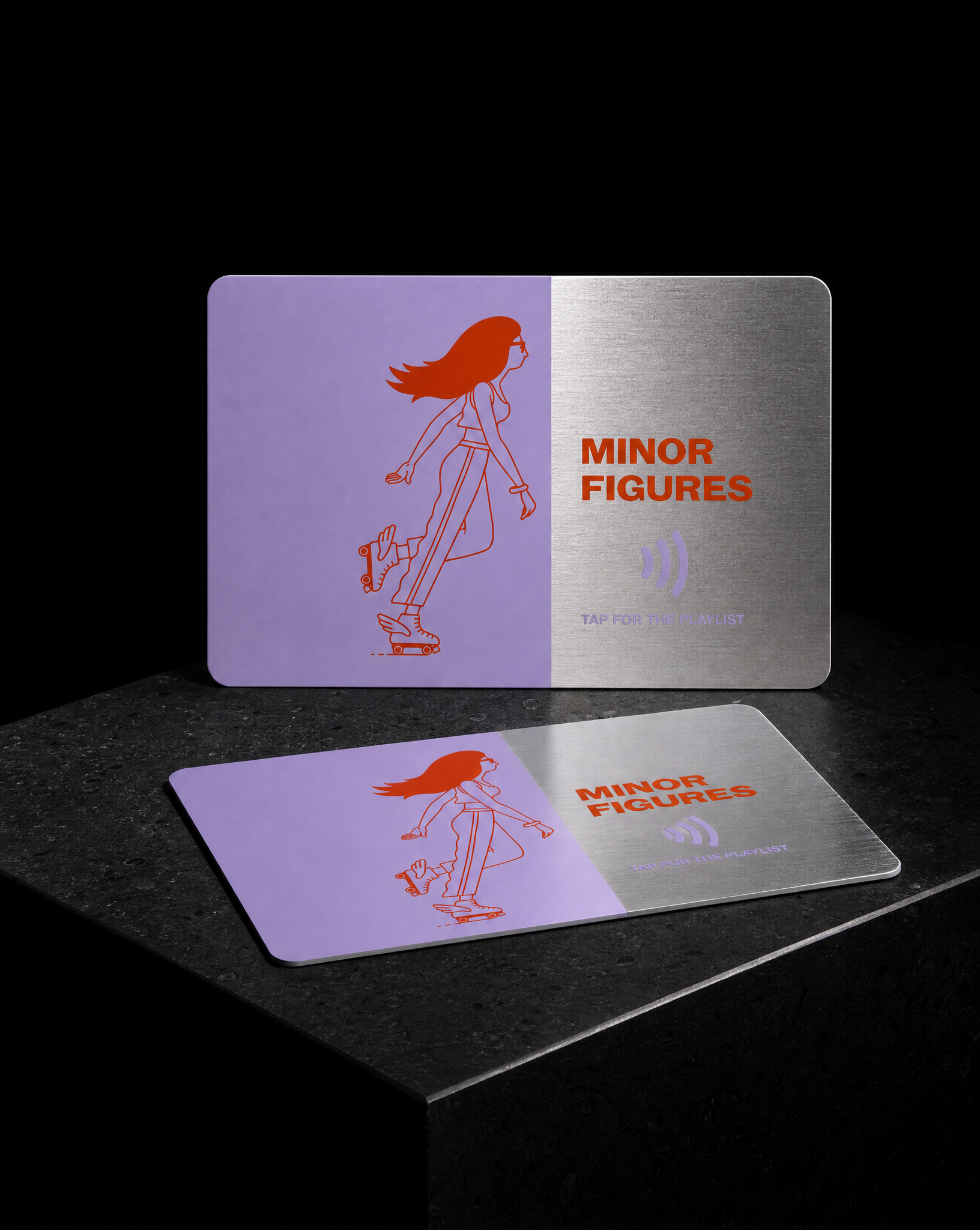
Minor Figures chose Look 1, The Carton.
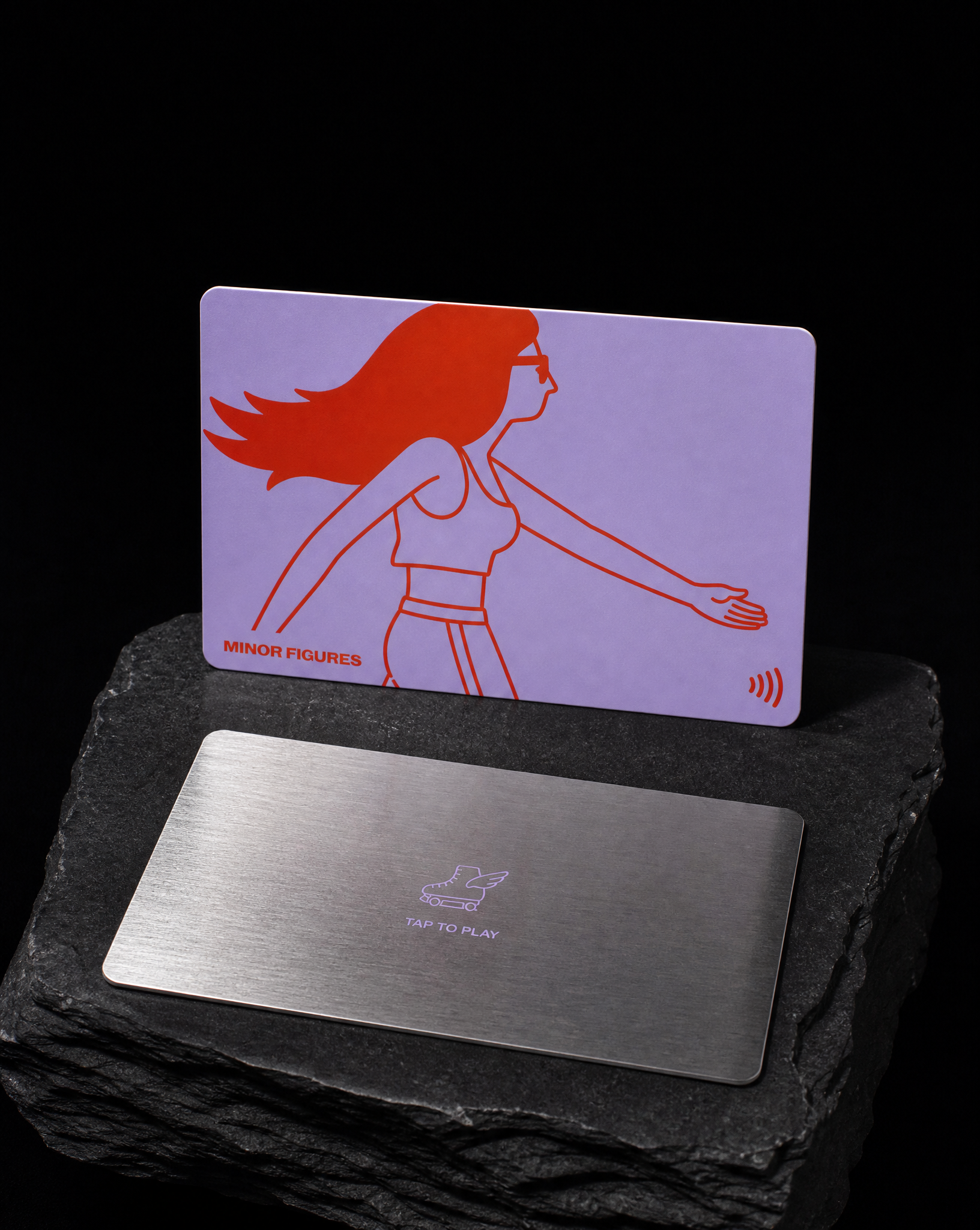
Look 1 is the safest: the carton, on a card. It needs no explanation from anyone handing it over.
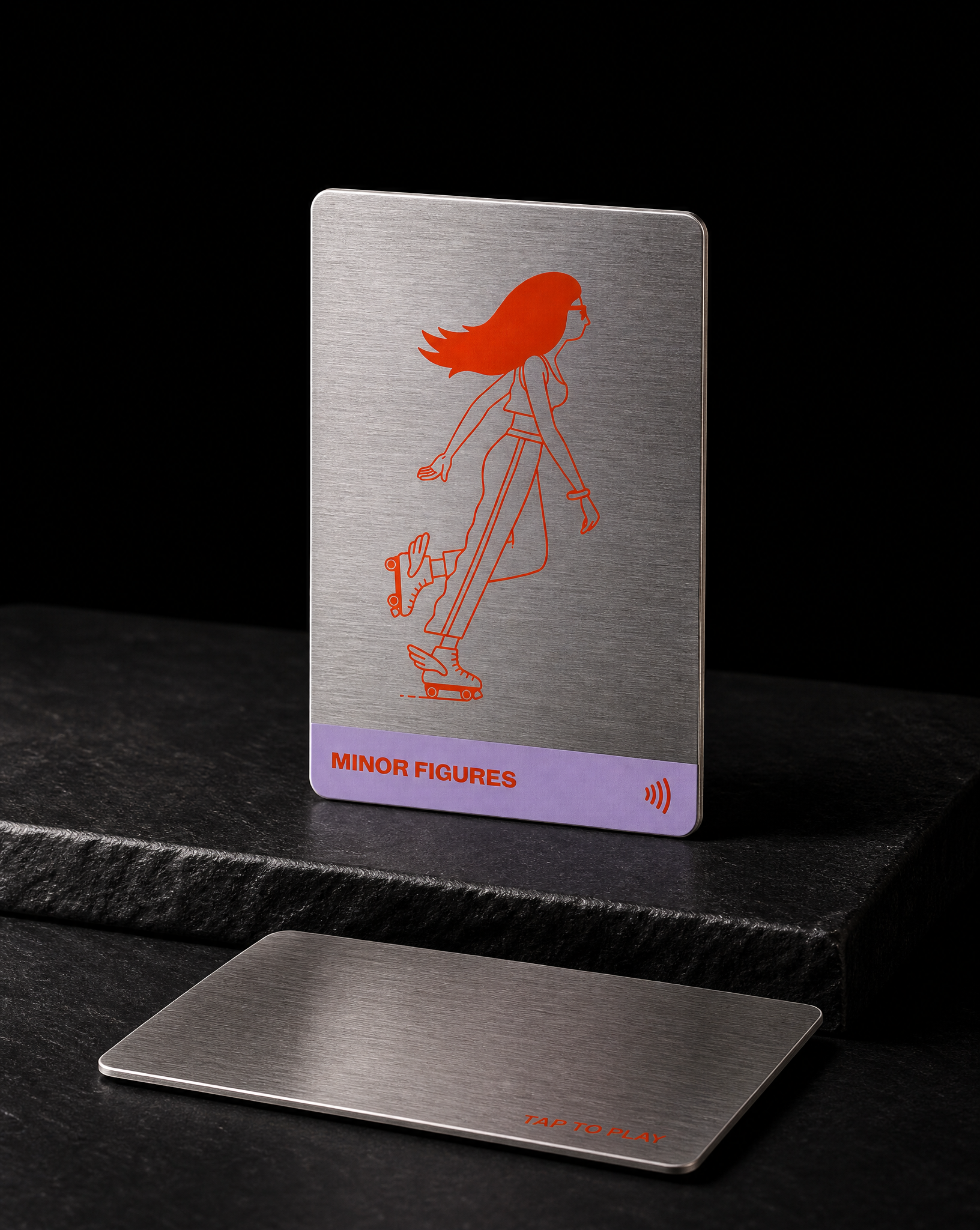
Looks 2 and 3 put the steel on show — the split is the one that reads as an object rather than as print.
Looks 4 and 5 are the loud end: the inversion for a second run, the crop for anyone who already knows the brand.
Start from these materials
Same paper, foil and finish, locked in — nothing of Minor Figures's artwork comes with it.
Questions
- Can an NFC chip work in a metal business card?
- Yes, if the chip sits in a non-metal layer. Metal blocks the signal, so on this card the steel is the face and the NTAG213 chip is laminated into the PVC back. The phone taps the PVC side.
- Can an NFC card open a Spotify playlist?
- Yes. The chip holds a link, so a phone opens the playlist with a tap and no app. This card points through a redirect, so the playlist can be changed later without reprinting.
- Why silkscreen instead of UV printing on a metal card?
- To hold exact Pantone colours. Silkscreen lays down hand-mixed spot ink, here PANTONE 1665 C and 2635 C, one colour per pass. UV printing builds colour from process inks, which can drift from a brand's spot colours, especially on metal.
- How thick is a hybrid metal and PVC card?
- This one is 1.26 mm: 0.5 mm of stainless steel laminated to 0.76 mm of PVC, at standard CR80 size (3.375 × 2.125 in).
- Can a brand's own illustration be printed on a metal card?
- Yes, as line art in a spot colour. Very fine lines may need a uniform weight increase to hold in silkscreen. On this card the 0.3 pt line was printed at 0.5 pt, and the drawing itself did not change.