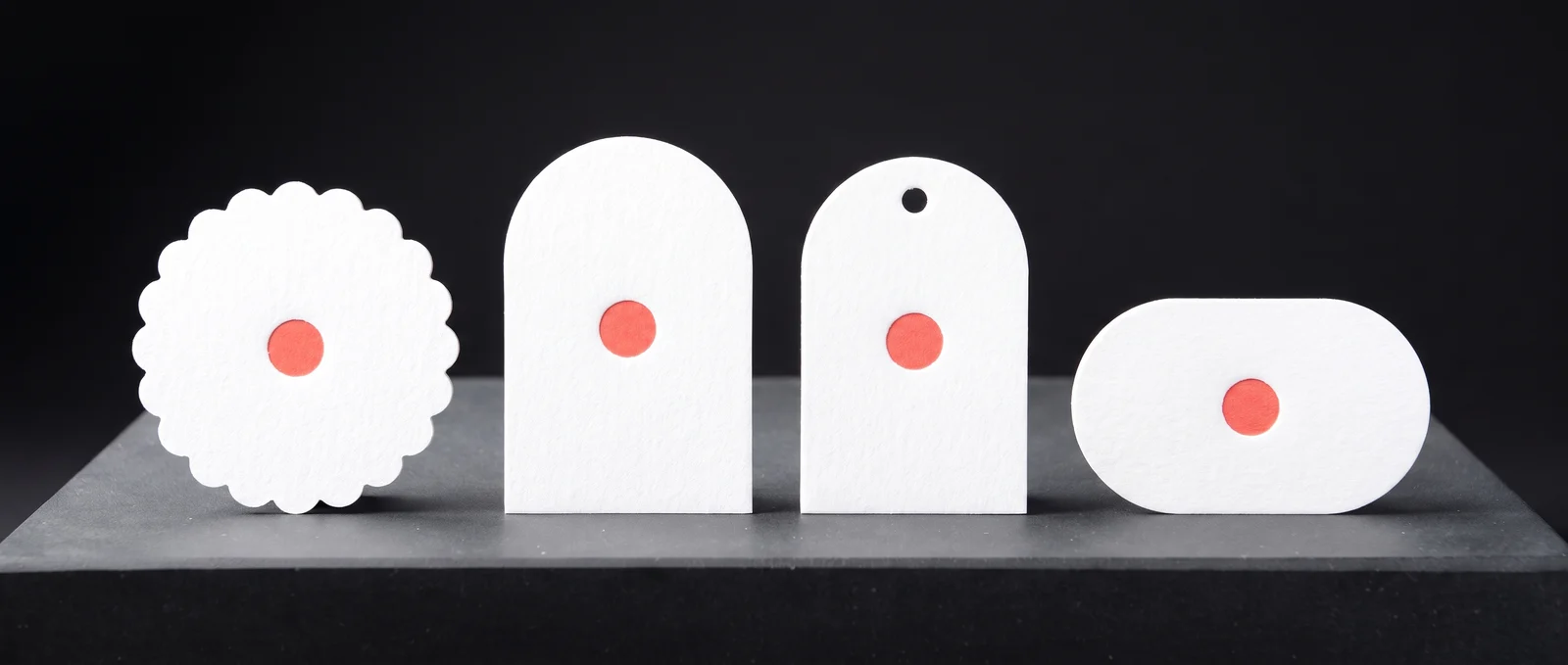
A shape is a piece of tooling.
A steel rule cuts the printed sheet to a repeatable silhouette. The outline belongs in the specification, the proof and the price: not only in the mockup.
Start with the finish
See what custom shapes does with your own brief.
Free · about two minutes
Steel-rule die·32pt cotton·Arch silhouette
Black colour-through·32pt·Window cut
White cotton·32pt·Bridged counter
Cream cotton·5 x 7 in·Laser cut
How it is made
A steel-rule die is a physical cutting tool made once and used for the run. That fixed tooling cost is why repeat quantity improves quickly. Laser cutting avoids a steel rule and handles intricate short-run contours, but it is slower per sheet and can leave a dark or polished edge depending on the material. Any cut that fully encloses an interior area creates a loose island; a ring, counter or frame must carry connector bridges or stay printed rather than cut.
A custom outline needs its own cutting tool. Changes to the perimeter belong in the specification and estimate.
What the screen cannot show
A photograph hides edge quality and scale. The sample lets you inspect the cut shoulder, bridge width and the way the shape survives handling.
Hold the finish in your hand: order the sample kit →What it runs on
| Substrate | Verdict | Why |
|---|---|---|
| Uncoated & 100% cotton | Excellent | Steel rule cuts cleanly; thick cotton needs enough bridge at narrow necks. |
| Colour-through (dyed) stock | Excellent | The cut edge keeps the sheet colour, so the silhouette reads from every side. |
| Coated silk & matte stock | Excellent | Sharp, repeatable cuts with little fibre pull. |
| Thick board, duplex & triplex | Excellent | Cuts as one bonded object after curing; narrow bridges must scale with caliper. |
| Recycled, kraft & inclusion stock | Good, tested | Long inclusions can feather at the edge, so fine contours need testing. |
| Solid wood | Good, tested | Laser often beats steel rule for short intricate work, but the edge darkens. |
Minimums and specs
- Steel-rule tooling
- Priced once / shape
- Floating islands
- Connector bridges required
- Laser alternative
- Intricate short runs
Choose the process by the outcome
- Repeatable production shape
- Steel-rule die.
- Intricate short-run detail
- Laser, after edge testing.
- A ring or enclosed counter
- Add bridges or keep it printed.
Pairs well with
Foil stamping
A heated die transfers a metallic film onto the stock under pressure. Not printed, not simulated: a layer of metal with an impression around it.
Blind deboss
A die presses the artwork into the sheet with no ink and no foil. The only thing you see is the depth: the surface reading differently where it's been compressed.
Duplex and triplex
Duplex bonds two printed plies into one piece. Triplex adds a third, often a contrasting core that turns the cut edge into a deliberate line.
Seen in
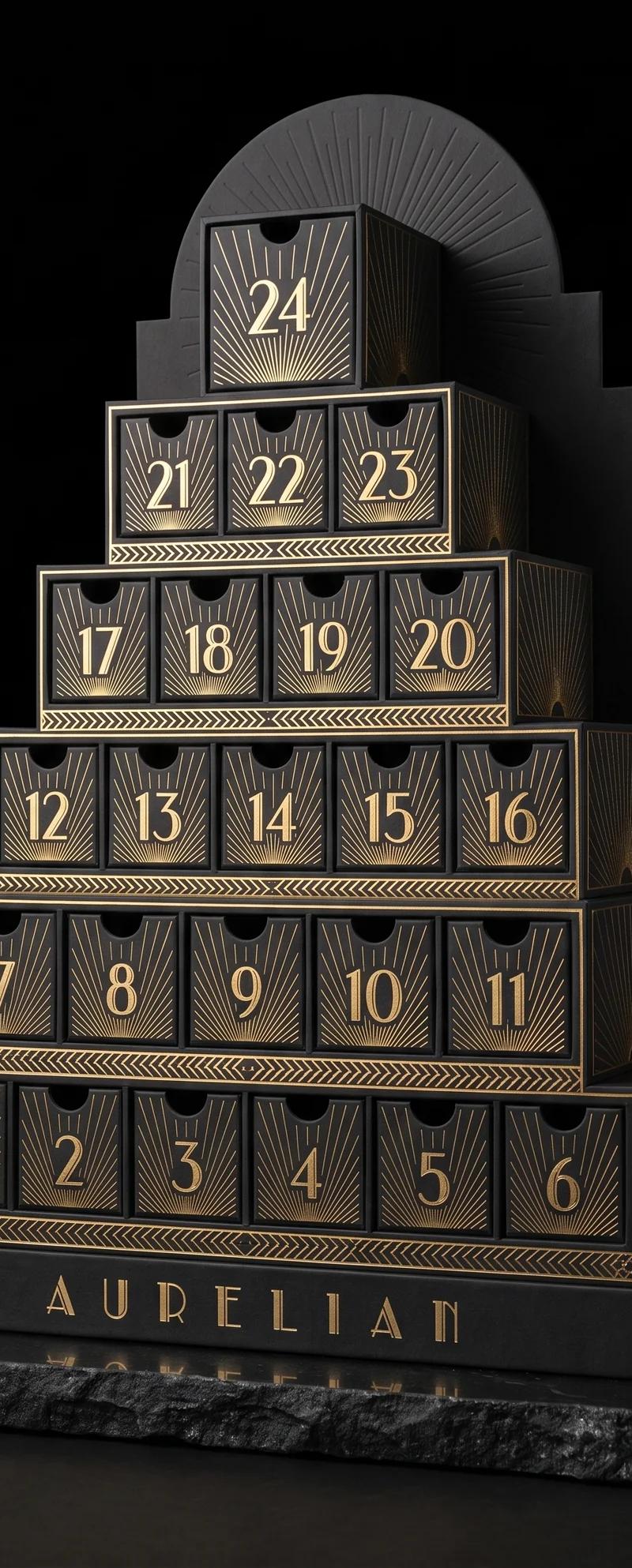
Peppermint design exploration
One brief, twelve design movements: the same 24 days, built the way each era would have built them, from papers and foils we actually stock.
Read the project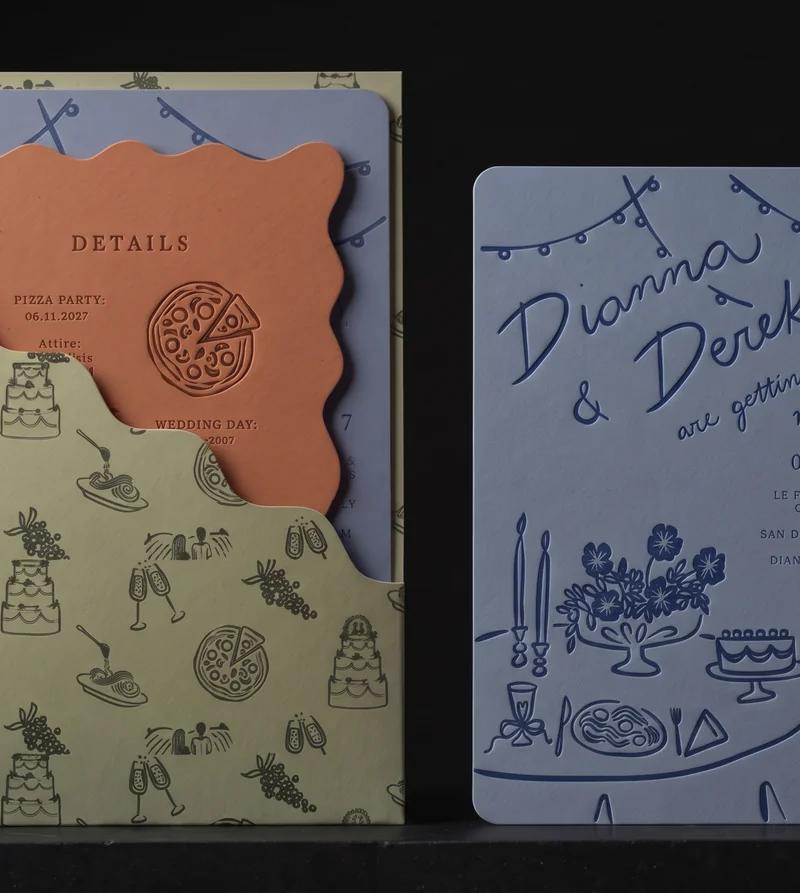
Dianna & Derek
Three colour-drenched pieces, one hand-mixed ink each, and one bold cut. Then the one we would have cut.
Read the project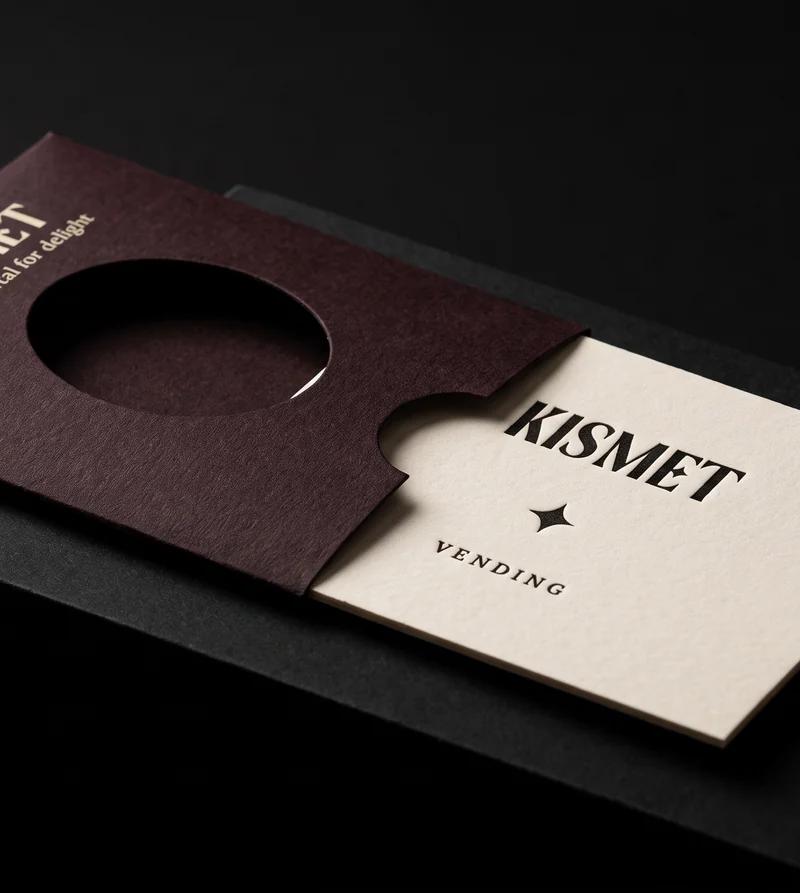
Kismet Vending
A card worth keeping, thin enough to fall out of a vending machine.
Read the projectCommon questions
- When is laser cutting better than a steel-rule die?
- For intricate short runs where avoiding tooling outweighs slower per-piece cutting and edge effects.
- Why do enclosed shapes need bridges?
- A fully enclosed cut releases the interior as a loose piece. Bridges keep it attached.
- Can the cut shape be decided after design?
- No. The perimeter affects layout, safety, tooling and price from the start.