Essential
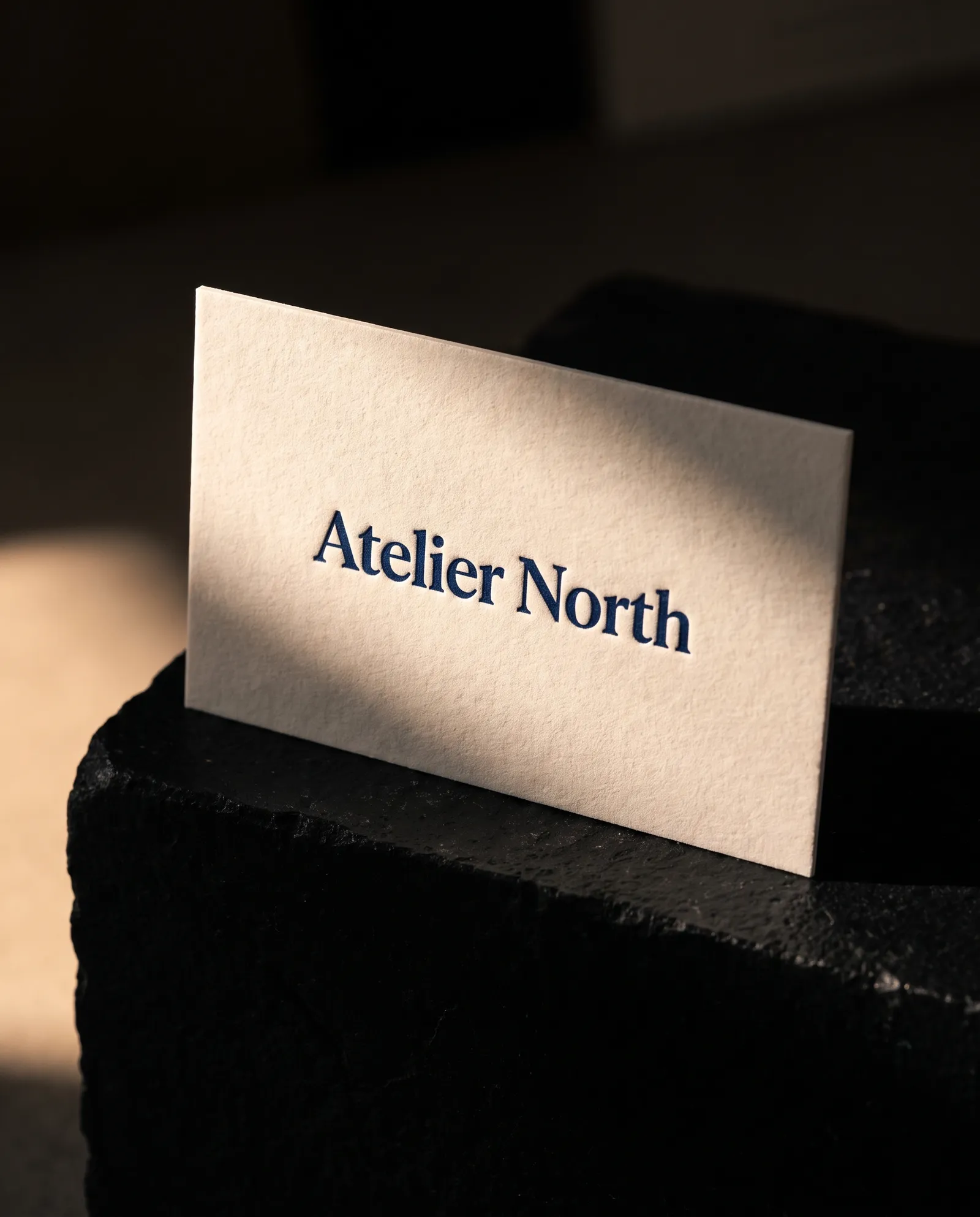
One ink, pure impression
48pt cotton · 1 Pantone ink, front · back blank
The cleanest version of the craft. One color, pressed deep, and nothing to distract from the bite.
From US$ 340 for 250
Custom · Letterpress
Your artwork cast into a plate and pressed into thick cotton, so every line sits in its own small valley you can find with a fingertip.
From US$ 340 for 250 · US$ 1,36 a card
About 3 weeks after you approve your proof (estimate).
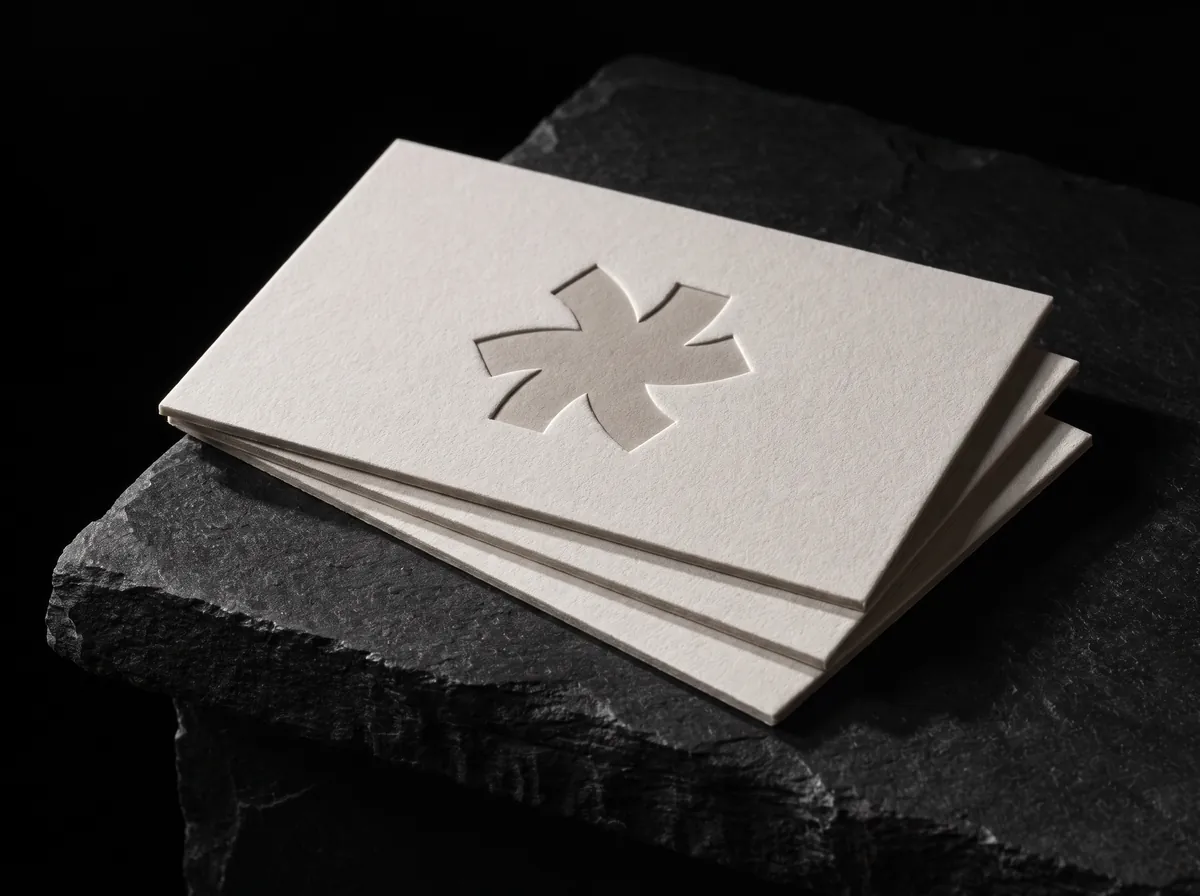
Letterpress business cards are printed by pressing an inked plate of your artwork into thick, soft cotton paper, so the ink sits inside a shallow impression you can feel. Ours start at US$ 340 for 250 on 48pt cotton (32pt also available) with one Pantone ink, take about 3 weeks after proof approval, and suit marks and type rather than photos.
Prices checked 1 October 2026.
We price every letterpress card with everything on it first, then show you what each step back saves. The middle one is the build we'd choose.
Essential
48pt cotton · 1 Pantone ink, front · back blank
The cleanest version of the craft. One color, pressed deep, and nothing to distract from the bite.
From US$ 340 for 250
Our pick
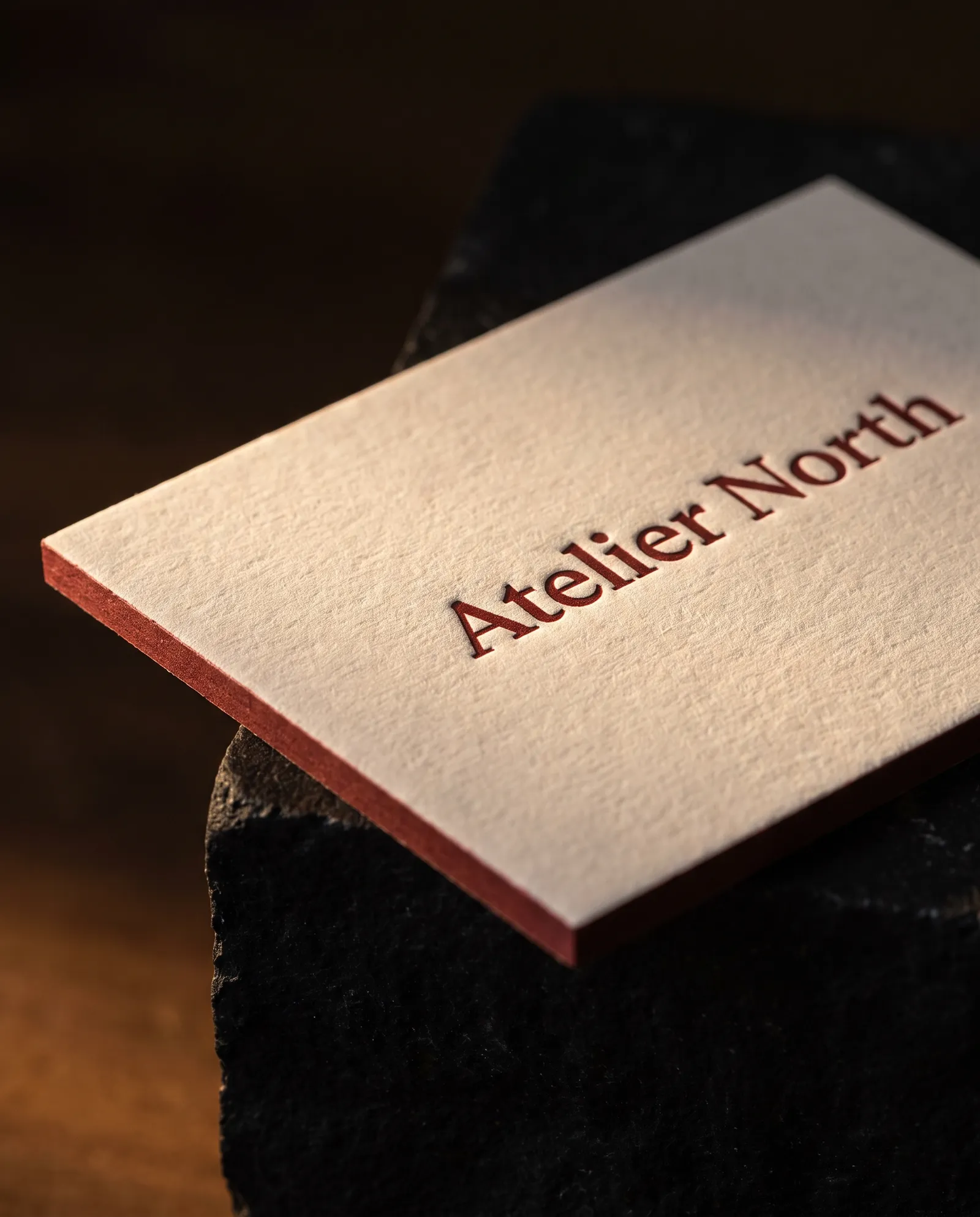
48pt cotton · 1 Pantone ink, front · edge painted to match the ink
The edge picks up your ink color, so the card shows its thickness from across a table. The single best upgrade for the money.
From US$ 380 for 250
Full production
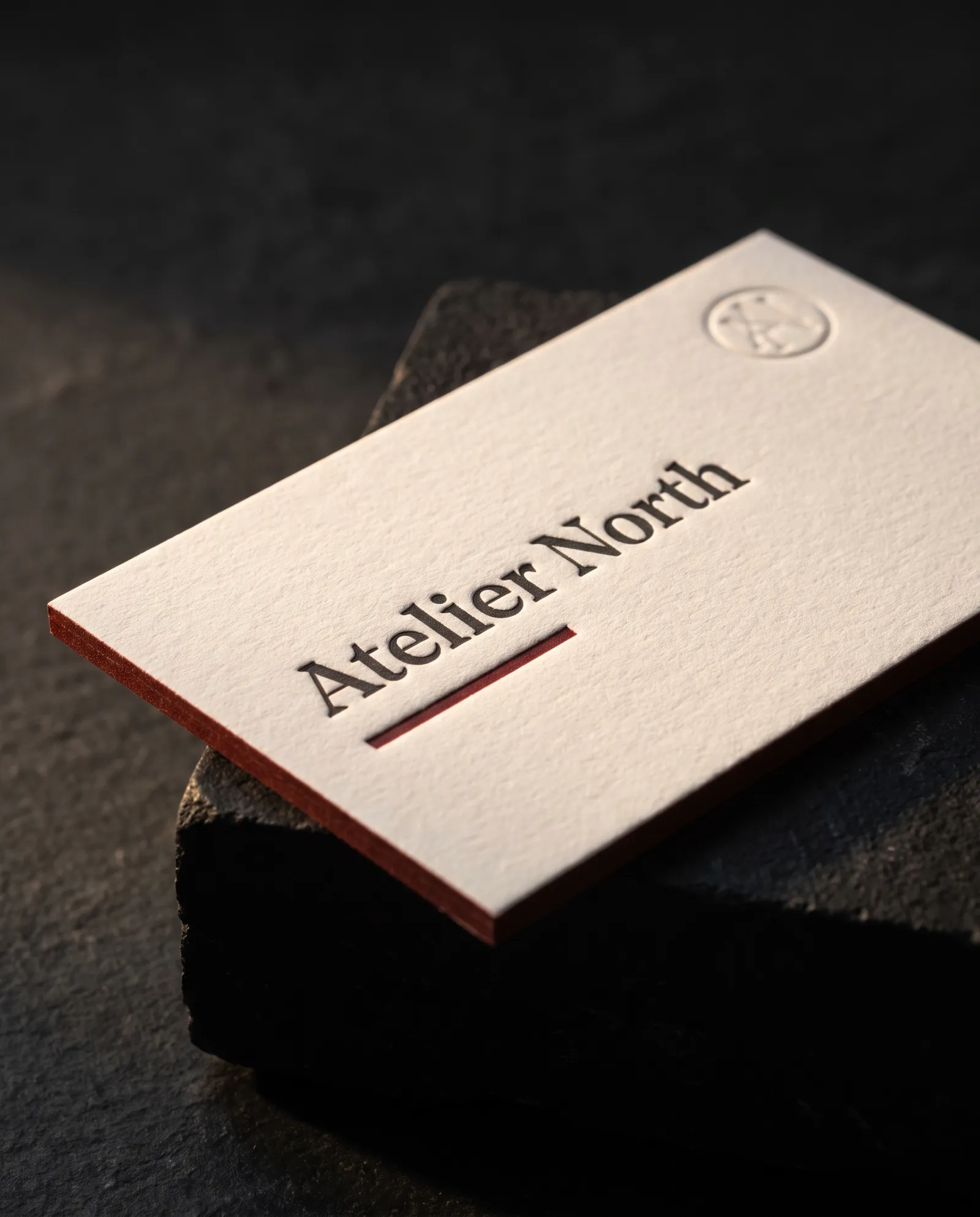
48pt cotton · 2 Pantone inks, front · a blind (inkless) impression of your mark · painted edge
Two colors registered against each other, plus a mark carried only by shadow. Built for founders and brands whose card is the first object a client holds.
From US$ 500 for 250
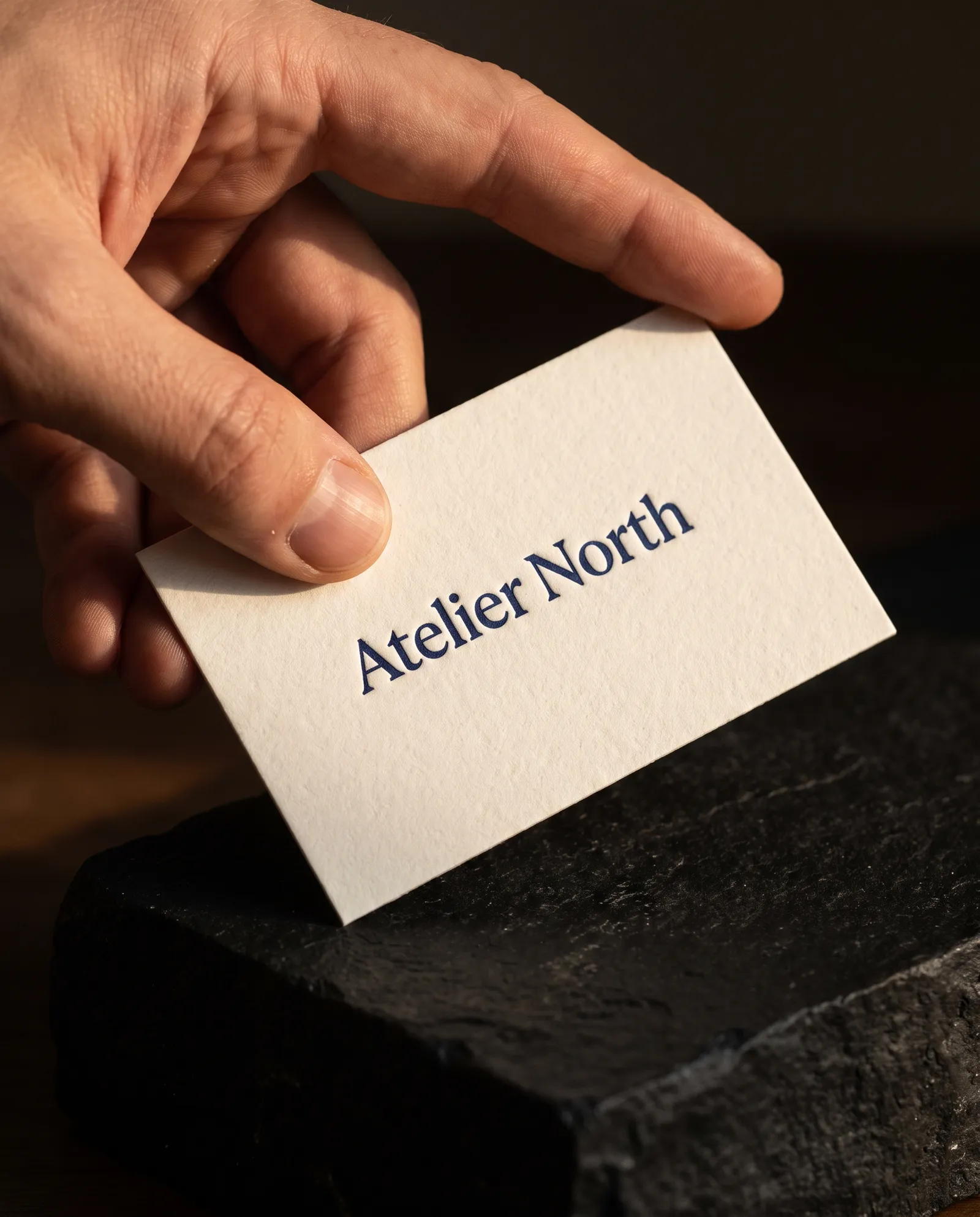
Pick one up and the first thing you notice is the weight. 48pt cotton is about one and a half credit cards thick, soft at the edge rather than sharp, and slightly warm to the touch the way good linen is.
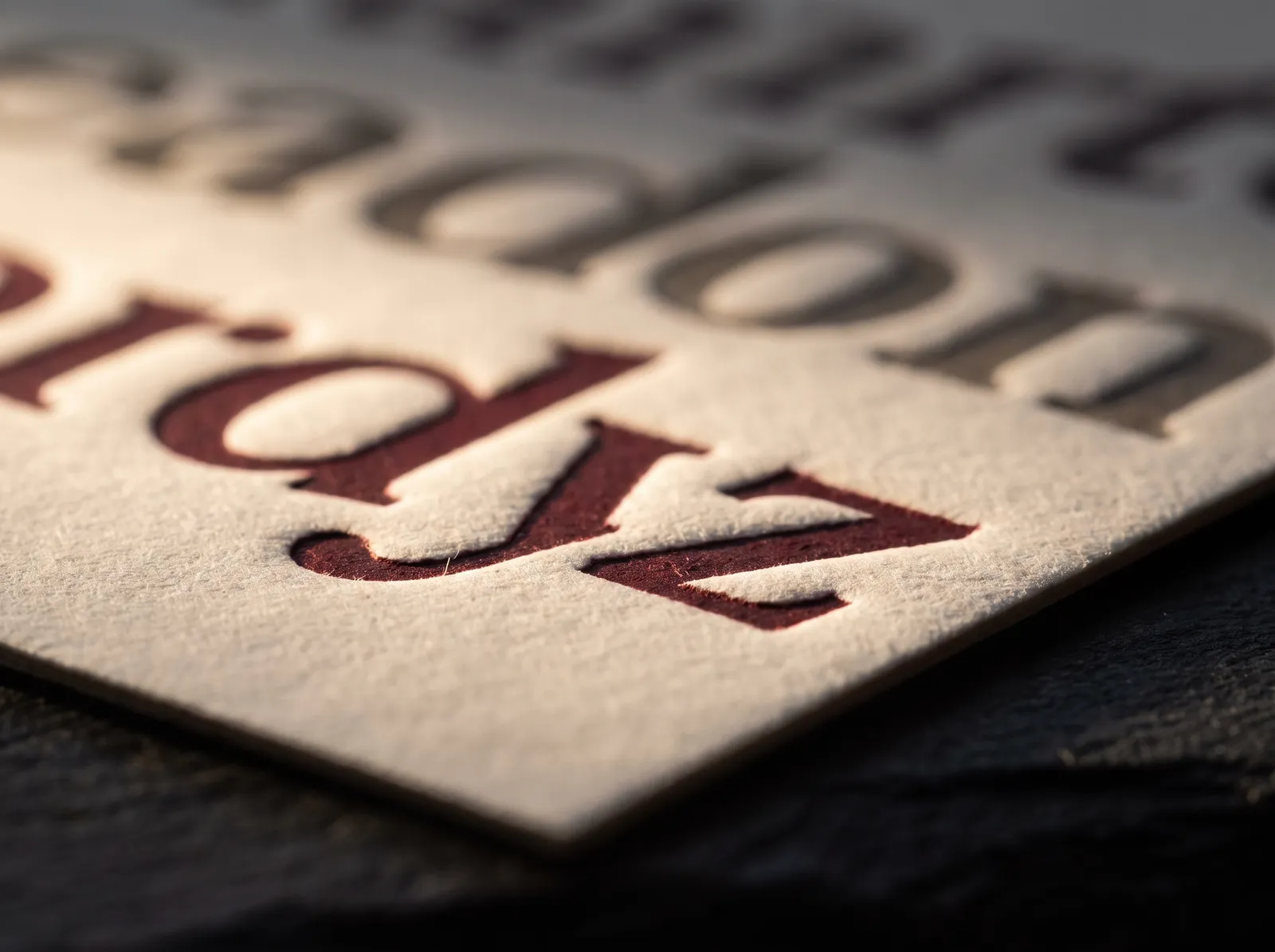
Then your thumb finds the type. Letterpress pushes the ink down into the sheet, so each letter sits in its own shallow channel with a softly rounded shoulder. Under a window the impression throws a hairline of shadow; turn the card and it disappears. These are pressed business cards, not printed ones, and people can tell before they have read your name.
“It's not a look. It's a feel. That's the whole point of letterpress.”
Letterpress is honest about what it can't do. We'd rather tell you now than after the plate is made.
Letterpress loves line and type. A large flood bottoms out the plate and prints with a soft, suede-like mottle. Our line is about 13 cm² (2 in²) of solid per shape on cotton. Past that we show you the texture at proof and you decide; some brands love it. If you want a flat field of color, we let the paper carry it instead: a through-dyed Colorplan sheet or a duplex in your color.
Letterpress ink is translucent, so it sinks into dark stock. For light-on-dark we use white pigment foil, which stays opaque on any paper.
Ink spreads as the plate presses in. Our minimums: lines 0.15 mm, reversed lines and gaps 0.3 mm, type 7 pt, reversed type 10 pt in a medium or bold weight. We check every file at proof and redraw anything finer before it reaches the plate.
Letterpress custom cards in three sizes, one to three inks a side, and a handful of finishes that pair with the bite. Each card says what it does and what it can't.
Each ink color is a separate letterpress plate and press run. We hand-mix each one to a Pantone target from the Uncoated book, because cotton drinks ink and shifts it slightly. One color is included; each extra plate adds US$ 70 at 250. Dark inks on off-white cotton read best.
What it can't do: gradients, tints below 15%, or photographs.
A plate or die pressed with no ink at all, so your mark is carried by shadow alone. It's the quietest thing we make, and on the right brand the loudest. Adds US$ 50 at 250.
What it can't do: read on black paper (it's very quiet there) or hold fine detail; blind work needs 0.5 mm strokes and 10 pt type.
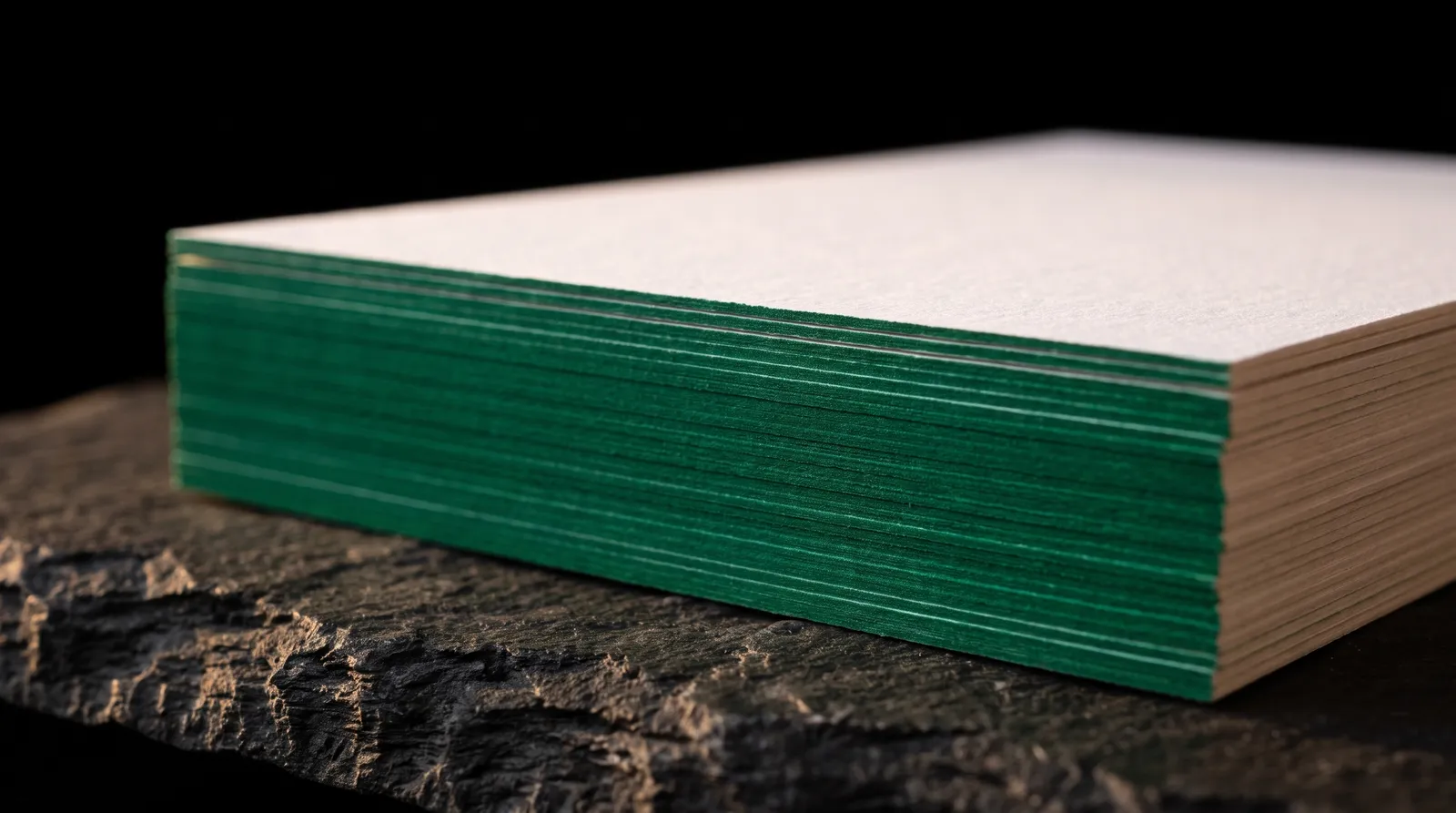
We clamp the finished stack and paint the edge in a Pantone matched to your ink, so front, back and edge agree. On 48pt the edge reads as a clear band. Adds US$ 40 at 250.
What it can't do: follow notches or cut-outs.
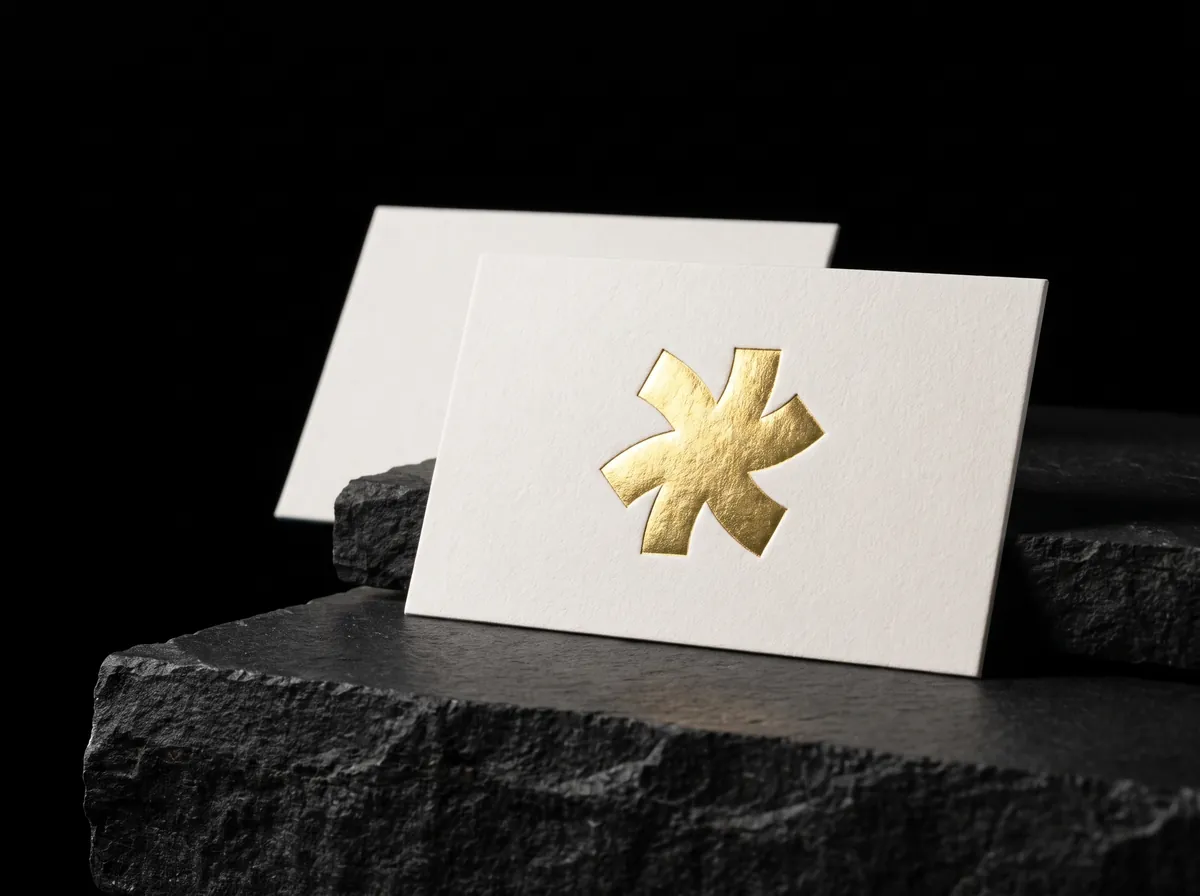
Foil next to letterpress gives you the one thing letterpress ink can't: shine, and opaque light color on dark. Foil lands on bare paper, never on top of ink, so we design a 1 mm gap between them. Adds US$ 80 at 250 for one side.
What it can't do: hairlines under 0.1 mm or gradients; holographic foil looks softer on textured cotton.
Two sheets of cotton bonded back to back: one color on the front, another on the back, and a stripe of the second color around every edge. It also lets each face take its own impression without fighting the other. Priced on request.
Edge foil gives a metallic edge instead of paint (US$ 60 at 250), with square or rounded corners; on cotton our press team confirms it before we promise it. Rounded corners (US$ 10 at 250) go with a plain edge or edge foil; with a painted edge our production team confirms first, because a corner can take the paint unevenly.
Standard 3.5 × 2 in, square 2.5 × 2.5 in or mini 3.5 × 1.5 in, same price. 1 × 3 in mini on request. 48pt as standard, 32pt if you prefer a slimmer card.
Upload your logo and our Studio shows you a letterpress concept on cotton in a few minutes: ink color, impression, edge. It's a rendering for direction, not a proof. A person then rebuilds your file for the press and sends a real proof before any plate is made.
Studio explorations, not client work
Letterpress is priced by plates, not by cards: each ink color is its own plate and press run, and that setup costs the same at 250 as at 5,000. That's why the price per card falls fast as you go up.
| Quantity | Essential (1 ink) | Our pick (1 ink + painted edge) | Two inks, front | Full (2 inks + blind mark + edge) |
|---|---|---|---|---|
| 250 | US$ 340US$ 1,36/card | US$ 380US$ 1,52/card | US$ 410US$ 1,64/card | US$ 500US$ 2,00/card |
| 500 | US$ 535US$ 1,07/card | US$ 600US$ 1,20/card | US$ 650US$ 1,30/card | US$ 795US$ 1,59/card |
| 1,000 | US$ 920US$ 0,92/card | US$ 1.025US$ 1,02/card | US$ 1.095US$ 1,09/card | US$ 1.335US$ 1,33/card |
| 2,000 | US$ 1.545US$ 0,77/card | US$ 1.710US$ 0,85/card | US$ 1.835US$ 0,92/card | US$ 2.225US$ 1,11/card |
| 5,000 | US$ 3.155US$ 0,63/card | US$ 3.465US$ 0,69/card | US$ 3.755US$ 0,75/card | US$ 4.540US$ 0,91/card |
Prices include one design proof and free shipping within the continental US. Checked 1 October 2026.
Configure
From € 315 for 250 cards with your current choices.
Each ink color is a separate letterpress plate and press run. Most letterpress cards use 1–2 colors.
Back of your card will be blank — clean and classic. Contact info on the front, logo speaks for itself.
Quantity
If you're not happy, we reprint. How our quality promise works
Need something custom? Other sizes, papers, finishes or quantities → Get a custom quote
Email me this spec
A copy of this exact configuration. The link in the email re-opens it here.
Letterpress holds a 0.15 mm line and 7 pt type (10 pt reversed, medium or bold). Anything finer, we redraw before it fills in.
Three ways to make a card you can feel. Here's where each one wins, including where letterpress doesn't.
| Letterpress (this page) | Blind emboss or deboss | Hot foil on cotton | “Letterpress-style” digital | |
|---|---|---|---|---|
| How it's made | Inked plate of your artwork pressed into cotton | Metal die pressed with no ink, raised or recessed | Heated die presses a metallic or pigment film onto the paper | Printed flat by digital press, then a separate deboss or a preset design |
| What you feel | Ink sitting inside a soft valley | Pure relief, no color | A slight bite and a smooth metal surface | Flat print; any texture is separate from your artwork |
| Best for | Type, line marks, 1–3 brand colors | Monograms and wordmarks that work in silhouette | Shine, and light color on dark paper | Photos and full-color art |
| Where it loses | No shine, no gradients, no light ink on dark | Very quiet on dark paper; no color | Hairlines under 0.1 mm; one flat tone per foil | No real impression of your design |
| From (250) | US$ 340 | US$ 350 | US$ 310 | n/a (we don't sell it) |
| Lead time | About 3 weeks after proof | About 3 weeks after proof | About 3 weeks after proof | n/a |
| Link | (you're here) | embossed business cards | foil business cards | — |
You can combine them: letterpress type with a blind mark, or letterpress with a foil accent beside it. Two techniques on one face is usually the sweet spot; more than that and the card starts shouting.
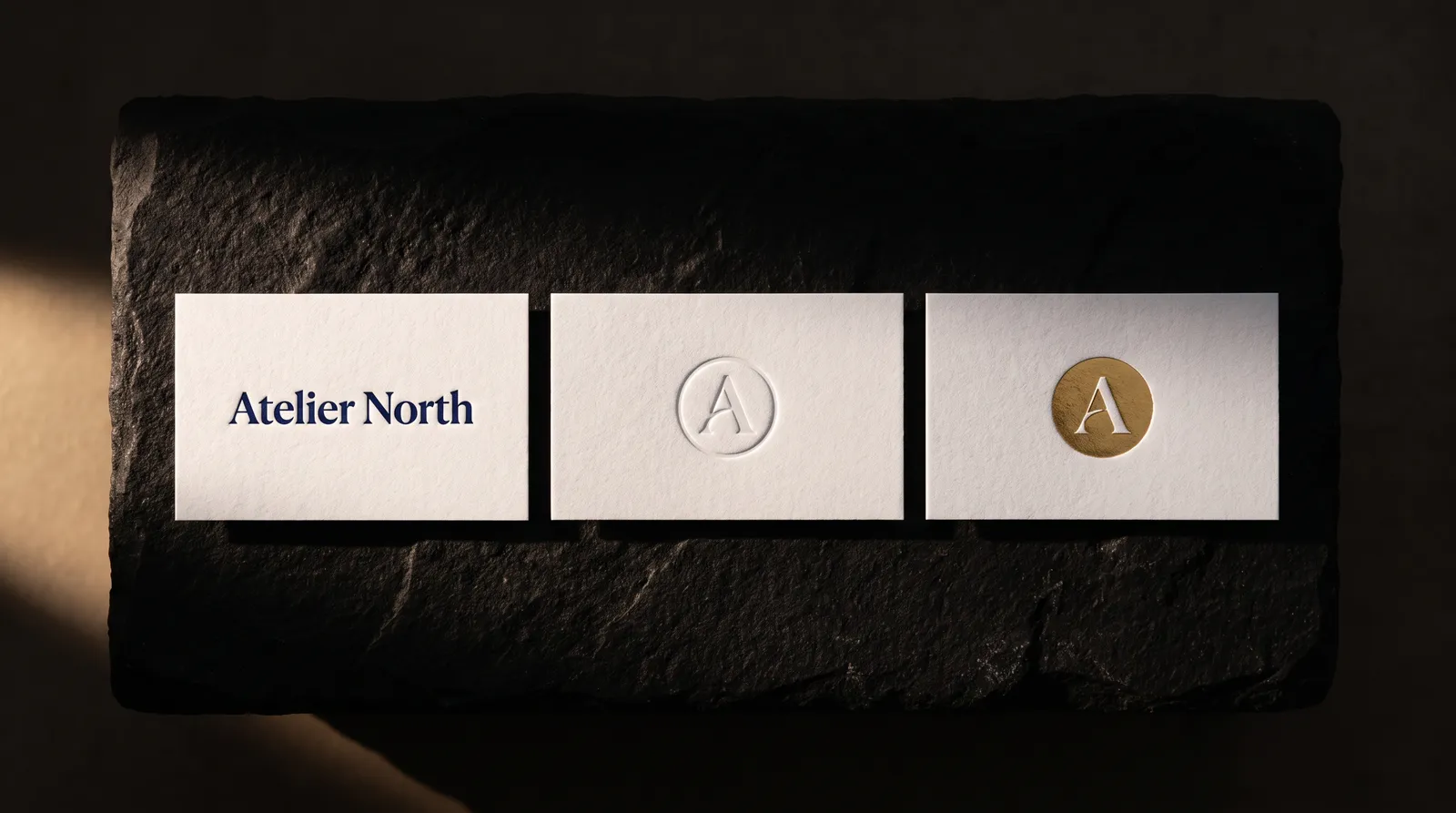
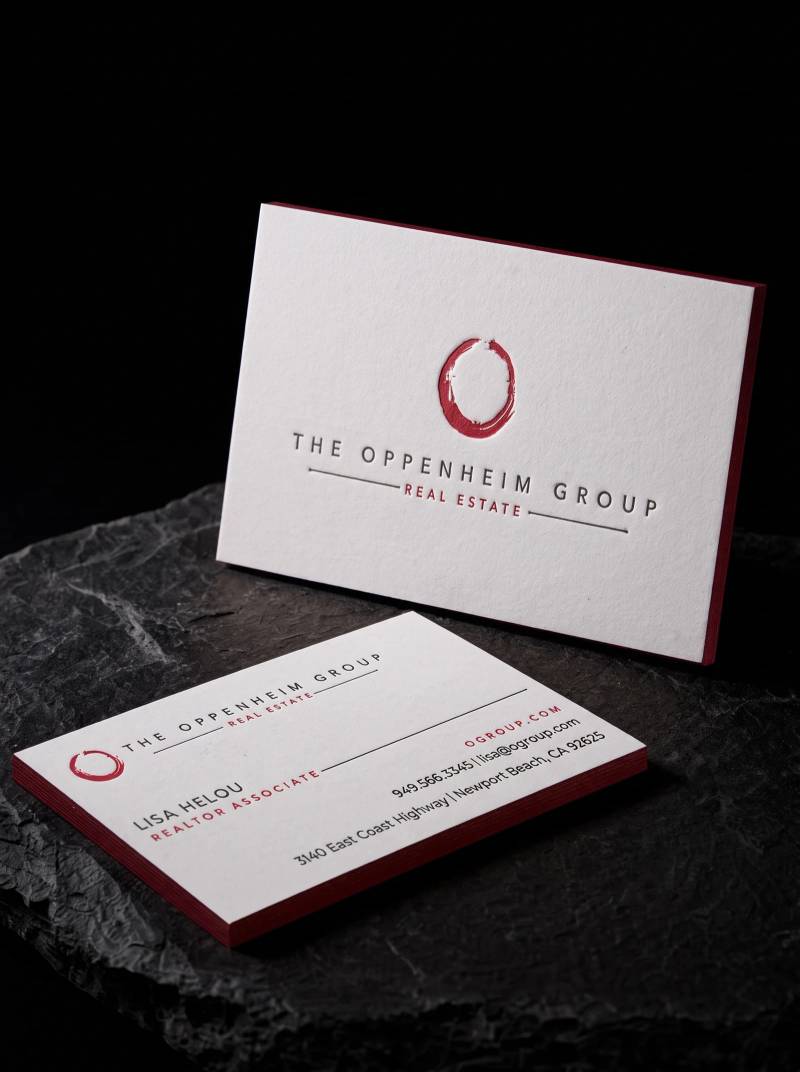
Two-color letterpress on bright white 100% cotton, PMS-matched red painted edge
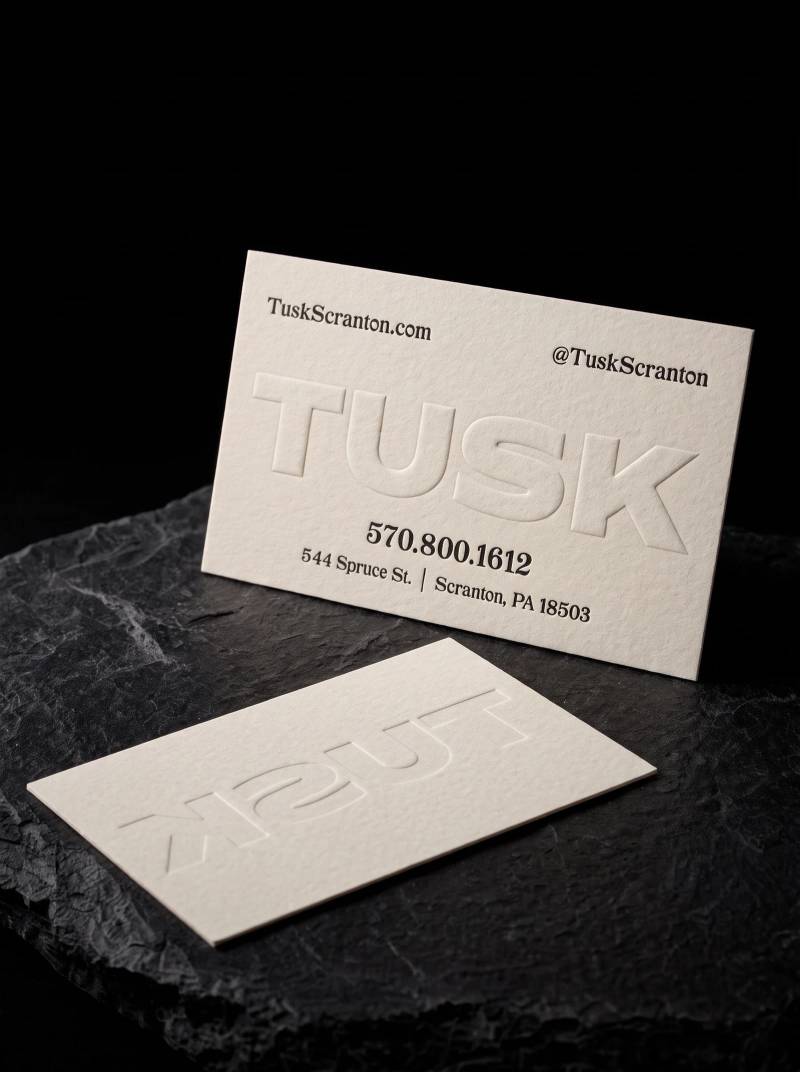
Off-white 100% cotton, large blind emboss, small details in black letterpress

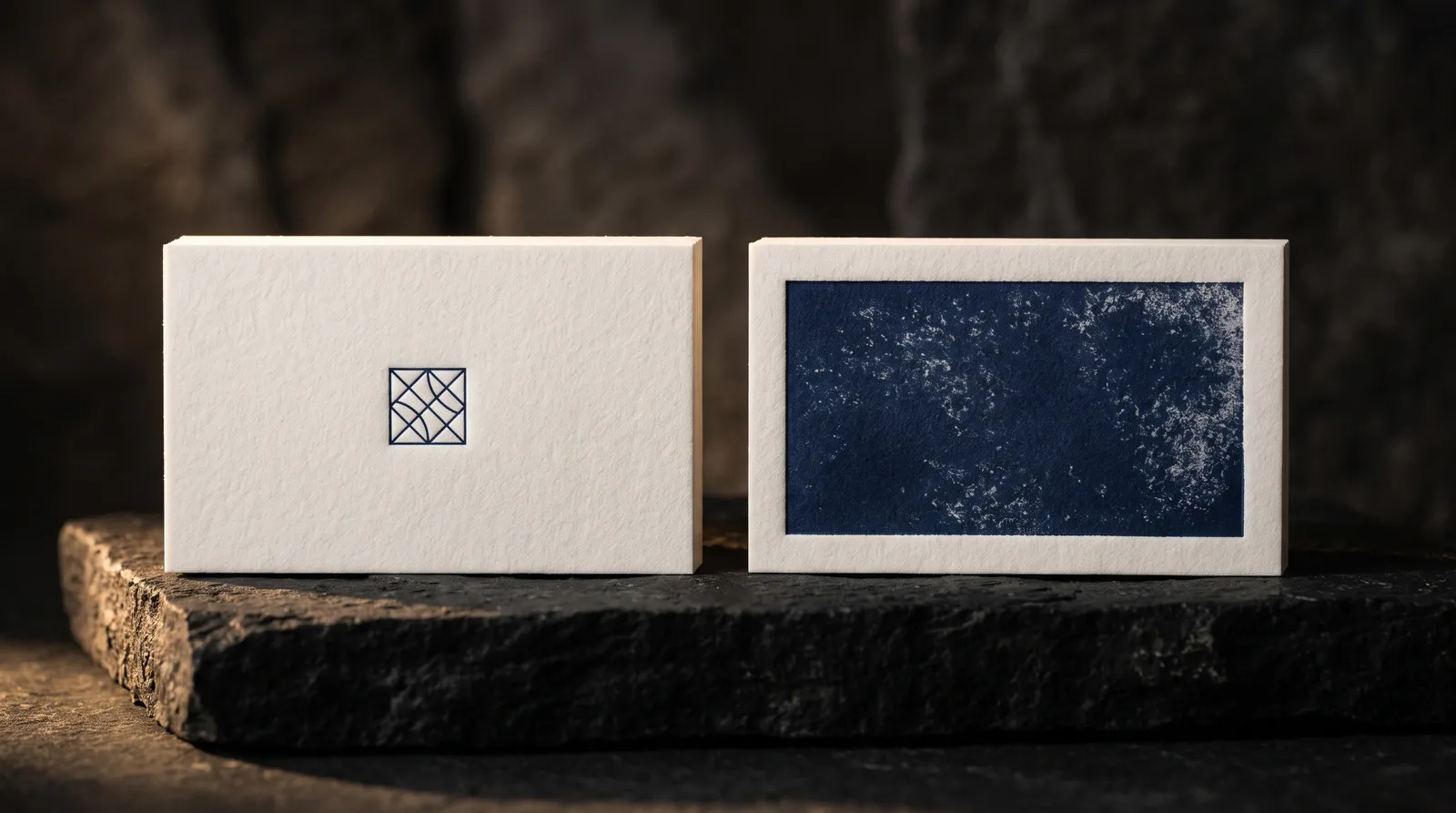
32pt off-white cotton, navy letterpress (PANTONE 294)
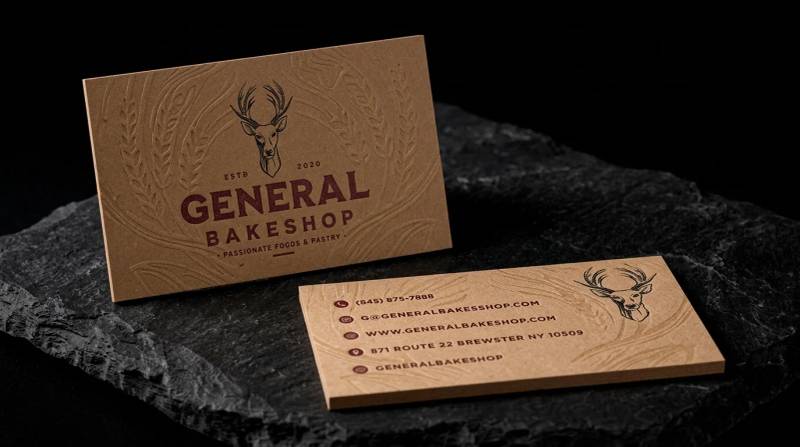
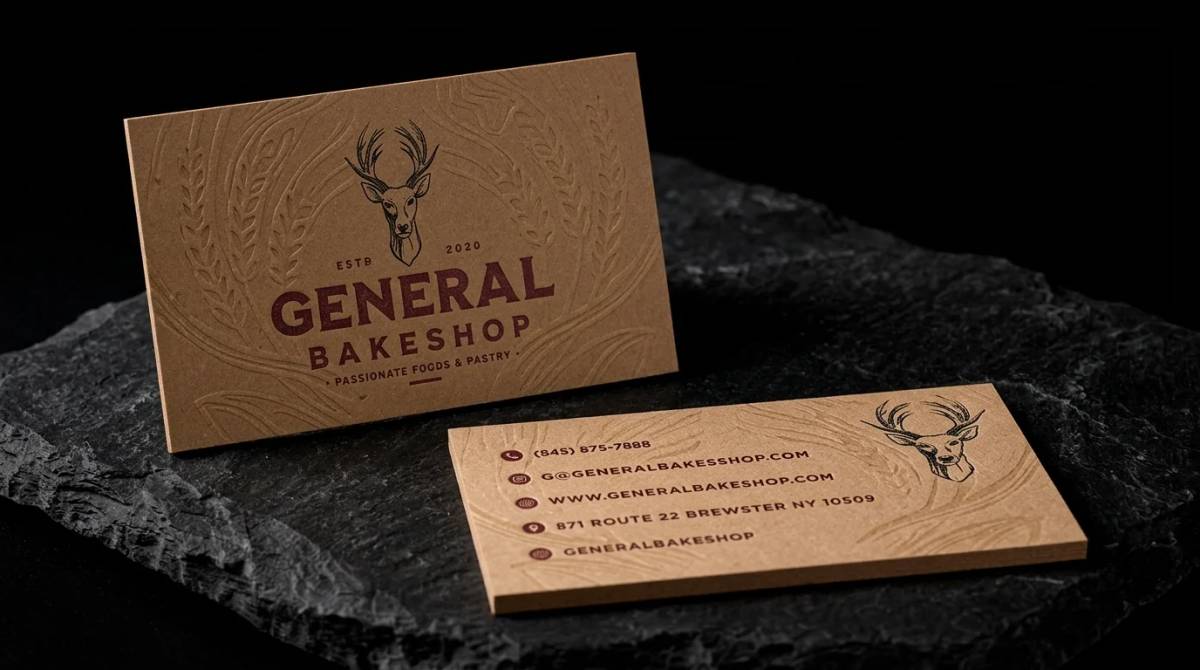
Heavy kraft, blind debossed wheat and wood-grain pattern, maroon and black letterpress

Rust-red letterpress with the press texture left in the solids, rounded corners

32pt grey/black duplex, black letterpress on the grey face, safety-orange foiled edge
“Letterpress, not foil. The type is pressed into the sheet, so you feel the quality more than you see it.”
If you're not happy, we reprint. How reprints work
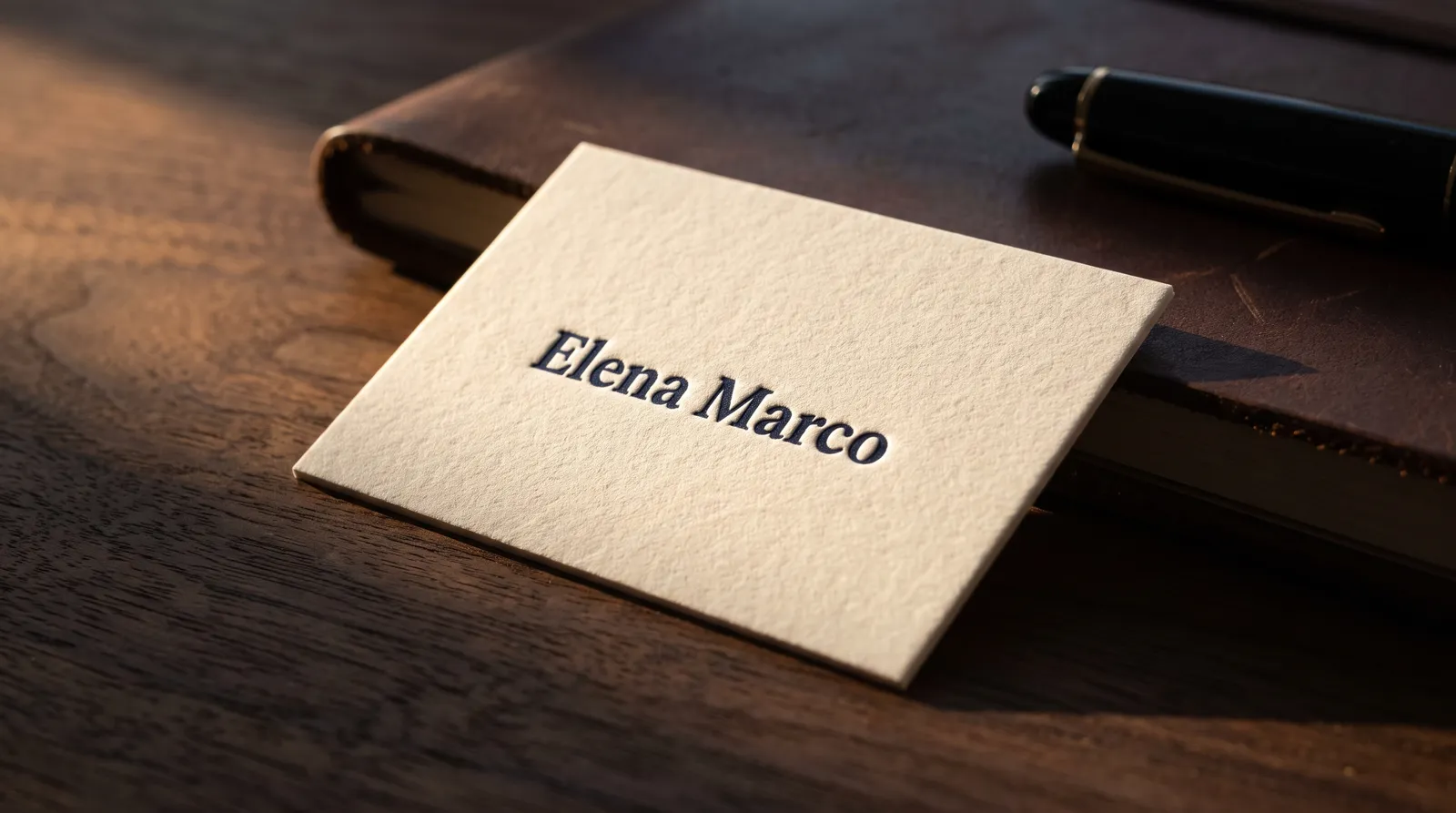
Our sample pack has the cotton, the letterpress and the edges in it. US$ 8, with a credit toward your first order.
A short call, no deck. Bring a sketch or a logo and we'll tell you how it will press.
A person checks your file and sends a proof. No plate is made until you approve it.
Ready to press yours?
Ours start at US$ 340 for 250 cards (US$ 1,36 each) on 48pt cotton with one Pantone ink on the front. Each extra ink color adds a plate, US$ 70 at 250. A painted edge adds US$ 40. At 1,000 cards a one-ink card is US$ 920. Prices are for our standard 48pt; 32pt is also available. Free shipping within the continental US.
Because most of the cost is setup, not paper. Every ink color is its own plate, its own mixed ink and its own press pass, and each one is set up and registered before the first good sheet. Those costs are the same for 250 cards as for 5,000, which is why the price per card drops sharply as quantity goes up.
About 3 weeks of production after you approve your proof, then transit time on top. These are estimates, not guaranteed delivery dates. If you have a date, tell us before you order and we'll say honestly whether it's realistic.
It can't print photographs or gradients; every color is one flat Pantone. Large solid areas print with a mottled texture. Letterpress ink is translucent, so light ink on dark paper won't work (we use foil instead). Each extra color adds cost, and a deep impression can show on the back of a single sheet.
It's a card printed by pressing an inked plate of your artwork into thick, soft paper, so the ink sits inside a recess. To check, run your thumb across the type: on real letterpress you feel each letter as a small valley. Some online printers sell “letterpress-style” cards that are printed flat and then debossed separately, or press only a preset design. Ours is your artwork, cast into a plate and pressed.
Yes, they're cotton paper business cards: 100% cotton, 48pt (about 1.2 mm) as standard or 32pt (about 0.8 mm) if you'd like a slimmer card, off-white and uncoated. Cotton's long fibres compress evenly, which is why it takes the deepest, cleanest impression. If cotton is what you're after without letterpress, see our cotton business cards. Paper choice in depth: best paper for letterpress.
Yes, as a separate plate for the back, from US$ 70 at 250 for one color. On a single sheet, a deep impression on one face shows as a faint mirror on the other, and two impressions fight each other. So when both faces are pressed, we press two sheets separately and bond them.
Yes, beside it, never on top of it. Foil won't bond to ink, so we knock the ink out under the foil and keep a 1 mm gap. Foil gives you shine and opaque light color, which letterpress ink can't. A foil accent on one side adds US$ 80 at 250.
Not well. Letterpress ink is see-through, so white or pale ink on dark paper looks chalky. We use white pigment foil for that, which stays opaque. On colored paper, dark inks read beautifully.
Vector artwork (AI, EPS or PDF with outlined fonts), one layer per ink, 0.125 in bleed. Letterpress holds a 0.15 mm line, 0.3 mm reversed lines and gaps, 7 pt type and 10 pt reversed type in a medium or bold weight (12 pt for thin faces). If your file isn't ready, we redraw it for the press.
Yes. Standard 3.5 × 2 in, square 2.5 × 2.5 in and mini 3.5 × 1.5 in are all the same price (a 1 × 3 in mini is on request), so a letterpress calling card or social card with just a name costs the same as a business card.
Three ways. Upload your logo to the Studio for a concept in minutes (direction, not a proof). Order the sample pack for US$ 8 to hold the cotton. And after you order, a person sends a real proof before any plate is made.
More ideas: minimalist business cards