This is right if
The mark is already yours and customers know it. Only the file is failing: soft edges, hairlines, touching colours, or it came out of an AI generator.
You have a logo
A press-ready redraw rebuilds an existing logo's curves, counters and separations by hand so a foil die, letterpress plate or emboss can hold it. The mark stays yours; only the drawing changes.
Guide price. Every project is quoted — tell us what it is for and we come back with a number. Most redraws land between 245 $US and 600 $US. Half of every design fee is credited against your first print order over 600 $US.
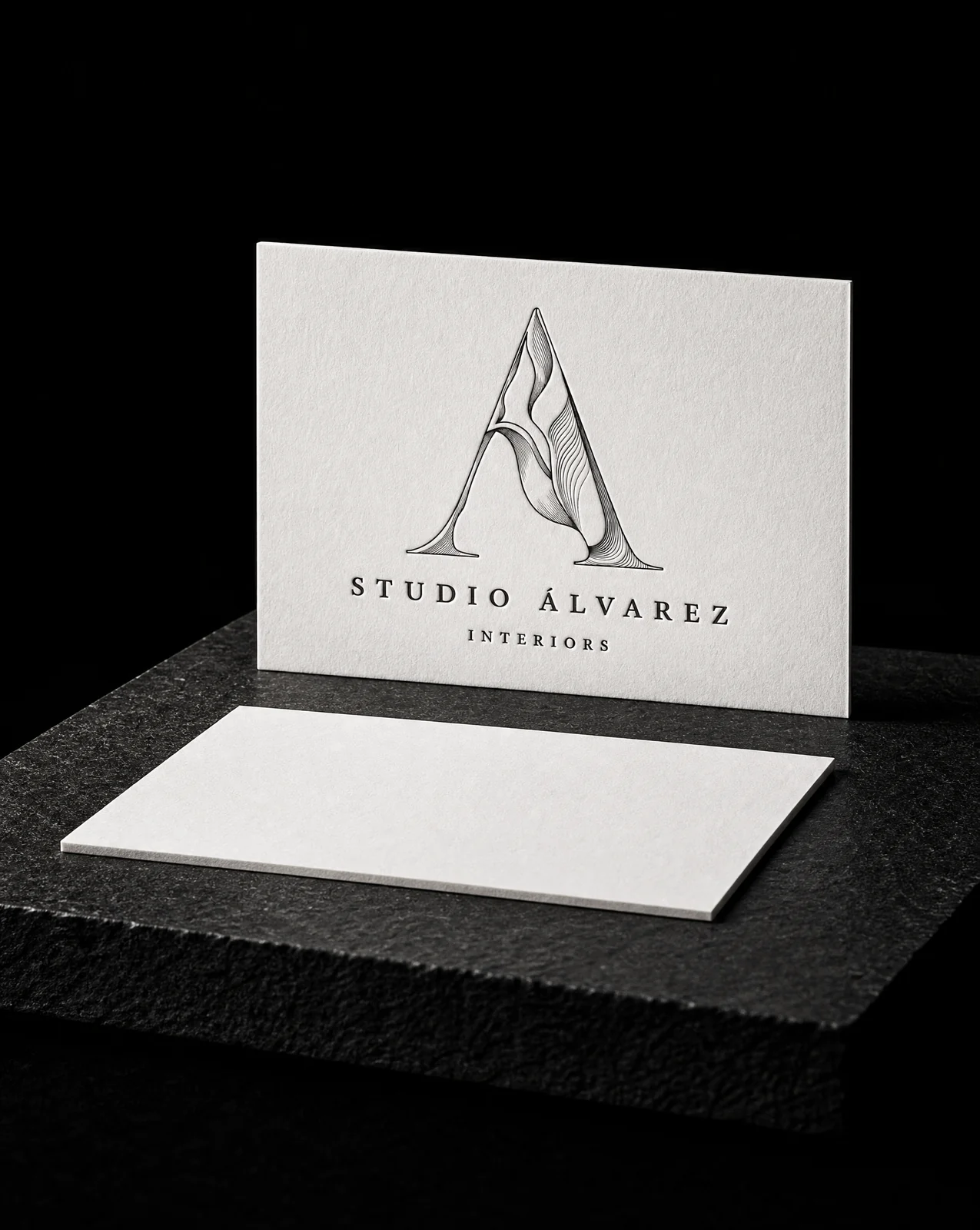
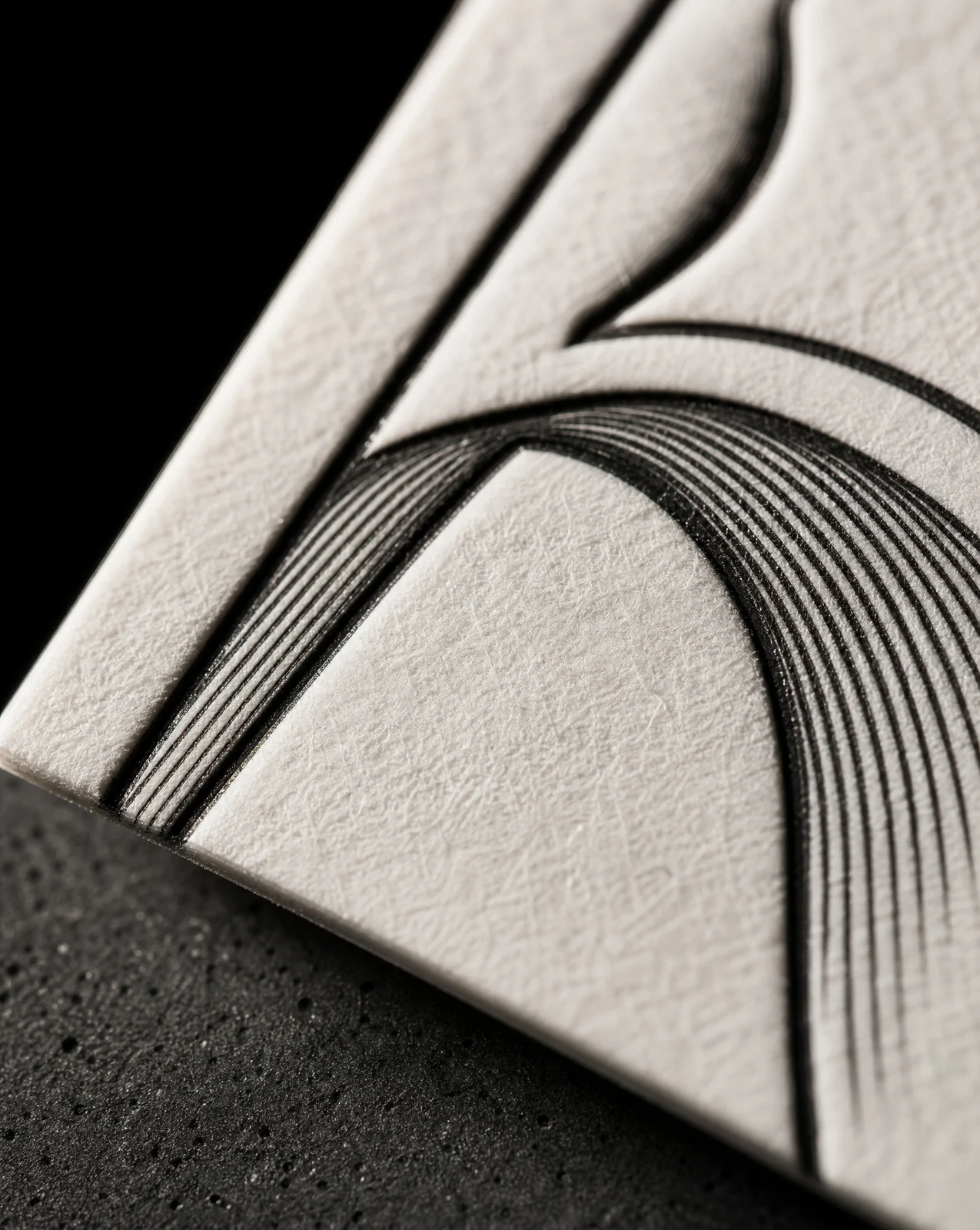
Alvarez Stone · rebuilt vector mark on its printed card
From a real project · Alvarez Stone
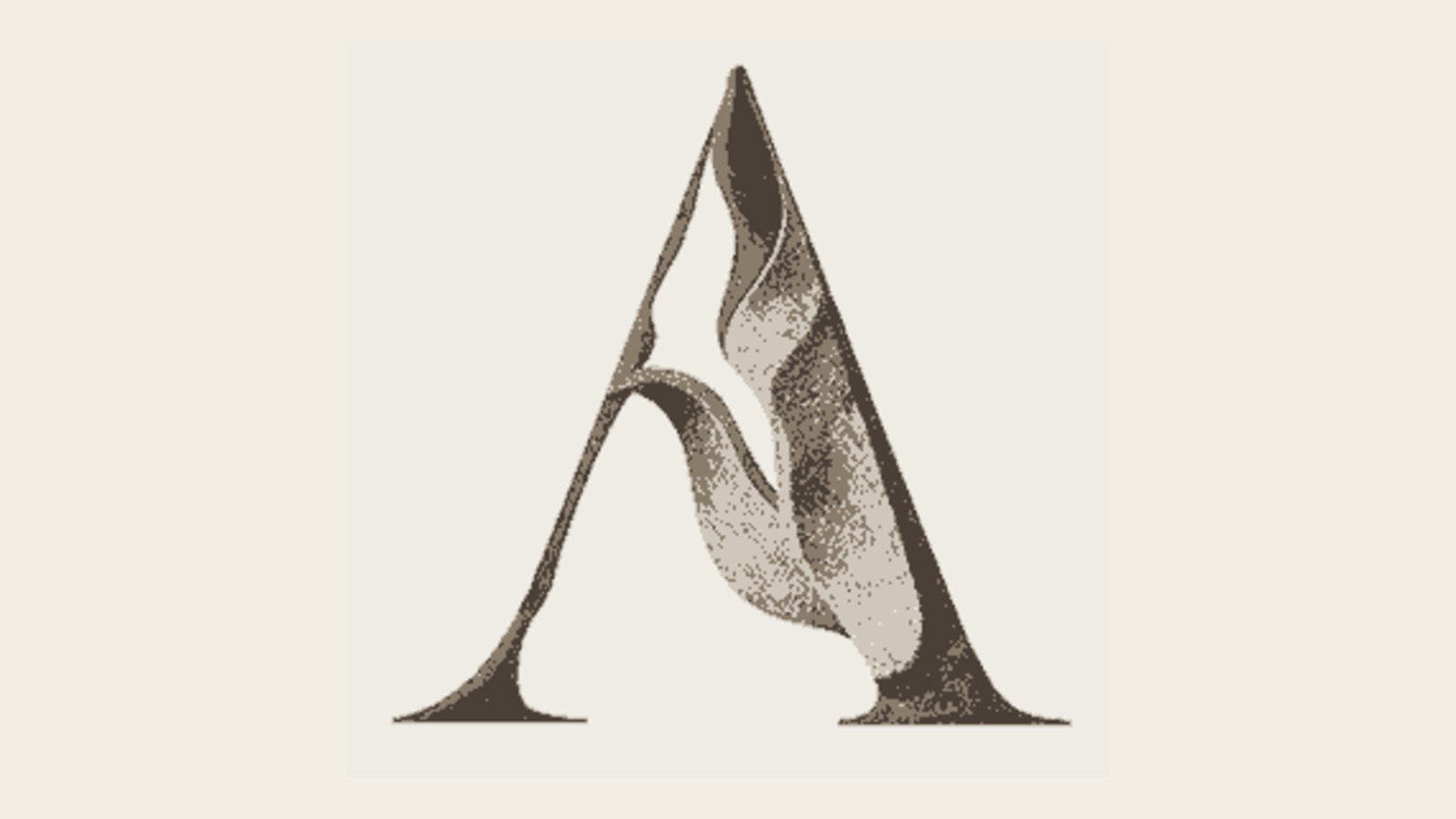
A raster has no line weight to hold to. Traced and rebuilt, every stroke has a measurable thickness we can lift to the foil floor, and foil, letterpress and blind emboss all become possible in the same pass.
Read the Alvarez Stone case study →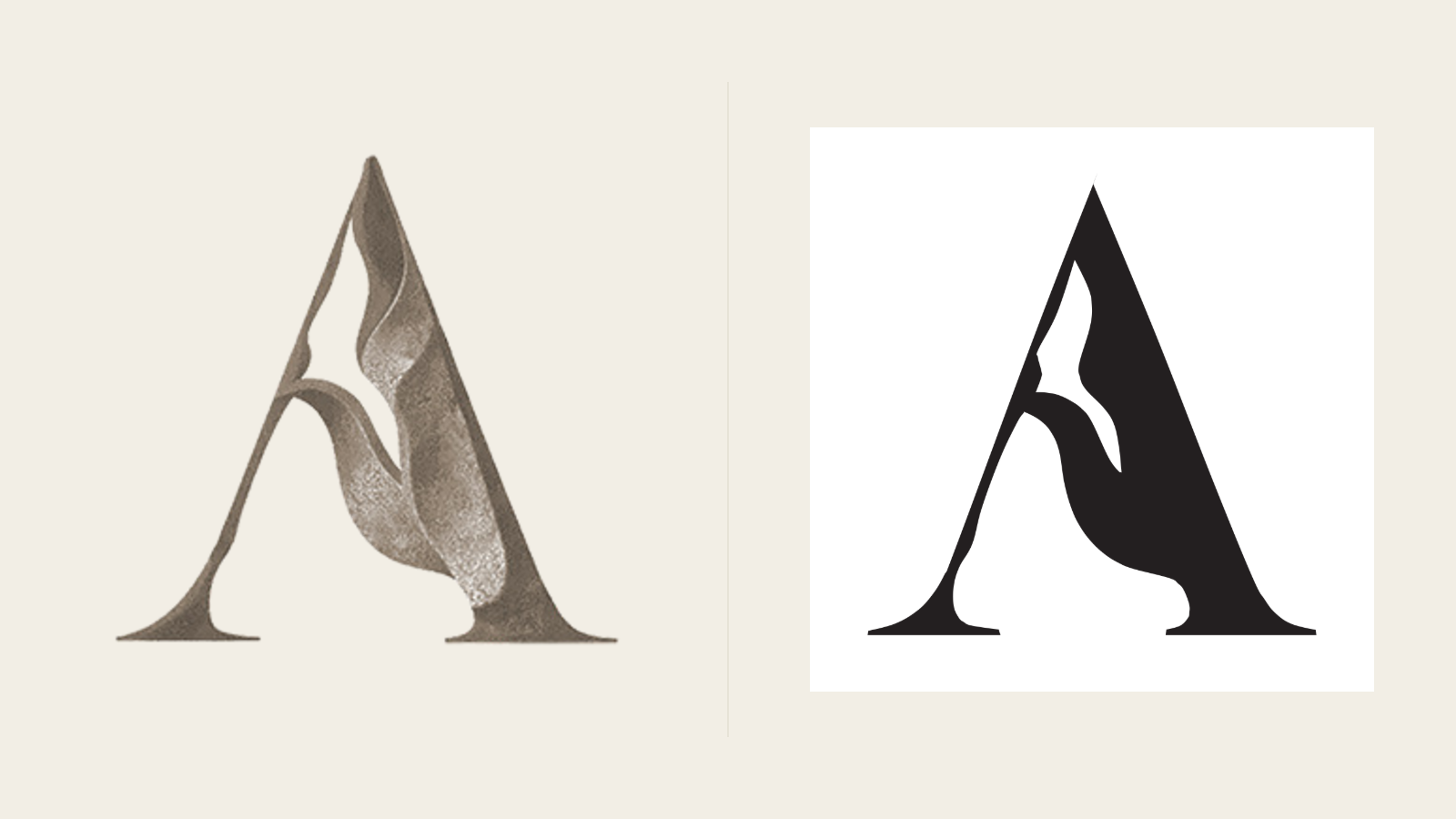
How it runs
Send a vector file, a PNG or a photo of a printed card. Within a day we tell you what can be saved and what has to be redrawn.
The redraw is shown on the stock and finish it will print on, beside your original at the same size.
One chosen direction is refined against your feedback and the limits of the selected process.
Outlined vector masters, process separations and a spec sheet naming what the press needs to hold.
The handoff
Is this the right service?
The mark is already yours and customers know it. Only the file is failing: soft edges, hairlines, touching colours, or it came out of an AI generator.
When the silhouette works but the details fall apart on paper, a reinterpretation is the more honest job.
Logo Reinterpretation · from 1 450 $US →
Your logo already holds. You just need it laid out and engineered on a card.
Business Card Artwork · from 295 $US →
Production standards
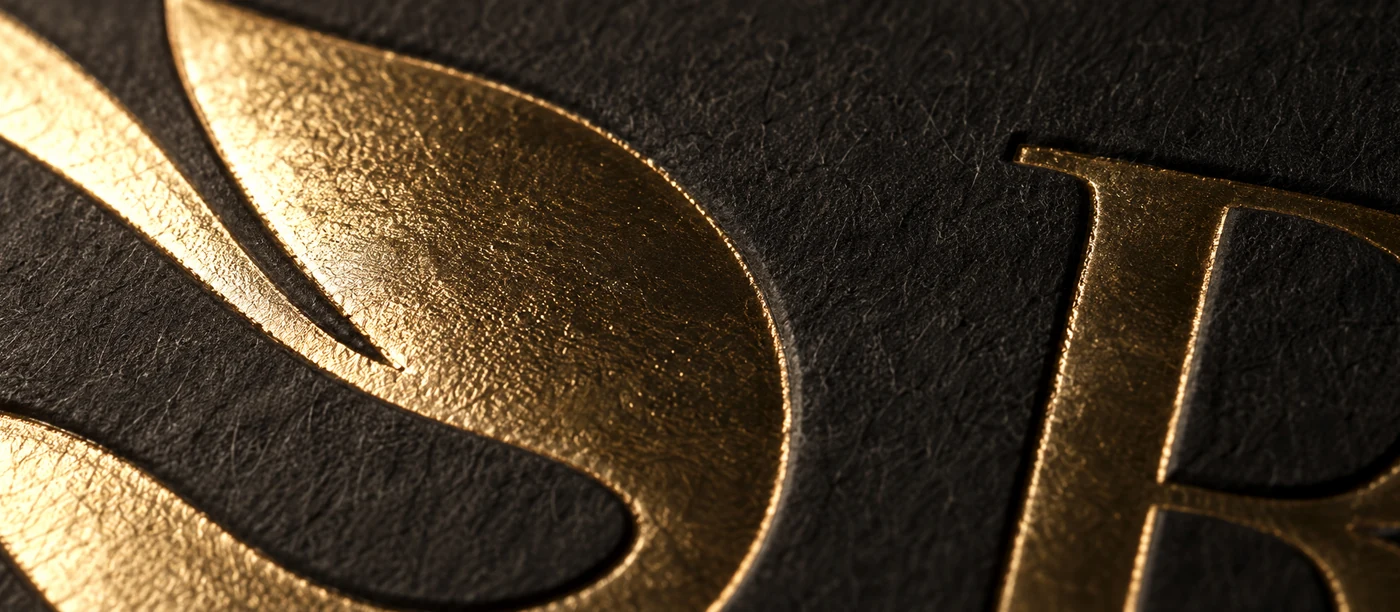
Fine detail survives foil: lines hold to 0.1 mm (0.28 pt). We design to 0.15 mm (0.43 pt, 0.006 in) for the crispest strike, with gaps around 0.25 mm. Only below-floor details need a small local adjustment; we never simplify or bolden your mark for foil.
Foil minimums →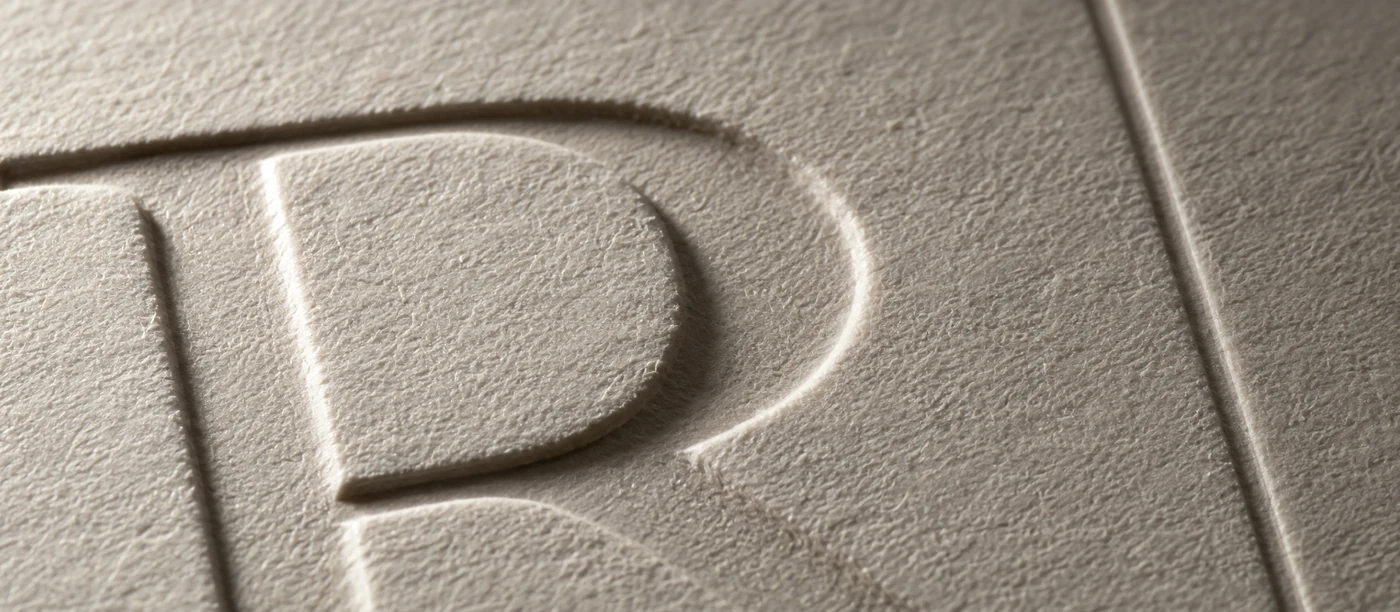
Keep internal foil gaps around 0.25 mm; adjust only gaps below 0.15 mm, without changing the mark.
Emboss and letterpress →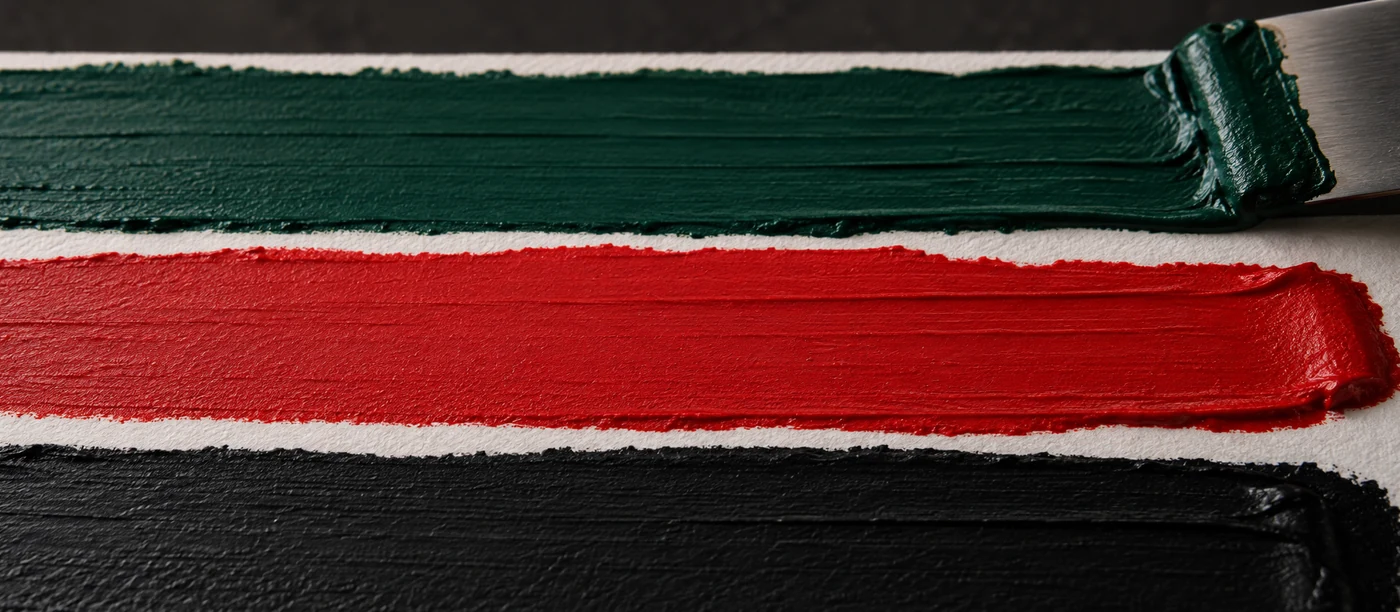
Yes. A foil logo needs a minimum line weight of 0.5 pt and counters no smaller than 1.5 mm, and we redraw yours to those floors. Anything finer fills in with foil or flakes off the sheet within a few hundred impressions.
Generated marks carry three things a die cannot hold: soft edges, hairlines that taper to nothing, and colours that touch. We rebuild the idea rather than trace the image.
We redraw rather than auto-trace. Auto-tracing leaves wobbling curves and stepped edges that are invisible on screen and obvious in a foil die or an emboss.
Yes. The approved artwork and its production files are yours. Fonts licensed from others remain subject to their licence.
Updated September 2026
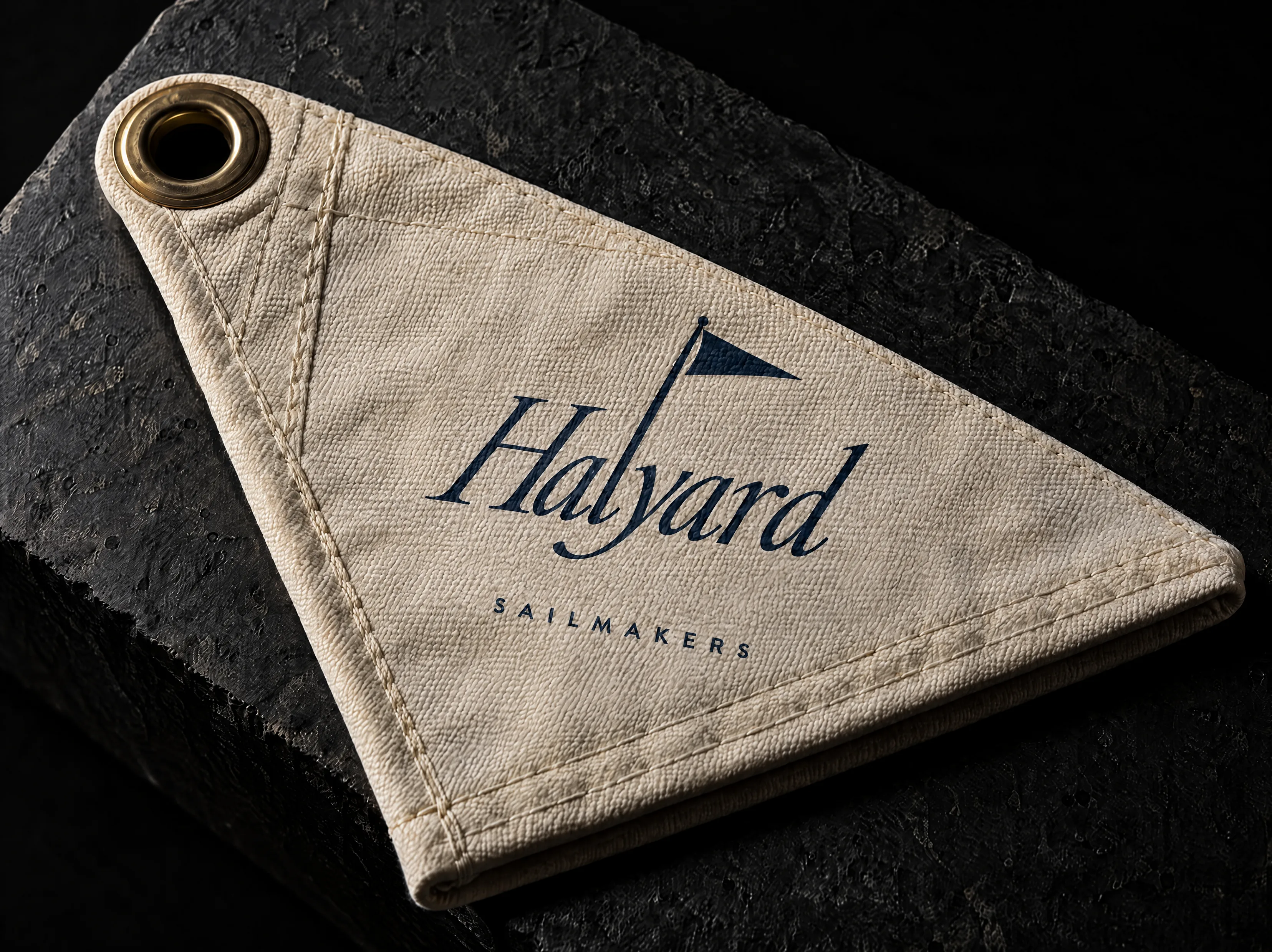
A mark, type and material language conceived together, from first name to finished printed piece.
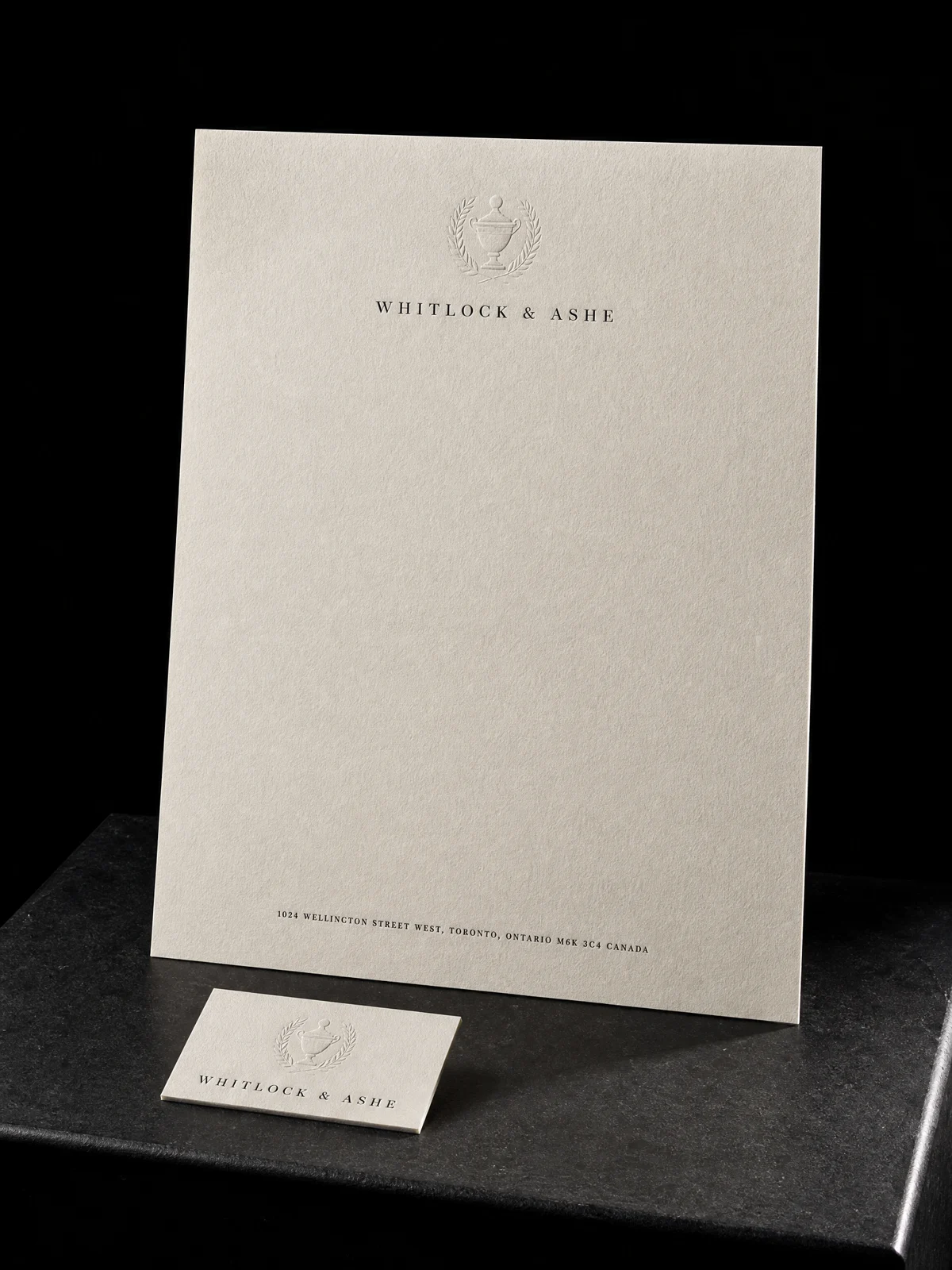
A card, letterhead and envelope with one consistent mark, thoughtful spacing and separations that make production simple.
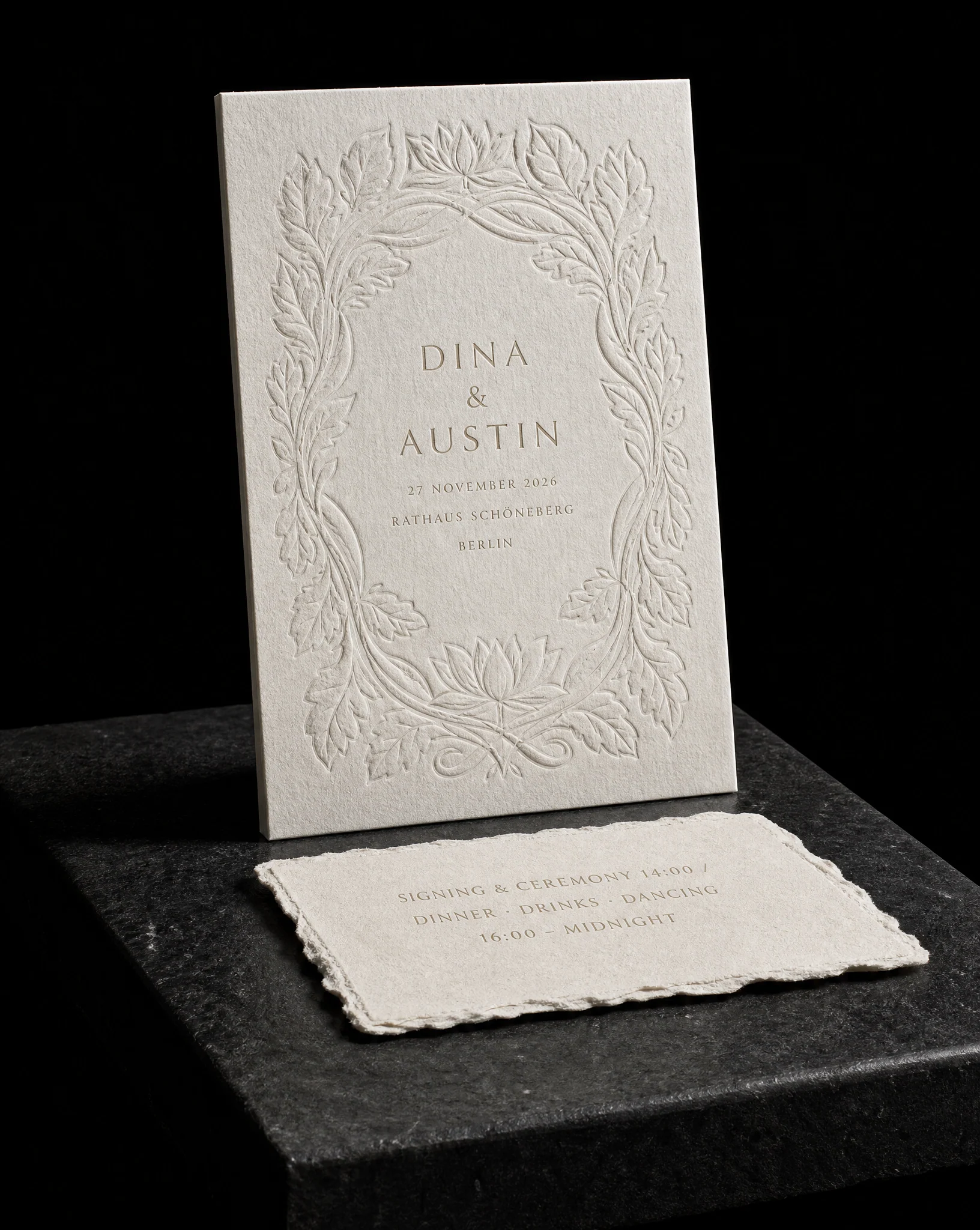
Invitation, reply, details and envelope considered together so the whole suite arrives as one clear gesture.