Design exploration · What if…? series
The Garden, folded
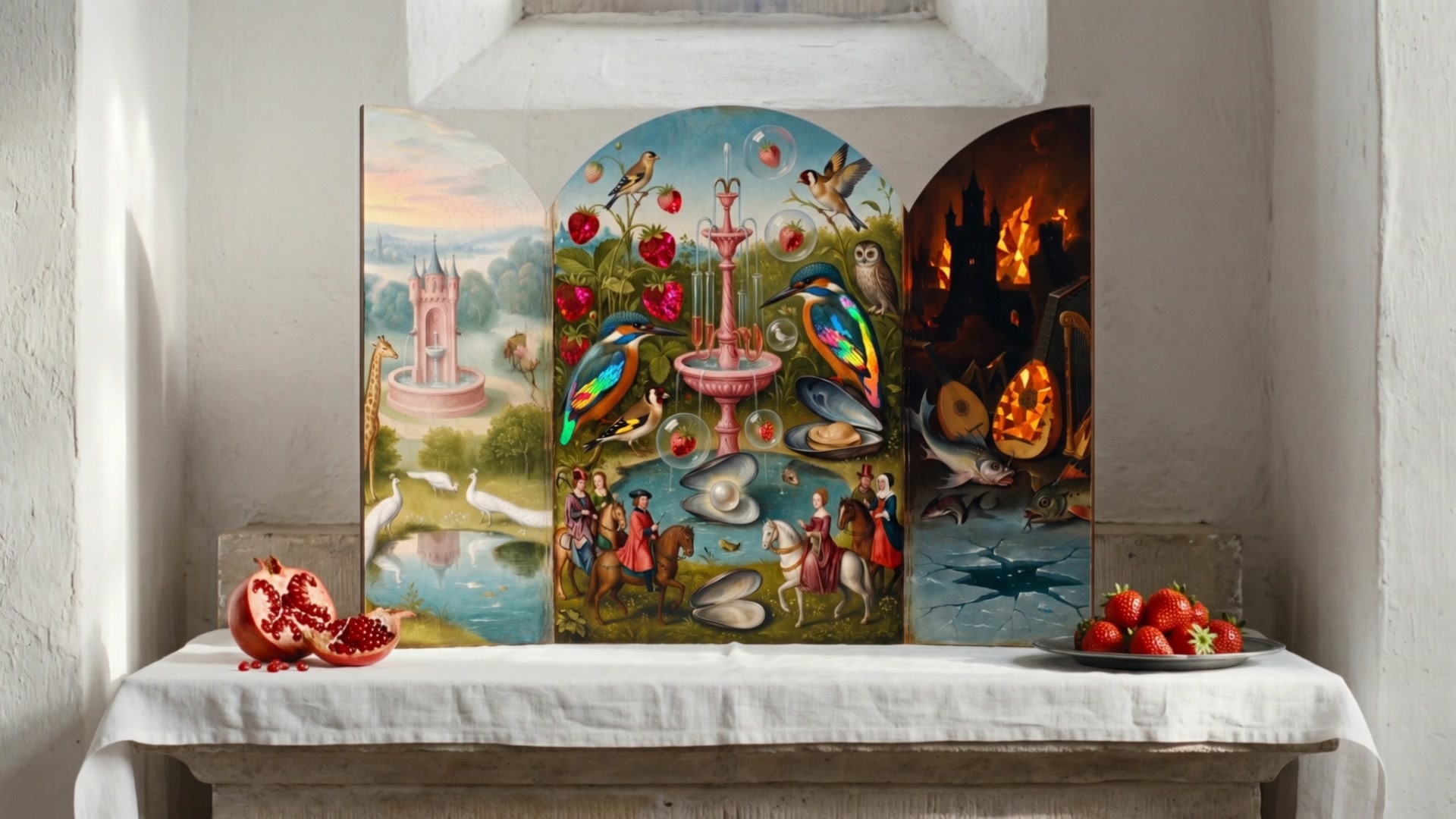
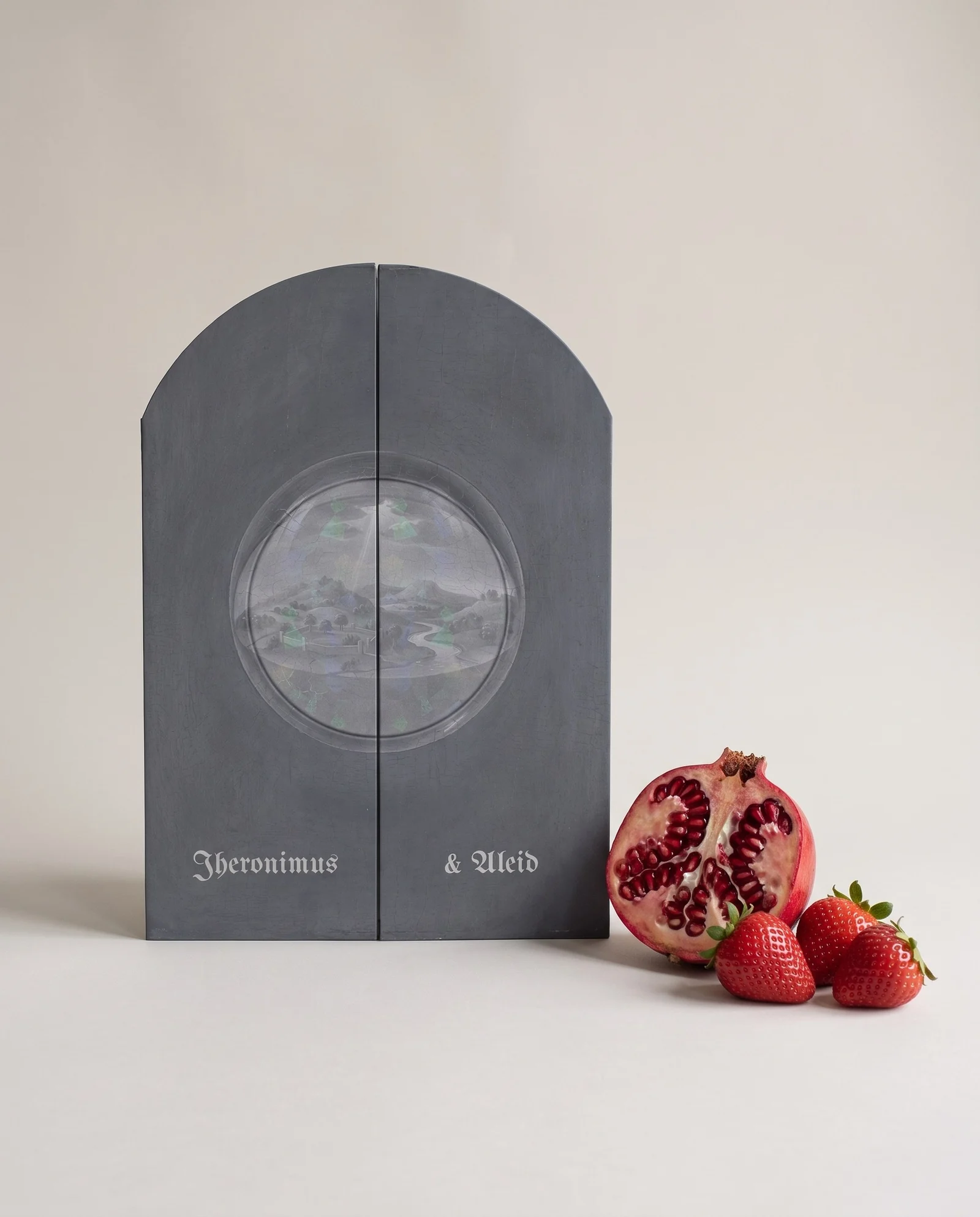
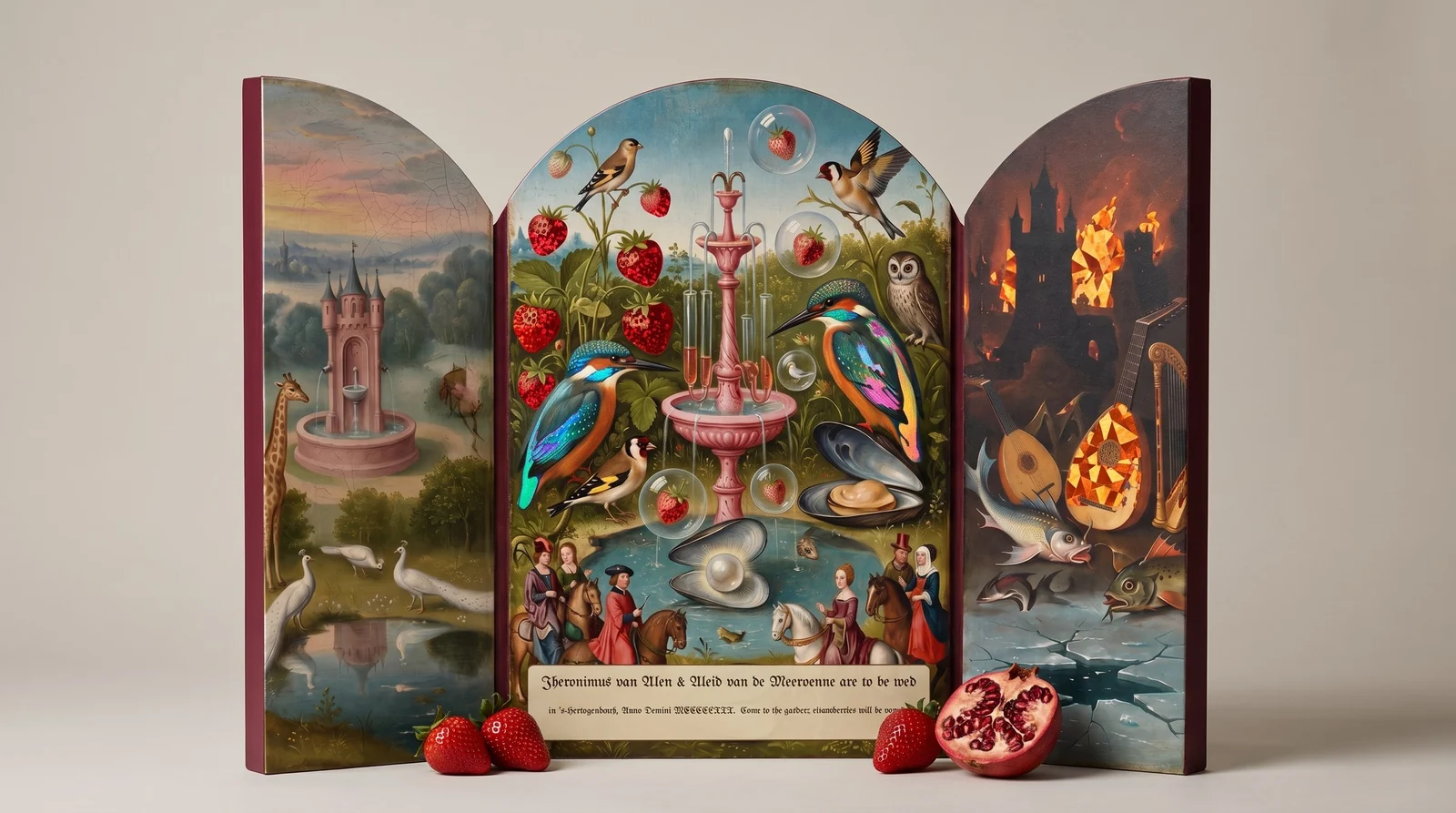
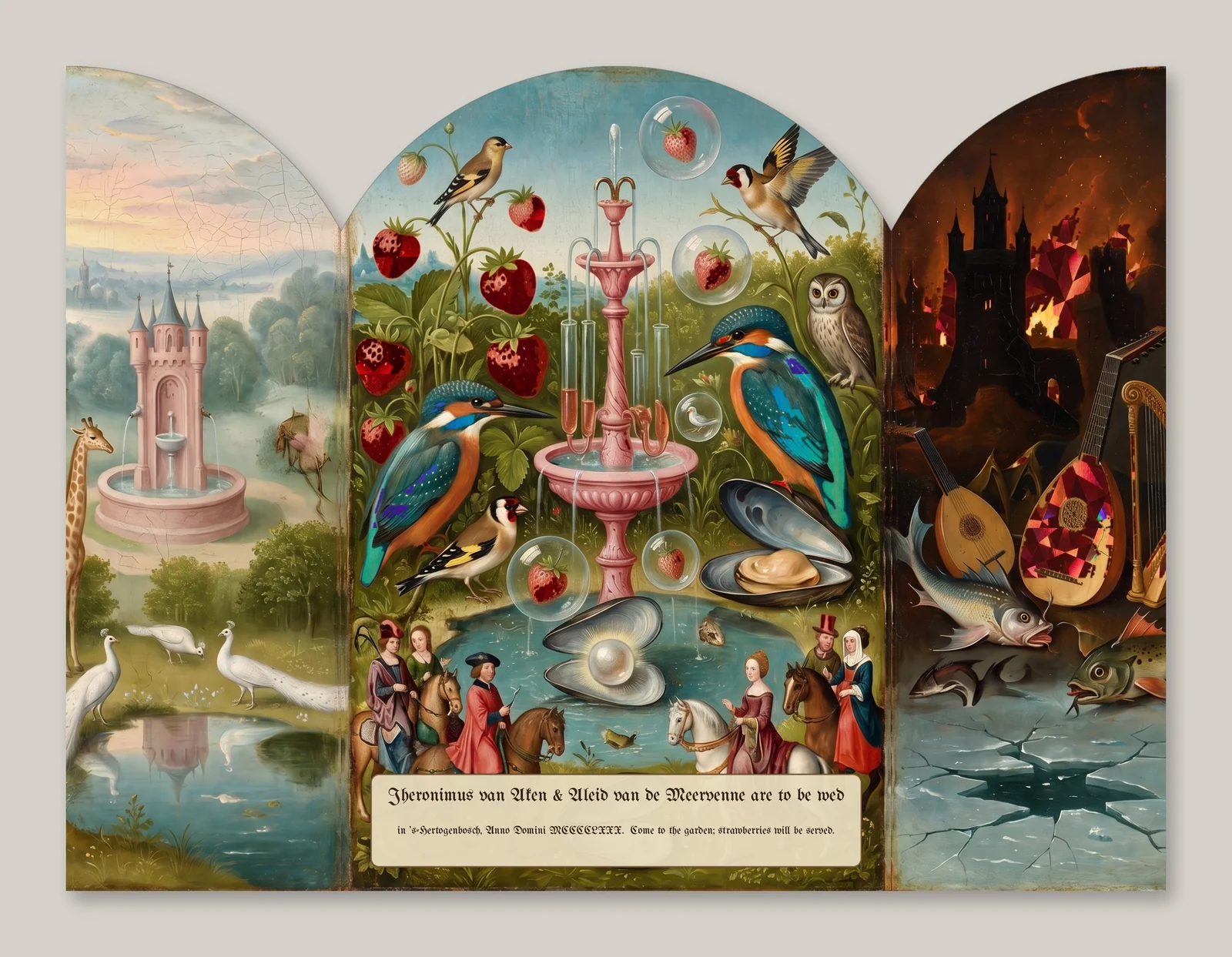
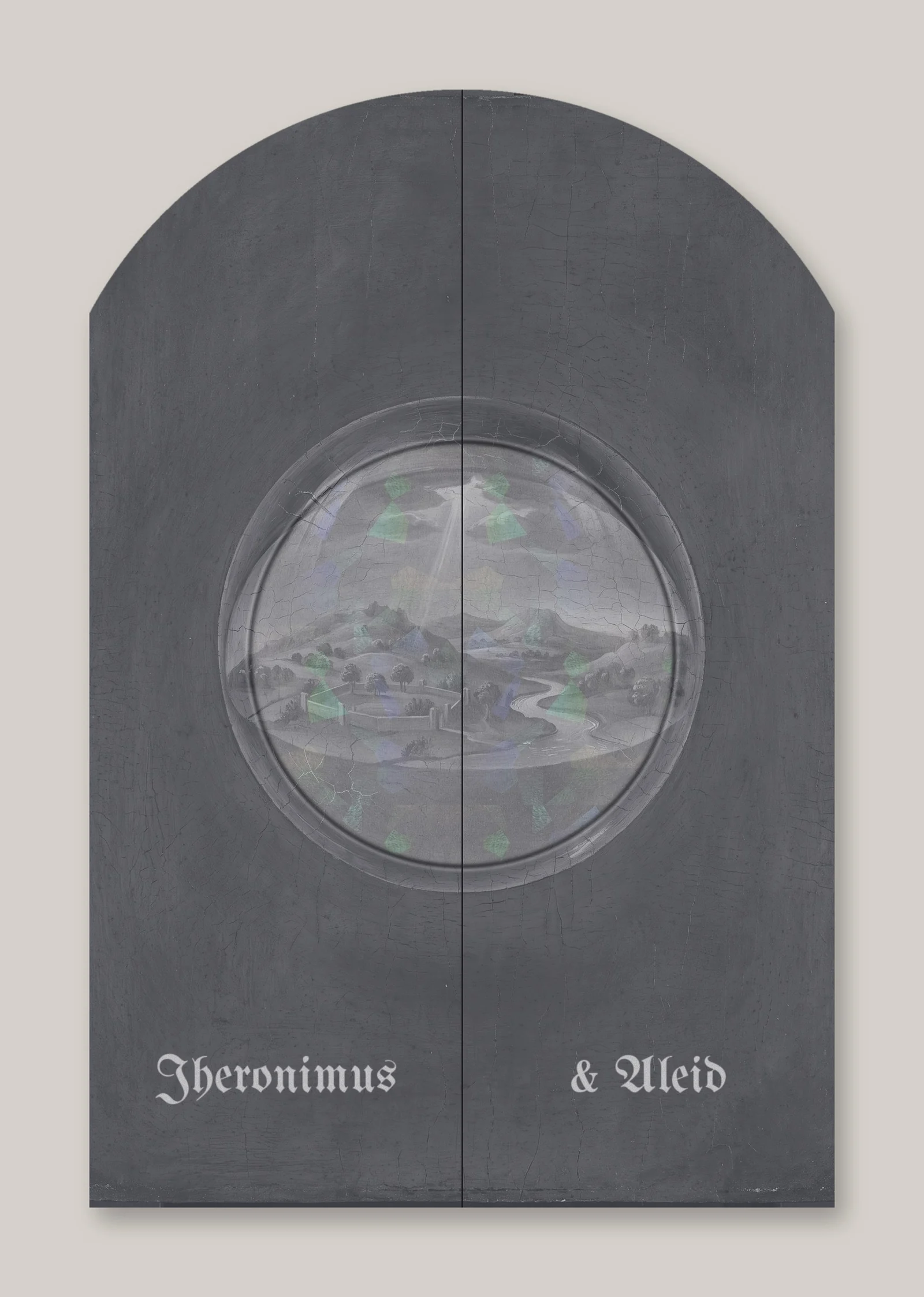
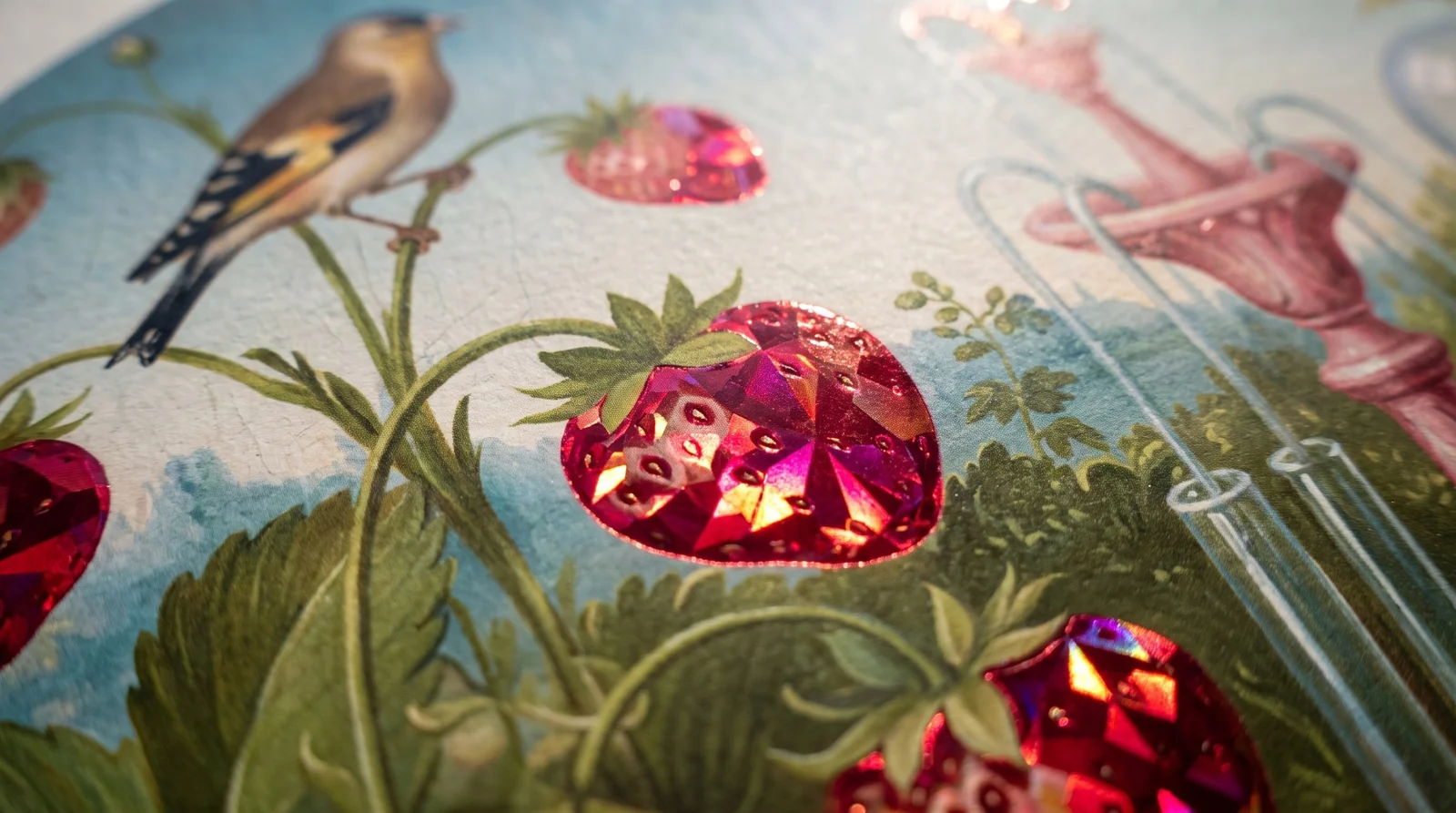
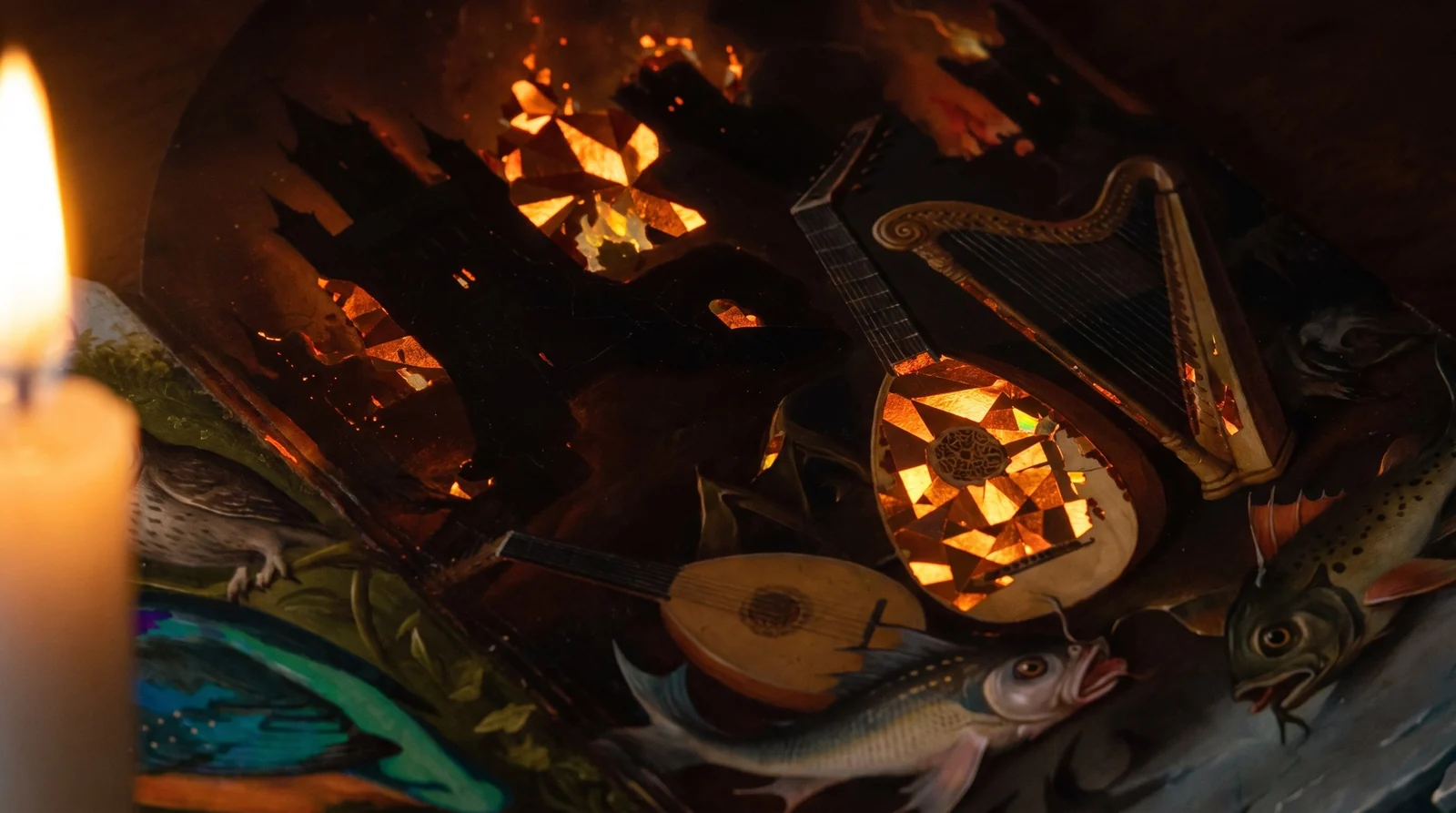
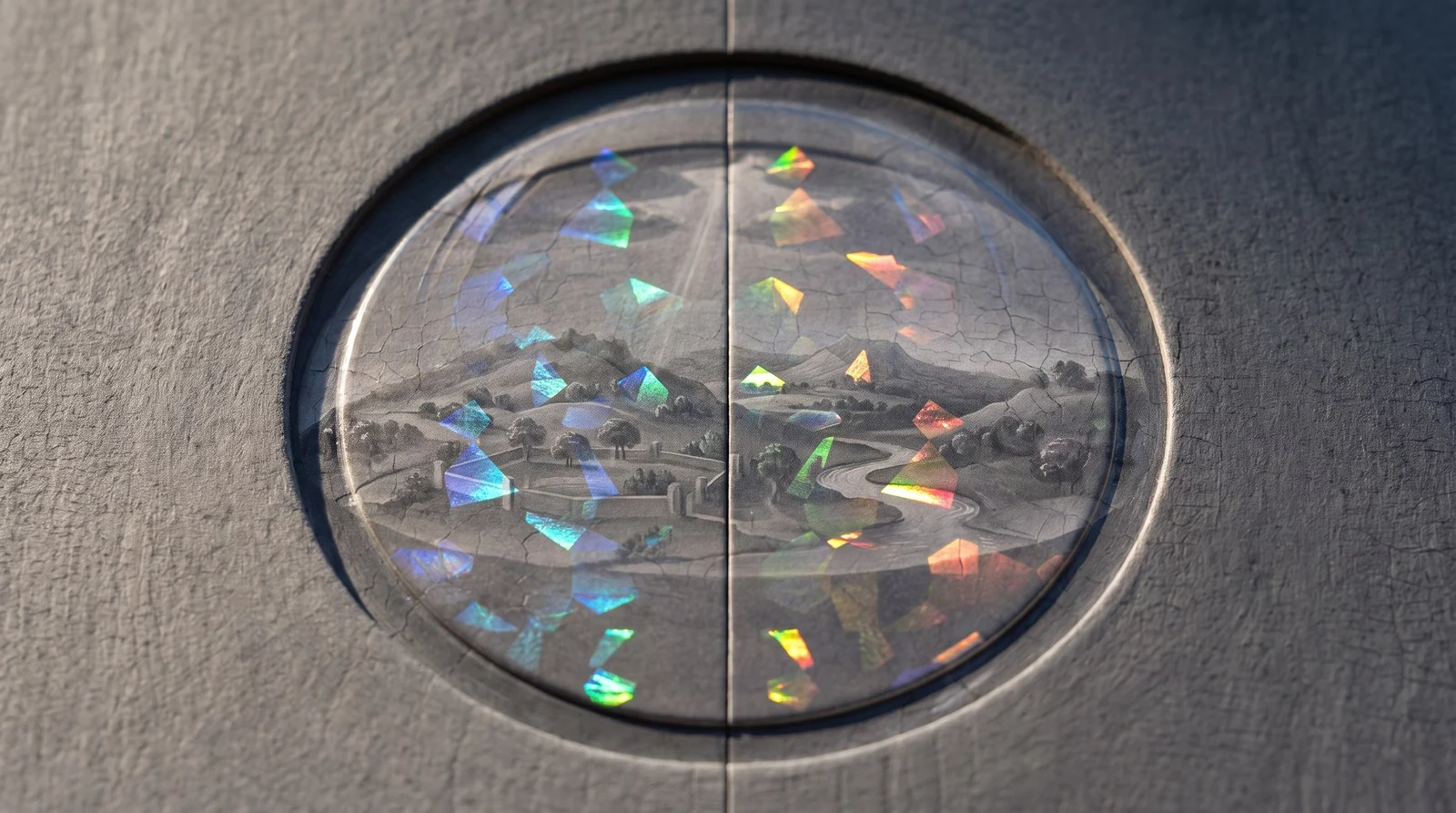
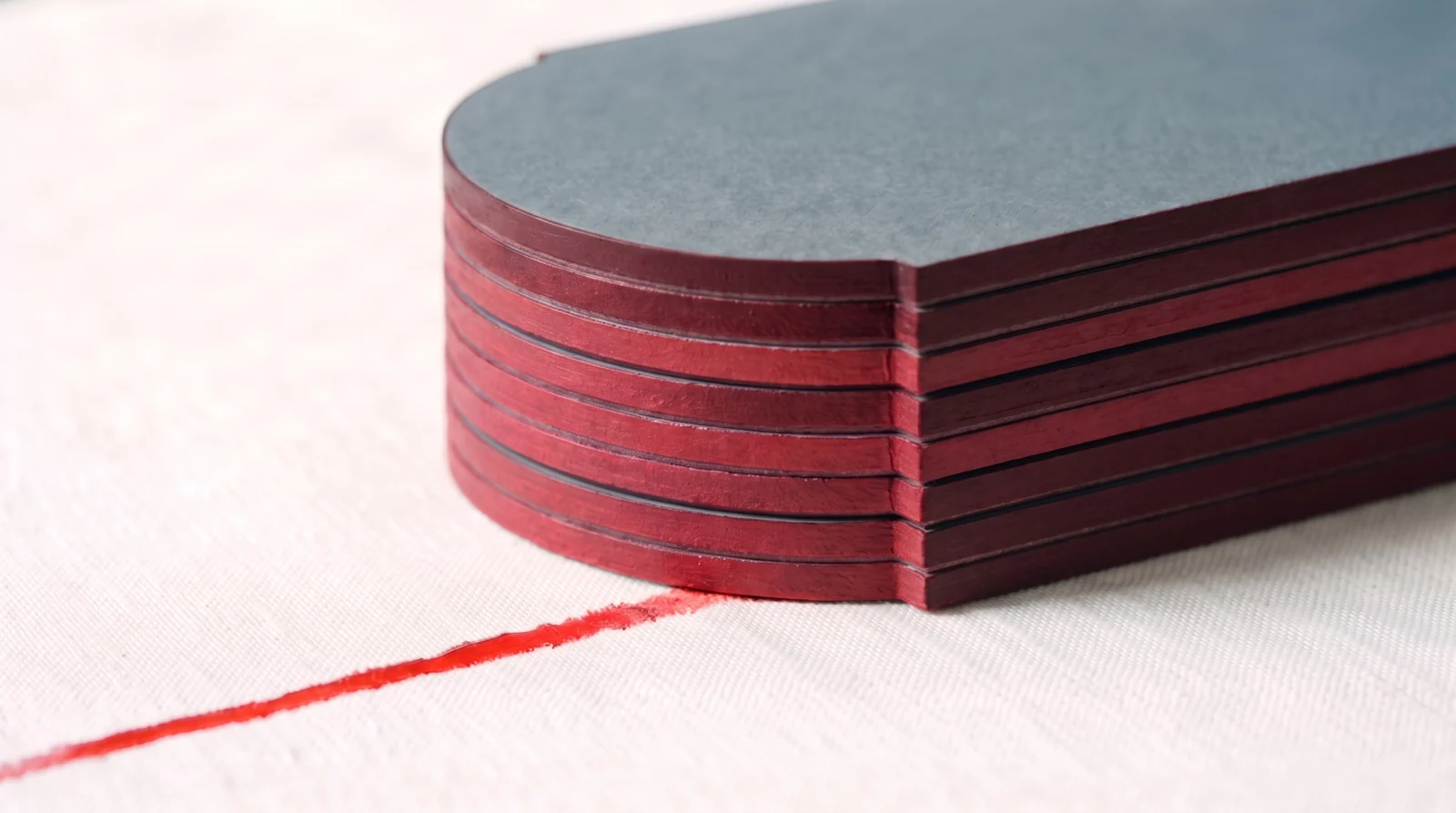
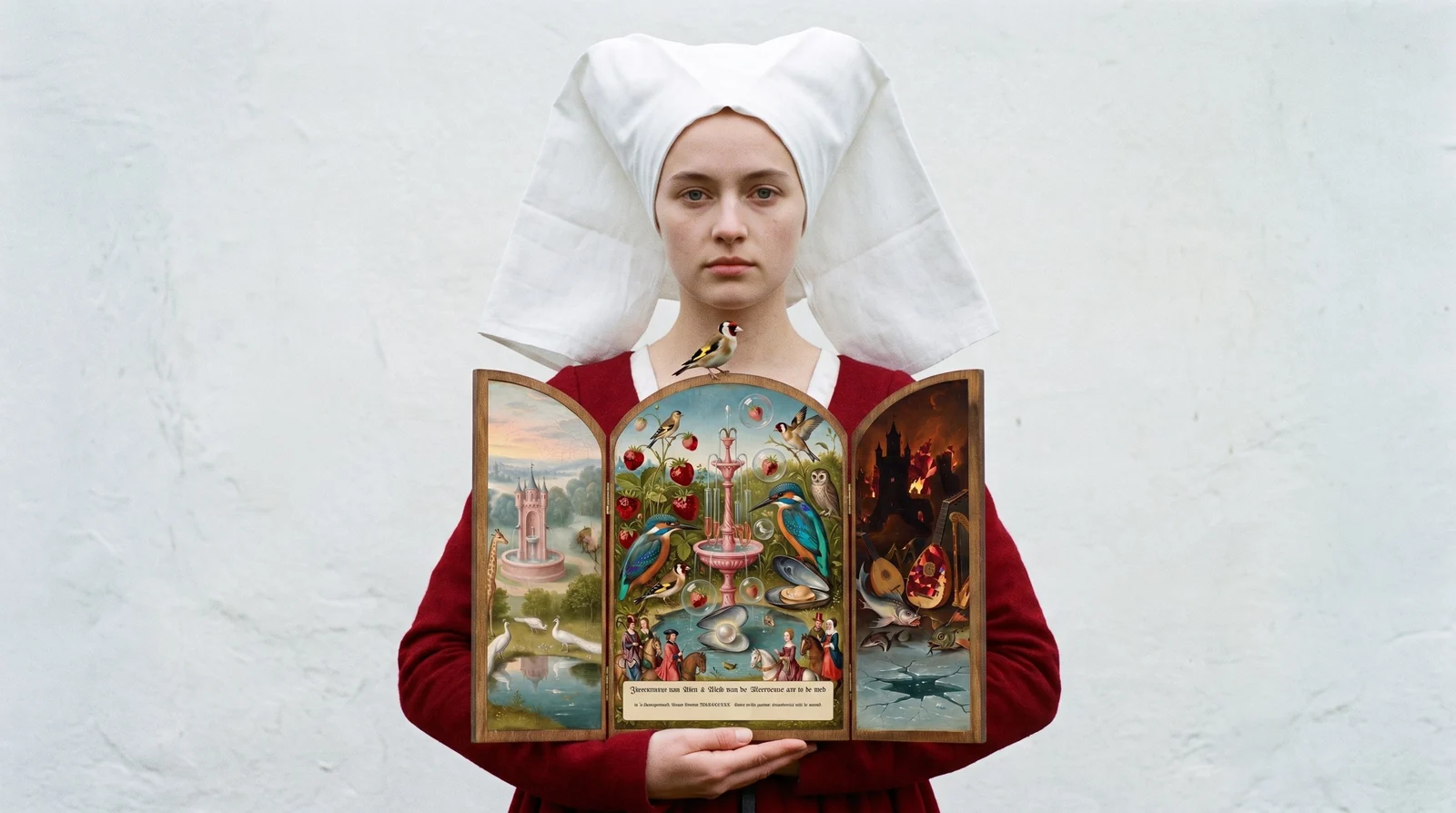
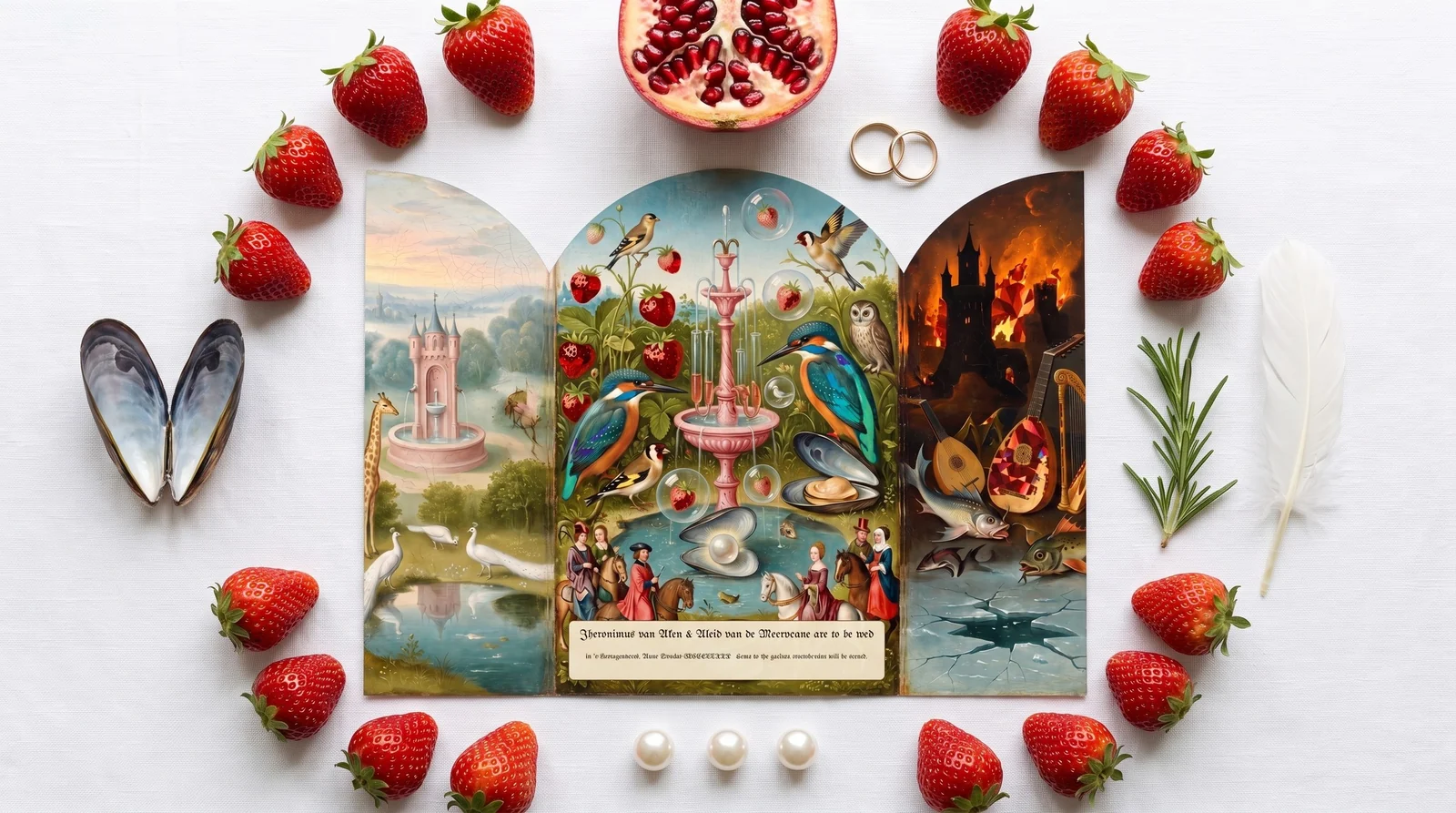
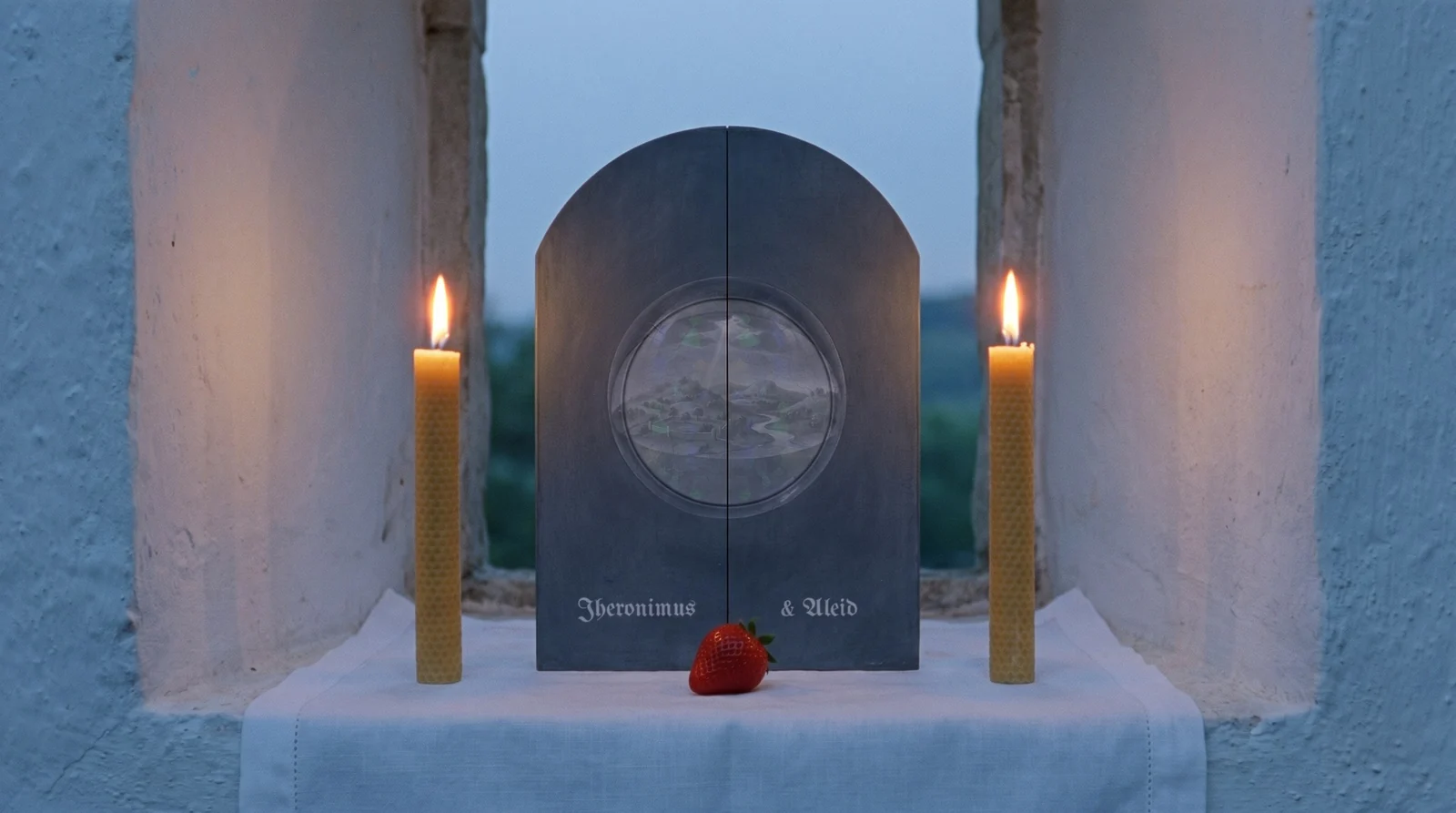
A design exploration: the wedding invitation Hieronymus Bosch might have made for his own wedding. It's a triptych that folds shut like an altarpiece, die-cut with an arched top. Outside, two sheets are duplexed: slate-grey Fedrigoni Materica Ardesia, with a blind-debossed globe filled with clear holographic foil and the couple's names in matte platinum foil. Inside, white Materica Gesso is printed with a full-colour painted garden, with ruby, orange and rainbow holographic foils on the strawberries, the flames and the kingfishers. The edges are painted PANTONE 202 C. Two papers, 250 g/m² each, bonded into one card.
The idea
Closed, it's a grey world. Open it, and the garden is inside.
Six rules
- 01An altarpiece you can mail. A 5-inch centre panel with two 2.5-inch doors that meet in the middle. The arched top is die-cut so the doors' half-arches complete the cen…
- 02Two papers, back to back. Duplexing: Materica Ardesia (slate) is bonded to Materica Gesso (chalk white), each 250 g/m². The painting is printed on the white side; th…
- 03Deboss before the bond. The globe is debossed and foiled on the Ardesia sheet alone, then bonded to the Gesso sheet, so the inside stays flat and the bruise of the…
- 04Foil where the light should be. Three holographic gemstone foils on bold shapes only: ruby on the strawberries, orange on the hell fire and lute, rainbow on the kingfisher…
- 05Folds that don't crack. Channel scoring at both folds, so each door hinges on a clean, wide groove.
- 06Red at the edges. Edges painted PANTONE 202 C, a deep wine red from the bride's dress, on the die-cut sheets before folding. The paint reads darker over the…
The commission
Around 1480, in 's-Hertogenbosch, the painter Jheronimus van Aken married Aleid van de Meervenne, a woman from a well-off local family. Today we know him by the name of his town: Bosch. And, being Bosch, he insisted on doing the invitations himself.
No invitation survives, so we made one: the invitation he might have designed for his own wedding. It's built in the form he's famous for, a triptych. Closed, the outer doors show a quiet grey world, a nod to the grisaille globe on the outer wings of The Garden of Earthly Delights. Opened, there's a garden inside, full of strawberries, kingfishers, a fountain and one small corner of hell.
The papers
Fedrigoni Materica is a range made with a mix of fibres, including cotton and recycled fibre, and coloured in the pulp. It has a soft, chalky surface that takes foil and deboss beautifully. Ardesia is its slate grey; Gesso is a warm chalk white. Both come at 250 g/m², and together they make a board about twice that weight.
Uncoated papers print colour a little softer than coated ones. Here that's the point: the painting looks like it was laid on plaster, and the foils pop against it.
Make your own
This one's an exploration, but every part of it is something we make: arched die-cuts, triptych folds, duplexed papers, holographic foils, debossing and painted edges. Bring us your painter, your garden or your strange little corner of hell.
More from the What if…? series
Our artist homages start with a real paper-and-foil specification.
What if Alexander McQueen designed your wedding invitation? →
Start from these materials
Same paper, foil and finish, locked in — nothing of this piece artwork comes with it.
Questions
- What is a triptych wedding invitation?
- A three-panel invitation: a centre panel with two doors that fold over it, like an altarpiece. This one is 5 × 7.5 in closed and opens to 10 × 7.5 in.
- Can you print a full-colour painting on Fedrigoni Materica?
- Yes. Materica Gesso, the white of the range, takes four-colour offset well. Like any uncoated paper, it prints colours slightly softer than a coated sheet, which suits painterly artwork.
- Does holographic foil work on textured paper?
- Yes, on bold shapes. Gemstone pattern foils read best on areas a few millimetres across or more, because very fine lines can break up on a toothy sheet. Clear and specialty holographic foils can also run on top of printed colour, which is useful when you want shimmer over an image.
- What is duplexing?
- Bonding two sheets back to back into one thicker board. It lets each side be a different colour, here slate grey outside and white inside, and gives the invitation real weight.
- What is edge painting?
- Colouring the cut edges of a stack of cards. Here it's PANTONE 202 C, a deep wine red, which hides the white core of the duplexed board and adds a flash of colour from the side.
- Can I order an invitation like this?
- Yes. This design is an exploration, but every technique in it is real. Order a sample pack to feel the papers and foils, start a quote, or book a design consultation and we'll build yours.
An homage to Hieronymus Bosch (c.1450–1516). Invented commission. Art direction by Peppermint. The flat artwork is built on our real papers and foil swatches; sets, people and motion are AI-assisted.