How much do gold foil business cards cost?
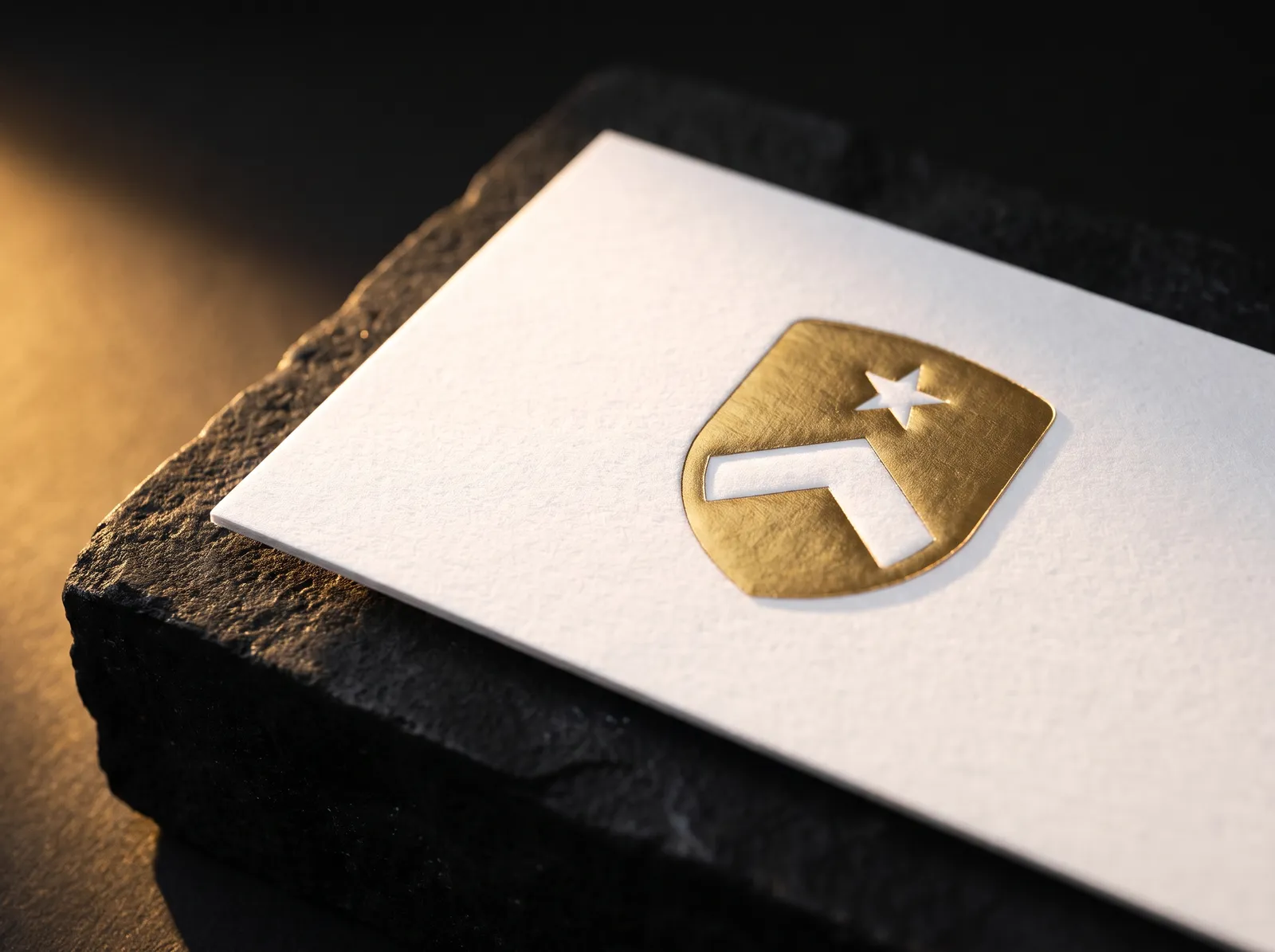
Raised gold foil on 20pt soft touch starts at 105 US$ for 100 and 145 US$ for 250. Die-stamped gold foil on 32pt cotton starts at 310 US$ for 250 and 410 US$ for 500. The die is a fixed cost, so the price per card drops quickly as quantity rises. Adding a second side, a second foil colour or edge foil adds a die and a press pass each.
Are gold leaf business cards real gold leaf?
Almost never, and ours aren't. “Gold leaf business cards” usually means gold foil: a thin metallised film pressed onto the card with a heated die, so the gold is bonded to the paper and won't flake in a wallet. Real gold leaf is beaten metal laid by hand with adhesive, and it isn't practical on a card people carry. Foil gives the same mirror or matte gold look.
What is a foil accent business card?
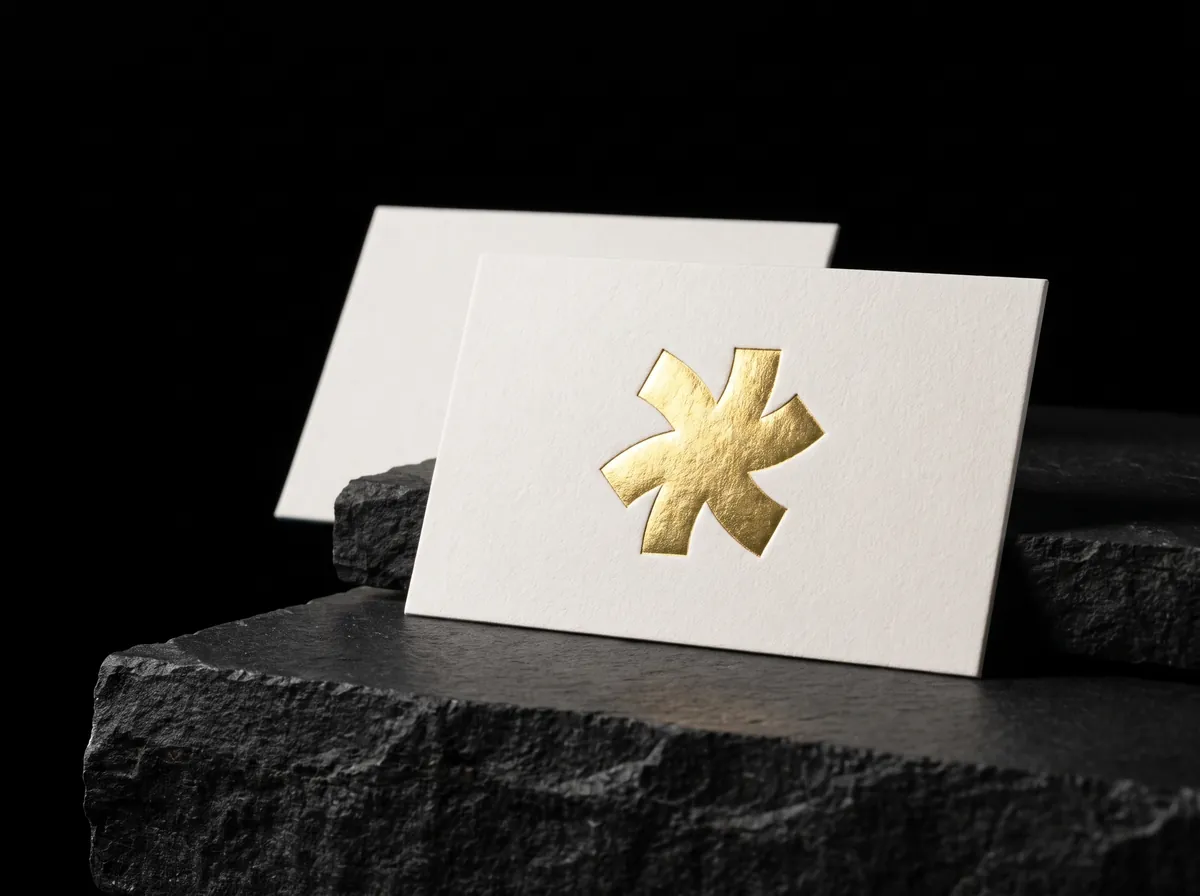
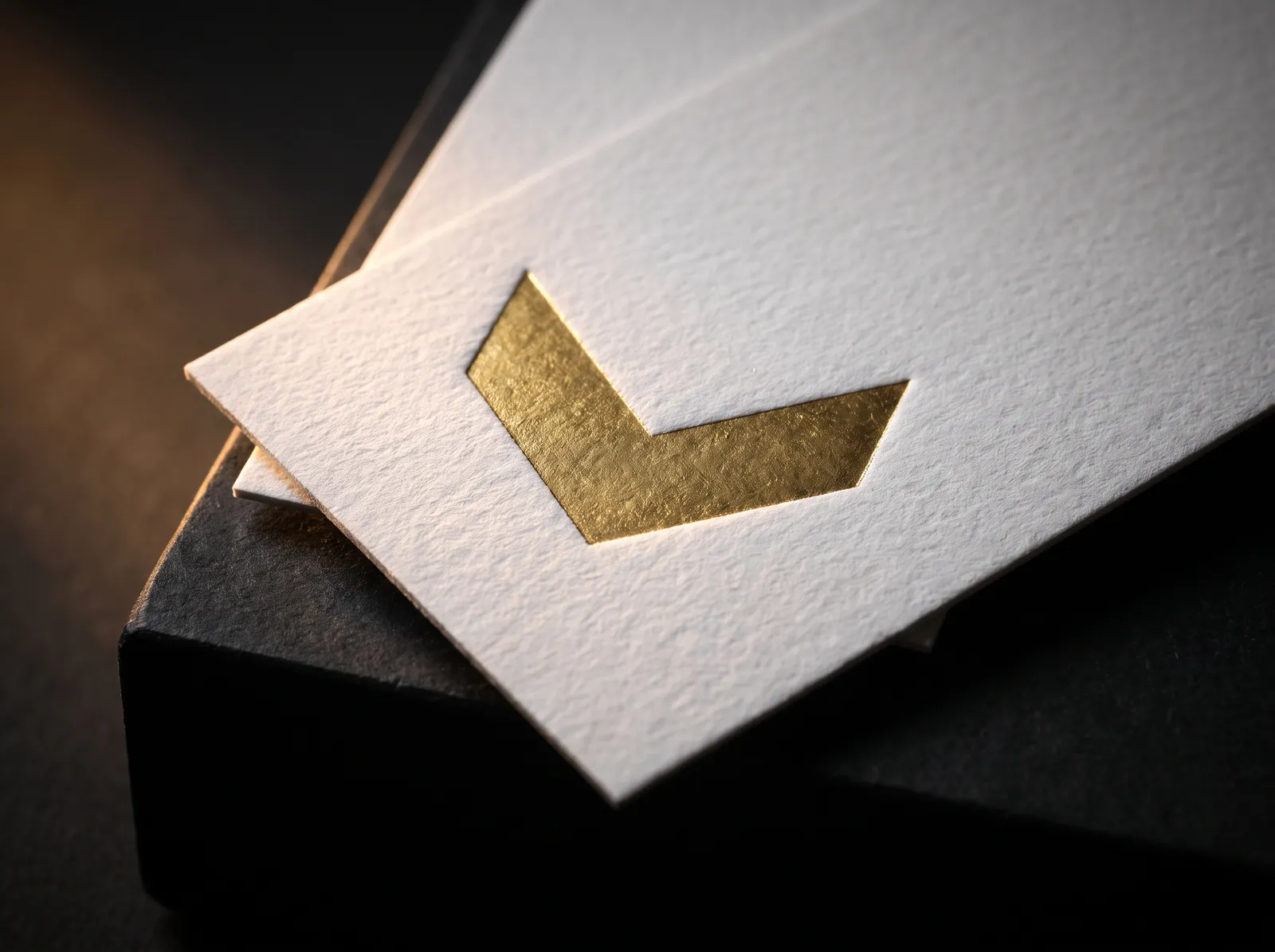
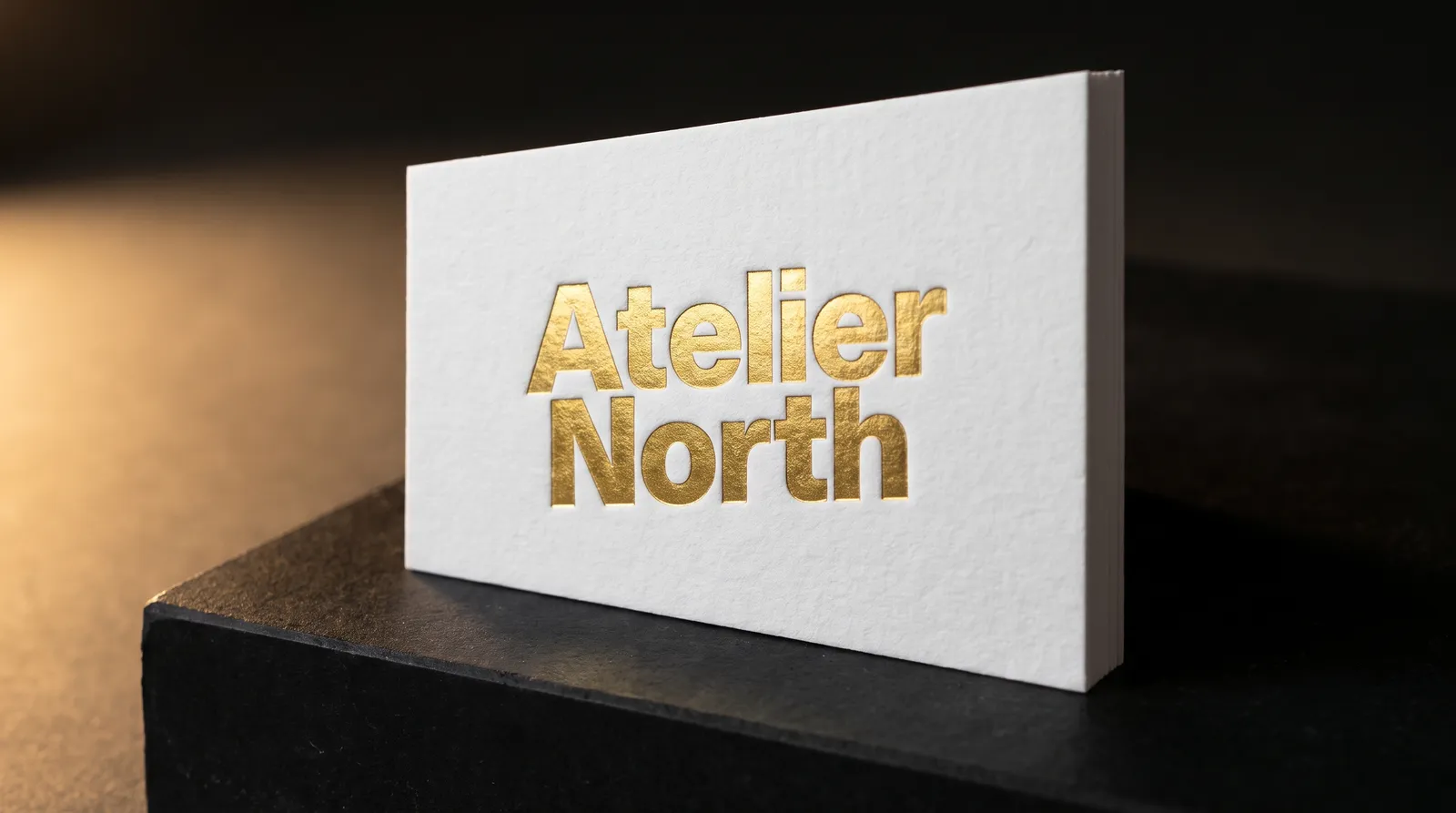
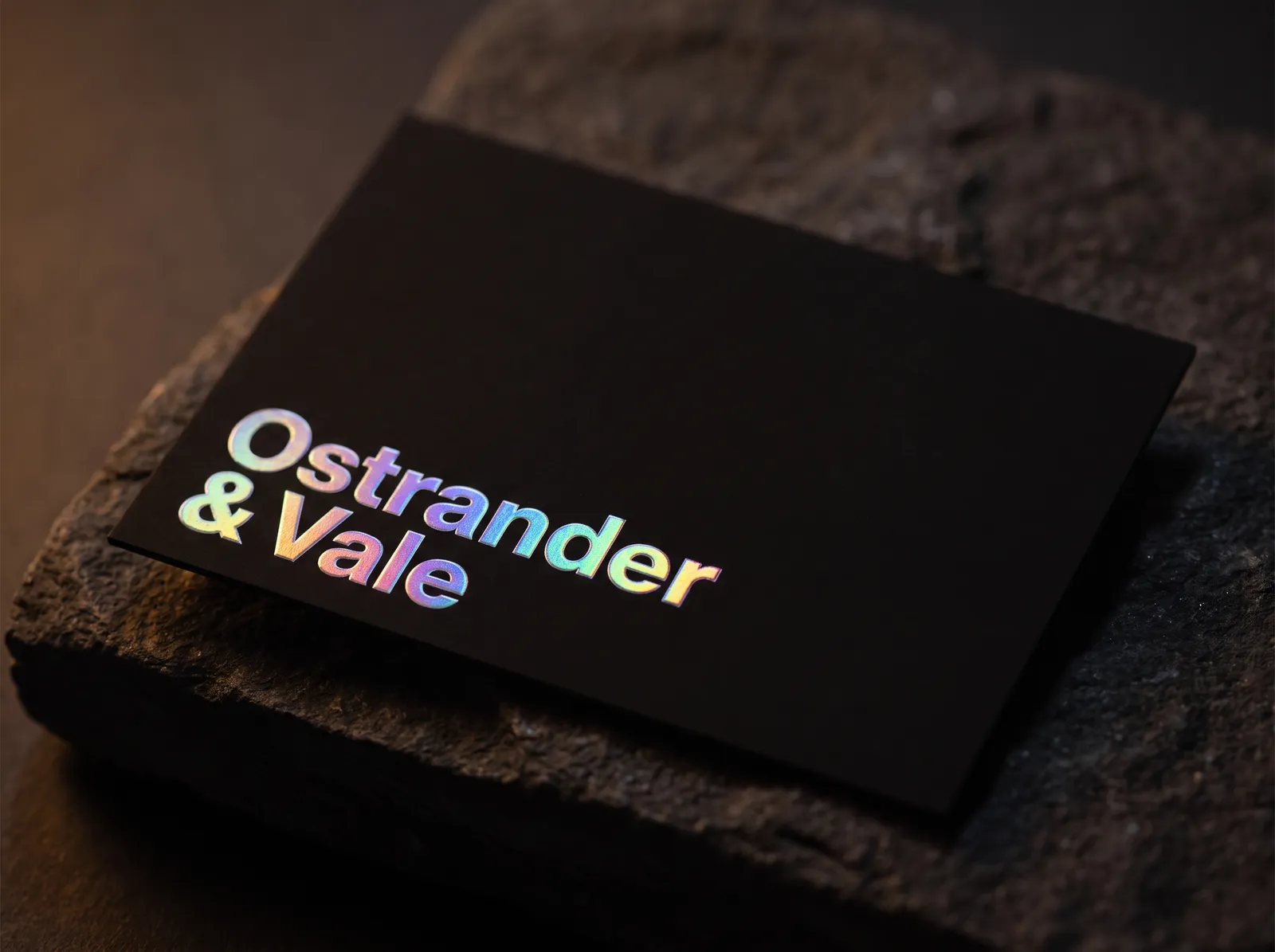
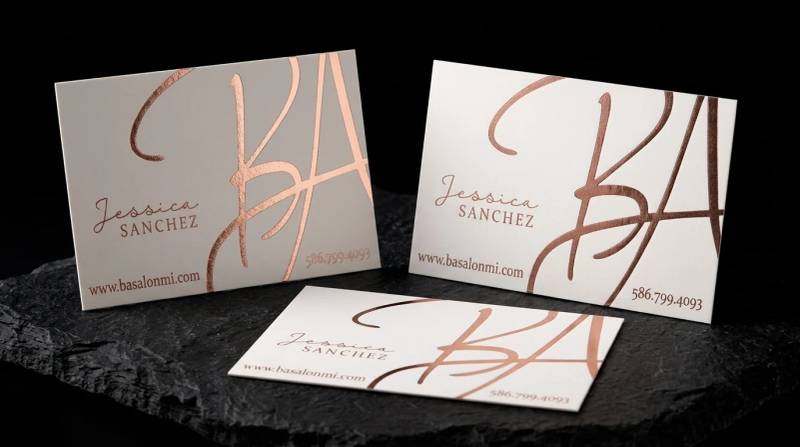
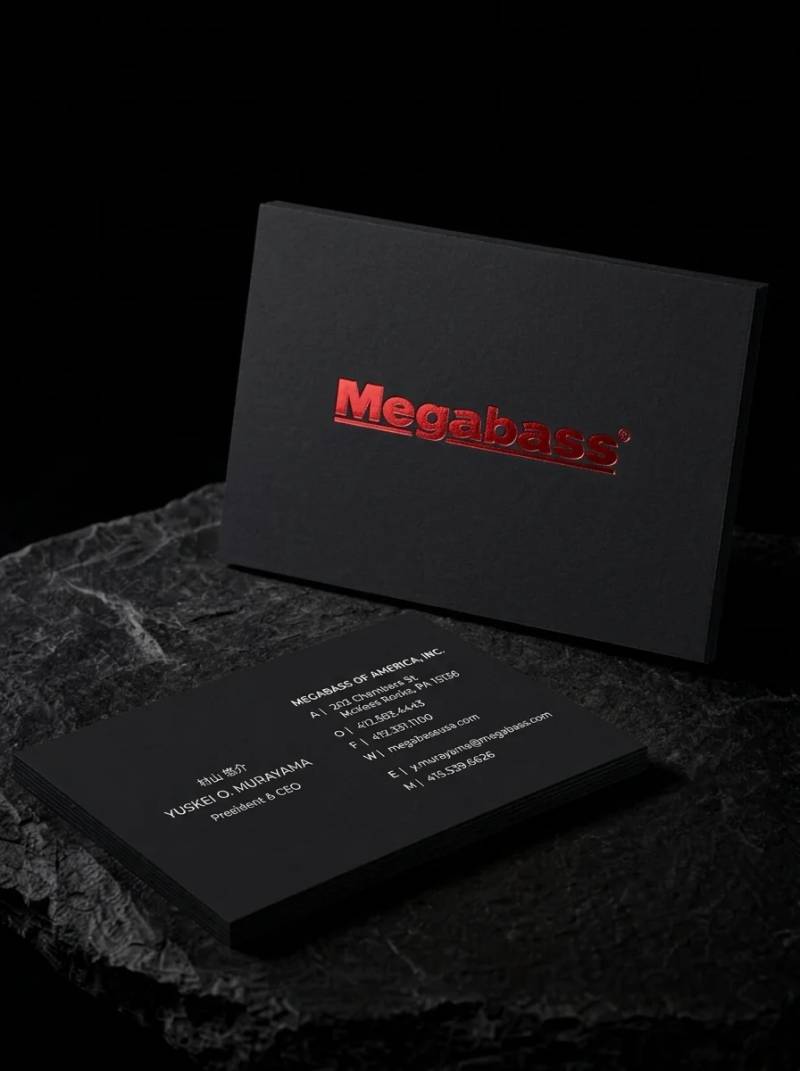
It's a card where foil is used on one element, usually the logo, the name or a single line, and the rest is printed or left blank. It's the most effective way to use foil: one bright element draws the eye, and you pay for one die. On our cards a foil accent can be gold, silver, rose gold, copper, red, black or holographic.
Is foil blocking the same as foil stamping?
Yes. Foil blocking is the British term, and foil press and hot foil stamping mean the same thing. A heated metal die presses foil from a roll onto the paper. Raised foil and digital foil are different: they're laid without a die, which makes them faster at small quantities but limits the papers and colours.
Will foil work on black or dark card stock?
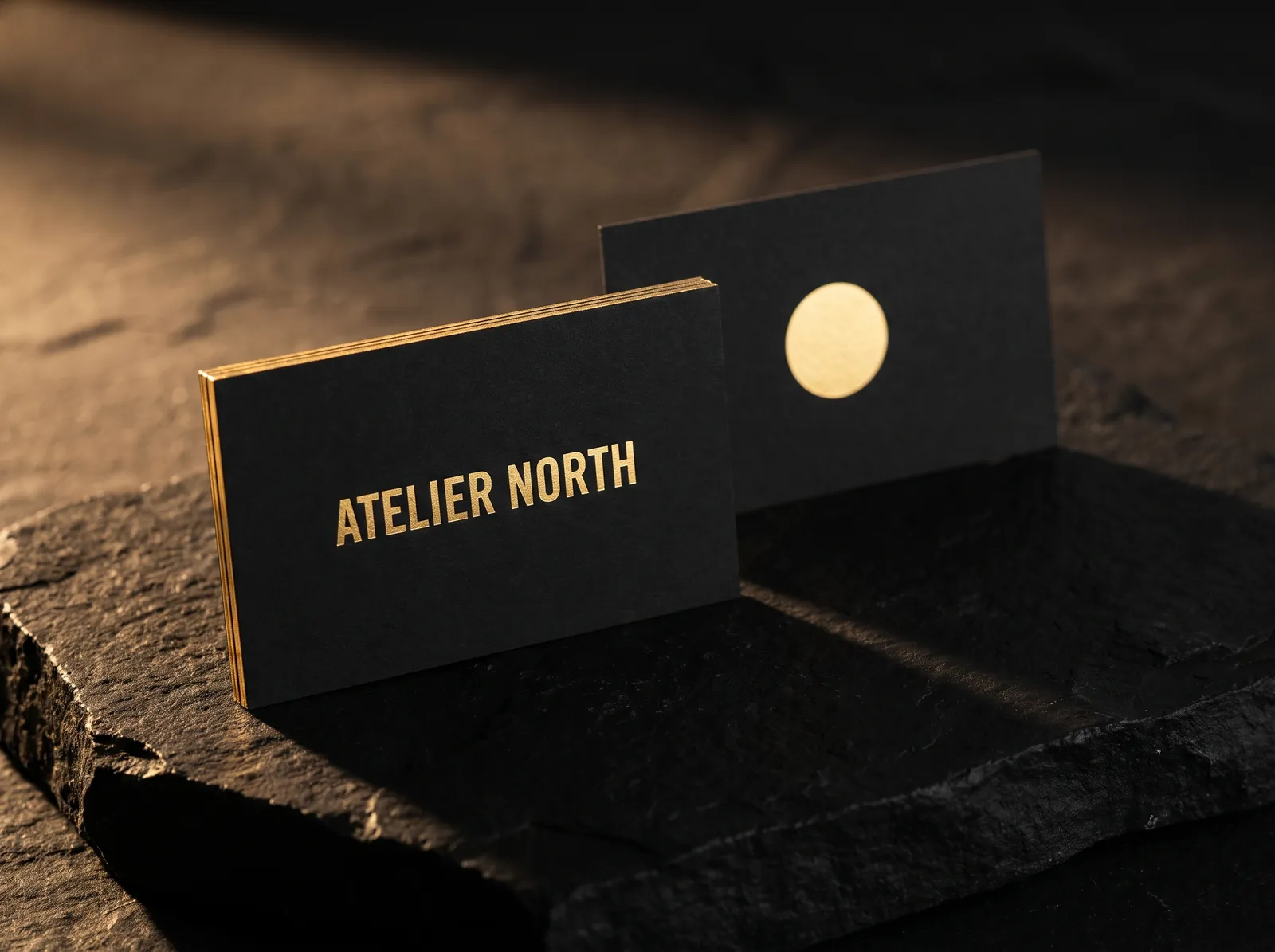
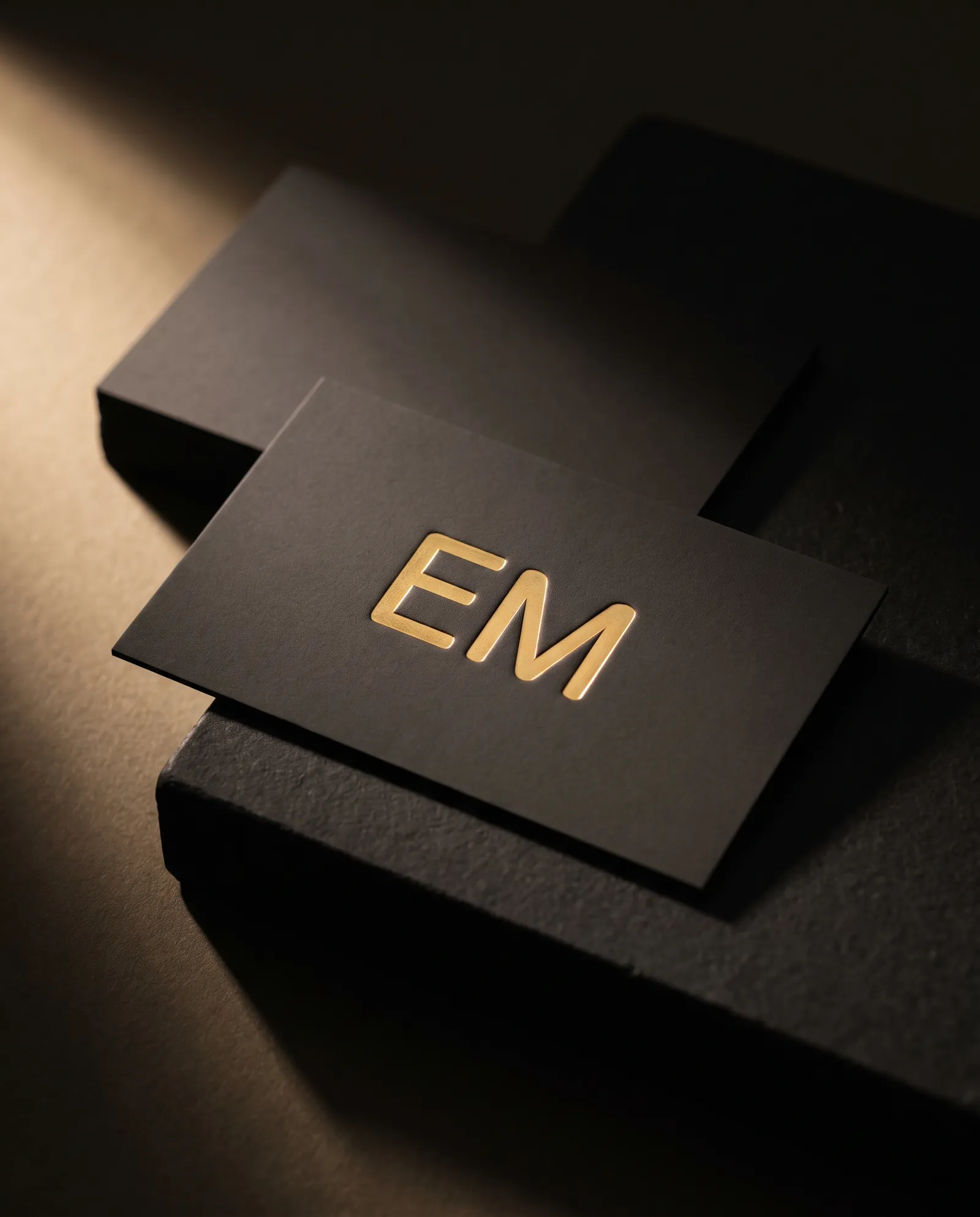
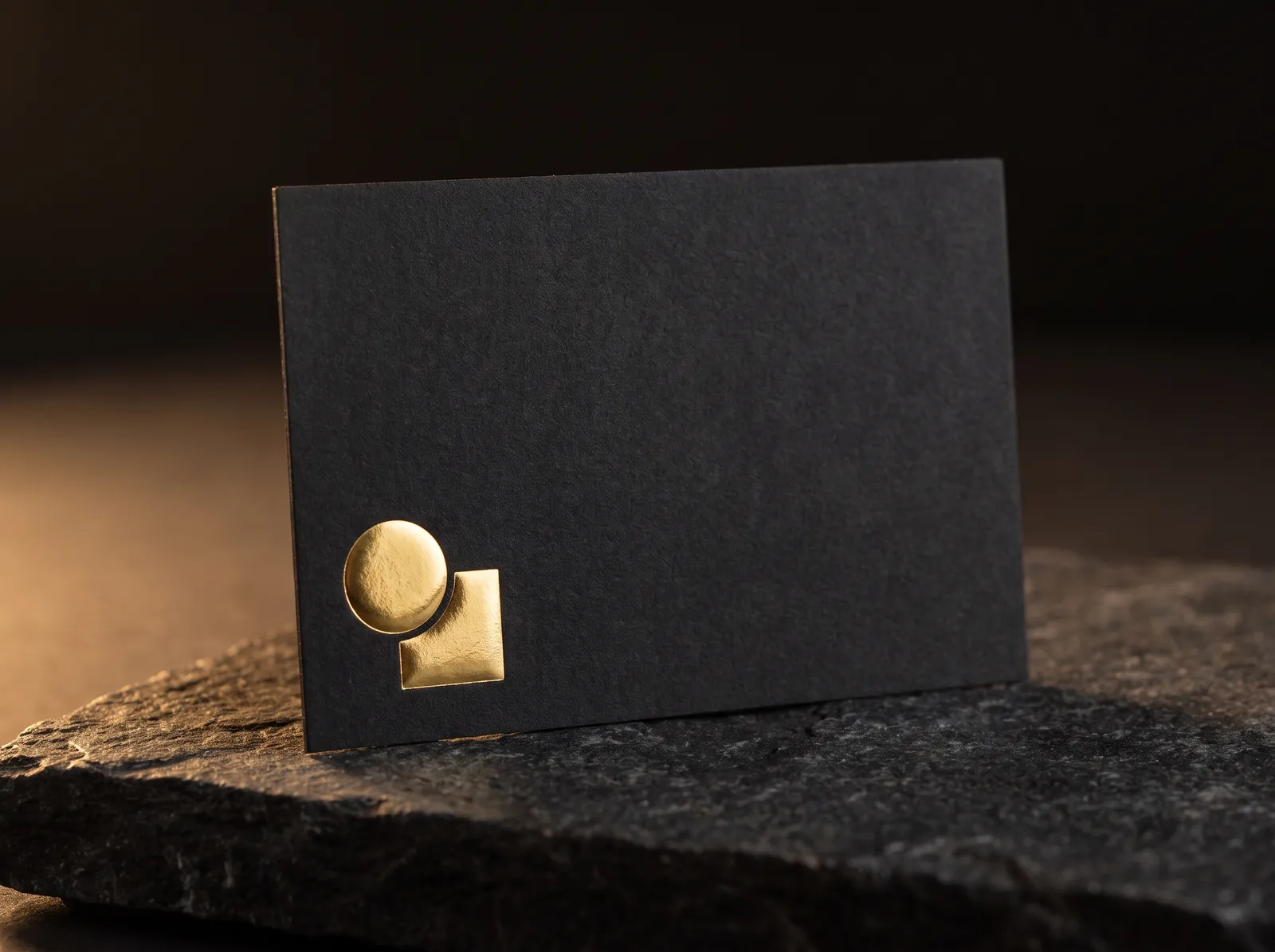
Yes, it's the best way to put metal or light colour on dark paper. Ink sinks into black stock and almost disappears, while foil is an opaque film that stays bright. For solid white on black we use white pigment foil. Black foil on black paper is the exception: it shows only as a sheen at an angle, so we don't use it for anything that has to be read.
Can I foil both sides of the same card?
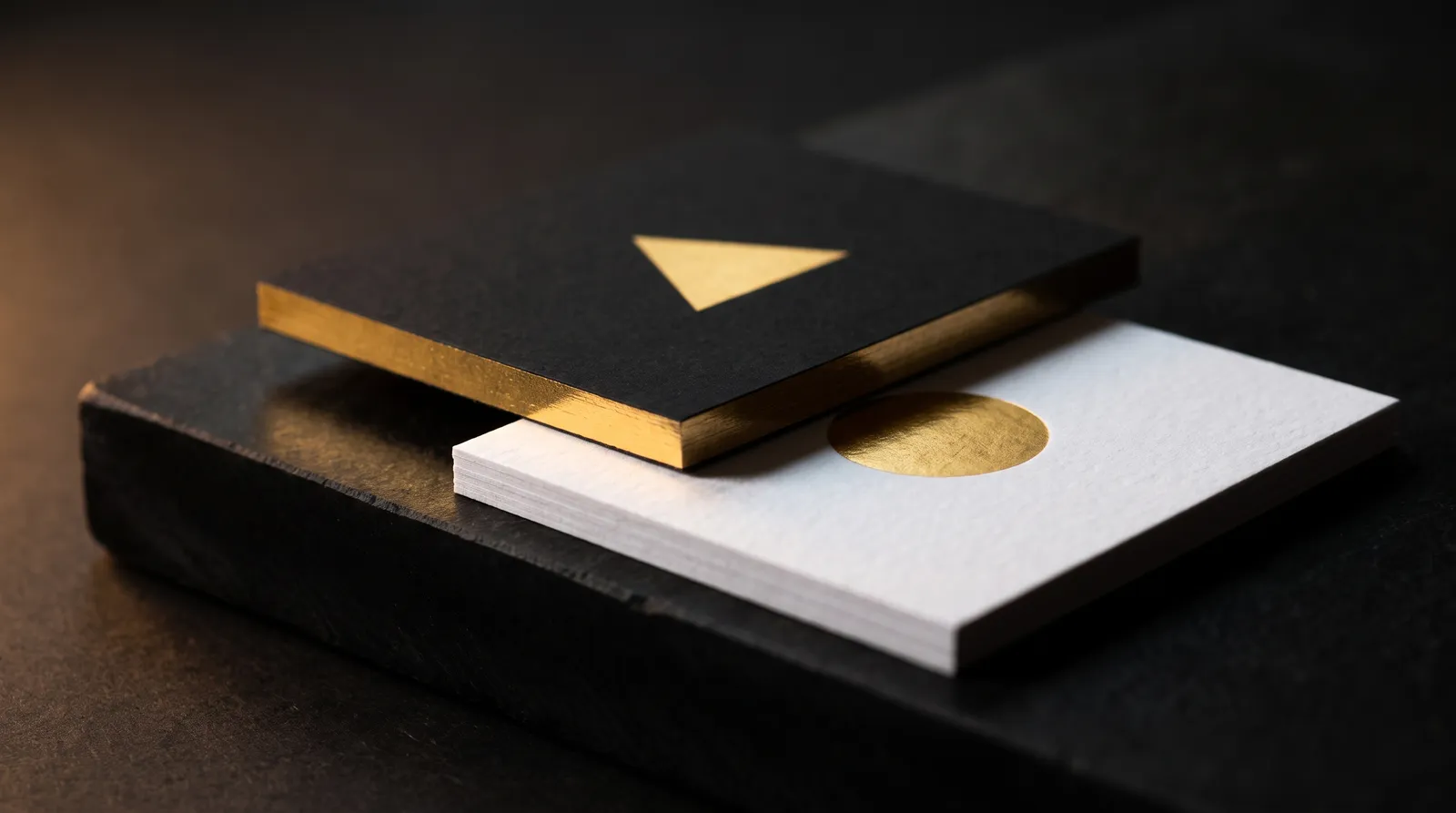
Yes. Each side needs its own die and press pass, which is why the second side adds to the price on both Custom hot foil and raised foil; the configurator shows the exact amount. On thick cards it's straightforward. If both sides carry heavy foil coverage or an impression, we bond two sheets so one side doesn't press through to the other.
How small can foil detail go?
Fine detail survives foil: lines hold down to 0.1 mm. We design to 0.15 mm for the crispest strike and keep internal gaps around 0.25 mm. Foil type stays at 7 pt or larger, 10 pt reversed; only detail below the floor needs a local adjustment.
Can a gradient or shaded logo be foil stamped?
No. Foil is one solid tone per die, so a gradient stamps as one flat colour. We rebuild the mark as solid shapes before the die is cut. If the shading matters, we print it in ink and keep the foil for a solid element, or split the design across two foil colours that sit side by side.
Can I put a QR code in gold foil?
No. Foil glares in a phone camera and its edges spread enough to blur the code. We print every QR code in flat dark ink on a light ground, at least 2 cm across, keep foil at least 1 mm away from it, and scan it at proof.
How long do foil business cards take?
Raised, holographic and flat foil (Standard) ship in 3–4 business days after you approve the proof, and die-stamped Custom hot foil takes about 3 weeks, plus transit. These are estimates, not delivery guarantees. If you have a date, tell us when you order and we'll say honestly which line can make it.
Is metallic ink the same as foil?
No. Business cards with metallic print use ink with metallic pigment, which gives a soft satin shimmer, and on cotton it dulls further. For a metallic finish with real reflection, you want foil: a metallised film that throws light like a mirror (or like brushed metal, with matte foil) and changes as the card moves. If you want shine you can see across a table, it's foil.
How much should I pay for 500 foil business cards?
With us, 500 cards cost 190 US$ in raised foil on soft touch, 210 US$ in flat foil on silk, or 410 US$ die-stamped on 32pt cotton. The difference is the stock and the process: cotton and a real die cost more, and you can feel why.