New: Peppermint Studio — Try it →
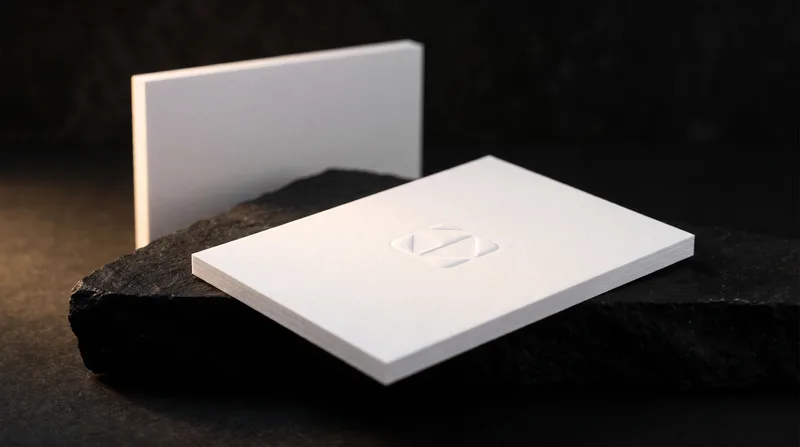
    Minimalist business card in thick white cotton with a single blind-embossed mark, lit by raking light on black stone

    Design exploration

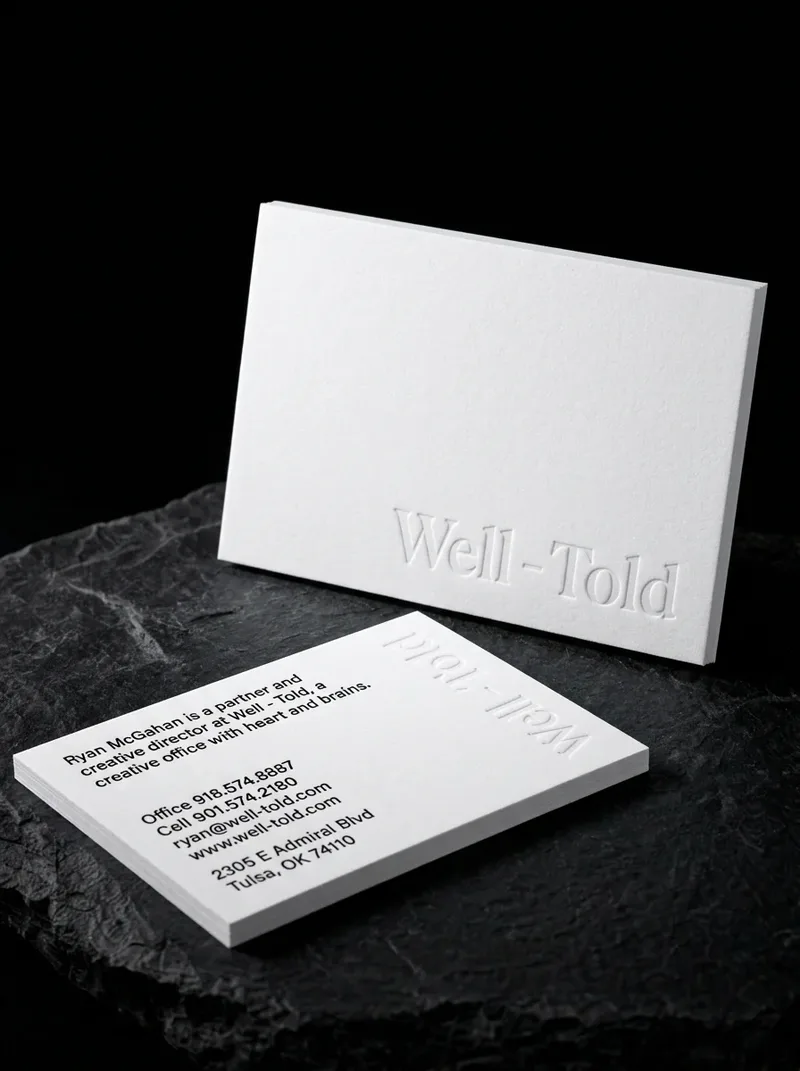
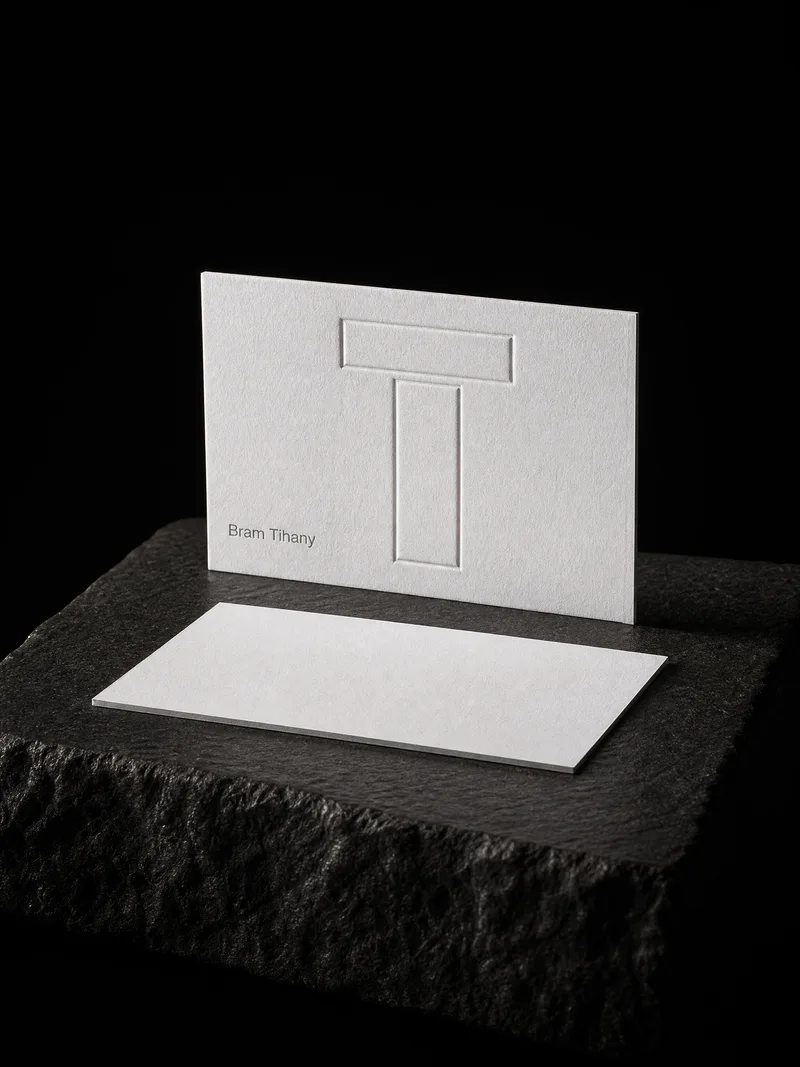
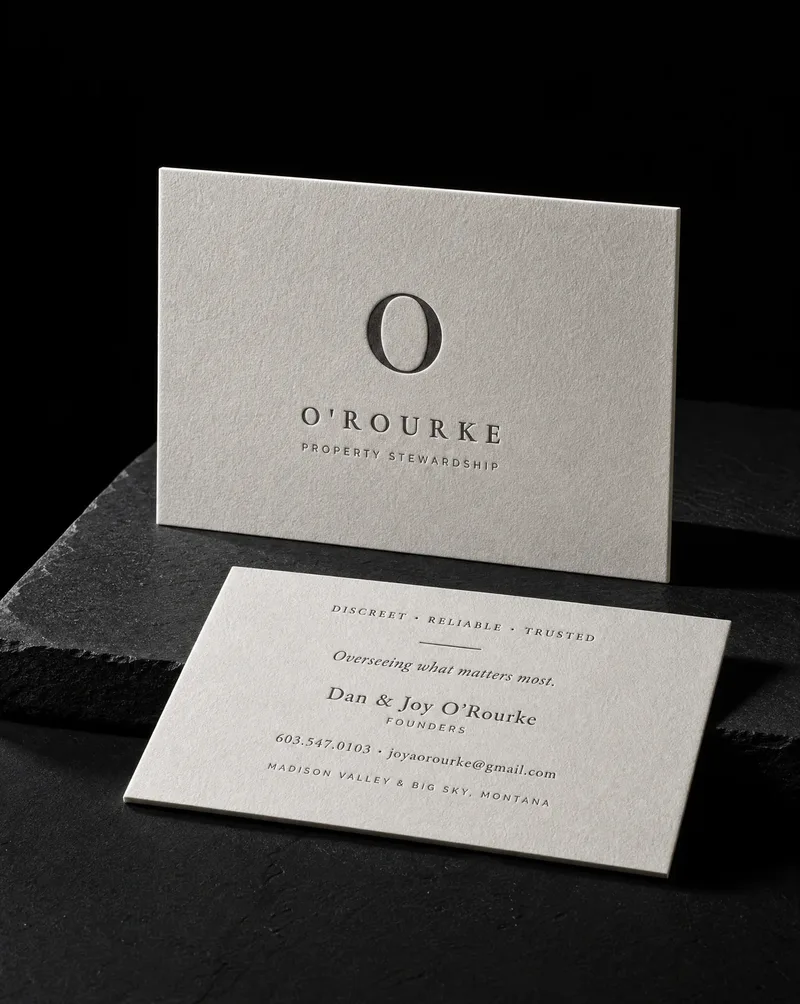
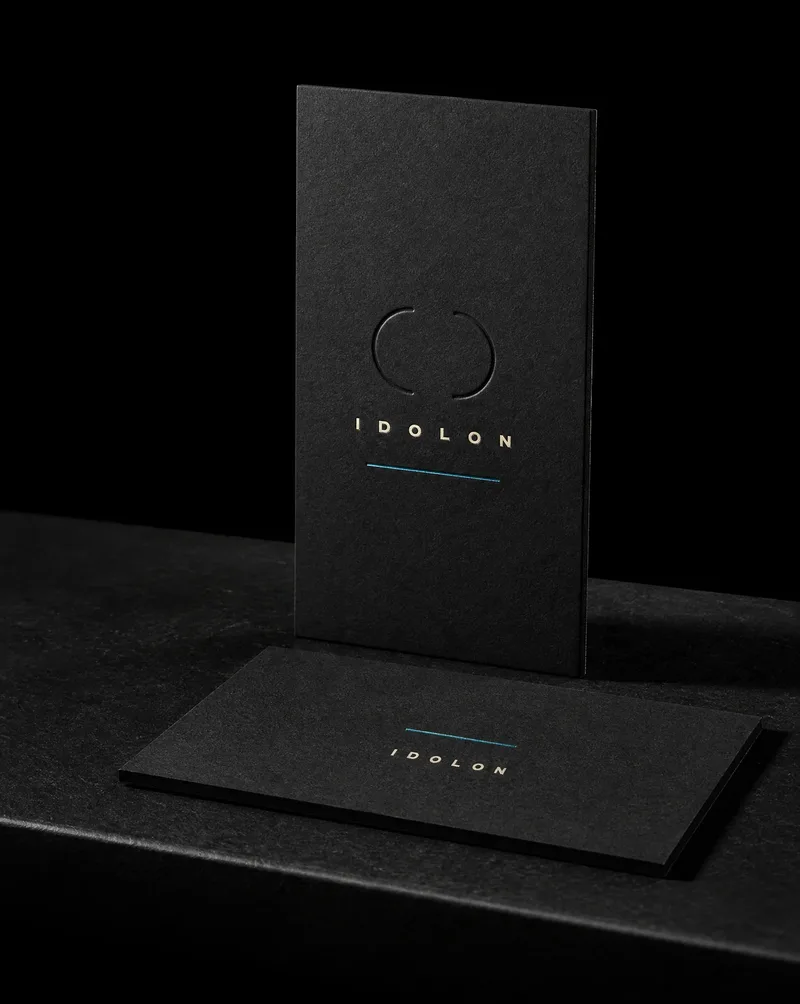
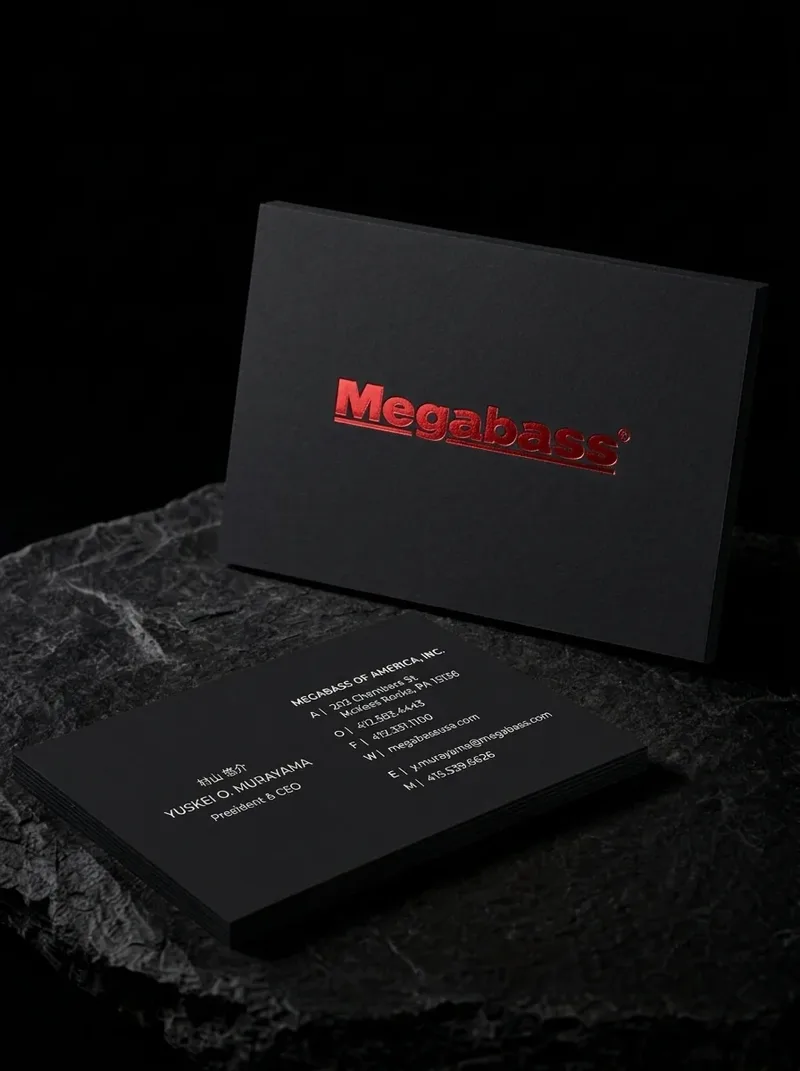
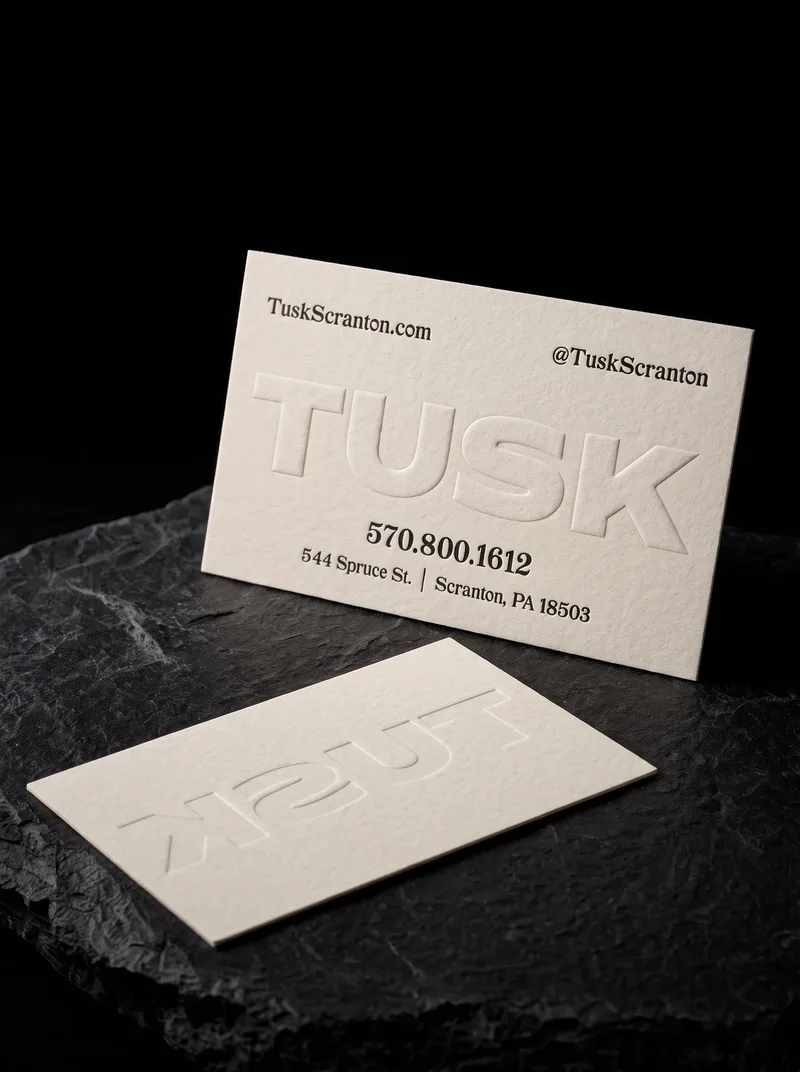
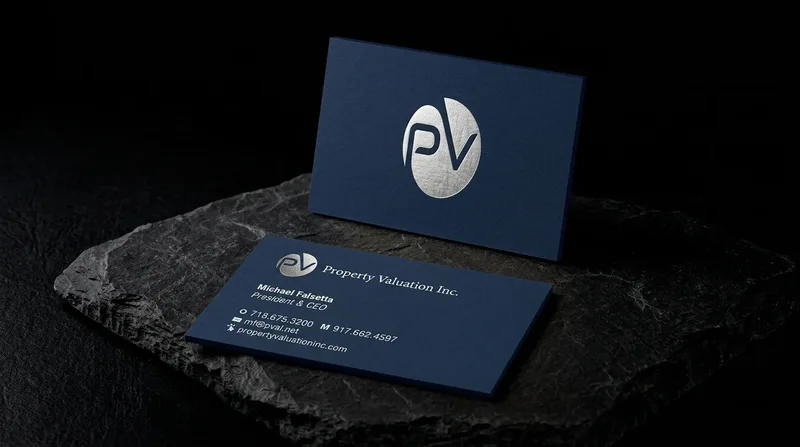
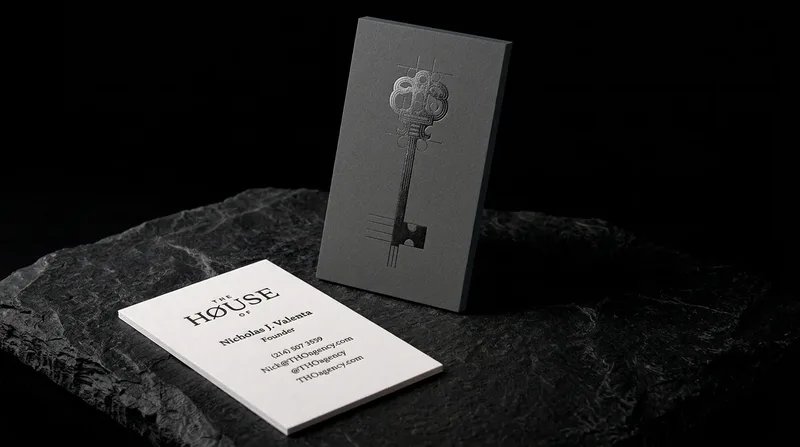
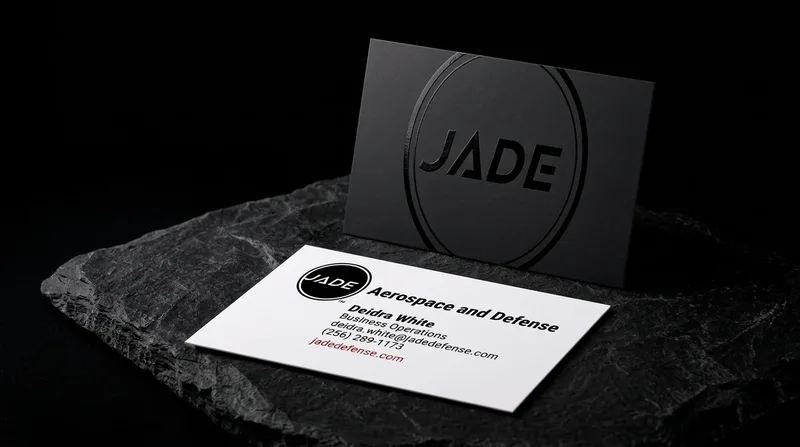
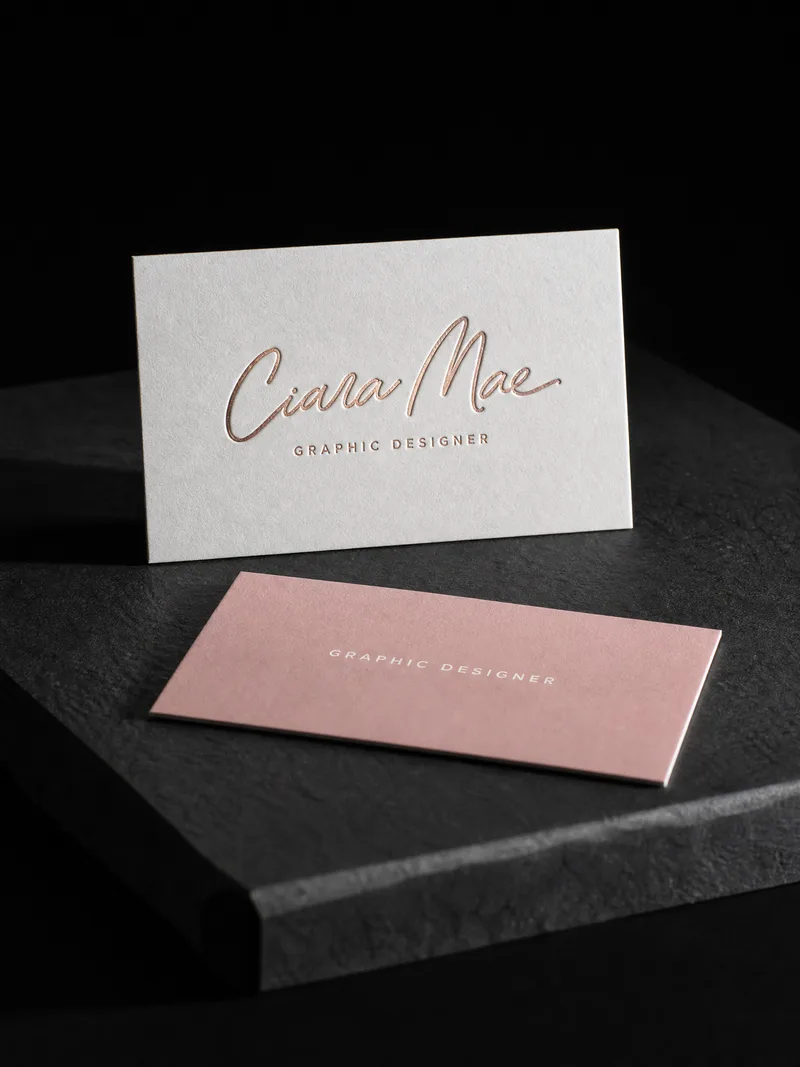
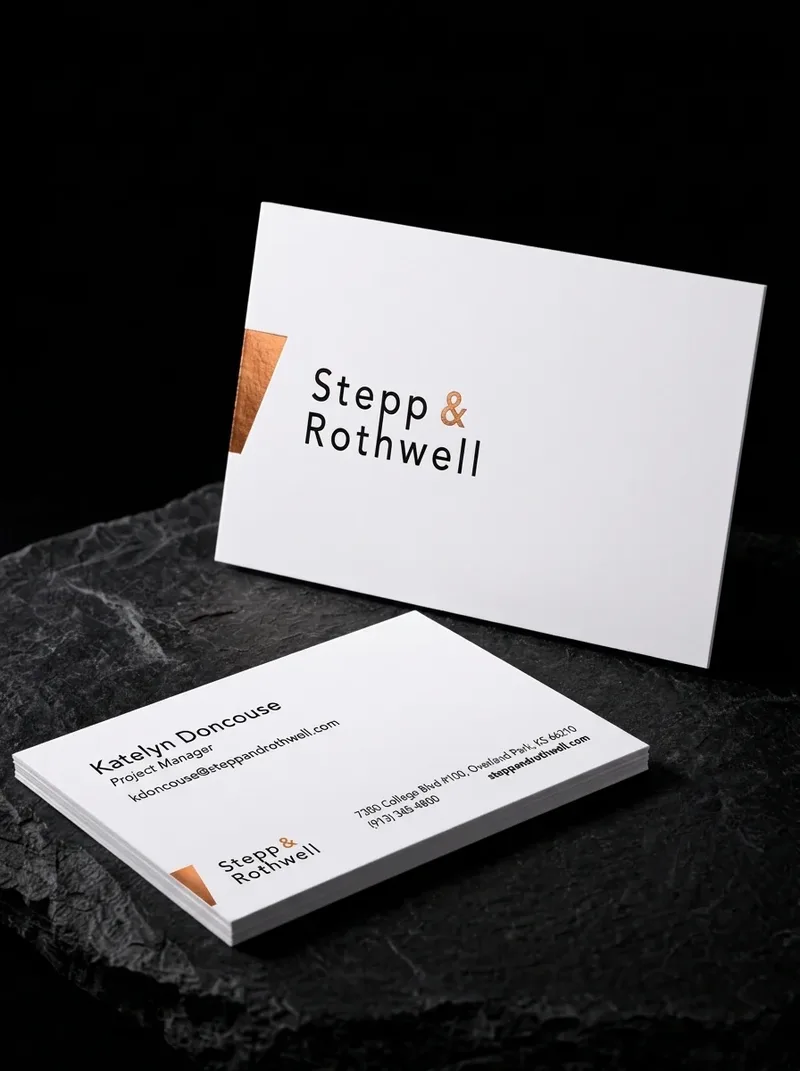
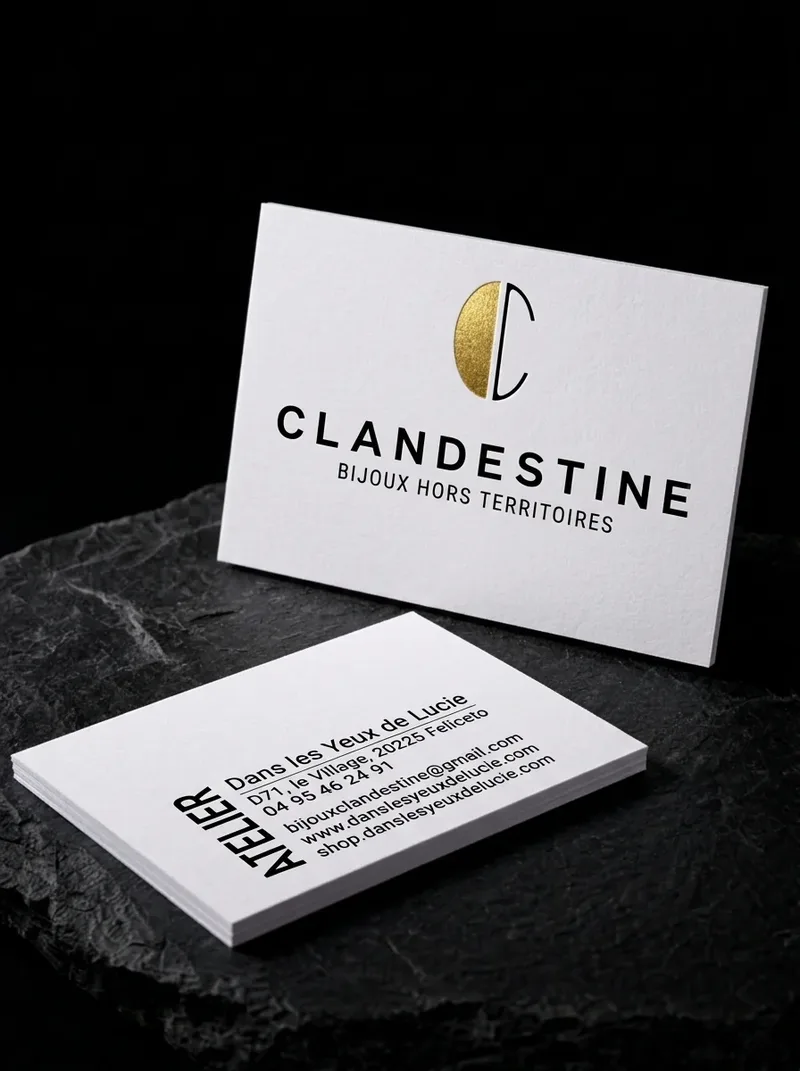
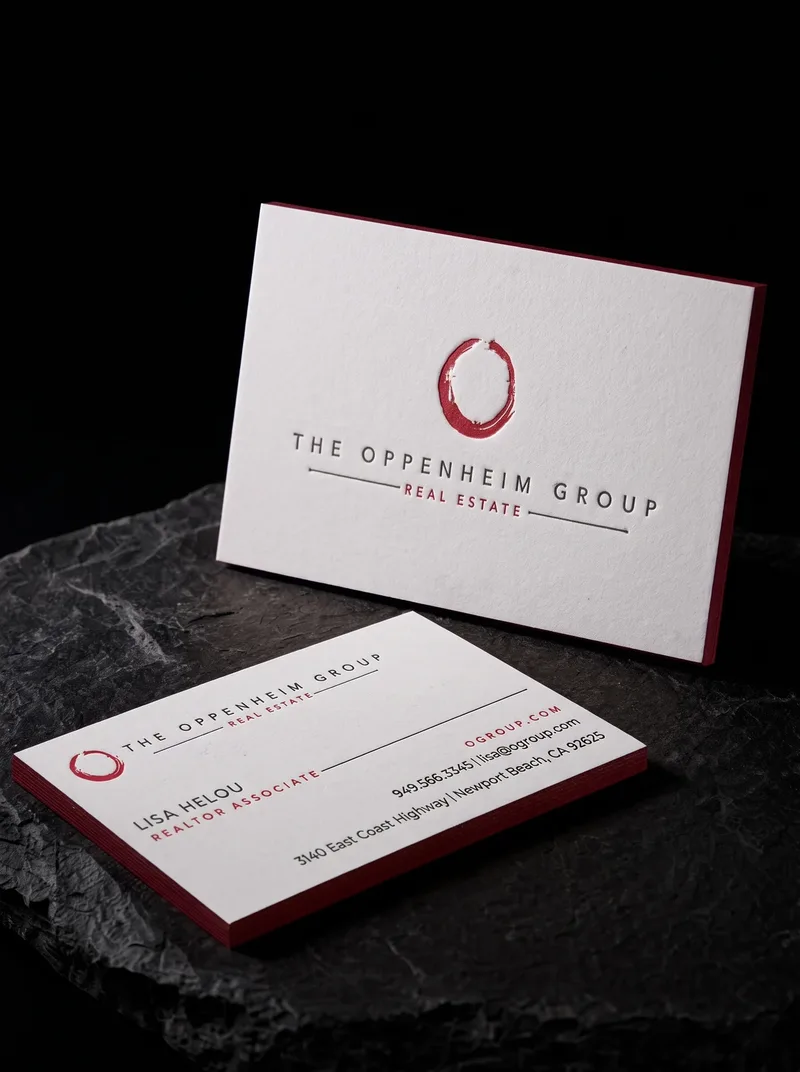
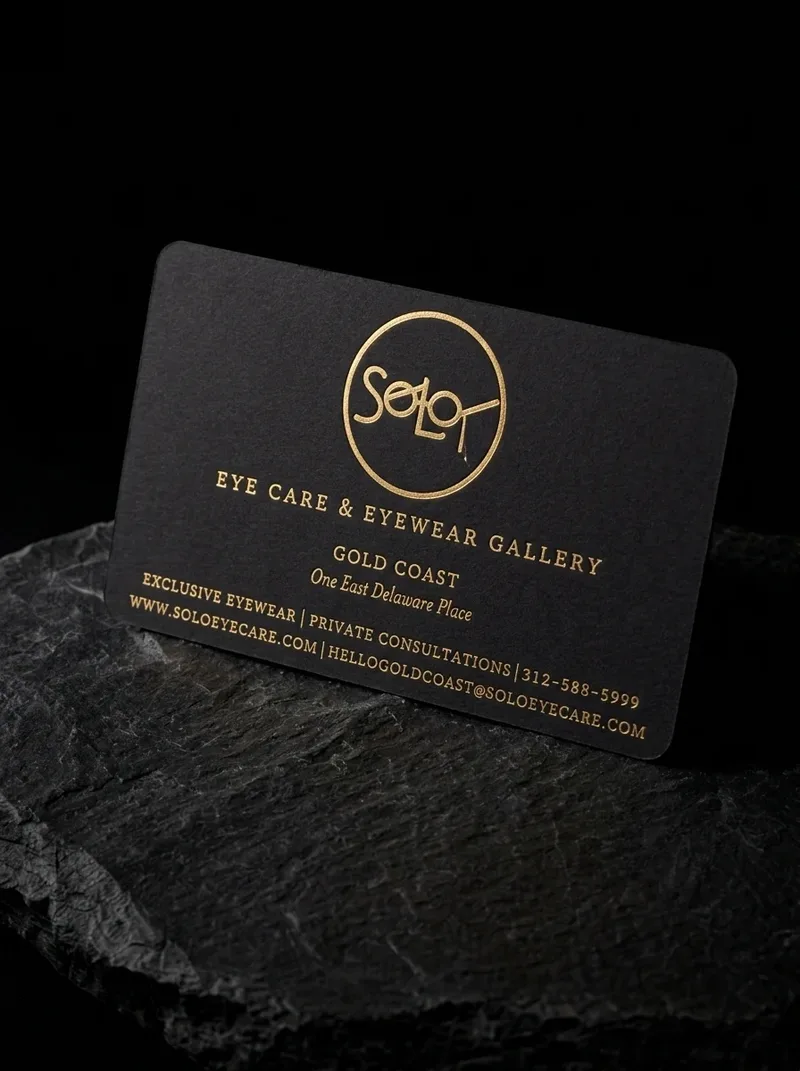
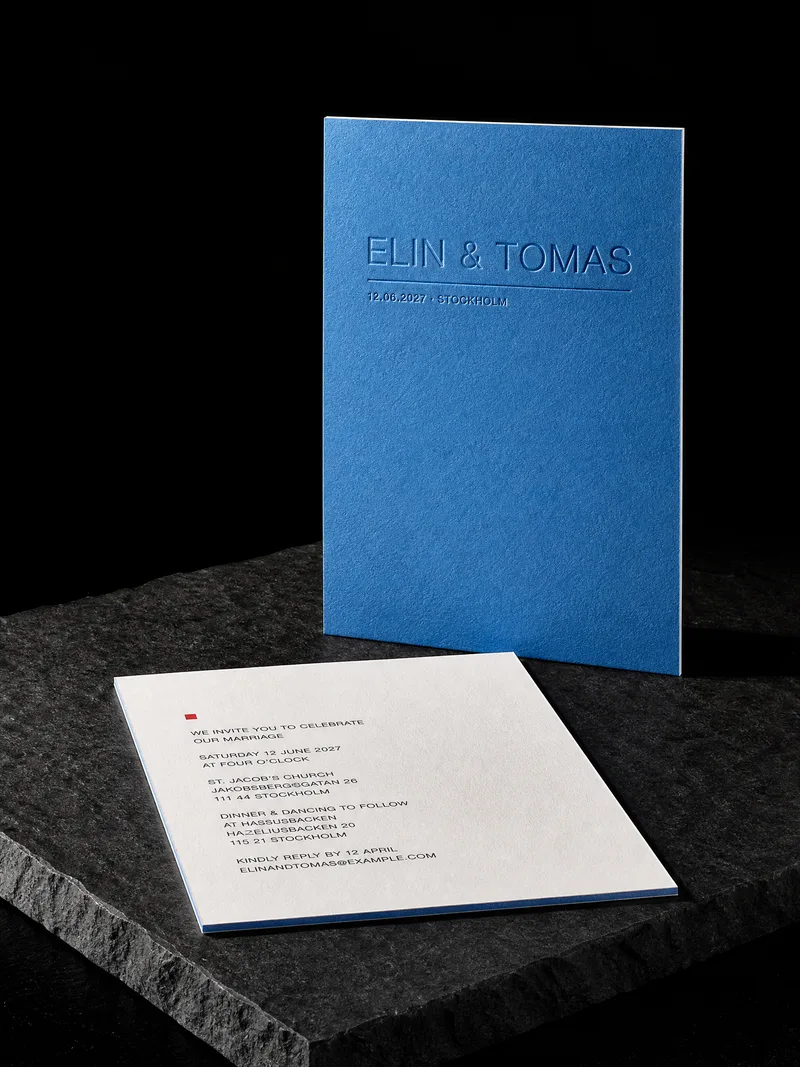
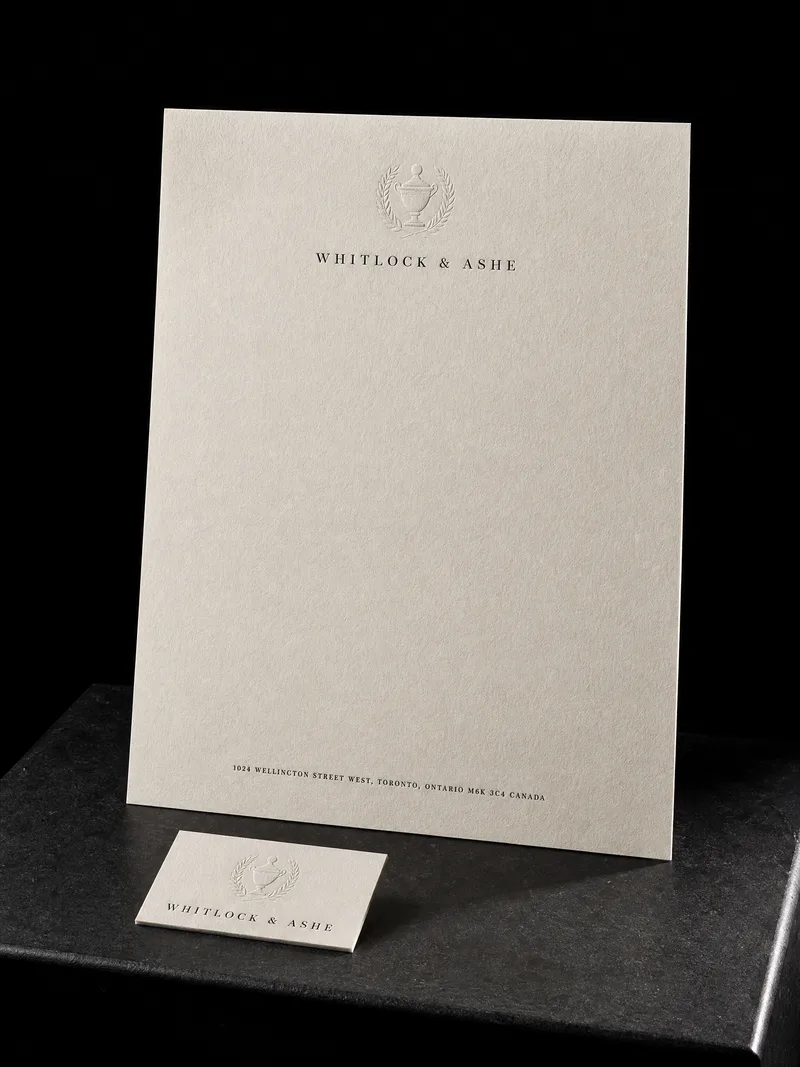
    Minimalist business card with the agency name blind embossed on a blank white cotton faceArchitect's minimalist business card with a two-level embossed T monogram on thick white cottonOne-colour letterpress business card in warm black on duplexed cottonBlack business card with a blind-debossed mark and metallic cyan foil, no printed inkBlack minimalist business card with a single red foil wordmark

    Design ideas · Business cards

    Minimalist Business Cards

    Less ink, more impact. A minimal card lets the paper and the press do the talking.

    A minimalist business card carries one idea per side: usually a mark or name on the front and the details on the back, with nothing decorative. The effect comes from the paper and the process: blind emboss, one-ink letterpress on cotton, or a single foil mark. Ours start at 52 US$ for 100, proofed by a person.

    Soft-touch from 113 US$ for 100 · letterpress on cotton from 340 US$ for 250

    Soft-touch ships in 3–4 business days; letterpress and emboss take about 3 weeks. Both after you approve your proof (estimates).

    Talk to our teamSee the work ↓

    The quietest build
    Blind emboss on cotton, no ink, from 350 US$ for 250
    Our pick
    One-colour letterpress on 48pt cotton (32pt also available), from 340 US$ for 250
    Fastest
    Soft-touch, one dark ink, from 113 US$ for 100, ships in 3–4 business days
    Paper
    Cotton in bright white, natural white or ivory; soft-touch; dyed-through black
    Thickness
    16pt, 32pt or 48pt (a credit card is about 30pt)
    Proof
    Free digital proof, checked by a person

    Three ways to build a minimalist card

    We'd price the most tactile version first and scale back from there. All three keep the design to one idea a side; what changes is how much the paper does.

    Full production: the impression

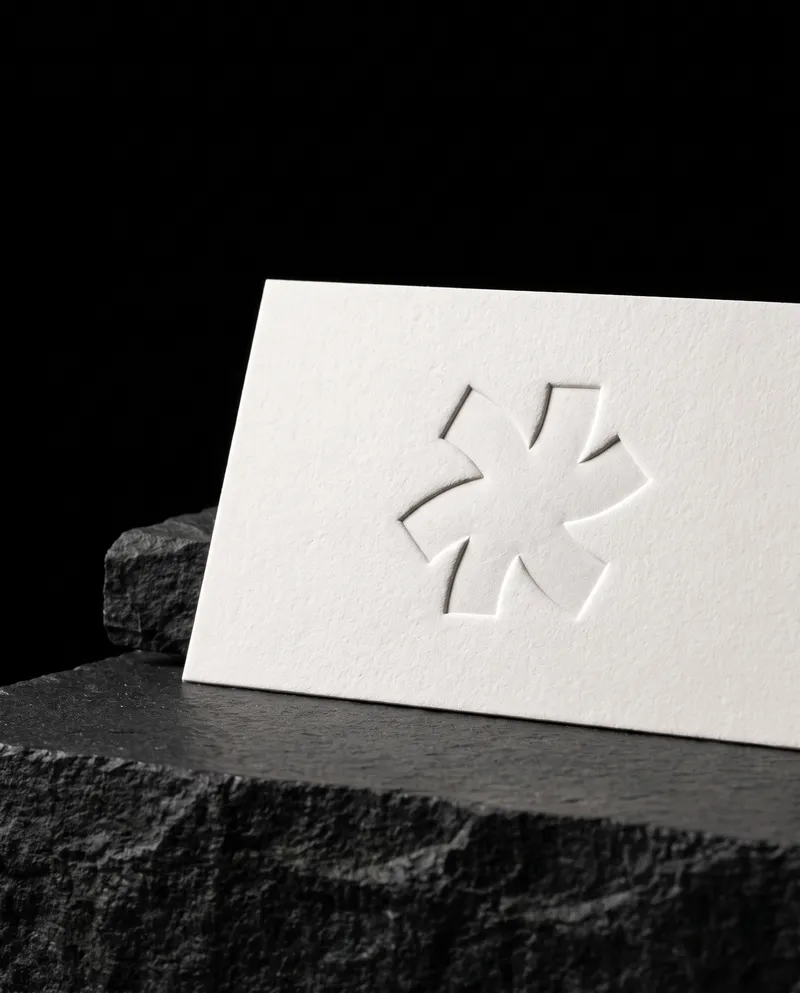
    Blind deboss asterisk pressed into white cotton under grazing light

    No ink on the front at all. Your mark is pressed into thick cotton and shows only as light and shadow.

    From 350 US$ for 250 · 48pt, a letterpress back or a painted edge: Get a price

    About 3 weeks after proof approval

    Build a blind emboss card

    Our pick: one-colour letterpress on cotton

    One-colour letterpress business card in warm black on duplexed cotton

    One ink, pressed into soft cotton so every line has a bite you can feel. The best value for a card that has to feel considered.

    From 340 US$ for 250 on 48pt cotton (32pt also available) · add a painted edge for 40 US$

    About 3 weeks after proof approval

    Start your letterpress card

    Printing both sides? We bond two sheets so neither impression shows through; your quote shows whether that adds cost.

    Essential: soft-touch, one dark ink

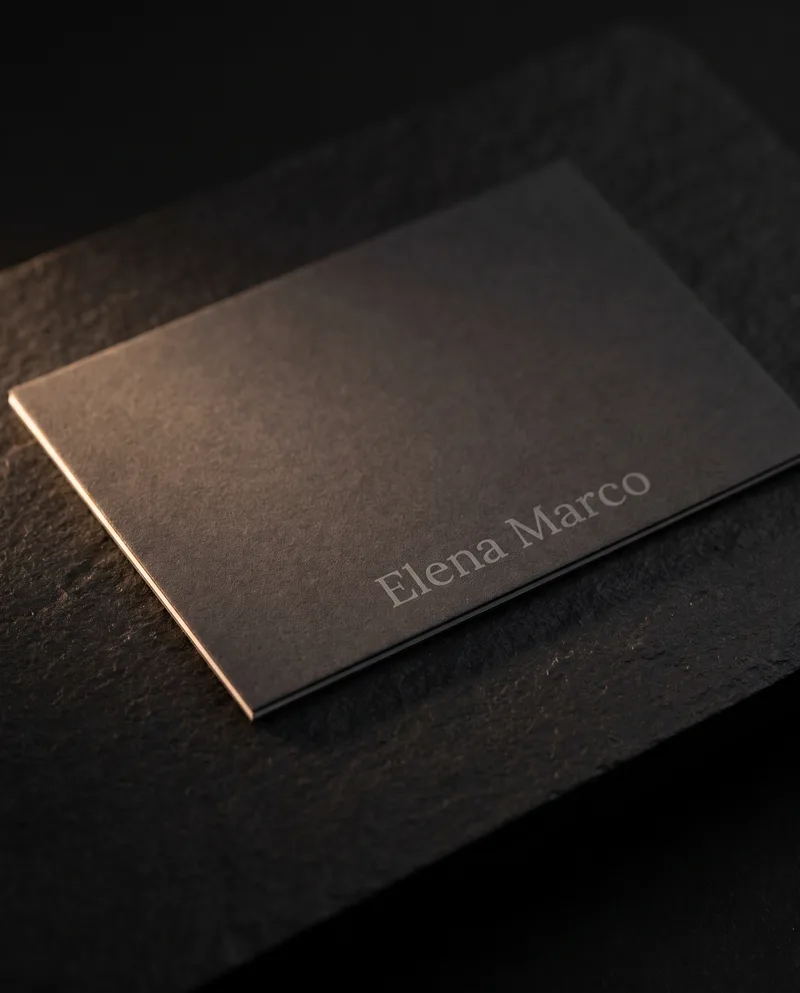
    Charcoal soft-touch business card with small grey printed name, flat print, on black stone

    A velvety laminated card in one dark colour. Flat, quiet, and the fastest minimal card we make.

    From 113 US$ for 100

    Ships in 3–4 business days after proof approval

    Order soft-touch cards
    "A minimal card has nowhere to hide. If the paper is thin, everyone notices."
    Austin Terrill, founder

    Minimalist business card layout: five rules we print by

    Minimal business card design starts with the paper, then the layout. These are the rules our designers check at proof.

    1. One idea per side. The front carries the mark or the name. The back carries everything you need to reach someone. Never split the details across both.
    2. Let the material make the contrast. White cotton against a black mark, a navy sheet against one silver foil. On a minimal card the paper colour is half the design, so choose it before you choose the font.
    3. Size type for the process, not the screen. Foil holds type from 7 pt and lines down to 0.1 mm; we design to 0.15 mm. Letterpress holds 7 pt. Emboss needs strokes of 0.5 mm and type of at least 10 pt, because it reads only by its shadow. A sleek business card design with hairline type looks perfect on screen and often disappears in print.
    4. One colour, or none. Pick one Pantone and use it everywhere it appears. Every extra ink or foil is another plate and another pass, which is also why one colour costs less.
    5. Keep away from the edges. Leave at least 3 mm inside the trim. A thin border close to the edge shows every fraction of a millimetre of cutting drift and makes a calm card look crooked.

    Minimum line weight and type size

    Why a minimalist card isn't a boring business card

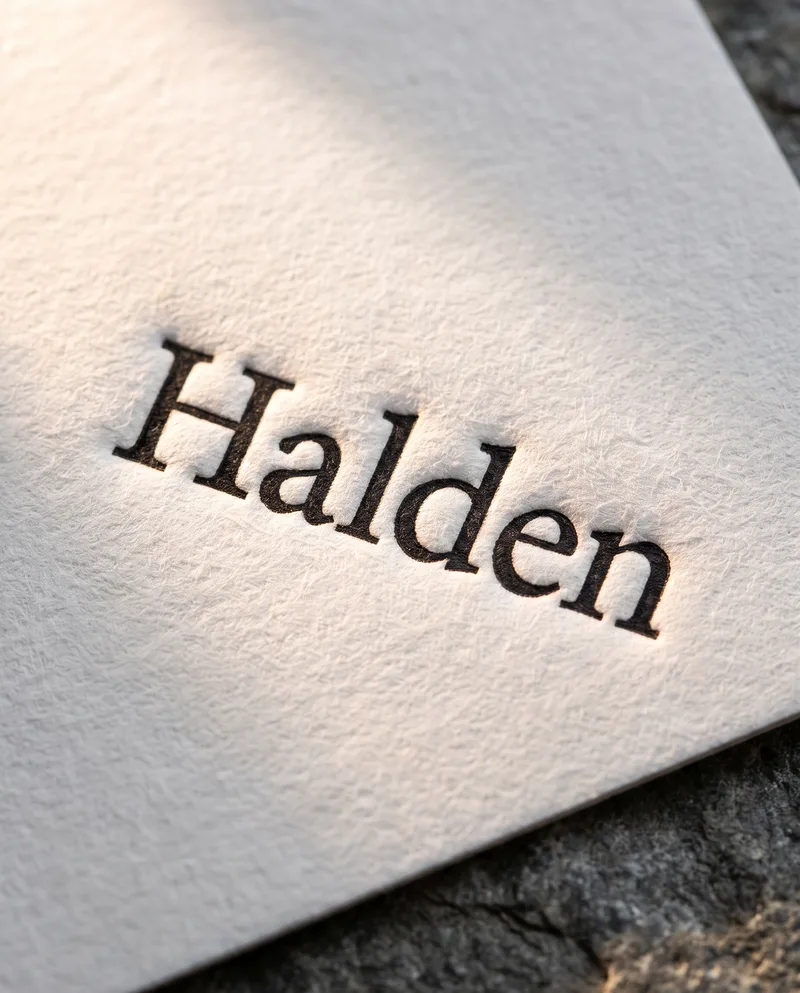
    Macro of black letterpress serif type pressed into soft white cotton paper, warm raking light

    A boring business card is a thin, glossy rectangle with everything crammed on one side. A minimalist one takes things away so the rest gets noticed: the weight of the paper, a mark you can feel, one colour that matches your brand exactly.

    The difference is all in production. Strip the design back on a 14pt digital card and you get an empty card. Strip it back on 32pt cotton with a pressed mark and you get the card people run their thumb across.

    What a minimalist card feels like

    Pick up a 32pt cotton card and it's about as thick as a credit card, but soft at the edges rather than sharp, and warmer in the hand. Run your thumb across a letterpress line and you feel a shallow groove where the ink was pushed in. A blind emboss rises under your fingertip; tilt the card and its shadow moves. Soft-touch is smoother, almost like suede.

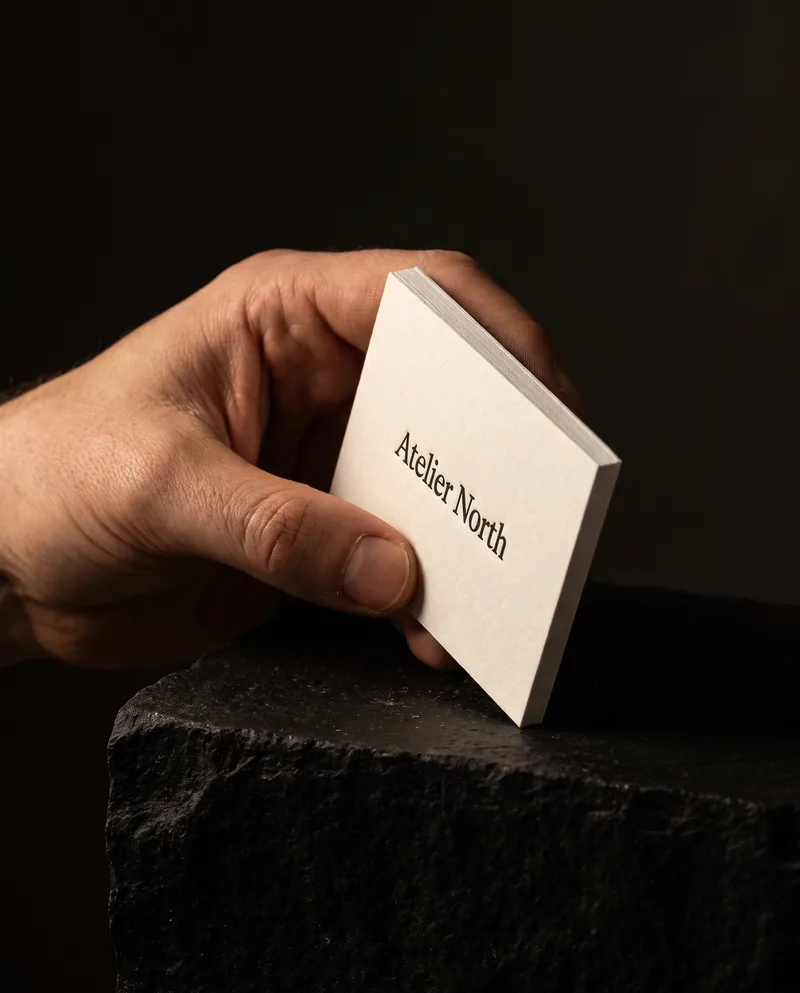
    Hand holding a thick natural white cotton business card with black letterpress name, dark studio

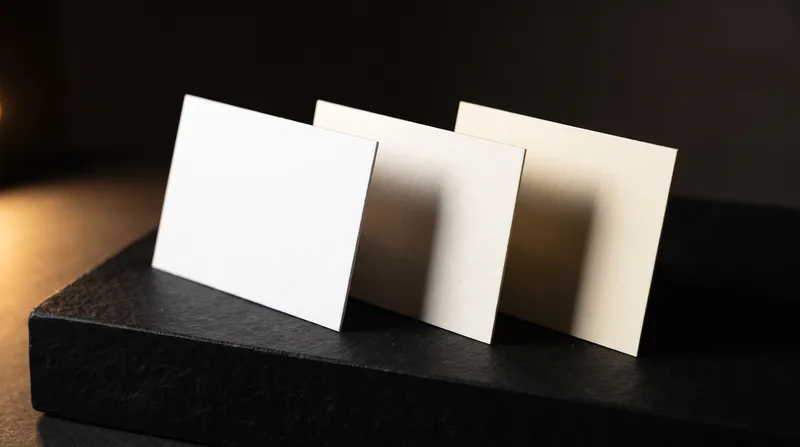
    Cotton comes in bright white, natural white (slightly warm, the raw fibre) and ivory. Many people call the warmer two "beige". Same texture; it's a brand-feeling choice.

    Three cotton business card stocks side by side: bright white, then natural white and ivory, the warm shades people choose for beige business cards

    The three things that ruin a minimal card

    We'll tell you when a detail won't survive the press, before you've paid for it.

    1. Hairlines that vanish.

      Fine detail survives foil: we design to 0.15 mm and adjust only lines under 0.1 mm; embossed strokes under 0.5 mm don't cast a shadow.

      Our fix: we measure at printed size, preserve the mark, and agree any below-floor adjustment at proof.

    2. A blind mark nobody can see.

      A blind impression on black or dark paper is very quiet; it reads only when the light rakes across it. That's lovely for a mark, and a problem for a name someone needs to read.

      Our fix: if it has to be read, we add foil inside the impression, or move it to a light sheet.

    3. The ghost on the back.

      Emboss or deep letterpress on a single sheet leaves a mirror image on the reverse, right where your contact details go.

      Our fix: we bond two sheets (duplex) when both sides carry something, or keep the back clear behind the mark.

    And if you're picturing white ink on black cotton: ink sinks into dark uncoated paper. We use white pigment foil instead, which stays opaque.

    How proofing works

    The processes behind minimalist cards

    White cotton letterpress business card with a thin red painted edge

    Letterpress

    An inked plate pressed into soft cotton, pushing the ink below the surface with a soft edge. One colour costs least; each extra colour is a new plate and a new pass. It's beautiful on type and fine lines, and splotchy on big solid areas, so keep large fields of colour for foil or the paper itself.

    letterpress business cards

    Blind deboss asterisk pressed into white cotton under grazing light

    Blind emboss and deboss

    The paper is pressed between two metal dies. Emboss raises the mark; deboss sinks it. "Blind" means no ink or foil, just shape and shadow. Strokes need 0.5 mm and type 10 pt to read. On a single sheet the back carries a mirror of the shape. See also blind deboss letterpress cards.

    embossed business cards

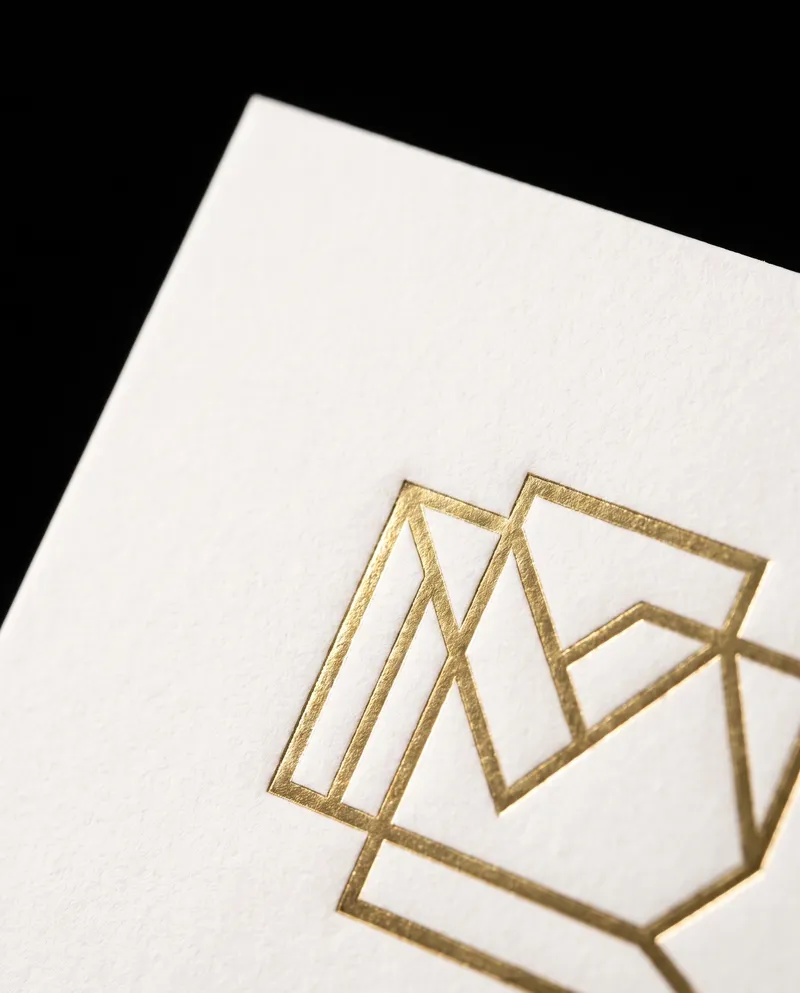
    Gold foil geometric monogram on a white cotton business card

    A single foil mark

    A metal or pigment film pressed on with heat and a die. One small mark in foil reads as more considered than a card covered in it. Matte foils glare less than mirror foils at reading angles. A gradient in your artwork becomes one solid tone.

    foil business cards

    Charcoal soft-touch business card with small grey printed name, flat print, on black stone

    Soft-touch

    A velvety matte laminate over the printed card. It mutes colour slightly and feels like suede. It can't be embossed or letterpressed (the film is too stiff), but it takes foil and raised clear gloss well.

    soft touch business cards

    Matte

    Smooth, no shine, our least expensive card, from 52 US$ for 100. Fine for a minimal layout when the budget is tight; it won't give you the weight or the texture of cotton.

    matte business cards

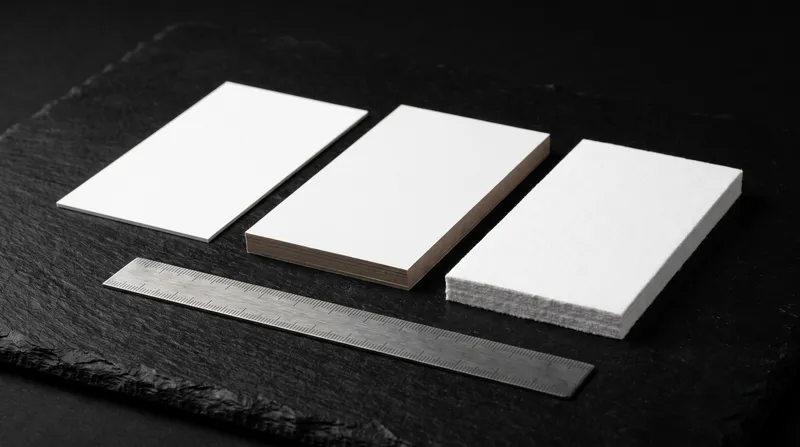
    14pt, 32pt and 48pt business cards side by side against a steel ruler

    Thick stock and painted edges

    32pt is about the thickness of a credit card and where a minimal card starts to feel deliberate; 48pt is dramatic. A painted edge adds one line of colour around the card, the only decoration some minimal cards need. See painted edge business cards.

    thick business cards

    See it on your design

    Upload your logo and see it pressed, debossed or foiled on cotton in minutes. It's a concept, not a proof: a person rebuilds your file and checks every stroke before anything is made.

    Upload your logo
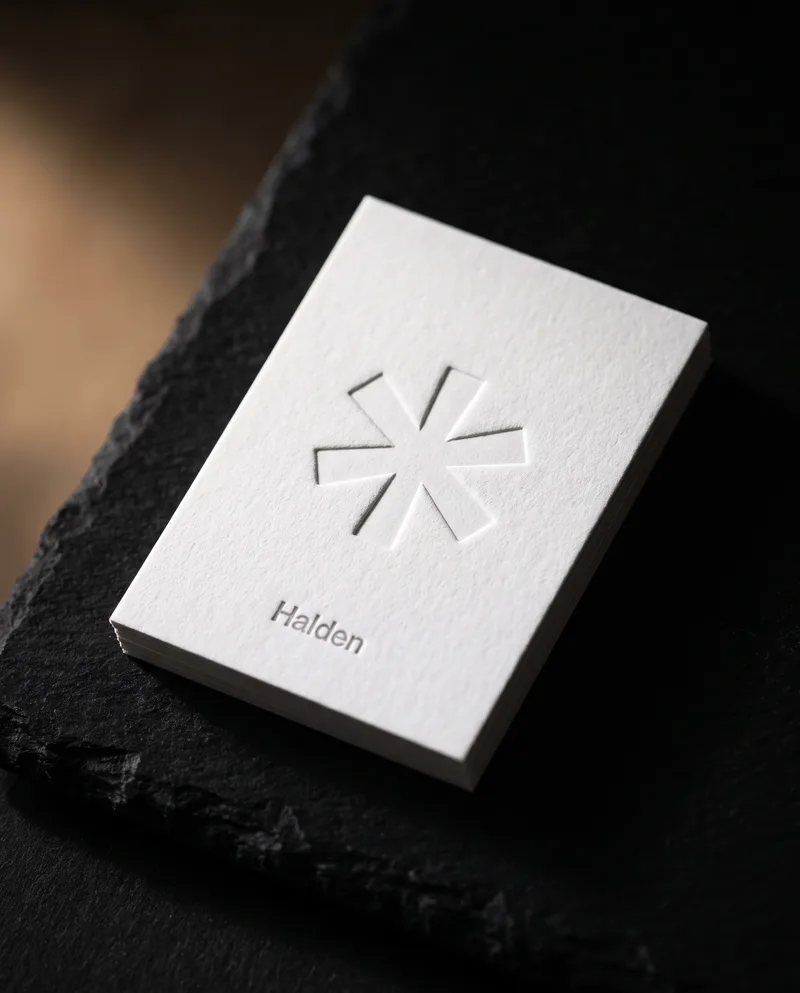
    Thick white cotton business card with blind-debossed asterisk and small grey letterpress name

    Design exploration

    "Halden"

    Blind deboss asterisk on 48pt white cotton, name in grey letterpress.

    Make one like this

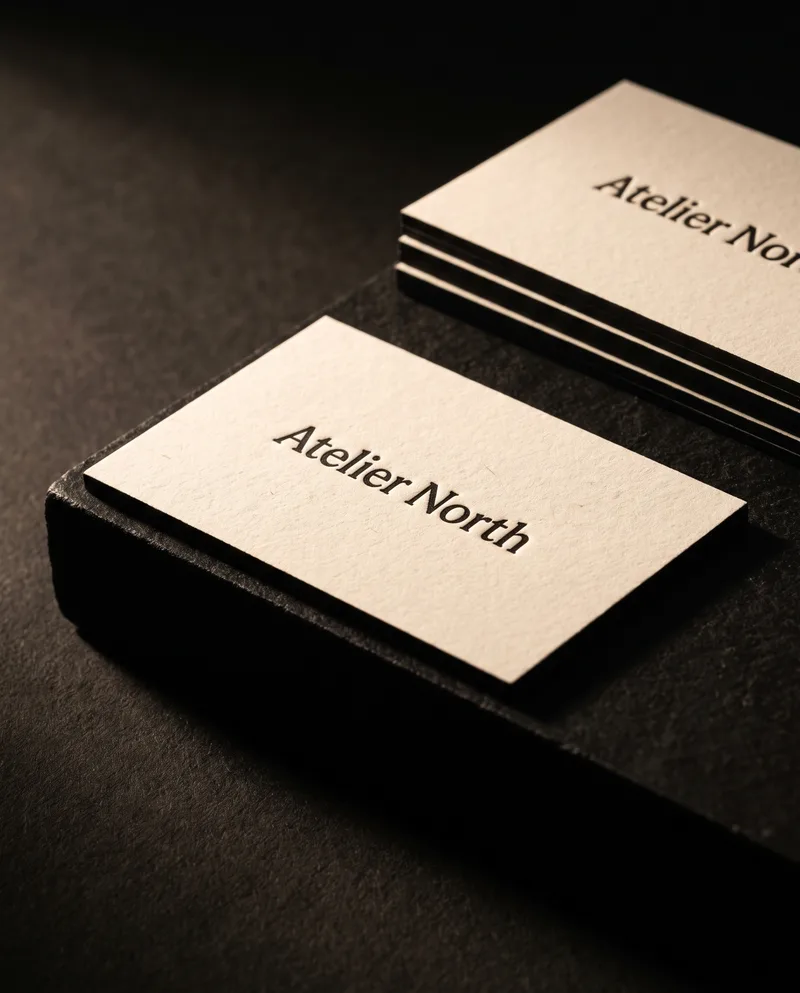
    Natural white cotton business cards with black letterpress name and black painted edges, stacked

    Design exploration

    "Atelier North"

    One-ink black letterpress on natural white cotton, painted black edge.

    Make one like this

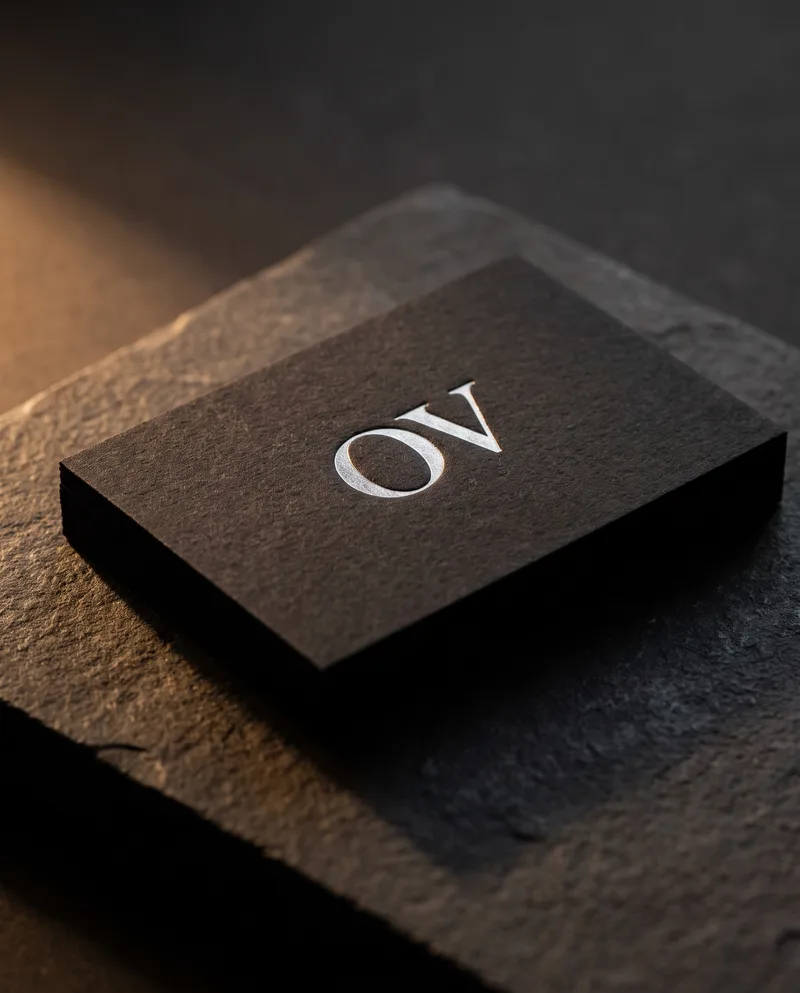
    Black dyed-through cotton business card with matte silver foil OV monogram on black stone

    Design exploration

    "Ostrander & Vale"

    Dyed-through black cotton, single matte silver foil monogram.

    Make one like this

    How much do minimalist business cards cost?

    Prices checked 1 October 2026. Free digital proof and free shipping within the continental US included. Prices read live from each product.
    Build250 cardsLead timeOrder
    Matte, one ink58 US$3–4 business daysOrder
    Soft-touch, one ink121 US$3–4 business daysOrder
    32pt thick, one inkGet a price~3 weeksAsk in the Studio
    One-colour letterpress, 48pt cotton (32pt also available)340 US$~3 weeksOrder
    … plus a painted edge+ 40 US$~3 weeksOrder
    One foil mark, 32pt cottonGet a price~3 weeksAsk in the Studio
    Blind emboss, cotton350 US$~3 weeksOrder
    48pt, multi-level emboss, duplexGet a price~3 weeksAsk in the Studio

    Minimal costs more than you'd think for how little is on it, and here's why: letterpress and emboss pay for plates, dies and press setup before the first good card comes off. After that each card is cheap, so 500 often costs far less per card than 250.

    Get a price in the StudioOrder the sample pack

    Which minimalist finish is right for you?

    What you seeWhat you feelFrom (250)Lead timeBest forWatch out for
    Blind emboss on cottonA mark in light and shadowRaised shape under the fingertip350 US$~3 weeksDesigners, architects, studiosBarely reads on black; mirror on the back of single-ply
    One-ink letterpressCrisp ink sitting slightly below the surfaceA groove along every line340 US$~3 weeksMost minimal cards (our pick)Big solid areas mottle; light ink won't show on dark paper
    One foil markA single flash of metalSmooth, with a slight bite on cottonGet a price~3 weeksA logo that should catch lightLines under 0.1 mm break; gradients go flat
    Soft-touch, one inkFlat, muted colourVelvety121 US$3–4 business daysFast, tidy, affordableNo emboss or letterpress on laminate
    Matte, one inkFlat colourOrdinary paper58 US$3–4 business daysThe tightest budgetIt's thin; the minimal look can read as plain

    Modern minimalist business cards: tone-on-tone gloss and black stock

    If your idea of modern simple business cards is darker and shinier, tone-on-tone is the move: a black logo in clear gloss on matte black that appears only at an angle, or a gunmetal foil on charcoal. These modern minimalist business cards sit between this page and our modern business cards.

    How we print your minimalist business cards

    1. 1

      Choose or brief.

      Pick a build above, or upload your logo in the Studio.

    2. 2

      Proof.

      A person checks every stroke at its printed size and sends a digital proof. Nothing prints until you approve it.

    3. 3

      Approve.

    4. 4

      Production.

      Soft-touch and matte ship in 3–4 business days; letterpress, emboss and foil on cotton take about 3 weeks; both after proof approval. These are estimates; if you have a date, tell us before you order.

    5. 5

      Ship.

      Free shipping within the continental US.

    If you're not happy, we reprint.

    How reprints work

    Feel the paper first.

    Order the sample pack (8 US$, 10 US$ credit on your first order).

    Talk to Austin.

    Austin, our founder, still takes the calls. He'll tell you honestly whether your card needs letterpress or whether soft-touch will do.

    Talk to our team

    Free proof.

    How proofing works

    Print Peppermint is a specialty print studio founded by Austin Terrill. It makes foil, letterpress, metal, plastic, NFC and cotton cards, wedding stationery and packaging, proofed by a person.

    Minimalist business card questions

    What is a minimalist business card?

    A card with one idea per side and nothing decorative: usually a logo or name on the front and contact details on the back, lots of empty space, and one colour or none. Because there's so little on it, the paper and the printing process carry the effect, which is why minimalist cards are often letterpressed or embossed on thick cotton.

    What should be on a minimalist business card?

    Your name or mark on the front. On the back: your name, role, one phone number, one email and your website. Leave out the slogan, the second phone number and the list of services. If people need more, the website has it.

    How much do minimalist business cards cost?

    Matte cards start at 52 US$ for 100 and soft-touch at 113 US$ for 100, both shipping in 3–4 business days after proof approval. One-colour letterpress on 48pt cotton (32pt also available) starts at 340 US$ for 250, and a blind emboss on cotton at 350 US$, both in about 3 weeks. Every order includes a free proof checked by a person.

    What is the best paper for minimalist business cards?

    Cotton, if the budget allows. It's soft enough to take a letterpress or emboss impression you can feel, and it comes in bright white, natural white and ivory. 32pt is the sweet spot; 48pt is dramatic, and it's our standard letterpress stock (32pt letterpress is also available). Soft-touch is the best faster option: velvety, but it can't be embossed.

    Can a business card have no ink at all?

    Yes. A blind emboss or deboss presses your mark into the paper with no ink or foil, so it shows only as light and shadow. Some of our clients run cards with nothing printed anywhere: impressions plus a single foil. It reads beautifully on white cotton and very quietly on black.

    How do you design a minimalist business card?

    Put one idea on each side, let the paper colour do the contrast, use one colour or none, keep text at least 3 mm inside the edge, and size type for the process: 7 pt or more for foil and letterpress, 10 pt for embossed type. Then choose the paper before the font.

    Is a minimalist business card too plain?

    Only if it's printed on thin, glossy stock. On a thin card, taking things away just leaves an empty card. On thick cotton with a pressed mark, the restraint is the point, and people notice the weight and texture before they read anything.

    Do minimalist business cards need to be thick?

    They don't need to be, but it helps more than any other upgrade. 16pt works with a single ink. 32pt (about as thick as a credit card) takes a deeper emboss or letterpress bite, and when it's built from two bonded sheets the impression doesn't show on the back.

    What's the difference between minimalist and modern business cards?

    Minimalist is about restraint: one idea, one colour, and the paper doing the work. Modern is about current finishes: raised gloss, tone-on-tone patterns, dark stocks, square shapes. They overlap in modern minimalist cards, such as a black card with a gloss logo you only see at an angle.

    How long do minimalist business cards take?

    Matte and soft-touch ship in 3–4 business days after proof approval. Letterpress, emboss and foil on cotton take about 3 weeks after proof approval, plus shipping time. These are estimates; tell us your date before you order and we'll say honestly whether it works.