Case study · Business cards · Peppermint sample card, 2020
Peppermint sample card, 2020 ↗The filter-tip business card
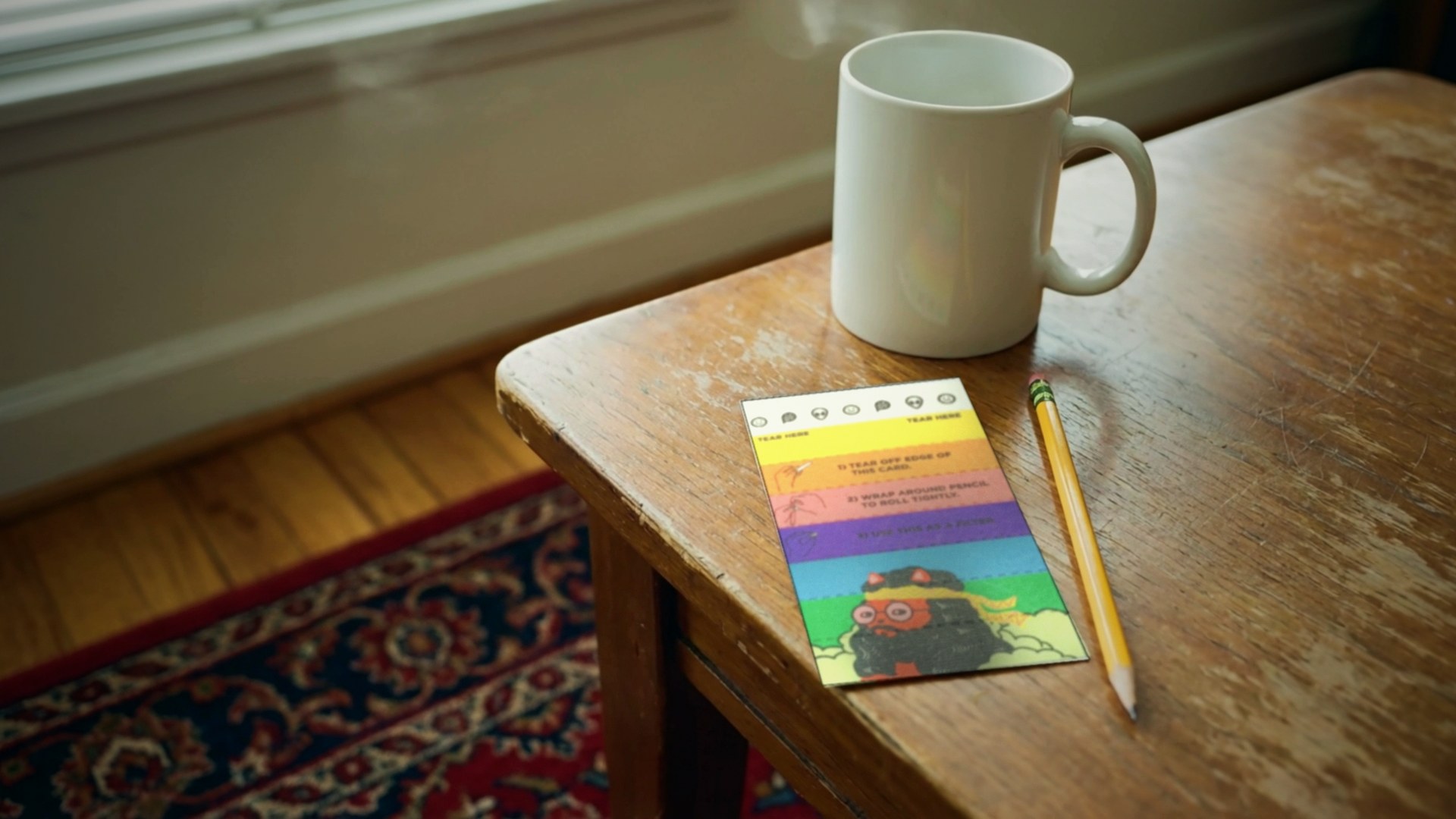
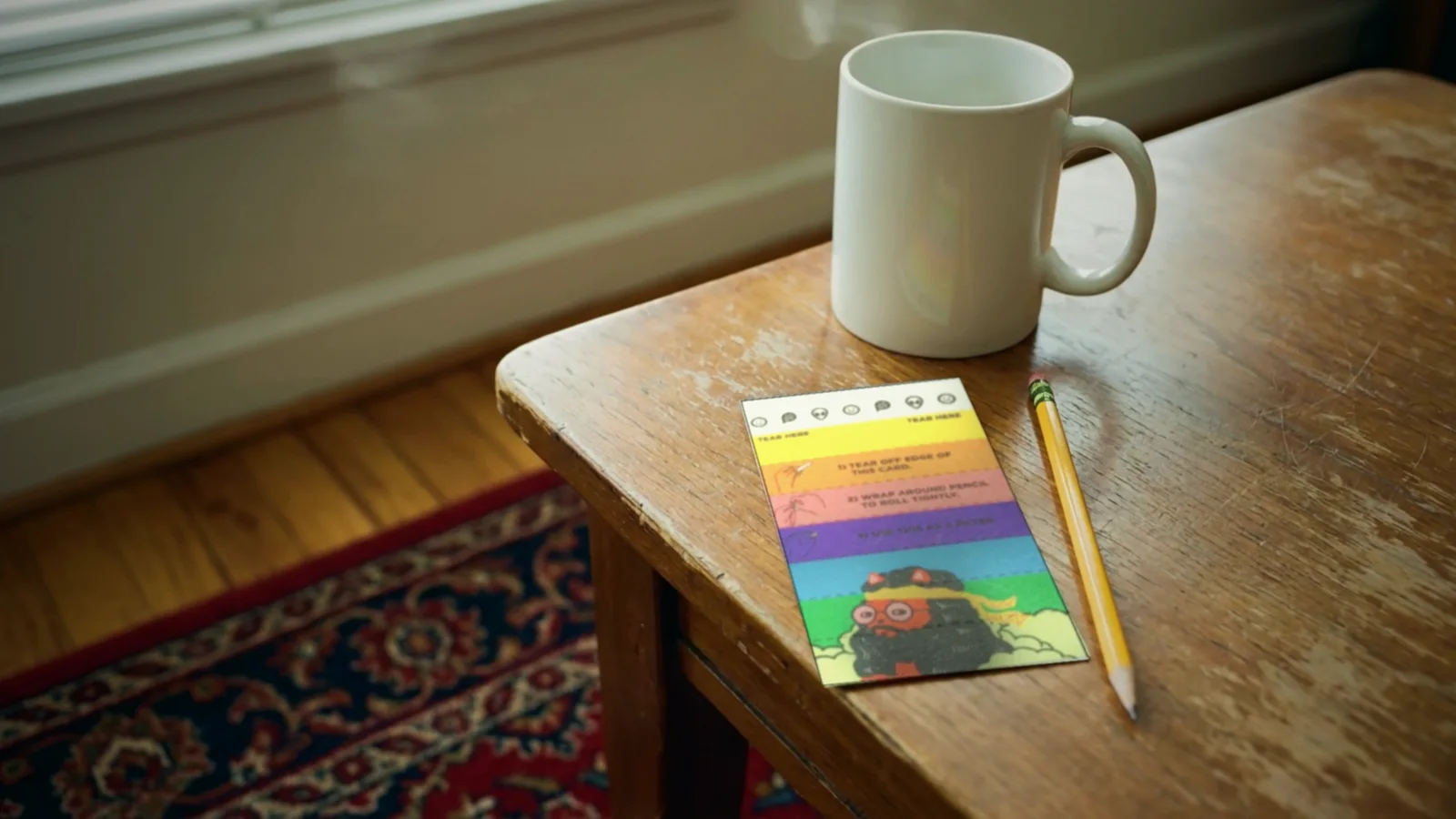
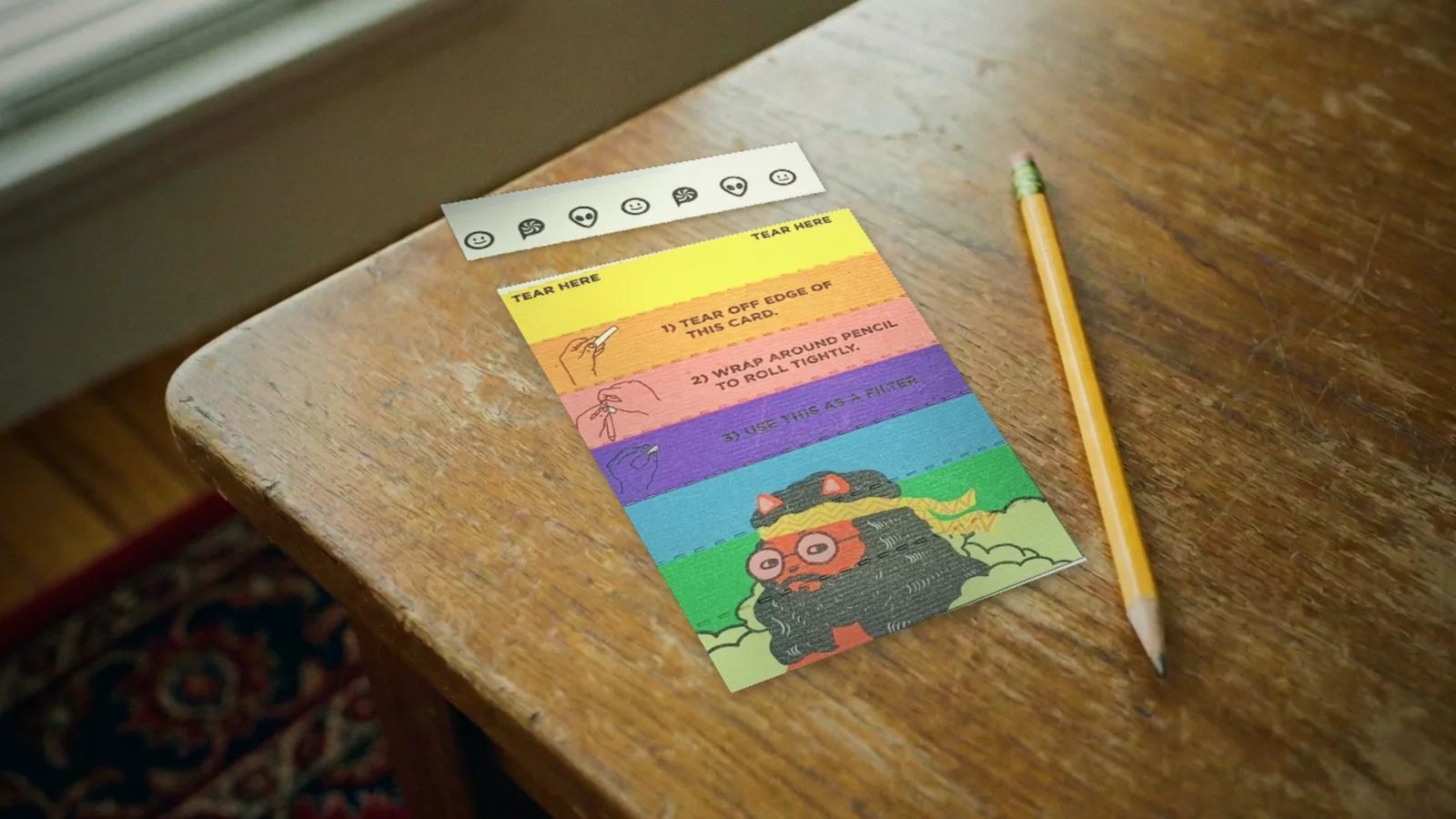
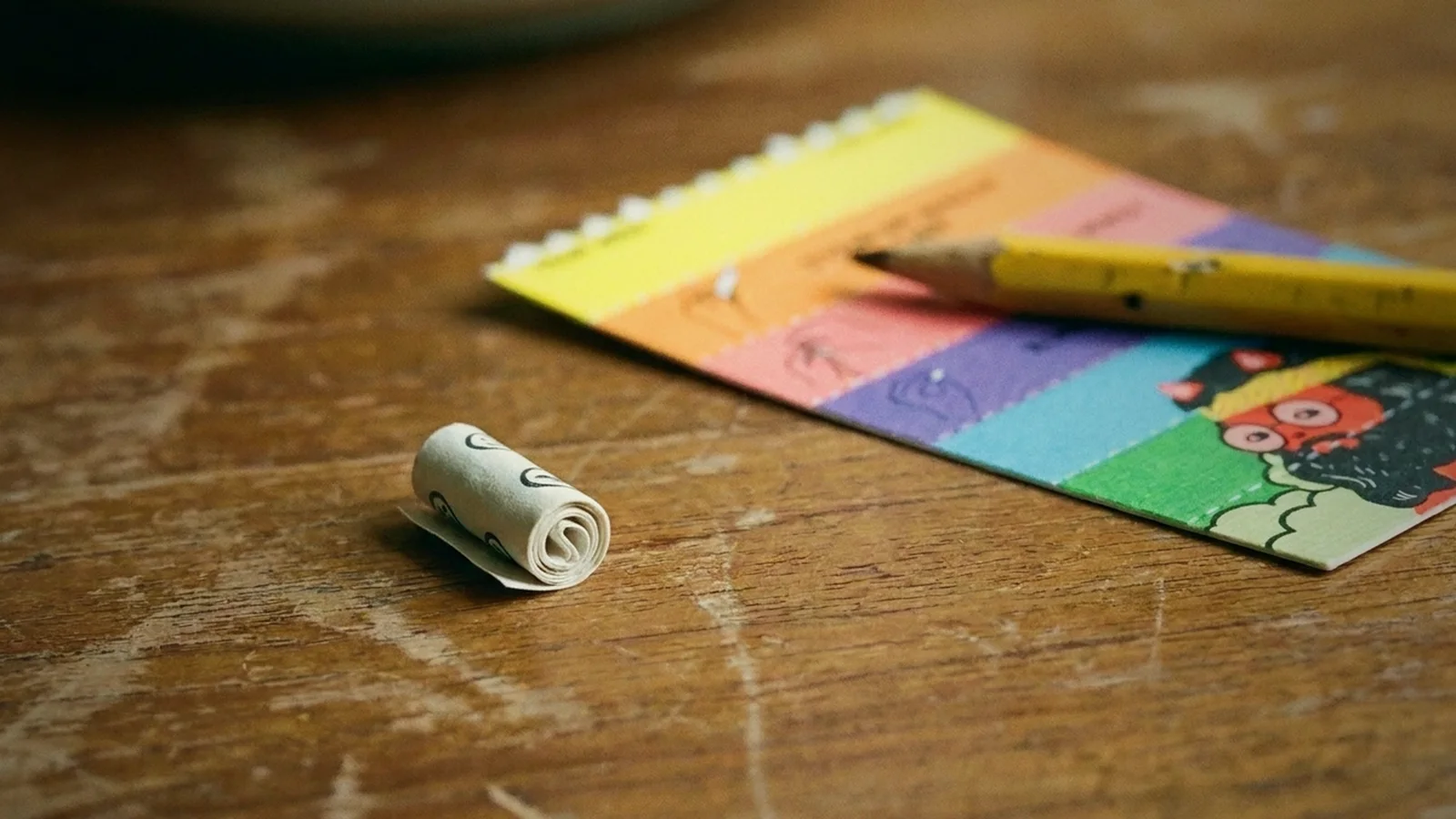
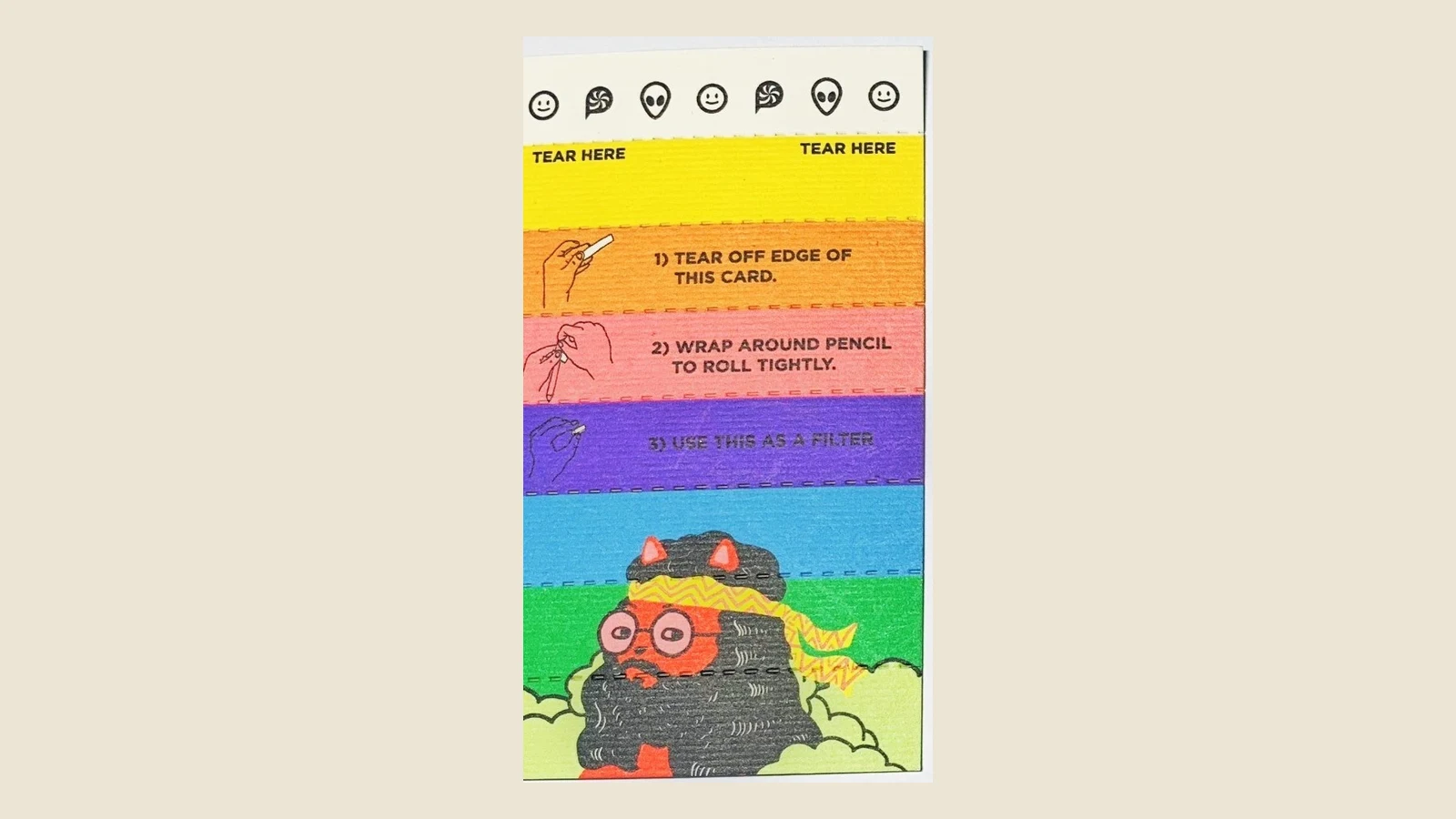
Our own 2020 sample card, printed four-colour offset with soy-based inks on Gmund Bio Cycle Cannabis, an uncoated 300 gsm paper with up to half plant fibres including hemp. Seven perforated lines turn the card into tear-off strips; each strip wraps round a pencil into a small filter tip, with the three steps printed on the card.
A ideia
A business card that gets used up instead of thrown away.
Five rules
- 01A hemp paper for a hemp idea. Gmund Bio Cycle Cannabis, 300 gsm: an uncoated paper from the Bavarian mill Gmund with up to half plant fibres, including hemp, and a fine…
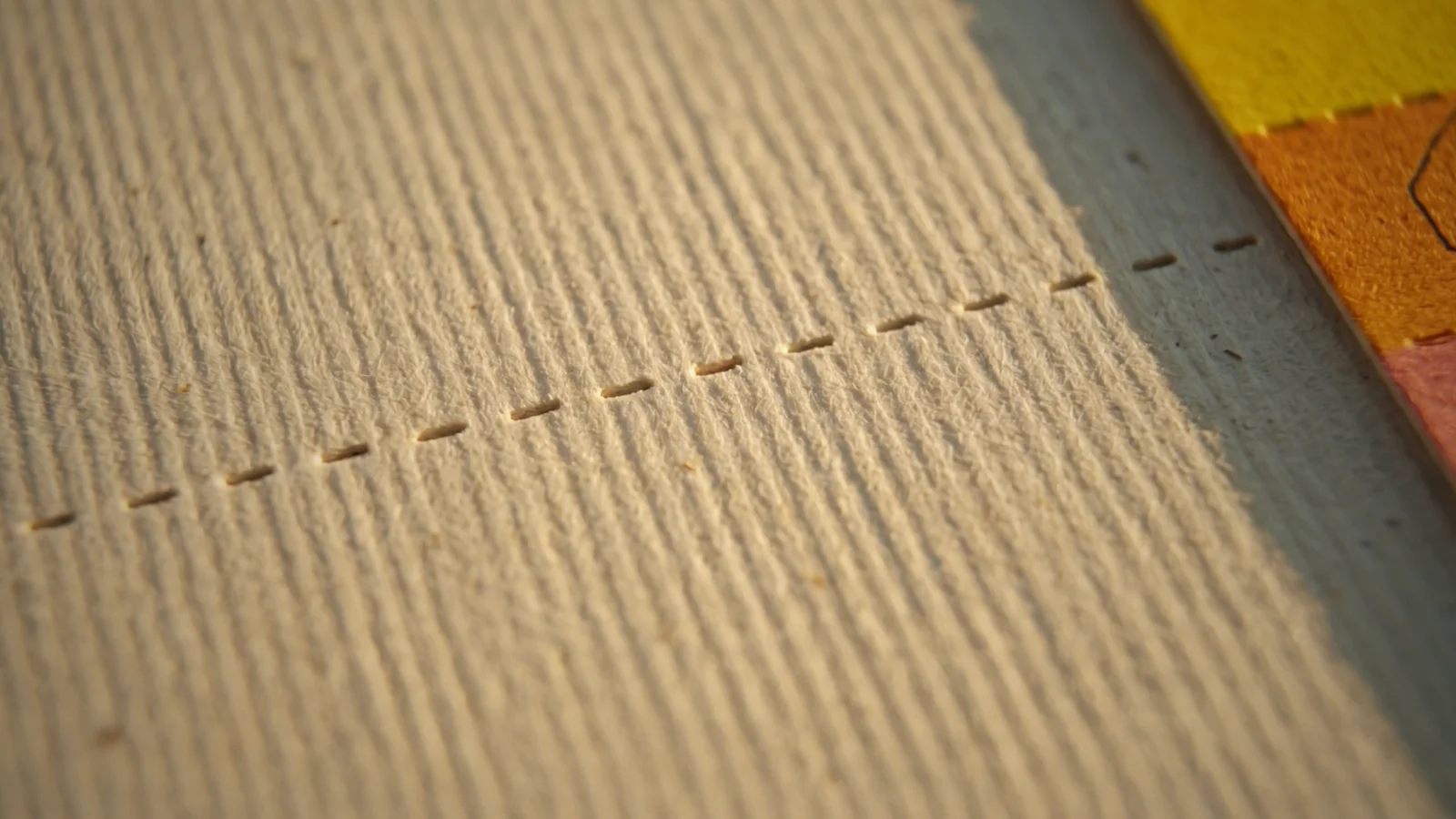
- 02Seven perforated lines. Seven perforated lines across the card, cut so the ties hold through a wallet but give way cleanly when you pull one strip from corner to c…
- 03Strips sized to roll. Each strip runs the width of the card and is narrow enough to wrap round a pencil only a few times, so it finishes tight and a little squar…
- 04Bold colour on uncoated paper. Four-colour offset with soy-based inks, artwork built from saturated flat bands and simple icons that hold up on uncoated hemp-fibre paper.
- 05A card that explains itself. Three numbered steps printed right on the colour bands: tear off the edge of the card, wrap it round a pencil, use it as a filter.
A business card with a second job
Most business cards get looked at once and dropped in a drawer. In 2020 we printed a sample card that was designed to be used up: seven perforated strips across a hemp-fibre card, each one meant to be torn off, wrapped round a pencil and rolled into a small filter tip.
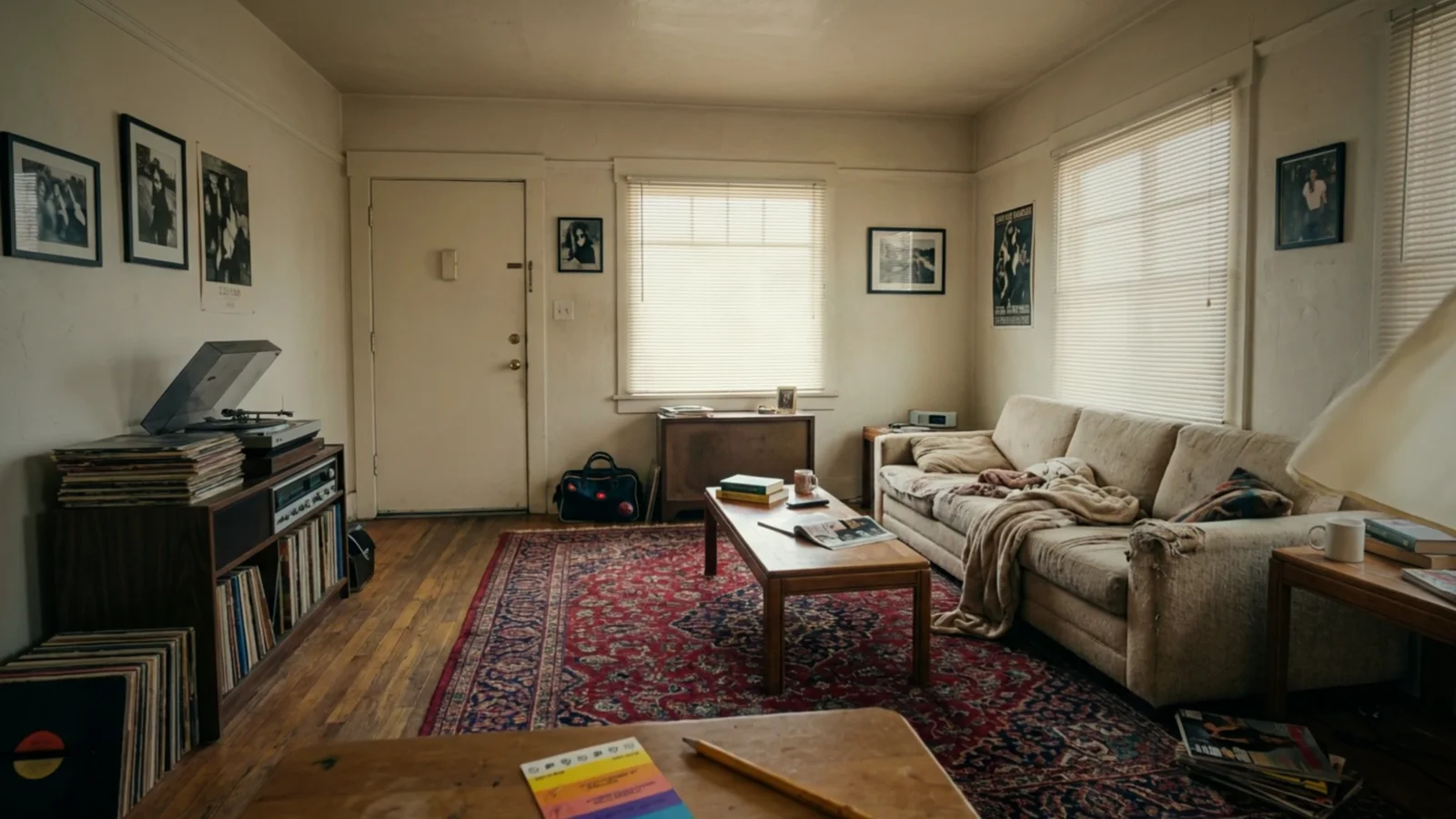
This is our own sample card, not a client project. We pulled it back out in 2026 and made a short film about it, an unofficial homage to a certain slow-moving 90s comedy about a man, a rug and a bowling team.
A hemp paper for a hemp idea
Wanted: A card made from the material it talks about, so the paper tells half the story before anyone reads it.
Constraint: The strips have to roll tightly by hand, so the sheet needs to be uncoated and supple, yet still stiff enough at 300 gsm to work as a business card in a wallet.
We chose: Gmund Bio Cycle Cannabis, 300 gsm: an uncoated paper from the Bavarian mill Gmund with up to half plant fibres, including hemp, and a fine ribbed laid texture you can feel.
Seven perforated lines
Wanted: Strips that tear off cleanly by hand, one at a time.
Constraint: Perforations that are too weak let the card fall apart in a pocket; too strong and the strip tears ragged or rips into the next one.
We chose: Seven perforated lines across the card, cut so the ties hold through a wallet but give way cleanly when you pull one strip from corner to corner.
Strips sized to roll
Wanted: A strip that becomes a small, tight filter tip, not a loose tube.
Constraint: Too much paper and the roll gets fat; too little and it won't hold its shape.
We chose: Each strip runs the width of the card and is narrow enough to wrap round a pencil only a few times, so it finishes tight and a little squarish, the way a hand-rolled tip does.
Bold colour on uncoated paper
Wanted: Bright, cheerful bands of colour that still read on a natural-fibre sheet.
Constraint: Uncoated paper drinks ink, so fine tints and subtle gradients go flat and soft.
We chose: Four-colour offset with soy-based inks, artwork built from saturated flat bands and simple icons that hold up on uncoated hemp-fibre paper.
A card that explains itself
Wanted: Nobody should need a manual to use their business card.
Constraint: Instructions take space on a card that is mostly tear-off strips.
We chose: Three numbered steps printed right on the colour bands: tear off the edge of the card, wrap it round a pencil, use it as a filter.
About the paper: Gmund Bio Cycle Cannabis
Gmund Bio Cycle is a family of papers from Gmund, a mill in Bavaria, made with plant fibres in place of part of the wood pulp. The Cannabis version uses up to 50% plant fibres, including hemp, and has a fine ribbed laid texture and a warm natural colour.
We print it uncoated at 300 gsm. It takes offset printing well, holds a clean perforation and feels noticeably different in the hand from a smooth white card.
Como fizemos o filme
The look is a nod to the bright, naturalistic 35mm of a much-loved 90s comedy: a sunlit bungalow, a Persian rug, a high-key bowling alley with salmon-orange seats. We built our own sets rather than copying any shot, and there are no characters, actors or film music in it.
The card is real, printed in 2020, and the card art you see on the table and in the tear is the real artwork, tracked onto the shot. Scenes made with AI; an unofficial homage, not affiliated with any film. The narrator and the score are original.
Make your own
Perforated strips, tear-off coupons, hemp and cotton papers: if your card should do something, tell us what and we'll work out how to print it.
Partir destes materiais
O mesmo papel, folha metálica e acabamento, já definidos. Nada da arte Peppermint sample card, 2020's vem incluído.
Perguntas
- What is a filter-tip business card?
- A business card with perforated tear-off strips. Each strip can be torn off, wrapped round a pencil and rolled into a small filter tip, so the card gets used instead of thrown away. Ours has seven perforated lines and the steps printed on the card.
- What is Gmund Bio Cycle Cannabis paper?
- An uncoated paper from the German mill Gmund that replaces part of the wood pulp with plant fibres, up to 50%, including hemp. It has a fine ribbed laid texture and a warm natural colour. We print it at 300 gsm for business cards.
- Can you print business cards on hemp paper?
- Yes. Hemp-fibre papers such as Gmund Bio Cycle Cannabis take four-colour offset printing. They are uncoated, so colours print a little softer than on a smooth coated card; bold, flat colour works best.
- Can you add perforations or tear-off strips to business cards?
- Yes. We can perforate business cards for tear-off strips, coupons, appointment stubs or reply slips. Thicker uncoated papers hold a clean perforation; tell us how the card should tear and we'll set the cut.
- What inks did you use?
- Four-colour offset with soy-based inks, on uncoated hemp-fibre paper.
- O filme é real?
- The card is real; we printed it in 2020. The scenes are made with AI, and the card artwork in the film is the real artwork tracked onto the shot. It's an unofficial homage, not affiliated with any film.
- Can I order a card like this?
- Yes. Order a sample pack to feel the papers, start a quote or book a design consultation, and we'll build a card that does its own trick.