Finishes
The part the big online shops can't run
Foil, impression, edges, cuts and coatings: the processes that happen after the ink is dry. Notes from the jobs we run: what the process actually does, what it fights with, and every stock it holds on.
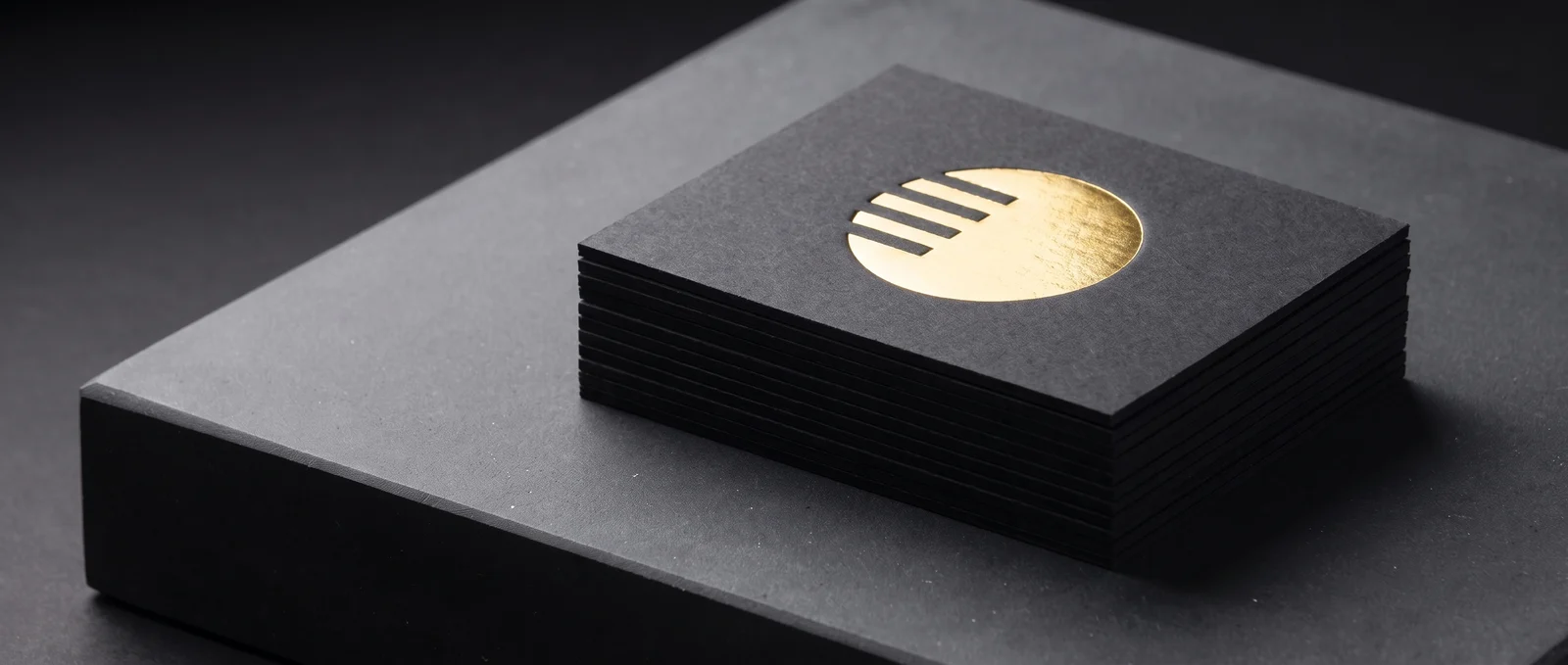
Foil stamping
A heated die transfers a metallic film onto the stock under pressure. Not printed, not simulated: a layer of metal with an impression around it.
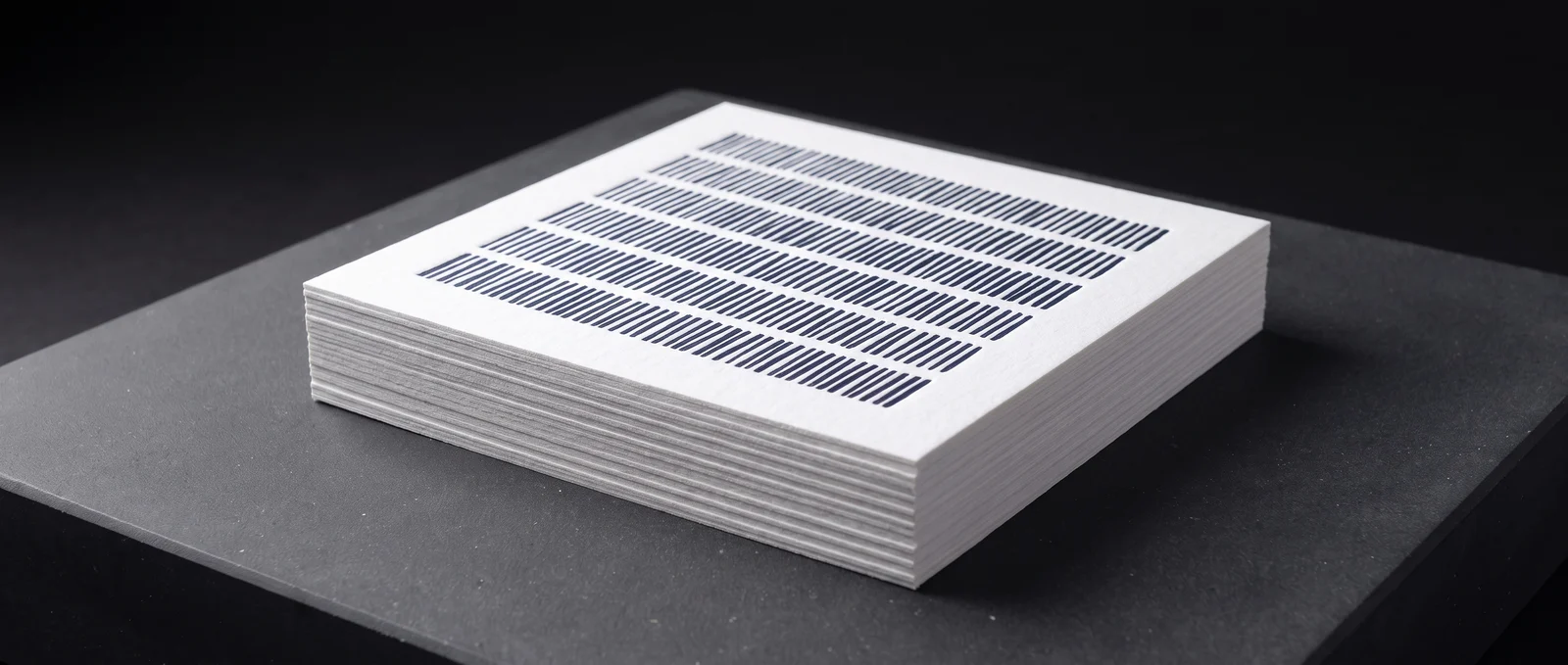
Letterpress
A polymer or metal plate is inked and pressed into a soft sheet, leaving colour sitting in a visible impression rather than on top of a flat surface.
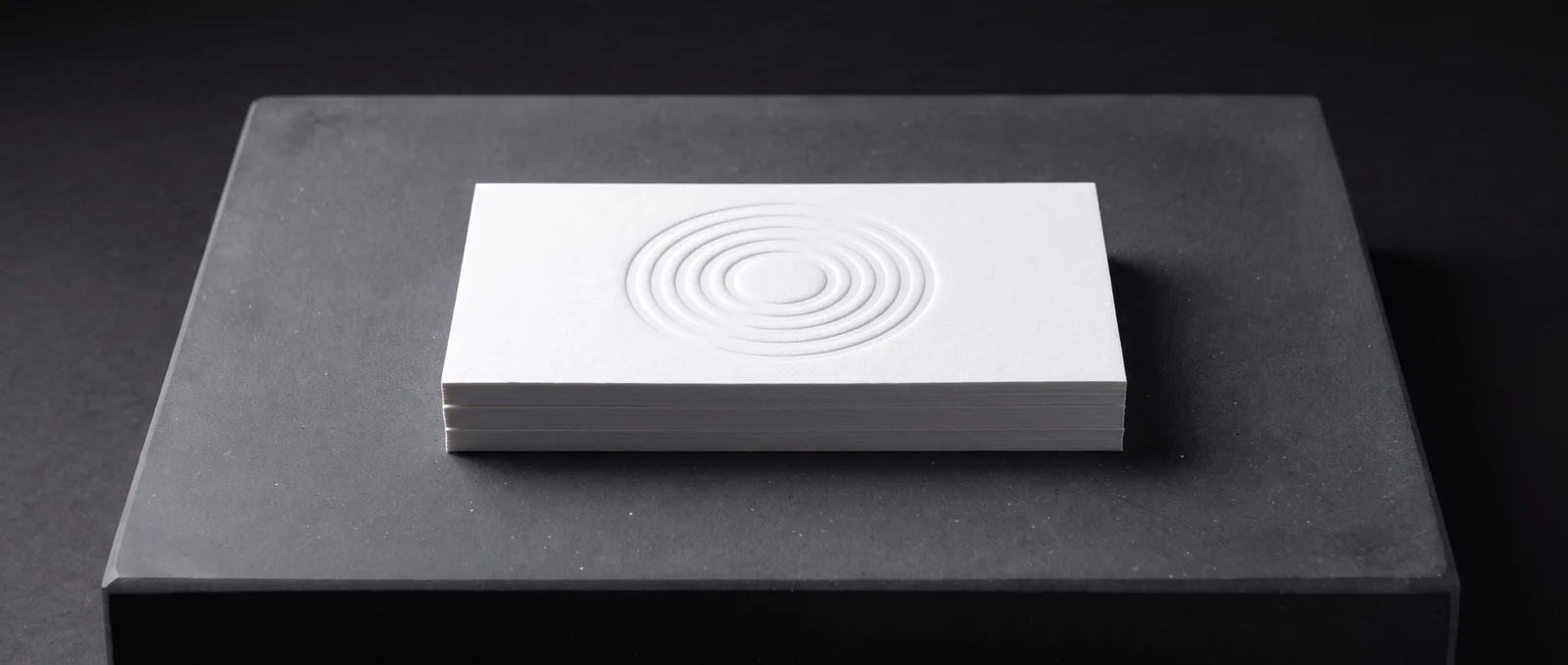
Blind deboss
A die presses the artwork into the sheet with no ink and no foil. The only thing you see is the depth: the surface reading differently where it's been compressed.
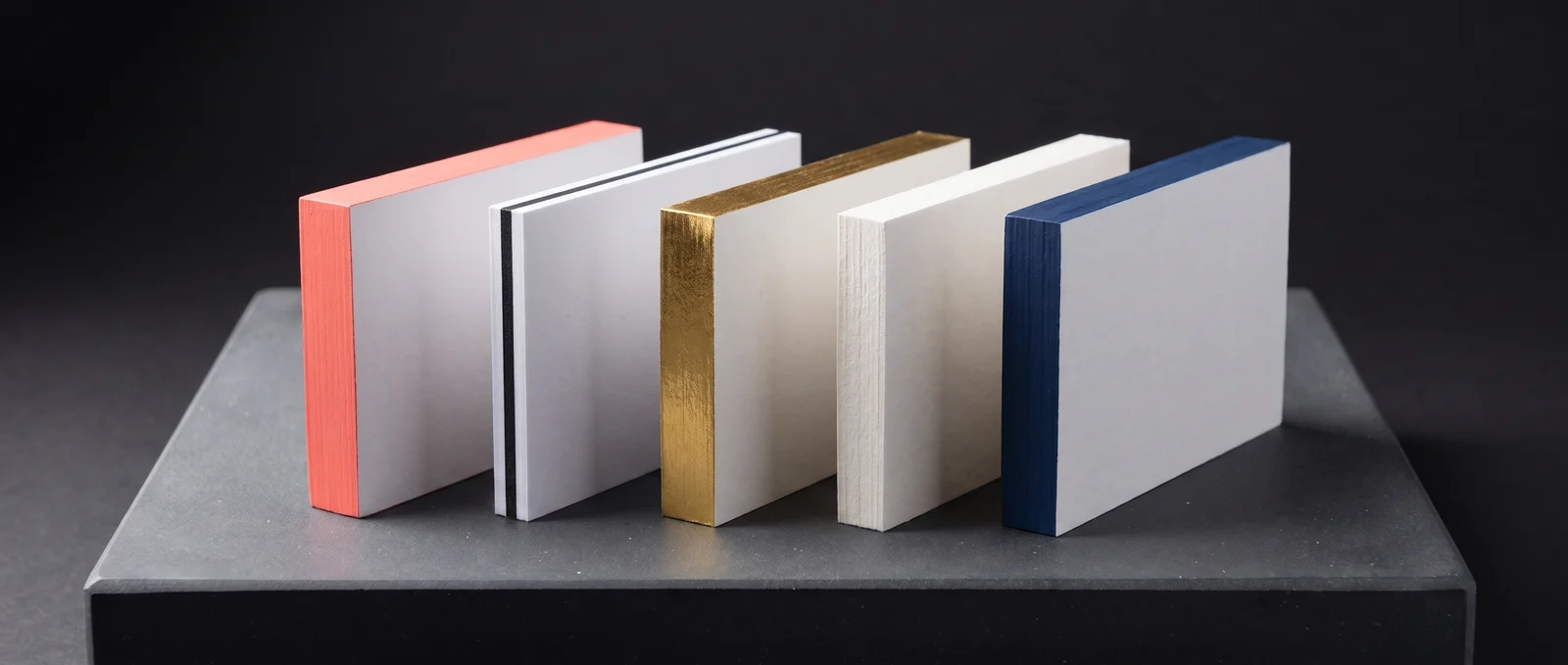
Edges and thickness
Paint adds colour, foil adds reflection, and duplex or triplex adds real plies. Choose the edge and construction together, not as interchangeable effects.
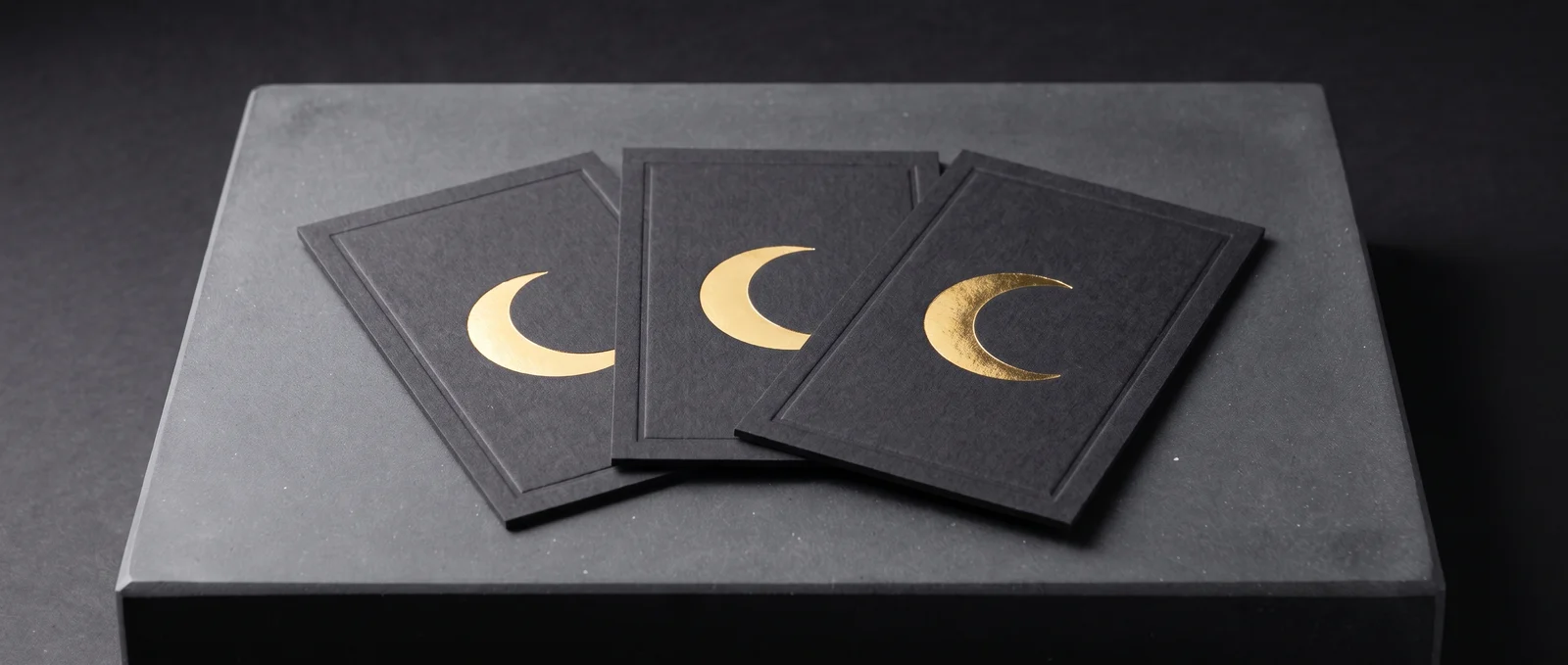
Foil on dark stock
Ink borrows its colour from the sheet below it. Foil does not: it lays an opaque metallic film over black, navy and saturated colour-through stocks.
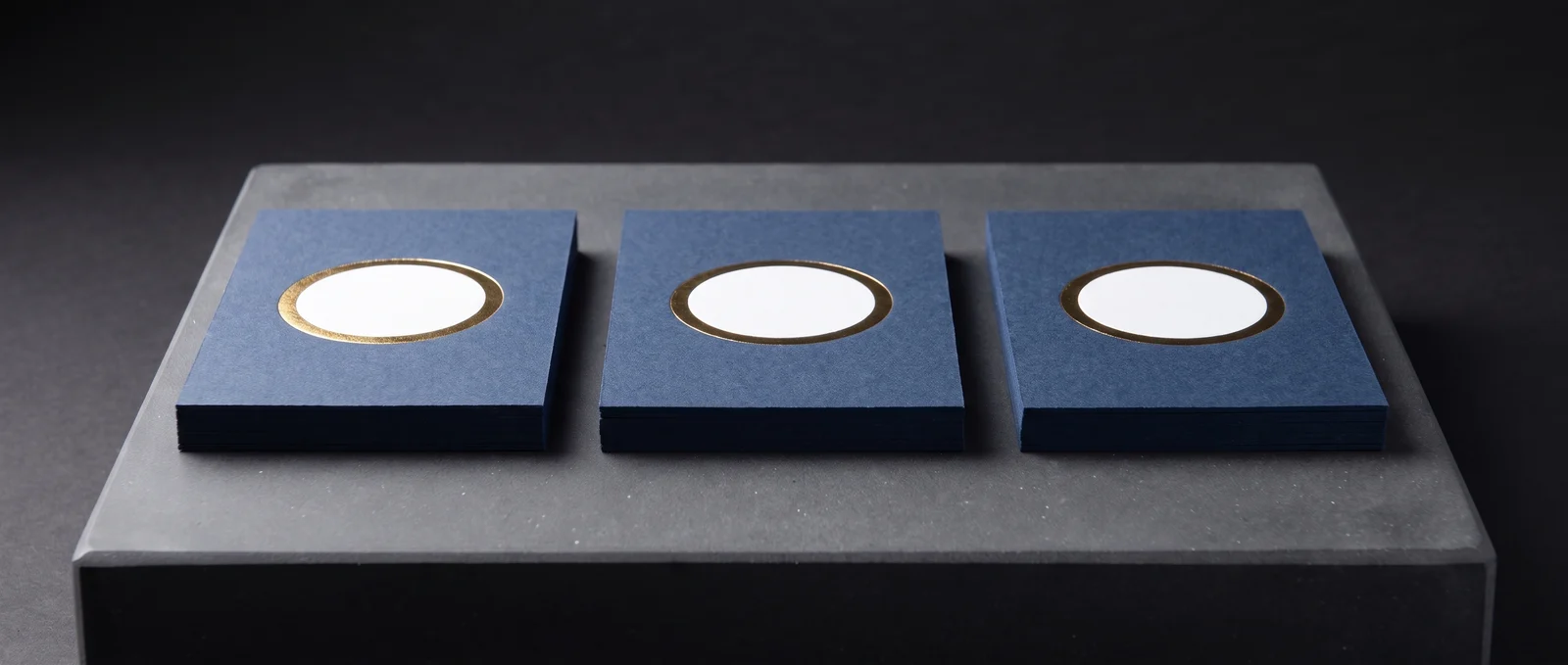
Two-color foil
Every foil colour has its own die, makeready and registered pass. The design succeeds when the colours cooperate with that physical tolerance.
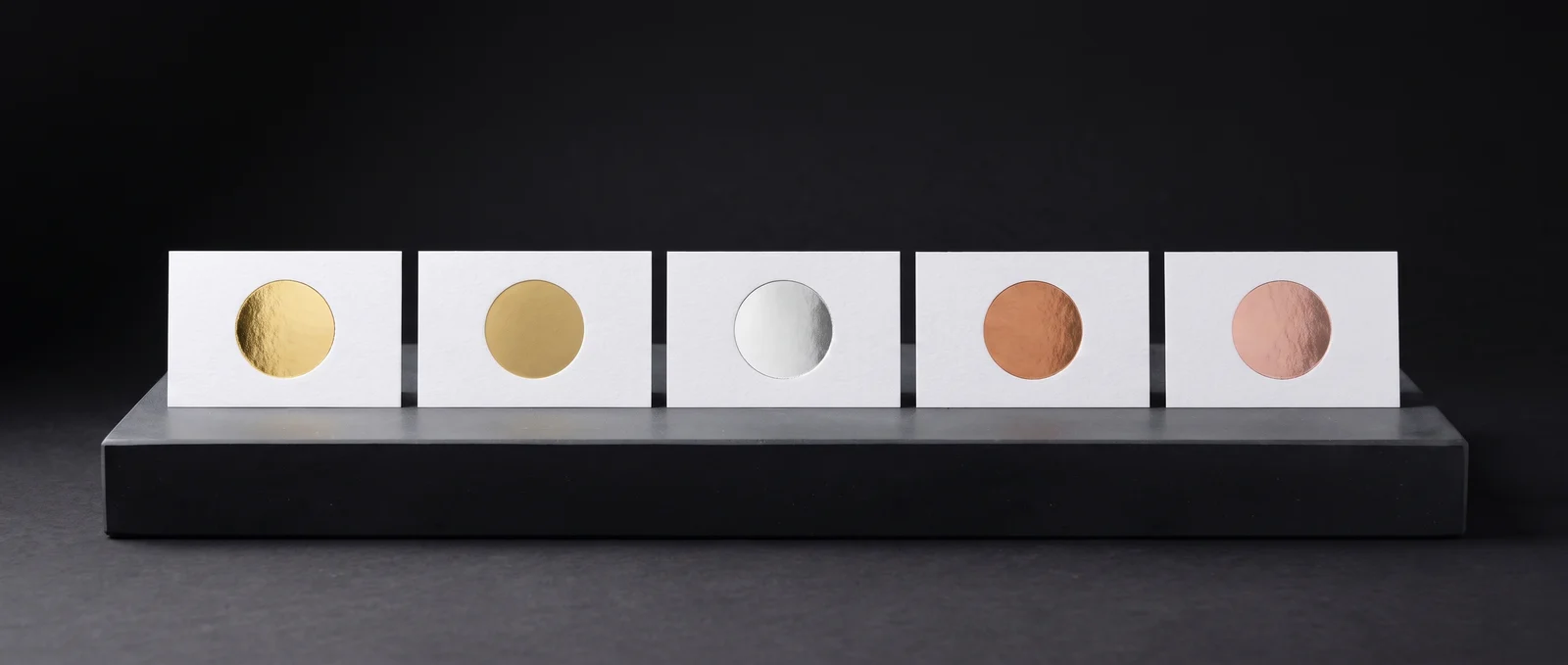
Gold, silver and copper foil
Gold, silver and copper are families, not single colours. Temperature and surface: matte, mirror, brushed or holographic: change the result more than a screen swatch can show.
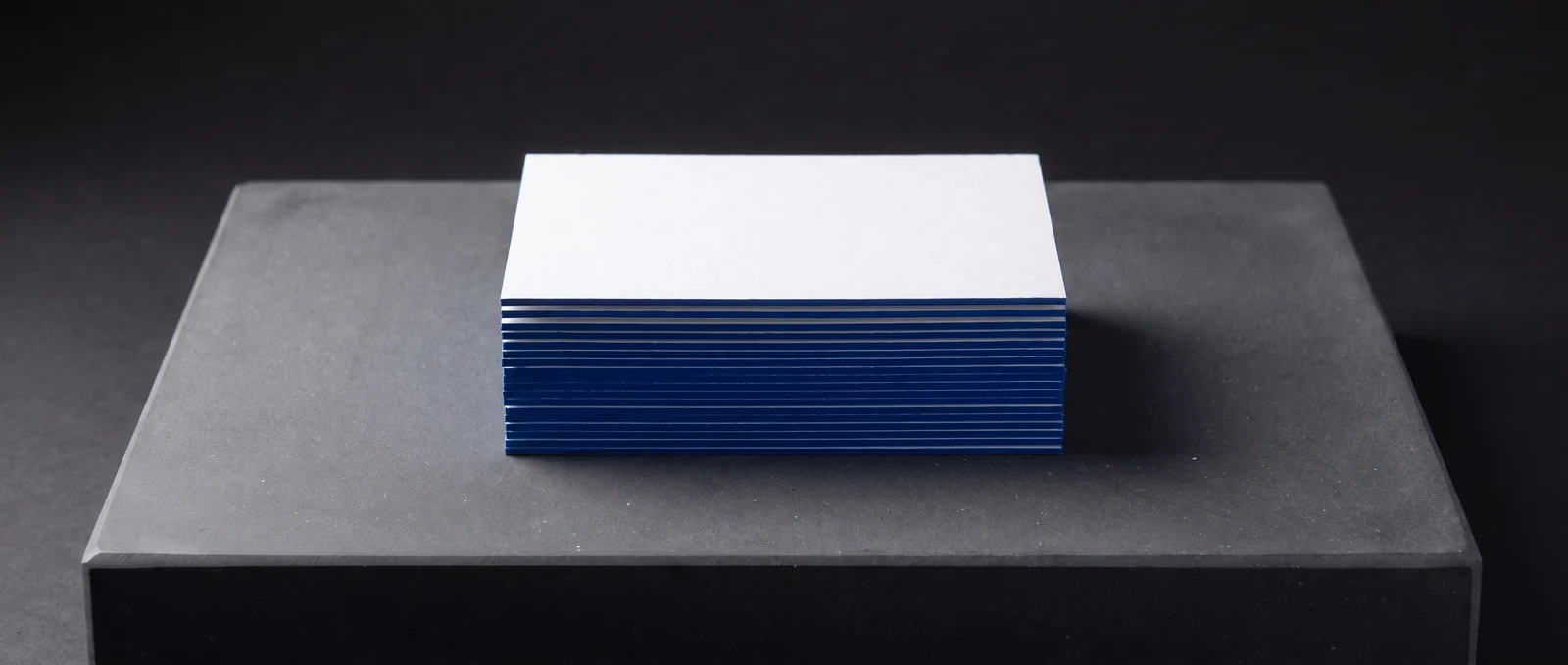
Painted edges
Edge paint is applied after cutting while the pieces are held tightly as one stack. It can run on single-ply and text-weight paper as well as thick cards.
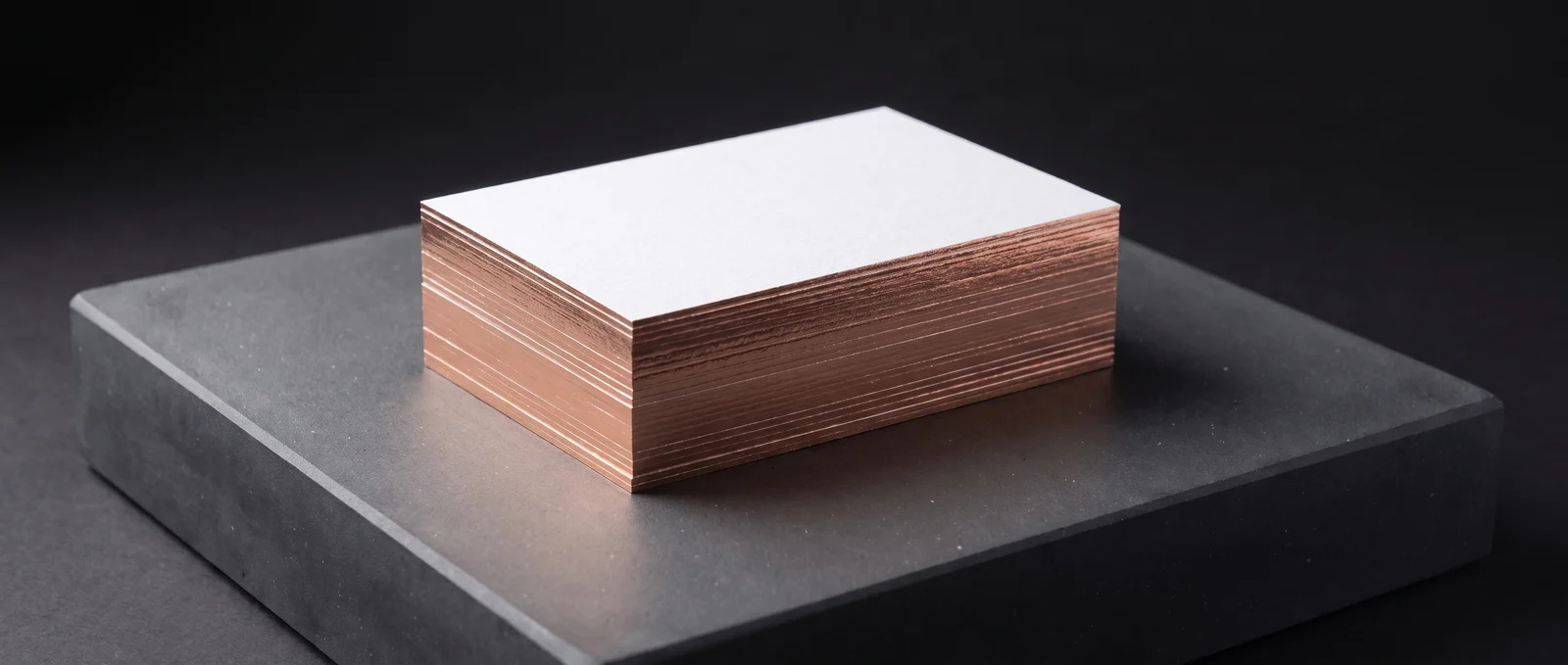
Foiled edges
A reflective metallic layer is applied to the trimmed perimeter of a thick piece. It reads as a flash when the stack moves, not as a painted stripe.
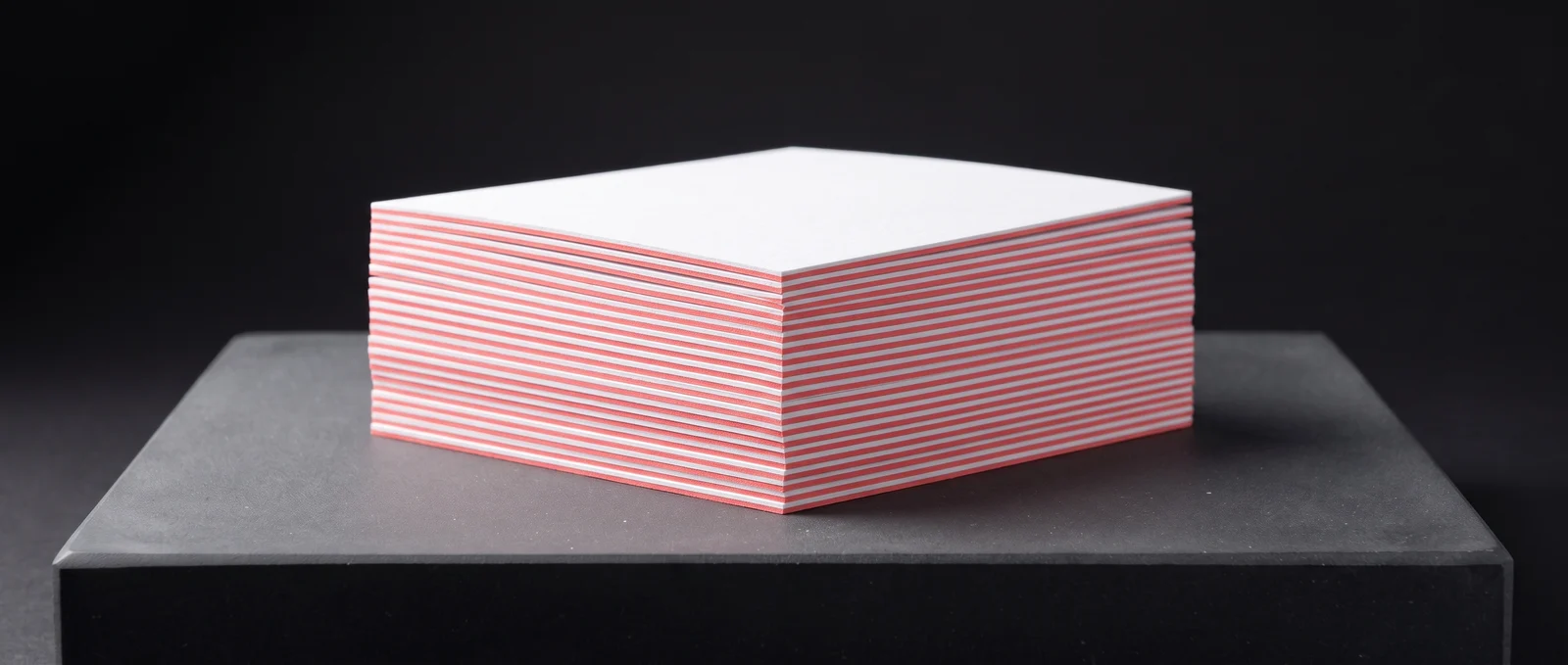
Duplex and triplex
Duplex bonds two printed plies into one piece. Triplex adds a third, often a contrasting core that turns the cut edge into a deliberate line.
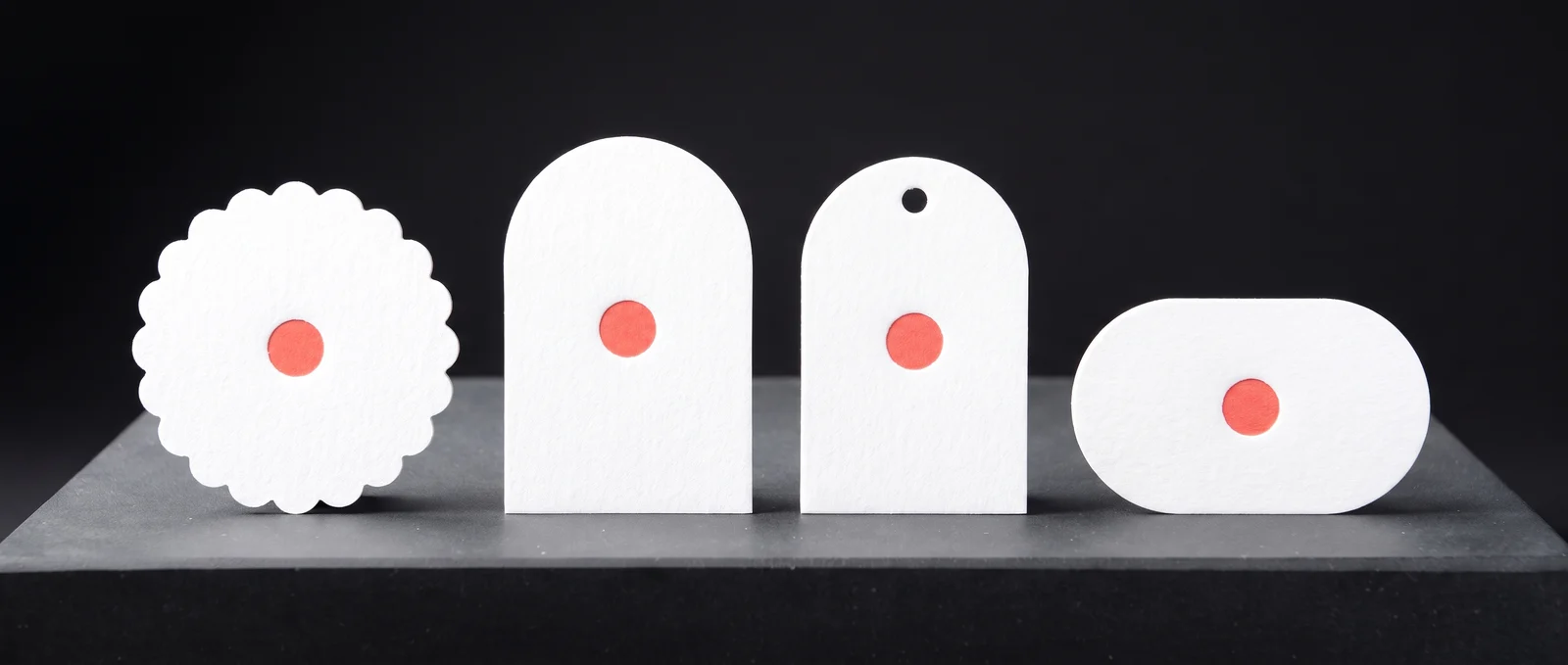
Custom shapes
A steel rule cuts the printed sheet to a repeatable silhouette. The outline belongs in the specification, the proof and the price: not only in the mockup.
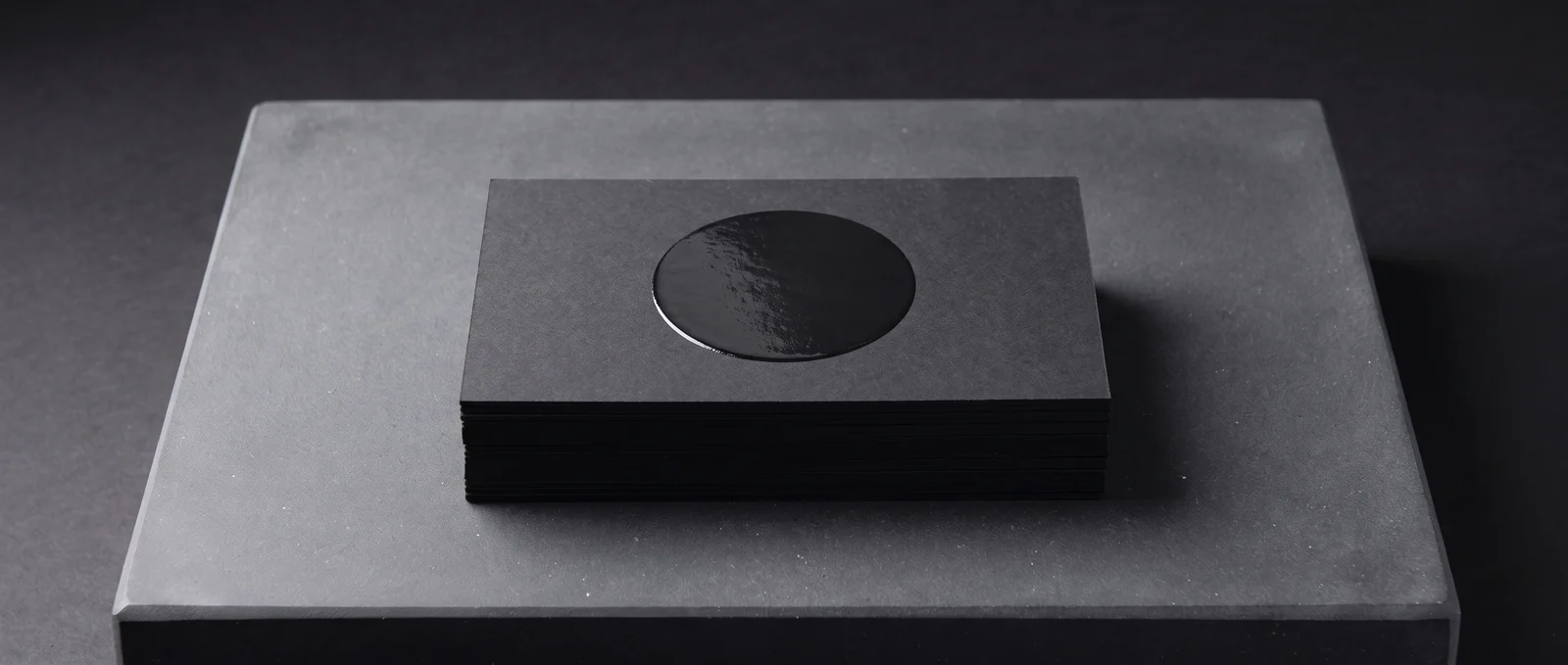
Spot UV, and clear foil on uncoated stock
Spot UV is a clear varnish cured over selected artwork. It needs a sealed surface; on raw cotton or uncoated paper it soaks in and the contrast dies.
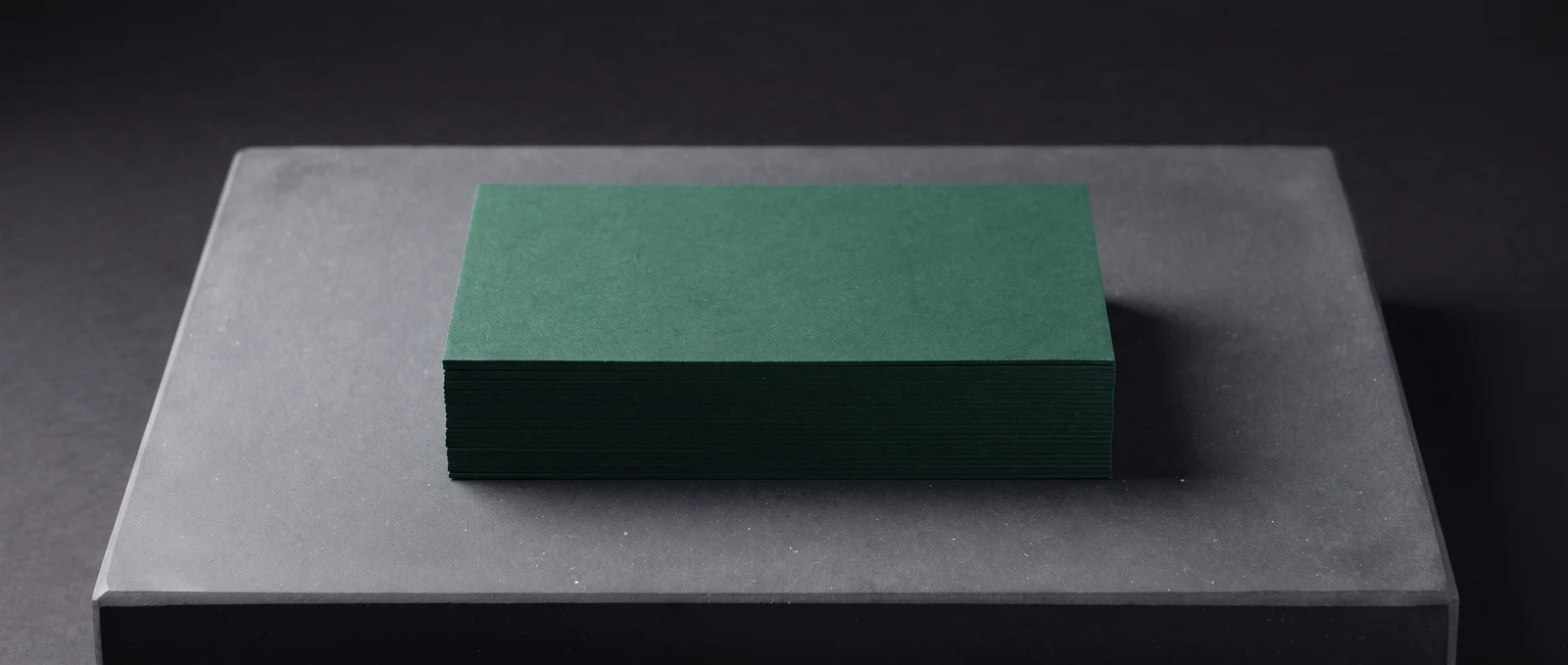
Soft-touch laminate
Soft touch is a thin, uniform laminate bonded over a printed sheet. The drag is tactile, but the surface stays visually smooth: never fuzzy, flocked or textile-like.
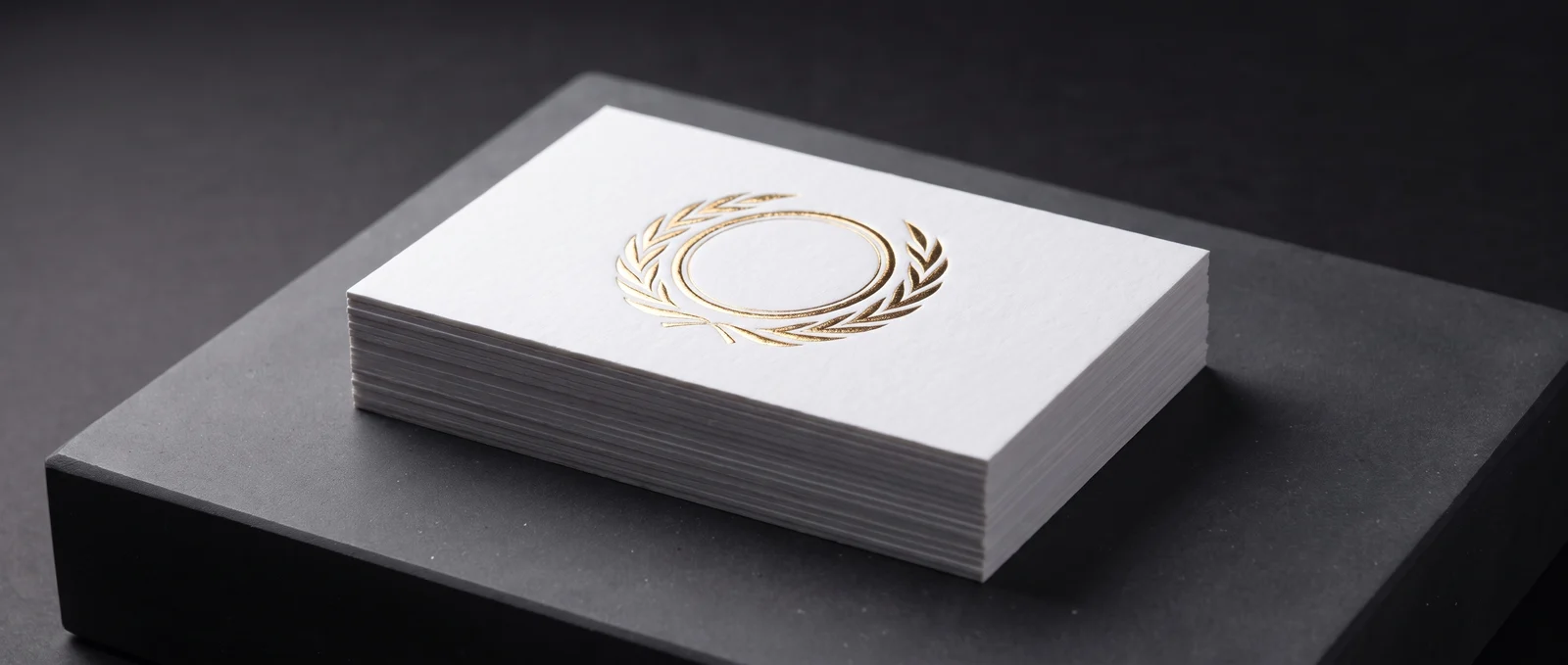
Emboss registered to foil
Foil supplies the reflection; emboss supplies the height. The two operations register to the same artwork but solve different physical jobs.
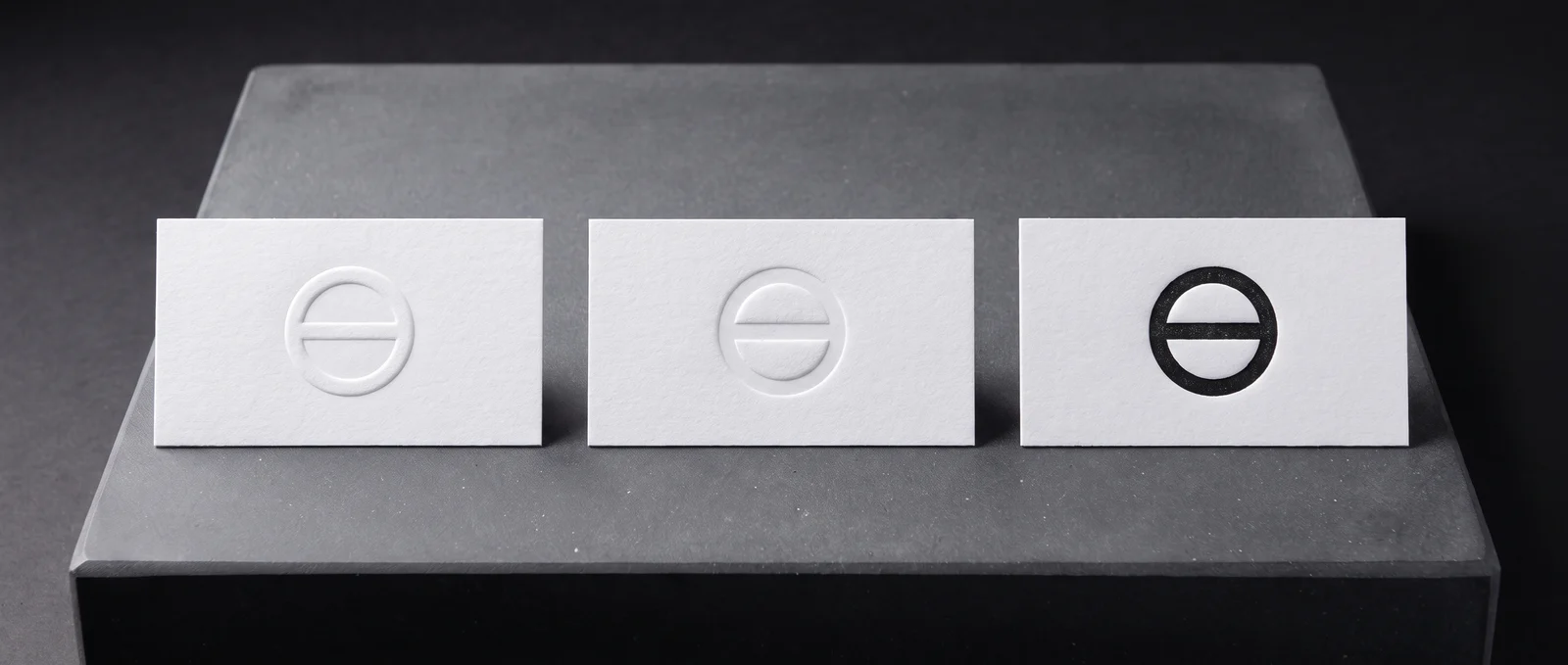
Emboss and letterpress
Emboss raises the sheet. Blind deboss presses it down with no colour. Letterpress prints colour inside a recess. They share pressure, not outcomes.
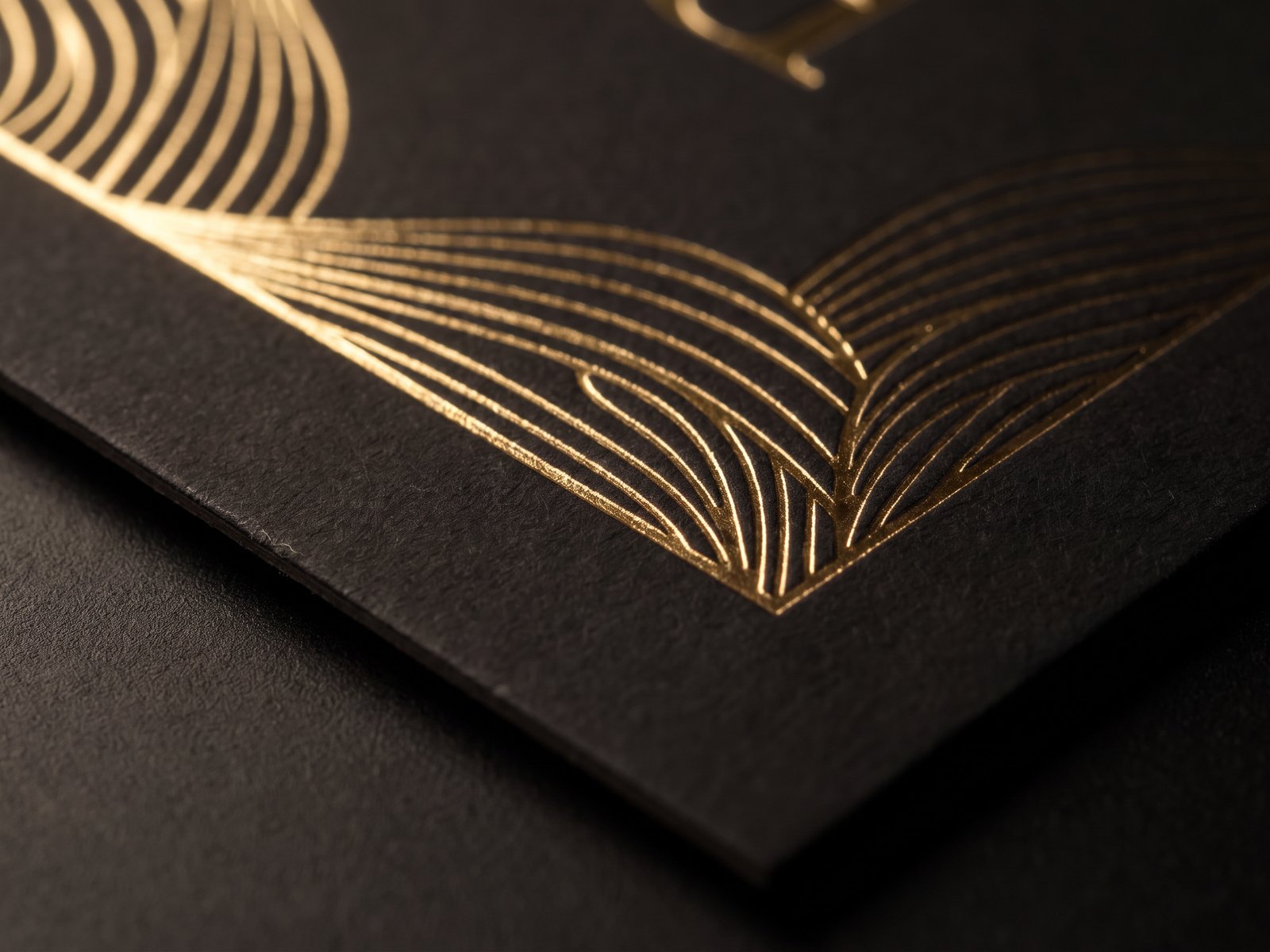
Raised foil
Digitally raised gold, silver or holographic foil stands above matte or soft-touch laminate. This is a tactile metallic mark, not an impression in cotton.
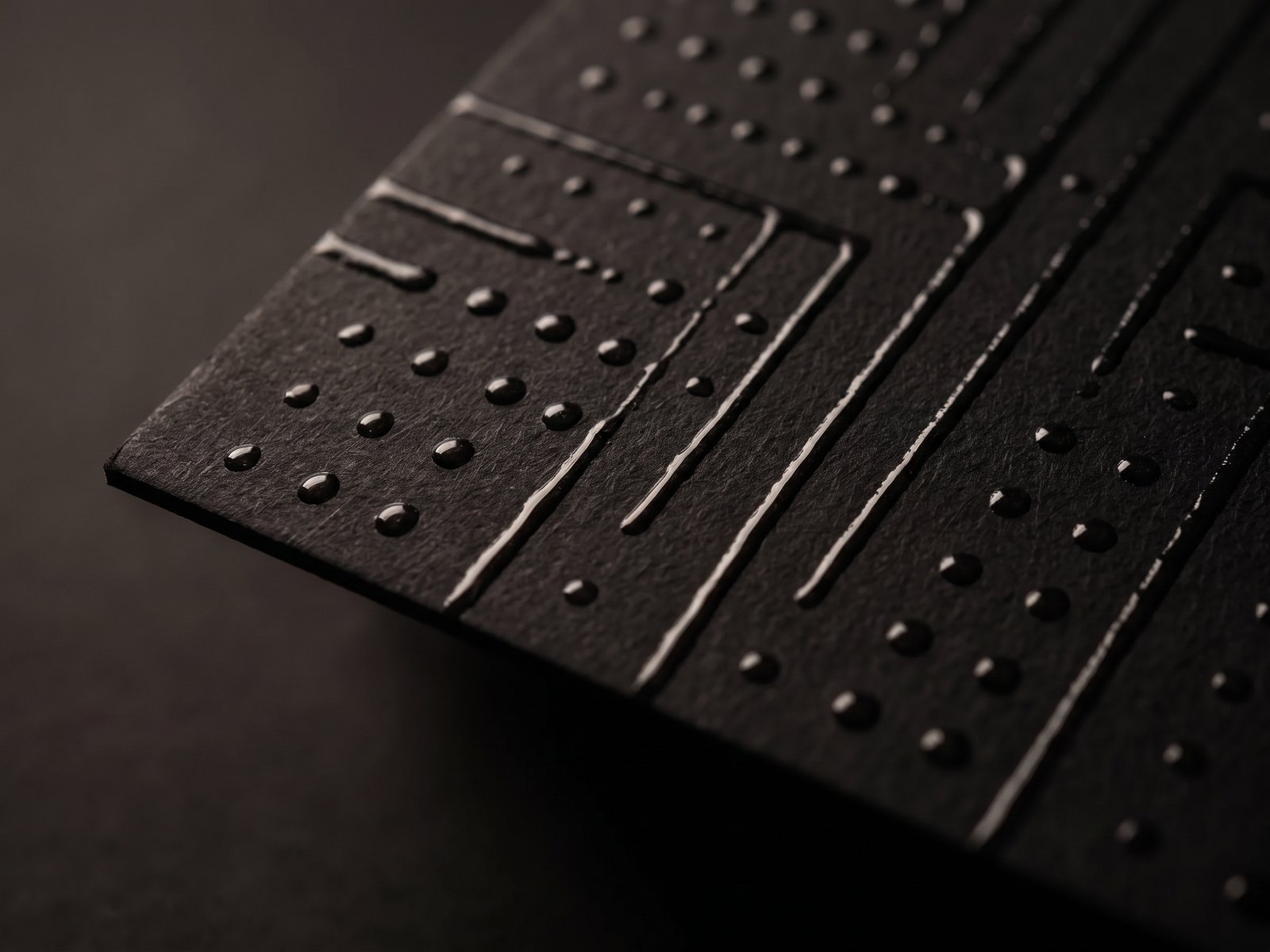
Raised spot UV
Thick clear varnish rises above matte or soft-touch laminate. It catches light and your fingertip without adding another ink colour.
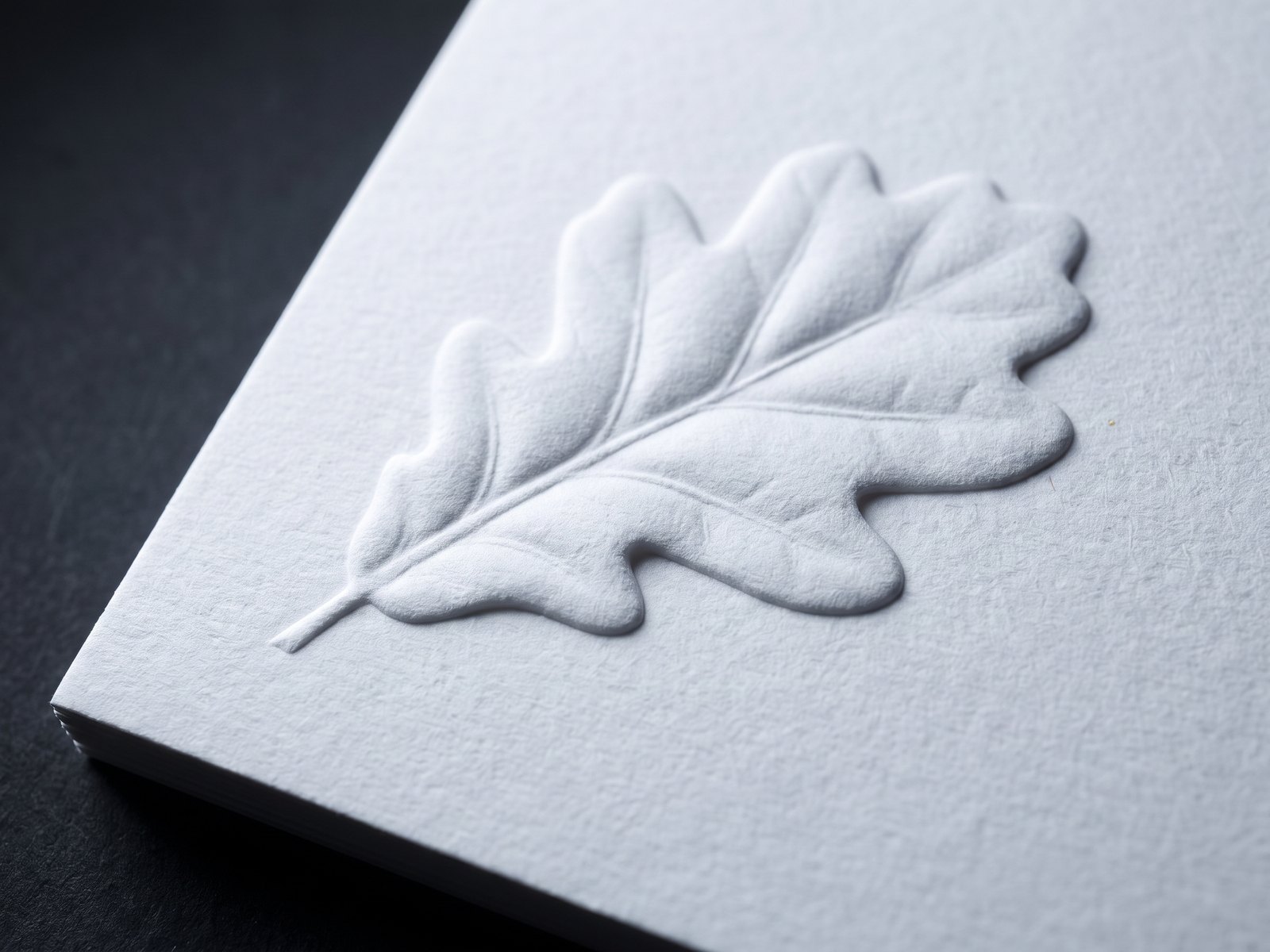
Sculpted emboss
Multi-level dies raise the sheet at different heights, shaping a softer relief than a single flat emboss. Thick cotton gives the form room to develop.
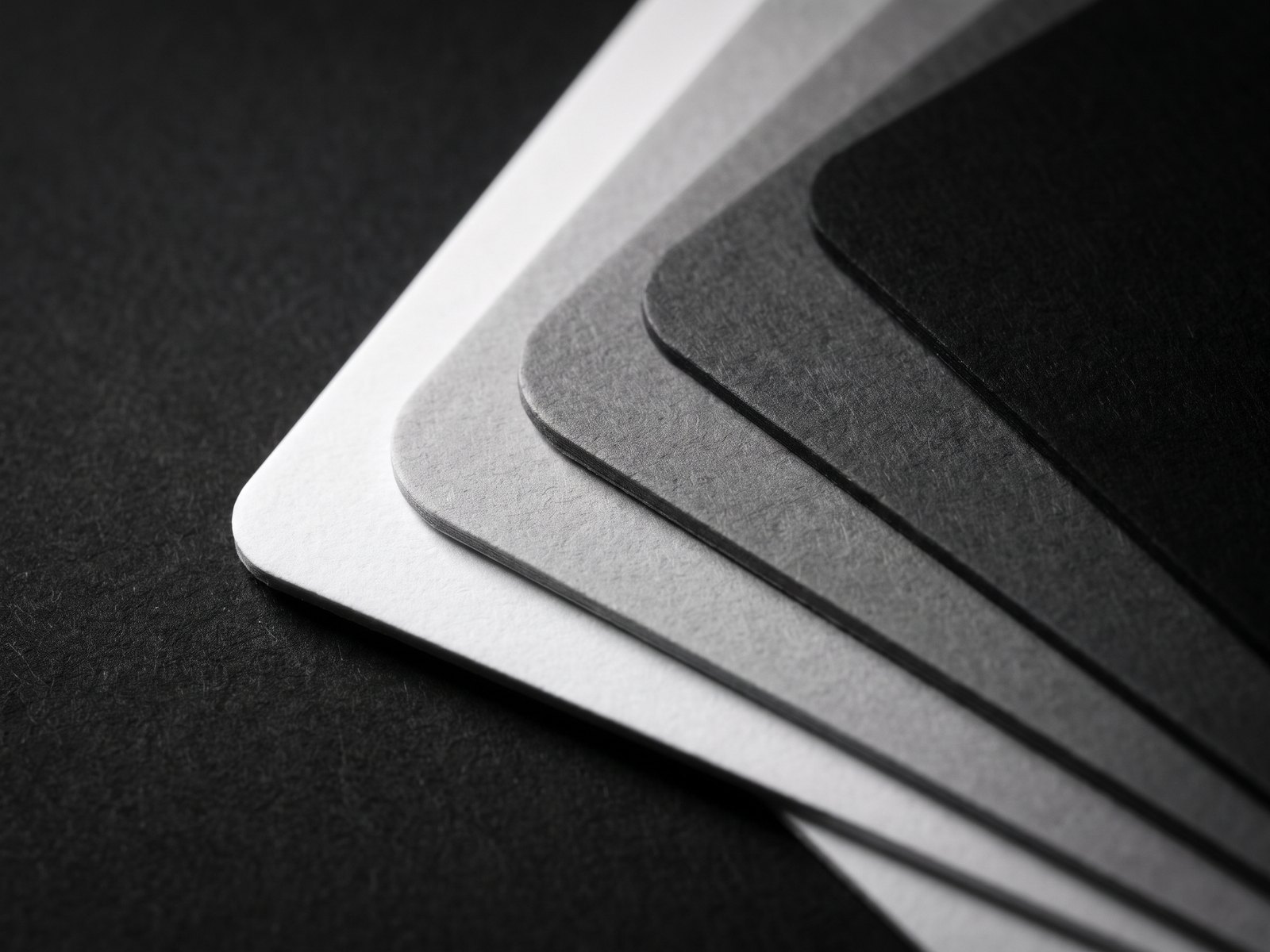
Rounded corners
A standard 1/8 in radius softens the corners without changing the piece into a different shape. Paper, plastic and metal can all take rounded corners.
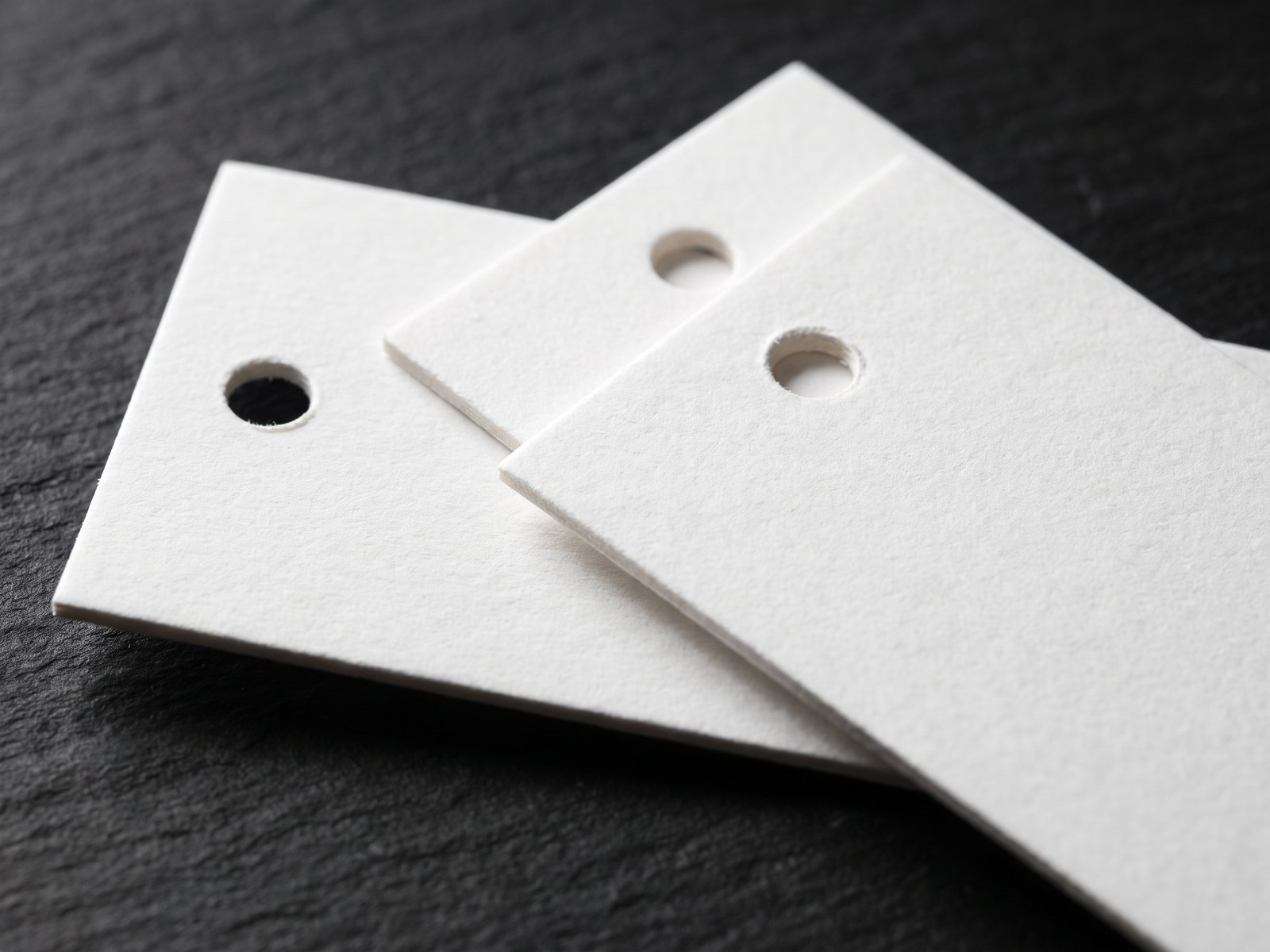
Drilled holes
A clean drilled bore turns a printed piece into a hang tag or swing tag. Choose the hole size for the ribbon or string that will pass through it.
Foil stamping
How the metal is applied : dies, passes, registration.
Emboss and letterpress
Inked letterpress, blind deboss and registered emboss.
Die cutting and coatings
Custom dies and cut-through shapes. Spot gloss, soft touch.