Custom rigid boxes, foil-stamped and debossed in small runs
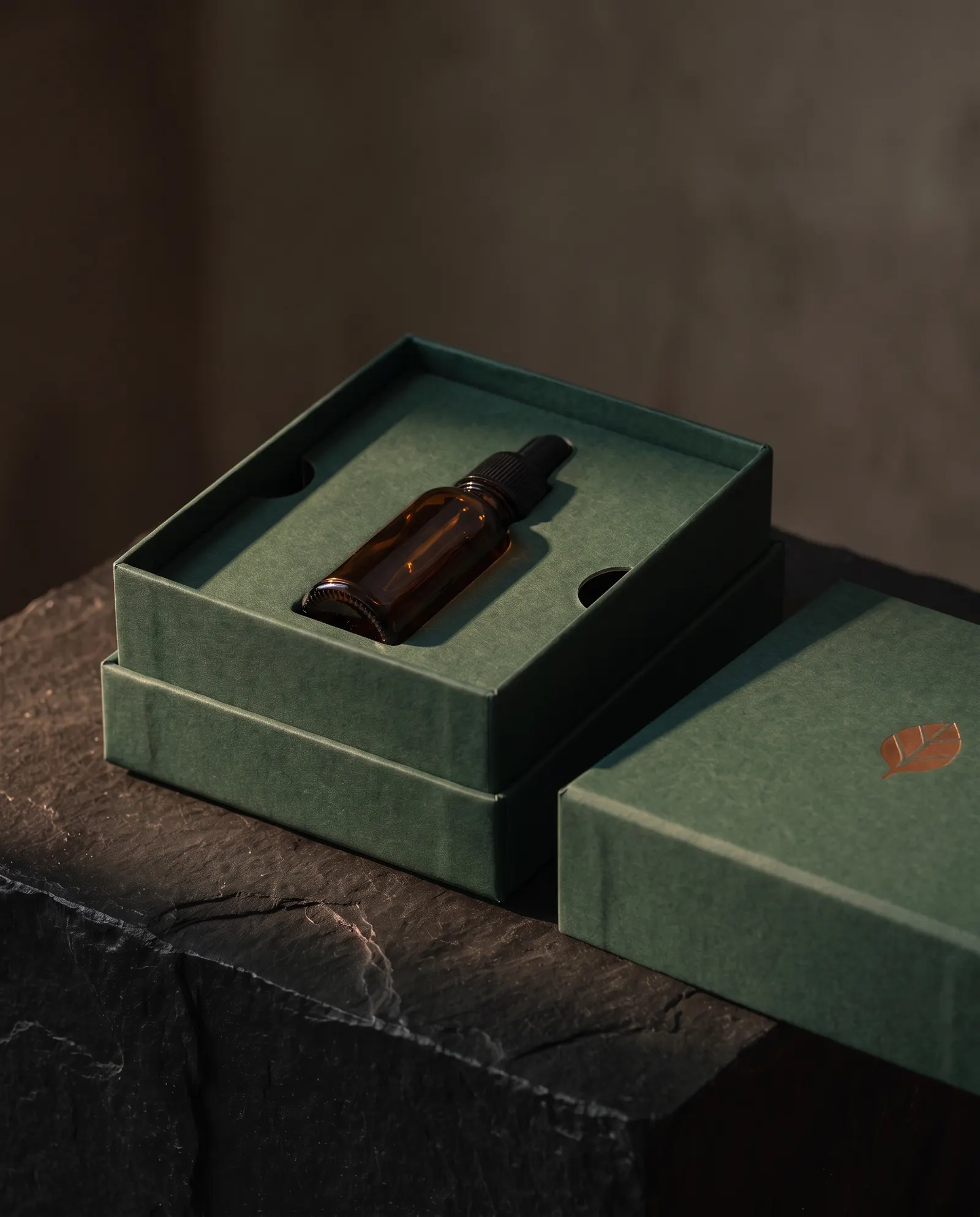
Custom rigid boxes are 2 mm greyboard wrapped in paper and built before they ship, so they arrive solid and never flat. We press real hot foil and blind deboss into that wrap, in runs small enough for a launch or a client gift list. Once a foil or deboss die is involved, runs usually make sense from about 100 boxes; shorter pilot runs are quoted on request. Most rigid box projects we've built have landed around US$ 1.400–US$ 2.000 for the run. Production takes about three weeks after proof approval, with a prototype first.
Get a price
About 3 weeks after proof approval, an estimate. Freight quoted with your boxes.
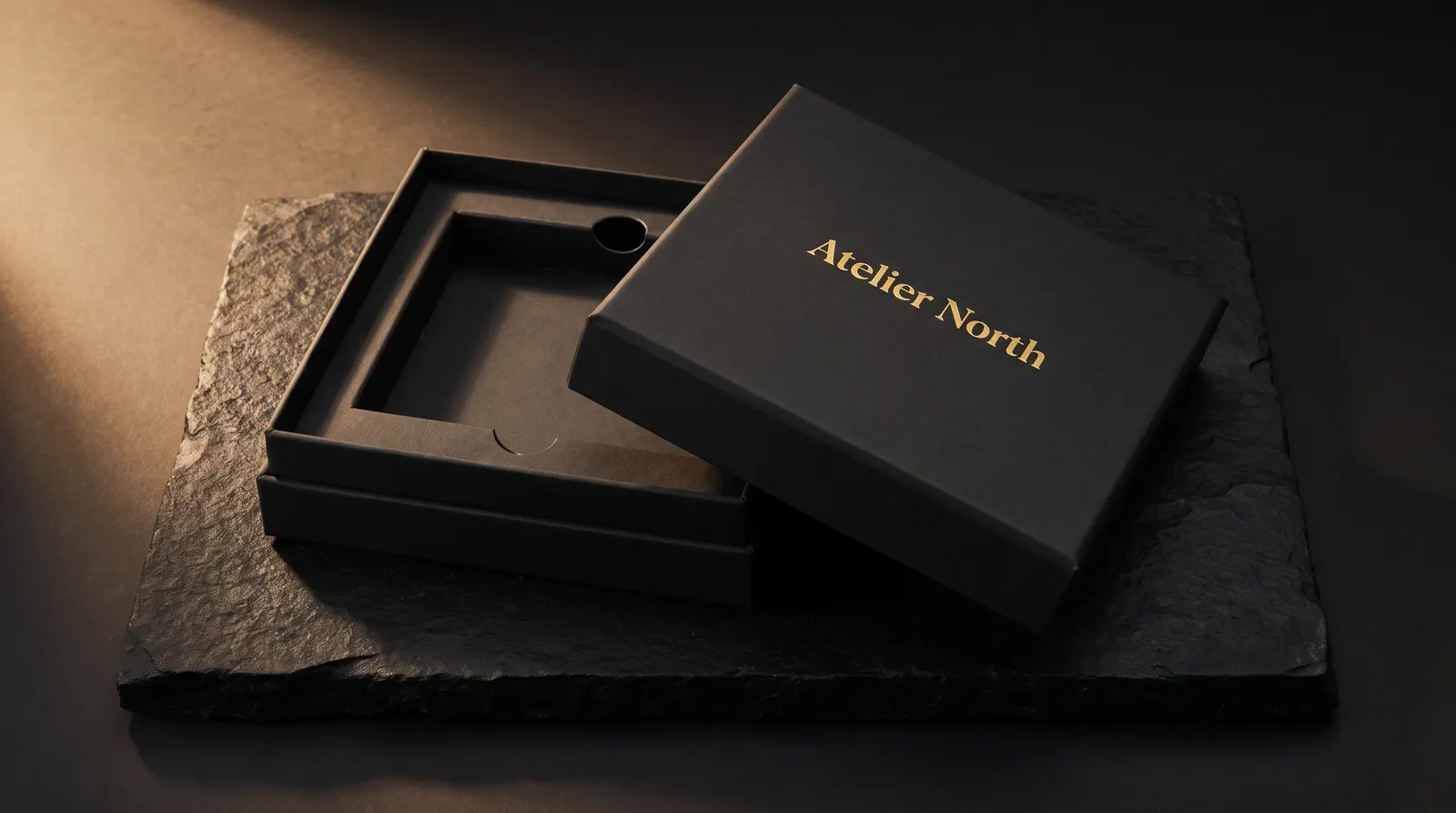
Custom Foil Stamped Magnetic Gift Boxes 7x5x2 in, Collapsible Rigid
7 x 5 x 2 in collapsible rigid box, magnetic flap, wrapped board, hot foil on the lid. A paid sample comes first, credited on 250+.
From US$ 1.805 for 100 boxes · US$ 9,75 a box at 500
Get this pricedPriced on a quick quote. A person replies, usually the same day.
Custom Foil Stamped Magnetic Gift Boxes 10x8x3 in, Collapsible Rigid
10 x 8 x 3 in collapsible rigid box, magnetic flap, wrapped board, hot foil on the lid. A paid sample comes first, credited on 250+.
From US$ 2.815 for 100 boxes · US$ 16,87 a box at 500
Get this pricedPriced on a quick quote. A person replies, usually the same day.
A paid sample comes first, credited on 250+.
Fixed-price magnetic boxes live on the magnetic boxes page. Everything else here is quoted to your product.
A person checks every proof.
Structure, dieline and artwork, before anything goes to press.
Prototype before the run.
You hold the structure in your hands before we make the order.
Freight quoted with your boxes.
Built boxes ship by volume, so freight is priced with the job, not buried in it.
What custom rigid boxes cost, and how few you can order
If you've searched for custom rigid boxes, you've seen per-box prices under a dollar. Before you compare, check what that number includes: the setup, the finishing and the freight are where a real box run's cost sits. We'd rather show you the whole number up front.
Most custom rigid box projects we've built have landed around $1,400–$2,000 for the full run. That's context, not a quote. Six things set your number:
| Cost driver | Why it moves the price |
|---|---|
| Size | More board, more wrap paper, and a bigger carton to ship. Built boxes ship by volume, so size drives freight more than weight does. |
| Quantity | The structure, the dieline and every die cost the same for 20 boxes as for 200. More boxes spread that setup thinner. |
| Wrap paper | A coloured uncoated sheet or natural kraft costs less than a printed wrap with soft-touch lamination. |
| Foil and deboss | Each foil colour is its own die and its own press pass, per location. One foil on the lid is the efficient build; foil on the lid and the base means a second die and a second pass. |
| Interior and insert | A printed lid liner and a paperboard tray each add a part and a step. |
| Freight | Quoted with the job. A box that arrives built can't be flattened for the trip. |
How small a run can be
Small runs are welcome. Once a foil or deboss die is part of the build, runs usually make sense from about 100, because below that the die and press setup land on very few boxes and each one gets expensive. Shorter pilot runs are quoted on request; we've built one of eight boxes for a launch, with a printed wrap and no foil die. Tell us the quantity you actually need. We'll price that number, not one that suits us.
Rigid box styles, and the trade-off in each
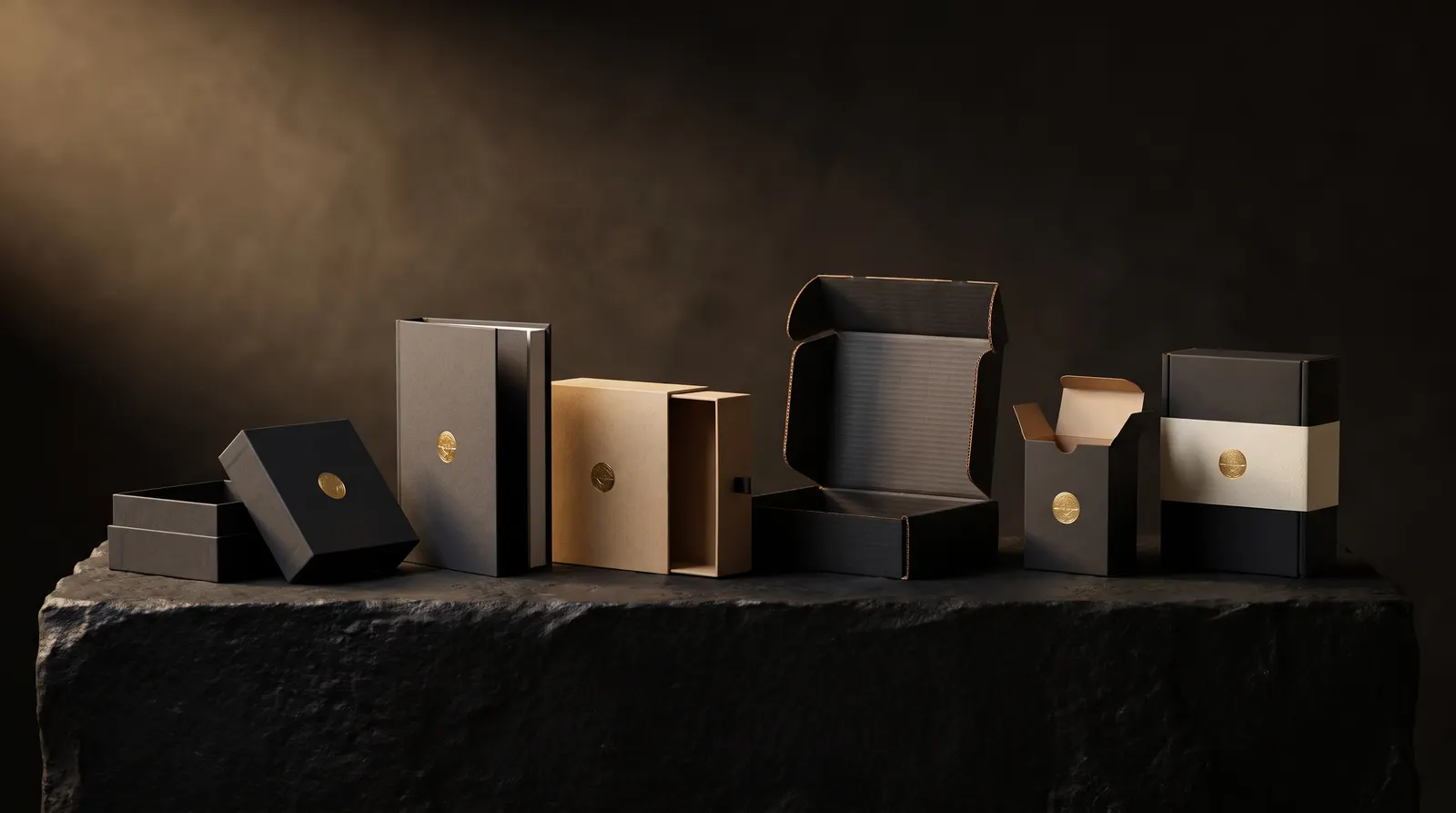
Pick the style first, then the finish. The style decides how the box opens, and most of the cost. If you're not sure, start with the two-piece rigid box, a lid and a base: it's what most people picture when they say rigid gift box, and its lid is the best surface on the box for foil.
| Style | How it opens | The honest trade-off | Use it for |
|---|---|---|---|
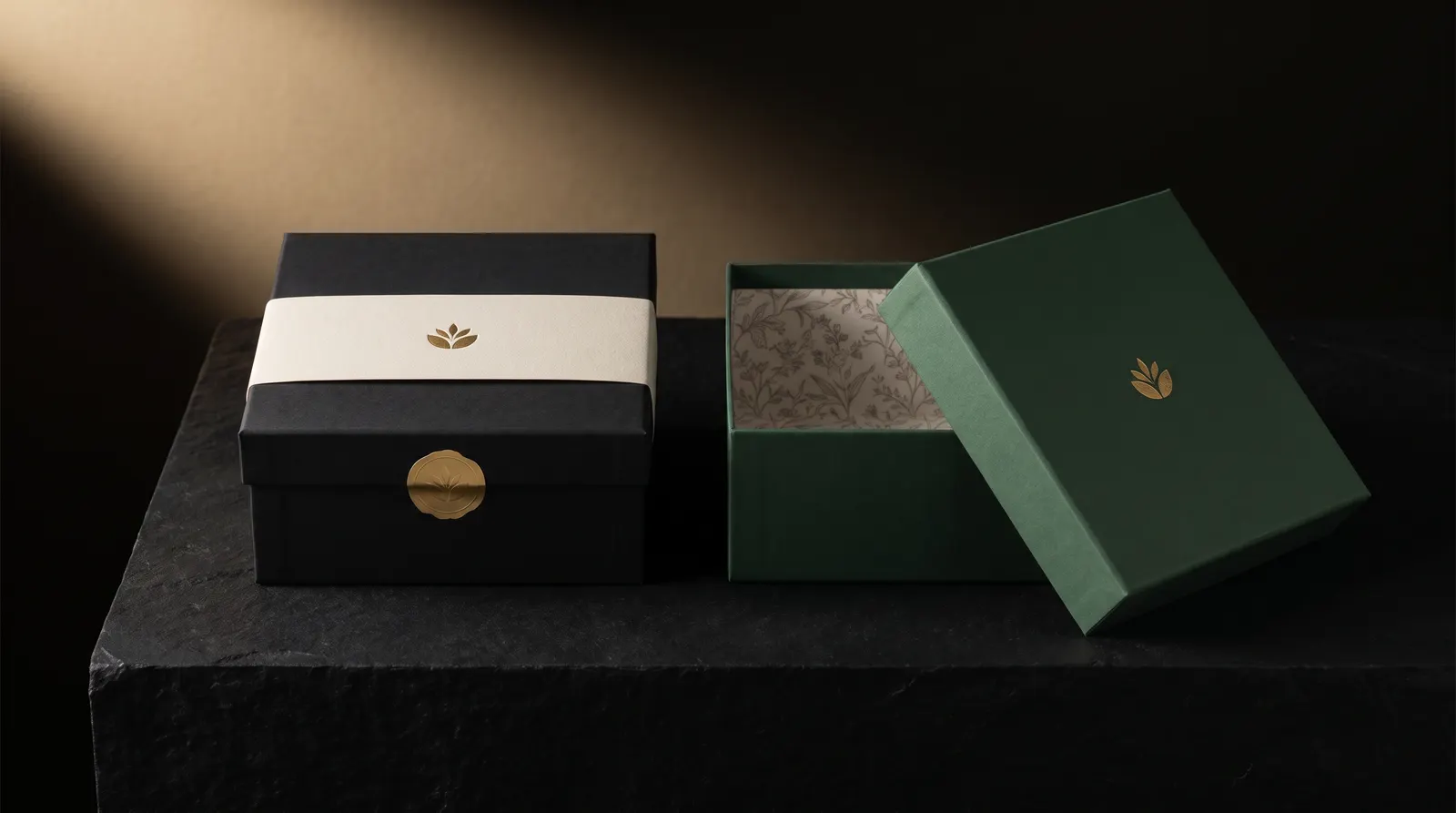
| Two-piece lid & base (our default) | The lid lifts straight off and slides down slowly over the base. | The fit has to be snug or the lid rubs the base and scuffs it. We set the fit on the prototype. | Gifts, launch kits, anything kept on a shelf |
| Shoulder-neck | The lid sits on a raised inner collar, so a band of the inside shows when it's closed. | A third built part, so more cost. Worth it when the reveal is the point. | Fragrance, jewellery, limited editions |
| Book-style magnetic | A hinged front flap closes with a soft snap from magnets hidden under the wrap. | Magnets and a hinge add cost, and the flap needs a clean fold line, so foil stays off the spine. | Presentation and PR kits that get opened more than once |
| Drawer | A tray slides out of a wrapped sleeve, pulled by a ribbon or a thumb notch. | A wrapped sleeve and a wrapped tray, and the tray has to slide freely without rattling, so the fit is tight work. We set it on the prototype. | Small objects, card sets, sample kits |
| Collapsible rigid | Ships flat and folds up into a rigid box, held by magnets or locking tabs. | Much cheaper freight and storage, but it never feels quite as solid as a rigid set-up box that arrives already built. | Large runs, or boxes you store before packing |
Every style here is a built box that needs an outer carton to go through the post. If the box has to travel on its own, it's a mailer, not a rigid box. Not sure it should be rigid? Compare all box structures. Book-style with a magnetic flap? See magnetic closure boxes.
Wrap papers and board, where the feel comes from
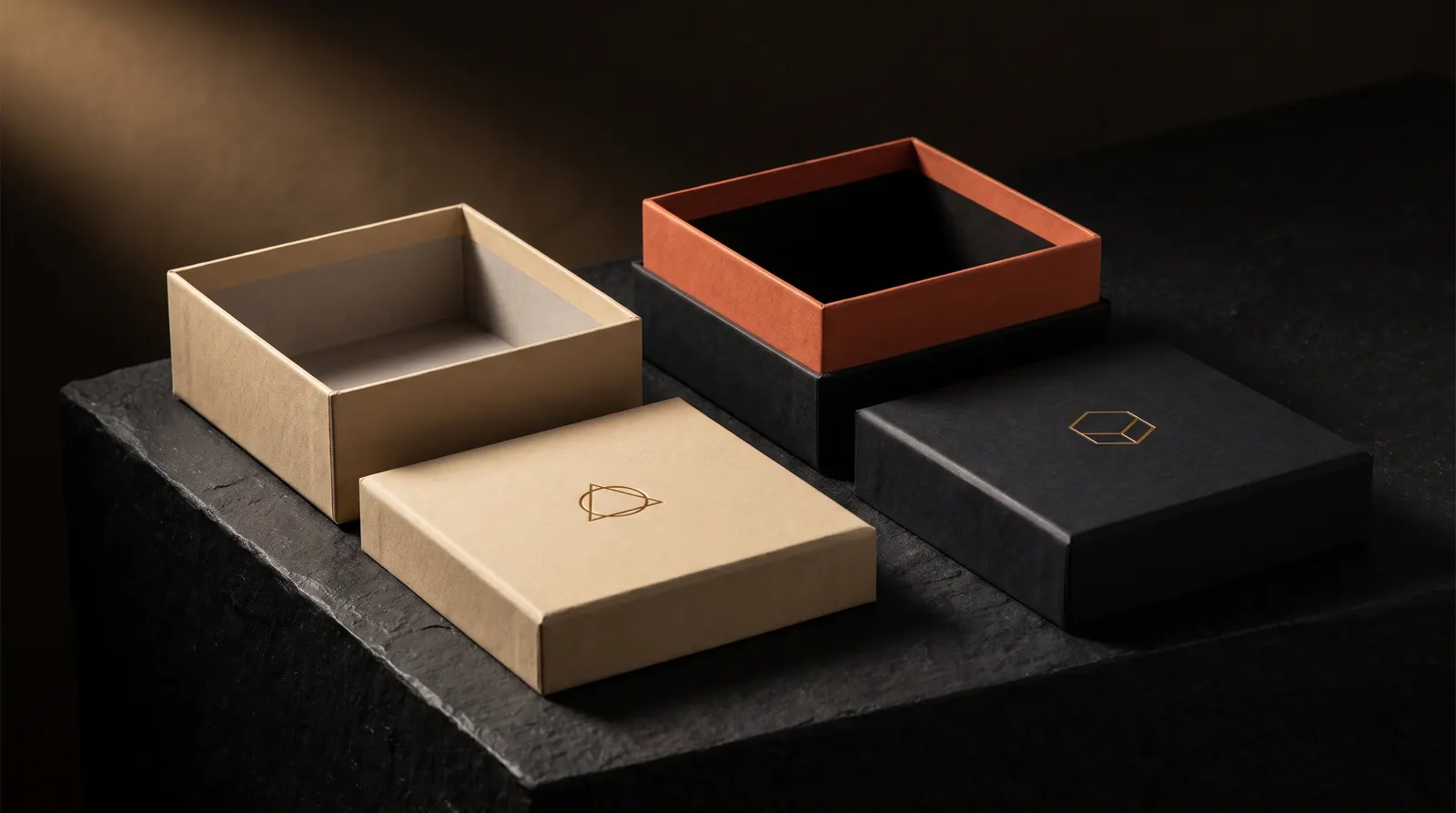
Every rigid box starts as 2 mm greyboard: dense, flat, and stiff enough that the lid drops rather than flexes. Heavier board is available on request. On luxury rigid boxes the board is never the surface anyone sees. A sheet of paper, the wrap, covers it and turns in at every edge, and a grey core showing anywhere is a fault, never a look. See rigid box board.
The wrap is where the feel lives, and it decides which finishes the box can take.
- Uncoated colour papers. Soft, slightly toothy sheets in a deep range of shades, like the sand Colorplan on our Vlada box. They take foil cleanly and hold a deboss crisply. Our first recommendation.
- Natural kraft. Brown, fibrous, honest. Ink sinks into it and turns flat and muddy, so we use foil. Black hot foil on kraft is the least expensive build that still feels like a gift.
- Black and dark uncoated. Dramatic, and foil sings on it. A blind deboss on black is very quiet, though, because a blind impression reads only by its shadow. If the mark has to be read, we put foil in the impression.
- Printed wrap with soft-touch lamination. Full-colour artwork, then a laminate with a suede-like drag under the fingers. Foil bonds well to it. Deboss doesn't: an impression won't seat in soft-touch laminate, so if you want both, the deboss moves to an uncoated wrap.
The landmine on dark soft-touch: on a deep navy or near-black soft-touch box, every fingerprint and every courier scuff shows. We plan around it with a lighter base colour, foil where hands won't land, and a proper outer carton. If the box has to be black and spotless, choose a black uncoated wrap instead.
Foil-stamped and embossed boxes: what the wrap can take
Every foil and every impression on a rigid box is pressed into the wrap while it's still a flat sheet, before it goes round the board. Press a wrap after it's assembled and it lifts off the board and the impression goes slack.
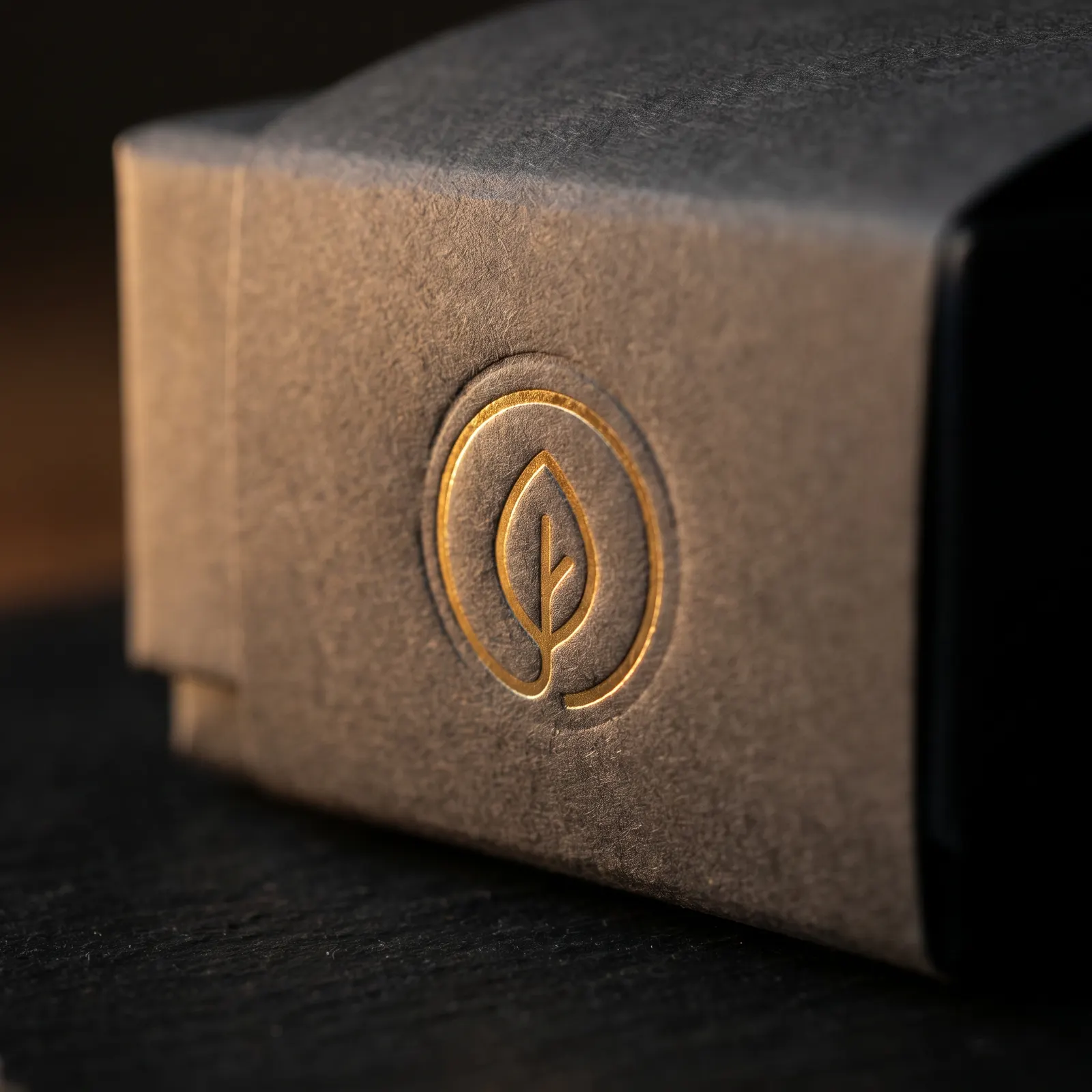
- Hot foil. A metal film pressed onto the wrap with heat and a die. Metallic and opaque pigment foils read on any colour of paper, dark ones included, which makes foil our default for a logo on a lid. Fine detail survives foil: lines hold to 0.1 mm; we design to 0.15 mm and adjust only below-floor lines, preserving your mark. Foil is one flat tone, so a gradient logo becomes a clean single colour. Black foil on a black wrap reads as a sheen, not contrast: lovely for a quiet mark, wrong for anything that has to be read. We keep 40 foils on the shelf.
- Blind deboss and emboss. The mark pressed into or out of the paper, with no ink and no foil. It needs an uncoated wrap that can take the shape, and it reads only by its shadow, so strokes stay at least 0.5 mm and text 10 pt or larger. Of all our box finishes, it's the quietest and the most tactile.
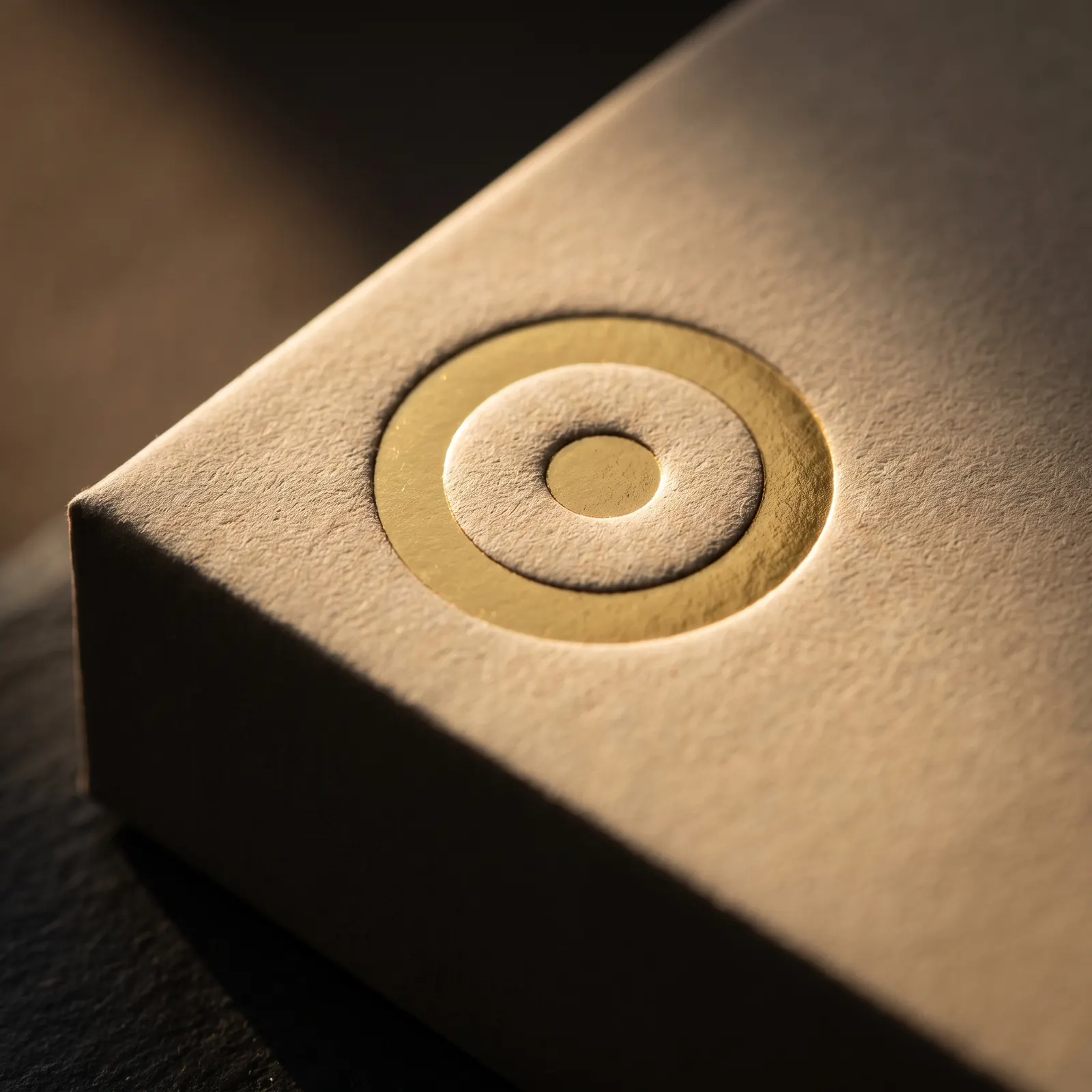
- Foil and deboss together. The foil sits at the bottom of a pressed recess, so you see the metal and feel the edge. When foil and impression share one shape, we cut a single combination die so they line up exactly. With black foil on a box wrap we keep the impression shallow, because a deep one makes the foil bridge across the recess instead of sitting in it.
- Printed interiors. A flood colour or a line of copy inside the lid, seen only once the box is open. It's one of the least expensive surprises a box can carry.
- Spot colour. Your brand colour mixed to Pantone for the wrap, the interior and the insert card. We match to the Uncoated book on uncoated papers and the Coated book on coated ones, because the same ink looks different on each, and we tell you on the proof if a colour shifts.
Two rules you'll see on your proof: foil and impressions stay at least 3 mm away from every edge and turn-in, because they crack where the wrap folds round the board. And any QR code prints in flat ink, never foil, so every phone can read it.
Three ways to build a custom rigid box
We price a box with everything on it first, then show you what each removal saves. Here's how it usually falls out.
| Build | What's in it | Price |
|---|---|---|
| Full build | Shoulder-neck or book-style magnetic box, foil and deboss in one combination die on an uncoated colour wrap, printed lid interior, paperboard tray, matching foil insert card. | Quoted. Upper end of $1,400–$2,000 or above, depending on size and quantity |
| Our recommendation | Two-piece lid and base, one foil on the lid of an uncoated colour wrap, paperboard tray. | Quoted. Most projects land within $1,400–$2,000 |
| Leanest custom box | Two-piece lid and base in natural kraft, one black foil on the lid, plain interior, tissue. | Quoted. Lower end of $1,400–$2,000 |
One foil on an uncoated wrap and a paperboard tray is where most of the feel comes from per dollar. Add the deboss and the printed interior if the number allows. Skip soft-touch on a dark box unless you're fine with the scuffs.
Don't need a custom box at all? If you already have a stock box you like, a foil belly band makes it yours from $295 for 100. It's the honest alternative when the box isn't the product.
Inserts that hold the product without foam
In rigid box packaging, an insert's job is to keep the product still and present it at the right height when the lid comes off. Our first suggestion is a paperboard tray: a recess cut to the product, a finger notch to lift it out, wrapped to match the box. It looks cleaner than foam, and it's paper like the rest of the box. Foam comes in only when the product is heavy or fragile enough to need it.
Send us the product, or its exact dimensions and weight, and we'll draw the tray around it. The prototype shows you the fit before anything is printed.
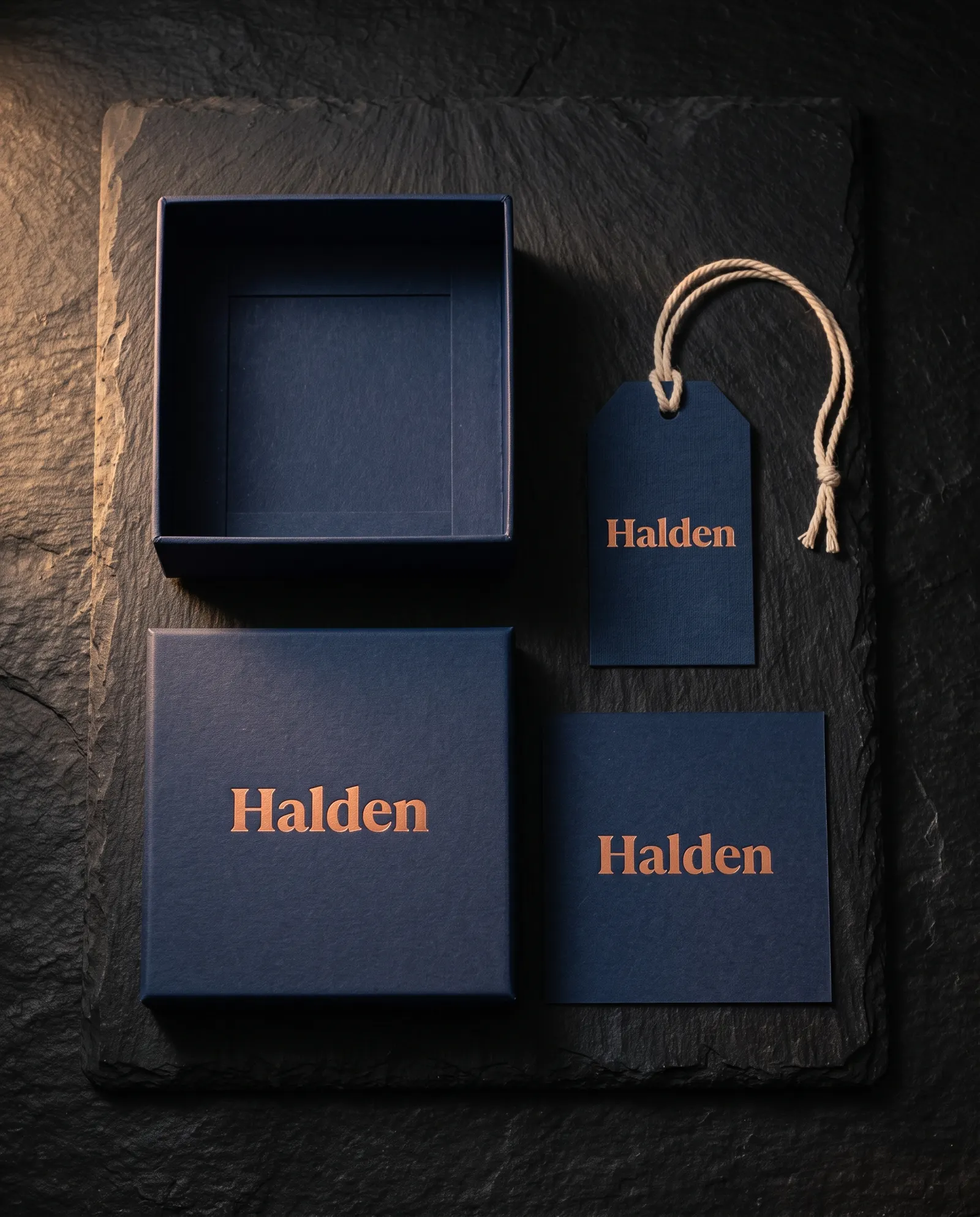
Then there's the card on top. A printed insert card in the same foil as the lid is the cheapest way to tie the whole box together. See packaging inserts and hang tags for the pieces that go inside.

How a custom rigid box gets made
1
Tell us the date first.
When the boxes need to be in hand decides which path is possible.
2
Then the product.
Its dimensions and weight, the quantity, and how the box travels. You don't need a dieline; we draw it.
3
We set the structure.
Style, board, wrap, closure and insert, drawn as a dieline to your product's real size. You can start this in the Studio and see concepts first.
4
You hold a prototype.
A plain physical sample of the structure, so you check the fit and the opening before anything is printed.
5
Artwork on our dieline.
You build on our template in vector, with foil and deboss on their own named layers, or our packaging artwork team builds it for you.
6
You approve the proof.
A person walks through structure, artwork and finishes with you. Nothing goes to production until you approve.
7
Production, then freight.
About three weeks of production after proof approval, then freight.
Every timeline here is an estimate, not a guarantee. For a launch or a holiday gift, start about eight weeks before you need the boxes in hand. See turnaround and shipping and proofing.
Custom rigid box specifications
| Spec | What we offer |
|---|---|
| Styles | Two-piece lid & base, shoulder-neck, book-style magnetic, drawer, collapsible |
| Board | 2 mm greyboard as standard; heavier on request |
| Wraps | Uncoated colour papers, natural kraft, black uncoated, printed wrap with soft-touch or matte laminate |
| Size | Built to your product's dimensions; tell us yours and we'll confirm |
| Hot foil | 40 shelf foils; one die per colour, per location; lines 0.15 mm target / 0.1 mm floor; gaps 0.25 mm target / 0.15 mm floor; foil text 7 pt or larger |
| Impression | Blind emboss, blind deboss, or foil and deboss together; uncoated wraps only (never soft-touch); strokes at least 0.5 mm, text 10 pt or larger |
| Interior | Plain, or printed lid and base liners |
| Inserts | Paperboard tray with a recess and finger notch; foam when the product needs it |
| Clearance | Foil and impressions at least 3 mm from every edge and turn-in |
| Codes | QR codes and barcodes in flat ink only |
| Files | Vector PDF on our dieline, each finish on its own named layer. Or we build the artwork for you |
| Proofing | Physical structural prototype, then a full artwork proof, checked by a person |
| Production | About three weeks after proof approval (estimate) |
| Shipping | Freight quoted with the job; ships built, inside outer cartons |
Rigid boxes we've made
Client jobs, and our own packaging. Each one is a single decision carried through properly.

Client job
Fletcher
A 9 × 12 × 4 in rigid box in natural kraft. One black hot-foil wordmark, given extra dwell so it holds on the rough kraft fibre, stamped flat before wrapping.
Client job
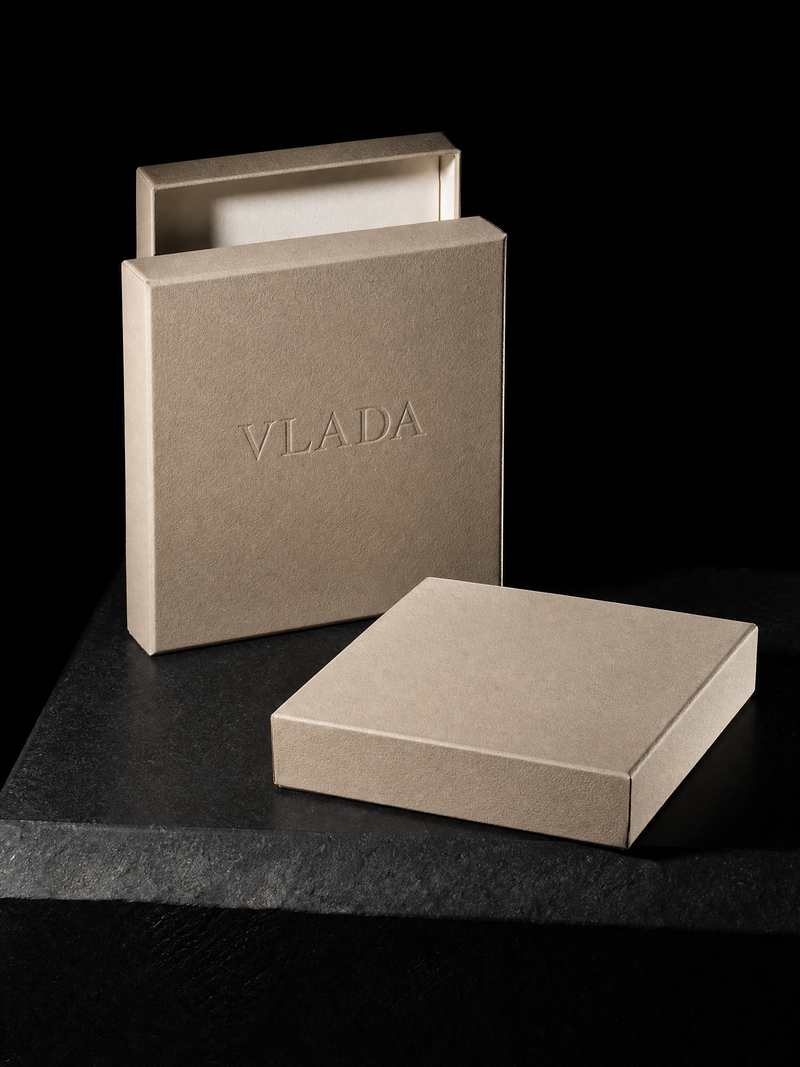
Vlada
A 6 × 6 × 2 in rigid box in sand uncoated paper. One name, blind-embossed into the wrap before it went round the lid. No ink.
Our own packaging
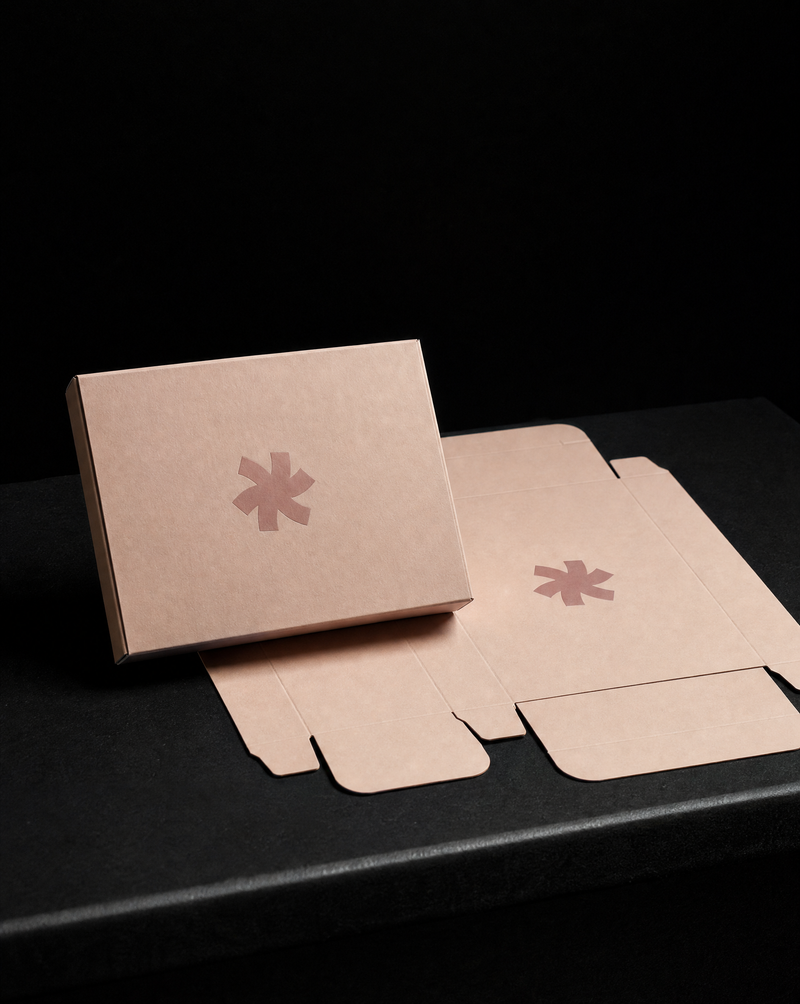
Our samples box
A folding carton, not a rigid box, but the same foil logic: one matte blush foil on dyed-through blush board. One die, one foil, no ink.
Custom rigid box questions, answered
What's the minimum order for custom rigid boxes?
Small runs are welcome. Once a foil or deboss die is part of the build, runs usually make sense from about 100, because the die and the press setup cost the same whether they make 20 boxes or 200, so very short runs carry a high price per box. Shorter pilot runs are quoted on request; we've built one of eight boxes with a printed wrap and no foil die. Tell us the quantity you actually need and we'll price exactly that.
How much do custom rigid boxes cost?
Most custom rigid box projects we've built have landed around US$ 1.400–US$ 2.000 for the whole run. That's context, not a quote. Size, quantity, the wrap paper, how many foil colours and impressions, the insert, a printed interior and freight set your number. We price the full build first, then show you what each removal saves, so you can choose where the money goes.
Why are rigid boxes more expensive than mailer boxes?
A rigid box is 2 mm greyboard wrapped in paper and assembled before it ships, and it can't fold flat. You pay for the board, the wrap, the assembly and freight on a box that's mostly air. A mailer is one die-cut sheet of corrugated board that ships flat and folds up in seconds. The rigid box costs more because it's built, and that solidity in the hand is what you're paying for.
How long do custom rigid boxes take?
Production takes about three weeks after you approve the proof. Before that comes the structure and a physical prototype; after it comes freight. For a launch or a holiday gift, start about eight weeks before you need the boxes in hand. These are estimates, not guarantees, so tell us your date first and we'll say honestly whether it's comfortable.
Can you foil or deboss a soft-touch rigid box?
Foil, yes: hot foil bonds well to soft-touch laminate. Deboss and emboss, no. Laminate is a stiff film that won't take a clean impression, so the mark goes flat or cracks. If you want an impression, we move the box to an uncoated wrap, where a deboss presses in crisply. If you'd rather keep the soft-touch, the mark goes in hot foil alone. One more thing on dark soft-touch: fingerprints and courier scuffs show, so ship it in a proper outer carton or choose a lighter colour.
Do I need a dieline to order a rigid box?
No. Send the product's dimensions and weight, or the product itself, and we draw the structure and the dieline around it. You approve a physical prototype of the structure first. Then you build your artwork on our dieline in vector, with foil and deboss areas on their own named layers, or our packaging artwork team builds it for you.
What's the difference between a two-piece and a shoulder-neck rigid box?
A two-piece rigid box is a base and a lid that lifts straight off. A shoulder-neck box adds a raised inner collar, the neck, that the lid sits on, so a band of the inside shows when the box is closed and the opening feels slower. Shoulder-neck is a third built part, so it costs more. Choose it when the reveal is the point; otherwise the two-piece is the better spend.
Can you put a white or gold logo on a black rigid box?
Yes, with foil. Ink sinks into black uncoated paper and nearly disappears, so a white mark is white pigment foil and a gold mark is metallic foil, both opaque on dark paper. Two things to know: black foil on black paper reads only as a sheen at an angle, and a blind deboss on black is very quiet. If the mark has to be read across a room, use a light foil.
Rigid, magnetic or mailer: which box should I choose?
Choose a mailer if the box has to go through the post on its own; it ships flat and is its own shipper. Choose a rigid two-piece if the box is a gift or a keepsake and travels inside a carton. Choose a book-style magnetic box when it will be opened and closed many times, like a PR or presentation kit. Compare all three on custom gift boxes.
Can the box match my business cards and hang tags?
Yes, and it's one of the best reasons to make the whole kit with one studio. We use the same foil and the same paper language across the box, the insert card, the hang tags and the seals, and check them on one proof, so the gold on the lid is the same foil as the gold on the tag. Foil can look a shade different on a different paper, so we lay the pieces side by side on the proof. Send us your existing pieces and we'll match them where the structure allows. See how the box can match your tags and inserts.
Can I see a sample before I order rigid boxes?
Yes. Our US$ 8 sample kit includes a foil swatch card with every foil we keep on the shelf, plus real papers and finishes like blind emboss. It's built around cards rather than boxes, but it's the quickest way to choose a foil in your own light. For the box itself, you approve a plain physical prototype of the structure before the run, so you check the fit and the opening in your hands before anything is printed.
How are rigid boxes shipped?
Freight is quoted with the job. Rigid boxes arrive already built, so they ship by volume rather than weight, and the box size and quantity drive the cost. If freight or storage space is the problem, a collapsible rigid box ships flat and folds up when you pack it.
What's the most cost-effective way to get a custom rigid box?
Keep the structure simple and spend on one finish. A two-piece lid and base in natural kraft or an uncoated colour wrap, with one hot foil on the lid, is the leanest build that still feels like a gift. Skip foil on the base, a printed interior and a second foil colour; each adds a die or a step. A collapsible rigid box saves on freight and storage. And if a stock box already works, a foil belly band from US$ 295 for 100 makes it yours without a custom box at all.
Tell us what goes inside the box
Send the product's size and weight, the quantity and the date you need the boxes. We'll come back with a style, a finish recommendation and a price, then a prototype you can hold. If it's easier to talk it through, book a call.
Reviewed by a person before anything prints.