FINISHES
What Is Spot UV?
Flat vs raised, spot UV vs spot varnish, the papers it shows best on, and what it costs.
By Austin Terrill, founder of Print Peppermint · Updated · 8 min read
On this page
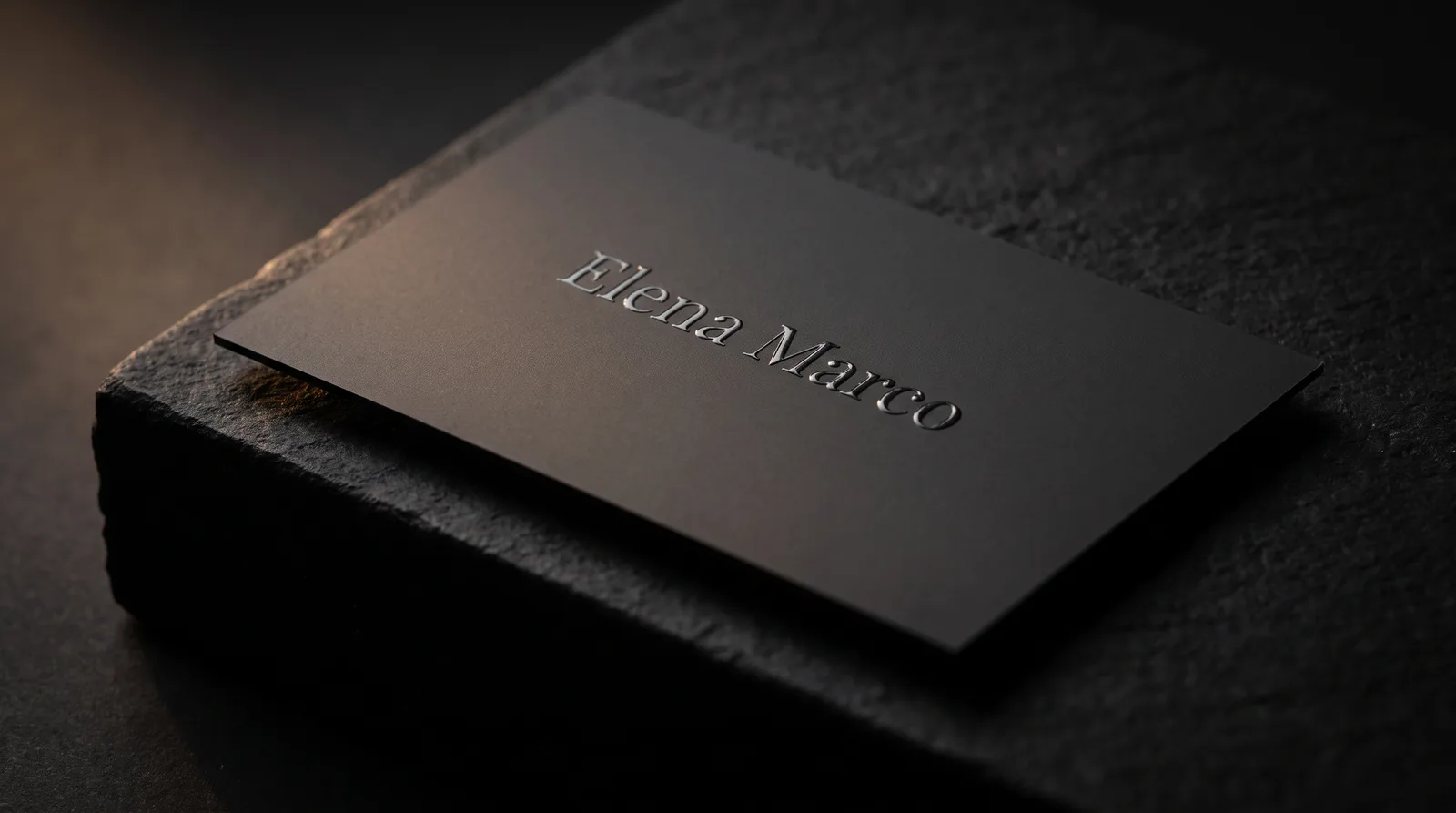
Spot UV (ultraviolet) coating applies a clear, glossy varnish to specific areas of a printed card, which is then cured instantly by UV light. The gloss sits against a matte surface like soft touch, silk or cotton, so the coated parts flash when the card moves. Flat spot UV is visual; raised spot UV can be felt.
Put it on a matte card, never a glossy one. That's the one rule worth remembering.
| What it is | A clear UV-cured coating on chosen parts of a print |
|---|---|
| Also called | Spot gloss. (Spot varnish is a different thing; see below.) |
| Two kinds | Flat (thin, smooth, seen) and raised (built up, felt) |
| Shows best on | Matte surfaces: soft touch, silk, matte coated, cotton |
| Wasted on | Gloss-coated or gloss-laminated cards (the spot disappears) |
| Smallest detail | Flat: 0.3 mm lines, 8 pt type. Raised lines and gaps: 0.3 mm target / 0.17 mm floor |
| Cost (business cards) | From 105 US$ for 100 raised; 125 US$ for 500 flat |
| Lead time | Our Standard cards ship in 3–4 business days after proof approval (estimate) |
How spot UV works
Spot UV (ultraviolet) coating applies a clear, glossy varnish to specific areas of a printed card, which is then cured instantly by UV light. The 'spot' refers to selective placement — rather than coating the entire card, the gloss is applied only to chosen design elements.
Here's what actually happens. Your card is printed first, as normal. Then a second pass lays down a clear liquid coating, but only where a separate file, the mask, tells it to. The mask is just your design's gloss areas in solid black on white. The sheet passes under ultraviolet lamps and the liquid hardens in a second. No drying time, no soaking in.
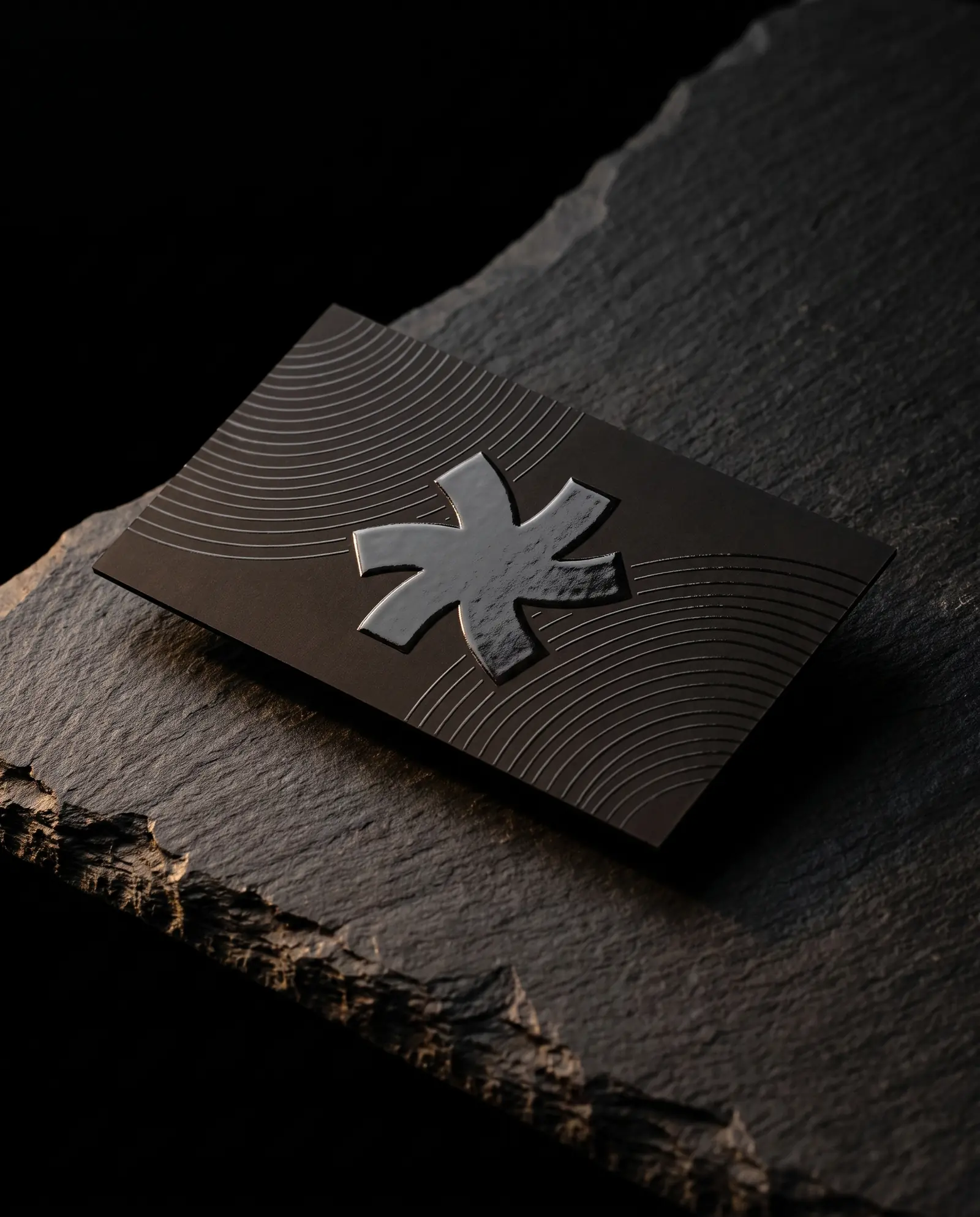
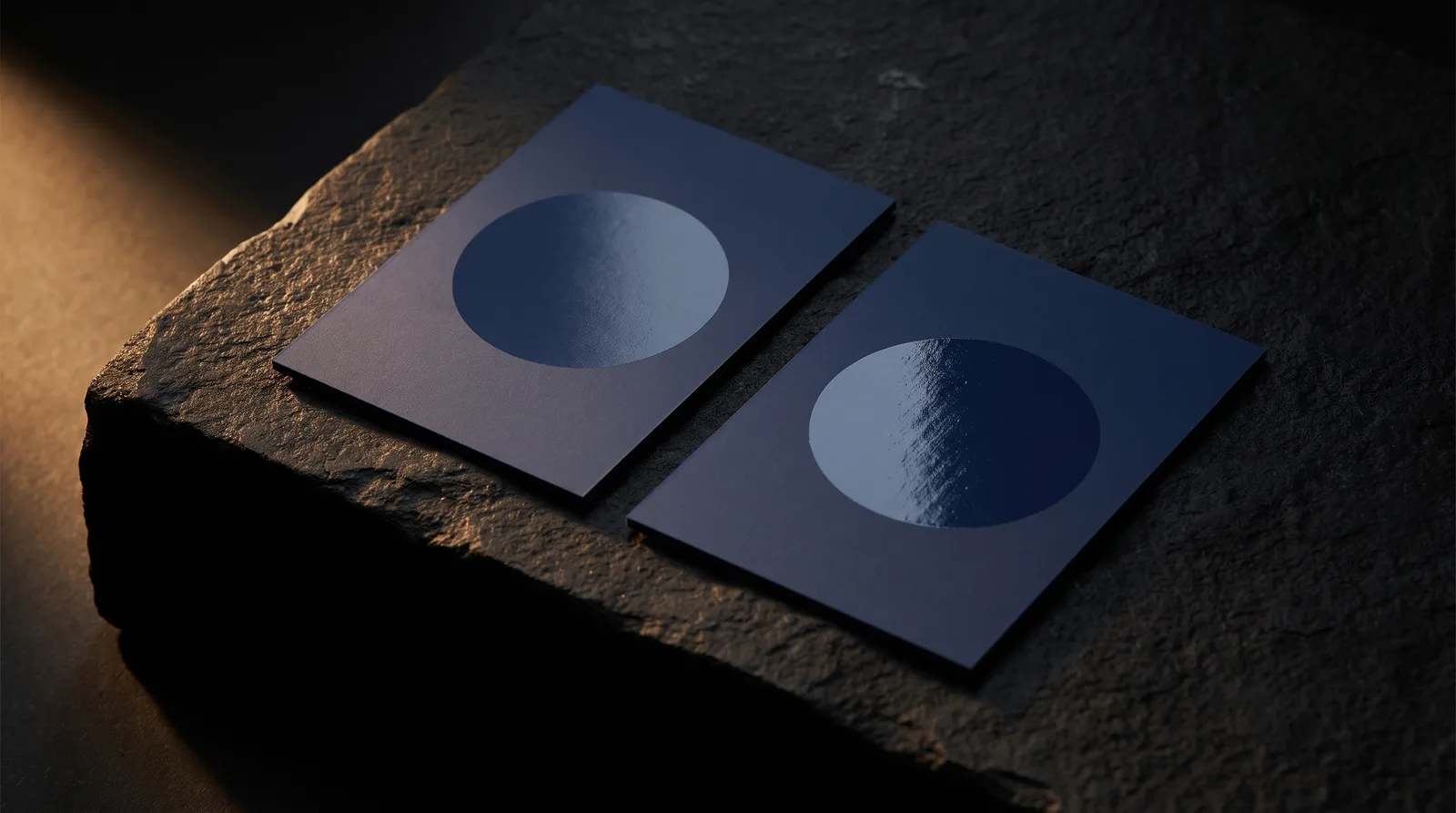
The effect depends entirely on contrast. Gloss reflects light in one direction; a matte surface scatters it. Put the two side by side and, straight on, you see almost nothing. Tilt the card ten degrees and the logo lights up. That's why I always say spot UV is a finish you design for movement, not for a flat photo.
Flat spot UV vs raised spot UV
Both are spot UV gloss. The difference is height.
Flat spot UV
A thin, smooth layer, flush with the card. You see the gloss difference but barely feel it. It holds lines at 0.3 mm, with type at 8 pt, and handles patterns and larger shapes well, which makes it the better choice for a pattern that spreads across the card. On a business card, it's the cheaper of the two at volume. You can see tone-on-tone patterns like this on our modern business cards.
Raised spot UV
The coating is built up thick enough to feel, a fraction of a millimetre, with a smooth, glassy shoulder. Run your thumb over it on a soft-touch card and you hit a cool ridge in the velvet. Lines and gaps use 0.3 mm target / 0.17 mm floor. This keeps the bead defined without imposing a heavier version of the artwork. And keep it to about a third of the card, or the cards stick together in the box.
| Flat spot UV | Raised spot UV | |
|---|---|---|
| Height | Flush | A fraction of a millimetre, felt |
| Line target / floor | 0.3 mm | 0.3 mm target / 0.17 mm floor |
| Smallest type | 8 pt | 8 pt (10 pt reversed) |
| Coverage | Patterns and large areas OK | About a third of the card, max |
| Best ground | Silk or soft touch | Soft touch |
| Feels like | Nothing; it's visual | A smooth ridge |
Spot UV vs spot varnish vs UV coating
People use these three interchangeably, and printers don't help. They're different.
Spot varnish is the old way. A varnish is printed from a plate on the press like an extra ink, only where you want it, and dries the way ink does. It gives a softer sheen than UV, and it can be gloss, satin or matte. It's economical on long offset runs.
Spot UV is a heavier clear coating cured instantly under UV light. It's glossier and harder, and it can be built up into raised spot UV.
UV coating (or UV varnish) usually means a flood: the whole sheet coated in gloss, which is what gives a glossy business card its shine. Spot UV is that same chemistry, applied selectively. So UV varnish vs spot UV comes down to coverage: the whole sheet, or only the parts you choose.
Spot gloss? That's a sales name for spot UV.
| Spot UV | Spot varnish | UV coating (flood) | |
|---|---|---|---|
| Where it goes | Chosen elements | Chosen elements | The whole sheet |
| How it sets | Cured instantly by UV light | Dries like ink | Cured by UV light |
| Sheen | High gloss | Softer; gloss, satin or matte | High gloss |
| Can be raised | Yes | No | No |
| Typical use | Business cards, covers, packaging | Long offset runs, magazines | Glossy cards, postcards |
glossy business cards (an all-over UV coating)
Where spot UV works, and where it doesn't
People ask me where spot UV looks best. The short answer: anywhere matte. Gloss only shows against a surface that doesn't shine, so soft touch is the strongest ground, silk and matte coated cards are very good, and cotton takes it too. The one place it's wasted is a card that's already glossy.
| Surface | Verdict | Why |
|---|---|---|
| Soft touch | Best | Velvet matte scatters light, so gloss reads at its strongest |
| Silk / matte laminate or coated | Very good | Smooth, sealed and matte enough for contrast |
| Gloss laminate or gloss coated | Pointless | Both surfaces reflect, so the spot disappears |
| Cotton | Available | A matte paper surface, so the gloss still has contrast |
| Across a fold or score | Avoid | It cracks; keep it 3 mm away from folds |
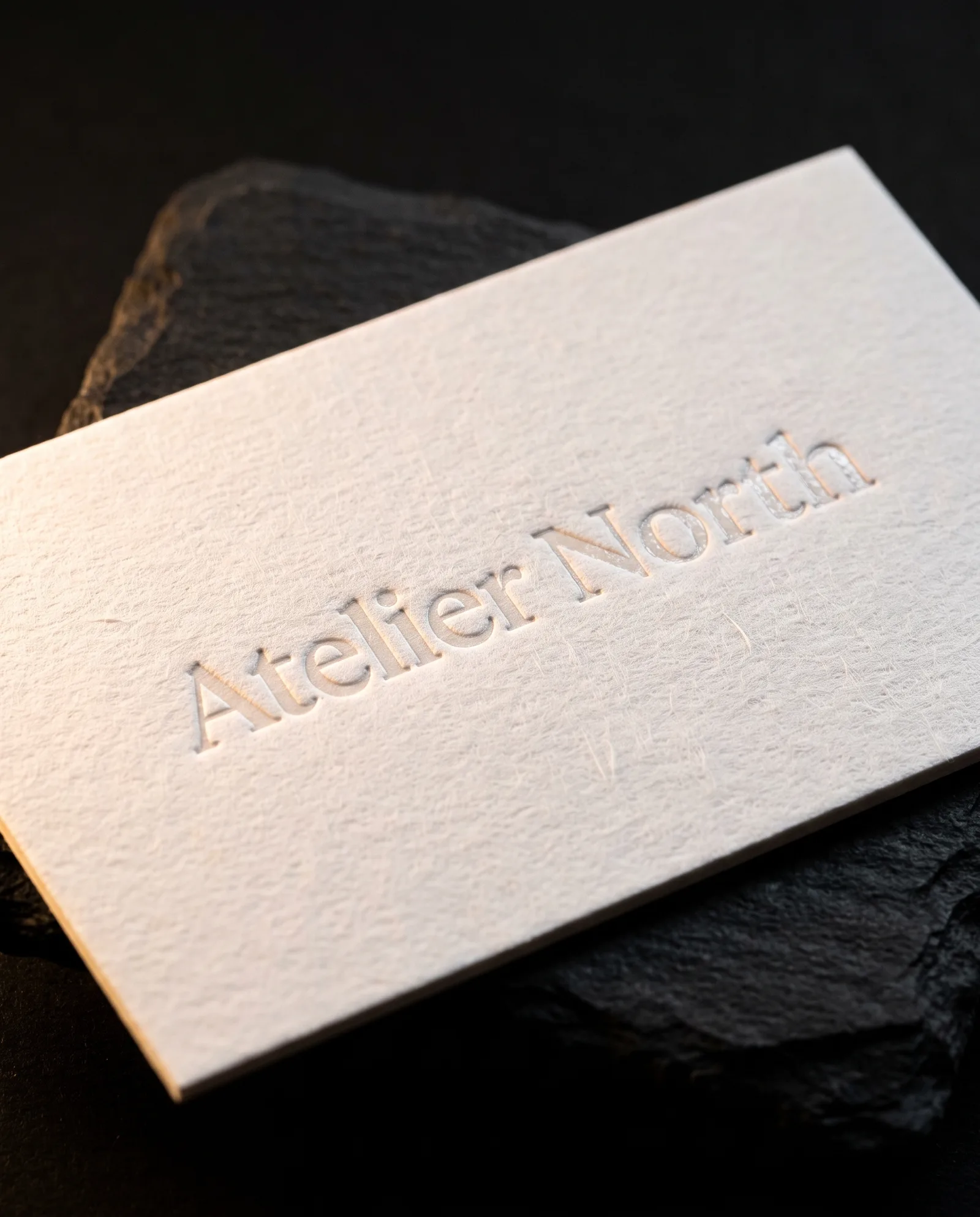
On cotton there are two more ways to get a light moment, if spot UV isn't quite the look: clear foil, the same shape pressed into the paper with heat, with a satin shine and a slight bite you can feel; or a blind deboss, which plays the same light-and-shadow game with no shine at all.
Design tips for spot UV
Most spot UV problems are file problems. Three rules cover nearly all of them: keep it bold, keep it off the edges, and don't ask it to trace your print exactly. The coating can land about half a millimetre off the printed shape, so a tight gloss outline around a printed logo will look misregistered.
| Flat spot UV | Raised spot UV | |
|---|---|---|
| Line | 0.3 mm | 0.3 mm target / 0.17 mm floor |
| Gap | 0.5 mm | 0.3 mm target / 0.17 mm floor |
| Type | 8 pt | 8 pt (10 pt reversed) |
| Distance from trim | 3 mm | 3 mm |
| Coverage | Moderate | About a third of the card |
| Registration to print | about ±0.5 mm | about ±0.5 mm |
- Make the mask vector, 100% black, on its own page or layer, the same size as the print file.
- Fill shapes inside the printed area slightly (a hair smaller) rather than outlining them.
- Never put a QR code in gloss: it glares in a phone camera. QR codes stay in flat ink.
- Foil and spot UV sit side by side, never stacked.
- On a dark card printed on white stock, expect a hairline of white at the cut.
Spot UV vs foil
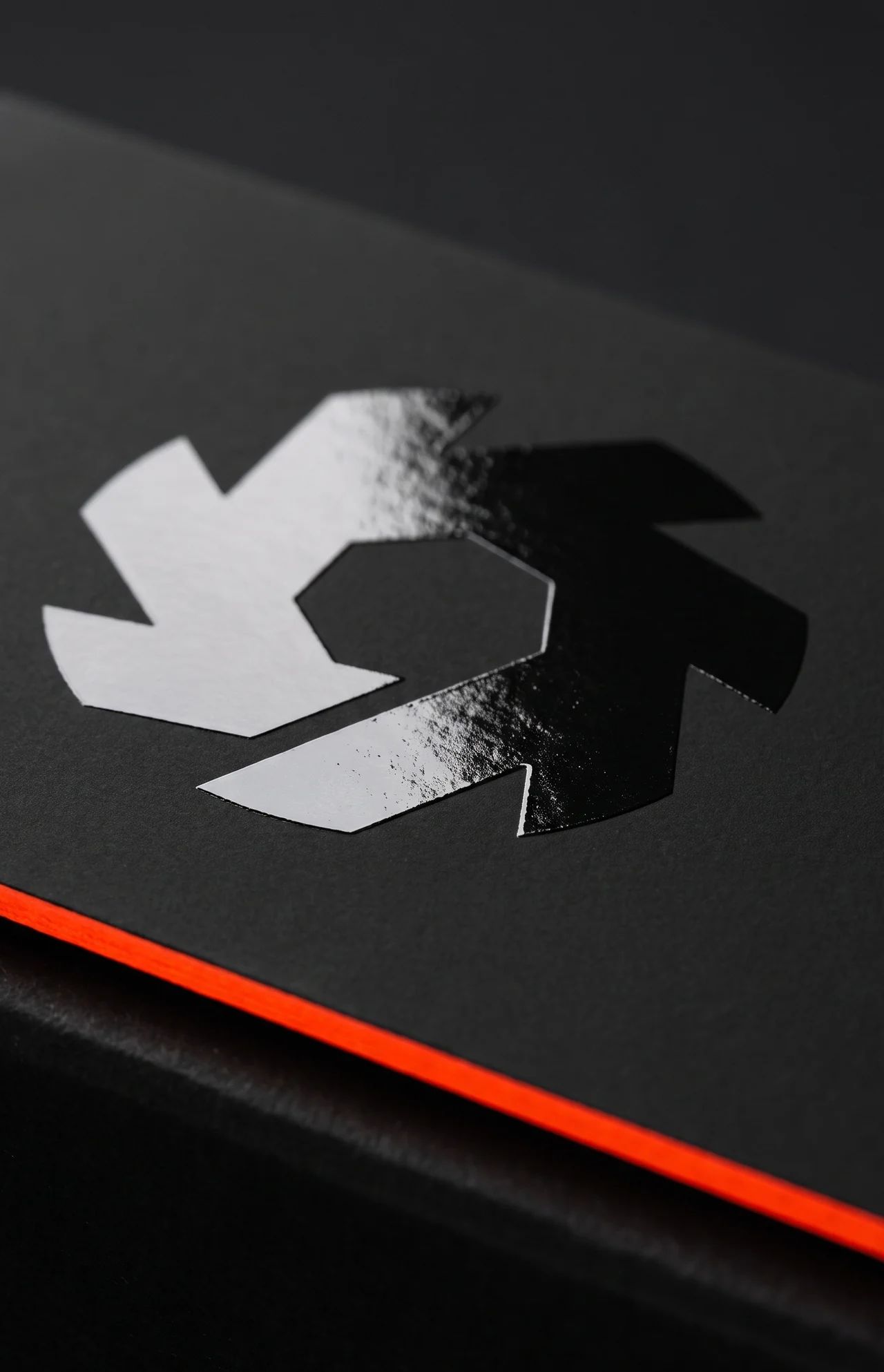
Foil is metal (or an opaque pigment) pressed onto the card with a heated die. It covers what's underneath and catches light like jewellery. Spot UV is transparent: the print shows through, and only the shine changes. Use foil when you want color or metal; use spot UV when you want the design itself to react to light.
They can live on the same card, side by side. Foil won't bond on top of a UV coating, so I'll put the foil on the logo and the gloss on a pattern around it, with a gap between them. One finish usually carries a card better than three.
| Spot UV | Foil | |
|---|---|---|
| Opacity | Clear | Opaque |
| Adds color | No | Yes (metal or pigment) |
| Works on cotton | Yes | Yes |
| Feel | Smooth (flat) or a ridge (raised) | A slight bite (hot foil) or a ridge (raised foil) |
| Cost on cards | Lower | Usually higher (hot foil needs a die) |
Is spot UV worth it?
On a matte soft-touch card, yes. It's the cheapest way I know to make a card do something when it's handed over. On a glossy card, no; you're paying for a coat nobody will see. On cotton, yes: the paper is matte, so it still has something to shine against.
Where I'd skip it: if the design relies on detail below the raised UV floor, check the actual mask before choosing the effect. And if the card is mostly gloss, it stops being a highlight. Pick one element, usually the mark, and let it be the thing that catches light.
"One element in gloss. Everything else matte. That's the whole recipe."
How much does spot UV cost?
Prices for our business cards, checked 1 October 2026. Full color on both sides is included.
| Build | 100 | 250 | 500 | 1,000 |
|---|---|---|---|---|
| Raised spot UV, 20pt soft touch, front | 105 US$ | 140 US$ | 180 US$ | Get a price |
| Flat spot UV, 16pt silk | n/a | n/a | 125 US$ | 149 US$ |
| Build | 250 |
|---|---|
| Custom raised spot UV on soft touch | 310 US$ |
| Custom spot UV (flat UV, default build) | from 245 US$ |
What moves the price: raised vs flat, one side or two, quantity, and whether you add foil or a painted edge on a thicker Custom card.
Compare every option on our spot UV business cards page.
Spot UV on real cards
A few from our own case studies.
Available products
Raised Spot UV on Soft Touch
20pt velvet card, gloss you can feel, ships in 3–4 business days
From 105 US$ for 100
Flat Spot UV
16pt silk, three sizes, ships in 3–4 business days
From 125 US$ for 500
Black Spot UV
Black on black: the logo appears only when it moves
From 121 US$ for 100
All options side by side: spot UV business cards
Spot UV questions
What is spot UV?
Spot UV is a clear, glossy coating applied only to chosen parts of a printed piece and cured instantly with ultraviolet light. The glossy areas reflect light while the matte card around them doesn't, so a logo or pattern flashes as the card moves.
What is spot varnish?
Spot varnish is a varnish printed from a plate on the press, like an extra ink, only where it's wanted. It dries like ink rather than curing under UV light, and gives a softer sheen. It can be gloss, satin or matte, and it is economical on long offset runs.
Spot varnish vs spot UV: what's the difference?
Spot UV is a heavier coating cured instantly by UV light. It's glossier, harder, and can be built up into raised spot UV. Spot varnish is printed and dries like ink, with a softer sheen and no raised option. For business cards, spot UV is the usual choice.
UV varnish vs spot UV: what's the difference?
UV varnish, or UV coating, usually means the whole sheet is coated, which is what makes a glossy card shiny. Spot UV is the same kind of UV-cured coating applied only to selected elements, so those parts stand out against a matte surface.
What is raised spot UV?
Raised spot UV is gloss built up into a smooth ridge you can feel. Lines and gaps target 0.3 mm (0.85 pt, 0.012 in), with a 0.17 mm floor. It shows well against matte soft touch.
Is spot UV the same as spot gloss?
Yes. Spot gloss is another name for spot UV gloss. Some printers say “spot gloss” for flat and “raised spot gloss” for raised. Spot varnish is the one that's different.
Can spot UV be used on cotton paper?
Yes, spot UV is available on cotton. It shows best against a matte surface, and cotton is matte, so the gloss still has contrast. If you'd like a pressed shine instead, clear foil in the same shape or a blind deboss are the other options.
Is spot UV worth it?
On a matte soft-touch or silk card, yes: it's an inexpensive way to make a card react to light. On a glossy card it's nearly invisible, so it isn't worth paying for. Keep it to one or two elements so it stays a highlight.
What are the downsides of spot UV?
It's barely visible on a glossy card. Fine hairlines fill in, and raised UV over large areas makes cards stick together. Gloss can shift slightly against the print, so tight outlines look off. And it cracks across folds, so it stays 3 mm away from scores.
How do I set up a spot UV file?
Send the print file plus a matching mask with gloss areas in solid black. Use vector shapes, keep them 3 mm from trim. Flat UV keeps 0.3 mm lines and 0.5 mm gaps; raised UV targets 0.3 mm lines and gaps, floor 0.17 mm.
What does spot UV look like on a business card?
Straight on, the card looks matte. As you tilt it, the coated logo or pattern lights up with a wet-looking shine. On soft touch, raised spot UV also adds a smooth ridge you can feel against the velvet surface.
How much does spot UV cost on business cards?
Our raised spot UV cards on 20pt soft touch are 105 US$ for 100 and 140 US$ for 250. Flat spot UV on 16pt silk is 125 US$ for 500. Both include full color on both sides and ship in 3–4 business days after proof approval.
Want to see it before you decide? Hold a raised spot UV card in our sample pack (8 US$, with 10 US$ back on your first order), or send me your file and I'll tell you honestly whether spot UV is the right finish.