Case study · Business cards · Kismet Vending
A fortune that fits the slot
Kismet Vending is an Austin startup putting collectible message cards into vintage vending machines. The founders wanted a card people keep, fifty different messages, a die-cut sleeve, and one hard limit: card and sleeve together under 1.1 mm. We laid out three ways to print it, letterpress, flat offset and raised-ink thermography, all on 100% cotton, and built production simulations of each before a single plate was made.
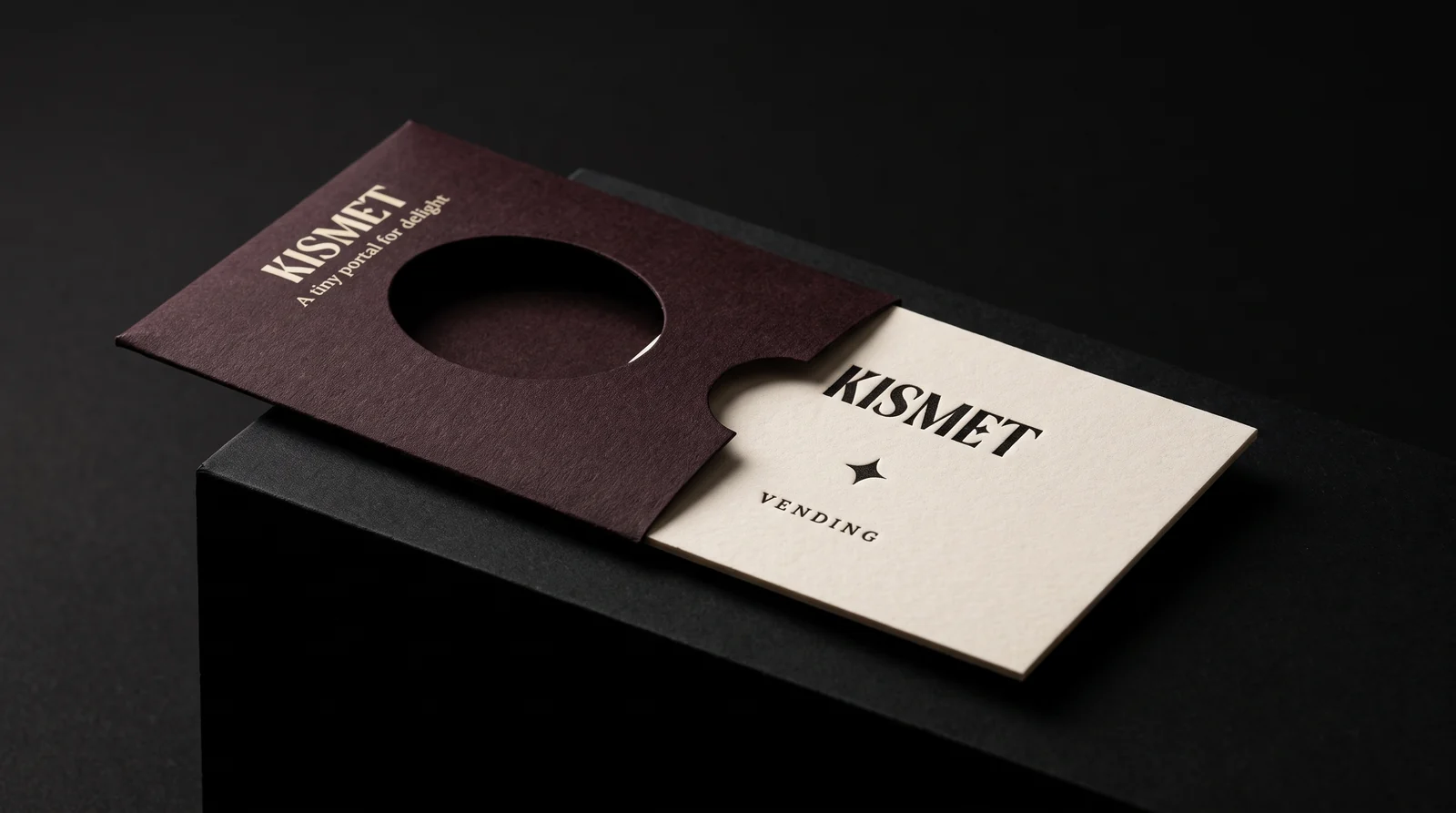
The idea
Kismet sells a small moment of chance. You put money in a vintage vending machine and a card falls out with a message on it, like a fortune cookie with more to say.
Seven rules
- 01Price the best version first. Quote full letterpress first, with flat offset and raised-ink thermography alongside, so the budget picks the method.
- 02Cotton, one black, both sides. 100% cotton in a natural off-white, one black ink on the front and back. Tree-free, and it takes an even, deep bite.
- 03Leave the photograph out. The founders dropped the photo card, so every template holds to the same single-ink line art.
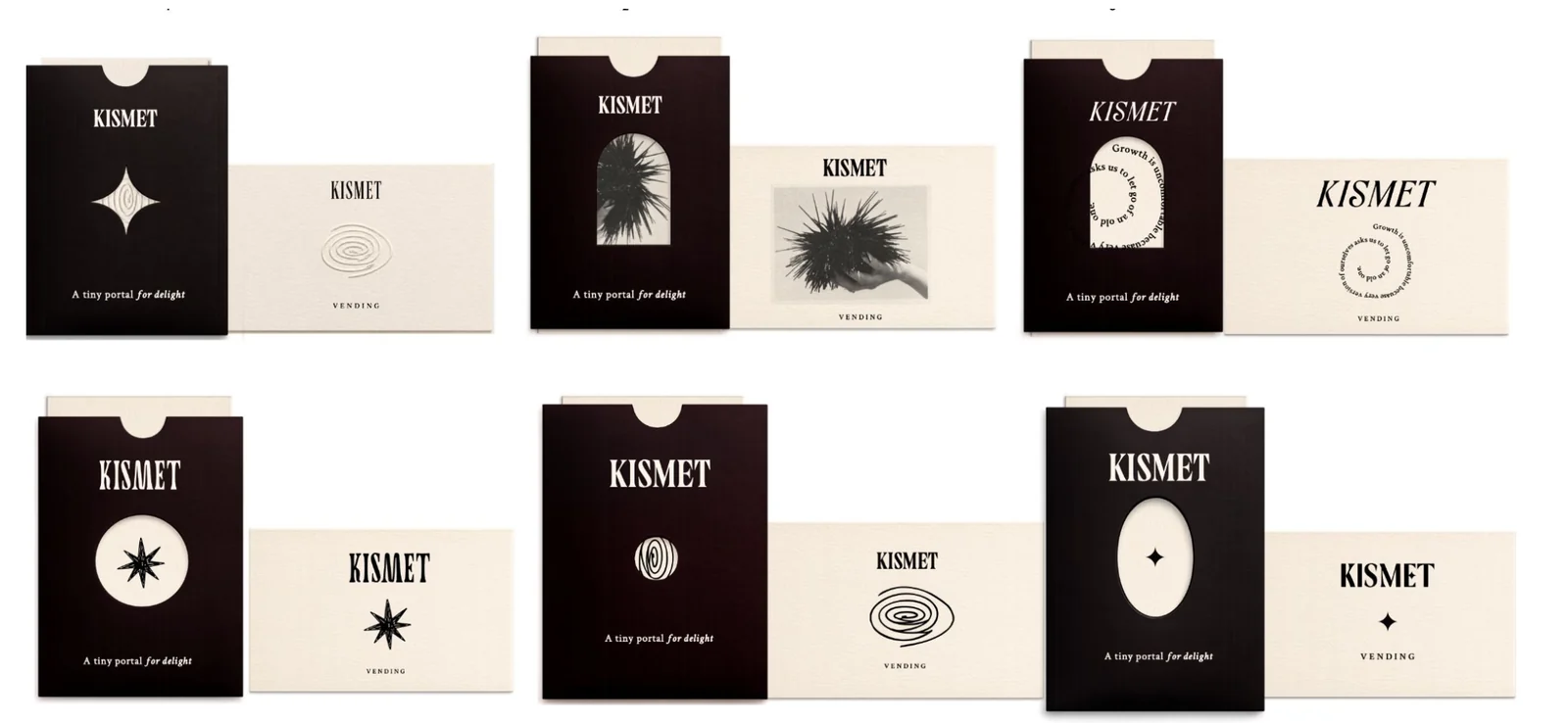
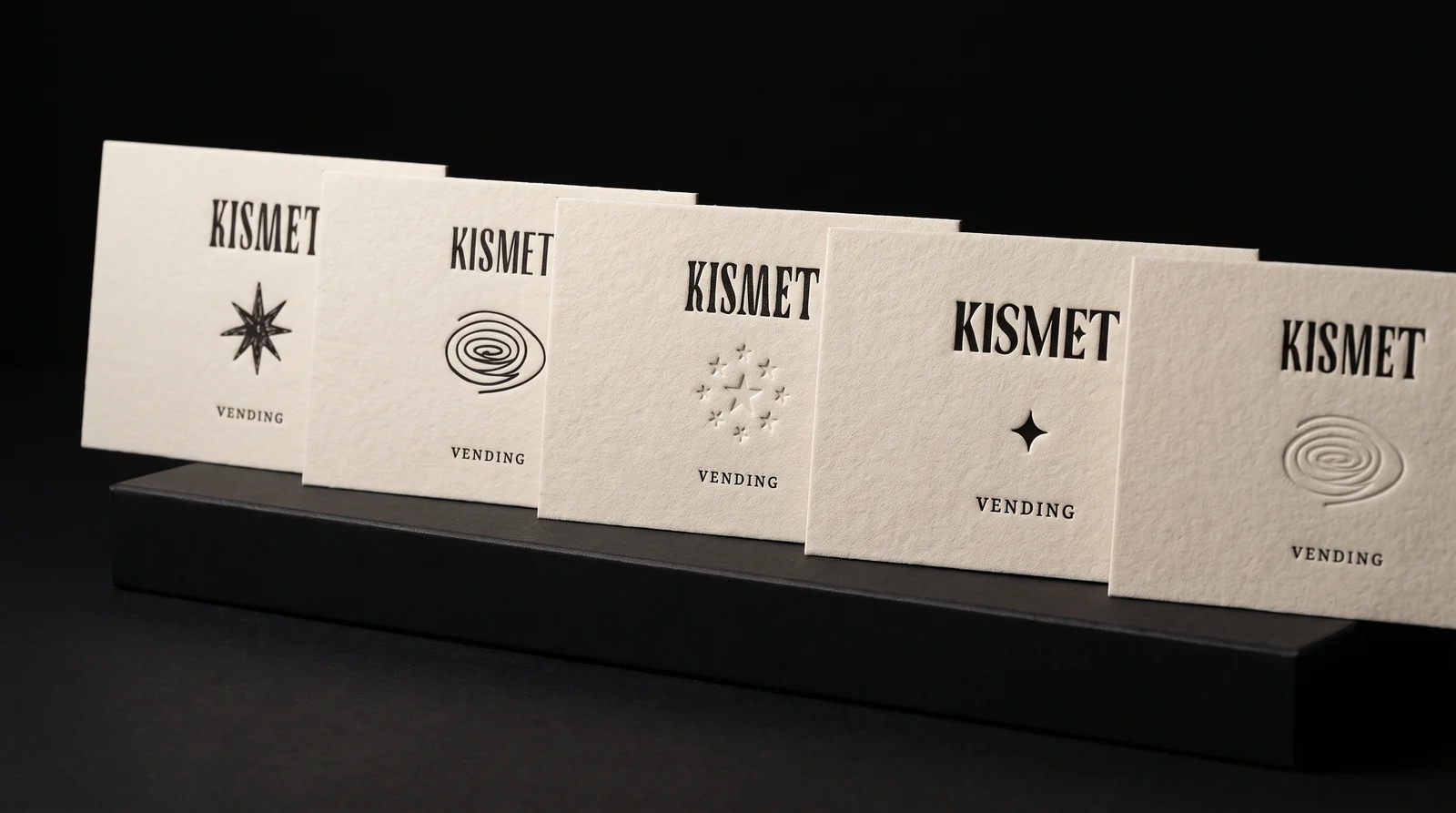
- 04Five templates, five blind dies. Five templates of ten messages each. Every template gets its own blind debossed mark, on the logo side only.
- 05Deboss in, and mind the back. On double-thick cotton the deboss stays on the front. On single-ply, lay out the back copy around the shape it leaves.
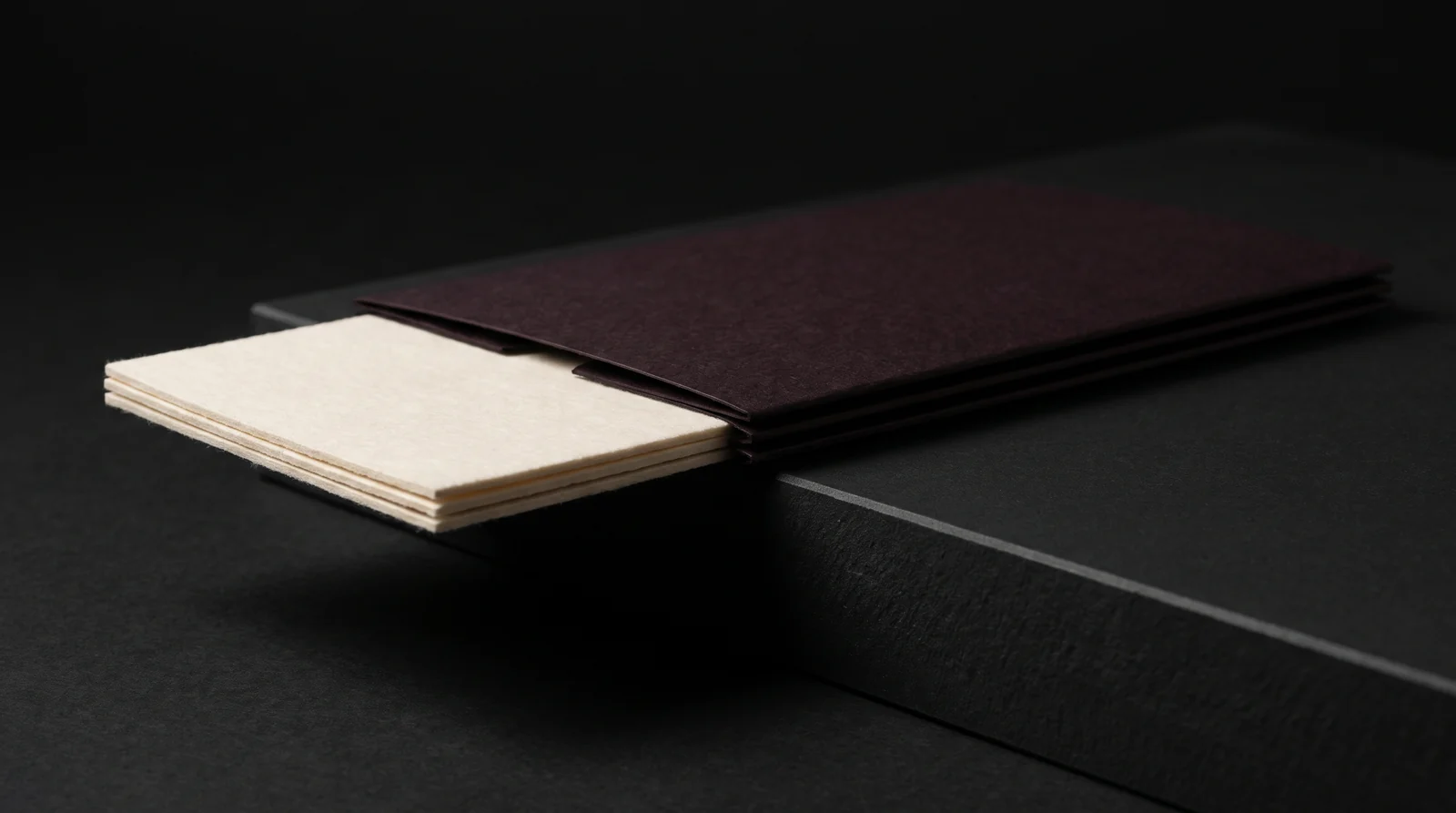
- 06Work backwards from 1.1 mm. Price single-ply and double-thick cards with a sleeve built snug to the card, then prove the fit with the prototype run.
- 07One sleeve for all fifty. One sleeve with one window that works for every card, with the variable-window version priced next to it.
The client
Kismet Vending is two co-founders in Austin, Texas, launching with machines around the city and planning to follow with hotels, coffee shops and bookstores, then capsule drops written by guest artists.
Their first message to us asked for full-colour printing on both sides, 2.5 × 3.5 in cards in sleeves, fifty messages shuffled rather than grouped, and a question most first-time clients ask: letterpress, embossing or foil, which one is worth the money?
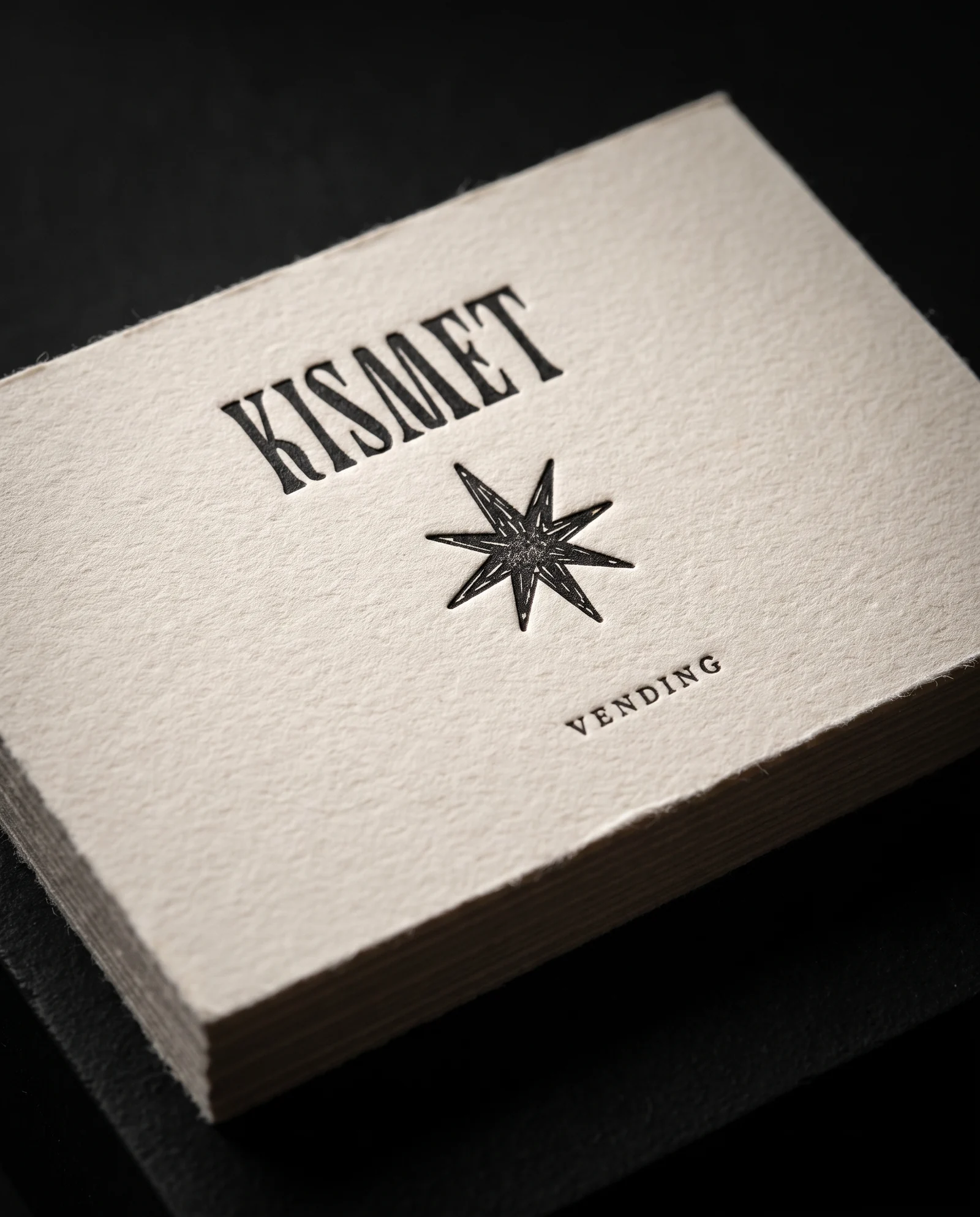
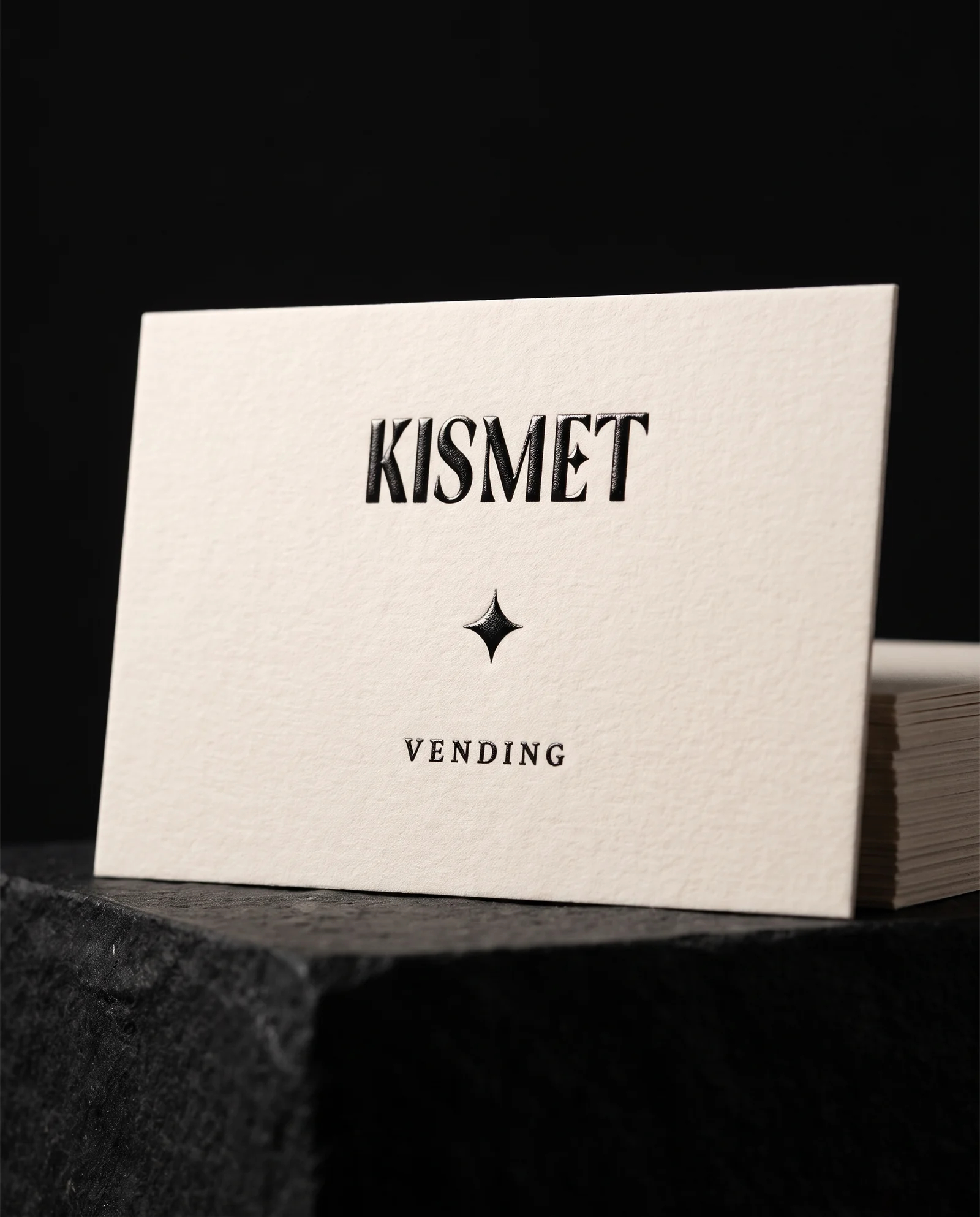
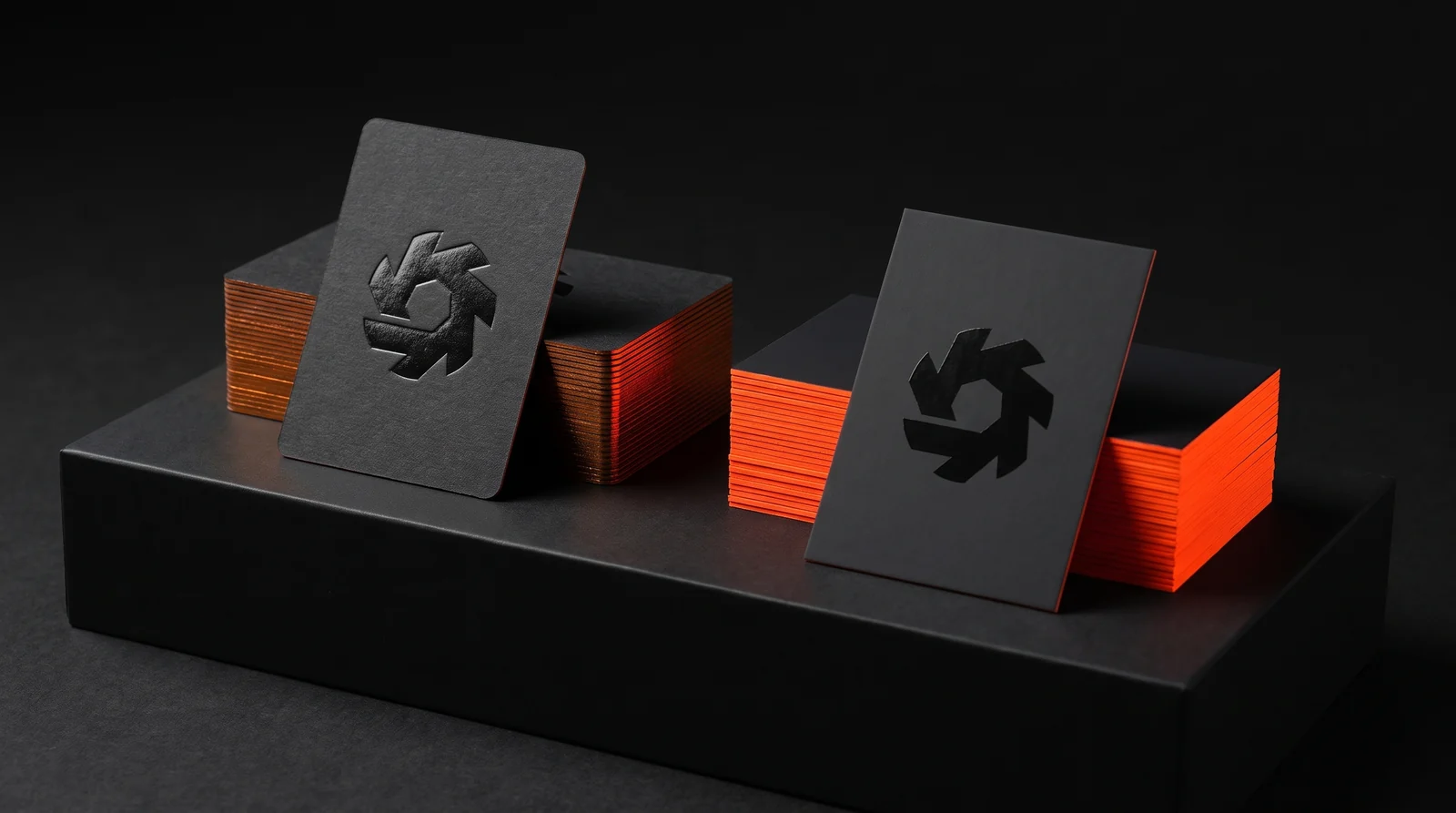
The same one-black artwork two ways. Letterpress sinks every stroke into the cotton and stays matte. Thermography leaves the sheet flat and lifts the ink into a soft, shiny ridge, at about the price of flat offset.
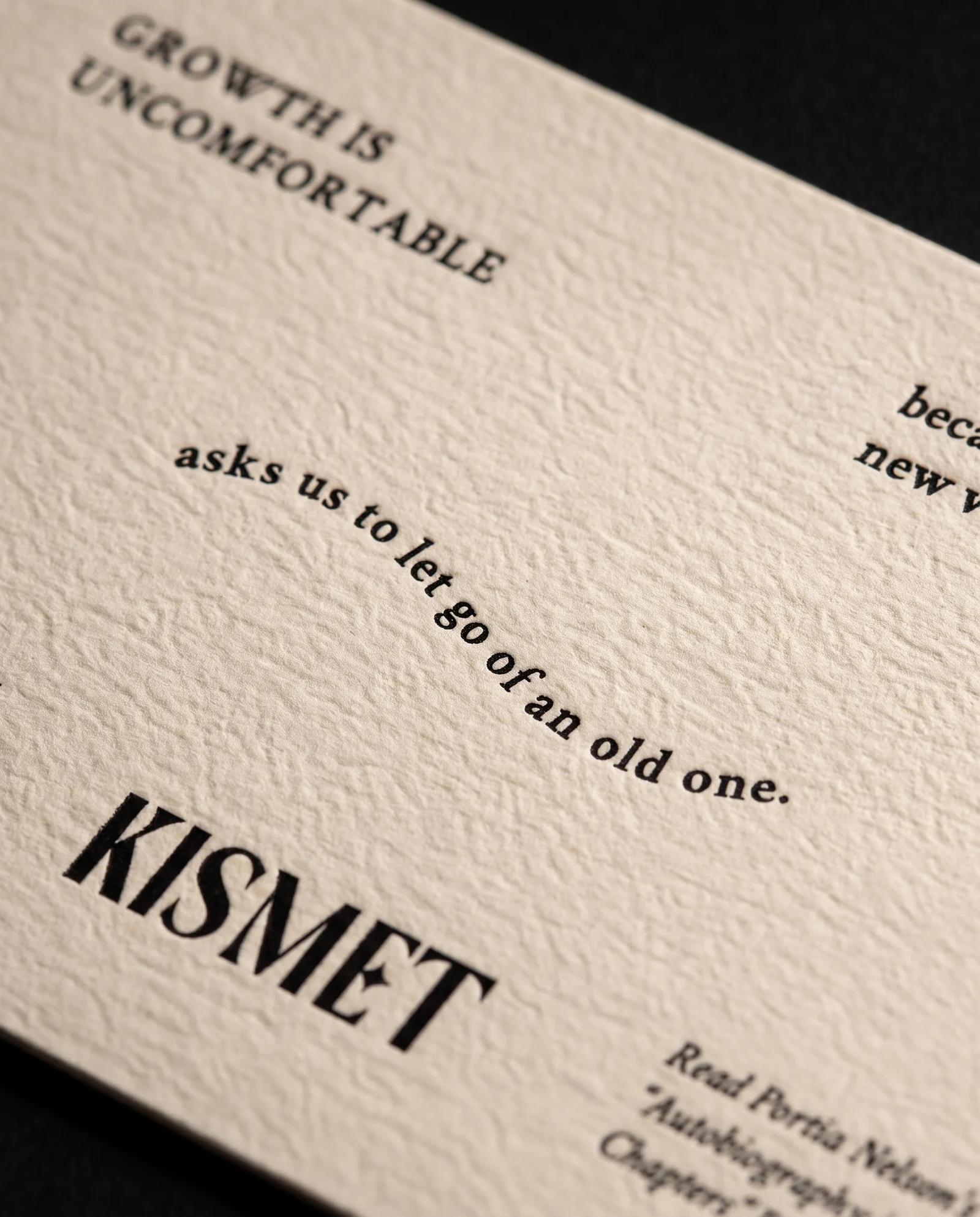
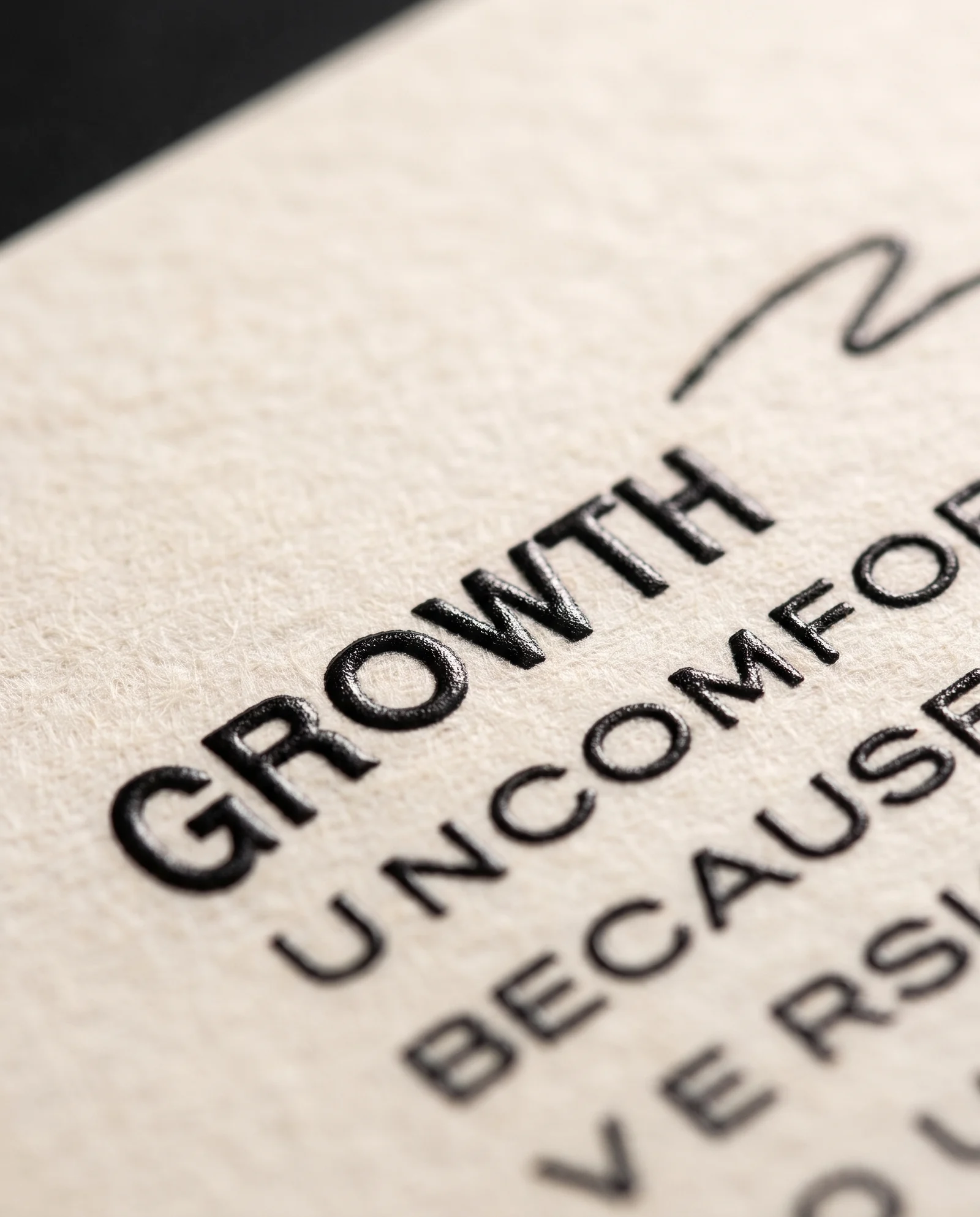
Up close, letterpress is a shadow and thermography is a highlight. One reads as craft, the other as polish, and both hold small type on cotton.
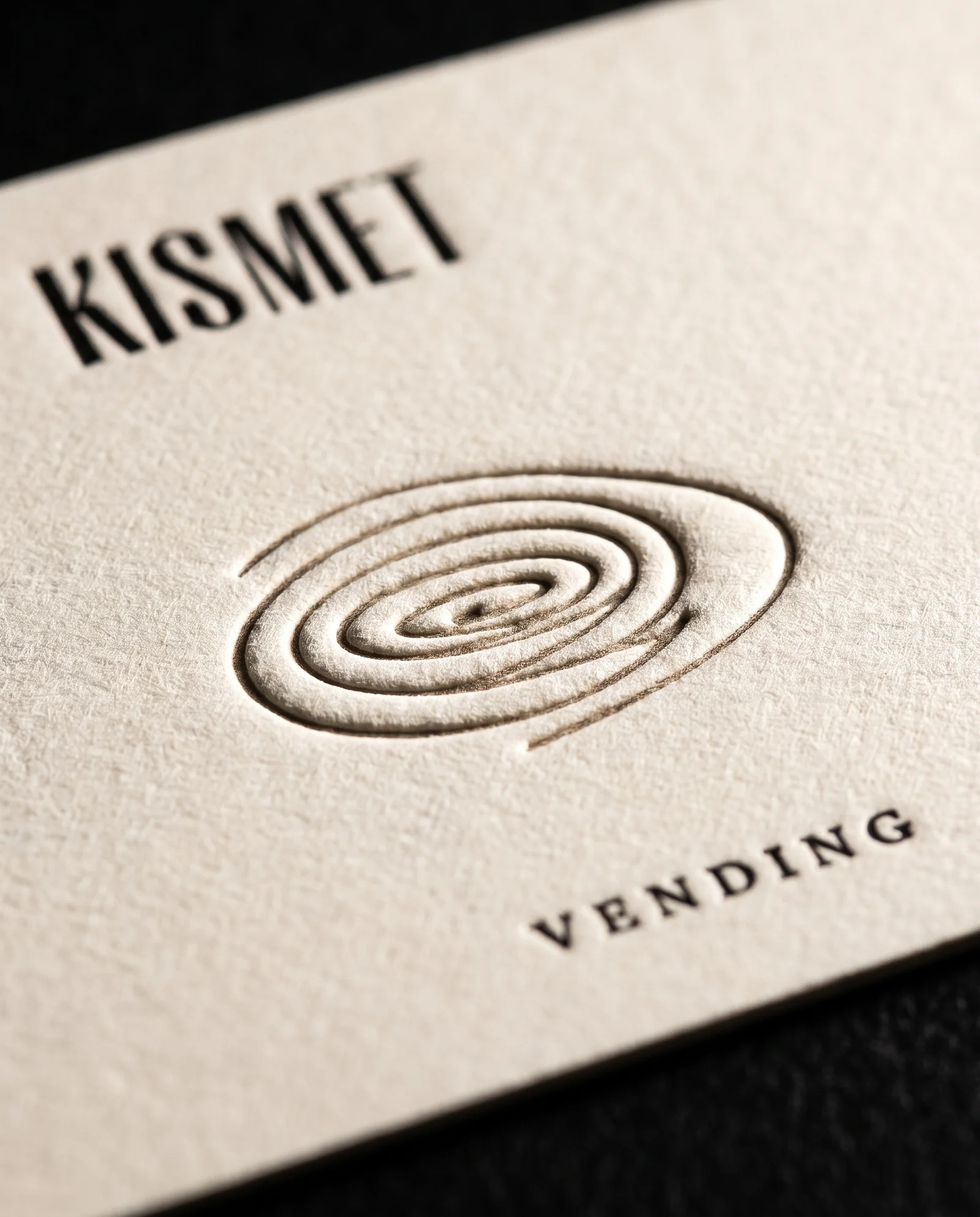
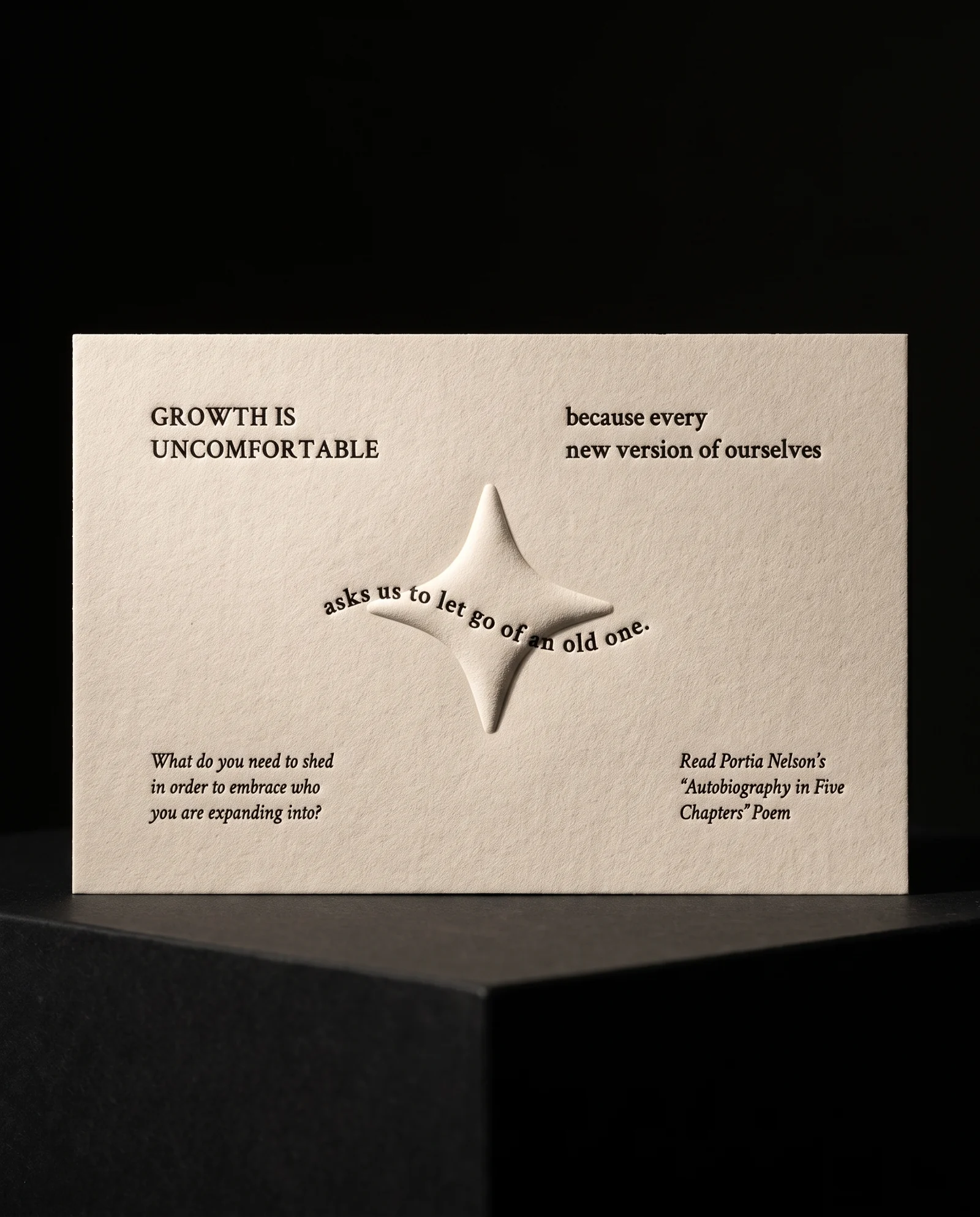
A blind deboss on double-thick cotton leaves the back untouched. On a single sheet the shape comes through as a raised bump, so the back copy has to be laid out around it. That only works if the designer knows before finishing the layout.
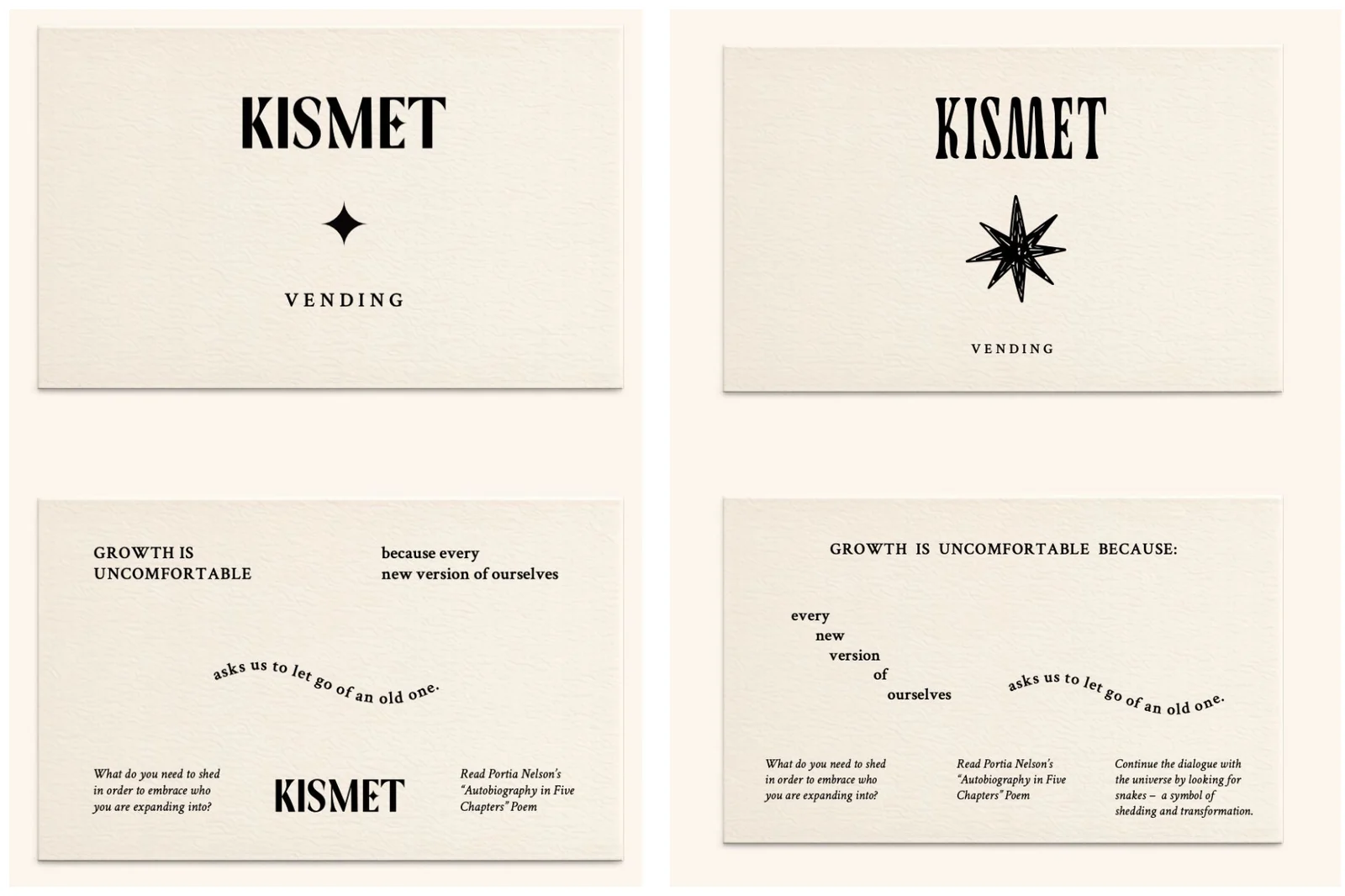
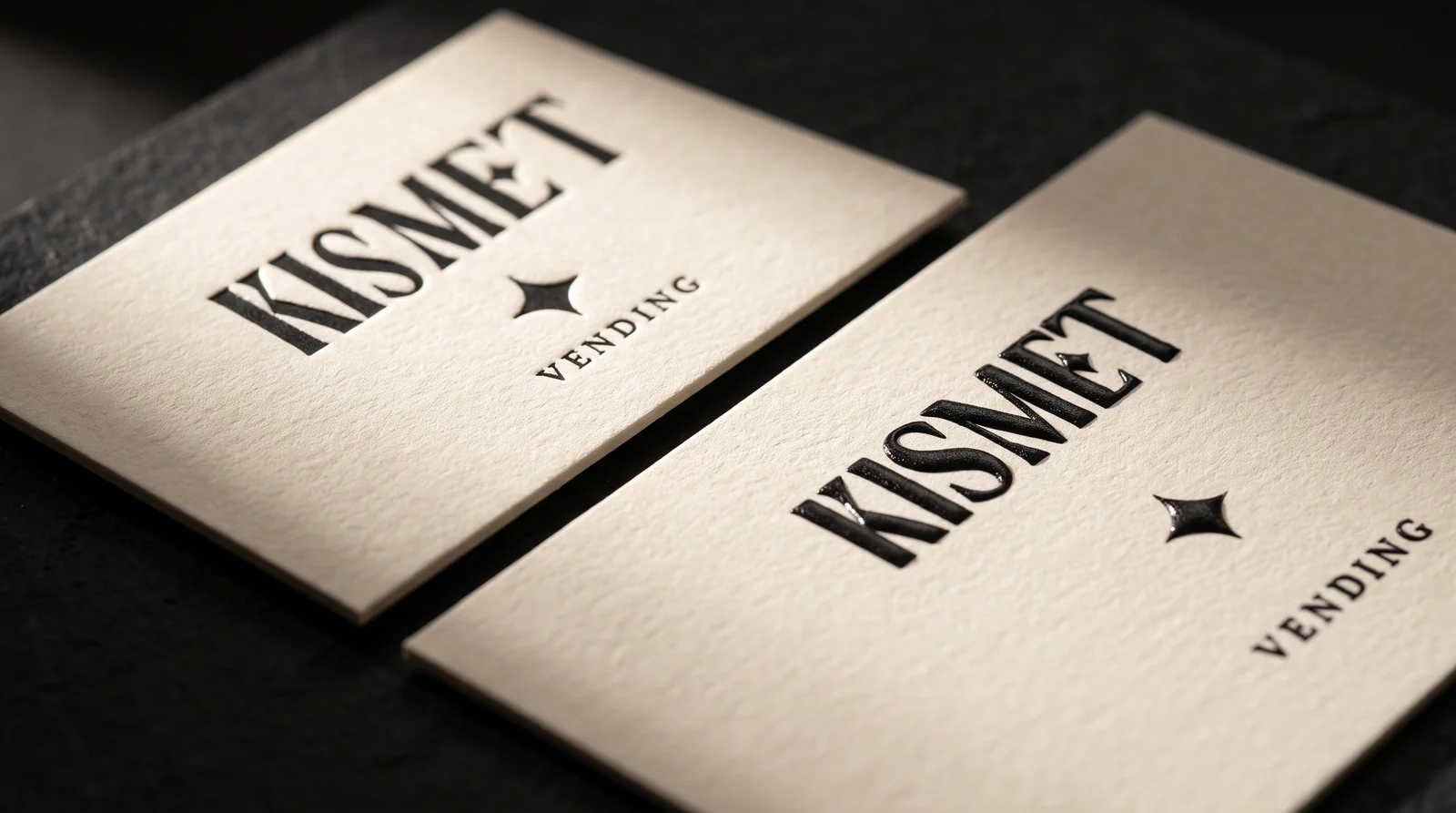
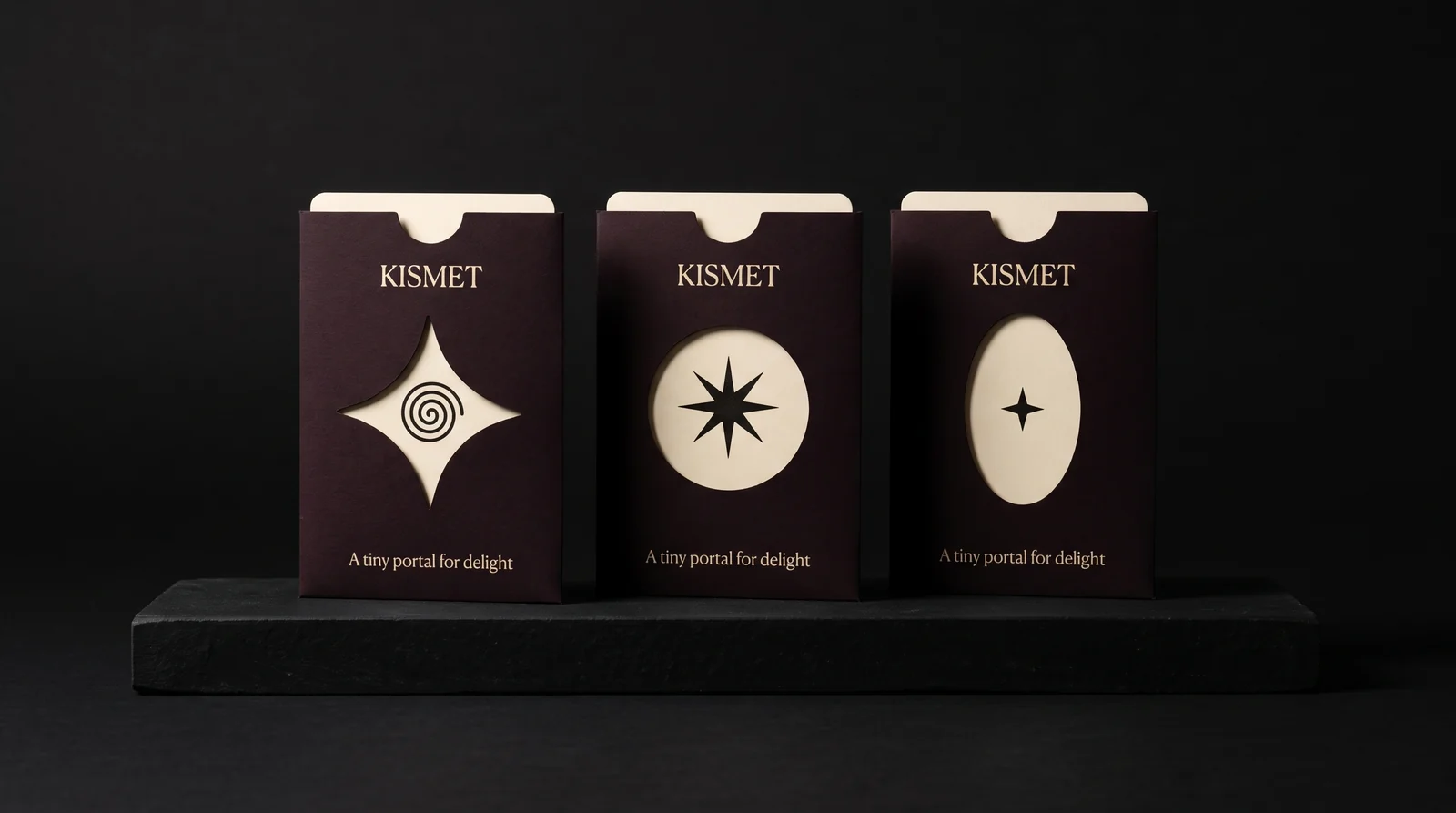
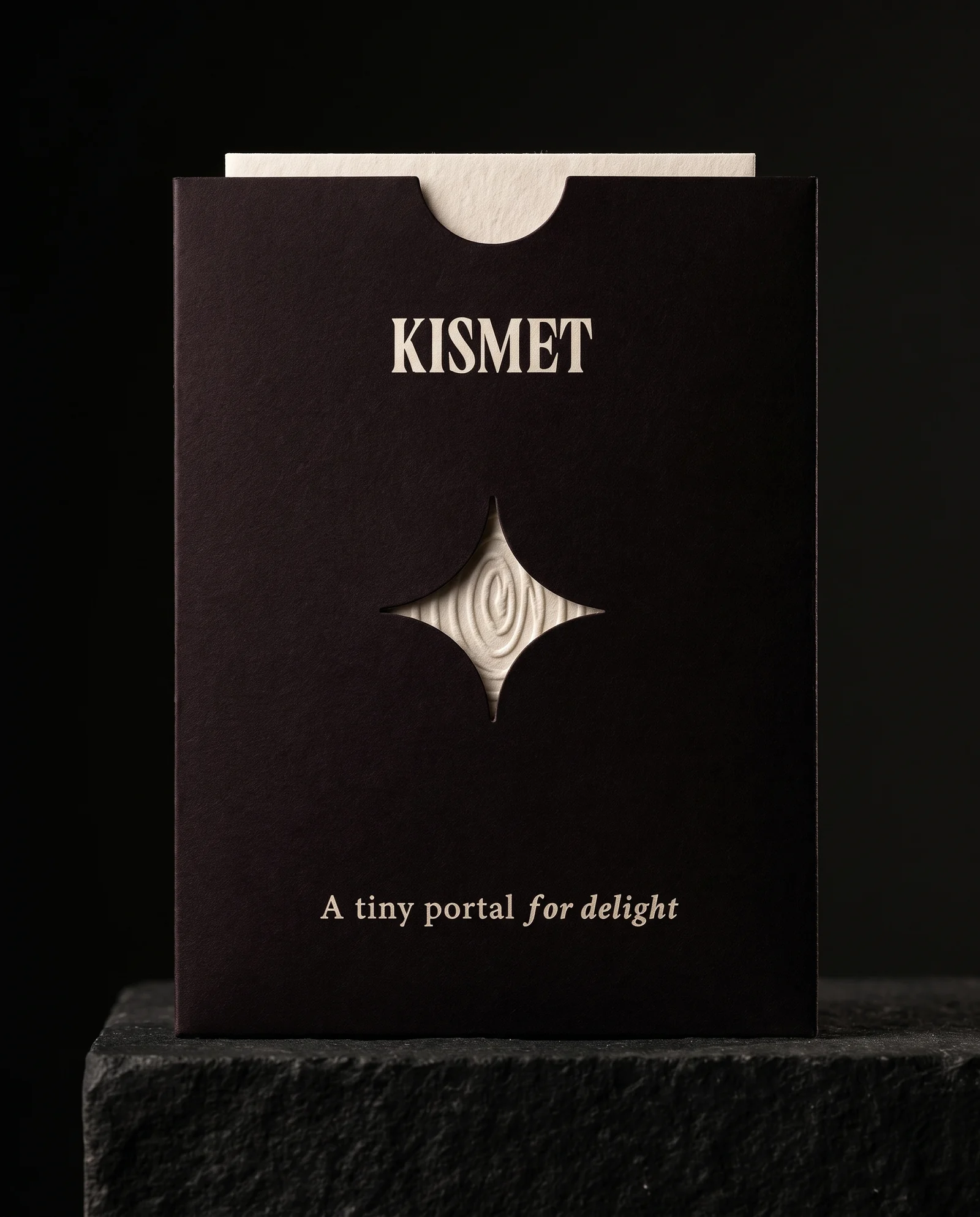
Three ways to print one black
Letterpress presses the ink into the paper. Each letter sits in its own shallow bite and you can find it with a fingertip. It is the most luxurious of the three and the most hands-on: every sheet is fed and watched on the press.
Flat offset lays the same black on the surface with no impression. It is the budget line, and on a good cotton sheet it still looks considered.
Thermography is offset with a powder added to the wet ink and a quick pass of heat at the end of the press. The ink swells into a slightly domed, satin-shiny line you can feel. It is an old technique that high-end fashion hang tags still use, and it costs about the same as flat offset.
The numbers
Six machines hold about 300 cards each, so one fill is 1,800 cards. Three fills is 5,400 cards: 108 of each of the fifty messages.
That is the full run we are pricing, with a prototype of 100 cards of one design and 100 sleeves first, so the founders can put them through a real machine before committing to the rest.
Say it on the machine
If the card is letterpressed on cotton, say so where people pay. Letterpress, blind debossed, 100% cotton, tree-free. Those words are what let a card in a vending machine cost more than a sticker, and every one of them is true of the object in your hand.
Why simulate before quoting
Most people have never held letterpress next to thermography. A screen shows both as the same black shape, and online photos are shot under whatever light flatters them most.
So we put both methods on the same cotton, under the same light, with the client's own artwork. The founders can decide what their fortune should feel like before a plate is made. Every photograph on this page is a production simulation; the real cards replace them when they run.
Where it stands
The options are being priced side by side: letterpress against flat offset and thermography, one sleeve against a sleeve per template, and the 100-piece prototype. The design gets finished once the production method is chosen, so the designer draws for the press that will actually print it.
Once the digital proof is approved, custom work like this is in hand in about three weeks.
Start from these materials
Same paper, foil and finish, locked in — nothing of Kismet Vending's artwork comes with it.
Questions
- What is the difference between letterpress and thermography?
- Letterpress presses ink into the paper, leaving a recess you can feel and a matte finish. Thermography prints flat and then heats a powder in the wet ink so it rises into a slightly raised, satin-shiny line. Letterpress reads as crafted; thermography reads as polished and usually costs less.
- Can you letterpress a photograph?
- Not well. Letterpress prints solid shapes and lines. A photograph needs fine halftone dots, which fill in under letterpress pressure, so photos are printed flat by offset or digital instead.
- Will a blind deboss show on the back of a card?
- On single-ply stock, yes: the pressed shape shows as a bump on the back. On double-thick or triple-thick cotton the impression stays on the front and the back stays flat.
- What paper is best for letterpress?
- Soft, thick, uncoated paper, and 100% cotton is the classic choice. It takes a deep, even impression and has a felted, handmade feel. Cotton is also tree-free.
- How thin does a card need to be for a vending machine?
- It depends on the machine. For Kismet, the card and its sleeve together had to stay under 1.1 mm, so paper weight and sleeve construction were worked backwards from that number and tested with a prototype.
- Does printing fifty different messages cost much more than one?
- Each message needs its own plate, so setup grows with every variation. Paper, ink and press time are shared across the run, so the cost per card falls as the quantity of each message rises.