Cajas de regalo a medida, bien diseñadas en torno a lo que va dentro
We make custom gift boxes the way we make our cards: real hot foil, blind deboss and printed interiors, on a structure drawn around your product. Rigid lid-and-base and magnetic boxes for the gift moment; mailers and folding cartons for the post and the shelf. Past custom box projects have run about 1295 €–1845 € for the whole run, set by size, quantity, wrap and finish (context, not a quote). Runs usually start around 100 boxes, and shorter pilot runs are quoted on request. Production takes about three weeks after you approve the proof, with a prototype stage before it. Estimates, not promises.
Pedir precio
Unas 3 semanas tras aprobar la prueba, como estimación. El flete se cotiza con tus cajas.
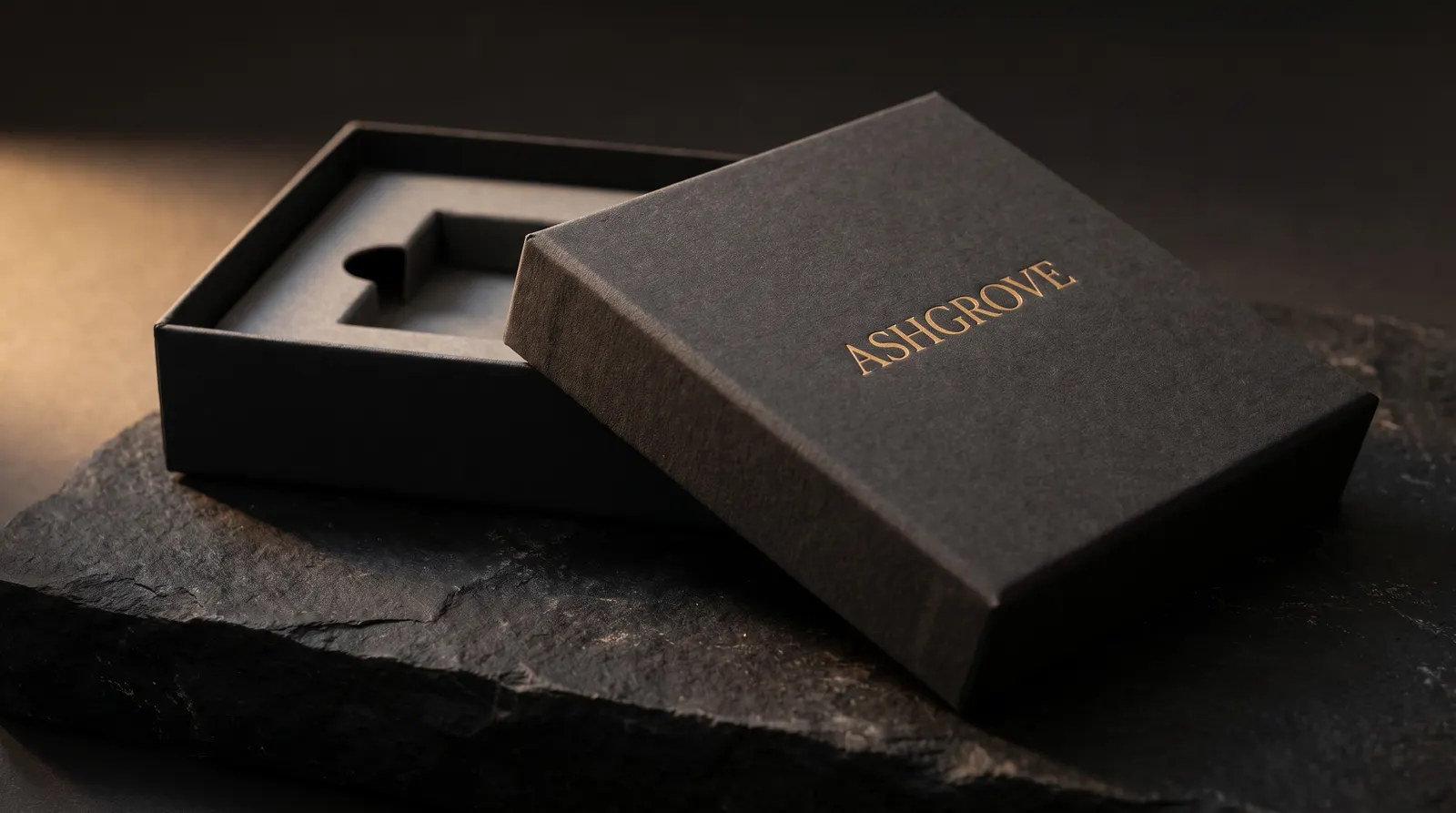
Una persona revisa cada prueba.
Una persona revisa la estructura, el troquel y el diseño antes de que nada pase a imprenta.
Prototipo antes del tiraje.
Tienes en la mano una muestra física de la estructura antes de que produzcamos el pedido.
Envío presupuestado con tus cajas.
Las cajas terminadas se envían según su volumen, así que cotizamos el flete junto con el pedido y lo ves antes de aprobar.
Cuatro tipos de caja, con precio desde el inicio
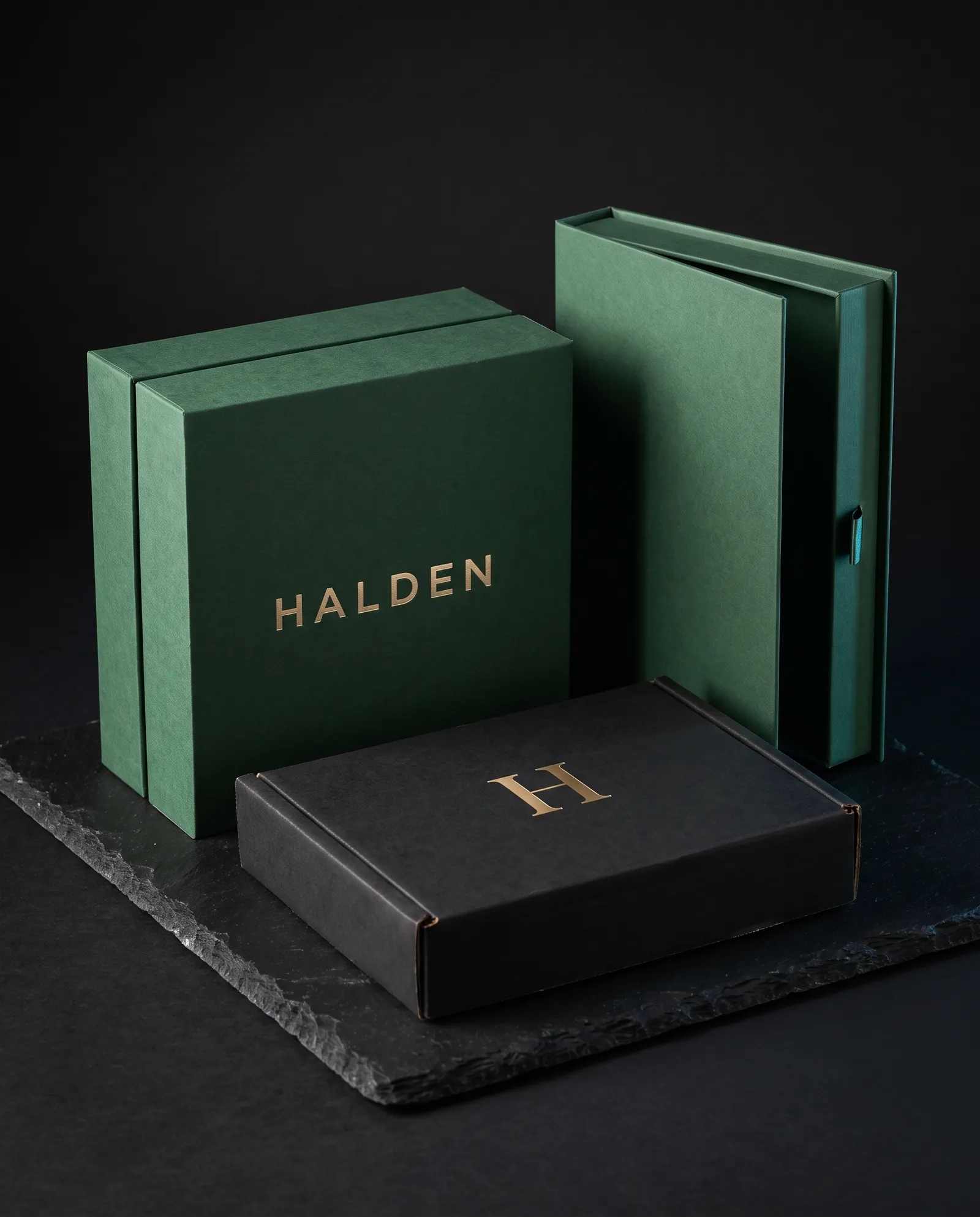
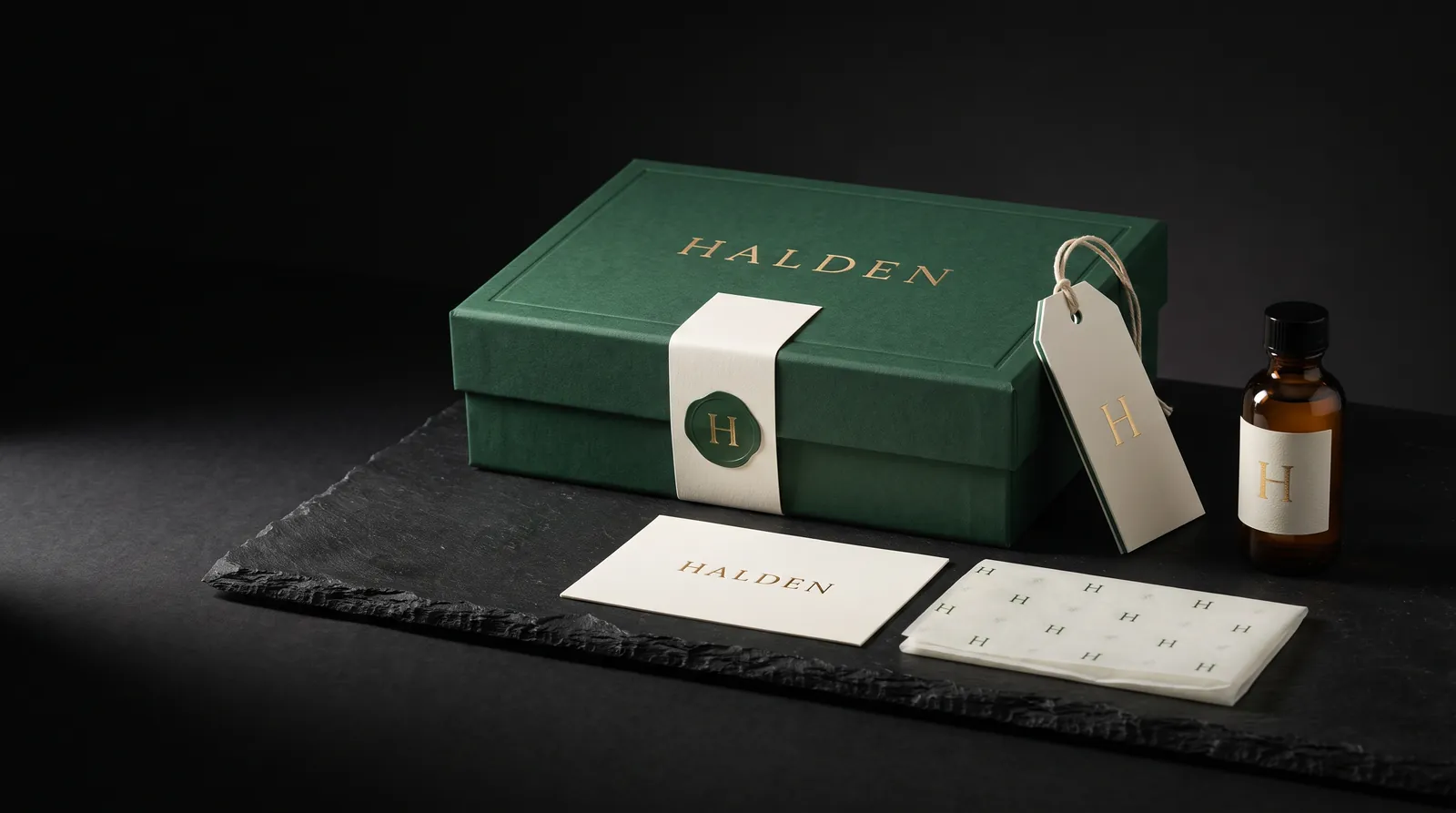
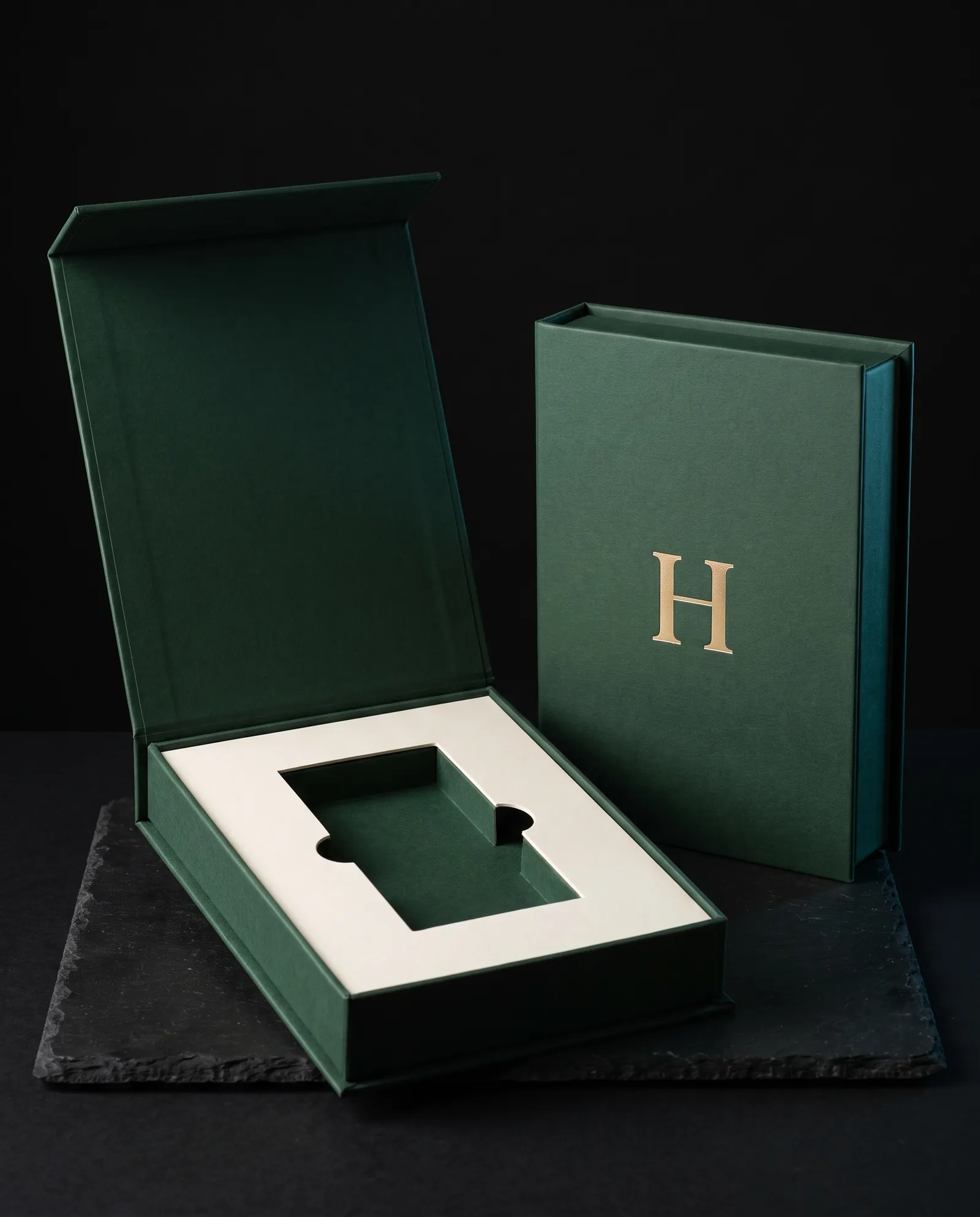
Cajas de regalo por estructura
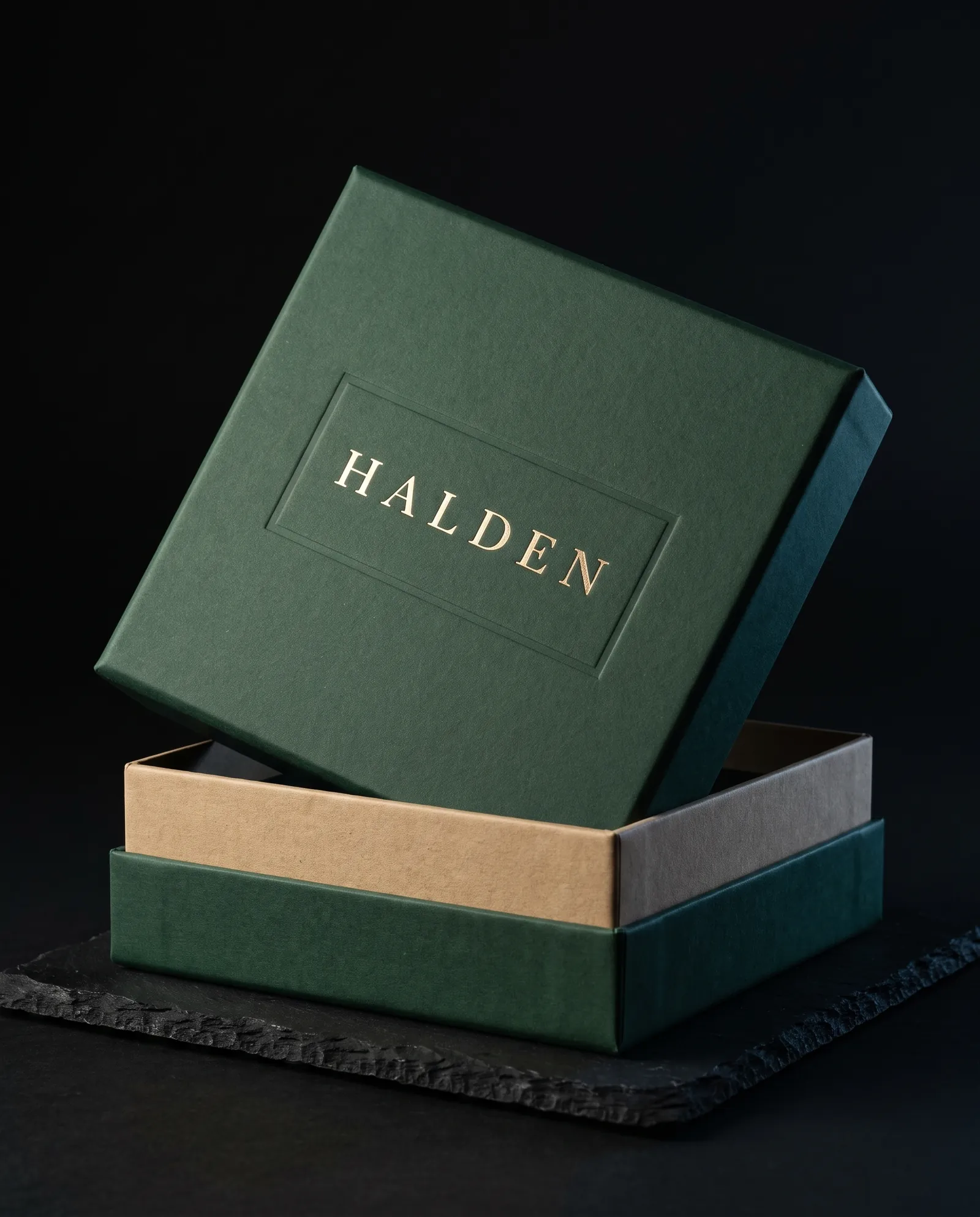
La estructura define cómo se percibe una caja antes de que nadie lea una palabra. También define la mayor parte del coste. Elige primero la estructura y después el acabado. Si tienes dudas, empieza por una caja rígida de tapa y base: es lo que casi todo el mundo entiende por caja de regalo, y su forro de papel sin estucar admite un foil nítido y un bajorrelieve limpio.
Qué estructura de caja va con tu producto
| Structure | How it feels | How it ships | Where the money goes | Go deeper |
|---|---|---|---|---|
| Rigid lid & base (two-piece) | Solid walls, a lid that lifts off slowly. Reads as a gift. | Arrives already built; needs an outer shipping carton. | Board, the wrap paper, hand assembly, freight by volume. | Custom rigid boxes |
| Magnetic book box | A hinged flap that closes with a soft snap from magnets hidden under the wrap. | Arrives built; needs an outer carton. | Everything a rigid box costs, plus the magnets and the hinge. | Quoted with custom magnetic boxes |
| Drawer box | A tray that slides out of a sleeve. Slower, more theatrical reveal. | Arrives built; needs an outer carton. | Two rigid parts instead of one, plus a pull tab or ribbon. | Quoted: start in the Studio |
| Mailer box (corrugated) | Light and sturdy. Snaps into shape and locks with a tuck. | Ships flat to you; goes through the post on its own. | Board grade, print coverage, inside print, any foil. | Quoted: start in the Studio |
| Folding carton (tuck box) | Thin board, crisp folds. Retail shelf and small products. | Ships flat to you; packed inside a mailer to post. | Board colour, the cutting die, the foil die. | See our own samples box |
| Sleeve or belly band | A printed wrap around a plain box. | Ships flat. | Paper, one foil, size. | Belly bands & sleeves |
Minimums depend on the structure. Rigid and magnetic boxes usually make sense from about 100; we quote shorter pilot runs when a launch or a gifting list calls for them. Tell us the quantity you actually need and we'll price that, not a number that suits us.
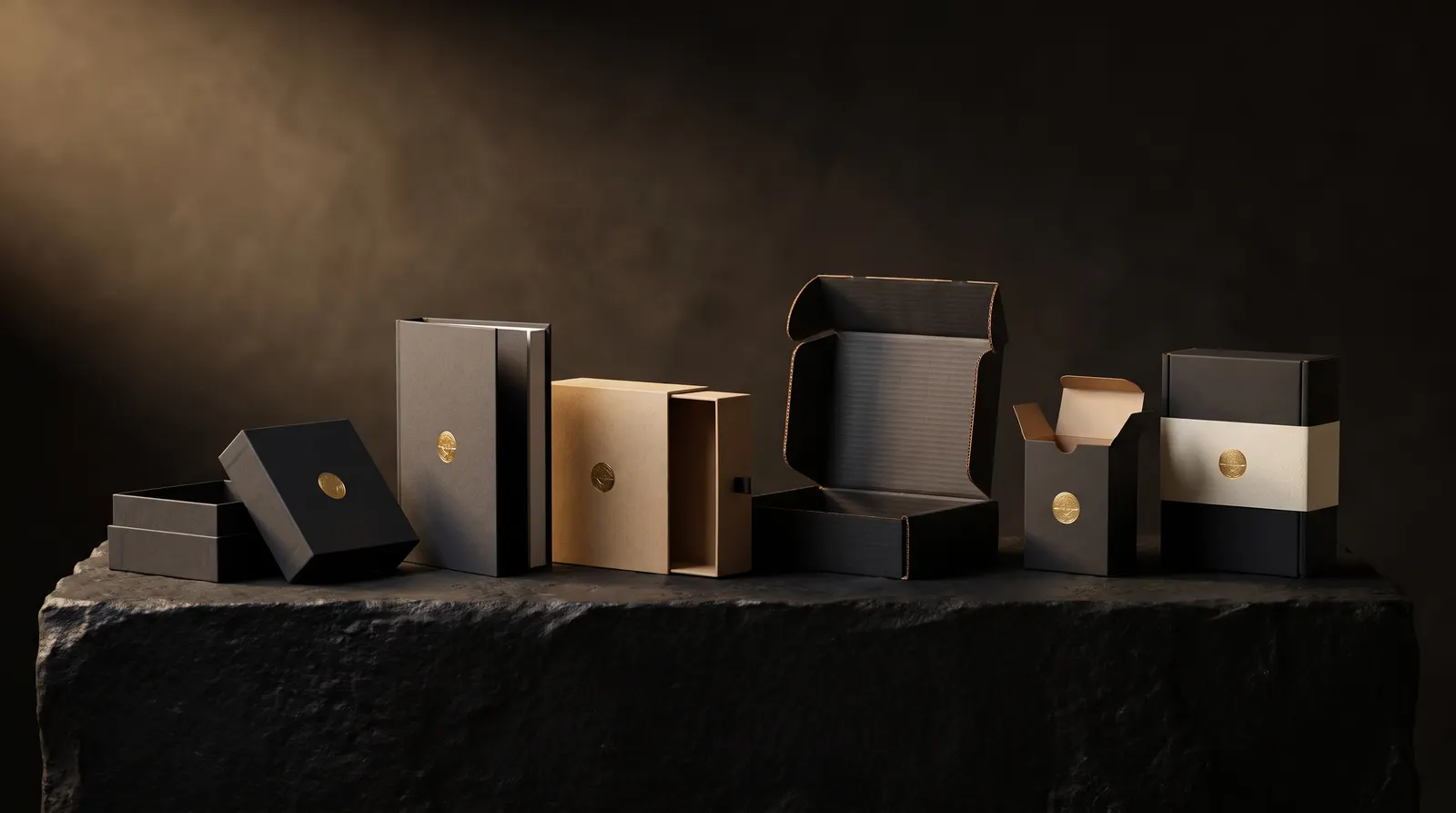
Caja de envío o rígida cambia cómo se siente la caja
A mailer box is corrugated board, scored and creased so it folds flat, snaps into shape and locks with a tuck. It's the e-commerce shipper: light, sturdy, and it needs no void fill when the fit is right. The strength is in the flute, the wavy layer inside the board.
A rigid box is a different animal, and it's what most luxury gift boxes are. Chipboard walls, wrapped in printed or specialty paper, assembled before it ever reaches you. It doesn't fold and it doesn't flex. That stillness in the hand is what people read as a gift rather than a delivery.
The honest trade-off: a rigid box can't go through the post on its own. It travels inside a carton, and because it arrives built, you pay to ship air. A mailer is its own shipper and arrives flat.
Tell us the product, its weight and how it travels. We'll recommend one, and tell you why the other one was wrong for it.
Foil, bajorrelieve y soft-touch en caja
Los acabados se comportan distinto en cartón que en una tarjeta de visita, y una caja tiene cantos, pliegues y un mensajero al que sobrevivir. Así los planificamos.
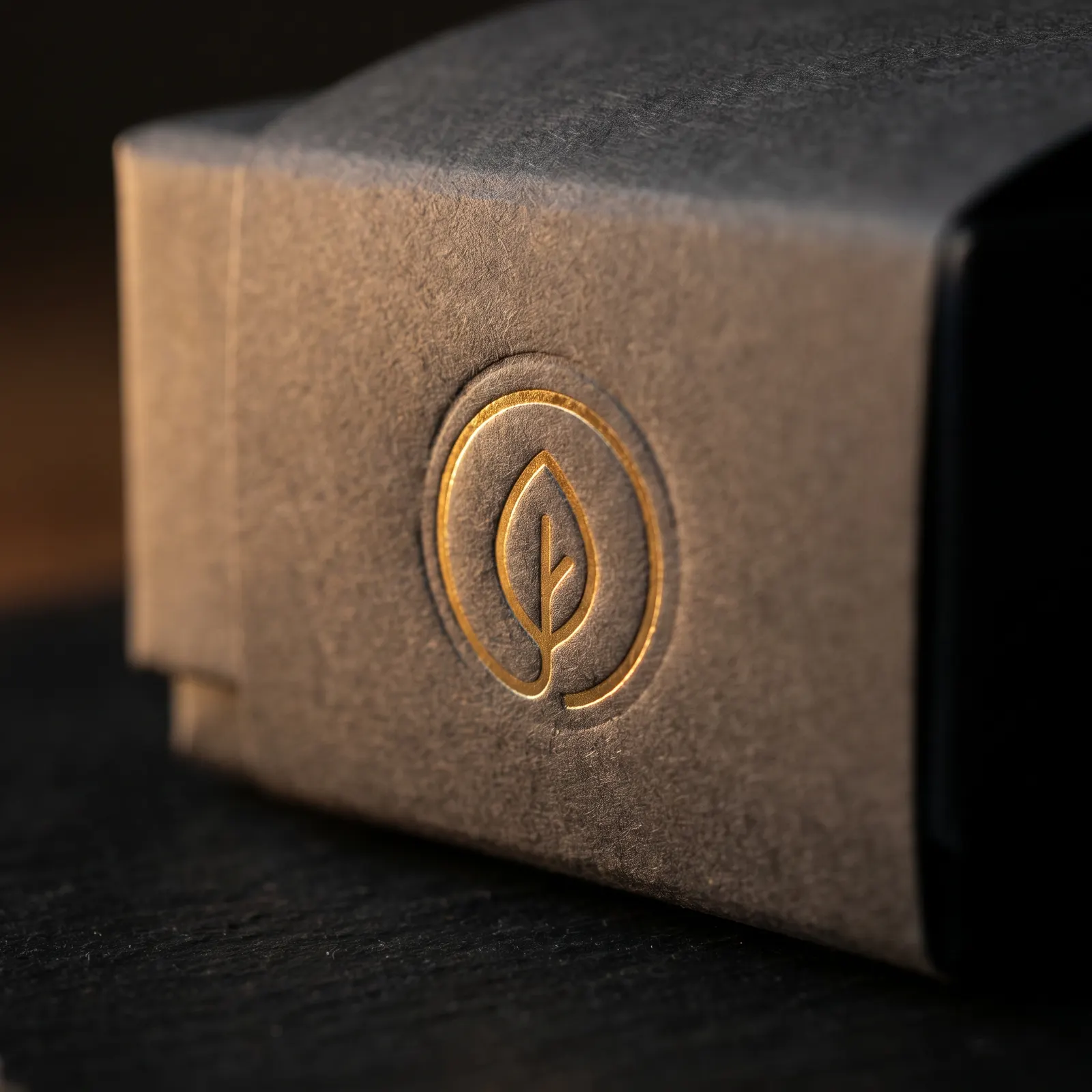
Hot foil is a metal film pressed onto the wrap with heat and a die. It's our default for a logo on a lid, because it reads on any colour of paper, dark ones included. Fine detail survives foil: lines hold to 0.1 mm; we design to 0.15 mm, with internal gaps around 0.25 mm. We adjust only below-floor details and keep the mark’s character. On kraft corrugated, the flute can show faintly through a large solid stamp, so on mailers we keep foil tight and graphic rather than sprawling. Black foil on a natural kraft wrap is the least expensive thing that still feels like a gift; see the Fletcher box. If you want that black foil embossed as well, we keep the emboss shallow, because a deep one makes black foil bridge and lose its edge.
Blind deboss and emboss press the mark into or out of the paper, with no ink. They need an uncoated wrap that can take the shape. We emboss the wrap flat, before it goes onto the board, so the impression stays crisp at the corners; the Vlada box is a name blind-embossed into sand Colorplan, and nothing else. Two rules: an impression won't seat in soft-touch laminate, so if you want both, the deboss goes on an uncoated wrap; and a blind deboss on black paper is very quiet, so if the mark has to be read, we put foil in the impression.
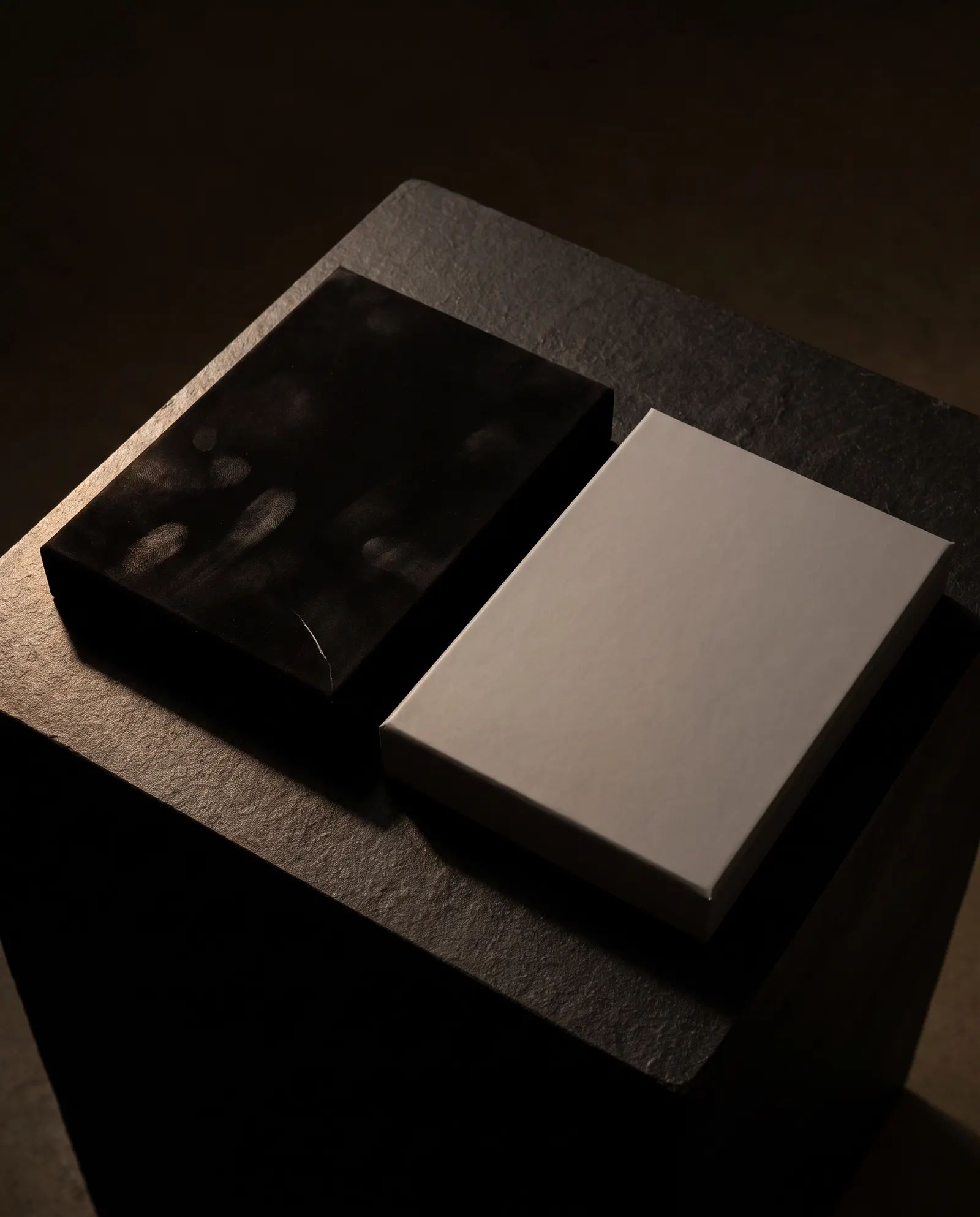
Soft-touch lamination is the finish people remember: a suede-like drag under the fingers, no gloss. The catch: on a deep navy or near-black box, soft-touch records every fingerprint and every scuff the courier gives it. We plan around it: a lighter base colour, a matte laminate that hides handling, foil placed where hands won't land, and a proper outer carton.
Folds and edges. Foil and embossing crack across a score, so we keep them at least 3 mm from every fold, turn-in and glue flap. You'll see that clearance on the proof.
Es el interior lo que justifica la caja
Flip the lid and there's colour, a pattern, a line of copy nobody expected. That moment is the reason to order custom printed boxes instead of buying blank ones. On a mailer, the inside is printed on the same sheet as the outside, so it often costs less to add than people assume.
Orientation is the landmine. On a mailer, the interior artwork has to be placed against the dieline so it reads right-way-up when the lid swings open, not when the sheet lies flat. We handle that mapping on our dieline, and you'll see it on the proof.
Inserts hold the product still. Our first suggestion is usually a paperboard tray with a recess cut to the product and a finger notch to lift it out. It looks cleaner than foam, and it's paper, like the box around it. Foam comes in only when the product is heavy or fragile enough to need it.
The card on top. A printed insert card in the same foil as the lid is the cheapest way to make the whole box feel considered. See packaging inserts, hang tags, gift tags and foil seals for the pieces that go inside, foil stickers to seal the lid, and luxury labels for the product itself.
Tres formas de invertir en una caja
Primero cotizamos una caja con todo incluido y luego te mostramos cuánto ahorras al quitar cada elemento. Así suele repartirse el presupuesto.
| Tier | What you get | Price |
|---|---|---|
| Stock box, our finish | A plain box you already have, finished with a foil belly band (10 × 2 in, one foil) or a foil seal. The least expensive way to make a blank box look like yours. | Belly bands from $295 for 100 · foil seals from $195 for 250 |
| Printed mailer or carton | A custom-sized mailer or folding carton, printed outside and in, with one foil. | Quoted to size: Get a price |
| Custom rigid or magnetic box (our recommendation for a launch or gift) | Rigid or magnetic structure drawn to your product, foil on an uncoated wrap, printed interior, paperboard insert. | Past projects have run about $1,400–$2,000 for the whole run (context, not a quote) |
If the box is part of the product, a launch kit, a client gift, anything that gets kept, it's worth making custom luxury boxes: go rigid with one foil on an uncoated wrap and a paperboard insert. That's where most of the feel comes from per dollar. Add deboss and a printed interior if the number allows; skip soft-touch on a dark box unless you're happy with the scuffs.
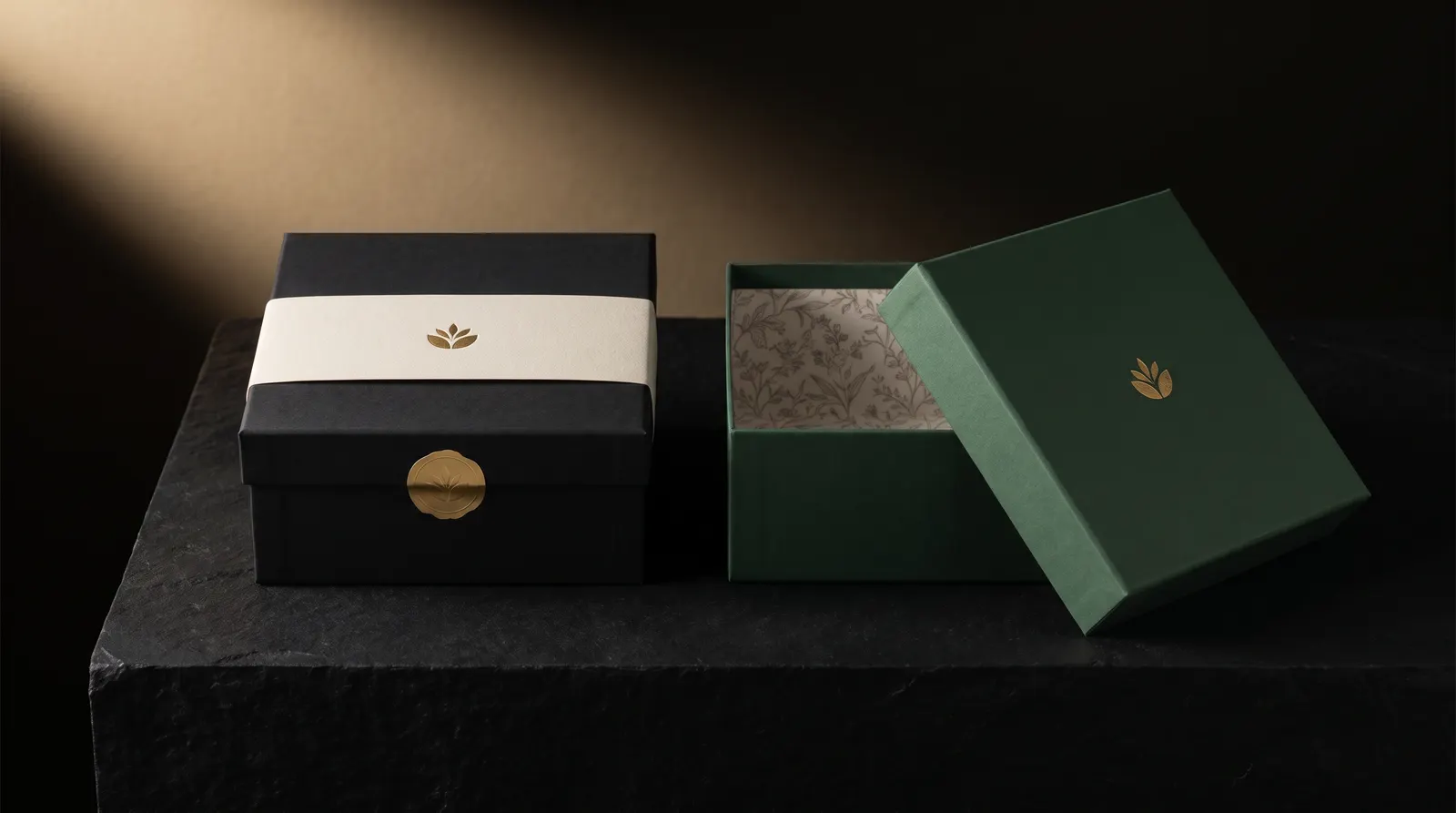
Cómo se fabrica una caja a medida
1
Dinos primero la fecha.
When the boxes need to be in hand decides which path is possible. Then the product's size and weight, the quantity, and how it travels.
2
Nosotros definimos la estructura.
Board, wrap, closure and insert, drawn as a dieline to your product's real dimensions. You don't need a dieline to start.
3
Tienes un prototipo en la mano.
A physical sample of the structure, so you can check the fit and the opening before anything is printed.
4
Diseño sobre nuestra plantilla.
You build on our template, with foil and deboss areas on their own named layers, or our packaging artwork team builds it for you.
5
Tú apruebas la prueba.
A person checks structure, artwork and finishes with you. Nothing goes to production until you approve.
6
Producción y transporte.
About three weeks of production after proof approval, then freight.
Timelines are estimates, not guarantees. For a launch or a holiday gift, start about eight weeks before you need the boxes in hand. See turnaround and shipping and proofing.
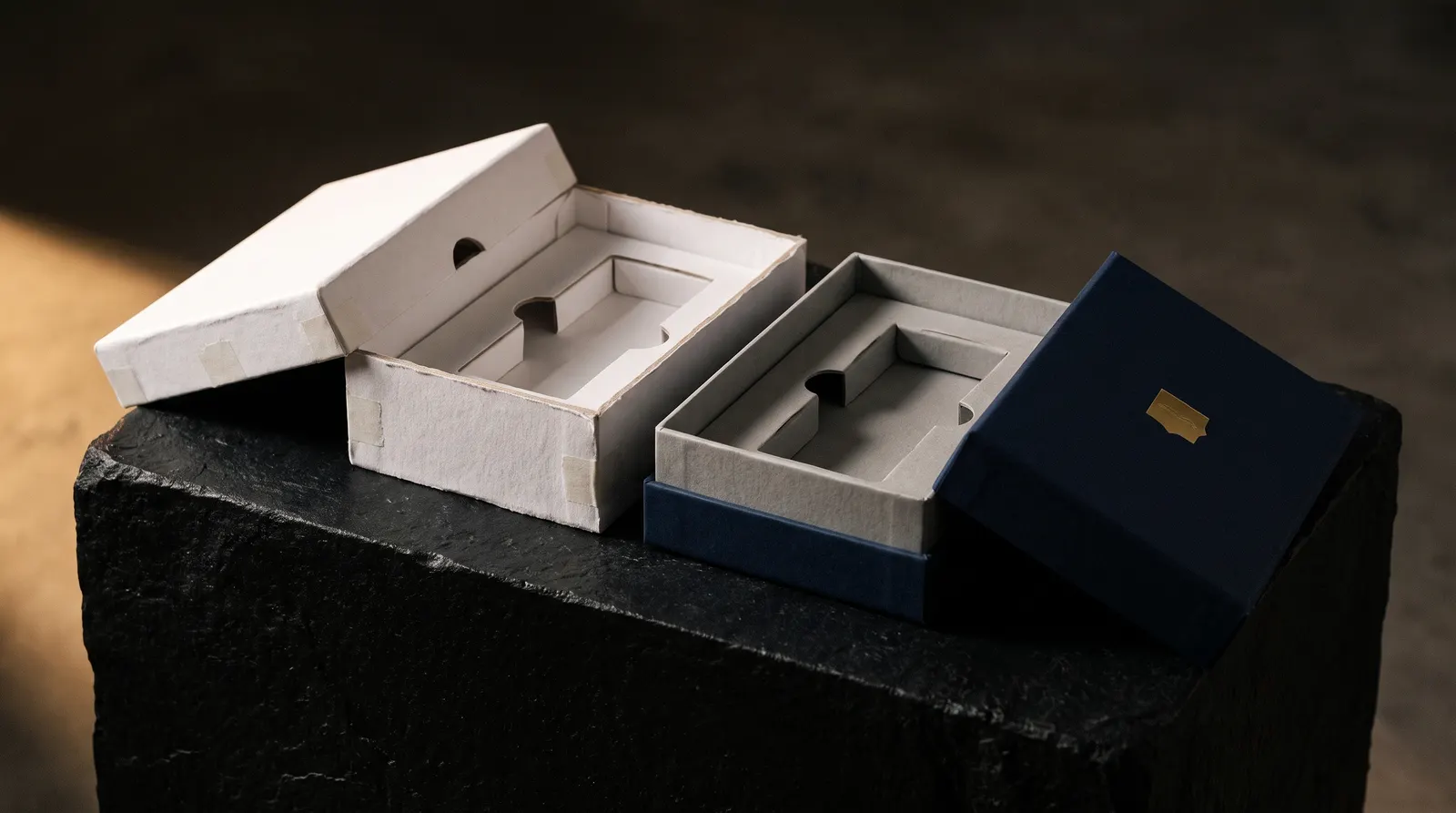
Cajas que hemos hecho y exploraciones de diseño
Los trabajos para clientes van primero y lo indican. Las exploraciones de diseño son ejercicios que creamos para probar una estructura o un acabado. Están señalados, no son trabajos para clientes y todos se pueden producir.

Trabajo de cliente
Fletcher
Hot foil negro sobre forro kraft natural, caja rígida de dos piezas de 9 × 12 × 4 in (228.6 × 304.8 × 101.6 mm).
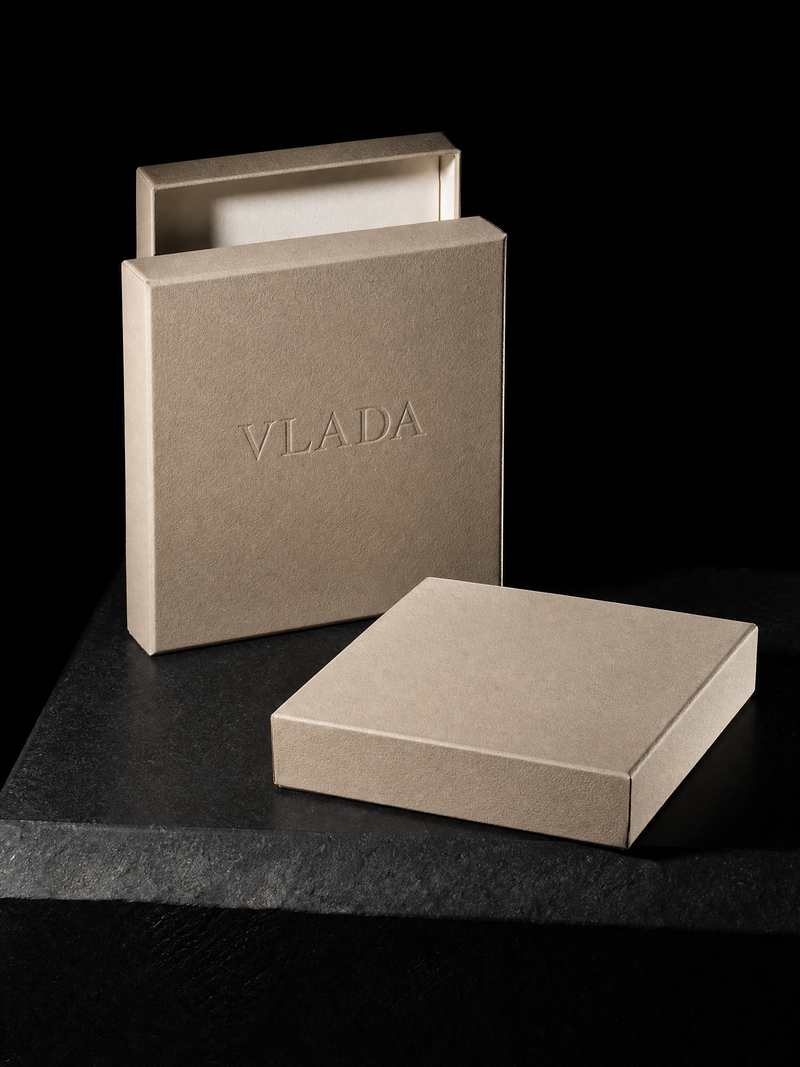
Trabajo de cliente
Vlada
Un nombre en relieve seco sobre Colorplan arena, caja rígida de 6 × 6 × 2 in (152.4 × 152.4 × 50.8 mm). Sin tinta.
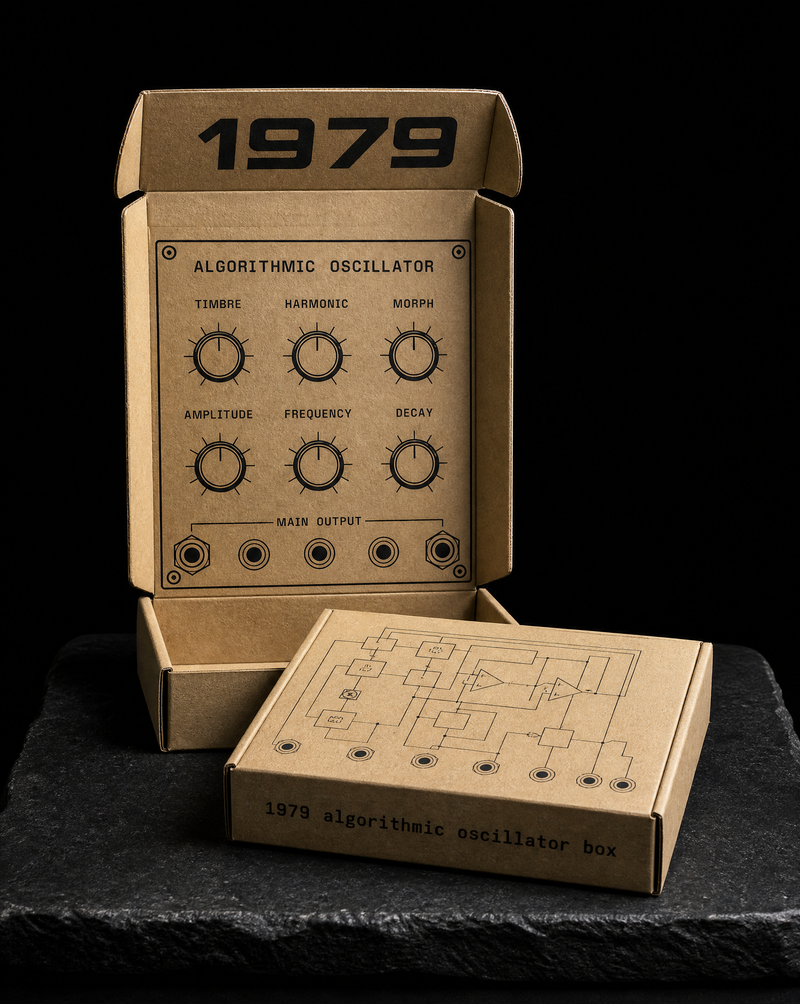
Trabajo de cliente
1979
Un panel frontal de sintetizador impreso en letterpress negro sobre cartón kraft natural.
Nuestro propio packaging
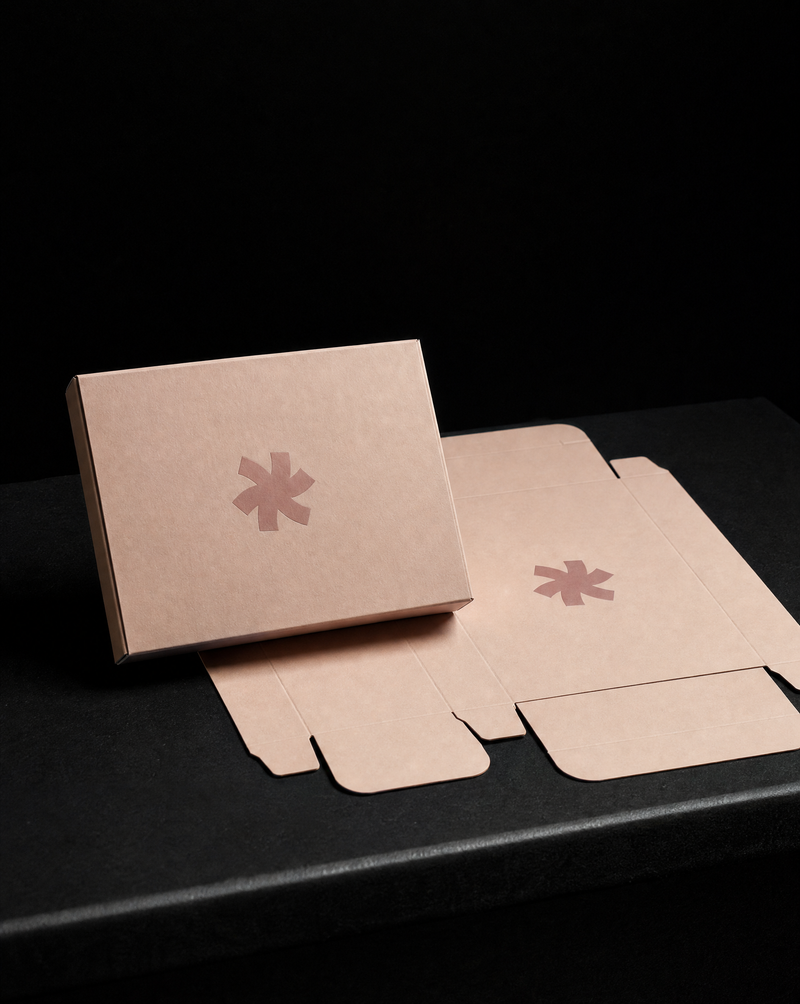
Nuestra caja de muestras
Un foil rosa empolvado mate sobre cartón rosa empolvado teñido en masa. Un grabado, un foil, sin tinta.
Exploración de diseño
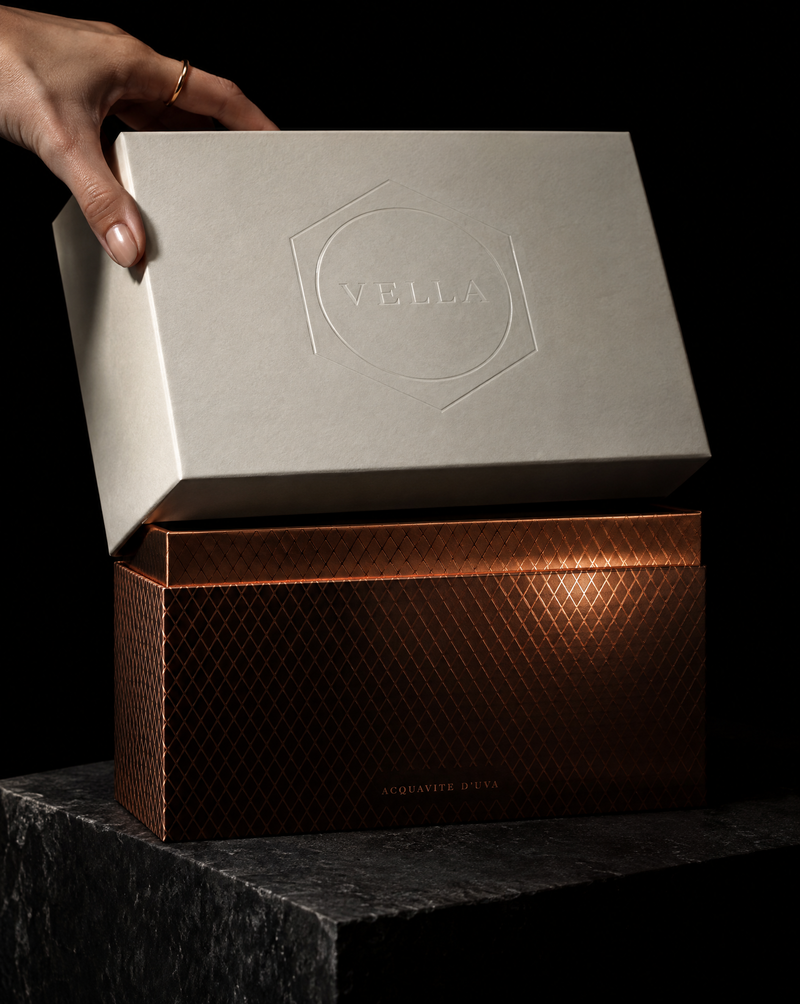
Caja de licores Vella
Exploración de diseño
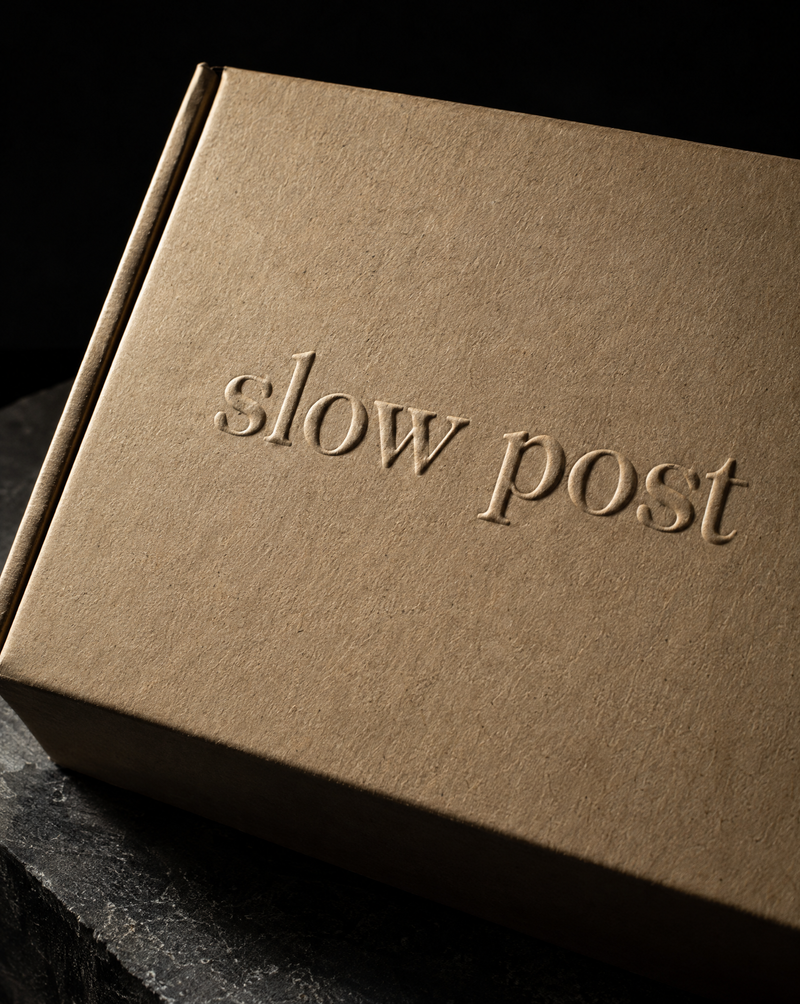
Sobre kraft Slow Post
Exploración de diseño
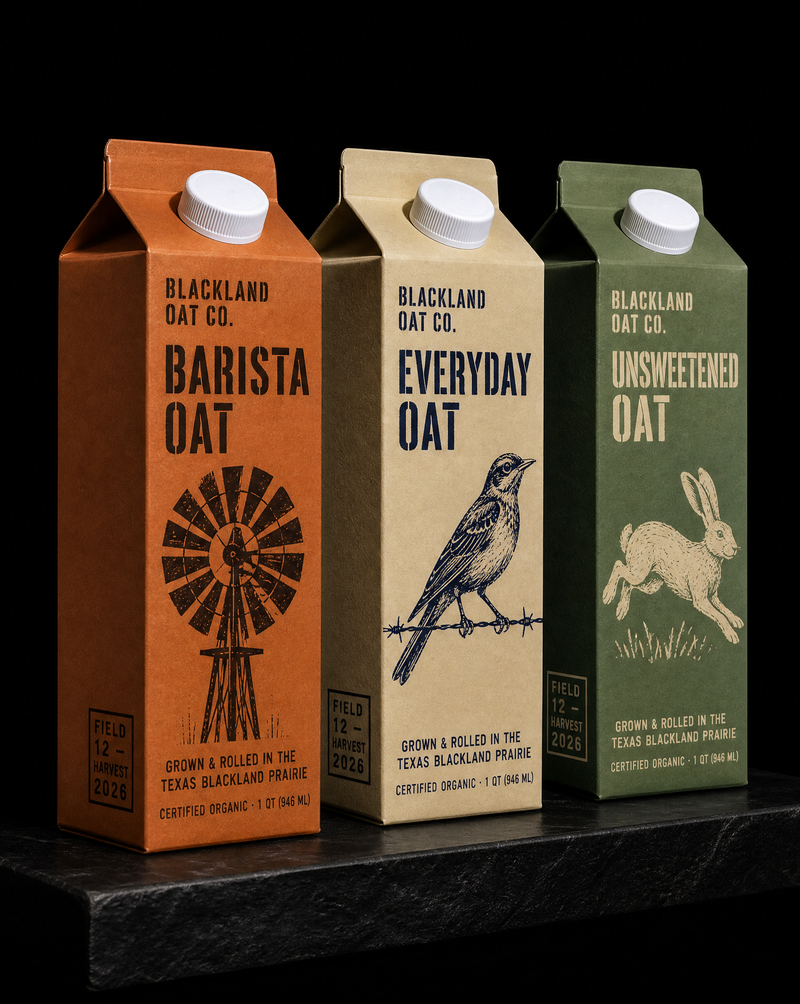
Serie de cartón Blackland Oat
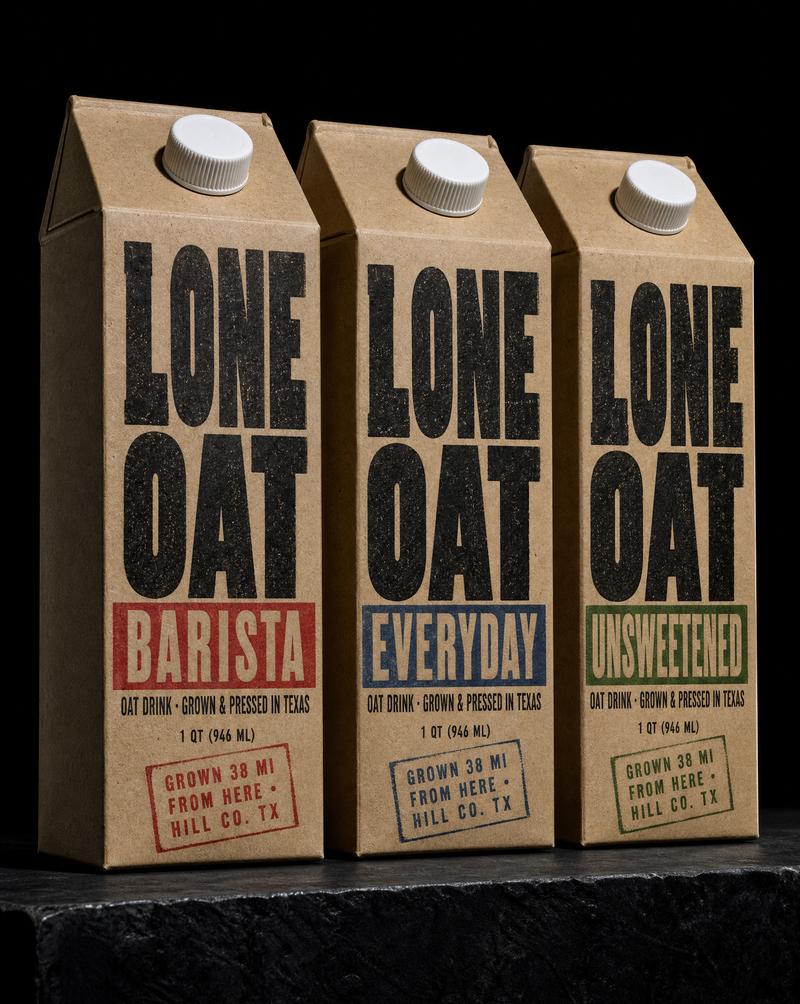
Exploración de diseño
Serie de cajas Lone Oat
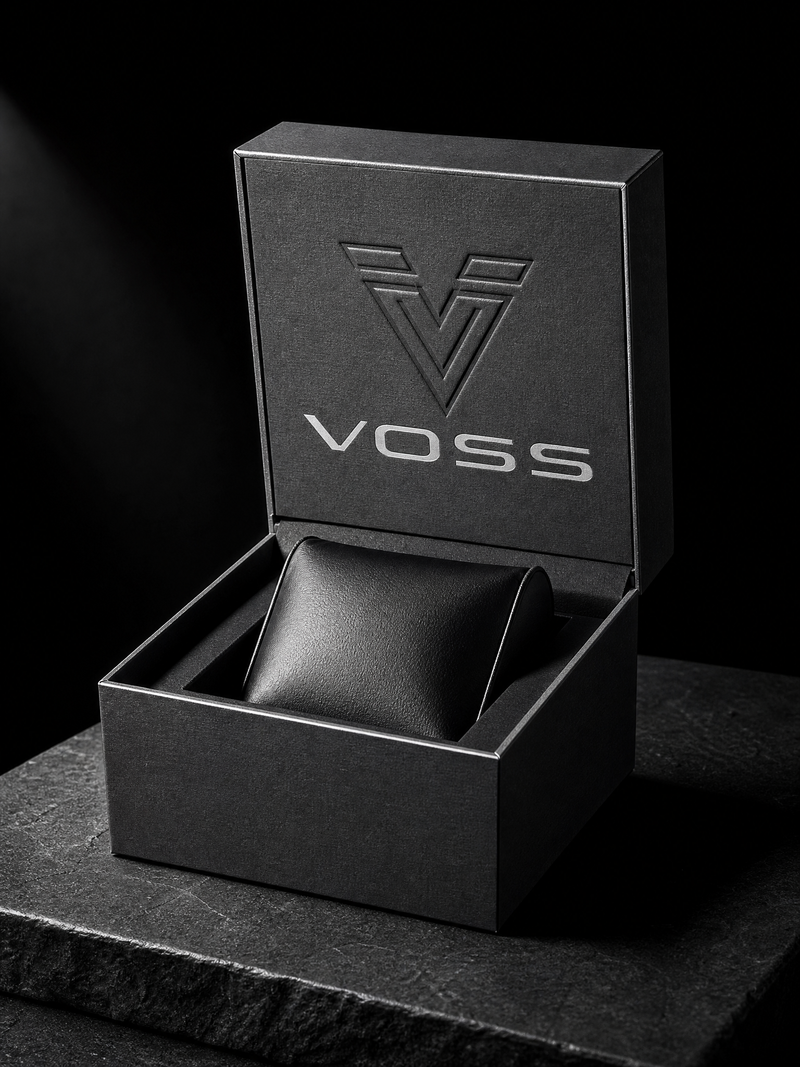
Exploración de diseño
Ciento doce cajas, cuarenta sectores
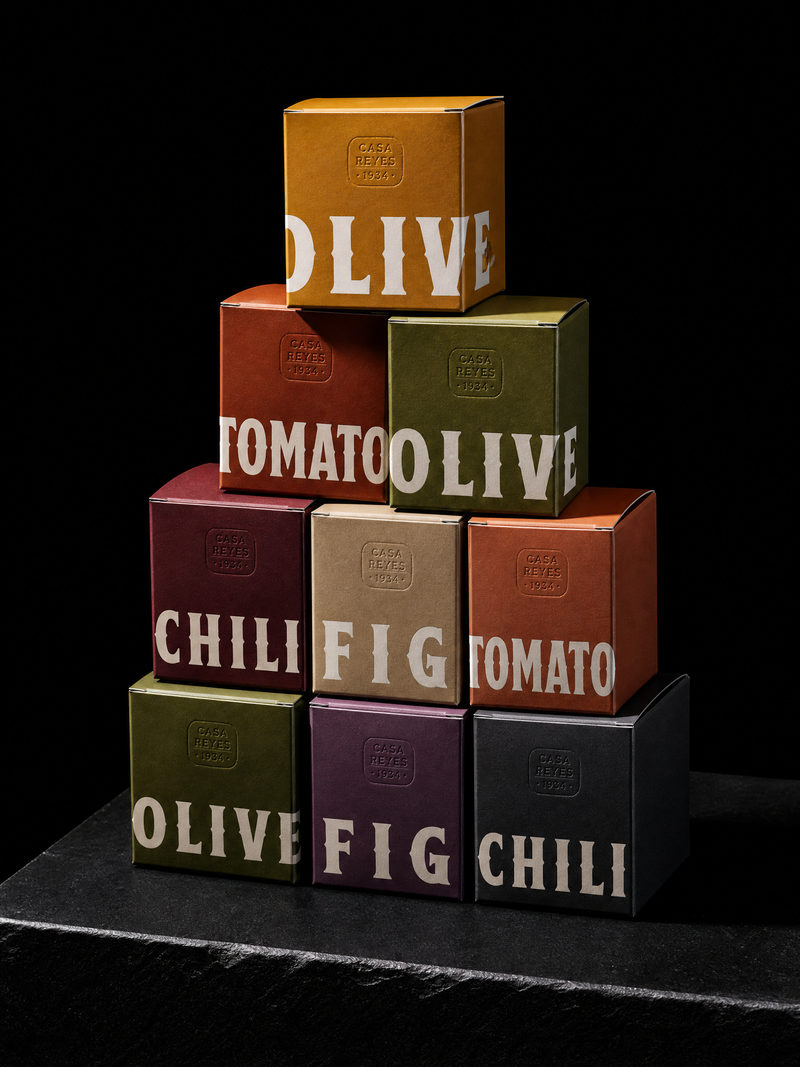
Exploración de diseño
Diecisiete referencias, cuarenta y cuatro respuestas
Dudas sobre cajas a medida
¿Cuánto cuestan las cajas de regalo personalizadas?
Past custom rigid and magnetic box projects have run about 1295 €–1845 € for the whole run. That's context, not a quote. Size, quantity, the wrap paper, how much foil and deboss, the insert and freight set the final number. Mailers and folding cartons cost less per box and are quoted to size. If you only need a blank box to look like yours, a foil belly band starts at 275 € for 100. We price the full spec first, then show you what each removal saves.
¿Por qué las cajas rígidas cuestan más que las cajas de envío?
Una caja rígida es cartón gris forrado con papel y montado antes del envío, en gran parte a mano, y no se puede plegar. Pagas el cartón, el forro, el montaje y el transporte de una caja llena de aire. Una caja de envío es una sola lámina troquelada de cartón corrugado que viaja plana y se monta en segundos. La caja rígida cuesta más porque se construye, y esa solidez en la mano es lo que pagas.
¿Cuál es el pedido mínimo de cajas personalizadas?
Las cajas rígidas y magnéticas suelen tener sentido a partir de unas 100. Por debajo, la preparación de la estructura y del troquel de foil se reparte entre muy pocas cajas, así que cada una cuesta más, pero presupuestamos tiradas piloto cortas para lanzamientos y listas de regalos corporativos. Dinos la cantidad que realmente necesitas y te daremos precio exacto.
¿Cuánto tardan las cajas a medida?
La producción tarda unas tres semanas desde que apruebas la prueba. Antes van la estructura y un prototipo físico; después, el transporte. Para un lanzamiento o un regalo de temporada, empieza unas ocho semanas antes de necesitar las cajas. Son estimaciones, no garantías, así que dinos primero tu fecha y te diremos con sinceridad si hay margen.
¿Diseñan la estructura de la caja y el troquel?
Yes. Send the product's dimensions and weight, or the product itself, and we draw the structure and dieline around it. You approve a physical prototype before the full run. Then you build artwork on our dieline in vector, with foil and deboss areas on their own named layers, or our packaging artwork team builds it for you.
¿Podemos usar kraft en vez de blanco?
Sí. Las cajas rígidas pueden forrarse con papel kraft natural, y las cajas de envío y estuches se fabrican en cartón kraft. Antes, ten en cuenta algo: la tinta de impresión es translúcida, así que los colores claros sobre kraft se ven apagados y turbios porque el marrón se transparenta. El negro, los colores intensos y el foil son los que mejor se leen. El foil negro en caliente sobre un forro kraft es una de nuestras combinaciones económicas favoritas, y para una marca en blanco usamos foil de pigmento blanco, que se mantiene opaco donde la tinta se absorbería.
¿Llegará impecable a mi cliente una caja soft-touch?
En una caja clara o de tono medio, normalmente sí. En una caja azul marino oscuro o casi negra, el soft touch muestra cada huella y cada roce del transporte. Lo resolvemos con un color base más claro, un laminado mate que disimula el manejo, foil donde no se apoyan las manos y una caja exterior de envío adecuada. Si la caja tiene que ser negra e impecable, te diremos cuáles de esas concesiones haríamos.
¿Foil, relieve o bajorrelieve en caja?
Sí. El foil en caliente se aplica sobre casi cualquier forro, incluido el soft-touch, aunque no sobre barniz UV selectivo. El foil reproduce líneas de hasta 0.1 mm; diseñamos a 0.15 mm con espacios interiores de unos 0.25 mm. El relieve y el bajorrelieve requieren un forro sin estucar; no se marcan en laminado soft-touch, así que si quieres soft-touch y una impresión en relieve, esta se hace en un forro sin estucar. Mantenemos el foil y el relieve a un mínimo de 3 mm de los pliegues, donde se agrietarían.
¿Conviene usar una faja en lugar de imprimir toda la caja?
Often, yes. A foil box sleeve or belly band around a plain box gives you the brand moment for much less than a fully printed box, and you can change it per season without new boxes. Our fixed-price foil belly band is 10 × 2 in with one foil, from 275 € for 100; larger sleeves are quoted to the box. Print the whole box when the box itself is the product experience, or when you want a printed interior.
¿Las cajas pueden combinar con mis tarjetas, etiquetas colgantes e insertos?
Sí, y es una de las principales razones para hacerlo todo con un mismo estudio. Usamos el mismo foil y el mismo lenguaje de papel en la caja, las etiquetas, los insertos y los sellos, y los revisamos en una sola prueba para que el dorado de la tapa sea el mismo que el de la etiqueta. Envíanos tus piezas actuales y las igualaremos donde la estructura lo permita.
¿Puedo ver una muestra antes de pedir cajas?
Yes, two ways. For the box itself, you approve a physical prototype of the structure before the run. For finishes, our 9 € sample kit includes a hot foil swatch card with every foil we keep on the shelf, plus papers and finishes like blind emboss. It's built around cards, not boxes, but it's the quickest way to choose a foil in your own light.
¿Cómo se envían las cajas?
El transporte de las cajas se cotiza con el trabajo. Las cajas rígidas y magnéticas terminadas se envían por volumen, no por peso, porque llegan armadas: el tamaño y la cantidad determinan el coste. Los mailers y las cajas de cartón se envían planos y cuesta mucho menos moverlos.
¿Vendéis cajas de regalo lisas?
No. Fabricamos cajas personalizadas, impresas y acabadas según tu marca. Si ya tienes una caja estándar que te gusta, podemos personalizarla con una faja con foil, un sello con foil o una tarjeta impresa en el interior, que suele ser la opción más económica.
¿Qué diferencia hay entre las cajas rígidas, magnéticas y de envío?
Una caja rígida es cartón gris forrado de papel con una tapa que se separa de la base; llega montada y viaja dentro de una caja de envío. Una caja magnética tiene la misma construcción rígida con una solapa con bisagra que cierra con imanes ocultos bajo el forro, por eso cuesta algo más. Una caja de envío es una sola lámina troquelada de cartón ondulado que se envía plana, se monta en segundos y viaja por correo sin otra caja. Las rígidas y magnéticas son para el momento del regalo; las de envío, para llevar el producto hasta la puerta.
El resto del unboxing
Cajas rígidas a medida
Pedir precioCajas magnéticas personalizadas
Pedir precioFajas y fundas
Pedir precioEtiquetas colgantes
Pedir precioInsertos para embalaje
Pedir precio
¿Necesitas que dibujemos el arte de la caja? Arte para packaging.
Empieza por el producto, no por la caja
Envíanos el tamaño, el gramaje, la cantidad y la fecha. Te responderemos con una estructura, una recomendación de acabado y un precio, y después con un prototipo que puedas tener en la mano. Si prefieres comentarlo, reserva una llamada.
Lo revisa una persona antes de imprimir nada.