PRINTING METHODS
What UV Printing Actually Is (and When We Use It)
UV printing cures ink into a film, making full-colour work possible on plastic, metal, acrylic and other non-absorbent surfaces.
8 min read
On this page
- UV printing is a curing method, not a coating
- UV printing vs spot UV: not the same thing
- Where it earns its place
- White ink, and why it decides everything on clear and dark
- What UV printing is not good at
- What we need from your file
- Choosing between methods
- Closing
- Common questions
- Is UV printing the same as spot UV?
- Can you UV print on clear or frosted plastic?
- Can UV printing produce metallic gold or silver?
- Will UV printing match my Pantone colour exactly?
- Why would you recommend screen printing on metal instead of UV?
UV printing is a curing method, not a coating
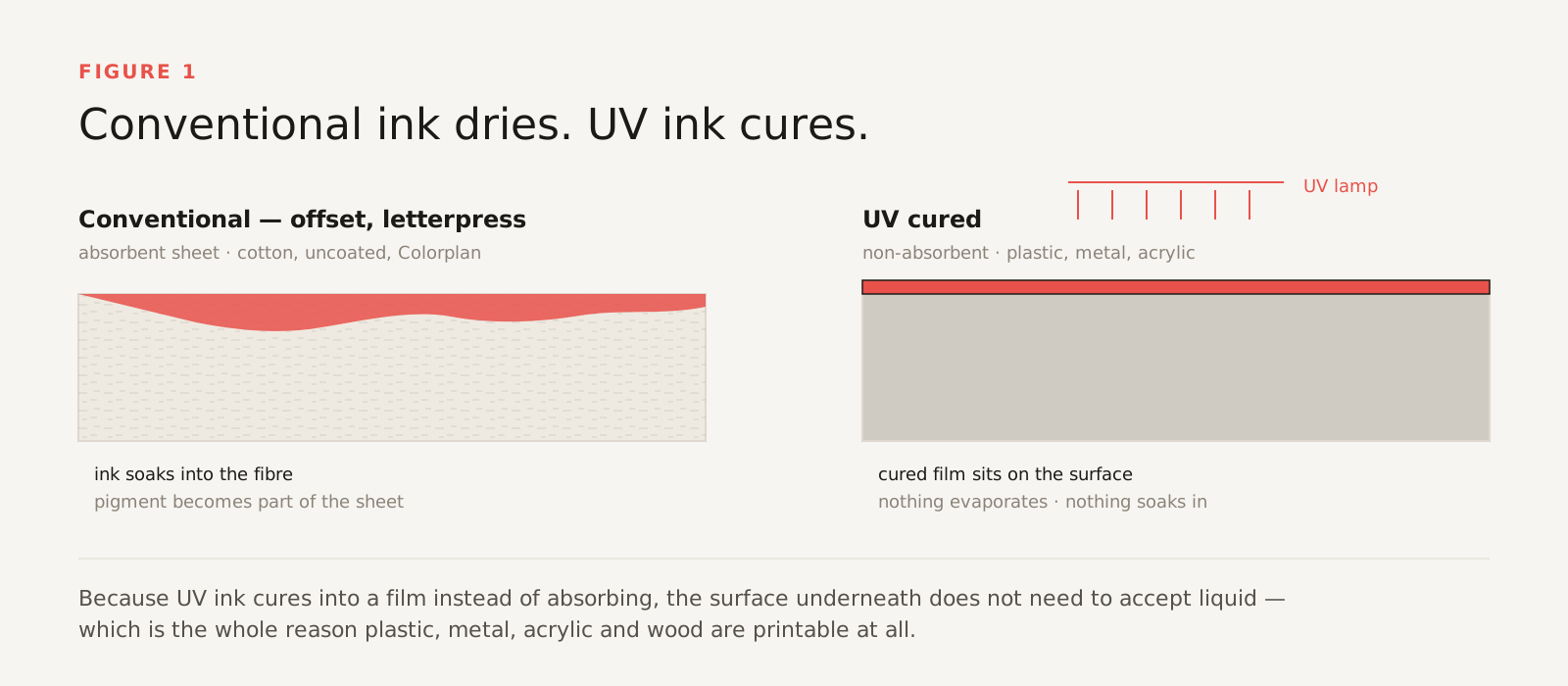
Conventional offset and letterpress inks dry by absorption and oxidation: the vehicle soaks into the sheet, the pigment stays behind, and the sheet needs time. That's why letterpress on cotton wants a day between passes, and why ink on uncoated paper shifts toward the paper's colour as it sinks in.
UV inks don't dry. They cure. They carry photoinitiators instead of solvent, and when they pass under a UV lamp the liquid ink polymerises into a solid film in a fraction of a second. Nothing evaporates. Nothing soaks in.
Two consequences follow, and everything else in this guide comes from them:
- The ink sits on top of the surface. It forms a thin plastic film bonded to whatever it landed on, rather than becoming part of a sheet of paper.
- The surface doesn't need to be absorbent. Which means plastic, metal, acrylic, wood, coated stock and frosted film are all printable — surfaces where conventional ink would simply sit wet and smear.
That is the whole reason we own UV equipment. It isn't a premium upgrade on paper. It's the method that makes non-paper possible.
UV printing vs spot UV: not the same thing
This trips up experienced designers, so it's worth stating plainly.
| What it is | What you see | |
|---|---|---|
| UV printing | Full-colour (or spot-colour) ink, cured by UV light | The artwork itself — the image, type, logo |
| Spot UV | A clear varnish applied to selected areas, also cured by UV | No colour at all — gloss against matte, a shine you feel |
Spot UV is a finish laid over a design. UV printing is the design. You can have both on one piece: UV-printed artwork with a spot-UV varnish over part of it. When a quote says "4/4 UV with spot UV front," those are two separate passes doing two separate jobs.
The naming collision is the industry's fault, not yours.
Where it earns its place
Plastic cards. Frosted, clear, white and coloured PVC absorb nothing. UV is the only way to get a full-colour image onto them and have it stay. This is also where white ink matters most (below).
Metal cards. Stainless, black-coated steel, brushed and mirror finishes are non-porous and often dark. UV lets us print colour onto a surface that would otherwise only accept etching, engraving or cut-through. Worth knowing: on metal we'll often recommend spot-colour silk screen over full-colour UV for one to three colours — screen lays down a thicker, more opaque, more saturated film, and on a mirror or matte metal that difference is visible. UV wins when the artwork is photographic or has more colours than screen can carry economically.
Acrylic and wood. Same logic — no absorption, so no conventional ink.
Coated paper on a deadline. UV cures instantly, so there's no dry time between passes and no set-off. It's occasionally the right answer on heavily coated stock. But on uncoated, cotton and Colorplan-class papers, conventional offset and letterpress are almost always better: the ink becomes part of the sheet instead of sitting on it, and that's exactly the quality people are buying those papers for.
White ink, and why it decides everything on clear and dark
CMYK is transparent by design. Cyan over yellow makes green because the two layers show through each other. That works beautifully on white paper, which acts as the reflector behind every colour.
On clear plastic there's nothing behind the ink. On black metal there's a surface darker than the ink. In both cases process colour prints and effectively disappears — a red goes muddy brown on black, or ghosts into whatever is behind a clear card.
The fix is a **white underbase**: an opaque white layer printed first, in the exact shape of the artwork, with the colour printed on top of it. The white becomes the paper.
- It's a real spec line, not a detail. More passes, more ink, and it belongs in the quote.
- White opacity is a decision. A single hit of white on a dark surface reads slightly grey; a double hit reads white but builds more film. Which one is right depends on the artwork.
- Leaving white out is a legitimate creative choice. Process colour printed directly on frosted plastic with no underbase gives a translucent, tinted, glassy result. Beautiful when it's intentional. A disaster when it's an accident.
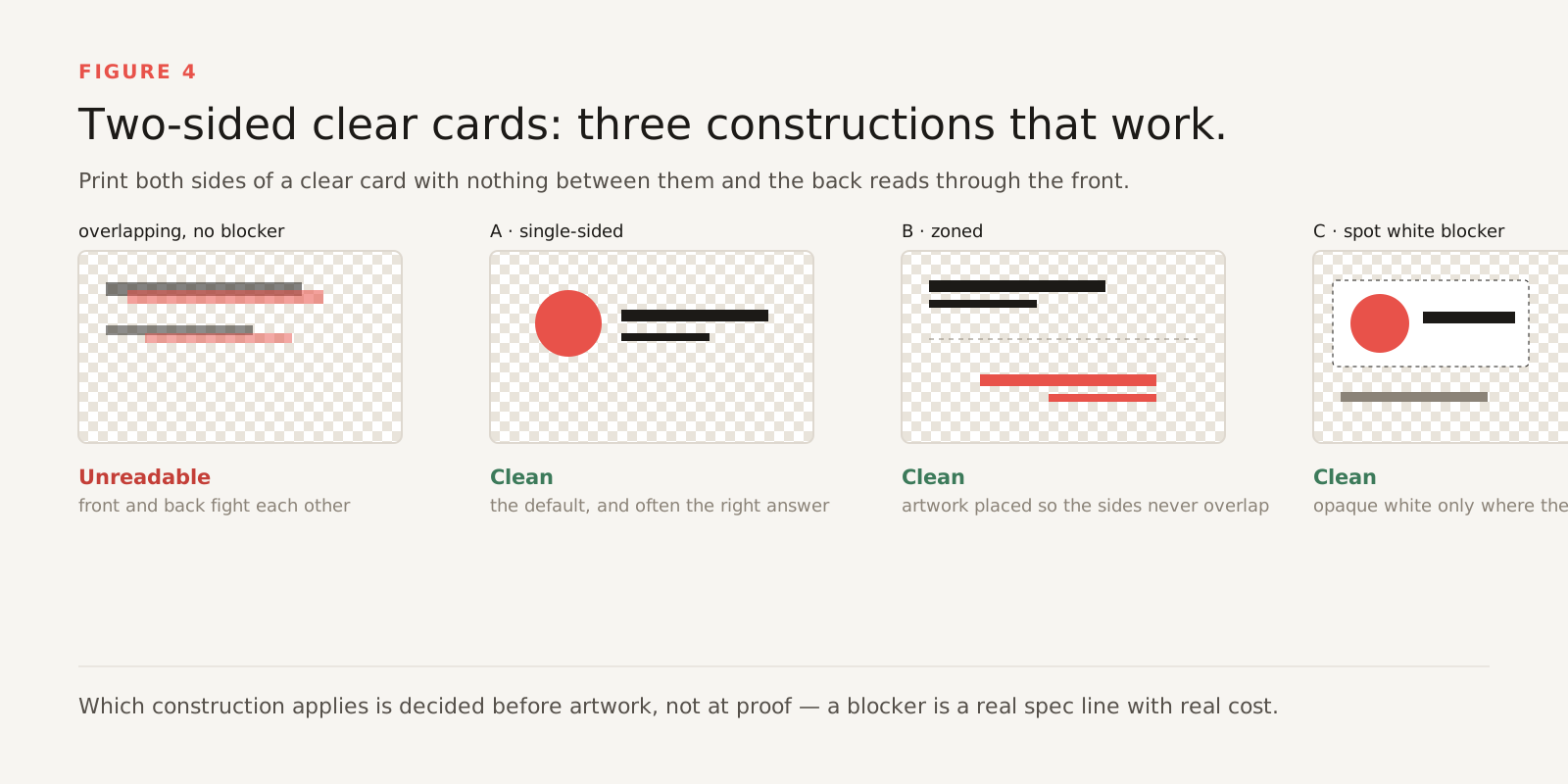
On a two-sided clear or frosted card there's a further question — whether the back shows through the front. A card printed both sides with no white blocker will read as a superimposed muddle. The answer is either a single-sided design, artwork zoned so the two sides don't overlap, or a **spot white blocker** in the overlap area. We decide that before artwork, not after.
What UV printing is not good at
Being straight about this saves everyone a proof round.
Colour matching. UV inks on a non-absorbent surface don't behave like offset ink on paper, and the substrate's own colour and sheen shift the result. If a brand colour has to match exactly, the honest answers are spot-colour screen printing, a Pantone offset run on paper, or foil — not process UV. We'll say so at quote stage rather than at proof stage.
Metallics. There is no process build of gold or silver. What UV can print is a metallic-looking grey or ochre, and it will look like a printed approximation next to real metal. Metallic means foil stamping (50+ colours, custom available), a metallic PMS ink, or a metallic substrate. Related: printing dark ink on a metallic paper gives an all-over metallic sheen that foil can't — foil only shines where it's stamped.
Build and texture. Cured UV ink has thickness. Usually invisible; occasionally you can feel a heavy solid, and that's normal for the method. Raised effects on purpose are a different process — raised spot UV, raised foil, or thermography.
Fine detail on a textured surface. Ink sitting on a brushed, embossed or fibre-flecked surface can't fill what's below it. Hairlines and small type over a strong texture will break up.
Fade and abrasion. Cured UV film is tougher than conventional ink on the same surface and is not going to rub off in a wallet. It isn't armour. Long outdoor exposure will fade process colour, and a sharp edge dragged across a mirror-finish card will mark the surface whatever is printed on it.
What we need from your file
- CMYK, not RGB. Bright RGB blues, greens and oranges are outside what any four-colour process reproduces, and on plastic or metal the gap is wider. Convert and look at it, or let us do the conversion and show you.
- Vector for type and logos. Cured ink holds a crisp edge well; a low-resolution raster doesn't get better because the ink is good.
- White underbase, called out. Either supply it as its own layer or spot channel, or tell us where you want it and we'll build it.
- Corner radius on plastic and metal. Both are typically produced with a soft radius rather than a square corner — 3mm on metal, wood and NFC; 1/8" or 1/4" on standard plastic.
Choosing between methods
| If you want | Use | Not |
|---|---|---|
| Photographic image on plastic or metal | UV printing (+ white underbase) | Offset, letterpress |
| One to three flat, punchy colours on metal | Spot-colour silk screen | Process UV |
| An exact brand colour | PMS spot ink, or foil | Process UV |
| Metallic gold or silver | Foil stamping, metallic PMS, metallic substrate | Any printed "gold" |
| Ink that becomes part of the sheet | Letterpress or offset on uncoated / cotton | UV |
| Gloss shine with no colour | Spot UV varnish | UV printing |
| A translucent, glassy card | UV on frosted plastic, **no** white underbase | Full opaque build |
Closing
UV printing is the reason our catalogue has plastic, metal, acrylic and wood in it at all. It's not the best way to print on beautiful paper, and we won't pretend otherwise — but on a surface that absorbs nothing, it's the only method that works, and it opens a set of materials that conventional printing simply can't reach.
If you're not sure whether your artwork suits it, send us the file. Ten minutes with a real press operator is cheaper than a proof round.
Common questions
Is UV printing the same as spot UV?
No. UV printing is ink cured by UV light — it makes the artwork. Spot UV is a clear varnish applied over selected areas to create gloss against matte. They're often used together on one piece.
Can you UV print on clear or frosted plastic?
Yes, and it's one of the main reasons we use it. On clear and frosted stock the decision that matters is whether to print a white underbase behind the colour — without it, process colour reads as a translucent tint rather than a solid image.
Can UV printing produce metallic gold or silver?
Not convincingly. Process ink can print a metallic-looking grey or ochre, but it won't read as metal. Real metallic means foil stamping, a metallic PMS ink, or a metallic substrate.
Will UV printing match my Pantone colour exactly?
Not reliably. Process UV on a non-absorbent surface, with the substrate's own colour and sheen affecting the result, isn't the right tool for an exact match. Spot-colour screen printing, a PMS offset run, or foil are.
Why would you recommend screen printing on metal instead of UV?
For one to three flat colours, screen lays a thicker and more opaque film than process UV, which reads as more saturated and more deliberate on a matte or mirror metal surface. UV is the better answer when the artwork is photographic or carries more colours than screen can run economically.
Ready to design on a non-paper surface?
Design on plastic or metal in the Studio →Send us the file if you're not sure which method suits it.