• Cotton business cards are made from cotton fibers instead of wood pulp, giving them a soft, textured surface ideal for letterpress.
• The fiber structure absorbs ink deeply and compresses under pressure, producing the crisp impressions letterpress is known for.
• Our cotton stock is off-white with a natural, uncoated feel — no gloss, no laminate, just fiber and ink.
• Pair cotton letterpress with edge painting for maximum visual impact.
• Available in standard 2×3.5", square, and euro sizes.
Cotton Business Cards and the Science of a Good Impression
Pick up a cotton business card and you'll notice something immediately: it doesn't feel like paper. There's a softness to it, almost like fabric, because that's essentially what it is. Cotton stock is made from cotton linter fibers — the same raw material used in fine stationery and currency — rather than the wood pulp found in standard printing papers. That distinction isn't cosmetic. It's structural, and it's the reason cotton is the single best substrate for letterpress printing.
Design Inspiration
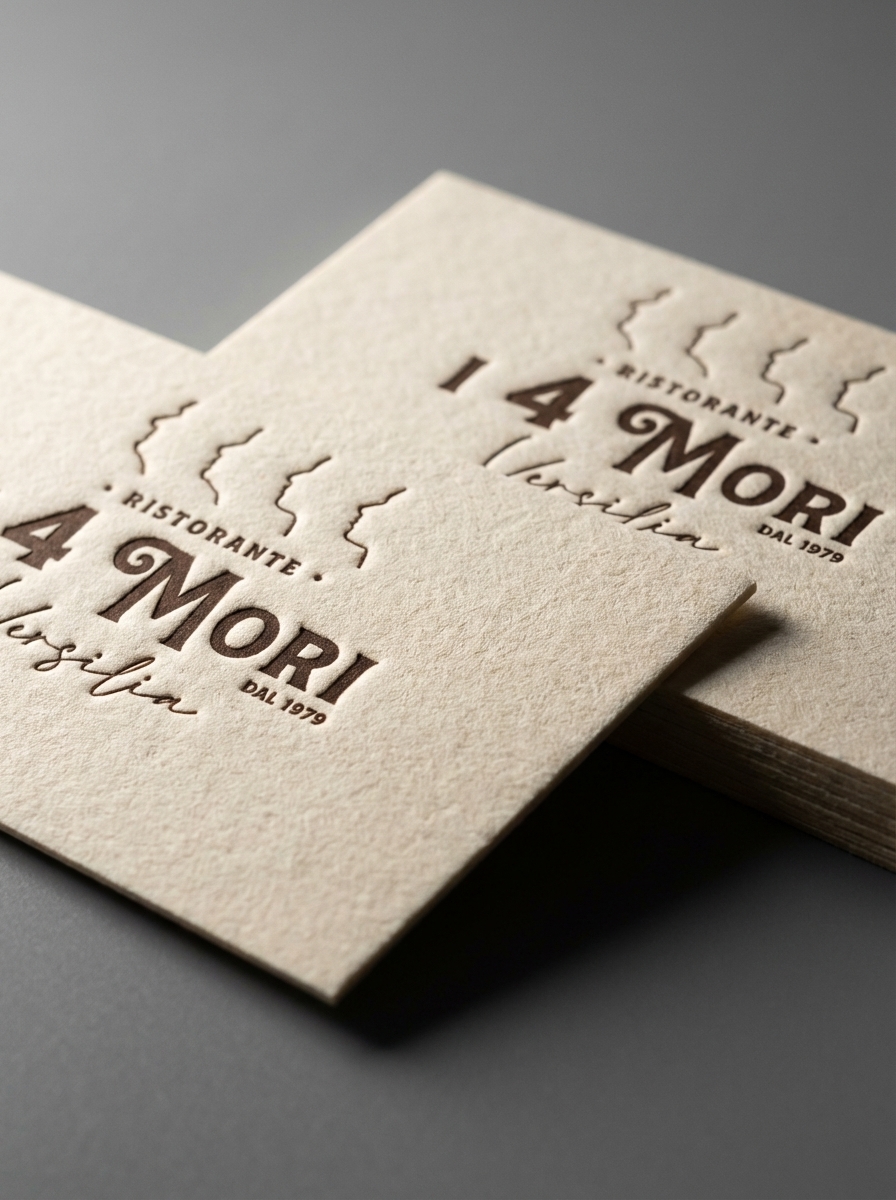
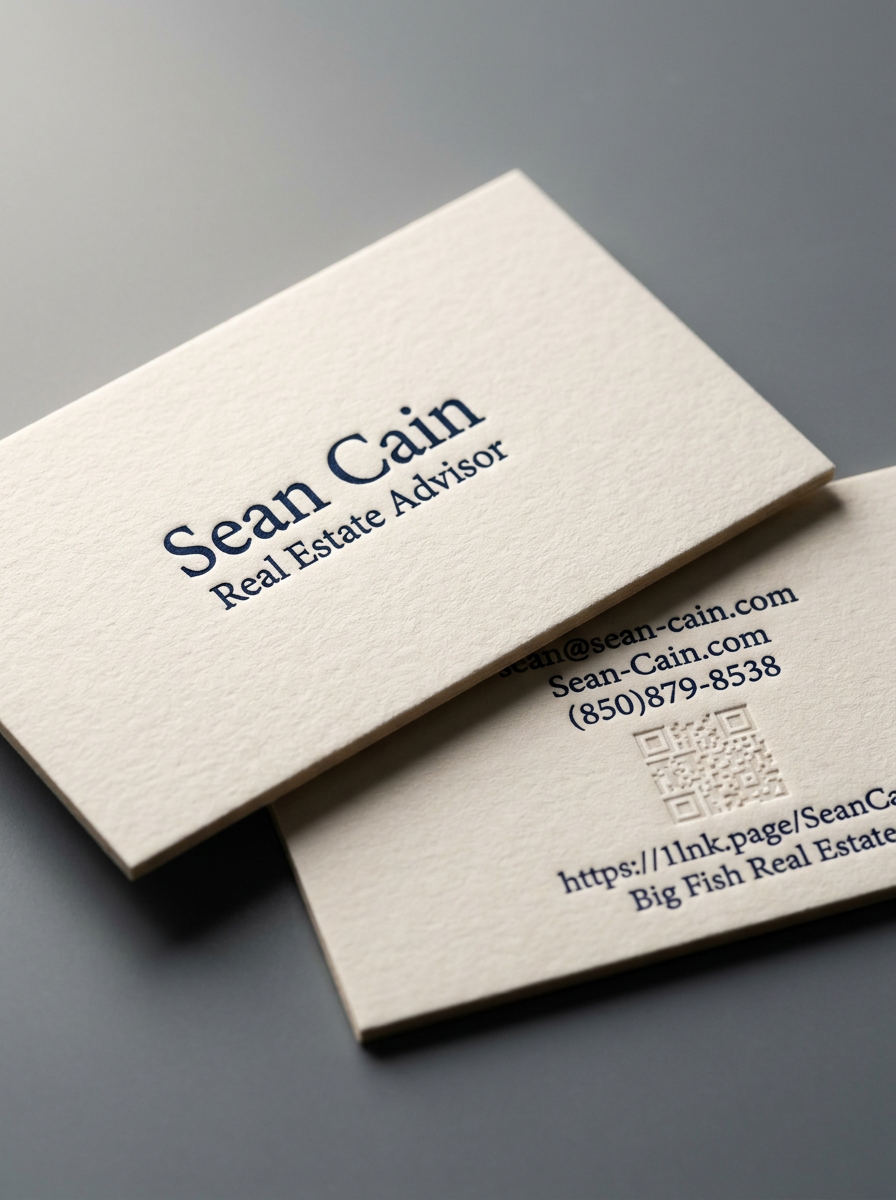
Wood-pulp papers are rigid. They resist compression. When a letterpress die strikes a coated or calendered sheet, the surface pushes back. You get ink transfer, sure, but the impression stays shallow. Cotton fibers behave differently. They're long, interlocking, and naturally absorbent. Under the tonnage of a letterpress plate, they compress and hold their new shape permanently. The result is that deep, tactile bite that makes people run their thumb across the card.
We print every letterpress order on our cotton stock — an off-white, uncoated sheet with a soft hand feel. It's not bright white. It's not glossy. And that's entirely the point.
What Makes Cotton Stock Different from Other Papers
Most business card stocks — 16pt, 32pt, silk laminate, soft touch — are built from wood pulp with coatings or laminations applied to the surface. Those finishes are great for digital printing, spot UV, and foil work. But they actively fight the letterpress process.
Here's why:
| Property | Cotton Stock | Coated / Laminated Stock |
|---|---|---|
| Fiber type | Cotton linter (long, flexible fibers) | Wood pulp (short, rigid fibers) |
| Surface | Uncoated, natural texture | Coated, sealed, or laminated |
| Ink absorption | Deep — ink soaks into fibers | Surface-level — ink sits on top |
| Compression under pressure | Permanent — fibers hold the impression | Minimal — surface springs back |
| Color | Natural off-white | Bright white or custom |
| Best for | Letterpress, deboss, minimalist design | Full-color digital, foil, spot UV |
The off-white tone of cotton paper cards isn't a limitation — it's a feature. It provides a warm, sophisticated canvas that makes dark inks pop without the clinical feel of bright white stock. For professionals in law, architecture, and fine dining, that warmth signals taste.
How Cotton Fibers Create Deeper Letterpress Impressions
Letterpress printing works by pressing an inked metal or polymer plate into the paper surface. The plate applies both ink and physical pressure simultaneously. On cotton stock, three things happen that don't happen on other papers:
The fibers compress permanently. Cotton linters are malleable. When the press plate pushes into the sheet at several tons of pressure, the fibers crush down and stay down. This creates the debossed channel — the "bite" — that defines high-quality letterpress work. If you're interested in how that tactile depth works across different techniques, our guide on 3D business cards and raised print breaks it down further. The ink absorbs into the fiber matrix. Rather than pooling on a sealed surface, ink wicks into the cotton fibers through capillary action. This produces rich, saturated color with soft edges — the hallmark look of letterpress that digital printing can't replicate. The difference between ink sitting on paper versus ink living in paper is visible to the naked eye. The surrounding paper stays pillowy. Because the uncompressed areas of cotton stock retain their loft, the contrast between the pressed impression and the untouched surface is dramatic. It's this contrast that makes the text and design elements feel carved into the card.
These three properties working together are why we exclusively use cotton for our letterpress business cards. No other stock gives us the same results on press.
Designing for Cotton: What Works and What Doesn't
Cotton stock rewards restraint. The texture and impression do the heavy lifting, so the design should let them.
What works beautifully on cotton
Clean typography with generous white space is the sweet spot. Sans-serif and serif fonts both print well, though heavier weights (medium to bold) produce more satisfying impressions than hairline type. Solid logos, monograms, and simple line art translate perfectly. Single-color or two-color designs are classic — think navy on off-white, or black with a copper foil accent.
Speaking of foil, cotton stock pairs exceptionally well with hot foil stamping. The foil adheres to the compressed fibers and sits slightly below the paper surface, creating a flush, integrated look rather than the raised-on-top effect you get with coated stocks.
What doesn't work on cotton
Full-color photography is out. Cotton is uncoated and absorbent, so CMYK process printing produces muddy, oversaturated results. Gradients are unreliable. Fine halftone screens (anything below 100 lpi) will bleed together. If your design depends on photographic imagery, you're better served by our silk laminate or soft touch stocks with digital printing.
Also worth noting: cotton stock comes in off-white only. If you need bright white, black, or colored stock, letterpress on cotton isn't the right path — but letterpress vs. digital printing covers when each method makes sense.
Who Should Choose Cotton Business Cards
Cotton letterpress cards carry a specific message: quality, permanence, and attention to detail. That message resonates strongly in certain industries.
Lawyers and law firm partners reach for cotton more than almost any other professional group. The stock communicates the same values their clients expect — tradition, precision, trustworthiness. A simple letterpress card on cotton says more about a firm's standards than any glossy, full-color alternative. Architects and designers gravitate toward cotton for different reasons. For them, the card itself is a material sample — a demonstration that they understand texture, proportion, and craft. The tactile quality of cotton stock speaks directly to a design-literate audience. Restaurants and chefs use cotton letterpress cards as an extension of their brand's sensory experience. The same care that goes into plating a dish goes into a card you can feel.
Creative professionals — photographers, brand strategists, studio owners — also benefit from cotton's tactile authority. And real estate agents working the luxury market find that cotton cards match the expectations of high-net-worth clients.
That said, cotton isn't for everyone. Tech startups often prefer modern finishes like spot UV or clear plastic, and that's a perfectly valid choice. The stock should match the brand.
Pairing Cotton Letterpress with Edge Painting
If cotton letterpress is the foundation, edge painting is the finishing touch. Because cotton stock is thick and soft, it takes edge color beautifully — the paint absorbs into the exposed fibers along the card's edges, producing a rich, opaque stripe of color.
The combination of a deep letterpress impression on the face with a bold painted edge is, frankly, the most impressive business card configuration we produce. A navy letterpress monogram on off-white cotton with gilded gold edges? That card doesn't get thrown away.
Edge painting is available in a wide range of colors, so you can match your brand palette precisely. It adds a flash of personality to an otherwise restrained design — which is exactly the balance most professionals want.
Specs and Ordering Details
Our cotton stock is a thick, plush sheet with a natural off-white tone and an uncoated, textured surface. Every letterpress order includes a free digital proof so you can confirm the layout before we go to press. Free shipping within the US is standard on all orders.
Turnaround for letterpress on cotton runs through our Studio tier (approximately three weeks) because each card is printed on an actual press — there's no shortcut for that. If you need cards faster and are open to a digital alternative, our Quick Ship options on other stocks can arrive in five to seven business days.
Available sizes include standard (2×3.5"), square (2.5×2.5"), euro (3.25×2.17"), and mini (3×1.5"). Custom die-cut shapes are also possible, though simpler shapes tend to work best with letterpress.
Ready to Feel the Difference?
Cotton business cards printed with letterpress are one of those rare products where the quality is immediately obvious to anyone who touches them. No explanation needed — the card speaks for itself.
Browse designs, upload your artwork, and order your cotton letterpress cards at our letterpress business cards page. Every order includes a free proof and free US shipping.