Blacks · spot ink
PMS Process Black U
Pantone® Process Black Uncoated — PANTONE Process Black on uncoated stock
Translucent — will not cover dark stock. Printers write it PMS Process Black U; brand guidelines usually write it Pantone® Process Black Uncoated. Same ink, same plate — the letter is the paper it lands on. On coated stock the same colour is PMS Process Black C, and it does not look the same.
- Default one-colour black
- Text
On-screen approximation — not a colour-accurate reference. Match to a physical PANTONE® chip before you sign off.
Coated vs uncoated, honestly
See Process Black C and Process Black U side by sideThe same ink is not the same colour on the two stocks. On coated sheets the ink sits on a sealed surface: denser, brighter, sharper edges. On uncoated the fibres absorb it: softer, duller, slightly lighter, and warm colours lose the most punch. Some colours change character outright — brights go chalky, deep navies go grey-blue.
| Stock | Reference | What you get |
|---|---|---|
| Coated | Process Black C | Denser and brighter. Ink sits on a sealed surface, edges stay sharp. |
| Uncoated | Process Black U | Softer and less saturated. Fibres absorb the ink; expect a step down in punch. |
How it behaves in production
- The plain black most jobs actually run. Neutral rather than cold.
- On uncoated it lands closer to a very dark charcoal than to a true black. If the design depends on a deep, dead black, either move to Black 6, add a second hit, or foil it.
On dark stock
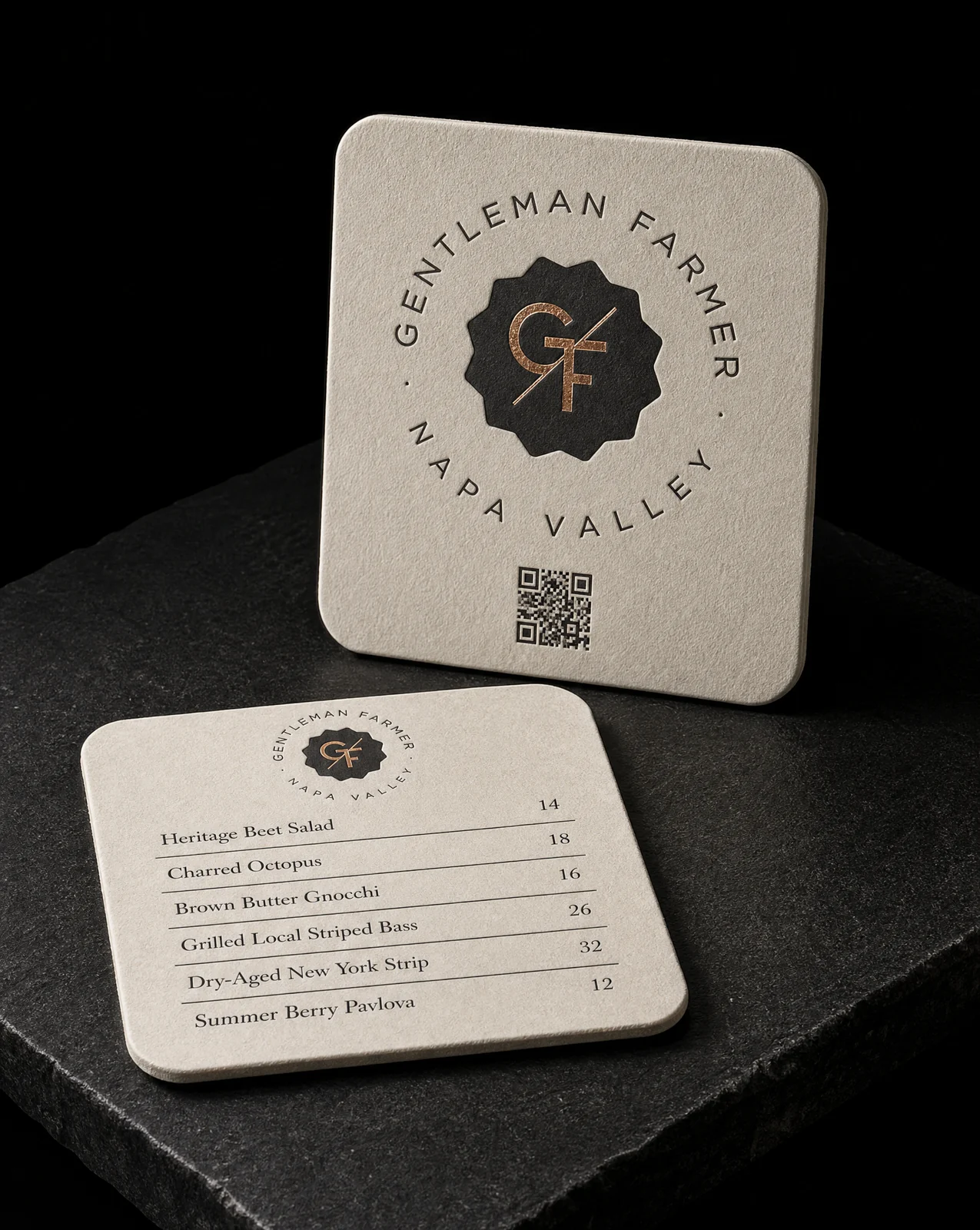
Offset and letterpress inks are translucent. On a dark or coloured stock a light ink will not cover — it sinks into the sheet and reads tone-on-tone. For light colour on dark paper the answer is foil stamping or an opaque screen pass, never a straight PMS hit.
See the foil directoryThe paper matters as much as the ink
A CMYK build of a spot colour is an approximation, not the colour. It matters most on large flat solids, on brand-critical marks, and in the brights and deep blues where process simply cannot reach. It matters least in small type and inside photography.
Browse the paper directoryCommon questions
- What does PANTONE Process Black look like on uncoated paper?
- Softer, duller and a touch lighter than the coated chip. Uncoated fibres absorb the ink instead of letting it sit on a sealed surface, so saturation drops across the board. The uncoated swatch here is modelled from the coated approximation — order a printed sample before you sign off.
- Can you print PANTONE Process Black on dark or coloured stock?
- Not as a standard ink hit. PANTONE Process Black is translucent, so on dark stock the paper colour comes through and the result is tone-on-tone. For this colour on dark paper we foil stamp or run an opaque screen instead.
- Can PANTONE Process Black be matched in CMYK?
- Sometimes. A process build is usually acceptable inside imagery or small type and usually visible on a large flat solid or a brand mark. If this is your brand colour, keep it a spot.
PANTONE® is a registered trademark of Pantone LLC. Print Peppermint is not affiliated with or endorsed by Pantone LLC. Codes are referenced to identify the inks we print.
Pairs beautifully with
Three combinations that hold up on press. Open one and the Studio starts with the stock, the foil and the ink already locked in.
PANTONE Process Black on Translucent vellum
PANTONE Process Black on Translucent vellum. Uncoated fibres drink the ink, so expect it a step softer than the coated chip — that softness is the reason to do it.
Compatibility matrix
Start this combination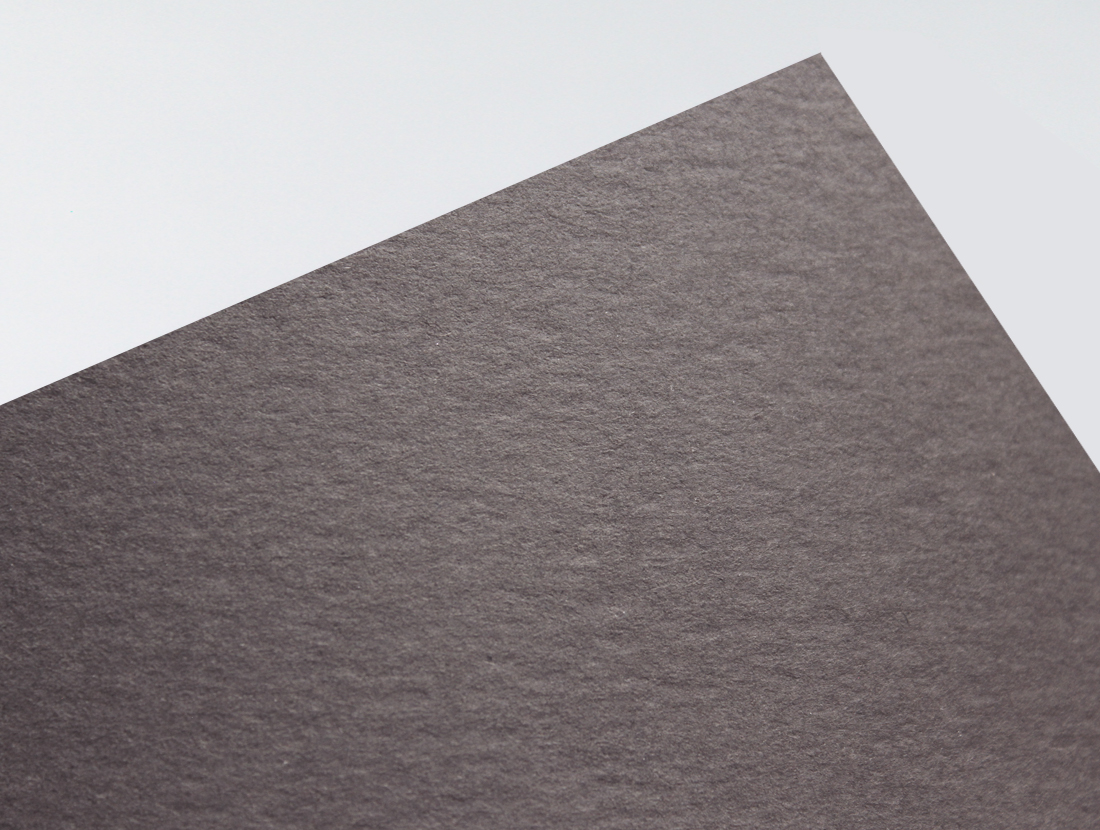
PANTONE Process Black on Wild Brown
PANTONE Process Black on Wild Brown. Ink is translucent: on a warm chocolate brown sheet the printed colour shifts toward the paper. Sign off against a printed sample, not the chip.
Compatibility matrix
Start this combinationPANTONE Process Black on Black uncoated 32pt
PANTONE Process Black on Black uncoated 32pt. Ink is translucent: on a black sheet the printed colour shifts toward the paper. Sign off against a printed sample, not the chip.
Compatibility matrix
Start this combination