Case study · Business cards · Piping Concepts
Piping Concepts ↗A trade card built like the trade
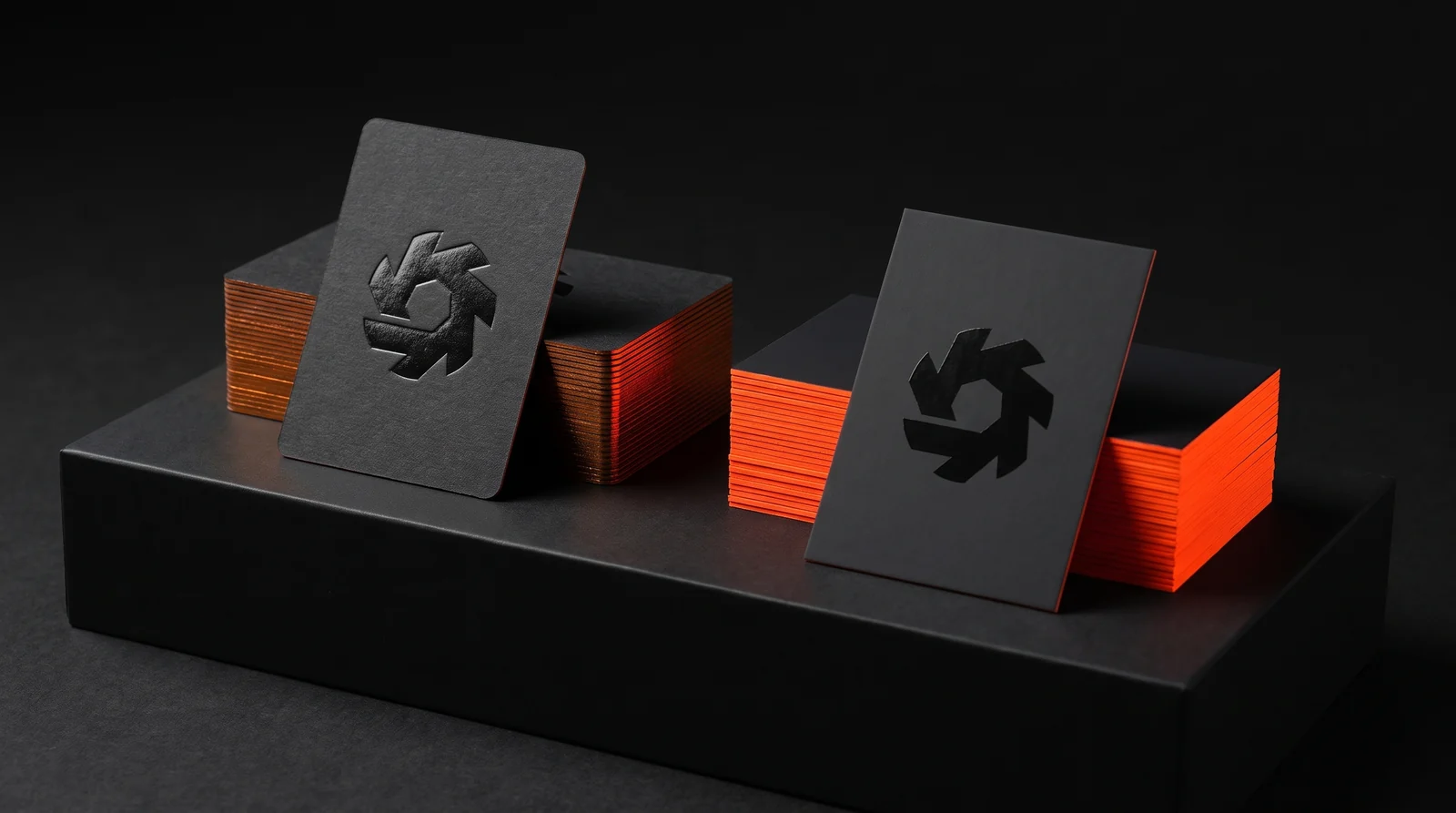
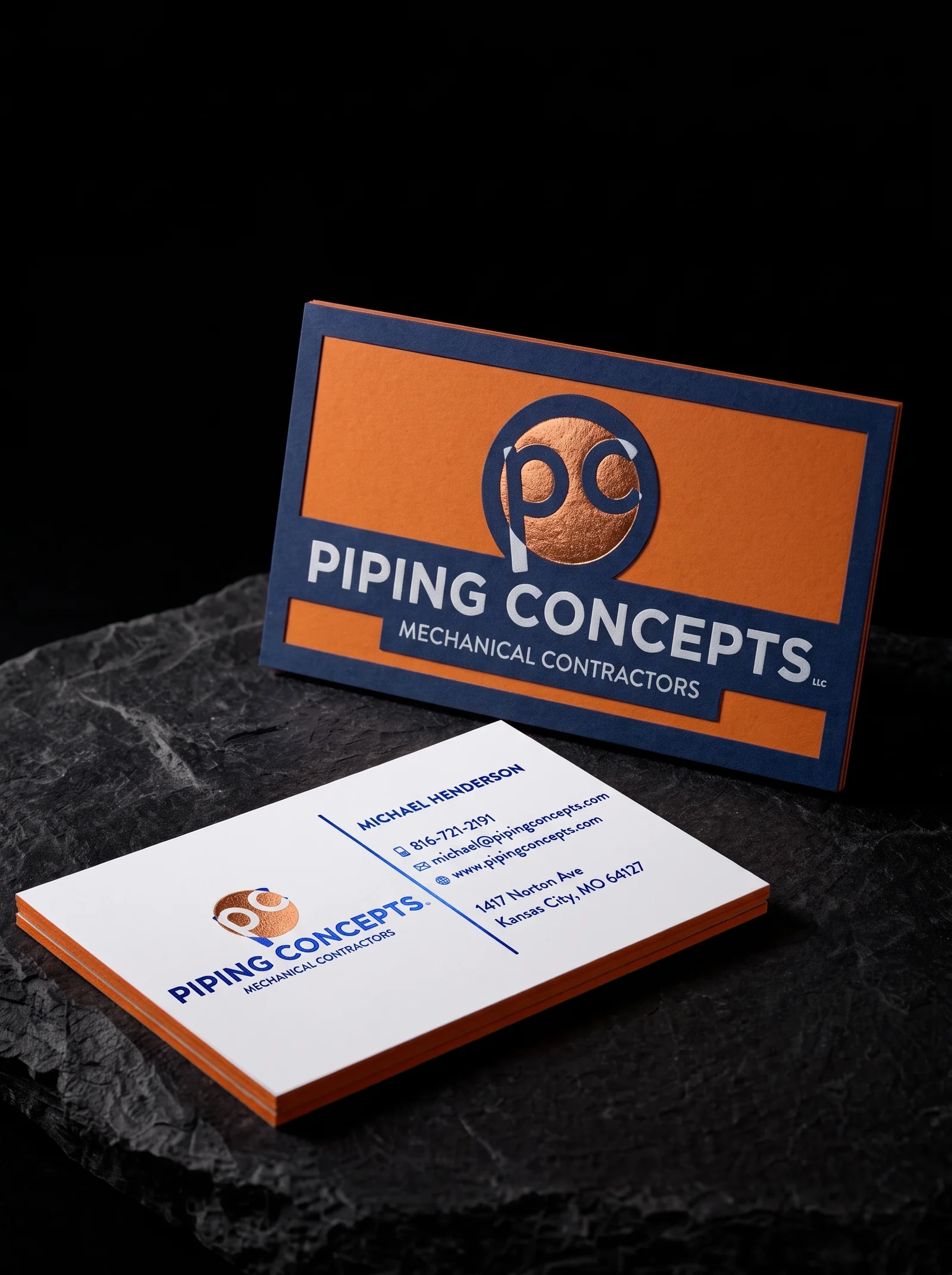
A three-layer business card built from blue, orange and white uncoated sheets, finished with copper and blue foil across two sides.
The idea
Piping Concepts has been a commercial mechanical contractor in Kansas City since 2002. The firm installs and services plumbing, HVAC and process piping, from new construction through emergency service. Its brand is navy and safety orange, and the orange is the colour you see on a job site.
Two rules
- 01Three layers, one visible seam. Three uncoated sheets—blue, orange and white—bonded into one card, with the orange middle layer visible around all four edges.
- 02Two foils, one per face. Copper foil for the mark on the blue face, and blue foil for the type on the white reverse, so each foil sits on the ground that suits it.
The client
The card had to hold both halves of that identity: the navy and orange of the trucks and signage, and something more exact for the people handing it across a desk.
Why it works
The card uses three colours, and each one comes from a different process: ink for the navy, foil for the metal, paper for the orange. You don't read it as printing on a card. The card is built from its colours.
Start from these materials
Same paper, foil and finish, locked in — nothing of Piping Concepts's artwork comes with it.
Questions
- What is a three-layer business card?
- Three sheets bonded into one thicker card. Here, blue and white uncoated face sheets surround an orange middle sheet, which shows as a coloured stripe around every edge.
- Can you use two different foil colours on one card?
- Yes. Each foil colour is its own die and pass. Here, copper sits on the blue face and blue sits on the white reverse.
- Is foil durable enough for trade use?
- Foil is bonded under heat and pressure and holds up to wallets and pockets well. On an uncoated sheet it settles into the surface rather than sitting on top.