Comparison · By Austin Terrill
The Best Business Card Printers, by What You're Making
By Austin Terrill, Founder & Creative Director, Print Peppermint · Prices checked October 1, 2026 · Updated
Most lists of the best business card printers crown one winner. There isn't one. There's a best printer for the card you're making. If you need 500 plain cards in a few days for under $50, Vistaprint or GotPrint is the answer. If you want a thick card fast, MOO Luxe. If you want real hot foil ordered online, Jukebox. If you want your own logo pressed by letterpress, a letterpress studio. And if you want foil, letterpress and a painted edge on one heavy cotton card, that's what my studio, Print Peppermint, is built for. The table below gives you the short answer. The rest of the page shows the limits each printer doesn't put in the headline.
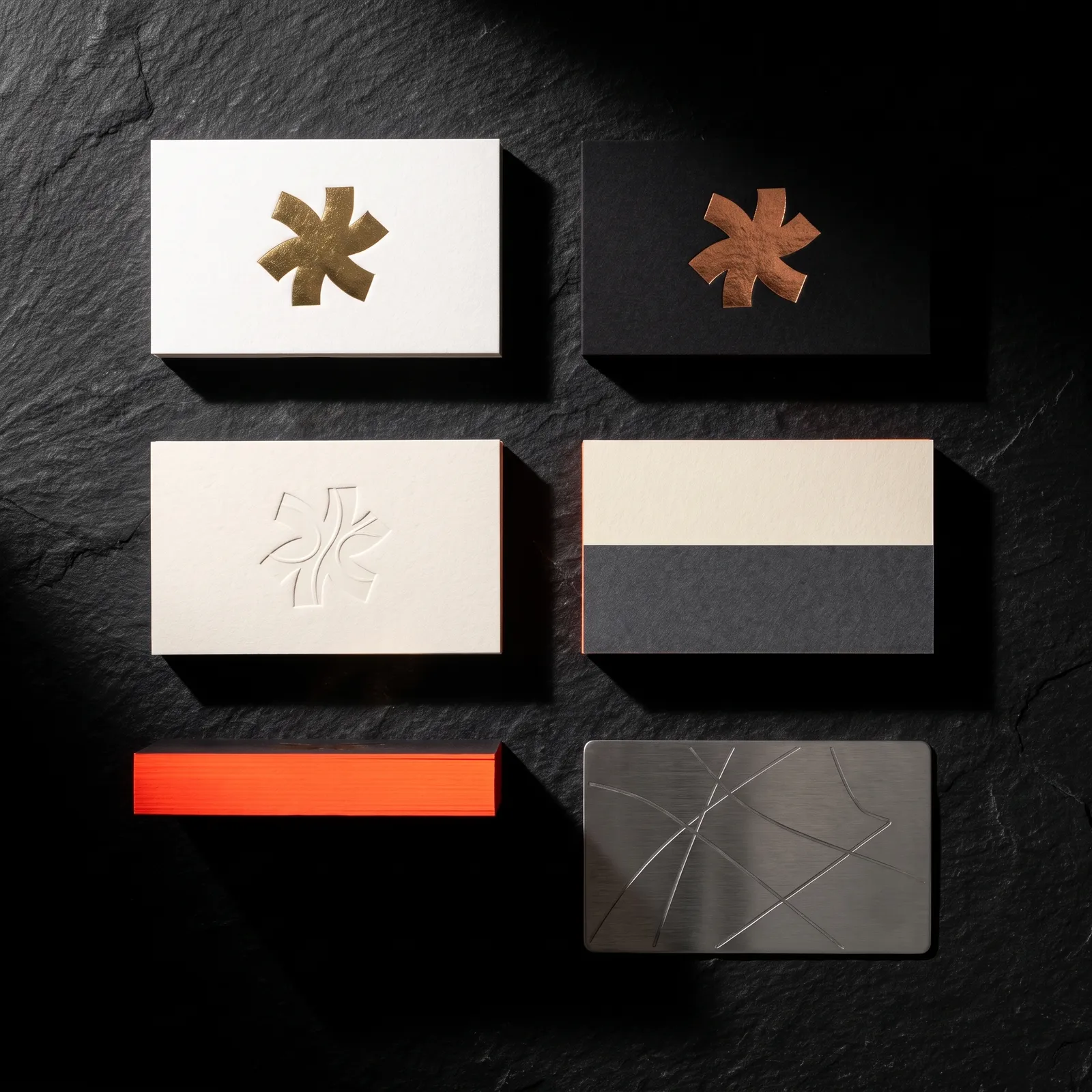
Quick picks: the best business card printers in 2026
Prices are list prices for standard 3.5 × 2 in cards, as shown on each printer's site on October 1, 2026, before promo codes, tax and shipping. Production times are what each printer states, not delivery dates.
| Printer | Best for | Example list price (Oct 1, 2026) | Where it stops | Stated production time |
|---|---|---|---|---|
| Vistaprint | Lowest cost and the widest catalogue | 14pt Standard, 500 for $24.99 (front only); Premium Plus 18pt, 500 for $46.99 | Ultra Thick 32pt takes no foil; raised foil is templates only | Next day on selected products; economy estimate was about 11 business days |
| GotPrint | Bulk orders on a budget | 16pt Premium Matte, 500 for $36.96; Trifecta 38pt triple-layer, 250 for $84 | Foil is digital raised foil, not die-stamped | 2–4 business days (16pt) |
| MOO Luxe | A thick card, fast | 32pt Luxe, 100 for $86; 1,000 for $435 | No foil or spot gloss on Luxe | As few as 2 business days |
| Jukebox | Real hot foil, ordered online | Foil stamped, 250 for $479 (20pt, one foil colour, no full-colour print) | One foil colour; more goes to a custom quote | 5 business days |
| SilkCards | Stacking finishes on a laminated card | 16pt silk + 1 foil, 250 for $97; 45pt cotton + foil, 250 for $237 | Foil process described as “metallic lamination”; thick stocks are glued 16pt sheets; 250 minimum | 8–12 working days, plus shipping |
| Luxury Printing NYC | Custom letterpress online | 1-colour letterpress, 250 for $292.50 | One stock online: 30pt smooth uncoated | 7–10 business days |
| Hoban Cards | Template letterpress on a budget | Kennedy template, 100 for $65; double thick, 250 for $180 | Templates; custom work is quote-only | About two weeks |
| Print Peppermint Custom | Several processes on one 32–48pt cotton card | Hot foil on 32pt cotton, 250 for $310; letterpress on 48pt cotton, 250 for $340 | Not a this-week option | About 3 weeks after proof approval |
| Print Peppermint Standard | A premium card in days, not weeks | Triplex black core, 500 for $126 | Fixed menu; raised foil in gold, silver or holographic only | Ships in 3–4 business days after proof approval (estimate) |
Sources for every row are listed under Sources, with the date checked.
My one-line verdict: for most people reading this, the split is Vistaprint for price, MOO Luxe for a fast thick card, Jukebox for one-colour foil on a short timeline, and a studio when the card has to carry more than one process.
Not sure which camp you're in? Feel the stocks first: order the sample pack ($8)
How I compared them
I've spent twenty years in specialty print, so I judged these the way I'd judge a press proof: by what the card actually is, not by the adjectives on the product page. Six things mattered.
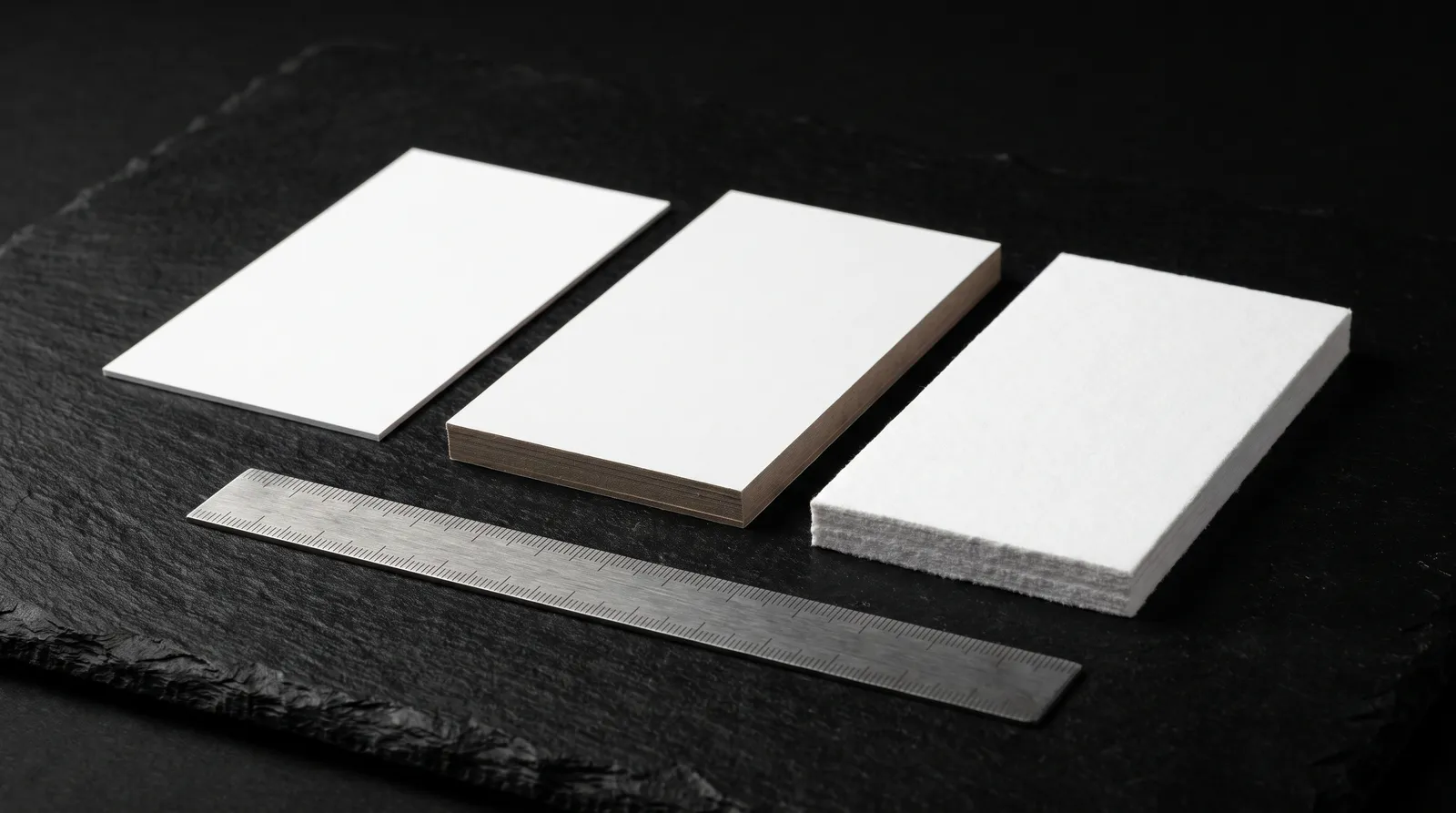
- Thickness actually offered, and how it's made. A single 32pt sheet, a duplex of two sheets, and three 16pt sheets glued together all measure about the same with a caliper. They don't take an impression the same way.
- Whether the finish is the real process. Die-stamped hot foil uses a heated metal die and pressure. Digital foil bonds foil film to toner with no die. Real letterpress presses an inked plate into soft paper. "Letterpress style" is often a flat print, or a print plus a deboss. Each has its place, but they aren't the same product at the same price.
- List price at 250 and 500. No promo codes, no first-order discounts, no account-only pricing.
- Stated production time. What the printer says on the page. None of these, including us, is a delivery promise.
- Whether a person checks the file. Some printers charge for it, some include it, some say plainly that their system is automated.
- What happens when it goes wrong. A reprint, a refund, or store credit.
I graded each competitor price as like-for-like or not. Where a printer's process couldn't be confirmed from its own pages, I say "unverified" rather than guess.
Read this before you pay for rush
Here's the landmine, before anything else. On October 1, 2026, we sampled the most recent 1–2 star Trustpilot reviews for nine card printers. At MOO, Vistaprint, Jukebox, Overnight Prints, Zazzle and PrintPlace, the most common complaint was the same: cards that missed the date, often after the customer paid extra for rush, usually right before an event. To be fair, these are samples of unhappy reviews, not the whole picture. MOO and Vistaprint both rate 4.5 out of 5 on Trustpilot overall, and Jukebox 4.8.
The lesson isn't "avoid those printers." It's that no printer controls the carrier. That includes us. Our Terms say plainly that production and delivery dates are estimates, and carrier delays are outside our control.
So my advice is the same whoever you order from:
- Work back from the event. Order early enough that a slow carrier doesn't matter.
- Proof early. Most delays I see start with a file that wasn't ready.
- If it's truly this week, buy a simple card from a fast printer for the event, and order the good card for after it.
Best for low cost and speed: Vistaprint and GotPrint
If price is the deciding factor, start here. Vistaprint's Standard 14pt card was $24.99 for 500 on October 1 (front only; printing the back costs extra), and its Premium Plus 18pt was $46.99 for 500. GotPrint's 16pt Premium Matte was $36.96 for 500, printed on both sides, with a stated 2–4 business days. For a trade show handout, a new hire's first box, or a card you'll redesign in six months, these are hard to beat on cost.
Where they stop is the thick, finished card. Vistaprint's Ultra Thick 32pt can't take foil. Its raised foil cards are pre-designed templates only; its own FAQ says you can't upload your own design for that product. Its Foil Accent card uses flat foil that takes the colour of your design, which is a digital process, not a die. GotPrint's foil is digital raised foil on 16pt matte, and its Trifecta triple-layer card is the thickest it sells (38pt with a coloured core).
Nothing wrong with any of that, as long as you know what you're buying. If you want gold that's pressed into the paper, not sitting on top of it, these aren't the printers for that job.
Best thick card, fast: MOO Luxe
MOO Luxe is the card most people mean when they search "moo luxe business cards", and it deserves the attention. It's 32pt Mohawk Superfine built in layers with a coloured seam in one of eight colours, priced at $86 for 100 and $435 for 1,000 on October 1, with a stated production time of as few as 2 business days. MOO's paper and colour are consistently praised by its own customers, and it offers a free reprint promise.
The limit is finishing. Per MOO's own guidance, Luxe isn't compatible with foil or spot gloss. MOO's foil cards are a separate product: gold or silver only, on 18pt Super Soft Touch, with foil under half the card. MOO's "Letterpress" line is twelve preset debossed designs on Luxe stock; MOO says you can't change the debossed design, and your own name and details are digitally printed.
So if you want a thick, plain, well-printed card in a few days, Luxe is a good buy. If you're looking for a MOO Luxe alternative because you want your own mark foiled or pressed into a thick card, that's the gap the next sections cover.
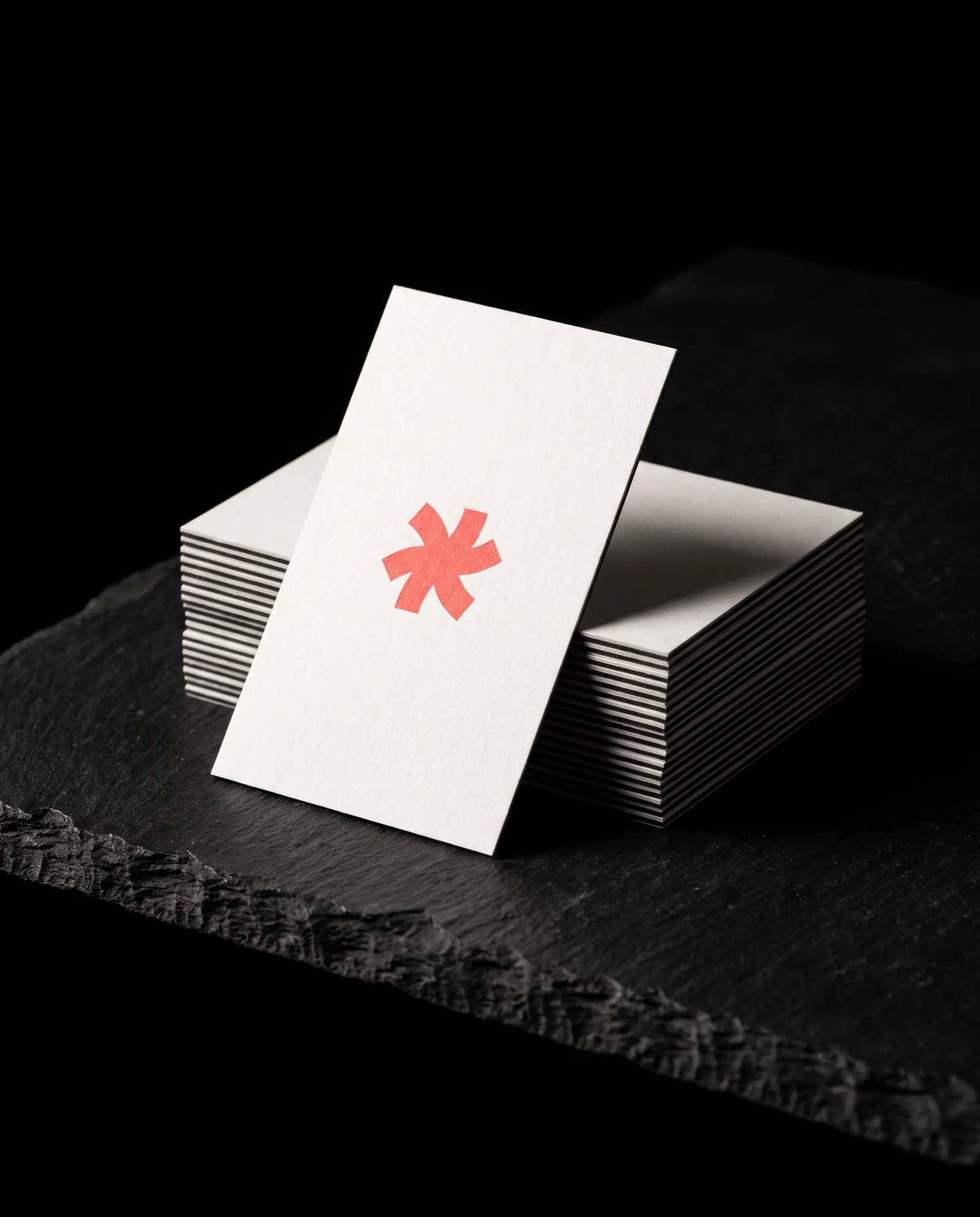
Best online hot foil and stacked finishes: Jukebox and SilkCards
Jukebox is the strongest big online seller for real hot foil. Its Foil Stamped card is die-stamped foil on a 20pt soft-touch card, $479 for 250 and $565 for 500 on October 1, with 5 business days of production. Two things to know: that price is one foil colour on the front with no full-colour printing, and one foil colour is the limit across the card. Anything more complex goes to a custom quote. Jukebox also offers duplex, triplex and painted edges, and its customers rate colour quality highly.
SilkCards (its trade arm is Silk Cards Pro) can stack more finishes on one card than most online sellers: foil, emboss, raised UV, painted or foiled edges. Its 16pt silk card with one foil was $97 for 250, and its 45pt cotton with one foil was $237 for 250. Two caveats from its own pages. Its foil product page describes the process as "metallic lamination", which I can't confirm is die-stamped, so I've marked it unverified. And its 32pt and 48pt cards are 16pt sheets glued together. Its minimum order is 250.
Here's how I'd decide. One foil colour, fast, on a mid-weight card: Jukebox. Lots of effects on a laminated card, and you're fine with 250 minimum: SilkCards. Foil pressed into thick cotton alongside a second process: read on.
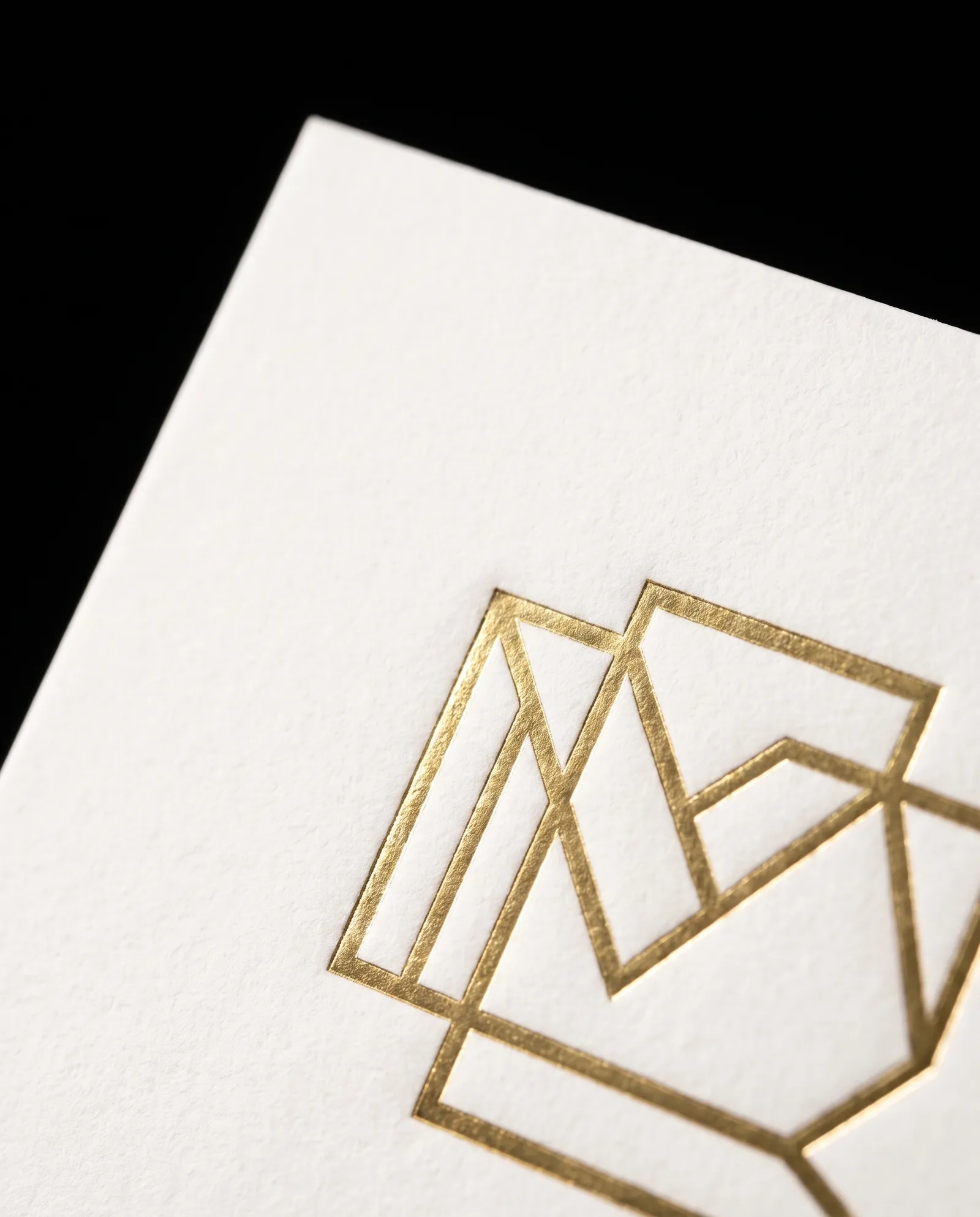
Best for letterpress
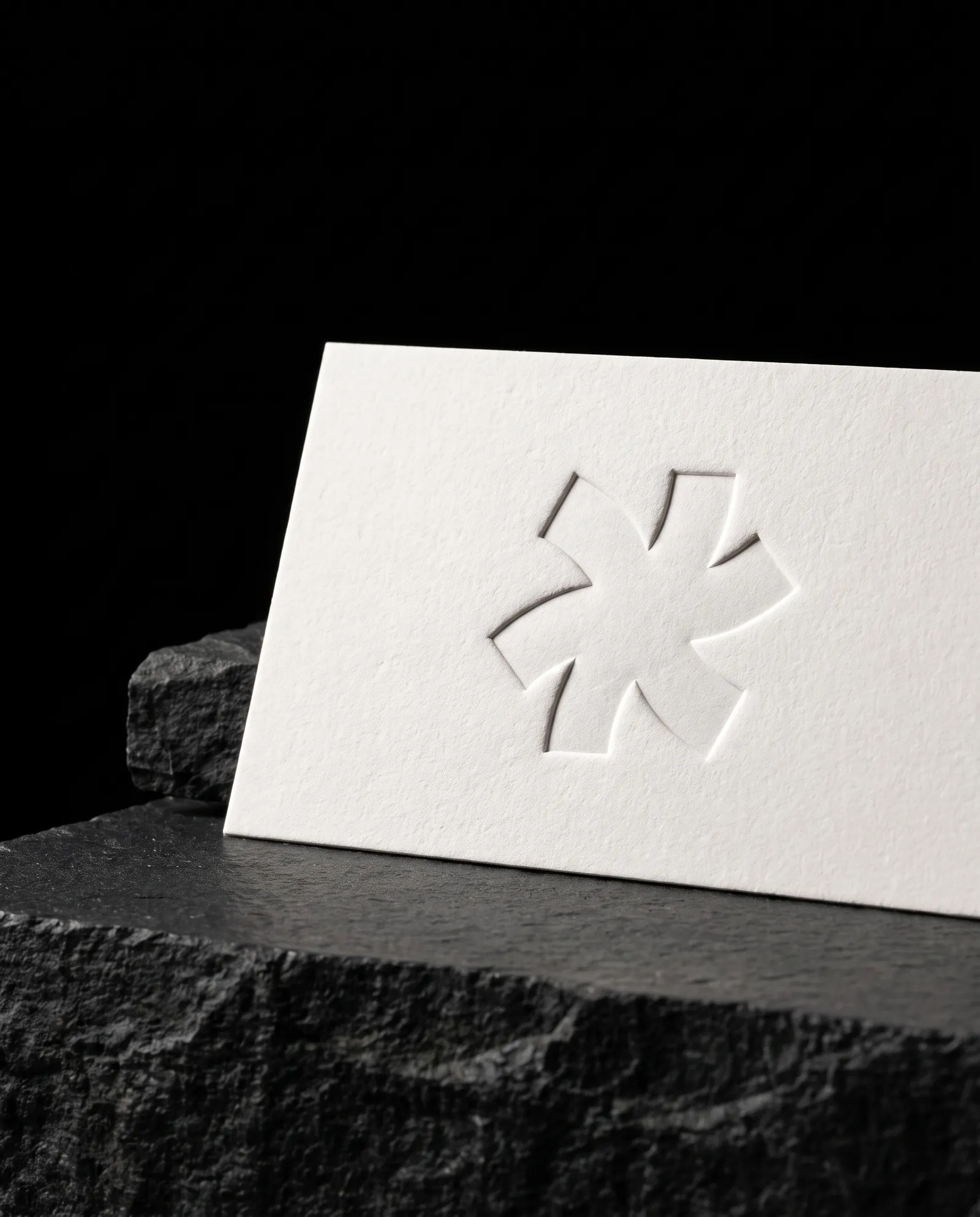
True letterpress is an inked plate pressed hard into soft paper. On cotton you feel every line under your thumb. It's priced per colour, per location, because each colour is its own plate and its own pass on press. That's why it costs more than digital print, and why so much online "letterpress" isn't.
- Luxury Printing NYC sells true custom letterpress online. One colour on the front was $292.50 for 250 on October 1. That figure includes the 50% "Online Order" uplift its configurator adds to the headline price. Its only online stock for letterpress is 30pt smooth uncoated, and its stated time is 7–10 business days.
- Hoban Cards is the value pick if a template suits you. Its Kennedy card was $65 for 100 in one-colour black letterpress on cotton, and $180 for 250 on its double-thick cotton. Templates take about two weeks; custom logos and layouts are quote-only.
- Boutique letterpress studios quote custom work with Pantone-mixed inks, often on 110lb Crane's Lettra. Dinglewood's semi-custom Frazier card, for example, was $400 for 250 in one ink.
- What to skip if you want real impression: MOO's preset Letterpress designs (your details are digitally printed), SilkCards' cotton "Custom Letterpress" card (its own knowledge base calls it print plus deboss), and anything labelled "letterpress style".
One landmine worth knowing: letterpress ink is translucent. Light ink on dark paper looks chalky, and a large solid area prints with a soft, mottled texture. For white on black, the right process is white pigment foil.
Best for metal and NFC cards
This market has split in two. On one side are print houses that make metal cards. SilkCards' 20pt stainless card was $240 for 100 with laser engraving and two Pantone colours, at 15 working days. Luxury Printing NYC's anodised black metal card was $594 for 100. On the other side are NFC platforms that sell a tap card bundled with a profile app, many of them on a subscription.
The big generalists have stepped back. On October 1, MOO's NFC "Business Cards+" page returned a 404, and Vistaprint's NFC page redirected to its general business-card category.
Two physics notes before you buy any metal NFC card. Solid steel blocks the signal, so the chip needs a non-metal window or a plastic back. And metal takes laser engraving, etching, colour fill and UV print; it can't be foil-stamped or letterpressed. If someone shows you "foil on steel", it's usually colour fill or polish.
Our metal cards start at $230 for 5. Our NFC cards start at $149 for 25 in white PVC and $229 for 25 in metal. The chip opens your link, and the person tapping needs no app.
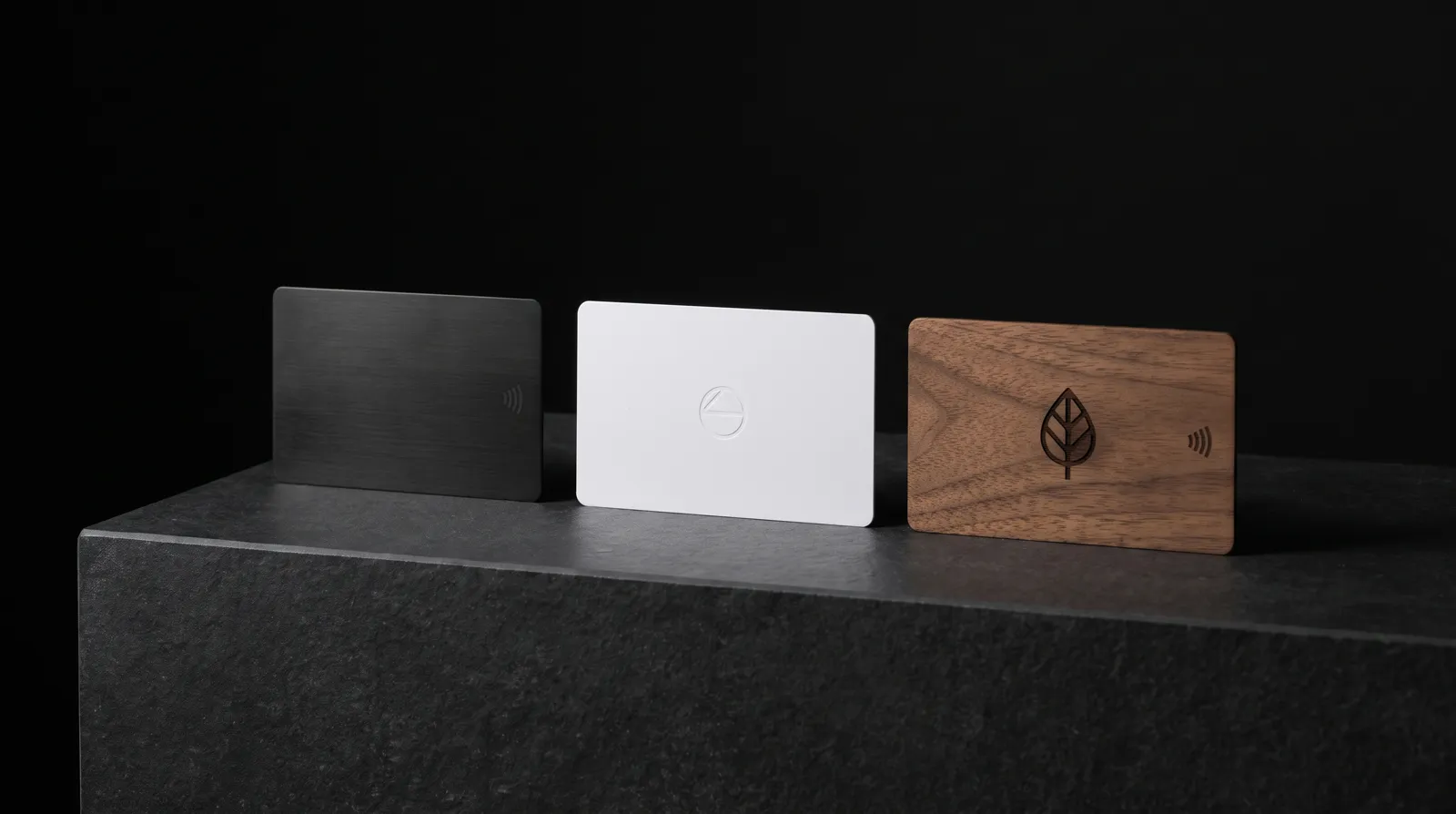
Where Print Peppermint fits, and where it doesn't
Plainly: we're a specialty studio, not a rush printer.
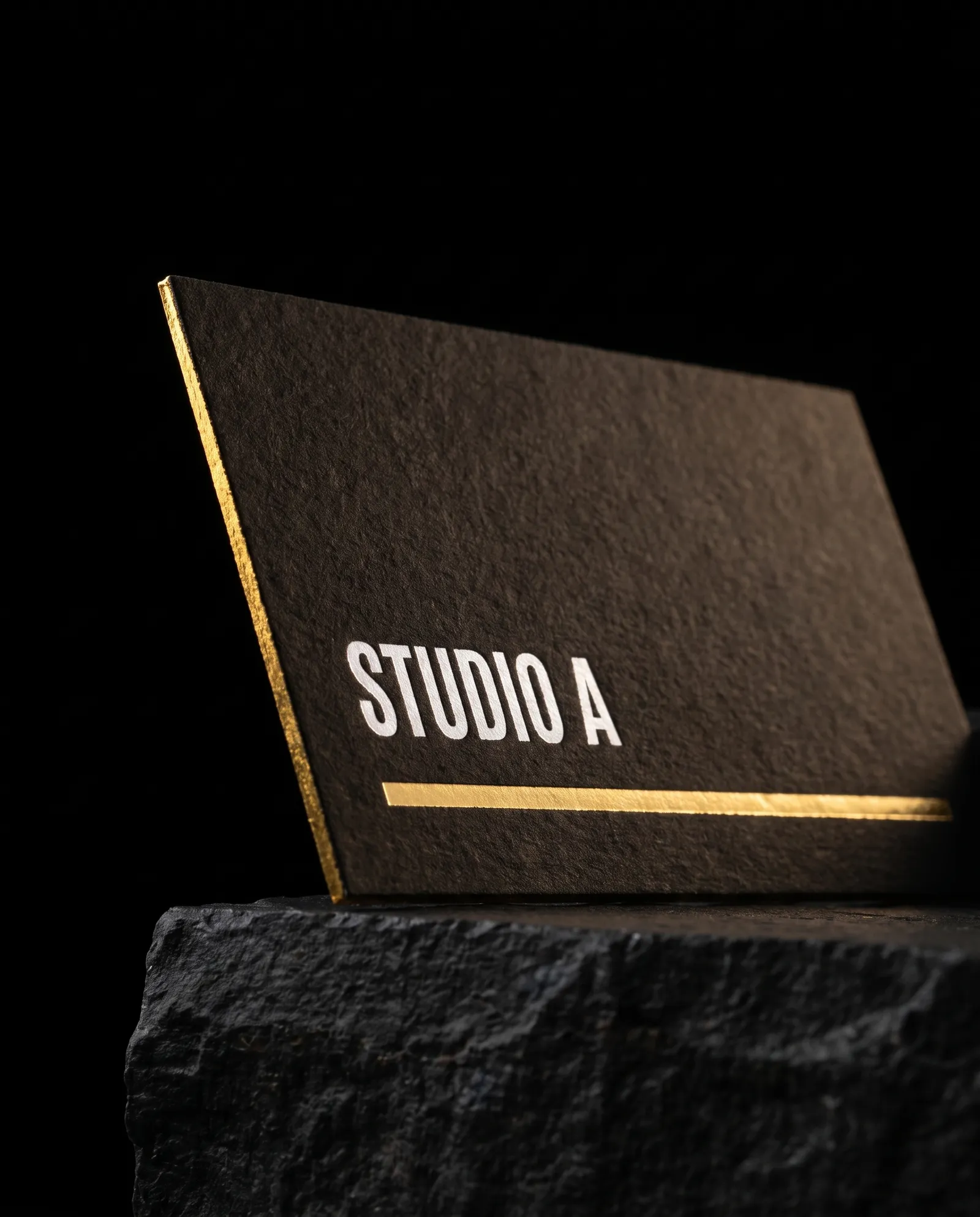
Use our Custom line when the card has to carry more than one process. That means hot foil in any of 40-plus stock colours (or a custom roll), letterpress, deboss and a hand-painted edge, combined on 32pt or 48pt cotton. Hot foil on 32pt cotton is $310 for 250, against Jukebox's $479 for one foil on 20pt. Letterpress on 48pt cotton (our standard; 32pt is also orderable) is $340 for 250. Custom orders take about 3 weeks after you approve the proof, plus transit. That's an estimate, not a delivery date.
Use Standard when you want a premium card in days. A triplex black core card is $126 for 500. A 32pt card with a painted edge is $165 for 250. Raised foil on soft touch starts at $105 for 100. Standard orders ship in 3–4 business days after proof approval (estimate), plus transit. To be straight with you, our Standard raised foil is digital raised foil, the same family of process as the big printers' raised foil. It's a good product at that price; it just isn't a die.
What's included. On Custom orders, a designer checks your file before anything is made, and you approve a free digital proof. On any order: if you're not happy, we reprint. It's a reprint, not store credit. How reprints work
Don't use us if:
- you need cards in hand tomorrow;
- your budget for 250 plain cards is under about $30 (our plain 16pt card starts at $58 for 250);
- you just want a template you can finish in five minutes. Vistaprint, MOO and Zazzle do that better.
Our own weak spots, in the same light. Custom is slower than Jukebox or MOO. We don't have public review stars yet. And the cheapest tiers of our plain cards cost more than the big printers'.
Is Vistaprint or MOO better?
For most people, MOO makes the nicer card and Vistaprint makes the cheaper one. MOO wins on paper and print quality, and Luxe is a good thick card with a fast stated turnaround. Vistaprint wins on price and range: 500 Standard cards were $24.99 against roughly $153 for 500 of MOO's Original cards (MOO sells 400 and 600, not 500). Neither puts foil on its thickest card.
If the card is a quick, functional handout, choose Vistaprint. If the paper matters and you want it fast, choose MOO. If you want a finish pressed into a thick card, neither is built for that. I go deeper in MOO vs Vistaprint, including what to look for in a Vistaprint alternative.
What 500 cards cost across printers
The short answer: on October 1, 2026, 500 standard full-colour cards had a median list price of about $74 (from about $23), thick cards about $231, one-colour letterpress about $420 and die-stamped hot foil about $565. The finish drives the price far more than the quantity.
This is the market at 500 cards on October 1, 2026. "Low", "median" and "high" are list prices across the comparable products I found from MOO, Vistaprint, Jukebox, SilkCards, GotPrint, PrintPlace, Zazzle, Minted, Luxury Printing NYC and the letterpress studios. Products whose process I couldn't confirm are left out.
| Card type (500 cards) | Low | Median | High |
|---|---|---|---|
| Standard 14–20pt, full colour | $22.56 | $73.50 | $200 |
| Soft touch | $45.99 | $124.35 | $405 |
| Thick (32pt and up) | $126 | $231 | $675 |
| Raised (digital) foil | $62.40 | $163.85 | $348.50 |
| Die-stamped hot foil | $98 | $565 | $678 |
| Letterpress, 1 colour | $340 | $420 | $960 |
| Painted edge | $142.99 | $229 | $298 |
| Metal | $906 | $1,161 | $2,092.50 |
One note on the letterpress row: the $340 low is MOO's preset-design card, where only MOO's debossed pattern is pressed. For your own artwork in true letterpress, the lowest list price I found at 500 was $420 (Luxury Printing NYC).
So a "good price" depends entirely on the process. Under $50 buys a perfectly decent plain card. Foil, letterpress or real thickness puts you in the hundreds, wherever you order. For our own ladder by product, see luxury business cards.
The best business cards for realtors, medical practices and creatives
For realtors
Realtors hand out a lot of cards and often print a headshot. Photos print best on smooth stock like silk or soft touch, not on cotton, which softens them. A QR code to your listings should print in flat ink, at least 2 cm wide; foil or gloss on a QR code stops phones reading it. A thick Standard card or soft touch with raised UV is the sweet spot for most agents. Save foil on cotton for a brokerage or luxury-listings card. See thick business cards.
For medical practices
A practice card often doubles as an appointment card, so the back should take a pen. Uncoated stock does; a laminated or soft-touch back is harder to write on. Keep contact details at a readable size and in a dark ink with strong contrast, because the people reading your card may not have their glasses with them. A clean 16pt or 32pt uncoated card with one spot colour usually beats a heavily finished one here.
For creatives
Designers and studios are the people most likely to notice the process. If your work is your pitch, it's worth one honest-to-goodness press finish rather than three effects. I wrote more on this in the best cards for creatives.
What people use instead of business cards in 2026
Mostly NFC cards and digital profiles, opened with a tap or a QR code. They're useful because the link can change after the card is printed. But the big printers have pulled their NFC cards, and many NFC platforms are built around an app subscription. A good paper card still gets kept, pinned and passed along in a way a link doesn't. My take: if you meet people in person, carry a card. If you want both, an NFC card with a printed QR backup covers older phones and every handshake.
Still deciding? Hold them first
The quickest way to settle "thick or foil or letterpress" is to hold all three. Our sample pack is $8 and includes a $10 credit on your first order.
Questions people ask about business card printers
Who makes the highest quality business cards?
Quality depends on the process more than the brand. For a plain printed card, MOO and Jukebox are consistently praised for paper and colour. For pressed finishes, the highest quality comes from printers that use true processes: die-stamped hot foil, real letterpress pressed into cotton, and painted edges on a thick sheet. These are mostly specialty studios like Print Peppermint and letterpress shops, not the big online printers. Check whether the foil is stamped with a die and whether the letterpress is your own artwork, not a preset.
What is the best place to order business cards?
It depends on the card. For the lowest price, Vistaprint or GotPrint. For a thick card in a few days, MOO Luxe. For one-colour hot foil ordered online, Jukebox. For your own logo in letterpress, a letterpress studio. For foil, letterpress and a painted edge combined on heavy cotton, a specialty studio such as Print Peppermint. Order a sample pack first if you're paying more than about $100.
What are the best luxury business cards?
The best luxury business cards combine a heavy stock with a finish you can feel: 32pt to 48pt cotton with hot foil, letterpress, a deboss or a painted edge, or a metal card. Thickness alone isn't luxury. A 32pt card with a flat digital print feels heavy but looks ordinary. Pick one or two pressed processes that carry your mark rather than stacking every effect. Our luxury business cards page shows builds and prices.
Are premium business cards worth it?
Expensive cards are worth it when people keep your card: client-facing roles, creative work, high-value sales, and introductions where the first impression is physical. They're not worth it for trade-show handouts or cards you'll redesign in a few months. A good middle path is a thick or soft-touch card with one finish, which costs a fraction of a fully custom build.
Is Vistaprint or MOO better?
MOO usually makes the better card, and Vistaprint the cheaper one. MOO is stronger on paper and print quality and offers a 32pt Luxe card with a fast stated turnaround. Vistaprint is cheaper and has a wider range. On October 1, 2026, neither offered foil on its thickest card, so if you want a pressed finish on a thick card, look at a specialty printer.
Which printers do real hot foil?
Real hot foil is stamped with a heated metal die. Among the printers in this guide, Jukebox, PrintPlace (500-card minimum) and Print Peppermint's Custom line say they use die-stamped hot foil. Vistaprint's Foil Accent and GotPrint's raised foil are digital foil, applied without a die. MOO and SilkCards don't state the process clearly on the product pages I checked, so I can't confirm either way.
What is the best paper for business cards?
Cotton is the best paper for pressed finishes: it's soft enough to take letterpress and deboss and holds hot foil with a slight bite. Silk and soft-touch laminates are better for photos and full-colour printing, and they take raised UV and raised foil. Uncoated paper is best if people need to write on the card. Our cotton business cards page covers weights and shades.
Are thicker business cards better?
Thicker cards feel more substantial and give a painted edge more surface, but thickness alone doesn't make a better card. 32pt, about 0.8 mm and close to a credit card, is where most premium cards sit. 48pt is dramatic, and some people find it too much for a wallet. How the thickness is made matters too: a single cotton sheet or a duplex takes an impression better than thin sheets glued together. For the full point-to-millimetre scale, see our guide to business card thickness.
Can I get foil on a thick business card?
Yes, but not from every printer. On October 1, 2026, MOO said its 32pt Luxe isn't compatible with foil, and Vistaprint's Ultra Thick couldn't take foil. Jukebox stamps foil on 20pt, and on duplex and triplex by custom quote. SilkCards adds foil to its laminated 32pt and 48pt cards. Print Peppermint stamps hot foil on 32pt and 48pt cotton, alongside letterpress, deboss or a painted edge.
How long do premium business cards take?
It varies by process. MOO Luxe states as few as 2 business days, Jukebox foil 5 business days, Luxury Printing NYC letterpress 7–10 business days, and SilkCards 8–12 working days plus shipping. Print Peppermint Custom orders take about 3 weeks after proof approval, and Standard orders ship in 3–4 business days after proof approval, plus transit. All of these are estimates; carriers aren't controlled by any printer, so order with time to spare before an event.
What happens if my business cards arrive wrong?
It depends on the printer's policy, so check it before you order. Several large printers' unhappy customers report being offered store credit or a partial refund rather than a reprint. At Print Peppermint: if you're not happy, we reprint. How reprints work
Sources
All checked October 1, 2026. Prices are list prices for 3.5 × 2 in cards before promo codes, tax and shipping. Where a price was interpolated between a printer's own pack sizes, it's marked.
Vistaprint
- Standard Business Cards, 14pt, front only, 500 = $24.99: https://www.vistaprint.com/business-cards/standard
- Premium Plus, 18pt, 500 = $46.99: https://www.vistaprint.com/business-cards/premium-plus
- Ultra Thick, 32pt, no foil; 250 = $81.99: https://www.vistaprint.com/business-cards/ultra-thick
- Raised Foil, templates only (“Can I upload my own design and add raised foil to it? Not at this time”): https://www.vistaprint.com/business-cards/raised-foil
- Foil Accent, flat foil that takes the design colour: https://www.vistaprint.com/business-cards/metallic
- Soft Touch, no special finishes on that stock: https://www.vistaprint.com/business-cards/soft-touch
- NFC page redirected to the general business-card category on October 1, 2026.
- Trustpilot (4.5 from 7,495 reviews): https://www.trustpilot.com/review/www.vistaprint.com
GotPrint
- 16pt Premium Matte, 500 = $36.96, regular 2–4 business days: https://www.gotprint.com/products/business-cards/order?size=101&orientation=1&paper=10&color=3&quantity=500&turnaround=1&proofType=31
- Trifecta 38pt Black, 250 = $84: https://www.gotprint.com/products/business-cards/order?size=101&orientation=1&paper=32&color=3&quantity=250&turnaround=1&proofType=31
- Raised Print Foil, digital, PDF proof $4 on that product: https://www.gotprint.com/products/business-cards/order?size=101&orientation=1&paper=10&color=3&quantity=500&turnaround=1&proofType=31&raisedPrint=138&raisedFoilColor=141
MOO
- Luxe 32pt, 100 = $86, 1,000 = $435, “as few as 2 business days”: https://www.moo.com/us/business-cards/luxe
- Luxe not compatible with foil or spot gloss (MOO support guidance)
- Gold and silver foil on 18pt Super Soft Touch, under 50% coverage: https://www.moo.com/us/business-cards/finishes/gold-foil-business-cards
- Letterpress, 12 preset designs, details digitally printed, 9 business days: https://www.moo.com/us/business-cards/letterpress
- Original 16pt, 400 = $135, 600 = $171 (500 interpolated ≈ $153): https://www.moo.com/us/business-cards/original
- Free reprint promise (raised spot gloss FAQ): https://www.moo.com/us/business-cards/finishes/raised-spot-gloss-business-cards
- “Business Cards+” (NFC) returned 404 on October 1, 2026.
- Trustpilot (4.5 from 18,793 reviews): https://www.trustpilot.com/review/www.moo.com
Jukebox Print
- Foil Stamped, 20pt soft touch, 1 foil colour, front only, no CMYK; 250 = $479, 500 = $565; 5 business days: https://www.jukeboxprint.com/business-cards/foil-stamped
- Triplex, 36pt, 250 = $195: https://www.jukeboxprint.com/business-cards/triplex
- Trustpilot (4.8 from 7,040 reviews): https://www.trustpilot.com/review/jukeboxprint.com
SilkCards / Silk Cards Pro
- Foil Business Cards (16pt silk + 1 foil, 250 = $97; 45pt cotton + foil, 250 = $237; page describes “metallic lamination”): https://silkcards.com/print/Foil-Business-Cards
- Thick (laminated 16pt layers): https://silkcards.com/print/Thick-Business-Cards
- Ultra Thick (laminated 16pt layers): https://silkcards.com/print/Ultra-Thick-Business-Cards
- Cotton “Custom Letterpress” (print plus deboss, per its knowledge base): https://silkcards.com/print/Cotton-Business-Cards
- Metal, 20pt stainless, 100 = $240, 15 working days: https://silkcards.com/print/Metal-Business-Cards
- Trade arm: https://silkcardspro.com/agency/
Luxury Printing NYC
- Letterpress, 30pt smooth uncoated, 1 colour front, 250 = $292.50 (includes the 1.5× Online Order uplift), 7–10 business days: https://www.luxuryprinting.com/letterpress-business-cards/
- Black Metal, 100 = $594: https://www.luxuryprinting.com/black-metal-business-cards/
Hoban Cards
- Kennedy template, 100 = $65; double thick 250 = $180; templates about two weeks (FAQ); custom work by quote: https://hobancards.com/products/kennedy-card
Dinglewood Design & Press
- Frazier letterpress, 1 ink, Crane's Lettra, 250 = $400: https://dinglewooddesign.com/products/frazier-letterpress-business-cards
PrintPlace
- Foil Business Cards, hot foil stamping, 500 minimum, 500 = $129.50: https://www.printplace.com/products/foil-business-cards
Market table (What 500 cards cost)
- Low, median and high across like-for-like competitor list prices recorded 2026-10-01 (comps graded A/B only, unverified processes excluded).
Review sampling
- The most recent 1–2 star Trustpilot reviews for MOO, Vistaprint, Jukebox, SilkCards, GotPrint, PrintPlace, Overnight Prints, Zazzle and Minted, sampled October 1, 2026 (the reviews themselves date from late 2025 to September 2026). Samples ran from about 20 to 60 recent negative reviews per printer (SilkCards had only about 10 negative reviews across all reachable sources), not full profiles. Trustpilot ratings from each printer's profile page, checked the same day.
Print Peppermint
- Terms of Service, Sections 5, 6 and 8: https://www.printpeppermint.com/terms
- Custom Hot Foil Stamped: https://www.printpeppermint.com/business-cards/foil/custom-hot-foil-stamped
- Thick business cards (Standard and Custom): https://www.printpeppermint.com/business-cards/thick