Design exercise · Business cards · Print Peppermint
Where the antenna goes
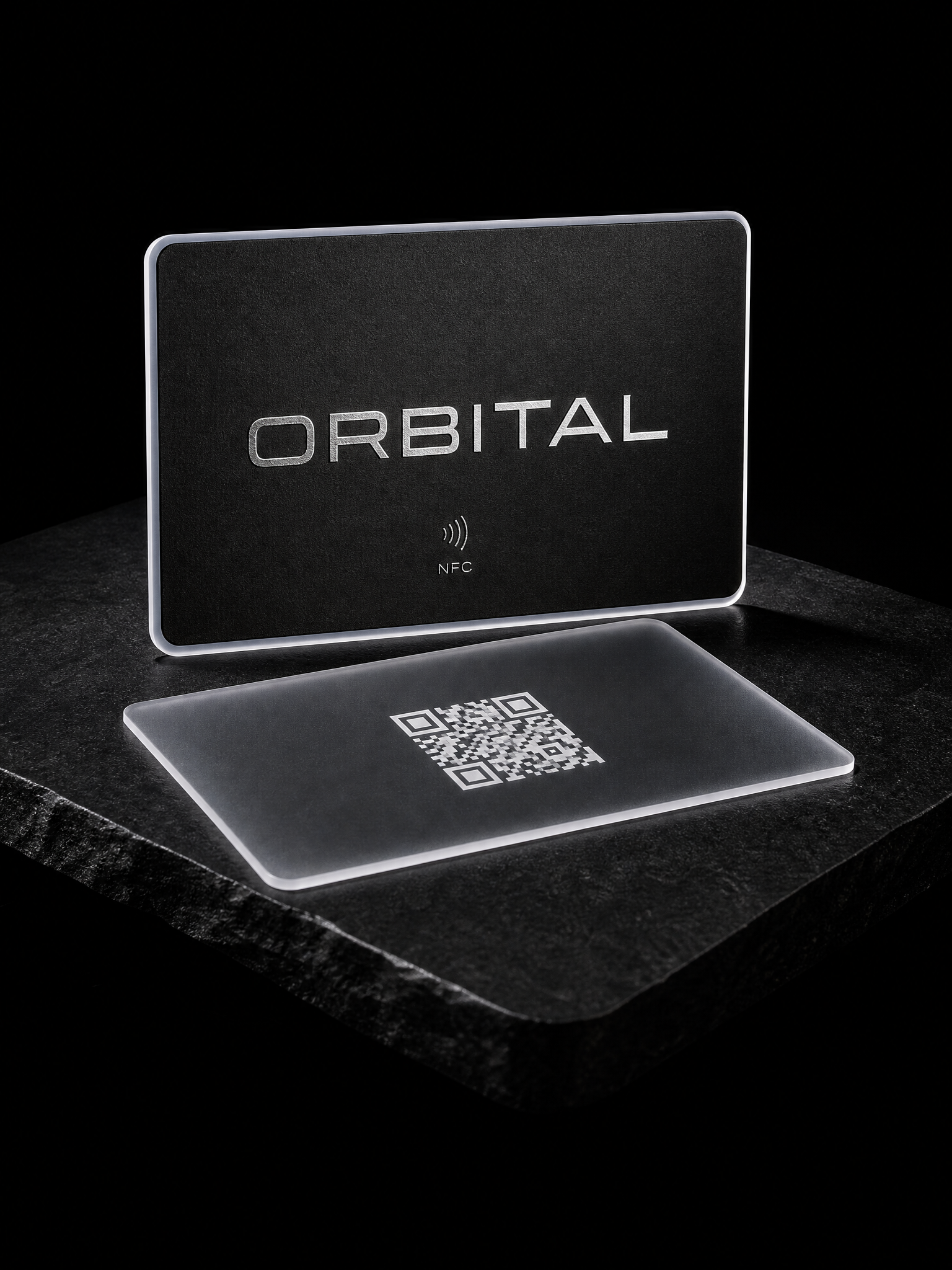
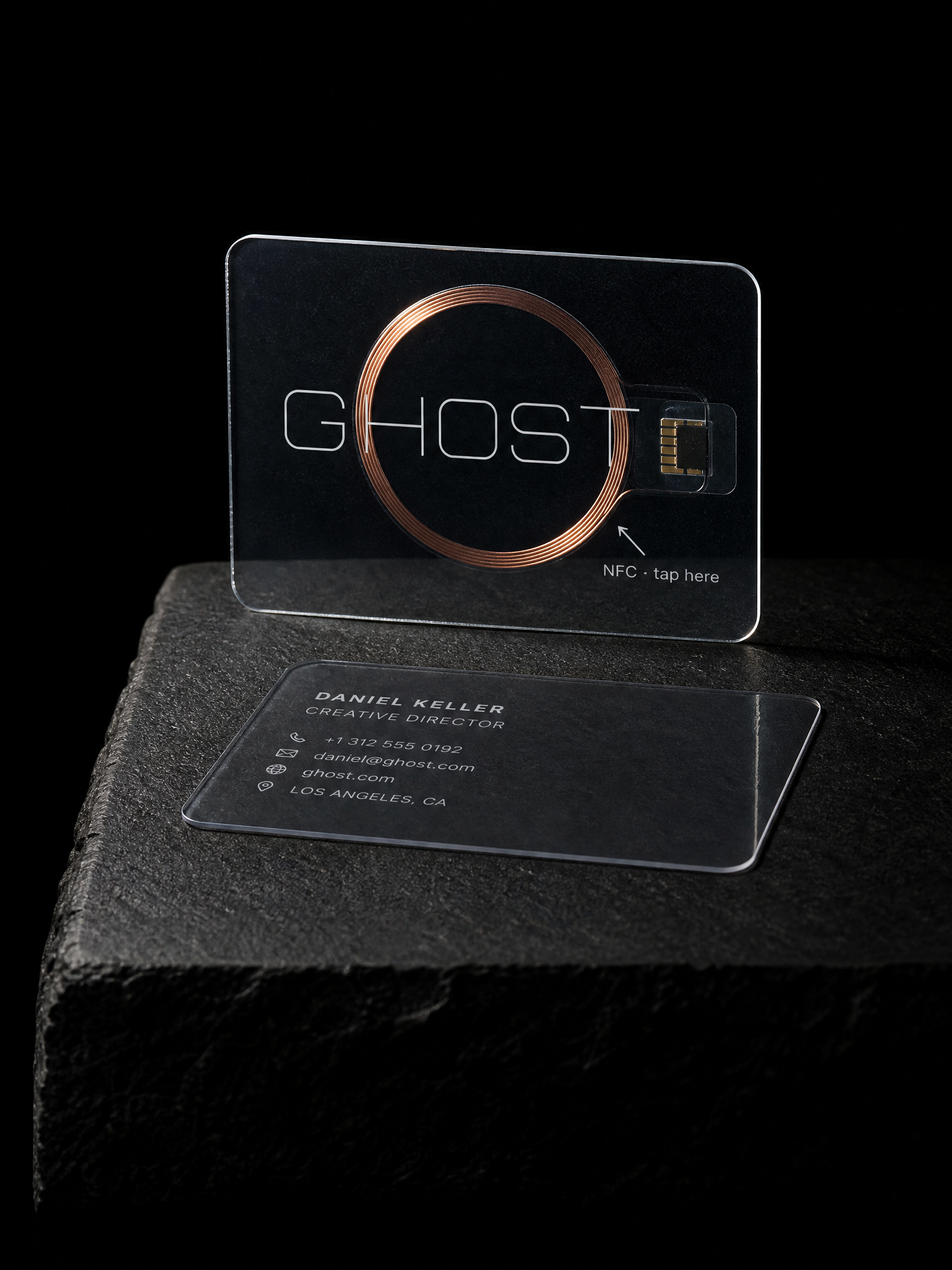
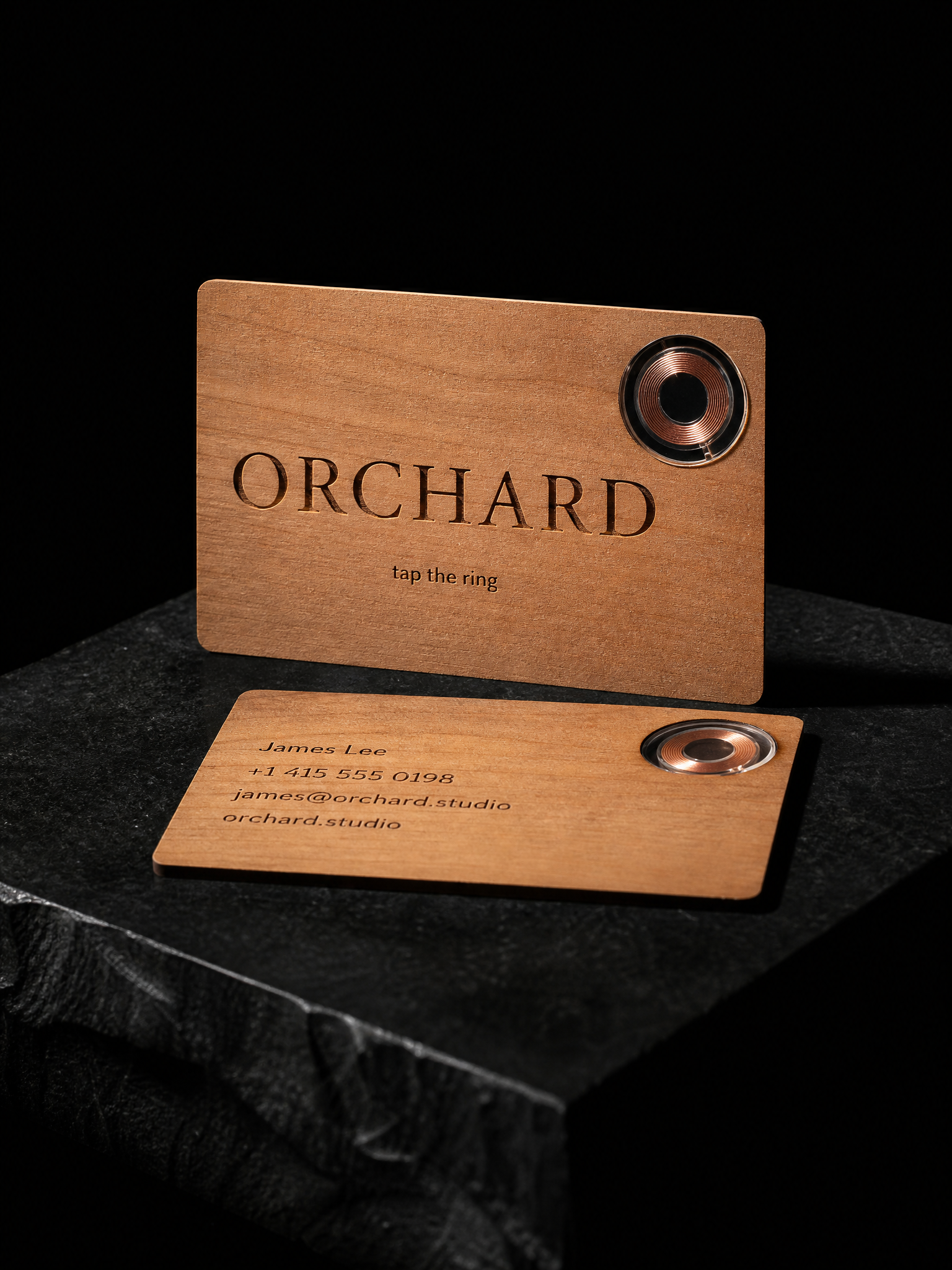
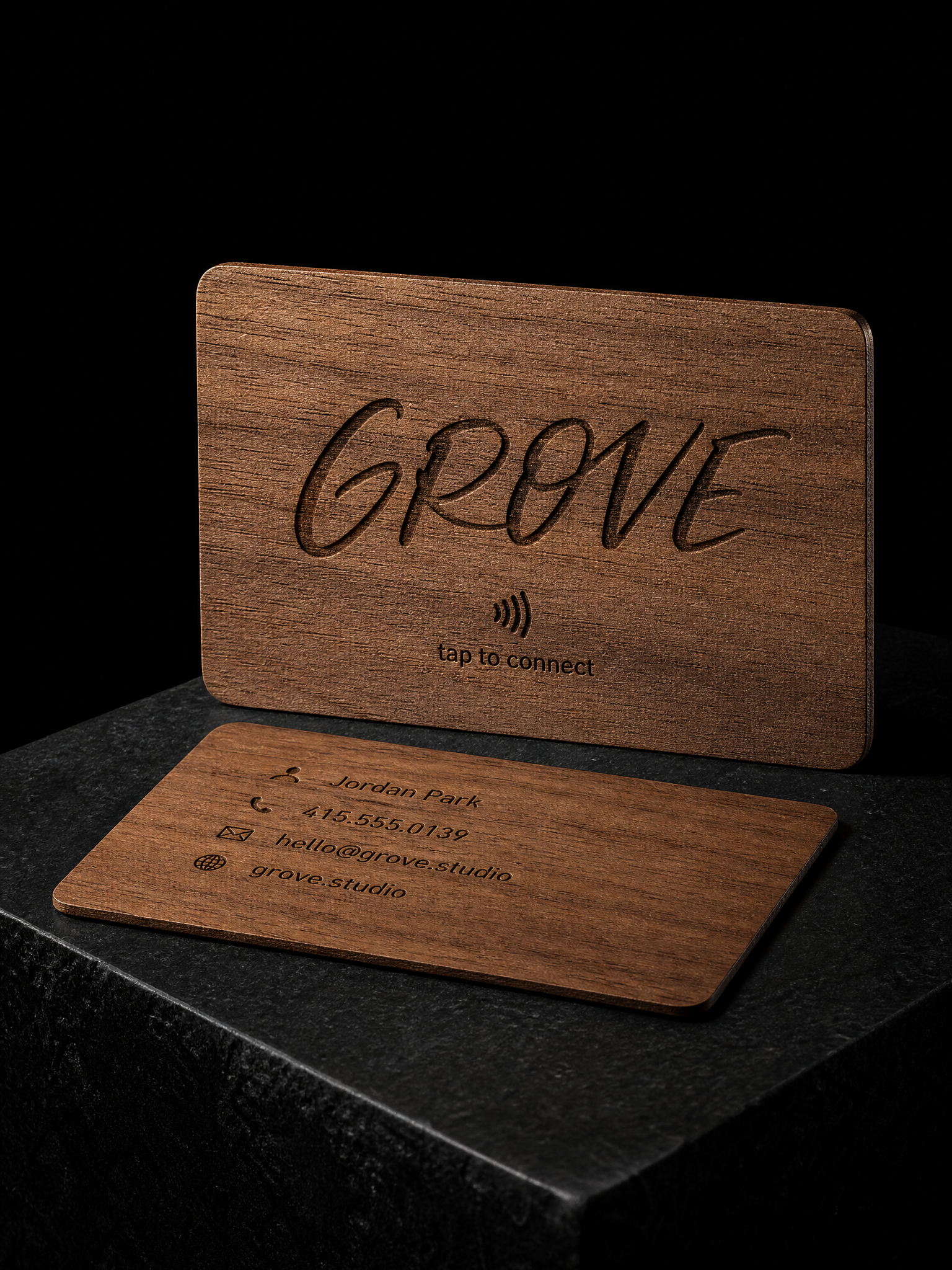
An exercise in NFC card construction across metal, plastic and wood: how each substrate handles the inlay, when to conceal the antenna, and when the coil is the best graphic on the card.
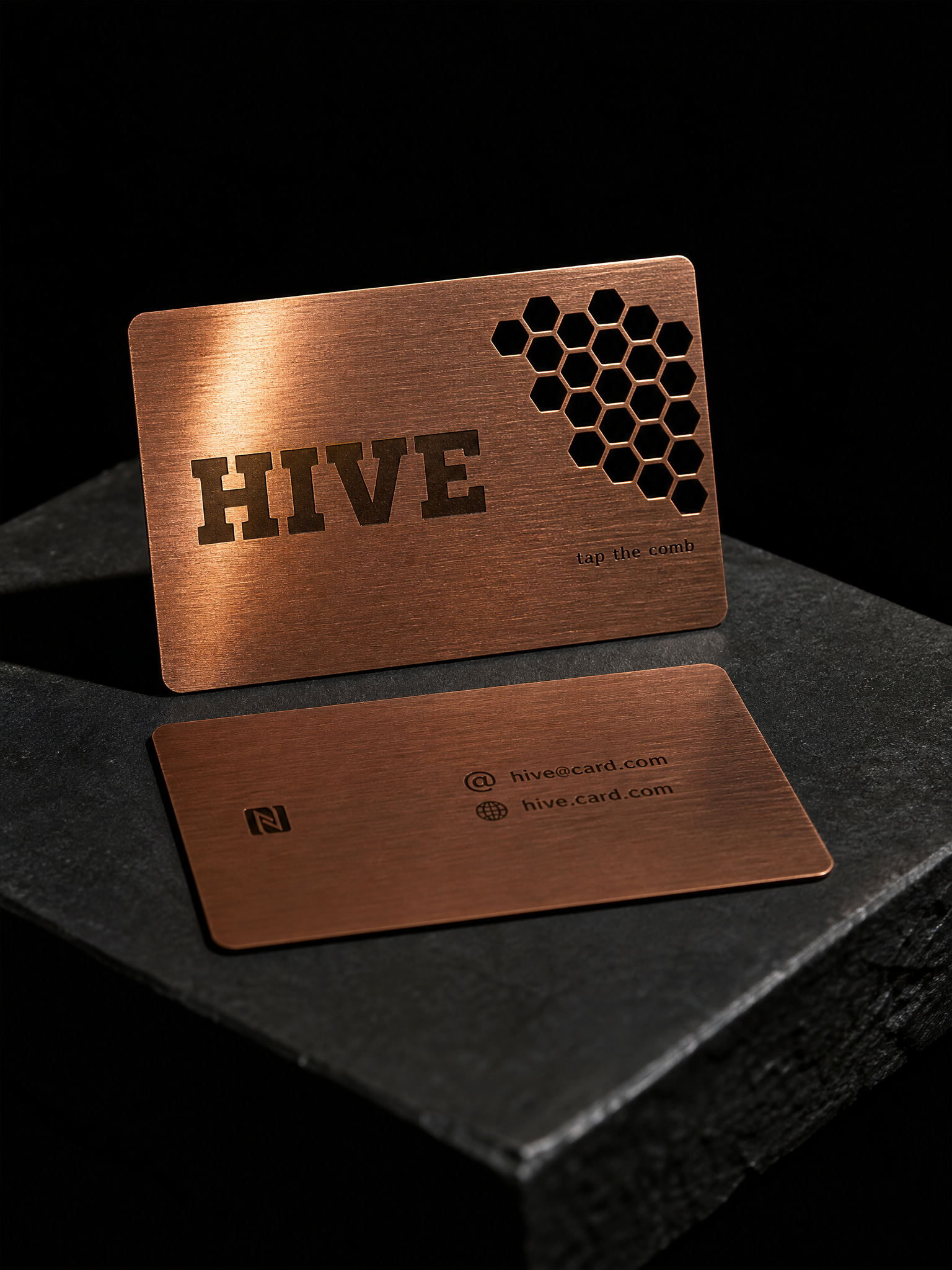
FoilsCHENHUI Standard Metallic (M series) Bright Silver, CHENHUI Standard Metallic (M series) Bright Gold, CHENHUI Standard Metallic (M series) Rose GoldTechniquesEngraved, Hot Foil, Gold Foil, Rose Gold Foil, Silver Foil, Laser Cut, Laser Engraved, Raised Spot UVStocksWhite PVC card stock, Matte black metal, Wood veneer, walnut, Bamboo ply
The idea
NFC cards are usually sold as a plastic novelty with a QR fallback. The interesting question is a production one: where does the antenna go, and what does the material force you to do about it.
Three rules
- 01Solid metal blocks the signal. Three routes, all shown here: a PVC inlay window set into the steel, a frosted edge strip that breaks the loop, and a honeycomb cut-through…
- 02Show the coil on purpose. On the clear and frosted builds the coil becomes the artwork: a visible copper spiral, positioned and framed like a drawn element rather th…
- 03Wood moves. Kept the pocket well inside the grain, engraved rather than printed, and used species with tight figure. Cherry got an acrylic window inste…
Why this one mattered
Three substrates, three different answers, and one of them turns the constraint into the design.
Start from these materials
Same paper, foil and finish, locked in — nothing of this piece artwork comes with it.
Designed by Austin Terrill, founder.