Embossed Business Cards
Cards you can feel. Embossing raises elements off the surface. Debossing and letterpress push them in. Both create a dimensional impression that transforms a flat card into something tactile — the kind of card people turn over in their hands.
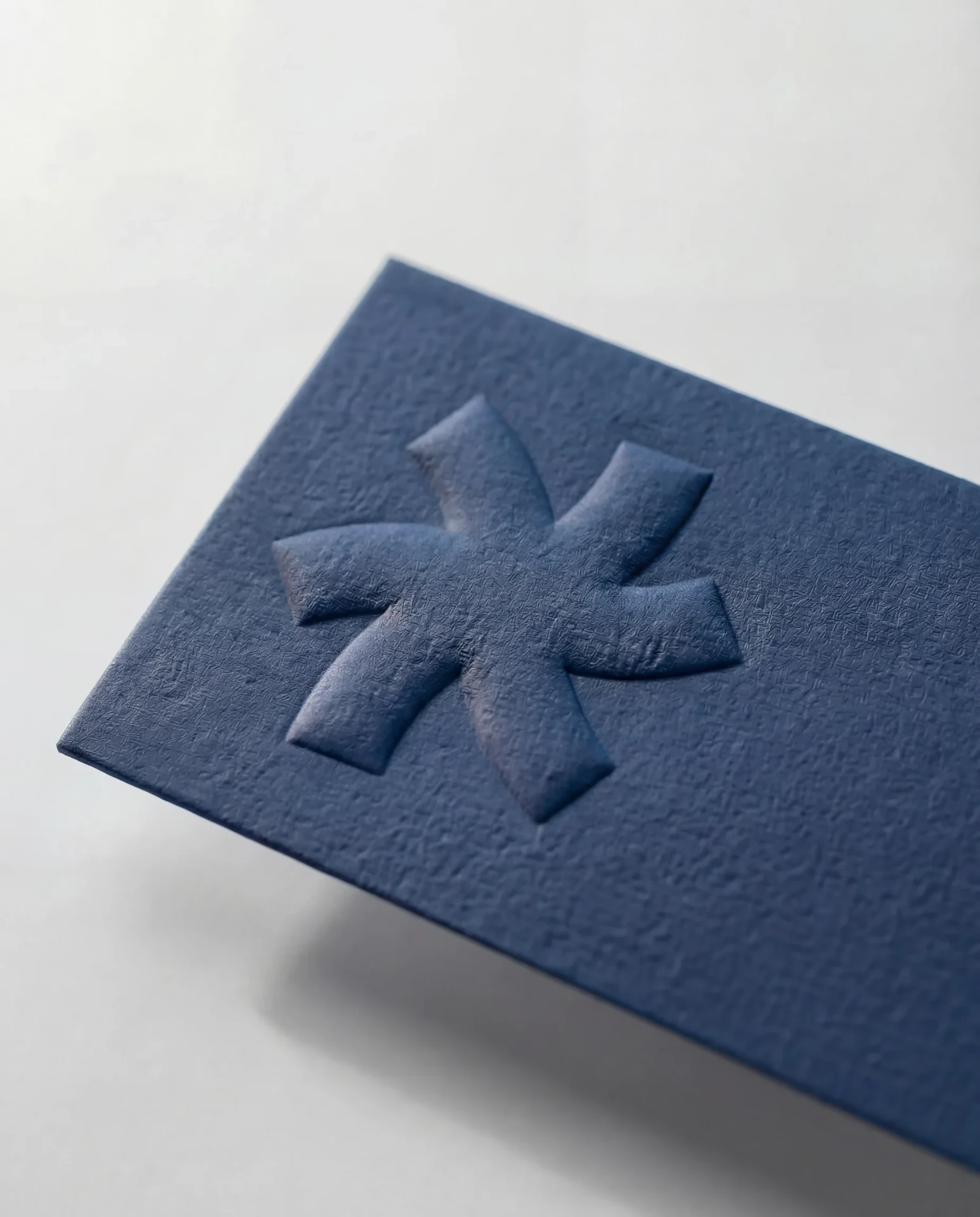
Custom Embossed & Debossed
Choose emboss or deboss, pick your paper, add edge finishing. Dimensional impressions made with custom metal dies on heavyweight cotton and other stocks.
From $235 for 250
3 weeks
View details →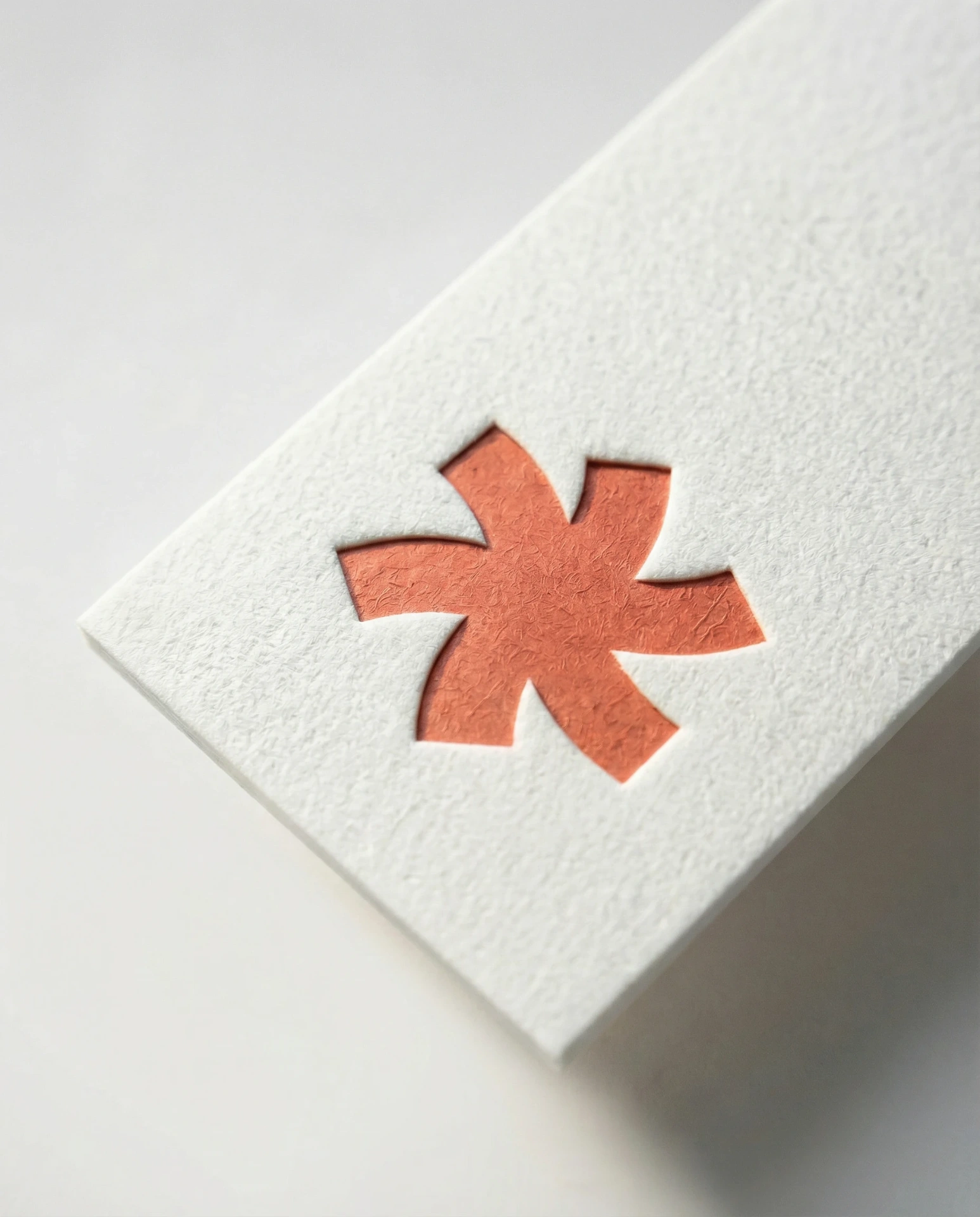
Letterpress
Ink pressed into soft cotton paper with a vintage printing press. Deep impressions, saturated color, unmistakable craft.
From $340 for 250
3 weeks
View details →How dimensional printing works
Embossing
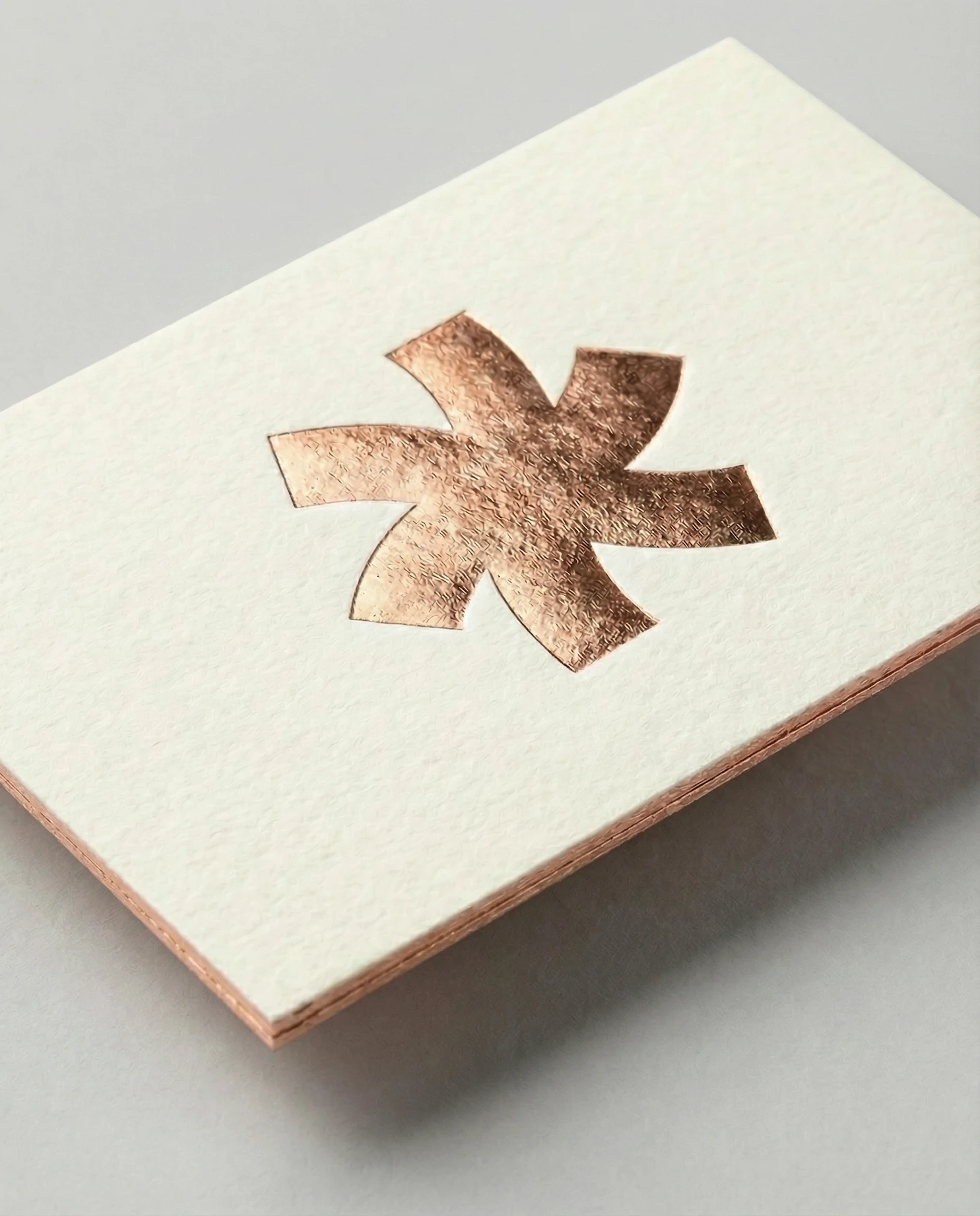
Embossing pushes paper upward from behind using a custom metal die, creating a raised surface you can feel. The result is a three-dimensional impression of your logo, name, or pattern that sits above the paper surface. Embossing can be blind (no ink or foil — just the raised impression) or registered to printed elements for added depth.
Because the paper is pressed between two dies, embossing creates a subtle inverted impression on the reverse side. Many designers incorporate this into the back layout. If you prefer no impression on the back, debossing is the better choice.
Debossing
Debossing is the opposite of embossing — it pushes elements into the paper surface, creating a recessed impression. The effect is more subtle and understated than embossing, but equally tactile. Debossing works especially well on thick, soft papers like cotton where the impression sinks deep into the fibers.
Unlike embossing, debossing does not affect the opposite side of the card. This makes it the preferred technique when both sides of the card carry printed content.
Letterpress
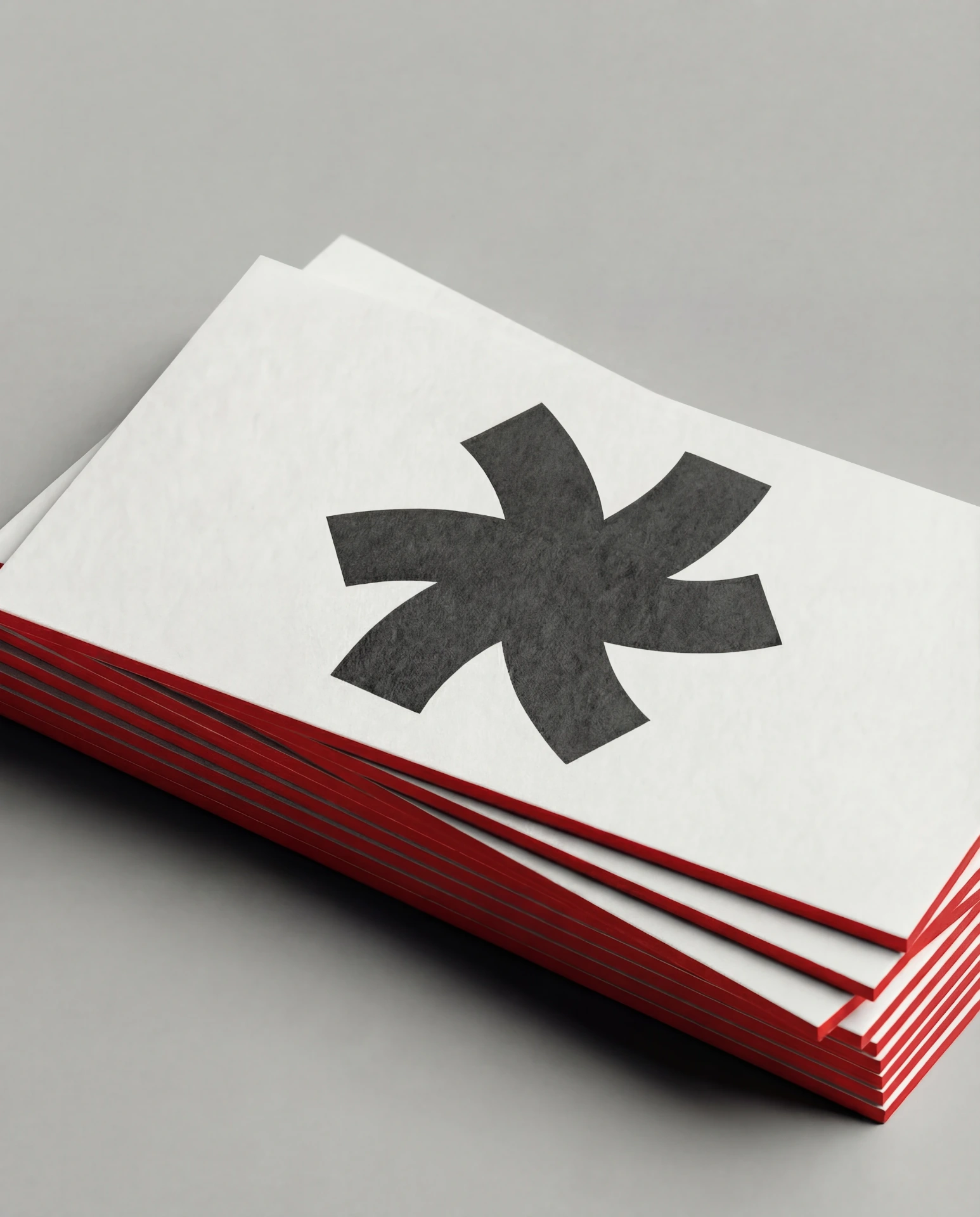
Letterpress is one of the oldest printing methods — ink is applied to a raised plate and pressed into paper under heavy pressure. The result is printed text and artwork with a visible impression pushed into the paper surface, similar to debossing but with ink applied simultaneously. The deep bite of letterpress into soft cotton paper is one of the most distinctive tactile effects in printing.
Traditional letterpress uses spot color inks (Pantone PMS) rather than digital CMYK printing, which produces richer, more saturated color. The technique works best with designs that use one to three ink colors — simple, bold, and confident.
Which technique is right for you?
| Embossing | Debossing | Letterpress | |
|---|---|---|---|
| Effect | Raised above surface | Recessed into surface | Ink pressed into surface |
| Best for | Logos, patterns, bold elements | Subtle branding, text, two-sided designs | Type-heavy designs, classic aesthetic |
| Paper | Cotton, Silk, Black, Colored | Cotton, Silk, Black, Colored | Cotton (white) |
| Ink/Foil | Blind, with ink, or with foil | Blind, with ink, or with foil | PMS spot color ink |
| Reverse side | Shows inverted impression | No effect on reverse | No effect on reverse |
| Turnaround | 3 weeks | 3 weeks | 3 weeks |
| Starting price | $XXX / 250 | $XXX / 250 | $XXX / 250 |
Embossing
- Effect
- Raised above surface
- Best for
- Logos, patterns, bold elements
- Paper
- Cotton, Silk, Black, Colored
- Ink/Foil
- Blind, with ink, or with foil
- Reverse side
- Shows inverted impression
- Turnaround
- 3 weeks
- Starting price
- $XXX / 250
Debossing
- Effect
- Recessed into surface
- Best for
- Subtle branding, text, two-sided designs
- Paper
- Cotton, Silk, Black, Colored
- Ink/Foil
- Blind, with ink, or with foil
- Reverse side
- No effect on reverse
- Turnaround
- 3 weeks
- Starting price
- $XXX / 250
Letterpress
- Effect
- Ink pressed into surface
- Best for
- Type-heavy designs, classic aesthetic
- Paper
- Cotton (white)
- Ink/Foil
- PMS spot color ink
- Reverse side
- No effect on reverse
- Turnaround
- 3 weeks
- Starting price
- $XXX / 250
Not sure which to choose? Order a sample pack to feel the difference →
Want to add foil to your embossing?
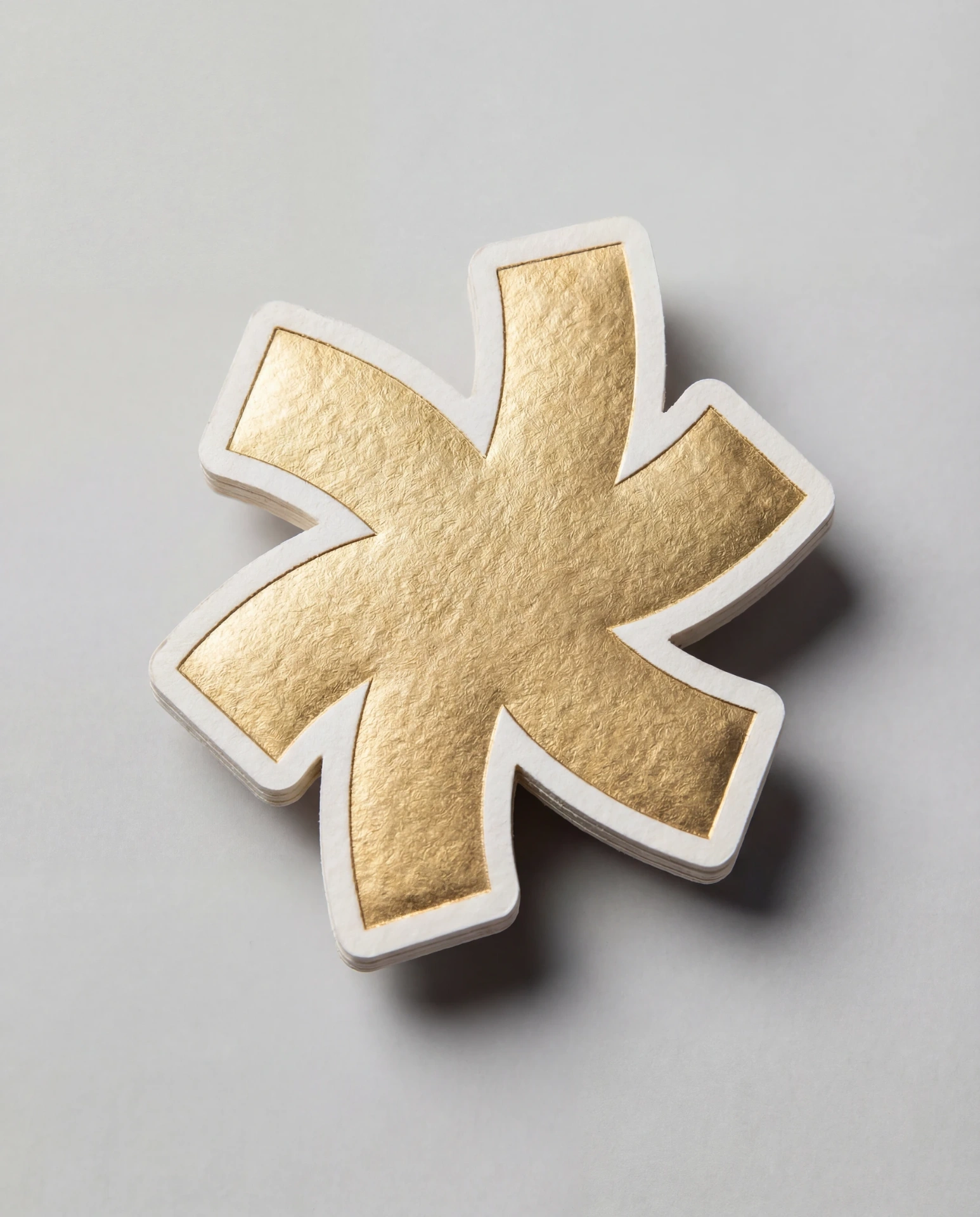
Metallic foil registered to an embossed or debossed impression creates one of the most premium finishes in print. Configure your foil + emboss combination on our Custom Hot Foil page.
Build a foil + embossed card →Explore other finishes
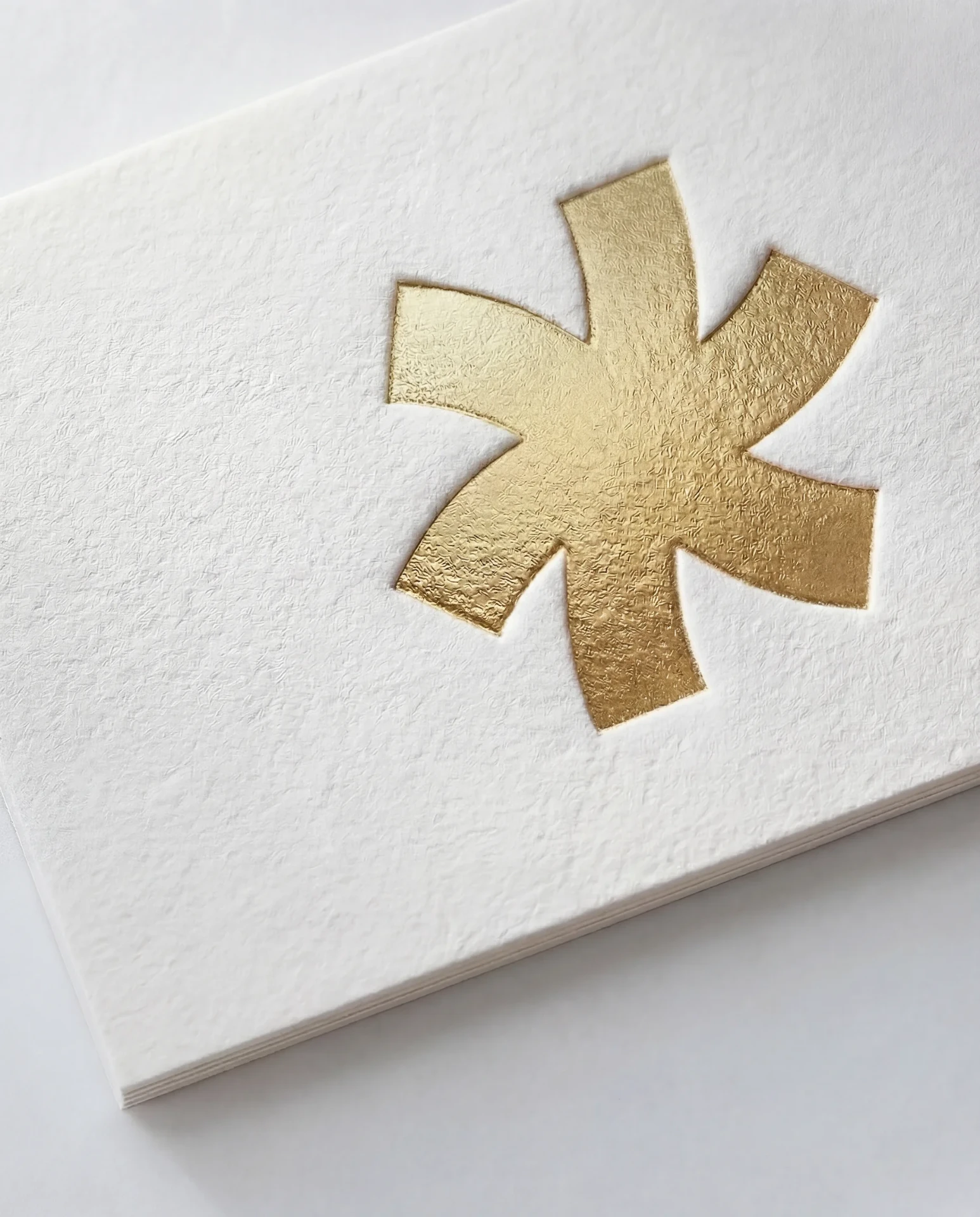
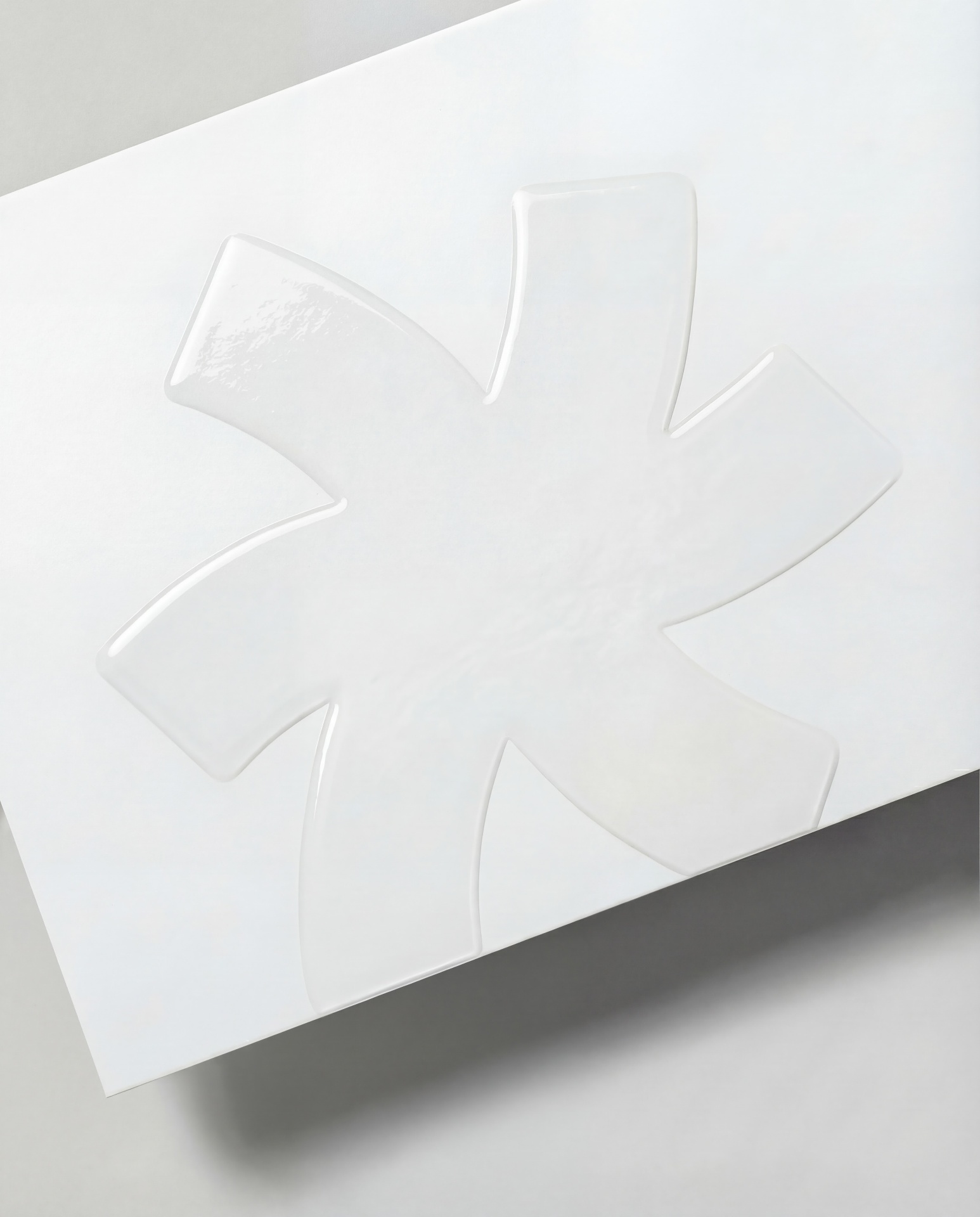
Will your logo hold in an emboss?
Emboss needs open counters and one clear depth — detail under about 1.5 mm collapses as the paper stretches over the die. We open the drawing up so the shadow reads.